Tag Archives: relationships

Using form: Susan McLean, ‘What Goes: A Rondelet’

You were the one
who always told me what to do.
You were the one
who said I ought to buy a gun.
So when you said that we were through,
one of us had to go. I knew
you were the one.

*****

Susan McLean writes: “I have to credit Allison Joseph for introducing me to the rondelet, a French repeating-form poem that has not been in fashion for a very long time. She was teaching a workshop on repeating forms at the West Chester University Poetry Conference, and I was one of the students. The rondelet is a short form with such short lines and so many repetitions of the first line that it doesn’t give the writer much wiggle room for an interesting twist in the meaning of the repeated line. I settled on “you were the one” as my repeated line, because it is associated with the standard swoony romantic line, but it could easily change its meaning depending on the context. Once I chose “gun” as a possible rhyme for “one,” that word suggested to me a scenario in which the controlling partner in a relationship comes to regret influencing his partner to arm herself. The poem’s title is a pun. At first, it looks as though naming the form in the title is just an effort to identify an unfamiliar form, but if you say it aloud, it evokes the common phrase “what goes around comes around,” suggesting that the man’s comeuppance is partly his own fault. In French, “rondelet” means “a little circle.” This poem first appeared in New Trad Journal and was later published in my second poetry book, The Whetstone Misses the Knife.

Susan McLean has two books of poetry, The Best Disguise and The Whetstone Misses the Knife, and one book of translations of Martial, Selected Epigrams. Her poems have appeared in Light, Lighten Up Online, Measure, Able Muse, and elsewhere. She lives in Iowa City, Iowa.
https://www.pw.org/content/susan_mclean

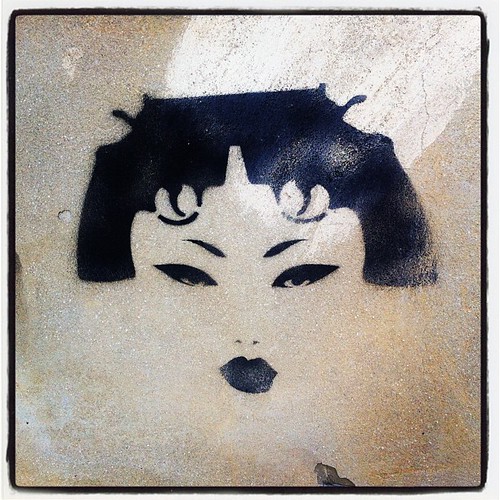
Photo: “#Siena #streetart #guns #woman” by Romana Correale is licensed under CC BY-ND 2.0.

Sonnet: ‘Parking Lot’

Although not of their class, I went to church
with Bryce and Nicky in the congregation.
In a shop’s parking lot and in the lurch
I asked Bryce for a job, loan, or donation.
Then Nicky’s car came up and Bryce got in,
the bastards swerved to hit me, ran me down;
when I got up, they ran me down again,
hit the wall with their car, left with a frown.
They don’t apologise, don’t feel the need –
“You caused it all ill-manneredly,” they say.
“Our car was damaged too.” (But did they bleed?)
I bothered them; they wanted me away.
The congregation says “Forgive, forget.”
Decades have passed. Forget? Forgive? Not yet.

*****

This Shakespearean sonnet (iambic pentameter, rhyming ABAB CDCD EFEF GG) has just been published in this month’s Snakeskin. Editor George Simmers expressed concern that it might be a true story… let me reassure everyone, I neither attend church nor get hit by cars. The poem is at most a parable, a parabolic approach to events.

Photo: from Snakeskin.

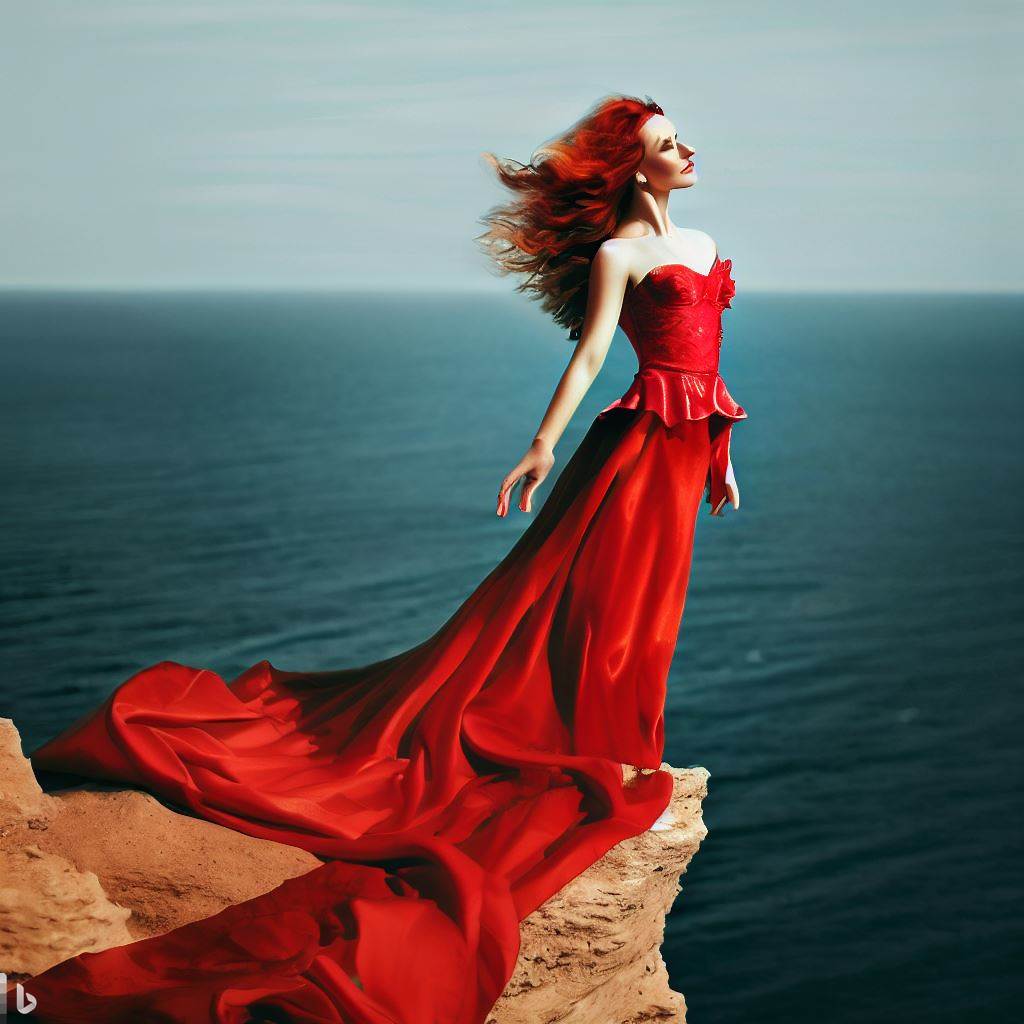
Michael Tyldesley, ‘Ballad of the Siren Song’

“Come closer and I will tell you a secret
To you, to you, only to you.
Come Closer.”

You’re perched sultry on a craggy cliff,
curvy on a windswept rock
with red dress clinging to your breasts:
you play that tune, that tune you play
it’s calling out to me.

And I’m sailing, roving, lost at sea,
bedraggled by the ocean spray
and changing course for you.

Because, that tune, that tune you play
it jolts me, hooks me, reels its prey:
from silent waves to violin,
from moonless numb to sun-kissed-skin
from topsail calm to snatching whip,
from steady course to daring trip.

I hear that tune, that tune you play
it takes me further, far away:
your spiral smile, your whirlpool lips,
they whisper songs to rolling ships.

That tune you play, with gravity
hypnotic moonstruck melody,
there’s no escape, the heavens swarm
electrostatic pulses form –

I’d love to be your thunderstorm,
whipping up the specks of you,
teasing you; perplexing you
not pleasing you; just vexing you
yet needing the effects of you,
a feeling that projects on you,
it’s squeezing me and sexing you.

And yet, that tune, that tune you play
it leads me on in some strange way –
I see beached skulls and broken hulls
shadows changing, screeching gulls,
till I’m marooned, a castaway,
a shipwreck in your taloned splay.

*****

Michael Tyldesley writes: “The poem was inspired by the trap of damaging relationships earlier in my life and the metaphor that sits behind the poem and continues to burn in me is the irresistible lure of hypomania. The poem structure was inspired by the freeform rhyming style of Jenni Doherty and the language of Dylan Thomas’s Under Milk Wood. It’s been gathering dust in my drawer over the years and it’s quite an old poem. I wrote most of it at 26 and I’m now 42. It’s slightly raunchy and I suppose I didn’t want to be judged negatively due to that but it’s always been a very popular poem when I shared it.”

Michael Tyldesley works in British submarine design. At the time of writing this post he is in Australia, doing performance poetry at Melbourne’s Vibe Union. ‘Ballad of the Siren Song’ was published in this month’s Snakeskin.

Photo: Image Creator powered by DALL·E

Susan McLean, ‘The Whetstone Misses the Knife’

I answered your desire to meet
resistance and be honed by friction.
Sharp as you were, you couldn’t beat
the zero-sum of contradiction.

Abrasion was your privilege,
the only stroking I have known.
Now you have lost your cutting edge
and I am just another stone.

*****

Susan McLean writes: “This poem was inspired indirectly by the suicide of a talented poet whom I had seen at conferences, but had never had a conversation with. I heard that she had killed herself on Christmas Eve because of an unhappy love affair. Since I knew nothing about her personal life, this poem is not about her, but her fate made me think about unhappy relationships, particularly those in which both partners have strong but conflicting personalities. I had in mind such stormy creative relationships as those of Sylvia Plath and Ted Hughes, Diego Rivera and Frida Kahlo, Camille Claudel and Auguste Rodin, in which the clashes are initially part of the attraction, yet turn destructive eventually. However, the imaginary relationship depicted in this poem is not based on the specifics of any of those relationships.
Balance and antithesis are the key characteristics of the theme of this poem, so I thought two quatrains with a rhyme scheme of ABAB would give equal weight to the “I” and the “you” of the poem.
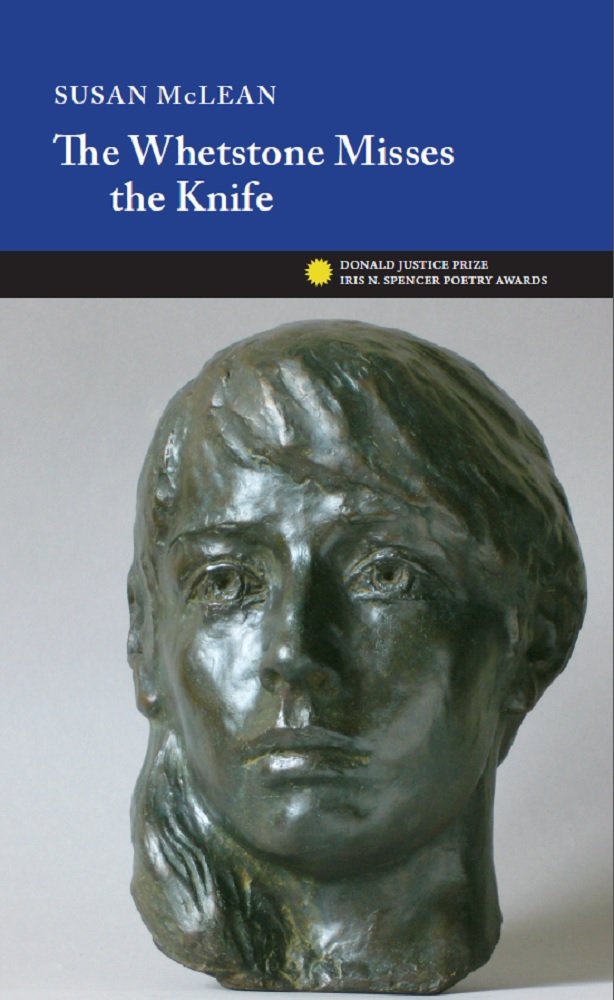
This poem first appeared in Mezzo Cammin, an online journal of female formalist poets, and later was published in my second book, The Whetstone Misses the Knife, which featured a bronze bust of Camille Claudel by Jacques Chauvenet on the cover.”

Susan McLean has two books of poetry, The Best Disguise and The Whetstone Misses the Knife, and one book of translations of Martial, Selected Epigrams. Her poems have appeared in Light, Lighten Up Online, Measure, Able Muse, and elsewhere. She lives in Iowa City, Iowa.
https://www.pw.org/content/susan_mclean

Using form: choice of metre: John Beaton, ‘Request for a Dance’

Step with me, float with me, over the floor;
weave with me, waltz with me, out through the door;
slide to the deck where the crowdedness clears;
glide through the garden and tear off your fears.

Step with me, sneak with me, down to the lake,
onto its waters; the mirror won’t break;
lilt in a ball gown of luminous mist;
twirl till you’re breathless and need to be kissed.

Step with me, skim with me, let yourself go,
dazzling and dizzy, then flowingly slow;
whirl till our swirls make a maelstrom of night;
pass through the portal from here to delight.

Step with me, sway with me, feel yourself swing,
hammocked on rhythms of hearts on the wing;
move to the measures of seasons and years;
sweep to that island where time disappears.

Step with me, slip with me, up to its crypt,
quaff a last laugh from the pleasures we’ve sipped;
curtsey and smile at a parting of hands
joined in this dancing by two wedding bands.

*****

John Beaton writes: “Inspired by Richard Wilbur’s beautiful ‘For C,’ and by my own marriage, I wanted to write a poem about lifelong love. For the beginning, a wedding dance came to mind and that expanded into an extended metaphor. The theme needed a form that danced the reader along.
I adopted a four-line stanza rhymed aabb with the meter of each line being a form of dactylic tetrameter: DA-da-da, DA-da.da, DA-da-da, DA. To kick off each stanza dancingly, I used near-repetition in the first two dactyls. Then a lot of alliteration and internal rhyme help it swirl along.
The poem develops the dance into a shared lifelong experience, one that must end but does so with a sense of fulfilment and beauty. I’ve recited it at weddings.”

John Beaton’s metrical poetry has been widely published and has won numerous awards. He recites from memory as a spoken word performer and is author of Leaving Camustianavaig published by Word Galaxy Press. Raised in the Scottish Highlands, John lives in Qualicum Beach on Vancouver Island.
https://www.john-beaton.com/

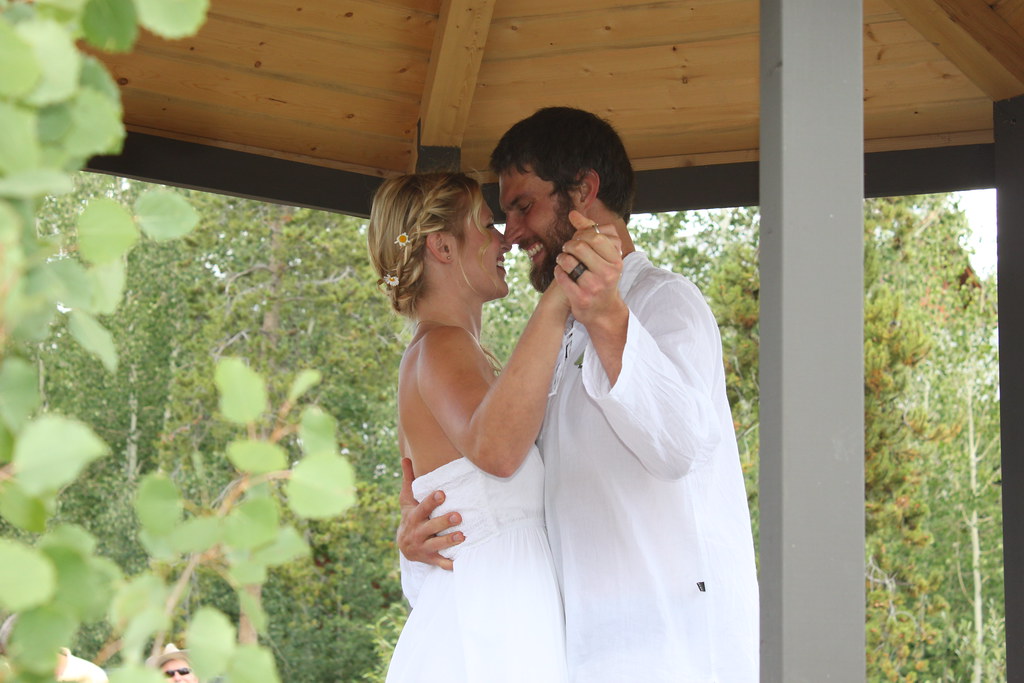
Photo: “Wedding Dance” by DonnaBoley is licensed under CC BY 2.0.

Ekphrastic poem: Jenna Le, ‘The Implorer’

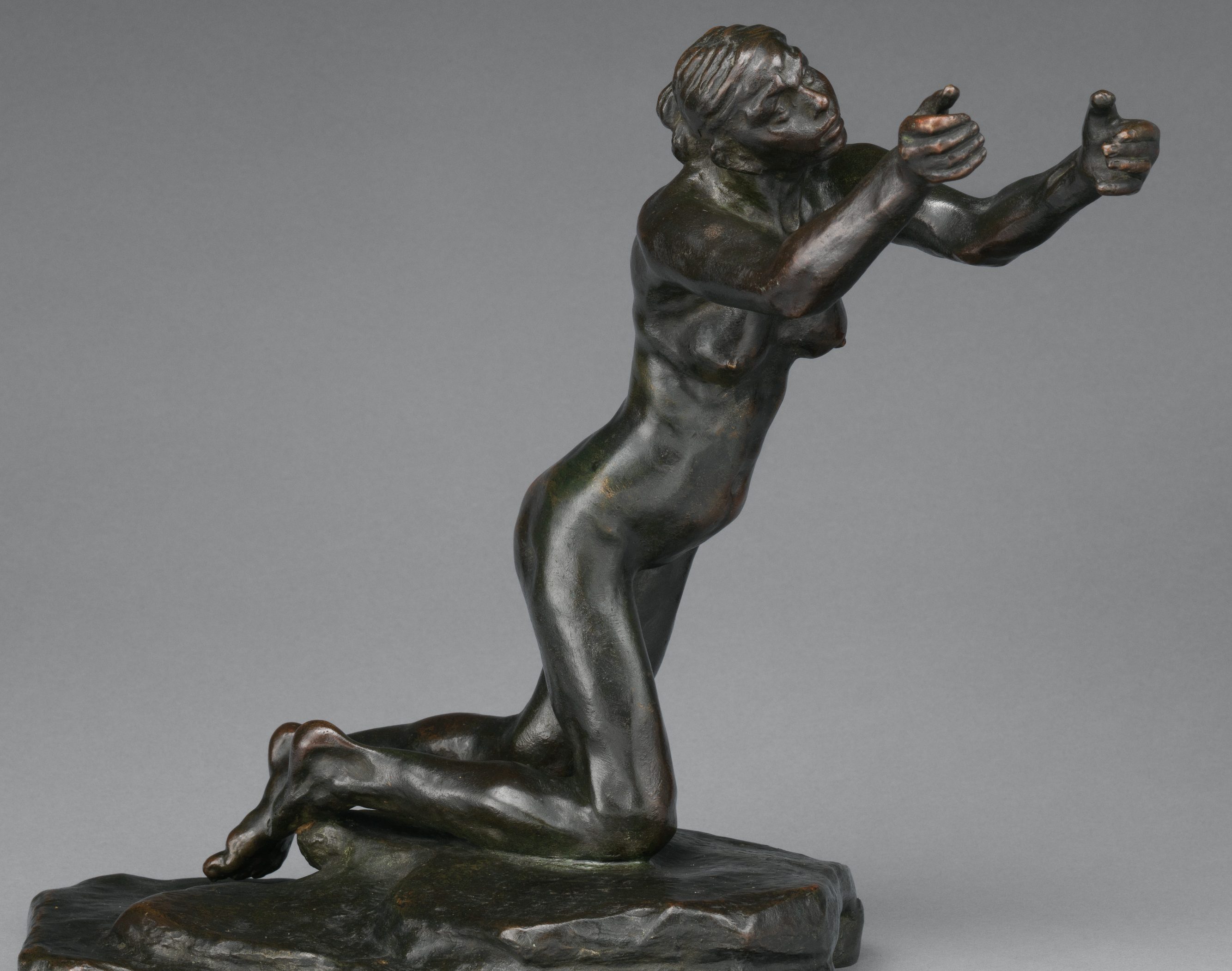
This figurine of bronze
cast by Camille Claudel,
known as Auguste Rodin’s
mentee and, for a spell,

his lover, is most striking
for being non-erotic–
desexed–despite depicting
a kneeling nude, lordotic

trunk outthrust at an angle,
headlong, precipitous,
arms outstretched not to strangle
one who broke faith, but just

to make a strangled gesture,
a soundless, ground-out groan,
the hauntings that oppress her
knowable to her alone.

*****

This ekphrastic poem was recently published in Able Muse.

Jenna Le writes: “I often draw inspiration from wandering around in art museums. The Implorer is a statuette I first saw at the Met. I find I’m especially attracted to artworks by women artists that portray female experience, and this bronze in particular called out to me because it radiated such a powerful sense of interiority, depicting a woman as not a muse or a reflective surface but as a source of painfully strong thought and emotion.”

Jenna Le (jennalewriting.com) is the author of three full-length poetry collections, Six Rivers (NYQ Books, 2011), A History of the Cetacean American Diaspora (Indolent Books, 2017), and Manatee Lagoon (Acre Books, 2022). She won Poetry By The Sea’s inaugural sonnet competition. Her poems appear in AGNI, Pleiades, Verse Daily, West Branch, and elsewhere. She works as a physician in New York City.

Photo: “File:The Implorer (L’Implorante) MET DP-13617-053.jpg” by Camille Claudel is marked with CC0 1.0.

Potcake Poet’s Choice: Max Gutmann, ‘Kindling’

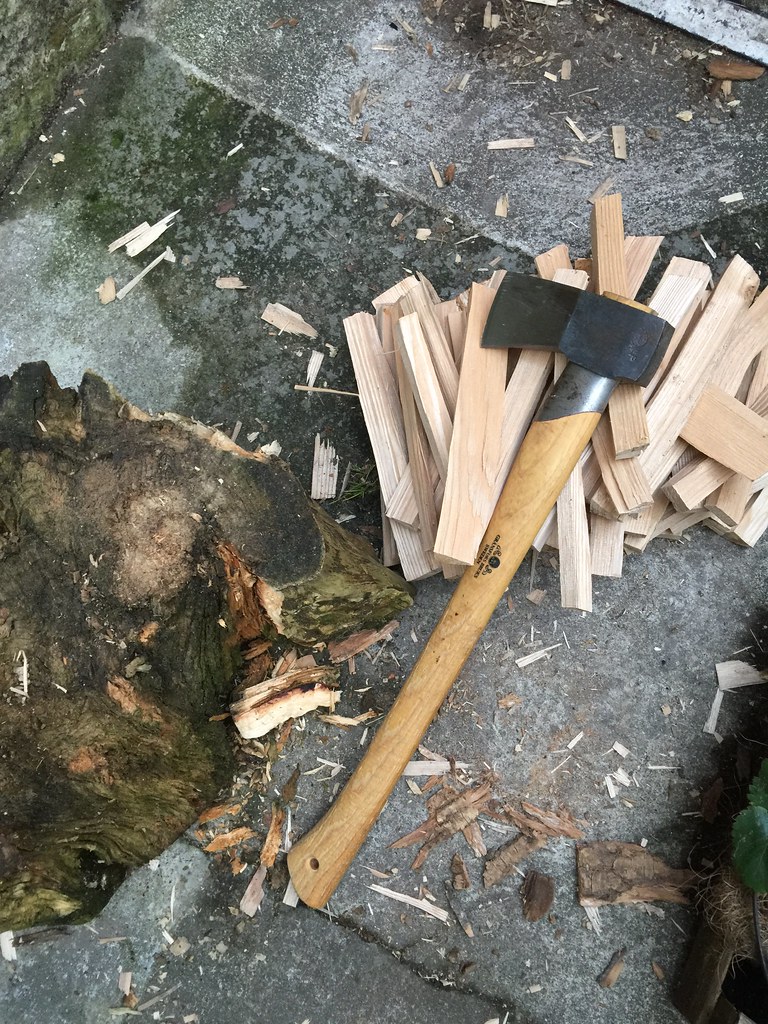
The day his girlfriend’s father let him cut
The kindling was the cracking of a crust,
A heavy volume falling open at
A pleasant page. He felt the guard relax
At last: it takes some trust
To hand a man an ax.

They foraged for straight grain, which wouldn’t knot
The blade, but give hospitably, a quick
Clean breach, if he could hit the angle right.
The older man first watched, and then went in.
Alone, he chopped each stick
To almost pencil-thin,

Absorbed in seeking out that magic split,
Delicious every time that it occurred,
A touch of luck rewarding skill and sweat,
Though earned, still only half-anticipated,
Like just the sought-for word,
Or love reciprocated.

Max Gutmann writes: “I like the pattern—unique without being complex, rhyming throughout but ringingly only at the stanza ends. I hope the last simile feels both surprising and, like an ax biting a block, inevitable.”

Max Gutmann has worked as, among other things, a stage manager, a journalist, a teacher, an editor, a clerk, a factory worker, a community service officer, the business manager of an improv troupe, and a performer in a Daffy Duck costume. Occasionally, he has even earned money writing plays and poems.

‘Kindling’ was first published in The Formalist.

maxgutmann.com

“Chopping kindling” by *Tom* is marked with CC BY-NC-SA 2.0.

Potcake Poet’s Choice: Tom Vaughan, “Save the Last Page for Me”

We choose what gives us meaning. I
chose you. That’s why
when people ask
me to unmask
and tell them if I’m ‘happy’, they
head off astray:
that’s not the glue.
But what I knew –
in the first minute, when we met
(part pledge, part threat) –
was that our text
defines, connects.

Of course, it’s only when you turn
the last page, learn
its backward view,
say farewell too,
that you can fully understand
an author’s plan.
So bugger books
and how we’ll look
to hooked, impatient readers who
will hurry through
to reach the end.
Leave that unpenned.

Tom Vaughan writes: “The poem I would choose to represent myself, Save the Last Page for Me, first published in Staple, represented a particular challenge. I’d come across the form (‘minute’ poems, i.e. 60 syllables in each stanza, with rhyming couplets and a pattern of four or two foot lines) which it was suggested was only for comic poetry. I wanted to say something serious, and hope I succeeded. Writing the poem was also another reminder that at least sometimes the more you work within the confines of a strict form, the more you discover what you wanted to say. The poem is about my wife, Anne.”

Tom Vaughan is not the real name of a poet whose previous publications include a novel and two poetry pamphlets (A Sampler, 2010, and Envoy, 2013, both published by HappenStance). His poems have been published in a range of poetry magazines. He currently lives and works in London.

https://tomvaughan.website