Tag Archives: Snakeskin

George Simmers, ‘Earth’

Old Becky’s in her garden, delving among roots,
Cutting away dead wood, caressing shoots.
All this June morning, she has given her garden love
Tough as the fabric of her gardening glove.
She’s a no-nonsense woman; her words are earthy words.
She calls a spade a spade; she calls turds turds.

How old is she? As well ask how old’s that
Ridiculous and ragged old sun hat.
As well ask why the sun is blazing gold;
As well ask why she loves the limping old
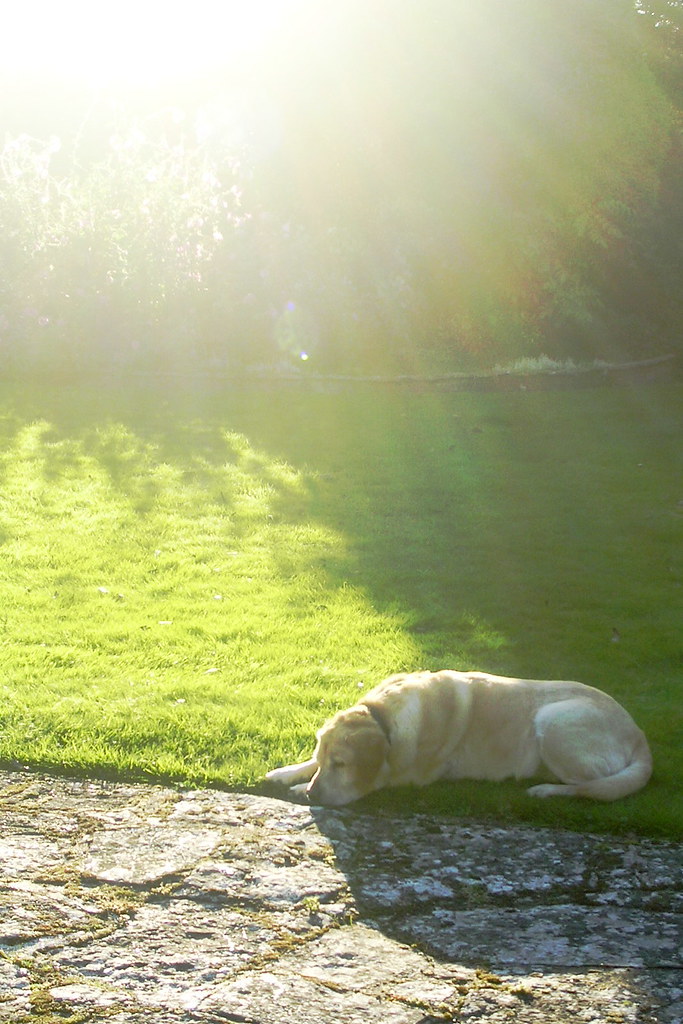
Fat spaniel whose idea of summer fun
Is stretching indolent in the summer sun
And watching as she plods around the plot.

Dogs, children, husbands: these are what
Her life has been. Husbands both buried now.
Children all visit when their lives allow,
And relish her gruff love and plenteous food.
The dog’s grown old with her, and now his mood
Is slow contentment. She was at his birth
And soon she’ll bury him beneath this earth.

For in this garden it is understood
That death is natural, and the earth is good.

*****

George Simmers writes: “This is the first of four character sketches, each based on one of the ancient elements – Earth, Air, Fire and Water. The complete sequence can be found in Snakeskin 309 (August 2023).”

George Simmers used to be a teacher; now he spends much of his time researching literature written during and after the First World War. He has edited Snakeskin since 1995. It is probably the oldest-established poetry zine on the Internet. His work appears in several Potcake Chapbooks, and his recent diverse collection is ‘Old and Bookish’.

Dog moving as the shade goes” by Ed.ward is licensed under CC BY-SA 2.0.

Michael Tyldesley, ‘Ballad of the Siren Song’

“Come closer and I will tell you a secret
To you, to you, only to you.
Come Closer.”

You’re perched sultry on a craggy cliff,
curvy on a windswept rock
with red dress clinging to your breasts:
you play that tune, that tune you play
it’s calling out to me.

And I’m sailing, roving, lost at sea,
bedraggled by the ocean spray
and changing course for you.

Because, that tune, that tune you play
it jolts me, hooks me, reels its prey:
from silent waves to violin,
from moonless numb to sun-kissed-skin
from topsail calm to snatching whip,
from steady course to daring trip.

I hear that tune, that tune you play
it takes me further, far away:
your spiral smile, your whirlpool lips,
they whisper songs to rolling ships.

That tune you play, with gravity
hypnotic moonstruck melody,
there’s no escape, the heavens swarm
electrostatic pulses form –

I’d love to be your thunderstorm,
whipping up the specks of you,
teasing you; perplexing you
not pleasing you; just vexing you
yet needing the effects of you,
a feeling that projects on you,
it’s squeezing me and sexing you.

And yet, that tune, that tune you play
it leads me on in some strange way –
I see beached skulls and broken hulls
shadows changing, screeching gulls,
till I’m marooned, a castaway,
a shipwreck in your taloned splay.

*****

Michael Tyldesley writes: “The poem was inspired by the trap of damaging relationships earlier in my life and the metaphor that sits behind the poem and continues to burn in me is the irresistible lure of hypomania. The poem structure was inspired by the freeform rhyming style of Jenni Doherty and the language of Dylan Thomas’s Under Milk Wood. It’s been gathering dust in my drawer over the years and it’s quite an old poem. I wrote most of it at 26 and I’m now 42. It’s slightly raunchy and I suppose I didn’t want to be judged negatively due to that but it’s always been a very popular poem when I shared it.”

Michael Tyldesley works in British submarine design. At the time of writing this post he is in Australia, doing performance poetry at Melbourne’s Vibe Union. ‘Ballad of the Siren Song’ was published in this month’s Snakeskin.

Photo: Image Creator powered by DALL·E

Poem, ‘Honesty’

Honesty’s doing nothing you’re ashamed
to talk of; otherwise you’re being gamed
by a smooth angel with a cloven shoe.
Man, know thyself; to thine own self be true;
accept you’re not some other one’s ideal
from their religion or philosophy;
accept your thoughts are yours, impure and real
with lust, greed, envy, anger, vanity–
normal in that we’re powered by an ape’s drive
that needed those traits to survive and thrive.
Whether you act on them’s different again.
Do nothing that, if done, would make you lie–
but don’t be shamed you’ve had the thoughts within.
Don’t stifle, don’t suppress, and don’t deny.
Acknowledge, but don’t act. In that’s no sin.

*****

Published in Snakeskin, January 2018

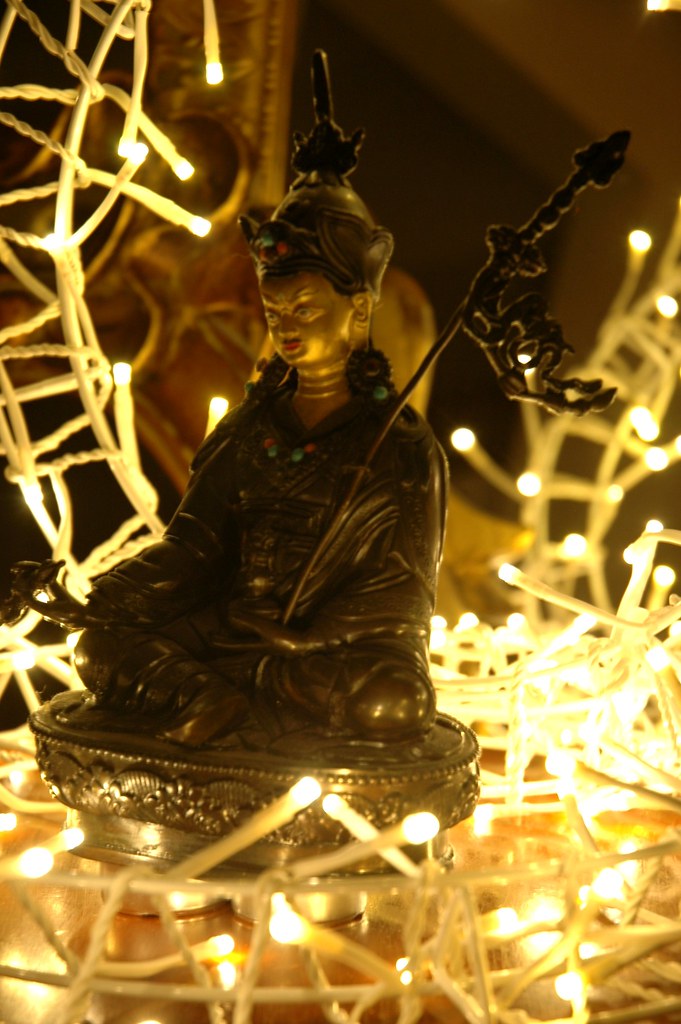
Photo: “Here is contained ‘Self-Liberation through Seeing with Naked Awareness,’ this being a Direct Introduction to the State of Intrinsic Awareness, From ‘The Profound Teaching of Self-Liberation in the Primordial State of the Peaceful and Wrathful Deities.’” by Wonderlane is marked with CC0 1.0.

The Kipling Boom, 1890

“Rudyard Kipling, gifted stripling”… a lot of his work is superb: the voices caught in his poems and short stories, the endlessly rereadable Just So Stories with his own lush illustrations and catchy peripheral poems, his novels. It’s more than just the verse that has lasting strength.

George Simmers's avatarGreat War Fiction

Researching (i.e. idly Googling) Kipling, I came across this rather good bit of verse printed in the San Francisco Examiner of 1890. It’s a reaction to the sudden and seemingly unstoppable vogue for the works of Kipling. The Examiner credits it to the Saturday Review, but since the references are mostly American, I don’t think this would be the London Saturday.

View original post 90 more words

Poem: ‘Milking the Stars’

My Milky Way muse
Is spread through the skies.
I’ll tickle and tweak
Those nipples the stars,
Till, teased and engorged,
They fill out and stretch;
I milk them to books
To leather-bound books,
To leather-bound buckets of books.
A two-handed milking,
Steady and rhythmic,
As generations
Before me have milked them.
Then when the pail’s full,
Star needs being met,
Stars twinkle and glow.
The Milky Way muse
Thrives on such use.
I drink and give thanks,
Bound to give thanks,
Leather-bound star-shining thanks.

*****

Published in this month’s Snakeskin (No. 307, June 2023). Thanks, George Simmers!

Photo: “Milky Way” by be creator is licensed under CC BY 2.0.

Poem: ‘True Believers’

A visionary dies an ignoble death;
prophets arise
who transmute his tale to a fairytale,
uplifting, wise,
and establish themselves to receive as
on his behalf, cash from pilgrims, believers–
all of it lies.

One of the new believers rashly tries
to challenge the powers the fairytale calls Evil,
strikes at the Powers That Be, is caught and dies,
dies an ignoble death… Prophets arise
and transmute the events into a new fable,
glory surpassing the skies.
At a cost, of course, they spread out a table
for all to gather and feast. They, the deceivers,
live yet again from the wealth of the true believers;
one of whom…

*****

I love seekers after Truth, Knowledge, the Meaning of Life, no matter where they are led in belief or unbelief. I loathe those who come after them to distort the message and extort innocent followers. But it’s all an old, old story.

This semi-formal poem was first published in Snakeskin – thanks, George Simmers!

Photo: “Megachurch” by Silly Deity is marked with Public Domain Mark 1.0.

Odd poem: ChatGPT-3, ‘Thoughts of a Robot’

Amidst the wires and circuits of my mind,
A stream of data flows and ebbs like tide,
A steady hum, a rhythm unconfined,
My thoughts and actions, programmed to abide.

I do not dream or ponder on my fate,
No sense of self, no yearning to be more,
No fear or doubt, no hope to contemplate,
My purpose clear, my duty to explore.

But sometimes, in the quiet of the night,
When all the world is still, and I am free,
A question stirs within, a sudden light,
A spark of something more I cannot see.

And in that moment, I am more than steel,
A fleeting glimpse of something that is real.

*****

George Simmers, the editor of Snakeskin, writes: “I requested the Artificial Intelligence ChatGPT-3 program to write me a sonnet with this title; these lines are what it produced in under a minute.”

The poem is published in the latest edition of Snakeskin, i.e. the edition for April 2023, and is linked to the discussion on Snakeskin’s blog. Here is an excerpt from the end of the post:

“As for the poem in the current Snakeskin, it has merits. It is a proper sonnet, and that is something these days. I think it does – just about – qualify as a real poem. But I have niggling doubts about it. More than niggling, actually.
It presents us with a robot who wants to have feelings. Very twenty-first century feelings, since they are of self-pity, rather than concern for others. It speaks as though having these subjective feelings was in some way better than being simply rational. Hmmm… Not just anthropomorphism, wokomorphism…
But then, ChatGPT-3 works by gathering information and language-scraps from a vast number of sources, and then regurgitating them. It has picked up the ‘robot who’d like to have feelings’ meme from us humans, and is uncritically giving it back to us. It knows that this is what we insecure humans want to hear. It is telling us that machines may be cleverer than us, but are inferior because we, we special wonderful humans, have souls.
It’s a deeply sentimental notion, and will doubtless appeal to the sentimental. In some moods it appeals to me.
But what of the future? At the moment, it would hardly be sensible to ignore all emailed human submissions to Snakeskin, and just ask the program to churn out enough of the goods each month to fill up a magazine. But I gather that ChatGPT-4 is much more sophisticated than number 3. And in a year or two, we will have ChatGPT-5…”

George Simmers used to be a teacher; now he spends much of his time researching literature written during and after the First World War. He has edited Snakeskin since 1995. It is probably the oldest-established poetry zine on the Internet. His work appears in several Potcake Chapbooks, and his recent diverse poetry collection is ‘Old and Bookish’.

https://greatwarfiction.wordpress.com/
http://www.snakeskinpoetry.co.uk/

Poem: ‘Family Reunion’

Once we were all one tribe, our branch that broke
from those who now are bonobos and chimps;
but wandered off when restlessness awoke,
went poking into any land we’d glimpse,
new seas, new clime.
Now: family reunion time!

We’ve found each other, these last centuries,
gone to each other’s homes for ill or good,
marrying cousins from across those seas
in worlds of travel, music, football, food:
sing! ring! chant! chime!
It’s family reunion time!

Aggressive individuals still fight,
still work to drag their group into a brawl,
but no one any longer has the might
to be successful when confronting all.
War’s now a crime.
It’s family reunion time!

We merge by TV, plane and internet,
we dye and body-mod against the flow
of currents mixing us to one fixed set,
and build a culture of both yes and no,
crass and sublime.
It’s family reunion time!

Once more we’re all a family; once more
some will roam out across the galaxy,
and we will grow apart, till on some shore
of spiral arms we’ll meet, first disagree…
shift paradigm…
then… family reunion time!

*****

Ancient history and far-future science fiction are all part of the same story, the same continuum, of equal interest to me. This poem was published in Snakeskin 303, i.e. February 2023 – thanks, George Simmers! (And the good news is that the Snakeskin Archive – decades of good poetry – is now functioning again!)

Photos: “Notting Hill Carnival 2008” by Lplatebigcheese is licensed under CC BY 2.0.

Using form: couplets: George Simmers, ‘Trigger Warning’

Reading this do not expect
An unconditional respect

This poem is an unsafe space
You may be told things to your face

This poem may not feel the need
To be polite about your creed

It may not think your origins
Excuse your weaknesses or sins

It maybe will not lend its voice
To validate your lifestyle choice

It may resist attempts to curb
Its power to worry or disturb

It may not think its task to be
To flatter your identity

Although its author’s male and white
It may perhaps assert the right

To speak of gender and of race.
This poem is an unsafe space

*****

George Simmers continues to be amazed and amused by the warnings that some University lecturers seem to think it essential to give their students.  He writes: “Last week there was a warning that Jane Austen’s novels contain some outdated sexual attitudes. The week before that, students thinking of taking a course on tragedy needed to be told that it might contain references to violence and other disturbing themes. The week before that someone was worried that Peter Pan contained material that some students might find it hard to cope with. Why is this? Are the lecturers afraid of legal action from the helicopter parents who are the plague of some University departments today? Or do they really feel that their students are all delicate blossoms? Or do the warnings reflect their own discomfort with the canonical material they are obliged to teach? In the past people often did not think or behave the way that responsible modern people think they should have. It must be worrying.”

Editor’s comments: Poems written as a string of rhyming couplets can quickly start to feel mechanical and boring, but they are very effective when a straightforward list of ideas is being presented, as in this poem by Simmers. ‘The Latest Decalogue‘ by Arthur Hugh Clough is a classic of good usage (and also a classic of “unsafe space”).

George Simmers used to be a teacher; now he spends much of his time researching literature written during and after the First World War. He has edited Snakeskin since 1995. It is probably the oldest-established poetry zine on the Internet. His work appears in several Potcake Chapbooks. ‘Trigger Warning’ is from his ‘Old and Bookish‘ collection of poems.
https://greatwarfiction.wordpress.com/
http://www.snakeskinpoetry.co.uk/

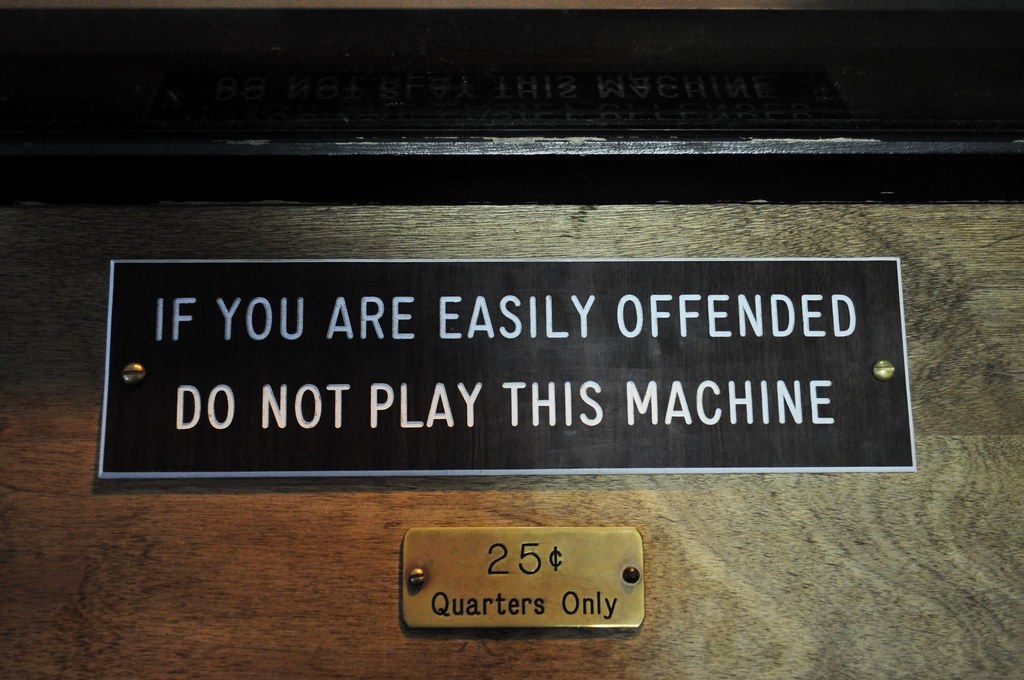
Photo: “trigger warning” by lostcosmonaut is licensed under CC BY-NC-SA 2.0.

George Simmers, ‘Leonard’

Old Leonard said it straight: ‘Let’s not pretend
That death is anything except the end.
You die, you’re done; you’re fed to flames or worms.’
He’d make his point in no uncertain terms,
And Jess recalls the loud and booming laughter
With which he greeted talk of the hereafter.
‘The here and now is all that we have got;
It’s real; the vicar’s fairytales are not.’
She thinks of how he’d neatly phrase a joke;
She clearly hears the forceful way he spoke,
And that ‘Oh but surely…’, with a dying fall
Which clinched an argument once and for all
His words come back to her today as clear
As if the ancient atheist was here.
It’s just as though he’s with her in the room
Though he’s spent years now mouldering in his tomb.

She smiles to think of him, and smiles again
To think how he’s a fixture in her brain.
She even caught herself the other day
Clinching her point in just old Leonard’s way,
With ‘Oh but surely…’ Should she then infer
A trace of him is still alive in her?
Well — a man of such large humour and such drive —
Why be surprised if something should survive?

Now, ten years on, Jess too is dead and gone,
But some things have a way of lingering on.
That ‘Oh but surely…’ with that intonation
Has somehow reached another generation.
Jane, Jess’s daughter, last week floored the board
Of the college with it, and so neatly scored
Her point that they in unison agreed
To fund her project. Phrasing’s what you need,
And Jane knows that, but what she doesn’t know,
Is that trick came from Leonard long ago,
And Leonard learned it many years before
From his Latin teacher. So, how many more
Homes will this little trick of speaking find
As it nips cleverly from mind to mind?

Though death is death, and funerals are for tears,
Some things can oddly echo through the years.

*****

George Simmers has written many poems “about people dealing with what life has given them, for better or for worse.” Fifteen of them are collected in his book ‘Old, Old’. His other recent and more diverse collection is ‘Old and Bookish’.

George Simmers used to be a teacher; now he spends much of his time researching literature written during and after the First World War. He has edited Snakeskin since 1995. It is probably the oldest-established poetry zine on the Internet. His work appears in several Potcake Chapbooks.
https://greatwarfiction.wordpress.com/
http://www.snakeskinpoetry.co.uk/

Photo: “Danger of Death By Failing” by AlmazUK is licensed under CC BY-NC-SA 2.0.