Tag Archives: The Sonneteer

Sonnet: Meredith Bergmann, ‘Public Art’

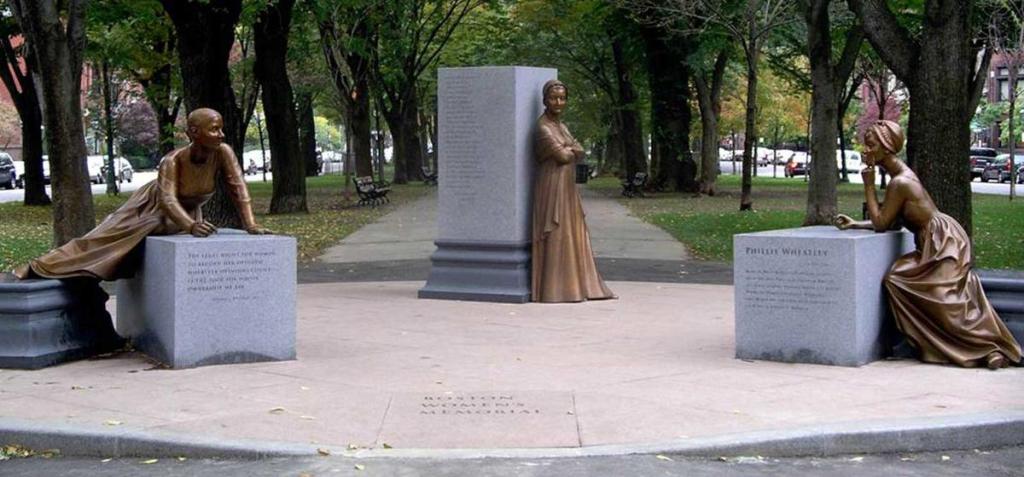
A girl, eleven, racing down the street
(who might be an imaginary daughter)
pulled by her Lab (a female?) plants her feet
before a statue whose bronze skirt has caught her
big dog’s attention.
Works of art command
our gaze, on average, for three seconds. Thought
or feeling must work quickly. We can’t stand
like statues—life is taxed and overwrought.
She doesn’t have her gadget, so she scans
the stone: “Remember”, “Deepen” and “Surpass.”
Her dog is eager for a fresher scent.
The sculptures, though, are asking if she can
imagine she might wield these words. It’s fast.
This is the moment of the monument.

*****

‘Public Art’ was originally published in The Sonneteer.

Meredith Bergmann is an award-winning sculptor whose public monuments can be seen in New York, Boston and beyond. Her Women’s Rights Pioneers Monument was unveiled in Central Park in August 2020, and she recently unveiled a monument for the historic center of Lexington, MA. Her many poetry publications include Barrow Street, Connecticut River Review, Contemporary Poetry Review, Hopkins Review, Hudson Review, LightMezzo Cammin, New CriterionNew Verse Review, Tri Quarterly Review and the anthologies Hot Sonnets, Love Affairs at the Villa NelleAlongside We Travel: Contemporary Poets on Autism, Powow River Poets Anthology II, and the forthcomingThe Country in the Mirror: Poems of Protest and Witness. She was poetry editor of American Arts Quarterly from 2006-2017. She has won three honorable mentions from the Frost Farm Poetry Prize, and in 2020, a 2nd prize from the Connecticut Poetry Club. Her chapbook A Special Education is available online from Bainbridge Island Press, and The Dying Flush, with poetry and illustrations by Bergmann, 2024 is available from EXOT Books.

Photo of Boston Women’s Memorial, Meredith Bergmann, 2003, from City of Boston

Sonnet: Ernest Hilbert, ‘Friends of the Library Sale’

It’s fallen half apart, a derelict.
The gatherings have sprung, the boards detached,
The spine perished, folding maps cut out.
The title page is splotched with ink and nicked
At the edge, the author’s homely portrait scratched—
A splash of beer, faint thumbmarks all about—
Discarded once, but now it’s yours. It lives,
Like you, diminished now by age and loss.
And so, it brings the breeze, the autumn sun,
The creaking door that with a push still gives
The afternoon, the birds and clouds, grass, moss,
The world still new, the journey not begun,
The path curling from sight in the soft glow
Of a fading day—and you, prepared to go.

*****

Ernest Hilbert writes: “I am a rare book dealer, so I spend my days surrounded by books. I love all kinds of books, and I have a particular affection for books no one seems to want but which are, nonetheless, worthwhile. There are, after all, far more books than there are readers. When a book is taken home, adopted, as it were, it finds a new life. Each book one acquires is, in its way, a hedge against the future, a small hope one might some day find the time to read it. When a book is read for the first time, however old it is, however many times it has been read before, it becomes a new book. The structure of the poem is designed to express this sense of renewal and hope, the litany of degradation and wear, the sense of hopelessness, one finds in the octave redeemed, after the volta, in the sestet. 

“I intended to communicate that sense of excitement I still feel when I first open a book, but I likely also had in mind Benjamin Franklin’s mock epitaph, written when he was 22, which begins “The Body of B. Franklin Printer / Like the Cover of an old Book / Its Contents torn out . . .” Finally, I must admit that there are few places I find myself happier than at a promising friends of the library book sale.”

*****

‘Friends of the Library Sale’ was originally published in The Sonneteer.

Ernest Hilbert was born in 1970 in the city of Philadelphia and educated at Rutgers and Oxford Universities. He is the author of the poetry collections Sixty SonnetsAll of You on the Good EarthCaligulan—selected as winner of the 2017 Poets’ Prize—Last One Out, and Storm Swimmer, winner of the 2022 Vassar Miller Prize. He works as a rare book dealer in Philadelphia. Visit him at www.ernesthilbert.com

Photo: “Journey” by ~Matt LightJam {Mattia Merlo} is licensed under CC BY 2.0.

Semi-formal Sonnet: Rachel Hadas, ‘Out of Reach’

Our lost ones drift down a dark stream,
surfacing at the brink of dream.
The crack of dawn: they’re gone again.
What have they left for us to keep?
Night’s dialect, a coded speech
beyond our reach.

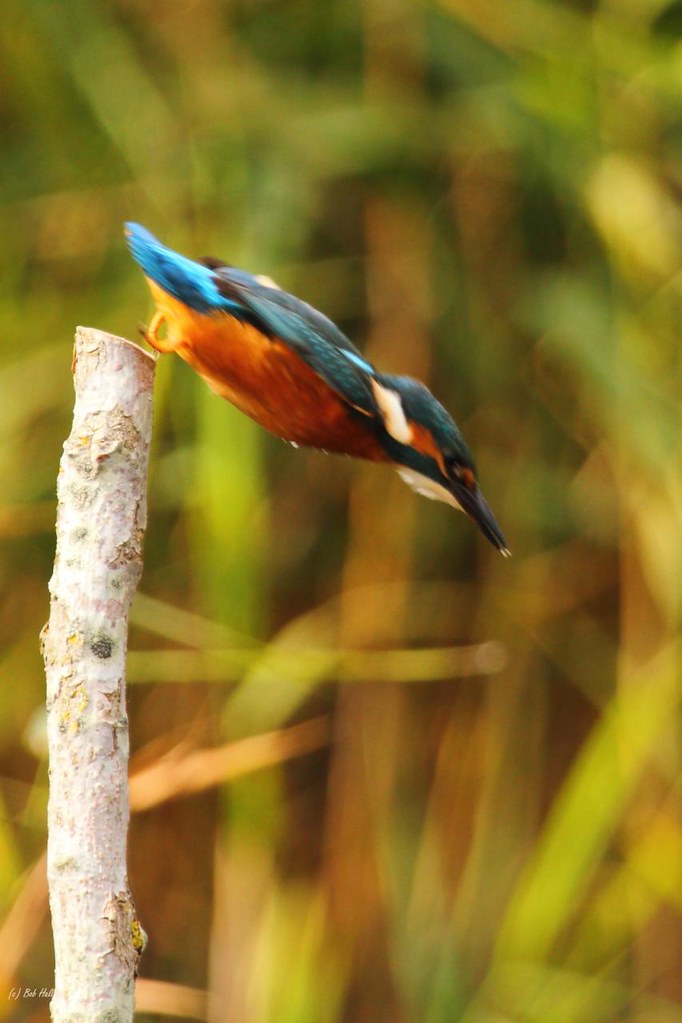
Birds on the bank of a calm pond:
each one is still and poised, then dives.
Mornings we wake into our lives,
blind to what lies beyond, below,
the chasms where black rivers flow,
and flickering deeper, darkly clear,
that coded speech beyond our reach,
words we can’t hear.

*****

Rachel Hadas has a group of sonnets appearing, one a week, in The Sonneteer. For the first she wrote: “The sonnets that will be appearing in the coming weeks weren’t conceived as a sequence. Encouraged by Ken Gordon’s enthusiasm to take a look at some of my unpublished shorter poems, I speedily found one fourteen-liner, “Tectonic Plates.” Three other poems were so close to sonnet length that they almost begged to be tweaked or tightened or gently expanded; this group includes “Out of Reach,” “Winter,” and “My Best Friend’s Mother.” In every case, the sonnetification (Ken’s helpful coinage) improved the poem. (…) I now realize that, while not conceived as a sequence, all five of these sonnets (now that they are all sonnets) do share themes. They’re about time and memory, aging and loss, what we lose and what we retain. So are many other sonnets, infinitely greater than mine. It’s a privilege to be able to join in the conversation, to swell the chorus.

Rachel Hadas (born November 8, 1948) is an American poet, teacher, essayist, and translator. Her most recent essay collection is Piece by Piece: Selected Prose (Paul Dry Books, 2021), and her most recent poetry collection is Ghost Guest (Ragged Sky Press, 2023). Her honors include a Guggenheim Fellowship, Ingram Merrill Foundation Grants, the O.B. Hardison Award from the Folger Shakespeare Library, and an Award in Literature from the American Academy and Institute of Arts and Letters.

https://www.rachelhadas.net/

Photo: “Kingfisher fishing” by Bob Hall Photos is licensed under CC BY-NC-ND 2.0.