Tag Archives: sonnet variation

Sonnet variation: Sally Thomas, ‘Eventide’


The sea unfolds itself onto the sand
Again, again. It drags its yellow hem
Across our feet and back. You hold my hand

And sing to me, the first bar of a hymn:
Abide with me. The phrase, unfinished, slides
Away into the dusk. The world’s wet rim

Keeps wrinkling on the sky. The eventide’s
Upon us now, the turning of the day,
The long slow ebb as everything subsides

Into the dark. The sea in disarray
Repeats itself. There’s nothing more to see.
The waves rush thinly in, then pull away

As, louder now, you sing, Abide with me,
Above the slow unfolding of the sea.

*****

Sally Thomas writes: “Sometime in the spring, Ken Gordon of The Sonneteer mentioned to me that he’d love for me to send him something, and I said that I didn’t have anything to send. I’d just published a big sonnet sequence that I had been writing over a number of years, but I wasn’t writing sonnets currently. Well, said Ken, I’ll wait. And because he was waiting, I thought I might as well make a new stab at something. I like terza rima and the various ways you can play with tying it off, and I had Frost’s “Acquainted with the Night” at the forefront of my mind, because I’d had my spring workshop students read it. This poem fairly quickly fell into terza rima and, once it had done that, it wrote itself.”

‘Eventide’ was first published in The Sonneteer

Sally Thomas is the author of two books of poetry, Motherland and Among the Living, both published by Able Muse Press, as well as an anthology, Christian Poetry in America Since 1940, a novel, and a collection of short stories. She is Visiting Professor of Poetry in the low-residency MFA program at the University of St. Thomas, Houston, and a regular contributor to the Substack newsletter Poems Ancient and Modern

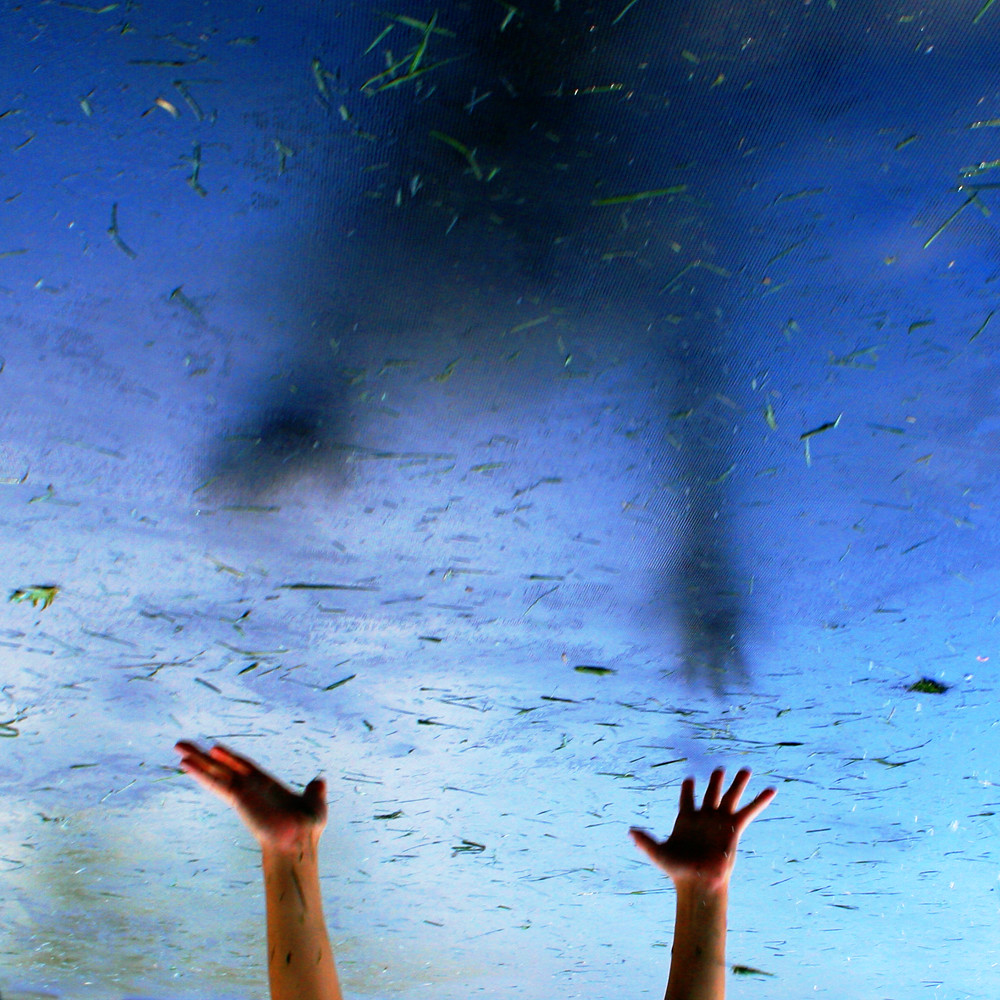
#Sunset at the #laxmanpurbeach #neil #island #andaman . Thanks a lot to the #lovely #couple . #silhoutte #beach #sea #dusk #soi #streetsofindia #_mobilography_ #mypixeldiary #photographers_of_india #soi #indiaclicks #igramming_india” by KasoKaishyap is licensed under CC BY-NC 2.0.

Sonnet variant: Michael R. Burch, ‘Once’

for Beth

Once when her kisses were fire incarnate
and left in their imprint bright lipstick, and flame,
when her breath rose and fell over smoldering dunes,
leaving me listlessly sighing her name …

Once when her breasts were as pale, as beguiling,
as wan rivers of sand shedding heat like a mist,
when her words would at times softly, mildly rebuke me
all the while as her lips did more wildly insist …

Once when the thought of her echoed and whispered
through vast wastelands of need like a Bedouin chant,
I ached for the touch of her lips with such longing
that I vowed all my former vows to recant …

Once, only once, something bloomed, of a desiccate seed—
this implausible blossom her wild rains of kisses decreed.

*****

Michael R. Burch writes: “Once” was submitted to The Lyric in 1999, and elicited these comments from editor Jean Mellichamp Milliken: “. . . I actually loved “Once” (better than ‘Twice,’ even), but you need a resolution—it leaves the reader hanging . . . please, please finish it. It’s such a wonderful, fiery, lyrical piece!”
The original poem was intended to leave the reader hanging. There was no resolution at the time it was written. The challenge of writing an ending couplet was intriguing, however, and “Once” was accepted (in its revised form with an ending couplet) and appeared in The Lyric along with “At Once,” “Twice” and “The Leveler.”

Michael R. Burch’s poems have been published by hundreds of literary journals, taught in high schools and colleges, translated into 23 languages, incorporated into three plays and four operas, and set to music, from swamp blues to classical, 86 times by composers.

Sand Dunes, Socotra Is” by Rod Waddington is licensed under CC BY-SA 2.0.

Sonnet variation: Daniel Kemper, ‘No Matter What, You’ve Got To Strut’

 
A courtly, grand, tradition; sure, but men
are men, and poets, poets; so, of course
behind their art is merry mischief, force
of guile, if not just force; but having then
been properly improper once again
with risqué sonnets, sometimes merely coarse
(if richly rhymed), how long must we endorse
these minuets? Will someone shout, A-men!?
 
Step it up and shake a foot, a
hand, a bodice: make it syncopated–
let it, having been elaborated,
settle for a minute.
Strike a pose. Then strut. And put a
little music in it.

*****

Daniel Kemper writes: “No Matter What, You’ve Got To Strut” –Yes, I’m quoting Buddy Love from Eddie Murphie’s version of The Nutty Professor! This, as you can tell from all the meta-textual wordplay (using a rime riche and then naming it [richly rhymed, and on and on]) was a lot of fun to write, but there’s a serious aspect to it as well. I’ve gone hog wild exploring sonnets and meters. This could be considered one of the culminating branches of that.

Sonnets in non-iambic meters:                            trochaic, anapestic, dactylic                                          {sonnet “space” increased by x4}

Sonnets that used more than one meter:

              Four possible meters to mix                                                                                                          {sonnet “space” increased by x64!}

Rule: One meter: one line, no changing within a line, only between them.

Most definitions of sonnets assumed iambic meter and so did not rule out the other meters. Many also implied only one meter throughout, but so long as it’s metrically consistent, it should be considered. Maybe there’s less wiggle room here, but I think I can lawyer it anyway.

Oooh, but then, in tandem with my poetic symphony inventions, I my thoughts ran down two paths at once. Other variations that I could “legally” do and, out of all the possible sonnet types, why are only a few around?

Other variations:

              Vary the line lengths: There are precedents. Shakespeare, #145 (tetrameter); Hopkins, Curtal sonnet (L11 is a half-length line), Spenserian Stanza (not a sonnet) last line is hexameter.

              Vary the rhyme schemes.

                             In multi-sonnet pieces, what effects can be achieved by moving the rhymed lines around a bit?

                            Why some combinations of rhymes and not others (bridge to second path).

So I felt leeway to go hog wild with variations—however, I was bound and determined to be “legal.” (I do not care for the lack of rigor in the thinking that allows “free verse sonnets” and “blank sonnets.”) Since I was starting with tradition, well, I started with tradition… That’s for the first half of [Strut].

I got a coder to help me run some common permutations for 14 lines. If 1.) they must all rhyme and 2.) no more than two consecutive rhymes and 3.) no rhyme is separated by more than two intervening lines, then there are 165,995 possible combinations for a sonnet. Why then do we have about a dozen and a half? Sure people “invent” new ones all the time, but those one-offs die pretty fast.

I arrived at two answers. One is historical. There are only so many poets writing formal poetry over only so many years—and poets actually tend to be conservative in bringing new forms to the canon.  The other is musical. There’s huge stuff here. Too much for this email. Suffice to say, there has to be a melodic contour, a musicality, a beat, a riff, a tension and release—NOT arbitrarily ordered rhymes. How does one define that “musicality”? It’s tough; what differentiates a melody from a random string of tones?

Back to [Strut]. Now you can see how the second half formed up in my mind and why the proliferation of musical terminology, also meta-textual. It is syncopated where it calls for syncopation. The meter before the volta and after are different. The rhyme pattern, btw, remains one of the traditional variations of the Petrarchan Sonnet.

As you look closer, you’ll notice that it’s not irregular; it’s highly structured. Key is that rhyming lines are the same length as each other, though different from others. That keeps the music in it—a kind of predictability despite change, an added degree of recognition. This is the future of the sonnet, the 21st century sonnet, IMO.”

*****

‘No Matter What, You’ve Got To Strut’ was first published in Rat’s Ass Review.

Daniel Kemper, a former tournament-winning wrestler, black belt in traditional Shotokan karate, and infantryman has earned a BA in English, an MCSE (Systems Engineering), an MBA, and an MA in English and had works accepted for publication at more than a dozen magazines, including a pushcart nomination. He’s been an invited presenter at PAMLA 2024 and presided over the Poetics Panel in 2025 and has been the feature poet at several Sacramento venues.

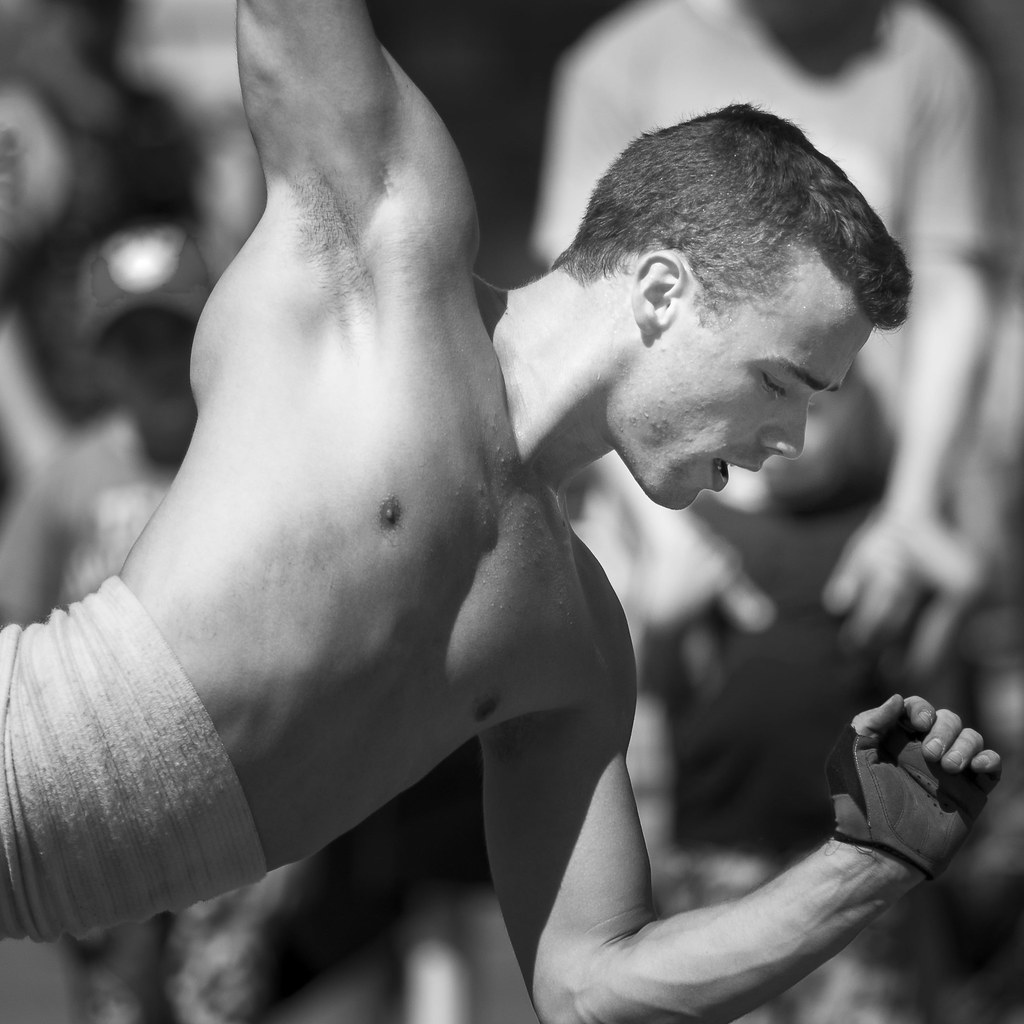
2014 07 05 Street Performer Strikes a Pose” by Jerome Olivier is licensed under CC BY-NC-ND 2.0.

Sonnet variation: Marcus Bales, ‘Detective Story’

“Have you ever thought, Holmes, all we are
Is one long tube around which are attached
As very mixed a cluster of bizarre
Accessories as ever were mis-matched
To move about to gain the wherewithal
To hunt and gather what it needs to eat
From things that grow or swim or fly or crawl,
And change them into matter to excrete?”
“Certainly, dear Watson — that’s a trope
That humankind has puzzled over, now,
And through the eons we’ve had love and hope,
And all philosophy’s no more than how,
Through grasping and digesting, we can cope
With nature’s discontents and discontentery.
You’ve heard me say it, Watson — it’s alimentary.”

*****

Marcus Bales writes: The Human Alloy

I’ve heard a lot of other poets say
   “This poem took me many years to write,”
And never understood, until today,
   What that was like, but now I think I might.

I heard the joke in second grade, or third,
   And didn’t get it. Nothing there for me
Who’d never heard of Sherlock Holmes, absurd
   As classmates made my ignorance out to be.

I read the books and stories then of course
   And hated Holmes’s bullying and sneers
At poor old Dr. Watson, so the source
   Of humor there eluded me for years.

Bit by bit, I finally came around
   To see superiority as fine
And feel such arrogance was something sound.
   You never heard such sneers and snarks as mine.

There’s nothing I would not pretend to know
   Nothing I had no opinion on
No lacerating length I would not go
   To show that all were ducks but I, a swan.

Until at length I came to read Ayn Rand
   Whose heroes do and say such nasty scat
That even I could finally understand
   The breach of faith it is to be like that.

And flawed, addicted Holmes no longer seems
   The snarling height of genius on its throne
Pursuing all the best of human dreams,
   But just another man almost alone.

And it’s by Watson’s decency we gauge
   Cooperation making common sense
Without which Holmes’s self-destructive rage
   Would flail against the world without defense.

My view of Holmes and Watson rounds at last
   To my acceptance of the central hoax
Of life: it’s only teamwork that can cast
   The human alloy. That and silly jokes.

*****

Not much is known about Marcus Bales, except he lives and works in Cleveland, Ohio, USA, and his work has not appeared in Poetry or The New Yorker. His latest book is 51 Poems; reviews and information at http://tinyurl.com/jo8ek3r

sherlock-holmes-thomas-watson” by JARS / JMPC / HN is licensed under CC BY-SA 2.0.

Sonnet variation: Gail White, “The Left Hand of Saint Teresa’

When the saint died, her best friend and confessor
cut off her hand. (What are friends for?) The shrine
at Ronda keeps it as a sacred treasure,
covered with glass and gold. I can’t assign
a special magic to those long-dead fingers,
lacking the power or the will to bless.
But with the faithful some enchantment lingers
over the bones, some touch of holiness
that once informed a living heart. I know
the spell I feel here will not come outside
with me, will never cheer me in the dark,
but for Teresa’s lovers, every tree
breathes miracles, and Ronda’s grassy park
abounds in babies whose young mothers planned
their nursery colors once they touched her hand.


Gail White writes: “This is one of about 3 poems based on my attraction-repulsion relationship with the cult of holy relics.  I’ve seen a number of relics, including Catherine of Siena’s head, which is really a creepy sight.  But after all, holiness is in the believer’s heart rather than in the subject’s bones, and that is what I have tried to get across with this poem for St. Teresa.”

This poem is the winner of Plough’s 2025 Rhina Espaillat Poetry Award.

Gail White is a widely published Formalist poet and a contributing editor to Light.  Her latest chapbook, Paper Cutsis out on Amazon or from Kelsay Books. She lives in Breaux Bridge, Louisiana, with her husband and cats.

Photo: The Hand of Saint Teresa in the church of Nuestra Señora de la Merced in Ronda, Spain. This piece is traditionally visited & kissed by Christians.

Semi-formal Sonnet: Rachel Hadas, ‘Out of Reach’

Our lost ones drift down a dark stream,
surfacing at the brink of dream.
The crack of dawn: they’re gone again.
What have they left for us to keep?
Night’s dialect, a coded speech
beyond our reach.

Birds on the bank of a calm pond:
each one is still and poised, then dives.
Mornings we wake into our lives,
blind to what lies beyond, below,
the chasms where black rivers flow,
and flickering deeper, darkly clear,
that coded speech beyond our reach,
words we can’t hear.

*****

Rachel Hadas has a group of sonnets appearing, one a week, in The Sonneteer. For the first she wrote: “The sonnets that will be appearing in the coming weeks weren’t conceived as a sequence. Encouraged by Ken Gordon’s enthusiasm to take a look at some of my unpublished shorter poems, I speedily found one fourteen-liner, “Tectonic Plates.” Three other poems were so close to sonnet length that they almost begged to be tweaked or tightened or gently expanded; this group includes “Out of Reach,” “Winter,” and “My Best Friend’s Mother.” In every case, the sonnetification (Ken’s helpful coinage) improved the poem. (…) I now realize that, while not conceived as a sequence, all five of these sonnets (now that they are all sonnets) do share themes. They’re about time and memory, aging and loss, what we lose and what we retain. So are many other sonnets, infinitely greater than mine. It’s a privilege to be able to join in the conversation, to swell the chorus.

Rachel Hadas (born November 8, 1948) is an American poet, teacher, essayist, and translator. Her most recent essay collection is Piece by Piece: Selected Prose (Paul Dry Books, 2021), and her most recent poetry collection is Ghost Guest (Ragged Sky Press, 2023). Her honors include a Guggenheim Fellowship, Ingram Merrill Foundation Grants, the O.B. Hardison Award from the Folger Shakespeare Library, and an Award in Literature from the American Academy and Institute of Arts and Letters.

https://www.rachelhadas.net/

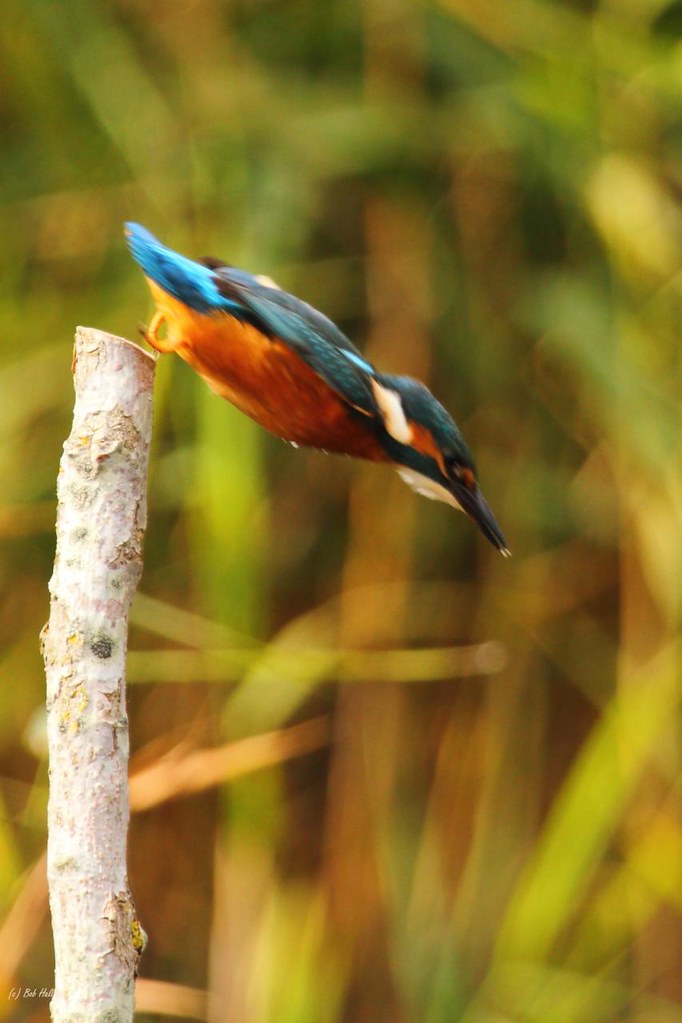
Photo: “Kingfisher fishing” by Bob Hall Photos is licensed under CC BY-NC-ND 2.0.

Sonnet Crown: Amit Majmudar, ‘Recourse’

1.

Time, like love, is cyclic. Please come back
to me. I’ll stand here waiting, wanting while
the mare without her rider rounds the track.
I want to weave a crown for you, design
a daisy chain whose threaded stems become
a bracelet that handcuffs your wrist to mine.
My shadow’s gnomon tilts like a sun dial’s.
I know you’re somewhere close. I feel a thrum,
a thrill beneath the stillness of the earth,
the way a woman, days before the birth,
places her husband’s hand on the sea swell
that rises out of her and passes through her,
and, touching so much vastness, he can tell
for all their time as one, he never knew her.

2.

For all our time as one, I never knew you—
but doesn’t learning come from repetition?
I’ll do this better if I do it over.
I’ll know your every need by heart, pursue you
like truth. I’ll learn to be a truthful lover.
I’ll circle back to freshman year and woo you.
No song’s recorded in a single session.
No sinner’s shriven after one confession.
It’s time that grows the pearl. Nacre layers
the sand grain, like a secret in the mouth.
Repentance grows, too—grows by daily prayers
into a faith whose trigger seed was doubt.
I am a pearl diver in your depth.
I never left. I just came up for breath.

3.

I never left, I just came up for breath,
but now I am ready to follow you all the way down.
I’ve read we get euphoric as we drown.
Samsara swirls us under. When we break
the whitecaps for an instant, that is death.
Don’t make us wait to be reborn before
we love again. You know me—I’ll just make
the same mistakes. Or make things even worse.
So what if time’s a circle? Doesn’t mean
we have enough of it. The now we’re in
will never come again. So come again
into my life, and love me sight unseen.
We’re both at sea, and no good at dead reckoning.
A burning town’s the only lighthouse beckoning

4.

Our house of light is burning down. It beckons in
the gloaming. The road I’m roaming is a ring.
All time is circular. We’re only seconds in.
All reasoning is circular. I sing
the seasons all the way around the year.
There was a chemist once whose dream disclosed
benzene’s atomic structure. What appeared
before him was a serpent swallowing
its tail—aroma’s O, ouroboros.
I’m wise at last to what the image knows.
I see my answer now, my big mistake.
A ring! Why couldn’t it have been this clear
back then? I see it best when I’m awake.
I’ve circled back. But there is no one here.

5.

I’ve circled back, but there is no one where
the ring road ends. It ends in newfound ruins,
a shell-flecked nest, a rain-worn blade that bears
a message for us. Who can read the runes?
Nietzsche proclaimed the eternal return
and threw his arms around a bleeding horse
to feel the centuries reversing course.
His gooseflesh rose like spores that pock a fern.
Let vultures circle, only widdershins
above the ring road where I wait alone,
knifing in bark a promise of my own.
I know the ring road ends where it begins.
Time is a circle I can put to use:
a wheel to roll things back, a crown, a noose.

6.

A wheel to roll things back, a crown, a noose:
My own Venn diagram of rings to choose
from. Fill its center up with hourglass sand,
and that’s where Archimedes, kneeling, draws.
This is the Roman siege of Syracuse;
he’s hard at work on time, its shape and laws.
He looks up from a boot. A soldier stands
above him, dripping gladius in hand.
Do not disturb my circles, says the Greek.
The soldier studies them, then runs him through—
and so reveals what Archimedes seeks,
the circle, like a circuit, broken, weeks
and months and centuries and aeons spilling
in slow, concentric circles from the killing.

7.

In slow, concentric circles from the still-pink
narcotic kiss print of the cupping glass,
let your memories ripple outward, killing
the pain I’ve caused you. We are not our past,
though time is cyclic. Cycles can be broken,
souls reborn in this life, sleepers woken.
Not that I can sleep beneath this star.
Horizon, magic circle, boxing ring—
time is the space, the spell, the place we spar,
the dome in which your name is echoing.
It’s where I pray the theory into fact
that love, like time, is cyclic. Please come back.

*****

Amit Majmudar writes: “The sonnet crown is a naturally recursive form of forms. The beginning of each sonnet is also an ending, and vice versa. A candle tilts to light a candle that tilts to light a candle, until the occult circle of flame is complete, and the poet sits inside it, meditating the next line, which may well be the line just written.

“This sonnet crown took, as its subject, the tendency of lovers, or at least their memories, to relapse. “Relapse” means to fall back, etymologically. To fall back in love; to fall back out of love. The sonnets enact through form and content alike the recrudescence of the past. The last line of the overall crown matches the first line of the overall crown. The reappearance of the old pain makes it a crown of thorns.

“I wrote this sonnet crown first line to last. I had never even attempted one before, but I relinquished myself to the music-making. I could do that because I circled around a theme–recursion in love–rather than trying to tell a story or present a philosophical argument or any such prosaic thing. Just pure pursuit of the right sounds. This crown came at the end of a sonnet-writing tear so my hand was in practice, as it were.

“Close readers will notice that the crown is imperfect, however. In the final, truncated sonnet, the speaker makes haste to return to the beginning, to break the process of endless recursion. Accordingly, the rhyme word of the line where the deviation begins is “broken”–and it’s there that the formal pattern–the “cycle”–itself is broken. Broken/woken collapses the separated rhyme sounds into a couplet, with a second couplet to conclude the 12-line ending–a couplet of couplets, the original pair formation and the hoped-for repeat pair formation, embodied in the music of the ending that is, at last, a new beginning. “

*****

Amit Majmudar is a poet, novelist, essayist, and translator. He works as a diagnostic nuclear radiologist in Westerville, Ohio, where he lives with his wife and three children. Recent books include Twin A: A Memoir (Slant Books, 2023), The Great Game: Essays on Poetics (Acre Books, 2024), and the hybrid work Three Metamorphoses (Orison Books, 2025). “Recourse” was first published in Plume Poetry, and will be appearing in Majmudar’s forthcoming collection, Things My Grandmother Said, in early 2026. 
More information at www.amitmajmudar.com

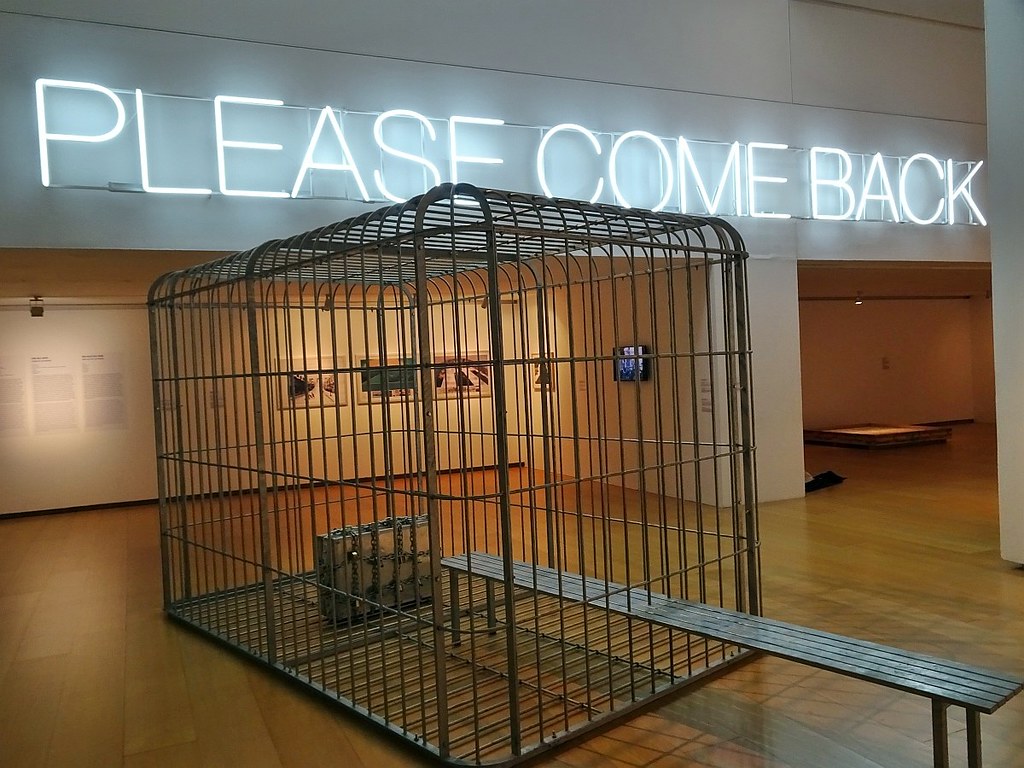
Photo: “0103-IVAM – Please Come Back 05” by gibbix1 is licensed under CC BY-NC 2.0.

Using form: sonnet variation: Amit Majmudar, ‘List of Demands’

All the twists in all the tongues, all
the zeroes, all the ones, all the arms of all the goddesses, all
the names of the nameless and bodiless, all the ways the all-
one embodies, all at once, the alls there are, all
our alleles and alphabets, all the forms, yes all,
even the sestina, all our alternating lives and deaths, all
the kingdoms, phyla, classes, orders, all
the peoples borderless as breaths, all the altars, all the all,

none of the zealots with knives for minds, none
of the wars, proxy, holy, shadow, cold, none
of the for-profit prophets in pulpits of gold, none
of the land grabs in the names of the long lost, none
of the one true anything, book or way or son, none
of that nonsense, absolutely none.

*****

Amit Majmudar writes: “The monorhymed sonnet (each line of the octet ending with the same word, each line of the sestet ending with another) is a chance to goad one’s creativity with a constraint just light enough. You have to come up with lines that stay interesting to the reader even though the reader knows how each line is going to end. In that, the line resembles, say, a formulaic genre novel where the hero gets the girl and defeats the villain at the end. Or one of Conan Doyle’s detective stories: You know that Holmes is going to solve the mystery. The number of characters is so low in a Holmes short story that the culprit has to be one of the few people introduced. But the delight is all in how he figures it out. Poems can work like that, too. The foregone conclusion of all, all, all, all, all, all, all, all, none, none, none, none, none, none is the equivalent of the certainty that Holmes will crack the case. The internal rhymes and alliteration, the images, the poem’s message exalting pluralism over zealotry—these are, collectively, the equivalent of the mystery and the ingenious solution to the mystery, the Sherlock-unlock, the puzzle (hopefully) satisfyingly worked out.”

‘List of Demands’ was first published in Plume.

Amit Majmudar is a poet, novelist, essayist, and translator. He works as a diagnostic nuclear radiologist in Westerville, Ohio, where he lives with his wife and three children. Recent books include Twin A: A Memoir (Slant Books, 2023), The Great Game: Essays on Poetics (Acre Books, 2024), and the hybrid work Three Metamorphoses (Orison Books, 2025). A new poetry collection, Things My Grandmother Said, is forthcoming in 2026. 
More information at www.amitmajmudar.com

Photo: “Inclusive community (citation needed) (2205859730)” by Matt Mechtley from Heidelberg, Deutschland is licensed under CC BY-SA 2.0.

Sonnet: ‘Maz’ Griffiths, ‘Internal Memo’

Dear Stomach,
… Look, we’ve really had enough.
Your job is simply to digest the stuff
supplied by Hands and Tongue, to move it through,
not chuck it up. Spurned food is déjà vu
and hurts Oesophagus; she’s frankly pissed,
and Face says please forget The Exorcist,
because projectile vomits are not fun
and bloody heartburn hacks off everyone.
Lungs say they’re worried by a niggling cough
and Guts say if you won’t perform: Sod off!
That’s not my phrase–I’m mediating here,
but want to stress the general atmosphere.

Please see these hiccups don’t occur again.
I sign myself, sincerely,
… Upper Brain

*****

Margaret Ann “Maz” Griffiths, born in 1947, suffered for years from a stomach ailment which finally killed her in 2009. Her frankness, good humour, range of interests and insights and her technical skill make her one of the very best English language poets of the early 21st century.

I recommend ‘Grasshopper‘, the 350-page compilation of her known verse, to anyone interested in modern poetry. It is one of those rare books that I reread every couple of years. I would be glad to hear of any more of her verse that has turned up since 2011.

Photo: By David Adkins – Scanned photo provided by David Adkins with permission for reuse, CC0, https://commons.wikimedia.org/w/index.php?curid=16997441

Sonnet variation: Juleigh Howard-Hobson, ‘Sylvan Episode’

He looked at me as if I ought to know
just who he was
but I did not. I looked away, then so
did he. Alas
I didn’t recognize the Great God Pan
in human form.
I simply thought he was another man.
I felt a warm
gaze inviting me once more. I turned to
see him changed. A
God again, hooves and furry legs, horns grew.
He gestured “Hey?”
I was too dumbstruck to do more than stare.
He shook his curls and sprinted off somewhere.

*****

Juleigh Howard-Hobson writes: “I wrote this when I lived off-grid on ten acres up in rural Washington State.The forest that made up half my property was dark and creepy. The Great God Pan was no more out of place than BigFoot or werewolves. All of which I imagined I saw/heard from time to time (I use italics as I am not absolutely convinced it was all imagination). Nothing out there ever hurt me, so all’s well that ends well–I’ve since moved back to civilization, which is far more frightening in many ways. As for the form–well, that just was how the poem decided to be.”

Juleigh Howard-Hobson’s work can be found in Think Journal, Able Muse, New Verse Review (including this poem), The Deadlands, Autumn Sky Poetry and other venues. She has been nominated for “The Best of the Net”, Pushcart, Elgin & Rhysling Awards. Her latest book is Curses, Black Spells & Hexes (Alien Buddha). A member of the HWA and the SFPA, she lives on the coast of the Pacific Northwest. In a poetically haunted house. 
X: poetforest

Photo detail “IMG_4017RBA Peter Paul Rubens 1577-1640 Anvers Deux Satyrs Two Satyrs ca 1619 Munich Alte Pinakothek” by jean louis mazieres is licensed under CC BY-NC-SA 2.0.