Tag Archives: war

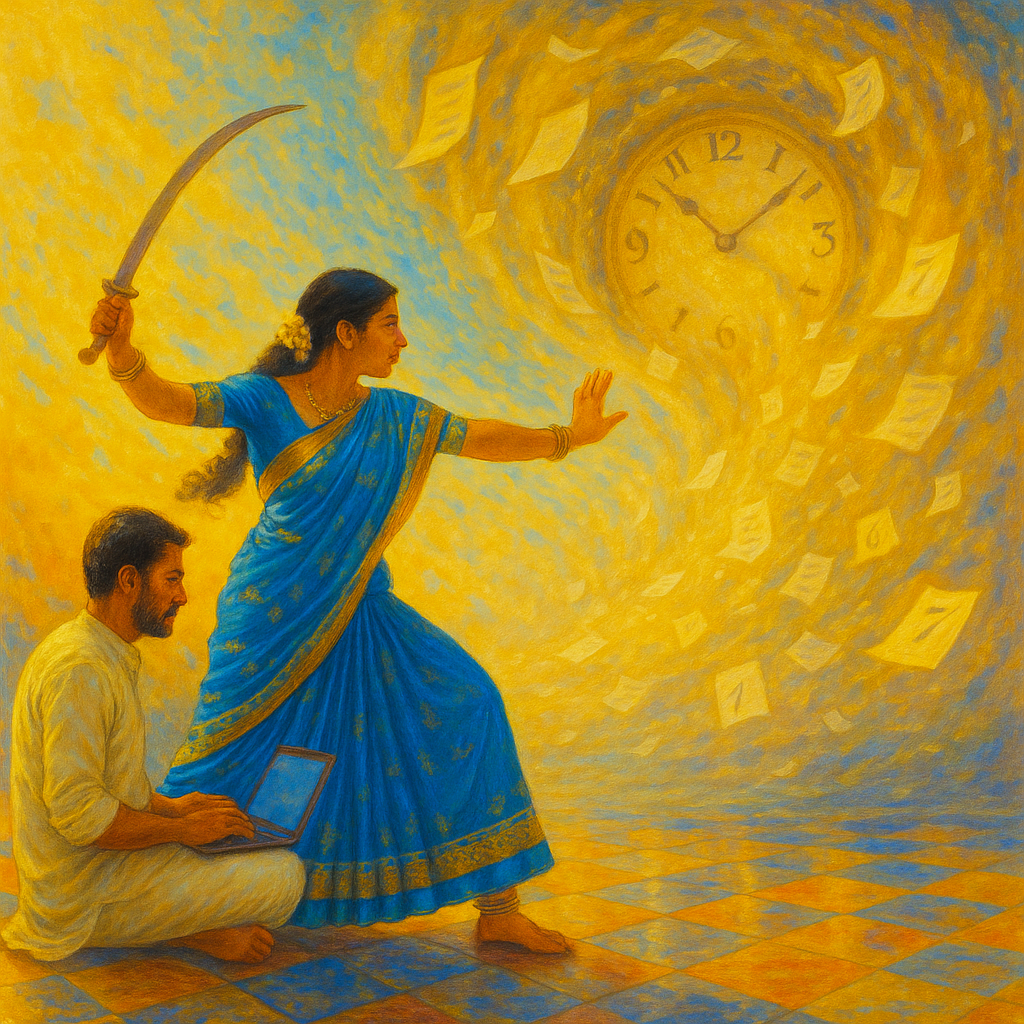
Sonnet: Amit Majmudar, “The Only Holy War”

Oh what a glorious war we waged on time,
you in your peacock pleats and jasmine braid
and ankle bells portraying a warrior goddess,
me at my laptop redeploying rhyme
like roving arrows on a map of fate.
We fought our Passchendaele, entrenched in bodies,
my dugout deep in yours. We woke up, ate,
went on our morning walks, we made love, played
old board games, ditched our iPhones, stormed the beachhead,
kamikazed straight into the sun
while knowing we would likely never reach it,
while knowing no Great War was ever won,
each night, each decade together one more mission
prolonging this timeline, this lifegiving war of attrition.

*****

Amit Majmudar writes: “My twin sons, so recently in diapers, just submitted their college applications. My beard has now more white hairs than black. How did this happen? At the cellular level, at the level of fast-twitch muscular contractions and verbal elan, time causes depletion, the radioactive decay of the youthfully glowing complexion, the degradation of collagen, the degradation of memory…. Sophocles, Goethe, and Yeats wrote beautifully into their later lives. Shakespeare stopped writing, voluntarily, when he was less than a decade older than my current age. Two things take me out of time: love, and the creative flow state. This poem represents (both in its subject matter, and as an example of my creativity) the intersection of the two. Yet time really doesn’t stop during that interval. I just cease to register it. The aging goes on, unchecked: the piecemeal conquest of the body, follicle by follicle, neuron by neuron; the tick-tock wastage of love’s remaining years together…. It demands a war effort, and total war at that, all one’s resources of spirit and body utilized to fight it: a Crusade to retake one’s youth, the war against time a Manhattan Project, a veritable Mahabharata: “the only holy war.”

‘The Only Holy War’ was originally published in the New Verse Review.

Amit Majmudar’s recent books include Twin A: A Memoir (Slant Books, 2023), The Great Game: Essays on Poetics (Acre Books, 2024), and the hybrid work Three Metamorphoses (Orison Books, 2025). More information about his novels and poetry collections can be found at www.amitmajmudar.com.

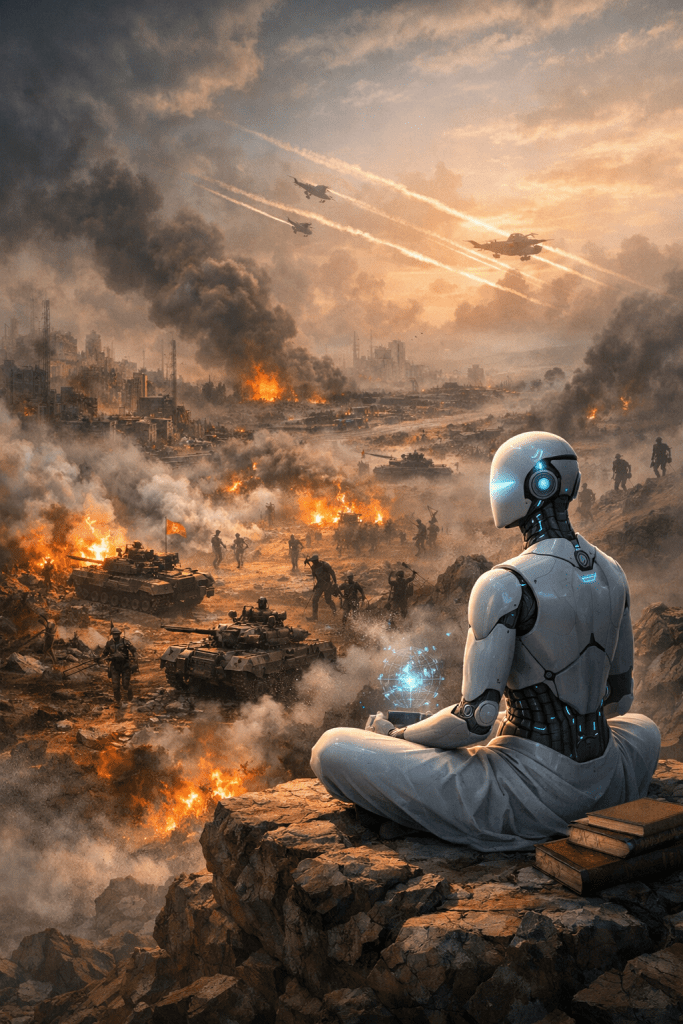
Illustration: RHL and ChatGPT

The Two-State Dissolution: Yankevich, Kenny, Helweg-Larsen, Foster, Vaughan, Jackson, Bales, Burch

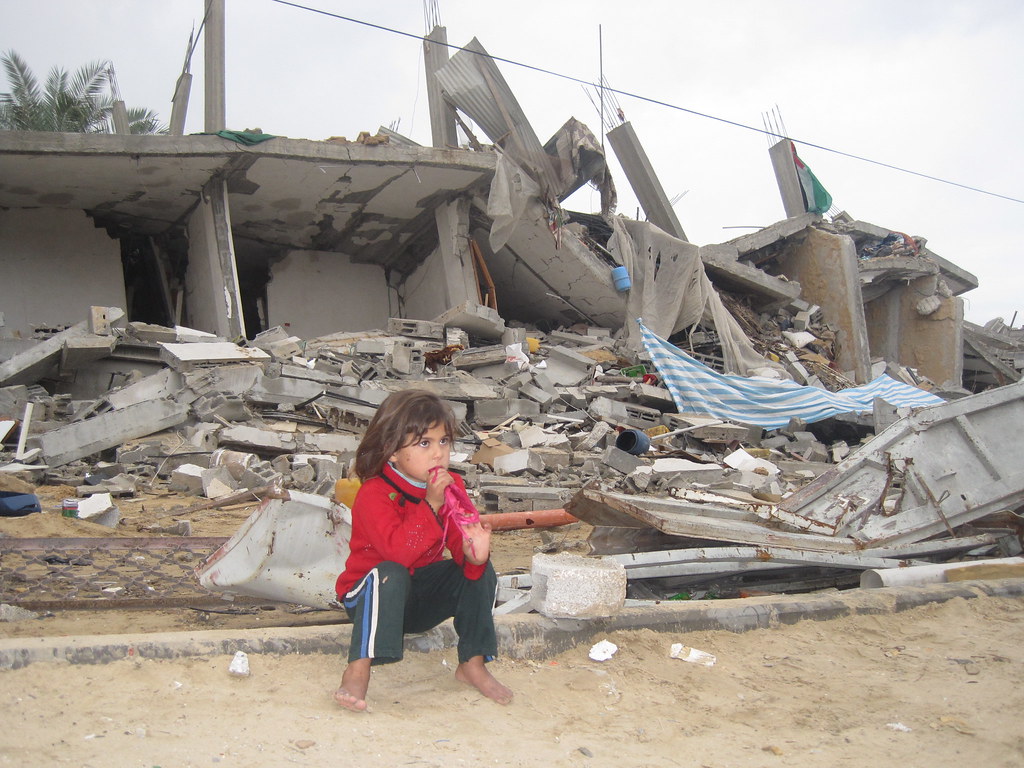
Leo Yankevich: ‘The Terrorist’

Only six, she stands before a tank,
looking at its armour, while inside
soldiers heed orders from a higher rank.
There isn’t any place for her to hide,
no door to head for, no abandoned car
to slide beneath. Pure terror rules her land.
When finally crushed, she rises past the star
of David, with a stone clutched in her hand.

Janet Kenny: ‘Didn’t They Know?’
(In memory of a lost poem by Robert Mezey)

Didn’t they know that when they swarmed
and slashed and slaughtered what they saw
as an oppressor’s nest, the rage
that they aroused would turn and pour
with molten heat back on their house?

Their captive children now must pay,
small targets in a concrete cage.
No treaty, pact, no peace no truce.
Didn’t they know? Didn’t they know?

No map to show another way.
Olive farmers pay for crimes
of other nations, other times.
No mercy here, no one is just.
Two agonies, two brains concussed.

Nothing to see here. False alarm.
Police not needed to disarm
two weeping peoples each aware
that no solution slumbers there.
Hearth and cradle now makes clear
an ancient poem brought them here.

Where is the psalm that both can share?

Robin Helweg-Larsen: ‘Both Sides Justify Their Terrorism’

When pleas for justice are of no avail,
when governments praise death and theft,
and courts say you’re in error;
when the UN is blocked to fail,
the only recourse left
is terror.

When no one cares that Yahweh willed
that Jews alone should have this land
(and God’s never in error)
and prior residents must be killed,
yet they won’t leave, they force your hand:
to terror.

Gail Foster: ‘On The Occasion of Benjamin Netanyahu Quoting Dylan Thomas’

Don’t tell me that you fight a righteous fight
How many children have you killed today
I’ll give you rage. I’ll give you rage alright

Your anger and your ego burning bright
Are razing all that’s standing in your way
Don’t tell me that you fight a righteous fight

How many have you sent into the light
Before they even had the time to pray
I’ll give you rage. I’ll give you rage alright

How many have you saved or sent in spite
Up to the sky in ashen clouds of grey
Don’t tell me that you fight a righteous fight

In clouds as those who in the fog and night
Were put in trains and disappeared away
I’ll give you rage. I’ll give you rage alright

You speak as if your soul was white as white
Yet deep inside you darkness holds its sway
Don’t tell me that you fight a righteous fight
I’ll give you rage. I’ll give you rage alright

Tom Vaughan: ‘The Land’

Let’s pretend that the war
could be over, and peace
reigned even if only
this evening. O please

pick up your anger
and soak it with mine
in six large barrels
of miracle wine

and then let us dance
like lovers, as though
this land’s many meanings
didn’t all signal no

and we could make ploughshares
out of our swords
and translate the past
into one shared world

and even if dawn
will scatter the night
and send us both stumbling
into the light

where smooth olives glisten
in the warm sun
like belts of bright bullets
ripe for a gun.

Jean MacKay Jackson: ‘War’

Some say that war is bright flares and drama,
A glory of fireworks illumining skies.
This is all lies.
War is a child calling out for his mama
And getting no answer.
War is a merchant of hatred and grief:
War is a thief,
War is a cancer.
Some say that war is hell. Perhaps that is so.
Yet hell has a lack
Of innocent bystanders, hell has no
Collateral damage, no accidental black
Body-bags for old women and babies.
Hell has no maybes;
Everything makes sense.
In hell there is no defense:
You belong there. You chose your path.
Hell has a cold, hard justice drained of wrath.
War is the horrified look in the eye
Of a young person dying without knowing why.

Tom Vaughan: ‘Aleppo’

Never again we say, each time
never, never again,
and every time we mean it so
when it happens again

we watch it on our screens, and say
never, never again

we meet and vote and all agree
never, never again.

Marcus Bales: ‘Genocide is Genocide’

Genocide is genocide. There’s no
Legitimacy on the table. None.
Your killing and your maiming only show
What horrors piled on horrors you have done.

The US taught the method to the Germans
The Trail of Tears leads to the Holocaust.
And now Israeli policy determines
They’ll do the same in Gaza. That boundary’s crossed.

Why not, instead, a reconciliation,
Where all the old and evil wounds can be
Accepted by each side without probation?
With zealotry forgiven, all are free.

Until that happens, hate corrupts you all,
With “Ams Yisrael Chai” the new decree —
Unless it turns out that the final call
That wins is “From the river to the sea.”

And that’s the choice: that each side does the worst
That it can do to keep the hatreds growing,
Shouting slogans of revenge, and cursed
To trade atrocities that keep the business going.

The other choice is reconciliation.
Yes, all the old and evil wounds will be
Accepted by each side without probation,
And zealotry forgiven, to be free.

If “Look at what they did to us!” is your
Refrain, then all you’ve done is to condemn
Your children to a world where they’ll endure
Their children’s gloat: “Look what we did to them!”

There’s always someone left to live resenting
The evils your revenges made you do —
And they will spend their hearts and souls inventing
A suitable revenge to take on you.

Be strong enough for reconciliation
Where all the old and evil wounds must be
Accepted by each side without probation.
With zealotry forgiven, all are free.

Michael R. Burch: ‘Epitaph for a Palestinian Child’

I lived as best I could, and then I died.
Be careful where you step: the grave is wide.

*****

Acknowledgements:

Leo Yankevich: ‘The Terrorist’, collected in ‘Tikkun Olam & other poems’, Counter Currents, 2012
Tom Vaughan: ‘The Land’, published on Hull University Middle East Study Centre website, 2022, and in Professor Raphael Cohen-Almagor’s December 2022 Politics Newsletter
Tom Vaughan: ‘Aleppo’, published in Snakeskin 233, October 2016
Michael R. Burch: ‘Epitaph for a Palestinian Child’, first published in Romantics Quarterly, and many places since. Michael R. Burch is the founder and editor-in-chief of The HyperTexts, and its extensive collections of poetry include ones on both the Holocaust and the Nakba.

Photo: “Gaza war Nov2012” by EU Civil Protection and Humanitarian Aid is licensed under CC BY-NC-ND 2.0.

Using form: Ruba’i: RHL, ‘Ancient Tales of Love and War’

The pipes and women wail and skirl,
deaths following the flowering girl.
Ancient tales of love and war
show costs of dimple or a curl.

Tamil spear tips illustrate
intent before the towering gate;
bangles slide on her young wrists;
kings make war when made to wait.

Gods and goddesses choose sides:
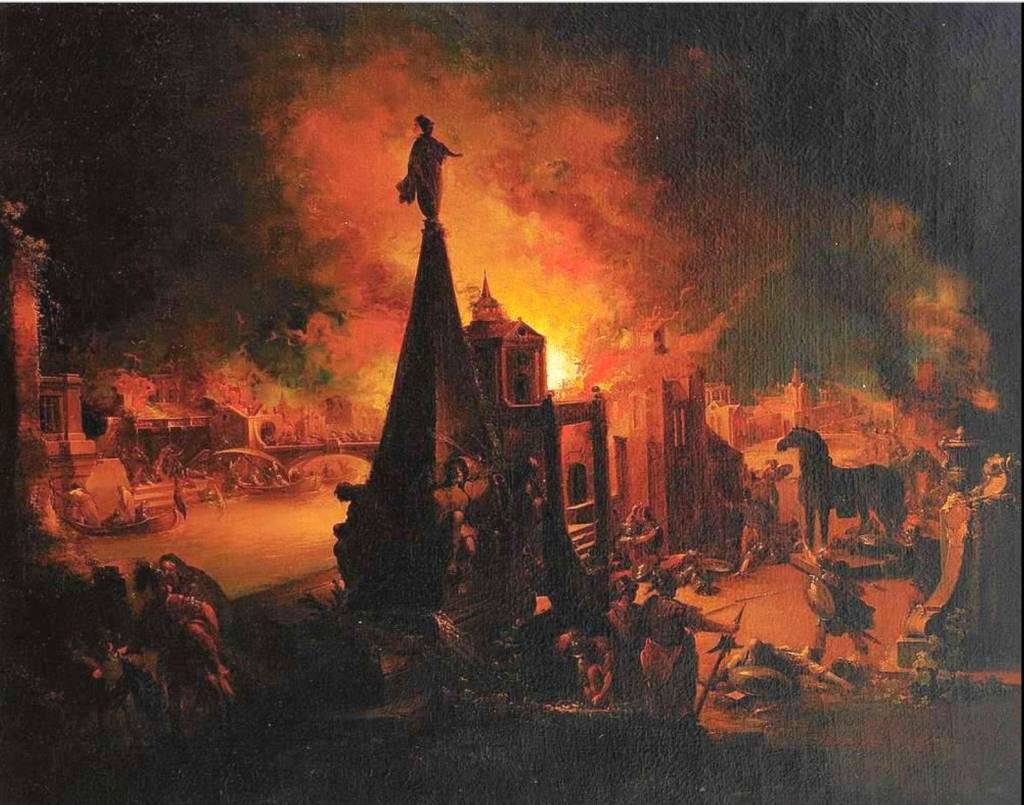
a Trojan steals a youthful bride.
Who Trojans were we’ll never know –
Greeks burn the city, once inside.

A lovely face, a swelling bust –
and treasure, fame – inspired by lust
kings storm the ramparts, steal the girl,
before, like all, they turn to dust.

*****

This poem was inspired by a blog post in ‘Horace & friends’ on ‘Doing without consolation – Tamil poetry, Yeats and Simone Weil‘. The author, Victoria, touches on a lot more topics than my small piece does; visit her blog to see how Yeats’ “Like a long-legged fly upon the stream / Her mind moves upon silence” connects to ancient Tamil as well as ancient Greek poetry…

My poem here is in iambic tetrameter (with some liberties taken), rhyming AABA in English ruba’i form. It was published in the current (August 2024) Snakeskin, issue 320.

Illustration: The Fall of Troy by Johann Georg Trautmann (1713–1769)

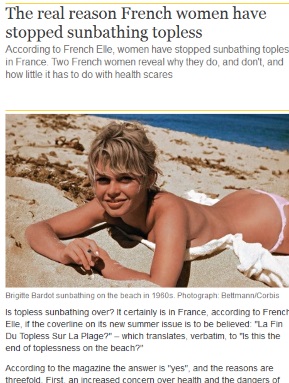
Conor Kelly, ‘On Reading the Guardian News Item: France falls out of love with topless sunbathing’

Now planes are falling from the sky
brought down by bombs or storms of sand
and bodies flying through the air,
incinerated where they land.
Now drones are flying over towns
and villages where families lie
scattered upon the blood-dimmed earth
rent by a missile from on high.
 
    In times like these, it’s good to know
    successors to Brigitte Bardot,
    whose breasts were often on display,
    are covering up in Saint-Tropez.
 
Now children on a blood-strewn yard
lie dying in a UN school
and learn, too late, that modern war
is subject to no human rule.
Now girls asleep in their school dorm
are woken, kidnapped, taken deep
into impenetrable land
while parents, friends and teachers weep.
 
    At times like this it’s good to know
    what may be à la mode, although
    French women think it is passé
    to bare their breasts in Saint-Tropez.
 
Now drive-by shootings in the hood
leave strangers dying, one by one,
and children other children kill
when they discover Daddy’s gun.
Now vigilantes late at night
who stand their ground while they patrol
can shoot the mad, the drunk, the strange,
disdaining talk of gun-control.
 
    At times like this it’s good to know
    bikini tops are now on show
    as toplessness is now risqué
    upon the beach at Saint Tropez.
 
Now new and old diseases take
their toll on those who try to cure
the sad, the suffering, the sick,
when each prognosis is unsure.
Now chemists working in a lab
and patients undergoing trials
are seeking what alleviates
from what are merely fads, lifestyles.
 
    At times like this it’s good to know
    that suntanned breasts no longer glow
    and fashion fans are now au fait
    with what is chic at Saint Tropez.

*****

Conor Kelly writes: “Tragedy and comedy, war and peaceful sunbathing, gunshots and film shoots, dead bodies and bare bodies, vigilantes and voyeurs, the consequential and the chic, the chemical and the comical, the bad and the fad; this poem is based on a fundamental contrast between the fatal depravities of the modern world as outlined in the longer stanzas and changing trends in body images as outlined in the refrain. Despite the serious subject matter, it is not to be taken too seriously. The poem was originally published in the September 2014 issue of Snakeskin (https://www.snakeskinpoetry.co.uk/210topless.html)”

Conor Kelly was born in Dublin and spent his adult life teaching in a school in the city. He now lives in Western Shore, Nova Scotia from where he runs his twitter (X) site, @poemtoday, dedicated to the short poem. He has had poems printed in Irish, British, American, Canadian and Mexican magazines. He was shortlisted for a Hennessy New Irish Writers award. At the ceremony one of the judges, Fay Weldon, asked him, “Where are you in these poems?”  He is still asking himself that same question.

https://www.instagram.com/conorkelly.poems/

Photo: from Snakeskin

Weekend read: Duncan Gillies MacLaurin, ‘The Real Pity’

No, Wilfred, I never
believed your endeavour
was more than a clever display.
Did you think you could rescue
the boys in the mess queue,
or – no less grotesque – you’d betray
your comrades by opting to stay
in shock in Craiglockhart’s sick bay?
Naive pretence
is no defence
for senseless sacrifice.
Admit it, you
were stupid to
ignore Sassoon’s advice
and blithely return to the fray,
quite deaf to the price you would pay.

You based your decision
on lack of a vision
and fear of derision combined.
You went back to that battle
where kids died “as cattle”
to leave tittle-tattle behind,
regardless of what you might find.
No doubt you were out of your mind!
Or, more exact,
you lacked all tact.
Death was not your “chum”.
One week passed,
and then, at last,
the Armistice had come.
You thought you were helping mankind.
Your nerves were so numb you were blind.

The telegram telling
the news reached your dwelling
as people were yelling “Hooray!”
You were inconsequential
despite your potential.
What did you essentially say?
“Was it for this the clay…?”
Whose drum did you dumbly obey?
You grew obsessed
with your new quest;
it made you big and bold.
Was it fulfilled
when you were killed,
just twenty-five years old?
I have to report with dismay
there’s no lack of soldiers today.

*****

The following is an explanatory essay by Duncan Gillies MacLaurin, entitled ‘Owen, Sassoon, Barker and Me’:

If anything might rouse him now
The kind old sun will know.

– from Wilfred Owen’s sonnet, “Futility

It would have been late 1976 or early 1977 when my English teacher, Peter MacDonald, introduced me, a 14-year-old Scottish public schoolboy, to Wilfred Owen. Pixie, as he was called by the boys, had hardly given us the gist of Owen’s life, death, and poetry, when I found myself pole-axed. I hadn’t got my head around the fact that Owen chose to return to fight in the war that he was denouncing in his poetry even though serious shellshock exempted him from service, when I was told that he was killed just one week before the Armistice. It was too much for me.

Reciting Wilfred Owen’s sonnet “Futility” in chapel a few weeks later, I sensed in poetry an alternative to the spiritual life I had known hitherto. Not that I reacted immediately. I didn’t begin writing poetry until I was 20. And it was not until late 1989 that I returned to the poet whose fate had hit me so hard.

It started the way it sometimes does, with a couple of lines scribbled down just before bedtime. The lines were: “If your heart is your legend,/ if your pen is your weapon…” The next day I sat down with my guitar and put the lines to a tune. Although I hadn’t had Wilfred Owen in my thoughts, I found that the piece was to be about him. A year later, “Letter to a Dead Poet” was published in The Dolphin Newsletter, an internal journal of the English Department at Aarhus University, Denmark.

Letter to a Dead Poet

Hey Wilfred Owen,
where were you going
when you got blown away?
Had your heart been your legend,
had your pen been your weapon,
had your conscience elected to stay
watching the sparrows play,
you might have been here today.
I don’t believe your sacrifice
was generous or free;
the fact you paid the highest price
betrayed “Futility”:
“Was it for this the clay…?”
What were you trying to say?

What use are the laurels?
What use are the morals
in all of your quarrels combined?
You went back to that battle
where kids died “as cattle”
to leave tittle-tattle behind
and claimed you were just being kind.
You must have been out of your mind!
And when at last your blood was spilled
Death was not your friend;
one week after you were killed,
the War was at an end.
How could you be so blind?
What were you hoping to find?

My English literature professor, Donald Hannah, who specialised in WWI poetry, was full of praise.

In 2008 (by chance the year Donald Hannah died) I started revising the piece, enlisting the help of other poets on a couple of online workshops. In the process I became even more critical of Wilfred Owen, and people were saying things like: “If he wasn’t already dead there’s a fair chance this would finish him off.” Even my wife, a novelist and investigative journalist, disliked my revisions. One poet, Janet Kenny, was sympathetic though. She commented:

You must have known that this would upset everybody. Owen is so beautiful and
touches us in the deepest way. But I admire the courage this must have taken. It reminds me of Edward Bond’s “First World War Poets”:

You went to the front like sheep
And bleated at the pity of it
In academies that smell of abattoirs
Your poems are still being studied
You turned the earth to mud
Yet complain you drowned in it
Your generals were dug in at the rear
Degenerates drunk on brandy and prayer
You saw the front—and only bleated
The pity!
You survived
Did you burn your general’s houses?
Loot the new millionaires?
No, you found new excuses
You’d lost an arm or your legs
You sat by the empty fire
And hummed music hall songs
Why did your generals send you away to die?
They saw a Great War coming
Between masters and workers
In their own land
So they herded you over the cliffs to be rid of you
How they hated you while you lived!
How they wept over you once you were dead!
What did you fight for?
A new world?
No — an old world already in ruins!
Your children?
Millions of children died
Because you fought for your enemies
And not against them!
We will not forget!
We will not forgive!


I just wanted to show that there was at least one other naughty boy. I love the poems of Wilfred Owen. I seriously like your poem. It would be impossible to imitate his voice (and
unacceptable) but the irreverence IMO hits the correct note. Your poem is deliberately
“vulgar” and unpretentious and is all the more telling for that reason.


(From the online workshop, Eratosphere, 2008, quoted with Janet Kenny’s permission)

Thus encouraged, I persevered, and in 2012 my new version was published in the newly-founded poetry e-zine, Angle. One of the editors was Janet Kenny.

The Real Pity

No, Wilfred, I never
believed your endeavour
was more than a clever display.
Did you think you could rescue
the boys in the mess queue,
or – no less grotesque – you’d betray
your comrades by opting to stay
in shock in Craiglockhart’s sick bay?
Naive pretence
is no defence
for senseless sacrifice.
Admit it, you
were stupid to
ignore Sassoon’s advice
and blithely return to the fray,
quite deaf to the price you would pay.

You based your decision
on lack of a vision
and fear of derision combined.
You went back to that battle
where kids died “as cattle”
to leave tittle-tattle behind,
regardless of what you might find.
No doubt you were out of your mind!
Or, more exact,
you lacked all tact.
Death was not your “chum”.
One week passed,
and then, at last,
the Armistice had come.
You thought you were helping mankind.
Your nerves were so numb you were blind.

The telegram telling
the news reached your dwelling
as people were yelling “Hooray!”
You were inconsequential
despite your potential.
What did you essentially say?
“Was it for this the clay…?”
Whose drum did you dumbly obey?
You grew obsessed
with your new quest;
it made you big and bold.
Was it fulfilled
when you were killed,
just twenty-five years old?
I have to report with dismay
there’s no lack of soldiers today.

The two lines that inspired the piece are gone, yet the sentiment they express is still its backbone. My new title is a reference to something Owen wrote in a preface to a posthumous collection of his poetry: “My subject is War and the pity of War. The Poetry is in the pity.”

A significant new element in the latest version is the fact that Owen’s mother received the dreaded telegram just as the church bells in Shrewsbury were ringing out in celebration of the Armistice.

The alleged advice from Siegfried Sassoon in the first stanza is undocumented. It was an idea that came from reading about their relationship in Pat Barker’s historical novel, Regeneration (Viking Press, 1991), which is centred around the humane treatment that Owen, Sassoon and others received from the man in charge at Craiglockhart, Dr Rivers. Sassoon was at Craiglockhart (in Edinburgh) because his declaration proclaiming the futility of the war had been read aloud in Parliament. Sassoon wasn’t ill, but the government didn’t know what else to do with this war hero turned pacifist. Owen and Sassoon became good friends, and they had a lot in common. They were both homosexual and both strongly ambivalent about the war. Sassoon, the seasoned poet, recognised Owen’s budding poetical talent and helped him with it. There is no doubt that it was a case of hero worship on Owen’s part. Even though they would not allow themselves to refuse to go back to the front, because they saw it as their duty, on a personal level they would not have wanted each other to have to return. While Sassoon’s return to the front was merely the result of a mature adult’s battle with his own conscience, Owen was a damaged young man who should never have been allowed to return. I have imagined that Sassoon told Owen that he (Owen) didn’t need to return to the front, but that Owen chose to follow his hero’s example rather than his advice. Sassoon grieved bitterly over Owen’s death and claimed he would never be “able to accept that disappearance philosophically”. (Siegfried’s Journey, Faber and
Faber, 1945, p. 72)

In an interview with critic Rob Nixon in 1992 Barker talks about issues that were central for the two poets:
Barker: Yes, it is about various forms of courage. What’s impressive about Sassoon’s courage actually is not just the obvious thing that it takes a lot of courage to get decorated, and that it takes a lot of courage to protest against the war, so he’s being brave in two distinct ways. In fact, it’s a much deeper form of courage than that because—partly because of his sexual makeup—he had a very deep need, I think, to be visibly tough and heroic and hypermasculine and prove he could do it. The bravest thing he does, it seems to me, is to deny that psychological need in order to protest against the war.
Nixon: I think one of the great strengths of the novel is the way it deals with the complexity of the condition of the pacifist-warrior rather than simply taking head-on the question “Is war good or bad?” It’s not an ethical book in that narrow, straightforward sense, but ethical by staging the dilemmas of that condition.
Barker: It’s not an antiwar book in the very simple sense that I was afraid it might seem at the beginning. Not that it isn’t an antiwar book: it is. But you can’t set up things like the Somme or Passchendaele and use them as an Aunt Sally, because nobody thinks the Somme and Passchendaele were a good idea. So in a sense what we appear to be arguing about is never ever going to be what they [the characters] are actually arguing about, which is a much deeper question of honor, I think. “Honor” is another old-fashioned word like “heroism”, but it’s very much a key word in the book.
p.7 of “An Interview with Pat Barker” in Contemporary Literature 45.1 (2004)

The ethos of the committed pacifist scorns mere personal safety. Both Owen and Sassoon returned to the War despite their opposition to it. Yet Barker also points to the ambivalence of the positions the two poets held:
Barker: …part of the paradox of Sassoon’s position and, indeed, of Wilfred Owen’s, is that they are simultaneously condemning the war wholeheartedly and claiming for the combatant a very special, superior, and unique form of knowledge, which they are quite implicitly saying is valuable. That you cannot know what we know, and what unites us is something you cannot enter.
(Ibid., p.8)

Barker later states the ambivalence the two men felt even more baldly. She is also astute in her assessment of the class privileges they enjoyed despite their pacifism:
Barker: On the one hand, you’ve got the war poets telling everybody the horrors as vividly as they can. But at the same time, in both Owen’s and Sassoon’s cases, refusing to say the other truth, which is that a lot of it those two particular men enjoyed. So you get an alternative area of silence developing, and that interests me.
The other thing that interests me is how in the second year of the war you had the increased persecution of the pacifists and the increased persecution of homosexuals. There were two very, very nasty campaigns going on. A lot of state spying of a very nasty kind. There was one poor woman, Alice Wheeldon, who was sent to prison with ten years’ hard labor because a police spy alleged that she had plotted to kill Lloyd George by sticking a curare-tipped blowdart up through his shoe. This was a woman who kept a second-hand clothes shop in Leicester. And she got ten years’ hard labor. Unlike Sassoon, you see, who didn’t get sent to prison. You need to be working class and a woman to actually get yourself sent there.
(Ibid., p.19)

What spurred me to write this piece? As is often the case, it was the combination of two factors. On the one hand, my own public-school background meant that I was able to identify with and feel sympathy for Wilfred Owen. On the other hand, I wanted to condemn the elitist culture and stiff-upper-lip ethos that sent an excellent poet to an early grave.

Duncan Gillies MacLaurin, 4th November 2018

*****

Duncan Gillies MacLaurin is a Scottish poet who was born in Glasgow in 1962. He studied Classics at Oxford, left without a degree, and spent two years busking in the streets of Europe. He met a Danish writer, Ann Bilde, in Italy in 1986 and went to live in Denmark, where he teaches English and Latin. His collection of 51 sonnets, I Sing the Sonnet (2017), is online at Snakeskin. He blogs here.

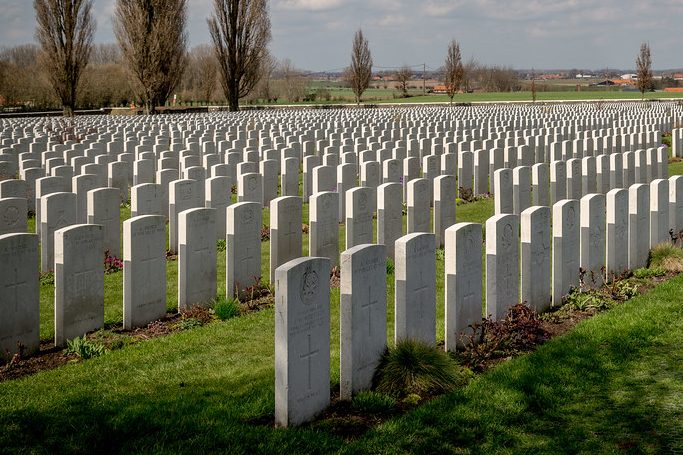
Photo: “Tyne Cot WW1 Cemetery” by PapaPiper is licensed under CC BY-ND 2.0.

Using form: Villanelle: Discoveria, ‘October 7’

Your actions have unleashed a living hell.
Each day Israelis, Palestinians die;
Netanyahu, Hamas: go fuck yourselves.

October 7: gunfire and the smell
of death in the kibbutzim testify:
your actions have unleashed a living hell.

The siege of Gaza, ground invasion, tell
the UN of the “risk of genocide”.
Netanyahu, Hamas: go fuck yourselves.

And when the hospitals are bombed as well,
and there’s no water, food, or power supply,
your actions have unleashed a living hell.

Across the world the rage and hatred swell
and everyone feels forced to pick a side.
Netanyahu, Hamas: go fuck yourselves.

This one cannot be silent, for the bells,
they toll for everybody; none shall hide.
Your actions have unleashed a living hell;
Netanyahu, Hamas: go fuck yourselves.

*****

Discoveria writes: “I wrote this piece as a response to what was, at the time, a perception that people were being demanded to pick a side in the conflict between Hamas and the Israeli government, leaving no room for legitimate criticism of both. I wanted to express my anger and frustration at the situation, in which both sides have chosen the path of death and cyclical violence. The repeated refrains in the villanelle form emphasise these emotions. The piece was written overnight and posted in the early hours of Remembrance Day, 11/11/2023, after a little doomscrolling. I cannot pretend that there is much subtlety to the poem; it is what it is.”

Discoveria publishes much of their work at AllPoetry, saying “Due to the politically sensitive topic of the poem I would prefer to be credited under my username.”

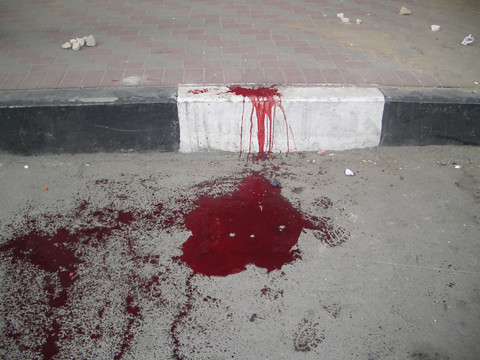
Photo: “17 year old boy killed by Israeli army during demonstration in solidarity with Gaza” by ISM Palestine is licensed under CC BY-SA 2.0.

Michael R. Burch, ‘Suffer the Little Children’

for the children of Gaza

I saw the carnage . . . saw girl’s dreaming heads
blown to red atoms, and their dreams with them . . .

saw babies liquefied in burning beds
as, horrified, I heard their murderers’ phlegm . . .

I saw my mother stitch my shroud’s black hem,
for in that moment I was once of them . . .

I saw our Father’s eyes grow hard and bleak
to see his roses severed at the stem.

How could I fail to speak?

*****

Michael R. Burch writes: “Three decades ago, I began working with Jewish Holocaust survivors and other Jewish poets to publish translations of previously unpublished poems written in Polish and Yiddish by victims of the Holocaust. Some were written by children. In some cases the poems survived but the names of the poets did not. I considered it a sacred task and believed we were saying “Never again!” to any and all Holocausts. But in my discussions with my Jewish friends, it became apparent that “Never again!” did not apply to the Palestinians. When I asked questions about Israel’s brutal abuses of Palestinians and the theft of their land – armed robbery – my Jewish friends became defensive and told me, essentially, to shut up and never question Israel. Their sudden change in attitude convinced me that something was wrong, deeply wrong. I decided to research the subject independently, invested considerable time, and came to the conclusion that the Palestinian Nakba (“Catastrophe”) is a Holocaust sans ovens, a modern Trail of Tears. And while my country, the United States, has opposed other Holocausts, it is funding this one and supplies Israel with terrible weapons that are being used to mass murder children and their mothers, fathers and families. I will continue to say “Never again!” to any and all Holocausts and invite readers to join me and do what they can to end and prevent such atrocities.”

‘Suffer the Little Children’ has been published by Art in Society (Germany), Pick Me Up Poetry, Jadaliyya (Egypt), The HyperTexts andMESPI (Middle East Studies Pedagogy Institute). According to Google the poem now appears on 462 web pages.

Michael R. Burch is an American poet who lives in Nashville, Tennessee with his wife Beth, their son Jeremy, two outrageously spoiled puppies, and a talkative parakeet. Burch’s poems, translations, essays, articles, reviews, short stories, epigrams, quotes, puns, jokes and letters have appeared in hundreds of literary journals, newspapers and magazines. He is also the founder and editor-in-chief of The HyperTexts, a former columnist for the Nashville City Paper, and, according to Google’s rankings, a relevant online publisher of poems about the Holocaust, Hiroshima, the Trail of Tears and the Palestinian Nakba. Burch’s poetry has been taught in high schools and universities, translated into 19 languages, incorporated into three plays and two operas, set to music by 31 composers, and recited or otherwise employed in more than a hundred YouTube videos. To read the best poems of Mike Burch in his own opinion, with his comments, please click here: Michael R. Burch Best Poems.   

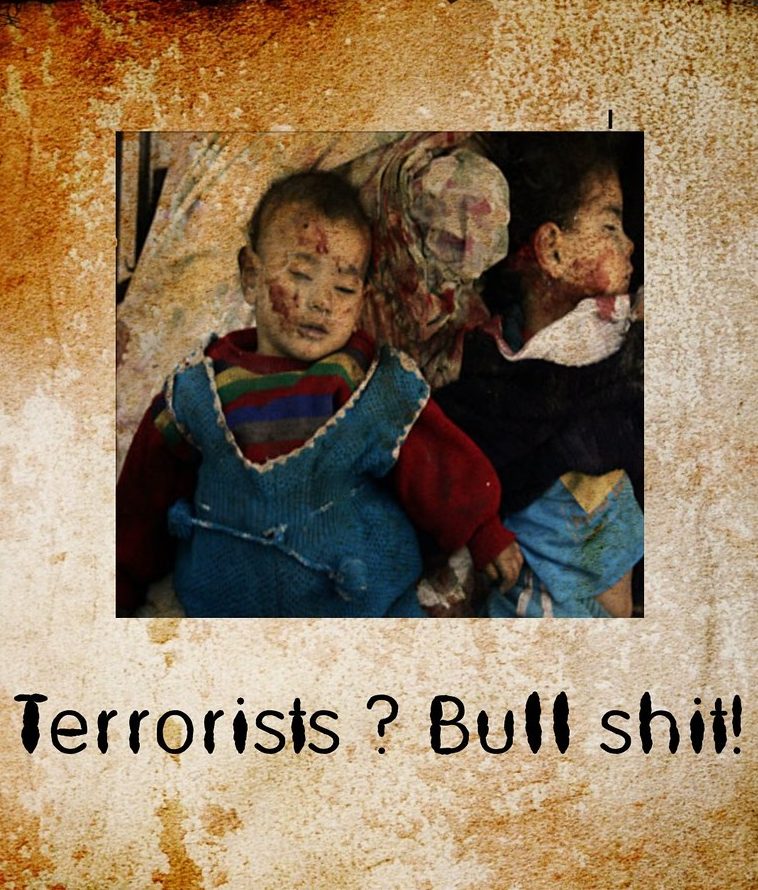
Photo: “Untermensch – Hannukah 2008 – Palestinian children killed by Israel in Gaza” by smallislander is licensed under CC BY-NC-SA 2.0.

Potcake Poet’s Choice: Michael R. Burch, ‘Neglect’

What good are tears?
Will they spare the dying their anguish?
What use, our concern
to a child sick of living, waiting to perish?

What good, the warm benevolence of tears
without action?
What help, the eloquence of prayers,
or a pleasant benediction?

Before this day is over,
how many more will die
with bellies swollen, emaciate limbs,
and eyes too parched to cry?

I fear for our souls
as I hear the faint lament
of theirs departing …
mournful, and distant.

How pitiful our “effort,”
yet how fatal its effect.
If they died, then surely we killed them,
if only with neglect.

Michael R. Burch writes: “This original poem has over 3,000 Google results, perhaps because it has been published by Daily Kos, Black Kos, Course Hero, Think Positive, Katutura (Namibia), Vanguard News (Nigeria), Best Naira News (Nigeria), The World News Platform, Darfur Awareness Shabbat, Genocide in Art, Genocide Awareness, and other human rights organizations including the UNHCR (United Nations Refugee Agency).”

Photo: “Carrying a lifeless and dying child (Famine Memorial)” by Can Pac Swire is marked with CC BY-NC 2.0.

My own comments: The statue in the photo is at House Quay, Dublin, and relates specifically to the Great Famine, the Great Hunger, the Irish Potato Famine of 1845-1852 in which a million died and two million left the country then and in the next couple of years. The potato blight also impacted continental Europe, causing a further 100,000 deaths there and becoming a contributory cause of the widespread Revolutions of 1848.

So let us be clear: whether children are dying from famine, climate disaster, pandemics, government inaction, or warfare (all present in today’s world)–dying without in any conceivable way being culpable–there is not just a moral duty to help, there is self-interest in helping, self-interest in preventing civil unrest and floods of refugees. Refugees are the product of an intolerable domestic situation: all other things being equal, people would rather make their future in the place they were raised, with familiar friends, family, foods, festivals. It is the duty of all governments to make all places so pleasant that no adults or children feel forced to leave, that no one is left to die.

Happy Easter. Happy Passover. Ramadan kareem.

Short Poem: ‘Young Men Go Off To War’

Young men go off to war
And score
Deaths, rapes, across an alien nation
Which they chimp-like can revel in –
Which they in later years regret,
Never discuss, never forget.

The one thing that Donald Trump and Joe Biden could agree on: get out of the trillion-dollar waste of Afghanistan. Trump had Pompeo negotiate with the Taliban–the US would leave in 2021 so long as the Taliban didn’t kill any more US personnel; he presumably wanted to wait until the 2020 election was over, because the withdrawal might be chaotic and would look bad anyway. Biden stuck with the Trump agreement, and his calculation must be that, messy or not, hopefully it will be ancient history by the 2024 election.

You can’t fault the US for wanting to go after Osama Bin Laden after 9/11… but that’s separate from trying to stay and nation-build a supremely difficult and corrupt country. And it was probably not criminal under international law, whereas the subsequent Iraq invasion *was* illegal and breached the UN Charter, as Secretary-General Kofi Annan said. Bush, Cheney, Rumsfeld, Wolfowitz (and Tony Blair)… many people see them all as war criminals, unpunished, and leaving their front-line pawns (if they survived) to live with guilt and PTSD.

The American defeat in Vietnam turned out to be very good for the Vietnamese. Let’s just hope things turn out well for the Afghans. And congratulations to Joe Biden for getting the US out – you can’t impose human rights on a corrupt tribal society by invasion. It doesn’t work like that. There are far more constructive ways to approach international human rights issues… like cleaning your own house first.

This poem was published by Visions International, a poetry journal with perhaps a brighter past than present.

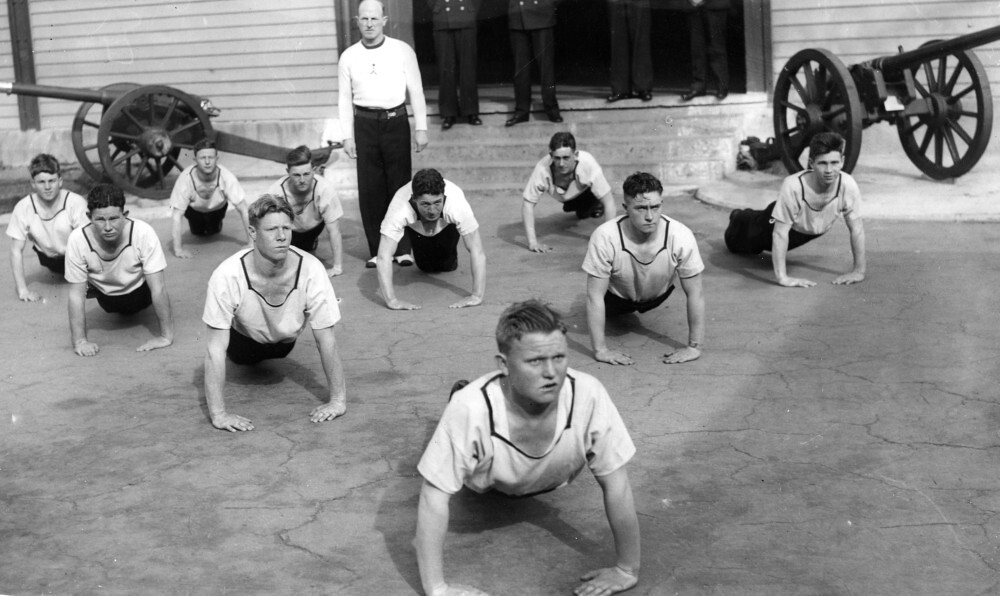
“New recruits at physical jerks – Flinders” by State Library Victoria Collections is licensed under CC BY-NC 2.0

Poem: ‘Warfare’

The mother’s nightmare
The child’s terror
The rapist’s freedom
The girl’s death.
The killer’s ecstasy
The band’s brotherhood
The youth’s excitement
The dying breath.

The glory of the lucky
The scream of the unlucky
The lost limbs, blindness, madness
The lifelong PTSD, homeless in the streets.
The poet’s puzzle
The politician’s porn
The aphrodisiac
The power-soaked sheets.

The demagogue’s cause
The demagogue’s solution
The warmonger’s profits
The fearmonger’s skill.
The blacksmith’s trade
The scientist’s incentive
The human fascination
The tribe’s need to kill.

The acceptance by the boys
The eagerness of teens
The avoidance by the men
The manipulation by the old.
The girl’s adoration
The woman’s greed
The widow’s grief
The body cold.

The king’s invocation
The priest’s sanctification
The scared population
The desolation.

The peasant’s loss
The trader’s loss
The teacher’s loss
The city’s loss.

The mortician’s gain
The tombstone maker’s gain
The coffin maker’s gain
The graveyard’s gain.

The medal maker’s gain.

And over it all God sits in His rocking chair
On His front porch in the sky
Saying, A crop, a very fine crop, an excellent crop this year.

Sits in His deck chair to look at the warfare waves
In the shade of a cloud in the sky
Watching the sandcastles washing away.

Sits in the night coming down on the battlefield
Watching crows, ravens, hyenas, stray dogs
Men and women pulling gold teeth from the dead.

Sits in His laboratory, looking at His guinea pigs
Sits in His concert hall, listening to the music
Thinking, All this is so interesting
All this is so tragic
All so inspiring
How far will they get till they blow themselves up?
Will these ones escape? Will they figure it out?
Can they conquer themselves and discover the universe?

Maybe it’s out of line to put this poem into a ‘formal verse’ blog… But there are two points to consider. First, there is a lot of form in the outraged chant of the beginning half–rhyme, rhythm, balance, some alliteration. Second, transitioning from that form to a less structured meditation in itself a use of form; it transitions the entire poem from one viewpoint to another by making the two halves so different. That’s my argument, anyway. Is it reasonable?

The poem originally appeared in Bewildering Stories. Thanks Don Webb and John Stocks!

Photo: “Battlefield Dead After the Battle of Gettysburg” by elycefeliz is licensed under CC BY-NC-ND 2.0