Monthly Archives: July 2025

RHL, ‘Privelitch’

Some suffer from a travel itch
but I call that a snivel glitch
I only want to travel rich
and love it: it’s my privelitch.
O privelitch, o privelitch!

I only go to schools most rich,
(and only eat foods superrich),
then college has to be Oxbritch,
for that’s my privelitch.
I love you, love you, bitch!

I wear the robes and coronitch,
I swear by God I’ve found my nitch,
for, be I tubby, tall or titch,
I’ve got my privelitch.
O privelitch, o privelitch,
I love you, love you, bitch!

I never on my class would snitch
(or if I do, it’s just a smitch);
I’m faithful – cept for those I ditch,
for that’s my privelitch.
O privelitch, o privelitch!

I down it nail, I up it stitch,
call me a wizard or a witch,
I’ve got it all, with perfect pitch,
for that’s my privelitch.
I love you, love you, bitch!

My life with none I’d ever switch,
I’m over all, no slightest twitch,
and even when I’m in Death’s ditch
my tomb shouts Privelitch!
O privelitch, o privelitch,
I love you, love you, bitch!

*****

Don’t think I’m unaware of my own privilege: white males with above-average education are a privileged minority in any country. But also you reading this, whoever you are, you are privileged to not be a child in Gaza or any of the other hells that humans make for each other on an otherwise beautiful planet; you are privileged to be alive during this affluent and pivotal time in human history. And of course those who in addition have cultivated a taste for poetry… is there maybe a hint of privilege there?

This poem, like Buccaneer, was recently published in Magma.

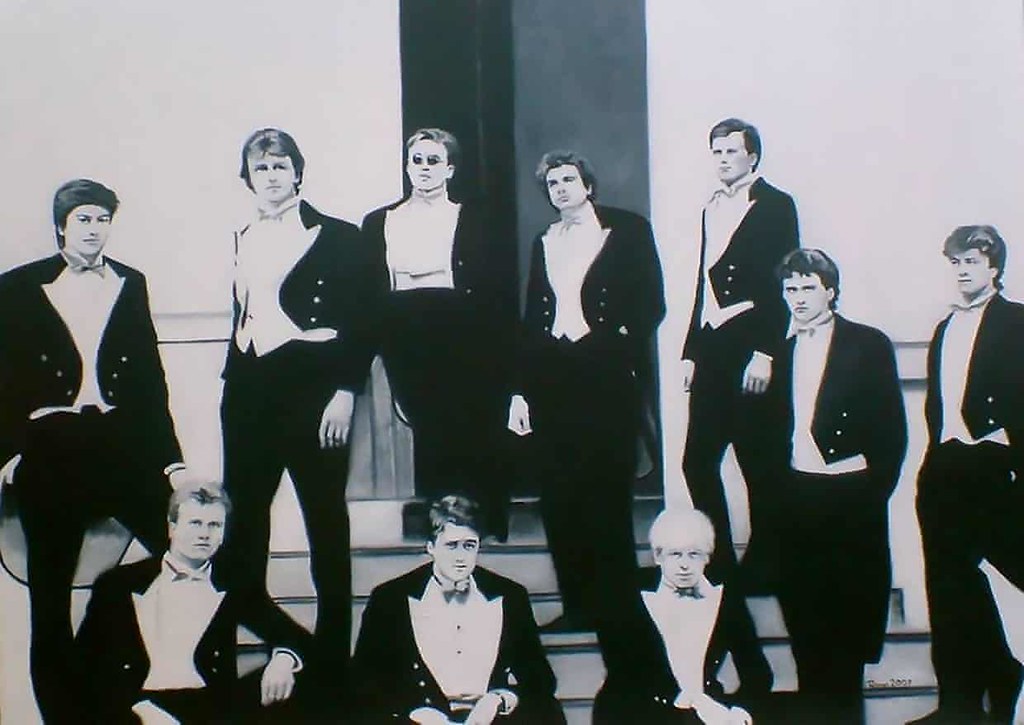
Photo: “General Election Bullingdon Club Members in 1987, including Boris Johnson and David Cameron” by Diego Sideburns is licensed under CC BY-NC-ND 2.0.

Double sonnet, Daniel Galef, ‘A Nightingale to a Sad Poet’

(Keats’s ‘Ode to a Nightingale’ from the other side)

You slump at my tree’s foot, complex angsts brewing
While our red-clawed, red-beaked animal furies
In these shadowy plots hatch our own undoing.
If thinking is man’s ruin, have no worries.
If you could speak the whistling words of birds
Whose sound to you like music now appears,
As nature’s snow-white cream man sours to curds
To chew, our songs would curdle in your ears:
‘Fly!, fly! The bearded fox is on the prowl!’—
And ‘Keep away! These berries are quick poison!’—
‘I need a mate, or I was born for nought’—
‘Go south, go south!’—‘The horned and hoary owl
Brings swift, crook-taloned death.’ You seek strange joys in
Ignorance, to envy lives so fraught!
Now dull-brained human scientists proclaim
That tool-use is no more unique to apes
Than language, war, or thumbs. They’re all the same
Emergent properties, like wine from grapes.
I am not certain that is Hippocrene;
The Pierian Spring leaves no such scarlet stain.
A jug of wine might well complete the scene:
Your book of verse, &c. A brain
Like smiling Aesop’s, where morals mask the roar
Of lions, the flopping fear of fish in the net,
The worm-wove cloak we dress up in our tomb in—
I think that must be Lethe. Drink, and soar
Above your brain, and me, and quite forget
That you were all too sentient, all too human.

*****

Daniel Galef writes: “I’m a sucker for parodies and response poems! My first book features riffs on Byron, Swift, Ernest Thayer, the ancient epigrammatist Nossis the Epizephyrian, and Doris Day. A few years ago in my master’s program I took a[n excellent] poetry workshop with Barbara Hamby focusing on the history of the Ode, as part of which she had everyone memorize Keats’s “Ode to a Nightingale.” We’d all read the poem before, but engaging with it so closely for a sustained duration was a really lovely experience, and having the whole poem by rote is an excellent party trick if you ever need to clear the room at the end of a party. At the end of the class I sent Professor Hamby a little parody piece, a rebuttal from the nightingale’s point of view to the moping poet sitting underneath its tree. (It was also a gesture of peace because I had gotten on her bad side by insinuating that the speaker calling the nightingale “dryad of the trees” was redundant because all dryads are by definition of the trees.) That poem was three pages or so and more directly parodying Keats’s style, as well as being written with the same stanzaic structure as Keats’s. It was also just for fun and thoroughly unprintable. But something I’ve been doing lately when I can’t bring myself to write an original poem is to sonnet-ize other things I’ve written—short lyric poems, long narrative poems, free verse, even short short stories—as I’m currently putting together a second collection of Imaginary Sonnets, a series of persona poems I’ve been writing for years inspired by the Victorian poet Eugene Lee-Hamilton. I cherrypicked a handful of my favorite lines from the long nightingale poem and spun some sonnet-stuff around them and ended up with this. It was still too much material for fourteen lines but fit into a double-sonnet, which is half as good.”

Daniel Galef’s poetry, half-serious and half-non-, has been published in a variety of venues themselves both serious and non-. His first book, Imaginary Sonnets, collects 70 persona poems from the point of view of various historical figures and literary characters, including Lucrezia Borgia, Christopher Smart’s cat, and a taco. “A Nightingale to a Sad Poet” first appeared in the Spring/Summer 2025 issue of Sein und Werden. Other recent writing can be found in the Indiana Review, the Best Small Fictions anthology, and Scientific American.

Bard of the Mossy Cot” by Giles Watson’s poetry and prose is licensed under CC BY-SA 2.0.


Sonnet: Maryann Corbett, ‘Saturday Edition’

Page one, above the fold: the world in flames.
A luxury hotel gapes like a sore.
In mammoth type, the headlines yell the names
of prophets stoking hells of holy war.

In Business, meanwhile, there is calm discussion
of sales rates for the sexy underclothes
pitched by Victoria’s Secret, and a fashion
for surgical revision of the nose.

It isn’t news to those who sell the paper:
their readers can take only so much hell.
They proffer me the surgeon and the draper
as pastures where my bovine brain may dwell,

ignoring, while it chews on this confection,
the screams of children from the other section.

*****

Maryann Corbett writes: “My records tell me that ‘Saturday Edition’ is one of my very earliest sonnets and very earliest acceptances, appearing in The Barefoot Muse in 2007 and included in Mary Meriam’s Irresistible Sonnets in 2014. It was among the poems that gave me the lightbulb realization that I tend to write sonnets when I’m angry.”

Maryann Corbett earned a doctorate in English from the University of Minnesota in 1981 and expected to be teaching Beowulf and Chaucer and the history of the English language. Instead, she spent almost thirty-five years working for the Office of the Revisor of Statutes of the Minnesota Legislature, helping attorneys to write in plain English and coordinating the creation of finding aids for the law. She returned to writing poetry after thirty years away from the craft in 2005 and is now the author of two chapbooks and six full-length collections, most recently The O in the Air (Franciscan U. Press, 2023). Her work has won the Willis Barnstone Translation Prize and the Richard Wilbur Award, has appeared in many journals on both sides of the Atlantic, and is included in anthologies like Measure for Measure: An Anthology of Poetic Meters and The Best American Poetry.

Photo: “UN School in Gaza Attacked” by United Nations Photo is licensed under CC BY-NC-ND 2.0.

Lucius Falkland, ‘Sado-Masochism in Love Poetry’

Some like being bound up in leather and chains,
Others spanked with a branch from a tree,
But the people who truly get turned on by pain
Try to publish their love poetry.

The poet’s not known for his psychical health:
He wrestles despair, feels dejected,
Not that undisposed to killing himself,
Yet his heart’s work so often rejected.

Sometimes he must wait the best part of a year,
Like an innocent man on death row,
To have to him confirmed his most terrible fear,
For they are quite sadistically slow.

And the hurt they inflict? It’s not over yet.
Do they find wounding fragile souls funny?
Some journals won’t read the submissions they get
If the poets don’t first send them money!

Once it’s crafted and honed and as good as Ted Hughes,
On a par with their earlier choices,
They find a new method to mentally abuse:
They prioritize “marginalised voices.”

The agony felt by a hounded young deer
As he’s brought to the ground by a predator
Is as nothing compared to the suffering and fear
That’s induced in a poet by an editor.

*****

Lucius Falkland writes: ‘I wrote this poem in response to having so many of my love poems rejected by poetry journals. It struck me as absurd that poets experience feelings, including being in love, so intensely that they must process them via poetry, they share the most poignant aspects of their lives with journal editors, and yet they know they will frequently get rejected. It is as though they write about their deepest pain only to then subject themselves to the further pain of being told that they can’t even express their pain properly. ‘Are we poets Masochists?’ I wondered. Naturally, this poem was itself rejected by a number of editors – with one even commenting that he was sympathetic to my plight. before rejecting it anyway because ‘it’s not the right fit’ (euphemism for ‘I don’t like it!) – before being published in The New English Review.”  

Lucius Falkland is the nom de plume of a writer and academic originally from London. His first poetry volume, The Evening The Times Newspaper Turned Into Jane Eyre, was published in 2025 with Exeter House Publishing. It can be purchased here.

Illustration: “Vinegar Valentine – 05” by BioKnowlogy is marked with Public Domain Mark 1.0.

Rachel Hadas, ‘Rag Rug’

It has arrived—the long rag rug
multiply folded. On top, one alien hair.
I put my face to the folds and smell despair
palpable as salt air
in all those rooms and houses, small and smug—
enclosures I passed through on my way where?

Whoever did the weaving appears old
in my mind’s eye. I can’t make out her face,
can only conjure up the faintest trace
of an abstracted grace,
clack of the loom. Does she know they’ll be sold
these precious things, in some unheard-of place?

I perch her on a hill, precariously
beyond the reach of waves’ daily boom.
Sun blazes overhead, but her dim room
(no bigger than the loom)
is proof against the violence of the sky
From it I further spin what I once called my home:

Endless horizons fading into haze,
the mornings dawn came up so rosy clear;
snails in the garden, sheep bells everywhere,
the brightness of the air,
terraces, valleys organizing space
and time’s cessation. So this package here

I’m now unwrapping, in New York, today
(rugs like rainbows, woven with a grace
my strands of language barely can express;
dishrags of dailiness
dispersed and recombined and freshly gay)
comes to me imbued with images,

slowly and faithfully across the water,
across the world. It represents a time
I myself snipped and recombined as rhyme
as soon as I went home,
if that is where I am. These rugs recover
the sense of stepping twice into a single river.

*****

Rachel Hadas writes: “Rag Rug, written probably around 1980 or sometime in the early Eighties, describes my experience opening packages of rag rugs handwoven by a woman or women in Samos, the Greek island where I’d lived between 1971 and 1974. The rags in question were blue jeans, pajamas, tablecloths, you name it – I’d cut these into narrow strips which I sewed together and rolled into a ball, and when I had enough such balls I mailed them to my former mother-in-law in Samos; she eventually sent me the finished project, long rag rugs perhaps eighteen inches wide, colorful, washable, which eventually faded and blended as madras does. The evocative smell of the cloth; the memories of the island and my life there; the fact that poetry, like the making  of these rugs, like quilting, is a piecing together, recombining and recycling of fragments – reading the poem now brings all this back.”

Rachel Hadas’s recent books include Love and Dread, Pandemic Almanac, and Ghost Guest. Her translations include Euripides’s Iphigenia plays and a portion of Nonnus’s Tales of Dionysus. Professor Emerita at Rutgers-Newark, where she taught for many years, she now teaches at 92Y in New York City and serves as poetry editor of Classical Outlook. Her honors include a Guggenheim fellowship and an award from the American Academy-Institute of Arts and Letters.

Photo: “Colourful rag rug” by theihno is licensed under CC BY-ND 2.0.

Nonce form: RHL, ‘Buccaneer’

These are the waters of the buccaneer–
they live large lives and lounge around with liquor,
floating on waters calm, gin-clear,
their risks outrageous and their thinking thin,
alert to bargain and to dicker
and not averse to sin–
a life erratic.

The time of storms starts… ends… another year
has gone by, always it seems quicker–
thoughts of a distant home fade, disappear–
beard covers sunken cheeks and chin
and there’s no comment, jibe or snicker,
only a rueful grin,
wry, enigmatic.

There’s no reflection or confession here,
for there’s no use for church or vicar.
Security is in the bandolier;
here, courts and coppers don’t look in,
the flame of justice can no more than flicker.
More feared is the shark’s fin:
steady, emphatic.

But years creep up–ears deafen and eyes blear–
dry stone gets harder and wet walkways slicker,
and friends go out upon a bier.
It’s hardly worthwhile trying to begin
new quests once you’ve absorbed this kicker:
‘Really, what’s there to win?’
Change becomes static.

O pirate with your dwindling sense of cheer,
while lounging on rattan and wicker!
Though others lack your lazy lack of fear,
their fine awards, like yours, are only tin.
Enjoy your days and friends; don’t bicker:
soak in life’s warmth and din.
Be undramatic.

*****

I wrote this poem two years ago, and thought it was strong enough to get me into a good new magazine for the first time. And so it turned out… after 20 rejections, the 21st accepted it. So now I’m proud to be featured on the promo page for the latest Magma.

And about time too – after being brought up in a house called ‘Buccaneer Hill‘, by parents who started the ‘Buccaneer Club‘ guest house and restaurant, this poem was long overdue.

Illustration: RHL + ChatGPT

Simon MacCulloch, ‘Mouth Harp’


The doctor raised an eyebrow. He’d pronounced the sentence (death)
And expected her to die now; yet the patient still drew breath.
The woman was a smoker, and the cancer had a hold
That was strong enough to choke her. She was ninety-three years old.
Her lungs must be a sump, awash with nicotine and tar,
And with a clogged-up pump like that she wasn’t going far.

Well, any trouble breathing? Not at all, I just can’t walk!
(I see her, thick smoke wreathing, still unpausing in her talk.)
A cough, perhaps? Not really – nothing wrong that I’m aware.
The doctor starts to feel she must be using different air.
There’s nothing more to say, his grim prognosis is complete;
The science of today must now acknowledge its defeat.

Back home, I watch my mother as she settles in her chair,
Sips coffee, lights another and inhales without a care.
I pass her the harmonica, she takes it, has a blow,
And jaunty and euphonic her recital starts to flow.
The angels have their harps but death’s a word they never knew;
Down here it’s flats and sharps and death’s a song on air turned blue.

*****

Simon MacCulloch writes: “A largely true account of the somewhat surreal day on which my uncomprehending late mother was diagnosed with terminal lung cancer. I’m still quite proud of having rhymed “harmonica” without anyone called Veronica to help out.”

‘Mouth Harp’ was originally published in The Cannon’s Mouth 92.

Simon MacCulloch lives in London and contributes poetry to a variety of print and online publications, including Reach Poetry, View from Atlantis, Pulsebeat Poetry Journal, Spectral Realms, Black Petals and others.

Photo: “Music Maker” by darkday. is licensed under CC BY 2.0.

Sonnet series: Jean L. Kreiling, ‘My Brother’s Last Year’

  1. What My Brother Says

He says I’m not myself, but in my eyes
and in my arms, he is. I hug him, feeling
that he’s lost weight, but brother-warmth defies
that deficit. Disease and “cure” both stealing
small pieces of him, he has had to quit
his role as family cook, and he can’t drive.
But he retains his reason and his wit,
so much so that it seems clear he’ll survive;
they say he won’t. He says his life’s been great,
though certainly too short. He still stands tall
and truthful: he unblinkingly looks straight
ahead, says what he sees, and leads us all.
He looks thin, but he always has been slim.
He says I’m okay, mostly. He’s still him.

  1. What Looms

It’s always there: a cloud—no, more than that,
a monstrous weight, insistent, ugly—no,
invisible, but foul. Its habitat
is everywhere; there’s no place he can go
to break away from its unfailing grip
and find a self not poisoned by his own
insidious insight, where he can strip
his days of its unnerving undertone.
His daughter’s funny story makes him chuckle,
he briefly cares about a football game,
but you can almost see his psyche buckle
again as deathless facts and fears reclaim
their sure dominion, making him aware
again of all that looms. It’s always there.

  1. Walking with My Brother and His Wife

They’re holding hands, as they so often do,
as we three walk a path in woods behind
their house, our sneakers swishing through
mid-fall’s crisp russet leaves. This path will wind
predictably through acres of old trees
and end at their backyard. Along the way,
we talk of plans, the weather, memories;
most of their plans are now in disarray,
like scattered leaves in autumn’s chill. They stroll
as easily as if they could predict
more than this path, own more than land, control
the odds that he’ll grow old. What fears afflict
them, they defer; they face the chill unbowed.
They’ll hold hands for as long as they’re allowed.

  1. Therapy

I write these sonnets as if that might ease
my mind; it doesn’t, and these lines can’t do
a thing for him. Like stopgap therapies
that promise him another month, a few
neat poems only shuffle deck chairs, shaping
elaborations on the theme that dulls
his days with brain fog. He won’t be escaping;
he knows he’s sinking. As my brother mulls
his measureless calamity, I count
out syllables, choose metaphors, debate
rhyme schemes, and watch the icy water mount
in seas that he cannot long navigate.
I write as if I’d find breath in a word,
as if safe passage might yet be secured.

  1. Progress

It’s not the kind of progress we would hope
for; it’s the damned disease that’s making strides.
My brother’s gaining only ways to cope
with each new deficit as it divides
him further from the life that he once led—
a life he’d thoughtfully constructed, made
of love, ideas, and work. Inside his head,
the enemy destroys the cells that weighed
the sense of printed words, and so he learns
to listen to the Post; when his synapses
don’t fire at numbers anymore, he turns
the checkbook over to his wife. The lapses
disturb but don’t defeat him; he finesses
each injury as the assault progresses.

  1. Nothing

I visit him again, this time by train.
(The ten-hour drive gets tougher as I age,
but then, what right do I have to complain?
To grow old is a gift.) This may assuage
my sense there’s nothing I can do, although
a visit’s nearly nothing. Yes, I care;
that’s what my presence demonstrates, I know,
but it will make him strain for things now rare
or difficult: the teasing repartee,
a walk outdoors, shared meals and memories.
He reassures me that he feels okay,
though I watch him declining, by degrees.
I bring his favorite chocolates, as if sweets
could mask the bitter taste nothing defeats.

  1. Want

Not long before the end, he made it clear:
there was so little that he wanted—just
to stay with those he loved, not disappear
into the latter part of dust to dust.
So many of us want so much: we crave
the shiny toy, the extra buck, and more
when less would do—stuff that will never save
our souls or bodies. I knew that before
my brother’s diagnosis, and today
I can’t claim to have unlearned pointless greed.
I find, though, that it’s easier to weigh
the worth of things desired, to measure need,
to understand there isn’t much I lack.
He wanted only time. I want him back.

*****

Jean L. Kreiling writes: “My brother Bill was wise and witty and loving, and deserved a far longer life; I miss him every day. He was teased and adored by his three older sisters, he made our parents proud, and he created a beautiful family of his own.  His magnificent wife and his three devoted grown children took good care of him in the year between his brain cancer diagnosis and his death, but it was a very difficult year for Bill and all who loved him.”

This tribute to him as a series of shakespearean sonnets was originally published in Pulsebeat Poetry 11.

Jean L. Kreiling is the author of four collections of poetry; her work has been awarded the Frost Farm Prize, the Rhina Espaillat Poetry Prize, the Kim Bridgford Memorial Sonnet Prize, and three New England Poetry Club prizes, among other honors.  A Professor Emeritus of Music at Bridgewater State University, she has published articles on the intersections between music and literature in numerous academic journals.  She lives on the coast of Massachusetts.

Photo: “Holding Hands on the Hornby Separated Bike Lane” by Paul Krueger is licensed under CC BY 2.0.
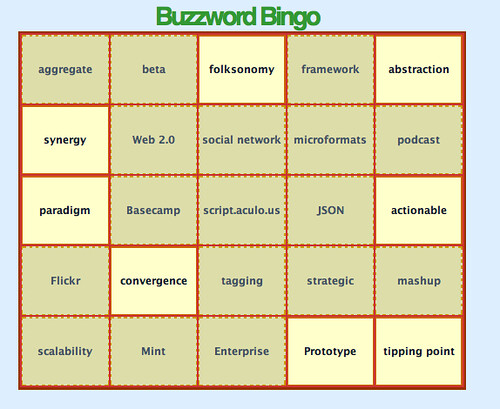
Stephen Gold: Bored Room

It ran up the flagpole
To not one salute.
No win-win was won,
We ate no low-hung fruit. 

The long view was taken,
We kicked every tyre.
No needles were moved 
As we sang to the choir.

There wasn’t the bandwidth
To see this one through.
Would the paradigm shift? 
We just hadn’t a clue. 

Our cutting-edge plan
To abolish cliché
From the meetings we’re forced
To endure every day

In the final analysis
Found no defender,
So we took a step back 
And right-sized the agenda. 

*****

Stephen Gold writes: “I didn’t have any deep philosophical reasons for writing it. It’s just a wry dig at corporate crapspeak and how often very bright people find it irresistible.”

Stephen Gold was born in Glasgow, Scotland, and practiced law there for almost forty years, robustly challenging the notion that practice makes perfect. He and his wife, Ruth, now live in London, close by their disbelieving children and grandchildren. His special loves (at least, the ones he’s prepared to reveal) are the limerick and the parody. He has over 700 limericks published in OEDILF.com, the project to define by limerick every word in the Oxford English Dictionary, and is a regular contributor to Light and Lighten Up Online (where this poem was first published).

Buzzword Bingo” by Zach ‘Pie’ Inglis is licensed under CC BY-NC 2.0.

J.D. Smith, ‘Monday in Las Vegas’

The skirts are off the tables.
A bucket’s on the floor
Until the plumber shows up.
In comped rooms, whales still snore.

An escort takes the day off
For visitation rights.
McCarran’s slots are ringing
With scores of outbound flights.

Housekeeping finds stray bits of
What happens and stays here:
Pawn tickets and a red chip,
Three shoes and one brassiere.

Booms or busts in housing
Roll through the neighborhoods,
And long-haul trucks deliver
All necessary goods.

Lit hard against the evening,
Severe and even grand,
The Luxor’s daytime profile
Recedes into the sand.

*****

J.D. Smith writes: “What happens behind the scenes—backstage, in the restaurant kitchen, under the metaphorical hood, what have you—has long fascinated me. Most of the time we don’t get to see the mechanics, the furious underwater paddling of the duck.
“In my experience, nowhere is the gap between the making and the made more pronounced than in Las Vegas. In the previous century a town of about five thousand people has grown to a metropolitan area of a million or so and well beyond its ecological carrying capacity, now accommodating a major airport with slot machines at the gates. Entertainment of all kinds depends on relatively low-paid labor, and pawn shops can be found off the Strip but conveniently close to it.   
“The city’s artifice if not hubris arguably culminates in the Luxor Hotel, which my friend the writer and editor Henry Perez has called “the world’s largest piece of kitsch.” I would also call it an embodied non sequitur. A glass pyramid with a massive Sphinx, it imitates the most famous structures of a civilization based on floodplain agriculture, generally not a viable option in Nevada. The Luxor is part of a small break in the desert, and my money is on the latter.”

This poem was collected in The Killing Tree.

J.D. Smith’s seventh collection of poetry, The Place That Is Coming to Us, will be published in September by Broadstone Books. His first fiction collection, Transit, is available from Unsolicited Press. Further information and occasional updates are available at www.jdsmithwriter.com.

Photo: “Why I hate Las Vegas” by mayhem is licensed under CC BY-NC-SA 2.0.