Monthly Archives: August 2025

Semi-formal verse: Barbara Loots, ‘The State of Absolute Nap’

Its conditions are rare. You must be free
of all desires but one: to sleep. You must be alone,
completely isolated from the compelling hum
of traffic or tv. There must be no phone,
unfinished book, or business left undone,
no guilt about neglecting anyone,
and nowhere to go too soon.
Let there be rain on a long afternoon
in the deep woods, at the end
of a long path, where no one will come,
after the last word with a listening friend.

*****

Barbara Loots writes: “Far from the original location of this poem, on a tiny island off the grid in Ontario, I discover that the state of absolute nap is nearly a sure thing any day. I acknowledge with gratitude that ‘Nap’ was first published by poet and editor Jane Greer, who kept the flame of formal poetry alight in the Plains Poetry Journal for many years.”

After decades of publishing her poems, Barbara Loots has laurels to rest on, but keeps climbing. The recent gathering at Poetry by the Sea in Connecticut inspired fresh enthusiasm. Residing in Kansas City, Missouri, Barbara and her husband Bill Dickinson are pleased to welcome into the household a charming tuxedo kitty named Miss Jane Austen, in honor of the 250th birthday year of that immortal. She has new work coming in The Lyric, in the anthology The Shining Years II, and elsewhere. She serves as the Review editor for Light Poetry Magazine.

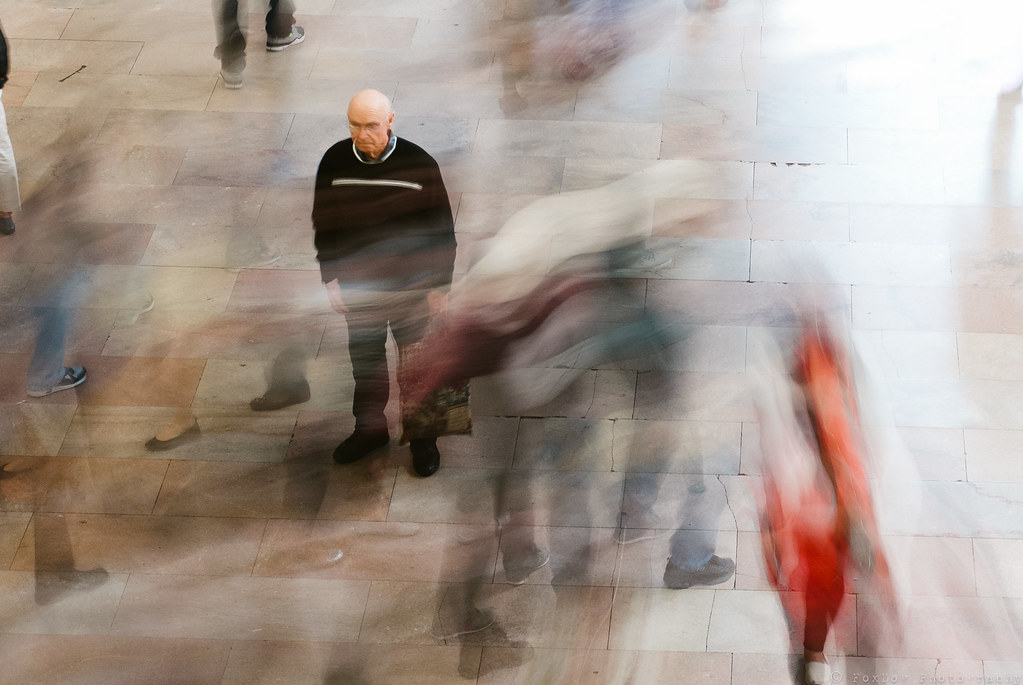
Photo: “331 of 365” by Leah.Markum is licensed under CC BY-NC-SA 2.0.

Amit Majmudar, ‘Poem that Almost Rhymed’

Sometimes I visit bodies where I almost roamed
and the curves are made of clouds I almost dreamed,

a consummation missed by just a touch,
an air-to-air refueling broken off,

the hose retracted and the thirst abandoned
as both planes bank in opposite directions.

I hold my almosts in a contact list
of hands I never held, and never lost,

my store of acorns, little lids on ache,
my unmates boarding, one by one, an ark

that sails them, as it must, away from this life,
where I have these three kids, this house, and this wife,

although it could have been somebody else,
a past I passed on quickening my pulse.

When I pull my present closer by the waist,
almost wears the skin of never was.

*****

Amit Majmudar writes: “Poem That Almost Rhymed operates by slant rhymes, mimicking phonetically the speaker’s romantic near-matches that ended up being near-misses. “Close but no cigar,” as the saying goes: the  speaker reflects on friends who almost made love using words that almost chime in melodiously coupling couplets. Incomplete. The sexual imagery is clear but hopefully sophisticated enough not to seem vulgar–particularly the coitus interruptus implicit in the image of mid-air refueling. The last slant rhyme “waist” almost consummates with “was”–two more letters, and the rhyme would fulfil itself as “waste,” the word that epitomizes the underlying regret of the speaker, who acknowledges his happiness but knows, too, that his happiness could have taken another form, perhaps (sigh) one that would have been an ever-so-slightly better match….”

Amit Majmudar is a poet, novelist, essayist, and translator. He works as a diagnostic nuclear radiologist in Westerville, Ohio, where he lives with his wife and three children. Recent books include Twin A: A Memoir (Slant Books, 2023), The Great Game: Essays on Poetics (Acre Books, 2024), and the hybrid work Three Metamorphoses (Orison Books, 2025). “Poem That Almost Rhymed” was first published in Bad Lilies. Majmudar’s next collection, Things My Grandmother Said, is scheduled for early 2026. 
More information at www.amitmajmudar.com

Missed Connection [day 111 of 366]” by Wondermonkey2k is licensed under CC BY-NC-ND 2.0.

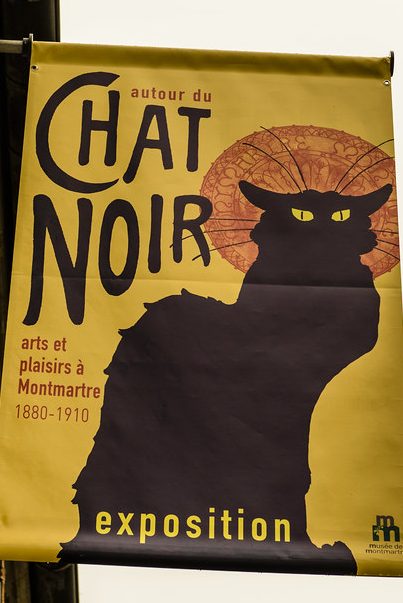
Weekend read: Daniel Galef, ‘Auriol to a Patron at Le Chat Noir’

For it was Auriol who concocted the Chat Noir-Guide toward the end of the nineteenth century. The Guide provides, for every objet d’art and knick-knack purportedly on display in the bar, fantastical tales of provenance.
From Cabaret to Concert Hall, Steven Moore Whiting


Come in, come in! Here, have a glass of beer—
The best in Paris! Whence derives such praise?
The Comte du Saint-Clement, when he drinks here,
And several other lumières Françaises
All say so. (Rimbaud swore “the best in France!”)
Perhaps you have been eyeing some of our
Objets and esoterica? Perchance
You’d like to hear their provenance? Le Soir
Has called the Chat’s decor the greatest work
Of art collection since the Louvre. These darts
Were thrown by Pippi Pavlo of Le Cirque.
This mirror-frame once held a Queen of Hearts
Played by the Duke of Sandwich in the game
At which he famously invented soup.
That specimen was lost before it came
To us—pinched by a croupier with the croup.
The mirror, too, is memorable—this crack
Imparted by a blow from cannon fire.
The cannoneer collapsed. Upon his back
They found the selfsame mark. Since then, each buyer
Has met a grisly fate—until bought by
A suicidal poet named Pierre.
It didn’t work. He gave it to Le Chat
In payment for a shot. We hung it there.
The timepiece on the mantle was a gift
From Pope Immaculate to me. Of course,
At that time, I had left the church. A rift
Arose when I ordained a bishop’s horse.
Ignore the wireless just beside—the news
Is so depressing, no? So . . . uninspired.
The mud, the blood, the bombs, the flu, the coups,
Enough to make Scheherazade tired.
But here! This silhouette is me—back then
I had a beard. I lost it in a duel
With three mad Turkish painters in Ardennes.
The third defaulted. Still I shot. It’s cruel
To leave a loser living. I was called
“The Caesar of Sargasso”—naturally
There wasn’t a resemblance. He was bald
While, under wraps as “Cleopatra Lee”
I worked with Pasteur researching a cure
To hair loss. Though the lab sank in a storm,
I drank the last drop as I swam to shore,
And thus my coiffure’s never lost its form.
This bronze, by Claus of Innsbruck, is a hoot—
So said the critic who is sealed inside
Its twin, the Triton by the stairs. Poor brute!
He knocked for half a week before he died.
It’s best not to insult these artist types.
I have the Gift myself, but can’t unearth it.
To catch the Muse is much like hunting snipes:
They bite, and taste too gamey to be worth it.
Each crystal on that chandelier’s a shard
From Louie Something’s windows at Versailles.
They say there came a witch, old, hunched, and scarred,
One night at midnight. With her one bright eye
She sneered once through the pane, and then departed.
Within a week, the king went mad and smashed
The lot of them, while mumbling “It has started!”
It’s cursed, of course. Too pretty to be trashed.
The candles are of beeswax. And what bees!
They live like princes. Endless fields of flowers
Are tended by the gardeners at Nice
And watered by a set of special showers
Constructed for the grounds by Lord Brunel.
We light them only rarely. For a guest
Such as yourself, I’ll gladly burn one. Well,
Just half. Come back someday, we’ll burn the rest.
These coasters? Quite mundane. They’re bits of planks
I salvaged from the Hesperus. Oh yes,
I once was quite the soldier. Only blanks
I ever loaded in my gun. The rest
Must have a chance, you know. It isn’t fair
To pit them up against whom Nelson dubbed
“The finest shot in Europe.” On a dare,
I handed him my pistol once. He clubbed
Me with his wooden leg. What’s that? His arm?
Oh no, that’s merely what the papers said.
In fact, it was his leg. It does no harm
To stretch the truth a little. Nelson plead
For them (the press) to print it right, but they
Insisted that an arm read better. He,
Of course, cried “What a silly thing to say!
An arm can’t read! Perhaps an eye?” You see,
They listened—Nelson loved Le Chat. You’ll find,
If you direct attention here, I’ll show
You where he signed the bar. Just why he signed
As “Ferdinando Smitty,” I don’t know.
That stool you’re sitting on I carved myself
With a pocketknife from one great slab of teak
When, hounded through a forest by some elf
I climbed a tree and hid there for a week.
That tree was this: The chair. The table, too,
Unless that one’s the Pharaoh’s table—no,
But come along, I’ll show that one to you,
Just past these poker-playing dogs (Van Gogh).
Don’t touch, the paint is fresh! I knew the model,
Lovely gal. Alsatian, I recall.
Her only vice, a weakness for the bottle;
Poor dear! Not drink—the bottle, that was all.
Our barman is a secret Count, a bastard
Practicing the rapier to reclaim
His stolen birthright. So far, he has mastered
Fourteen styles of swordplay. Soon his name
Will grace kings’ lips. For now, he’s just our skinker.
The chambermaid, as well, has quite a story.
A moron, yes? Wrong! Why, that genius thinker
Solved the famous Kjotz Conjecture. Glory
Is nought to her. She labors for mankind,
And for her god (the Devil). The Sorbonne
Has offered her a chair. But she declined.
(They say her mother was Napoleon’s son.)
That busboy? Oh, don’t heed him. He is lame
Not from trench foot, as some (and he) insist,
But—let me see—oh, yes!—a goon whose name
Was “Olaf” chopped his toes off at the wrist,
And now he’s quite—But pray, don’t touch that curtain!
The outside light must never be allowed
To touch these treasures. They’ll tarnish, I am certain.
(Besides, those drapes were Victor Hugo’s shroud.)
Our rum’s supplied by pirates. These fine cups
Looted from the Louvre. These splendid spoons
Are those with which the Mongol chieftain sups.
The silver forks are forged from gold doubloons.
Our beer, which I can see you quite enjoy,
Is brewed by tight-lipped monks who take a vow
Never to speak a lie—I, as a boy
Was in the order. (I have left it now.)

*****

Daniel Galef writes: “A few years ago when I was learning the Gymnopedies and Gnossiennes on piano I also tried reading up on Erik Satie, whose circle was full of interesting eccentrics, especially those frequenting Rodolphe Salis’s famous fin-de-siecle cabaret in Montmartre the Chat Noir: George Auriol, Vital Hocquet, Alphonse Allais, &c. As a fiction writer, I am fascinated by lies and liars and what drives them, and was particularly taken by the fact, mentioned in passing, that Auriol had written and published a fake guidebook for the Chat Noir. I’ve since read more about Auriol, and even tracked down and read (with the help of Google Translate) a scan of the Guide itself (and highly recommend it, if it’s still to be found online), but when it was the only thing I knew about him that line alone in Whiting’s book was enough to serve as springboard for this weird, sort of Browning-y monologue poem, which is one of my favorite things I’ve ever written. The long version was written first even though it was published second; it appeared in 2022 in Bad Lilies, and later I snipped a sonnet out of it, which was published in 2020 in Light (and then in a slightly different form in my first book Imaginary Sonnets).

Daniel Galef’s poetry, half-serious and half-non-, has been published in a variety of venues themselves both serious and non-. His first book, Imaginary Sonnets, collects 70 persona poems from the point of view of various historical figures and literary characters, including Lucrezia Borgia, Christopher Smart’s cat, and a taco. “A Nightingale to a Sad Poet” first appeared in the Spring/Summer 2025 issue of Sein und Werden. Other recent writing can be found in the Indiana Review, the Best Small Fictions anthology, and Scientific American.

Photo: “Le Chat Noir” by Son of Groucho is licensed under CC BY 2.0.

Susan Jarvis Bryant, ‘Armadillo’

A hand for the bandit in leathery livery
Advancing through grass to go grubbing in shrubbery –
Escaping the squeal and the squish of the rubbery
To comb and to roam neath the sun.

A bow to the wow of the charmer in armor,
A friend to the poet, a foe to the farmer –
This bug-crunching muncher, this flowerbed harmer,
Is digging up dirt just for fun.

A nod to the plod of this sod-lobbing critter
Whose shovel-shaped nose prods the gardeners bitter –
He begs me to bless him with lexical glitter
Till wittiest ditties are spun.

*****

Susan Jarvis Bryant writes: “When I first arrived in Texas from the UK, I had an overwhelming urge to feast my curious eyes upon an armadillo. I saw plenty of squished unfortunates callously labeled “roadkill”, but there wasn’t a live one in sight… until five years later on a bike ride at the local wildlife refuge, I saw my first wild armadillo (silver armor gleaming in the midday sun) rooting for grubs on the grass verge. Brimming with joy, I leapt off my bicycle and oohed and aahed from as near as I could possibly get. A lady walked towards me. My husband warned me not to get too exciteable about my find, as armadillos weren’t the most charming of Texas critters. I beg to differ, and the lady (from northern parts, apparently) was as excited as I was. To my husband’s undisguised surprise, we simply couldn’t get enough of this fascinating fellow. I had heard many stories (nearly all bad) and simply had to honor him the only way I know how – hence this poem. I love British hedgehogs and the armadillo is most certainly up there with his Kentish-countryside counterpart.”

Susan Jarvis Bryant is originally from the UK and now lives on the coastal plains of Texas. Susan has poetry published on The Society of Classical Poets, Lighten Up Online, Snakeskin, Light, Sparks of Calliope, and Expansive Poetry Online, The Road Not Taken, and New English Review. She also has poetry published in The Lyric, Trinacria, and Beth Houston’s Extreme Formal Poems and Extreme Sonnets II anthologies. Susan is the winner of the 2020 International SCP Poetry Competition and was nominated for the 2022 and 2024 Pushcart Prize. She has published two books – Elephants Unleashed and Fern Feathered Edges.

Photo: “Nine-banded Armadillo” by http://www.birdphotos.com is licensed under CC BY 3.0.

Daniel Brown, ‘Isn’t That The Way’

A river’s winter-silver
Discerned through screening trees
Takes on a certain sorrow
From the barrenness of these;

Of these whose summer glory
Can seem a little sad,
There being not a glimmer
Of river to be had.

*****

Daniel Brown writes: “I used to live in a seventh-story apartment in Manhattan whose kitchen window gave on Riverside Park and the Hudson River beyond. But this prospect had its limitations. I could see the river’s grandeur only in winter, when the intervening trees in the park were bleakly bare.  In the summer the trees were in glorious leaf—thereby blocking my view of the river. I wrote to a friend that this impossibility of having it all, view-wise, was “an emblem of our plight.”  Over the years I’d occasionally think about doing this predicament up as a poem, but my heart would sink at the anticipated tedium of laying out the situation’s physical set-up—the apartment, its location and elevation, its view—so I never attempted the piece. Then, not long ago, I found myself re-interrogating the poem’s possibilities—and recalling the phrase “emblem of our plight.”  It occurred to me that the poem could be cast as, well, emblematic: that laying out the physical set-up needn’t be burdensome because I didn’t have to lay it out; I could leave it out. Suddenly the poem seemed worth a try.”

‘Isn’t That The Way’ was published some years ago in a journal called Parnassus: Poetry in Review.

Daniel Brown’s poems have appeared in Poetry, Partisan Review, PN Review, Raritan, Parnassus, The New Criterion and other journals, as well as in a number of anthologies including Poetry 180 (ed. Billy Collins) and The Swallow Anthology of New American Poets (ed. David Yezzi). His work has been awarded a Pushcart prize, and his collection Taking the Occasion (Ivan R. Dee, 2008) won the New Criterion Poetry Prize. His latest collection is What More?  (Orchises Press, 2015). Brown’s criticism of poets and poetry has appeared in The Harvard Book Review, The New Criterion, PN Review, The Hopkins Review  and other journals, and the LSU Press has published his critical book, Subjects in Poetry. His Why Bach? and Bach, Beethoven, Bartok are audio-visual ebooks available at Amazon.com. His website is danielbrownpoet.com .

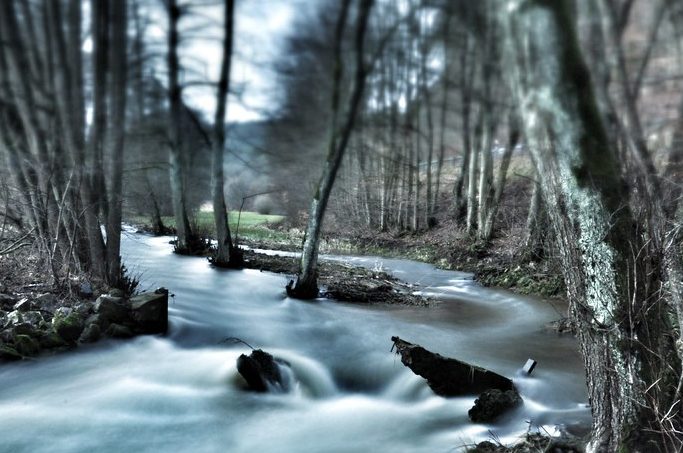
Photo: “Riverside Park South, June 2014 – 01” by Ed Yourdon is licensed under CC BY-NC-SA 2.0.

Short poem: RHL, ‘Heart Attack’

Lust –
Thrust –
Bust –
Dust.

*****

One of the things that intrigues me is the way certain word endings fall into groups, evoke a common mood, sometimes seem to tell their own story. Some of these groups seem natural with overall positive “light, bright, flight, height, white” or negative “dusty, musty, fusty, gusty”; “bumble, crumble, grumble, fumble, stumble, tumble” connotations… but I acknowledge that with the first set I’m ignoring “blight, night, shite” and so on. Some seem random, especially perhaps when the different spellings suggest unrelated origins: “beauty, duty, fruity, snooty,” but still lead to a story.

Happily, I’m not alone in these idle thoughts. Melissa Balmain’s Tale of a Relationship in Four Parts comes to mind… and from Maz (Margaret Ann Griffiths) we have ‘The Drowning Gypsy’:

Flamboyant
Clairvoyant
Unbuo
o
o
o
o
y
a
n
t

Maz’s work is collected in ‘Grasshopper‘; Melissa Balmain’s poem is collected in ‘Walking in on People‘ from Able Muse Press; ‘Heart Attack’ was recently in The Asses of Parnassus.

Photo: “heart-attack” by Pixeljuice23 is licensed under CC BY-SA 2.0.

Weekend read: Stephen Edgar, ‘Murray Dreaming’

It’s not the sharks
Sliding mere inches from his upturned face
Through warps of water where the tunnel arcs
Transparent overhead,
Their lipless jaws clamped shut, extruding teeth,
Their eyes that stare at nothing, like the dead,
Staring at him; it’s not the eerie grace
Of rays he stood beneath,
Gaping at their entranced slow-motion chase

That is unending;
It’s not the ultra-auditory hum
Of ET cuttlefish superintending
The iridescent craft
Of their lit selves, as messages were sent,
Turning the sight of him they photographed
To code: it is not this that left him dumb
With schoolboy wonderment
Those hours he wandered the aquarium.

It is that room,
That room of Murray River they had walled
In glass and, deep within the shifting gloom
And subtle drifts of sky
That filtered down, it seemed, from the real day
Of trees and bird light many fathoms high,
The giant Murray cod that was installed
In stillness to delay
All that would pass. The boy stood there enthralled.

Out in the day
Again, he saw the famous streets expound
Their theories about speed, the cars obey,
Racing to catch the sun,
The loud fast-forward crowds, and thought it odd
That in the multitudes not everyone
Should understand as he did the profound
Profession of the cod,
That held time, motionless, unknown to sound.

In bed at night,
Are his eyes open or is this a dream?
The room is all dark water, ghosted light,
And midway to the ceiling
The great fish with its working fins and gills
Suspended, while before it glide the reeling
And see-through scenes of day, faintly agleam,
Until their passage stills
And merges with the deep unmoving stream.

*****

Stephen Edgar writes: “As the reader may guess, although the poem is cast in the third person, in the figure of a young boy, it describes a visit to an aquarium that I made myself, and as an adult. And on the occasion of this visit I was struck, and deeply impressed, by the single large Murray cod, seemingly floating motionless in its large room-sized tank of water, designed to mimic a section of the Murray River. Impressed in what way? Well, it is hard to say, but there seemed to be a certain mystery and power embodied in this fish, which was sealed off from me, inaccessible. The image stayed with me. However, it was only when I revisited the aquarium some years later that this original mood was reawakened and prompted me to write a poem about it. 

“The challenge was to find the right way to express it.  I didn’t want the poem to seem too portentous and self-important, so I thought that by seeing it through the eyes of a young boy I could give it a certain lightness of touch. But also the young are often considered to be more in touch with the natural world than adults, with their worldly preoccupations. In the midst of all the other superficially more attractive and appealing creatures in the aquarium, this particular boy is transfixed by this large fish. He has, I suppose you could say, a vision. What of? Well, some kind of vision of timelessness and continuity represented in nature, in comparison with which the speed and hubbub of daily life—represented by the city traffic and crowds—seem trivial and unimportant.

“In a way, the poem is already over by the end of the fourth stanza. The main point has been made. But a poem has an aesthetic shape as well as a meaning and I felt the need to round it off in some emotionally satisfying way. So I placed the boy, after the day was over and he was home again, lying in bed reliving his vision. Maybe he is dreaming; maybe he is awake and having a waking dream: either way he sees the fish in the midst of his ordinary everyday room, and overlaid on this he sees the city scenes, which are gradually absorbed by the dream river and dream fish. 

“The word “dreaming” in the poem’s title, while it can refer to this last stanza, is also meant to imply the use of the word in indigenous Australian culture, signifying a body of lore connected to a totemic animal or sacred place.

“The poem is written in a nonce stanza form of my own devising, with nine lines rhyming ABACDCBDB, in pentameter, apart from line one in dimeter, and lines four and eight in trimeter.

“The poem first appeared in Poetry (Chicago). It then appeared in The Red Sea: New and Selected Poems (Fort Worth, Baskerville Publishers, 2012), now out of print; then in my ninth book, Eldershaw; and also in The Strangest Place.”

*****

Stephen Edgar was born in 1951 in Sydney, where he grew up. From 1971 to 1974 he lived in London and travelled in Europe. On returning to Australia he moved with his then partner to Hobart, Tasmania, where he attended university, reading Classics, and later working in libraries. Although he had begun writing poetry while still at high school, it was in Hobart that he first began writing publishable poems and found his distinctive voice. He became poetry editor of Island Magazine from 1989 to 2004. He returned to Sydney in 2005. He is married to the poet Judith Beveridge.

He has published thirteen full collections: Queuing for the Mudd Club (1985), Ancient Music (1988), Corrupted Treasures (1995), Where the Trees Were (1999), Lost in the Foreground(2003), Other Summers (2006), History of the Day (2006), The Red Sea: New and Selected Poems (2012), Eldershaw (2013), Exhibits of the Sun (2014), Transparencies (2017), The Strangest Place: New and Selected Poems (2020) and Ghosts of Paradise (2023). A small chapbook, Midnight to Dawn, came out in 2025, and a new collection, Imaginary Archive,will be published in late 2025. His website is www.stephenedgar.com.au, on which publication details of his books, and where they can be purchased, are given.

He was awarded the Australian Prime Minister’s Award for Poetry in 2021 for The Strangest Place.

Photo: “Murray Cod at Melbourne Aquarium” by brittgow is licensed under CC BY-NC 2.0.
John Gallas ‘A Comforting Sonnet’

‘Caring means a whole new world’ – Croatian Proverb

Rosa Horvat’s hound attacked my legs.
My toes went green. I had a dizzy fit.
They took me to the hospital in Split.
The wards were all full up, so Uncle Dregs
sat by my trolley till he went to work,
then Erno, who’s my mum’s half-brother’s son,
pushed me up and down the hall for fun,
until his grandad’s nephew, who’s a Turk,
came and told me jokes. I wet the bed.
Then someone in a helmet held my hand
and sang a song I couldn’t understand.
Then it was morning, and I wasn’t dead.

I’m home now. Hvala vam if you were there.
Or not. Or sometimes. Friends are everywhere.

*****

Hvala vam – thank you all (Croatian)

John Gallas writes: “As with Camaguey – same collection, the proverb this time being as the little epigraph says. I particularly wanted here a certain tone: I am not a my-thoughts/my-feelings/interesting me sort of poet, and write mostly objective tales, descriptions, experiences that contain anything ‘I’ might want to say. A firm believer in show-not-tell.
“This one has won a couple of prizes: I regularly enter competitions, testing my poems anonymously before judges from The Cats’ League to National Poetry Society. This one won the ‘Caring’ section of a national competition. They liked the ‘humour-and-kindness’ of it all – which pleased me, as that was exactly the tone-intention.
“Wee note: I often set poems – I have travelled much – in various lands and cultures: I have been in trouble for this (my Maori friend, Vaughan Rapatahana, just said ‘Don’t’ when I embarked on some Pacific Island tales-in-verse) but as a Man With No Culture (white NZer?) I feel free to roam, creatively, as long as certain sensitivities are observed. (I have a complex theory as to objection/offence as far as cultures go, but I’ll leave that for now). ‘The Song Atlas’, my best-selling Carcanet book, was a translation of one poem from every country in the world.”

John Gallas, Aotearoa/NZ poet, published mostly by Carcanet. Saxonship Poet (see http://www.saxonship.org), Fellow of the English Association, St Magnus Festival Orkney Poet, librettist, translator and biker. Presently living in Markfield, Leicestershire.
Website is http://www.johngallaspoetry.co.uk which has a featured Poem of the Month, complete book list, links and news.

Photo: John Gallas, Carcanet official photo