Author Archives: Robin Helweg-Larsen

Unknown's avatar

About Robin Helweg-Larsen

Director, Andromeda Simulations International, Bahamas: a global education company providing online and in-person workshops in business finance. Series Editor, Sampson Low's 'Potcake Chapbooks'. Formal verse about traveling, family, love, etc...

Edmund Conti, ‘My Son the Critic’

Read me a bedtime poem, said my son.
So I read him this:

We say hippopotami
But not rhinoceri
A strange dichotomy
In nature’s glossary.

But we do say rhinoceri, he said. Look it up.
So I read him this:

Life is unfair
For most of us, therefore
Let’s have a fanfare
For those that it’s fair for.

I smell a slant rhyme, he said, sniffing.
So I read him this:

While trying to grapple
With gravity, Newton
Was helped by an apple
He didn’t compute on.

My teacher says that’s not poetry, he said.
So I read him this:

René Descartes, he thought
And therefore knew he was.
And since he was, he sought
To make us think. He does.

That made me think, he said. But not feel.
So I read him this:

My hair has a wonderful sheen.
My toenails, clipped, have regality.
It’s just all those things in between
That give me a sense of mortality.

Did the earth move? I asked. Anything?
Nothing moved. He was asleep.

*****

Edmund Conti writes: “This is one of my favorites today. Tomorrow I might have different ones. I like it because it makes me nostalgic for an event that never happened. (My persona has a better life than me.) It came about after I sent the following quatrain to John Mella of Light Magazine (with appropriate punning title, of course).

We say hippopotami
But not rhinoceri
A strange dichotomy
In nature’s glossary.

John liked it and accepted it. I few weeks later he wrote and said he couldn’t use. Talking to a fellow editor, he learned there is such a plural as ‘rhinoceri.’ But now I was in love with my little piece and wanted to salvage it. But how? All I could think of was to take advantage of the poem’s failing. I came up with the idea of showing several possibly flawed quatrains to my son and having him disparage each one. And lo, the poem! I have 2 sons and when either one questions the reality, I just say it was the other one.”

Edmund Conti has many reasons for wanting his poems published—Power! Fame! Money!—but not (as you can see) as a venue for his bio notes.

Edmund Conti has recent poems published in Light, Lighten-Up Online, The Lyric, The Asses of Parnassus, newversenews, Verse-Virtual and Open Arts Forum. His book of poems, Just So You Know, is published by Kelsay Books,
https://www.amazon.com/Just-You-Know-Edmund-Conti/dp/1947465899/
and was followed by That Shakespeherian Rag, also from Kelsay
https://kelsaybooks.com/products/that-shakespeherian-rag

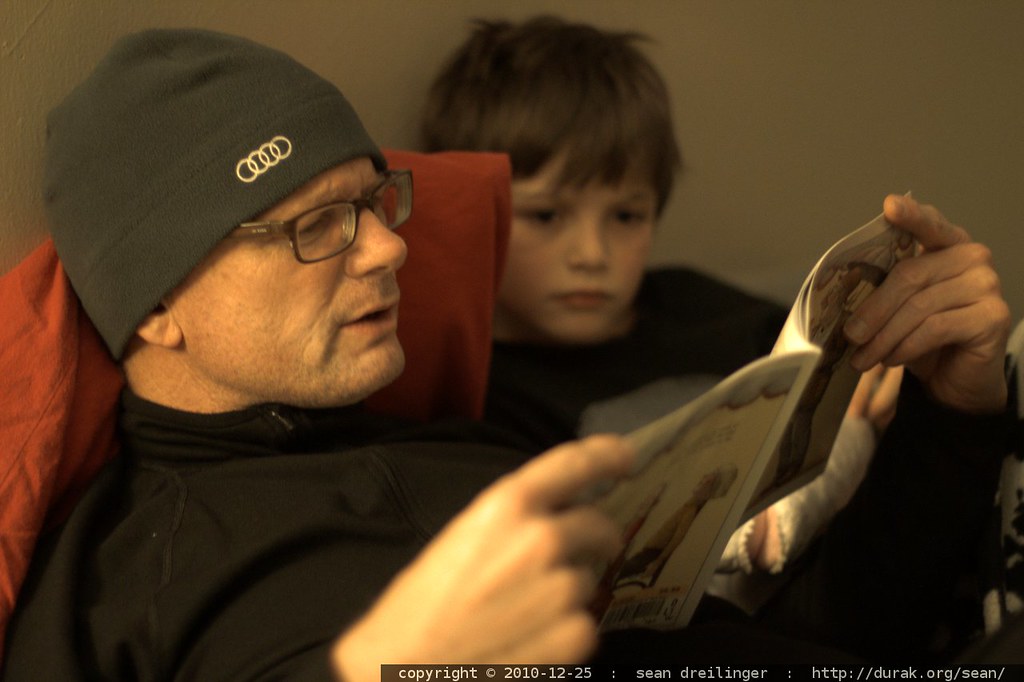
Photo: “grandpa reading nick a bedtime story – MG 6291.JPG” by sean dreilinger is licensed under CC BY-NC-SA 2.0.
Ann Drysdale, ‘Winter Song’

When blizzards blow under the tiles
and the dishcloth crisps on the draining board
and the snowscape stretches for miles and miles
and only the idiot ventures abroad.
When it’s early to bed, and thank heavens for that,
then coldly keens the cast-out cat:
Miaow! Miaow! – a doleful din –
and who will rise and let him in?

When slippery stones by the pond
make filling a bucket an effort of will
and you’re walled-up for weeks in the back of beyond
in a farm at the foot of a hell of a hill
then it’s early to bed, and thank heavens for that,
till coldly keens the cast-out cat:
Miaow! Miaow! – a doleful din –
and who will rise and let him in?

*****

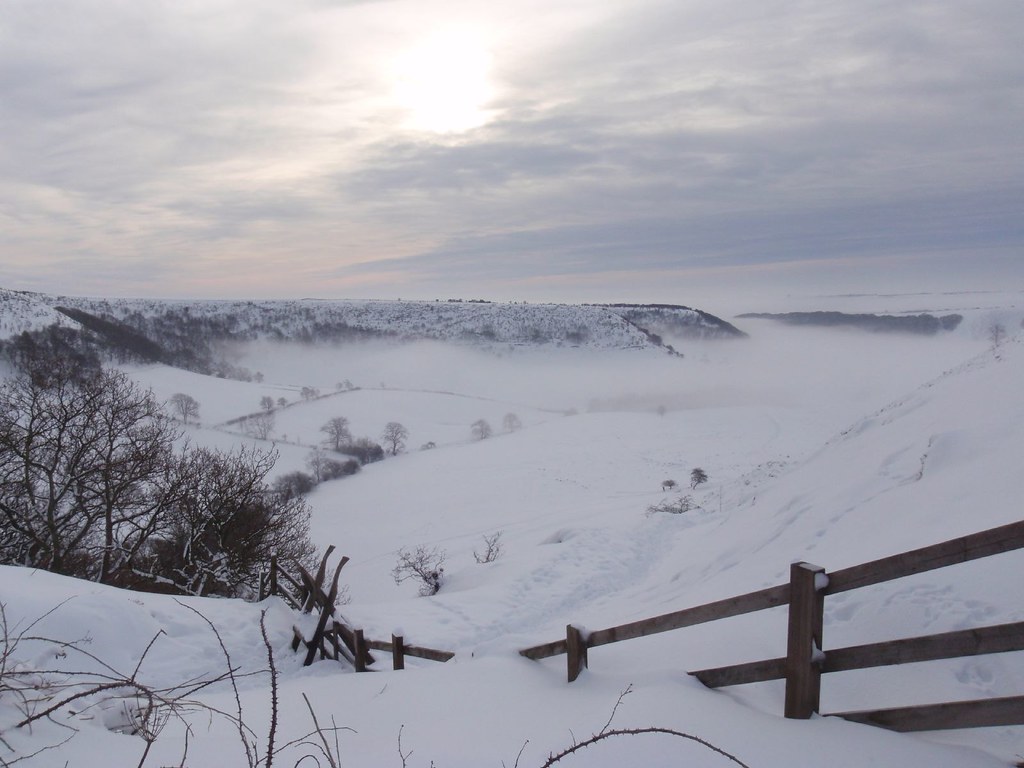
Ann Drysdale writes: “It was published in my very first collection, The Turn of the Cucumber (Peterloo Poets 1995) and dates from a time when I was bringing up three children as a single mum on a hand-to-mouth smallholding on the North York Moors.”

Editor’s note: Ann Drysdale takes the structure, but not the precise metre, of Shakespeare’s ‘Winter Song’ from Love’s Labours Lost. Her rollicking metre allows her “and the snowscape stretches for miles and miles” and the wonderful “in a farm at the foot of a hell of a hill”, for a bigger wintry landscape than Shakespeare shows.

Ann Drysdale now lives in South Wales and has been a hill farmer, water-gypsy, newspaper columnist and single parent – not necessarily in that order. Her eighth volume of poetry, Feeling Unusual, has recently joined a mixed list of published writing, including memoir, essays and a gonzo guidebook to the City of Newport.
http://www.poetrypf.co.uk/anndrysdalepage.html
http://www.shoestring-press.com

Photo: “Hole of Horkum, North York Moors” by reinholdbehringer is licensed under CC BY-NC-SA 2.0.

Joshua C. Frank, ‘The Adventures of Verb’

At six, I had a dictionary
Where I would meet a man named Verb,
Superb and quite extraordinary,
In every definition’s blurb,
Right at the finish, did while doing,
For example: “Verb chewed, chewing.”

In my mind, I saw Verb clearly,
With brown hair, mustache, thin, and tall.
“Verb smiled, smiling” sincerely
And “Verb told, telling” me of all
That “Verb did, doing” through his days
Within a sentence or a phrase.

“Verb ran, running,” “Verb swam, swimming,”
“Verb vaulted, vaulting,” “Verb gave, giving,”
“Verb bought, buying,” “Verb trimmed, trimming,”
“Verb flew, flying,” “Verb lived, living,”
One day I came real close to crying:
The day I read that “Verb died, dying.”

I looked up “verb,” and then I knew,
It’s not a man who lived and died;
It’s just a word that means to do.
Relieved, I put the book aside
And ran outside, where I “played, playing”
The things Verb did that still “stayed, staying.”

*****

Joshua C. Frank writes: “The poem was based on a children’s dictionary I remember from childhood.” It was first published in The Society of Classical Poets.

Joshua C. Frank works in the field of statistics and lives in the American Heartland.  His poetry has been published in The Society of Classical PoetsSnakeskinThe LyricSparks of CalliopeWestward QuarterlyNew English ReviewAtop the CliffsOur Day’s EncounterThe Creativity WebzineVerse VirtualMedusa’s KitchenThe Asahi Haikuist Network, and LEAF Journal, and his short fiction has been published in Nanoism and The Creativity Webzine.

https://www.newenglishreview.org/authors/joshua-c-frank/

Graphic: “moustache man” by A_of_DooM is licensed under CC BY 2.0.

Ed Shacklee, ‘Burn’

I took the way of stone,
not water, air or fire:
one element alone
could complement desire.

Not to quickly flare,
nor to slyly flow –
no fickleness of air
could whisper where to go;

for I was each, in turn,
as years unearthed the soul,
yet found no way to burn
but dark and pressed as coal.

*****

Ed Shacklee writes: “I very seldom know what to say about a poem; the cage opens, and the bird flies away – often not quite finished.”

Ed Shacklee lives on a boat in the Potomac River. His first collection, “The Blind Loon: A Bestiary,” was published by Able Muse Press.

And for those who like odd information and representations of animals, The Blind Loon: A Bestiary Facebook group is worth joining.

Photo: “Glowing Coals” by chrisgintn is licensed under CC BY-NC-SA 2.0.
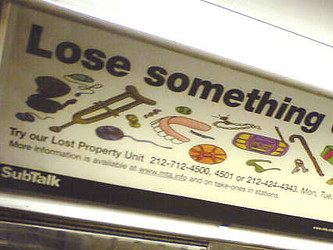
Barbara Loots, ‘Small Things’

Things have a tendency to lose themselves:
hammer, needle, the necessary spring,
a button, the keys–they disappear like elves,
like roses, wishes, the words for everything.

Dive in. Ransack a drawerful of debris.
Wrestle with irritation, grief, self-doubt.
One earring, that pen, eyesight, dignity:
small things we learn, in time, to do without.

*****
Barbara Loots writes: “The small losses and lapses of memory that happen to everyone seem more vivid and alarming as I grow older. I realize that it isn’t things but myself I must gradually, inevitably let go of. Even so, the vast, abundant universe brings perspective to the human situation, including mine.”

Barbara Loots resides with her husband, Bill Dickinson, and their boss Bob the Cat in the historic Hyde Park neighborhood of Kansas City, Missouri. Her poems have appeared in literary magazines, anthologies, and textbooks since the 1970s. She is a frequent contributor to lightpoetrymagazine.com. Her three collections are Road Trip (2014), Windshift (2018), and The Beekeeper and other love poems (2020), at Kelsay Books or amazon. More bio and blog at barbaraloots.com

Photo: “Things you might lose on the subway” by Hippolyte is licensed under CC BY 2.0.

Marcus Bales, ‘Down-sizing’

I will retire and go to buy a ranch-house home,
And a fenced yard build there, for the dogs to roam around,
And raised beds, full of easier-weeding loam,
And cultivate my garden’s ground.

And I shall have my wife there, who knows the signs of stroke.
Morning and night, we’ll take the pills our doctors gave us,
And cook our meals of beans and rice because we’re broke —
And hope the kids vote blue, and save us.

I will retire, and maybe write and, when I’ve napped,
Cruise the internet, perhaps, and lament the loss
Of civility, and watch the fascists arrive, wrapped
In the flag, and holding a Bible and cross.

*****

Marcus Bales writes: “Yeats‘s ‘The Lake Isle of Innisfree‘ irritates me. Its narrator, left to live on an isle, would be dead in a week. Yeats’s mode of life was a series of retreats from country-home to country-home, sponging off the wealthy. Retreat is his vade mecum, and ‘The Lake Isle’ is only his most famous one. So I thought, well what the hell am I doing differently? And the answer is, not much. I made a career out of selling expensive things to rich people, too. And my retirement will be a retreat as well. Where’s my Lake Isle? In the suburbs, funded by Social Security instead of Lady Gregory, perhaps, but no less a throwing up of the hands and leaving it to the next generation to try to straighten out what mine has done.

“So Yeats’s narrator retreats to the high-fantasy farming of an isle in a lake, as if farming weren’t hard enough but it needed the difficulties of getting supplies across water. My narrator retreats to the suburbs without enough money to sustain his prior lifestyle. Two silly poets writing silly stuff.”

Not much is known about Marcus Bales except that he lives and works in Cleveland, Ohio, and that his work has not been published in Poetry or The New Yorker. However his ‘51 Poems‘ is available from Amazon. He has been published in several of the Potcake Chapbooks (‘Form in Formless Times’).

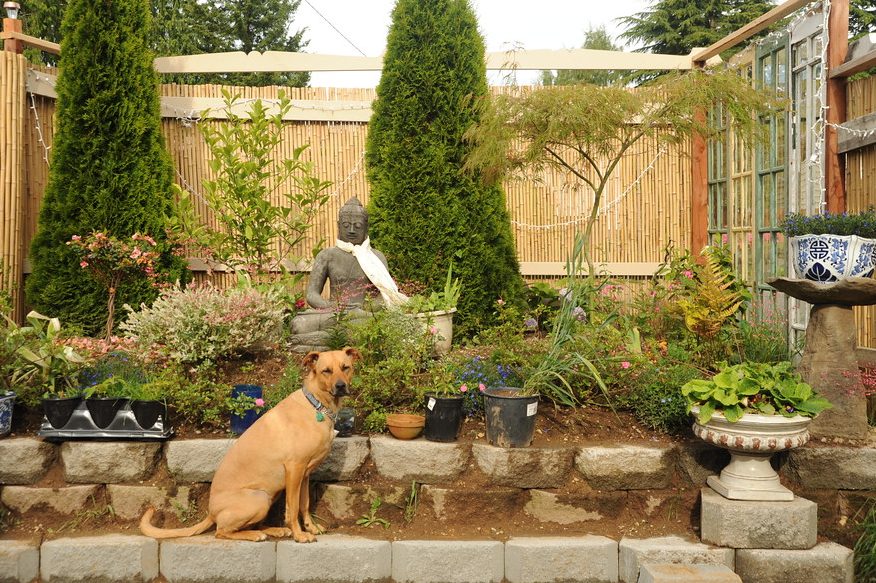
Photo: “Rosie poising with the garden Buddha, plants, raised bed, bamboo fence, Garden for the Buddha in progress, front yard, Seattle, Washington, USA” by Wonderlane is marked with CC0 1.0.

Barbara Lydecker Crane, ‘Justin Case’

Justin Case is a very cautious man.
He keeps a cache of bottled water, food
and a pair of spares in the trunk of his sedan.
Others think that he’s aloof or rude
when he inspects each fork and spoon for germs.
His sisters know he swivels out of kisses.
He navigates the office on his terms;
Justin shuns each outstretched hand–and misses
clinching business deals. He cannot fathom
why colleagues eye him strangely when he hits
an elevator button by lifting past them
his wing-tipped toe. With snakebite kit
and mosquito netting, he’s ready to embark 
upon his lunchtime stroll in Central Park.

*****

Barbara Lydecker Crane writes: “This poem, first published in the Atlanta Review, was one of the first persona poems I wrote: I’ve written several dozen over the years, and I find I love trying to speak for another person, real or imaginary. Maybe the process develops empathy, as well–who knows?”

Barbara Lydecker Crane was a finalist for two recent Rattle Poetry Prizes. She has received two Pushcart nominations and various awards from the Maria W. Faust and the Helen Schaible Sonnet Contests. Her poems have appeared in Atlanta Review, Ekphrastic Review, First Things, Light, THINK, Valparaiso Literary Review, Writer’s Almanac, many others, and in several anthologies. Her fourth collection, You Will Remember Me (ekphrastic, persona sonnets) was recently published by Able Muse Press, and is available from Amazon: https://www.amazon.com/You-Will-Remember-Me-Ekphrastic/dp/1773491261. Barb lives with her husband near Boston.

Photo: “i’m so scared you know” by timsnell is licensed under CC BY-ND 2.0.

Richard Fleming, ‘Time 2’

A hamster racing on a wheel,
a movie spinning on a reel,
the clock-hands march inexorably.
What they record, we cannot see
or touch, or hear, or smell, or taste,
yet it diminishes. Make haste.

*****

Richard Fleming writes: “When young, I thought about time in terms of how quickly I could run 200 metres and, later, whether I could dip under 35 minutes in a 10k road race. Yes, I was shallow then but youth and shallowness often go hand in hand: they did in my case. Grown older (let’s be honest, old) , Time has acquired a capital T and seems to have morphed into a rather unnerving companion who demands more and more of my attention every day.”

Richard Fleming is an Irish-born poet (and humorist) currently living in Guernsey, a small island midway between Britain and France. His work has appeared in various magazines, most recently Snakeskin, Bewildering Stories, Lighten Up Online, the Taj Mahal Review and the Potcake Chapbook ‘Lost Love’, and has been broadcast on BBC radio. He has performed at several literary festivals and his latest collection of verse, Stone Witness, features the titular poem commissioned by the BBC for National Poetry Day. He writes in various genres and can be found at www.redhandwriter.blogspot.com or Facebook https://www.facebook.com/richard.fleming.92102564/

Susan McLean, ‘Received Wisdom’

Unpacking it, we wondered who had sent it
and why they felt we needed it. We thought
we’d managed fine without it. Had they meant it
as tribute or rebuke? We had been taught
to view unsought donations with suspicion.
Inspecting it, we found a hairline crack.
It doesn’t suit our taste or disposition.
In short, we must insist they take it back.

*****

Susan McLean writes: “Finding new meanings in old phrases is one of my favorite games. In the case of the poem’s title, I was thinking about how each generation wants to pass along advice to the next generation, which the next generation tends to reject. Advice always feels like criticism, however well intended it may be. Moreover, the world is changing so fast that advice that worked for one generation no longer fits the reality of the next generation.

“The alternating feminine and masculine rhymes in the poem are meant to mimic the interplay between two generations, or any two groups that have differing views. ‘Received Wisdom’ was originally published in Free Inquiry and later appeared in my second book of poems, The Whetstone Misses the Knife.”

Susan McLean has two books of poetry, The Best Disguise and The Whetstone Misses the Knife, and one book of translations of Martial, Selected Epigrams. Her poems have appeared in Light, Lighten Up Online, Measure, Able Muse, and elsewhere. She lives in Iowa City, Iowa.
https://www.pw.org/content/susan_mclean

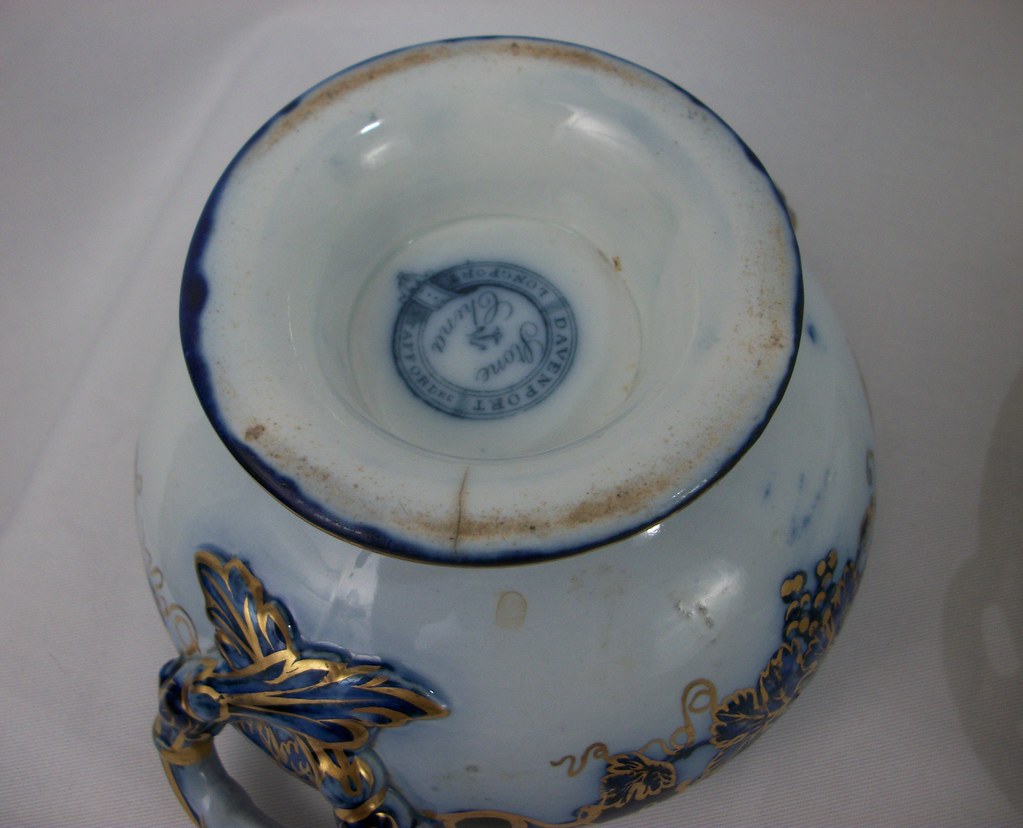
Photo: “sauce tureen 2, hairline” by pgintx1128 is licensed under CC BY-SA 2.0.

Using form: villanelle: Ann Drysdale, ‘A Harmless, Necessary Cat…’

(Shakespeare. The Merchant of Venice, IV, I)

Sing, in the season when convention brings
Frivolous gifts and merry masquerade,
A song of harmless, necessary things.

See how each household purposefully strings
Its fairylights, a debt of honour paid
To obligation that December brings.

Joy to the world! Hark how the welkin rings!
Joy to the merchant and his stock-in-trade!
Let us not think of necessary things!

Across the world the timeless story sings:
A homeless baby, refugees afraid,
The human need that dispossession brings,

Yet round and round the hurdy-gurdy swings
And up and down the characters parade
With scant regard for necessary things.

A placid cat, angels with cardboard wings
And all things heaven-given and home-made
Are at the heart of what this message brings.
I wish you harmless, necessary things.

*****

Ann Drysdale writes: “It was originally written as a Christmas card and was circulated only among friends. Compliments of the season to you and yours.”

Ann Drysdale now lives in South Wales and has been a hill farmer, water-gypsy, newspaper columnist and single parent – not necessarily in that order. Her eighth volume of poetry, Feeling Unusual, has recently joined a mixed list of published writing, including memoir, essays and a gonzo guidebook to the City of Newport.
http://www.poetrypf.co.uk/anndrysdalepage.html
http://www.shoestring-press.com