Category Archives: Robin Helweg-Larsen

Sonnet: RHL, ‘Zombies and Wolves’

Women I’ve failed or wronged or left behind
approach my thoughts like zombies for the kill;
I’ve literary walled defences – still
given the chance, they’ll eat my brains, my mind.

Through forest, orchard, farmyard in decay,
a shadow of a wolf slips greyly in,
my thoughts of death, grim, wasted, ill, rib-thin,
tracking my weak resolve, hungry to slay.

Mountaintops blown apart, forests clear-cut,
where’s there to hide? Nature doesn’t exist;
her landscapes crushed in patriarchal fist.
This former farmland hides my ruined hut.

Impotent, I still write, thus giving birth
to future wolves and zombies of the earth.

*****

This sonnet was originally published in Candelabrum (a twice-yearly print magazine of formal verse that ran bravely from 1970 to 2010… now sadly defunct, eaten by wolves or zombies or whatever snacks on print poetry magazines), and republished in Bewildering Stories #1039, a decades-old online magazine of primarily speculative fiction.

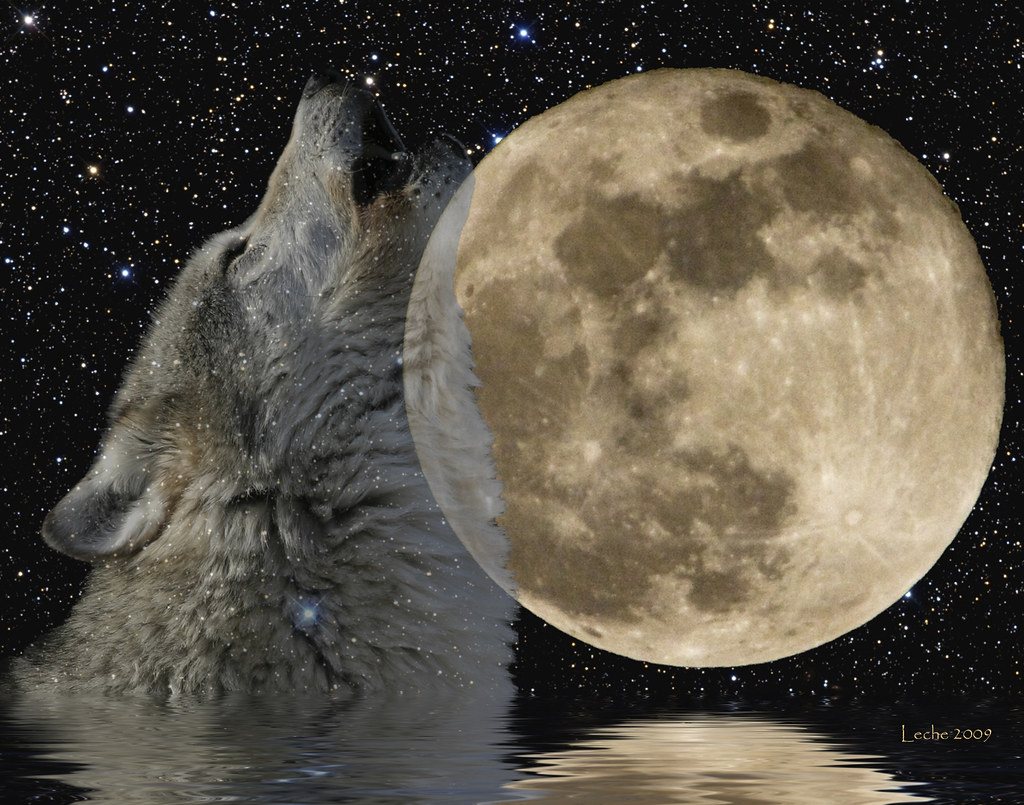
Photo: “Full ‘Wolf’ Moon – January 22, 2008” by Rick Leche is licensed under CC BY-NC-ND 2.0.

Short NSFW poem: RHL, ‘The Fig Tree’

The fig leaf symbol’s one of History’s greats
As, inter alia,
It hides, discloses and exaggerates
Male genitalia.
The fruit itself suggests the female form —
Dripping with honey
The little hole breaks open, pink and warm…
The Bible’s funny.

First published in The Asses of Parnassus, this poem was republished in Better Than Starbucks, which earned a “Kudos on your brilliant ‘The Fig Tree'” from Melissa Balmain, editor of Light. And it has now been added by Michael R. Burch to my page in The HyperTexts. That’s a wonderful set of editorial acceptances – it makes me proud, and I have to erase my lingering suspicion that the poem would be thought too rude for publication. Now I rate the poem more highly, as being not just a personal favourite but also acceptable to a wider audience.

It sometimes feels that all I write is iambic pentameter. It is always reassuring when a poem presents itself with half the lines being something else, and the result is a lighter, less sonorous verse. The rhymes are good; the poem’s succinct and easy to memorise. I’m happy with it.

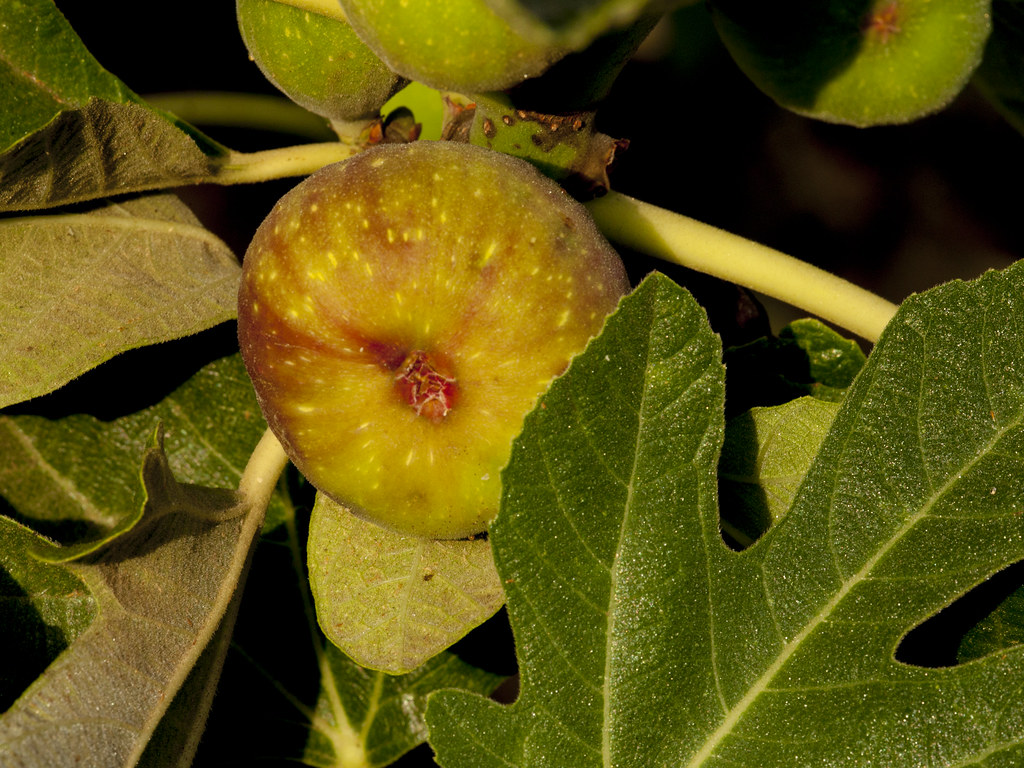
Photo: “Ripe Fig at Dawn” by zeevveez is licensed under CC BY 2.0.

Short poem: RHL, ‘Flying to Majorca in March’

Drop me down out of the cold wet gloom
into the orange trees in bloom:
the olives, almonds, windmills, cypresses,
the black-eyed girls with wild tresses;
where once were barren hillsides, peasants, mules,
are now estates with swimming pools.

*****

Mallorca, or Majorca to the English, has always been an attractive destination for people from further north. Frederic Chopin and George Sand moved there at the beginning of their relationship, spending three months while Chopin completed his 23 preludes in each of the major and minor keys (but the locals were suspicious of his coughing, and were antagonised by George Sand’s avoidance of church; the couple moved on). Robert Graves (whose Wikipedia entry’s Sexuality section is mind-boggling) lived for decades in the village of Deia, also associated with Anais Nin, Richard Branson, Mick Jagger, Mark Knopfler, etc. And these days Mallorca gets over 10 million tourists a year.

My short poem is inconsequential, but it has just been published in the September issue of Allegro, which is themed on ‘Flight’. It was a simple reflection on revisiting Mallorca decades after summer holidays there.

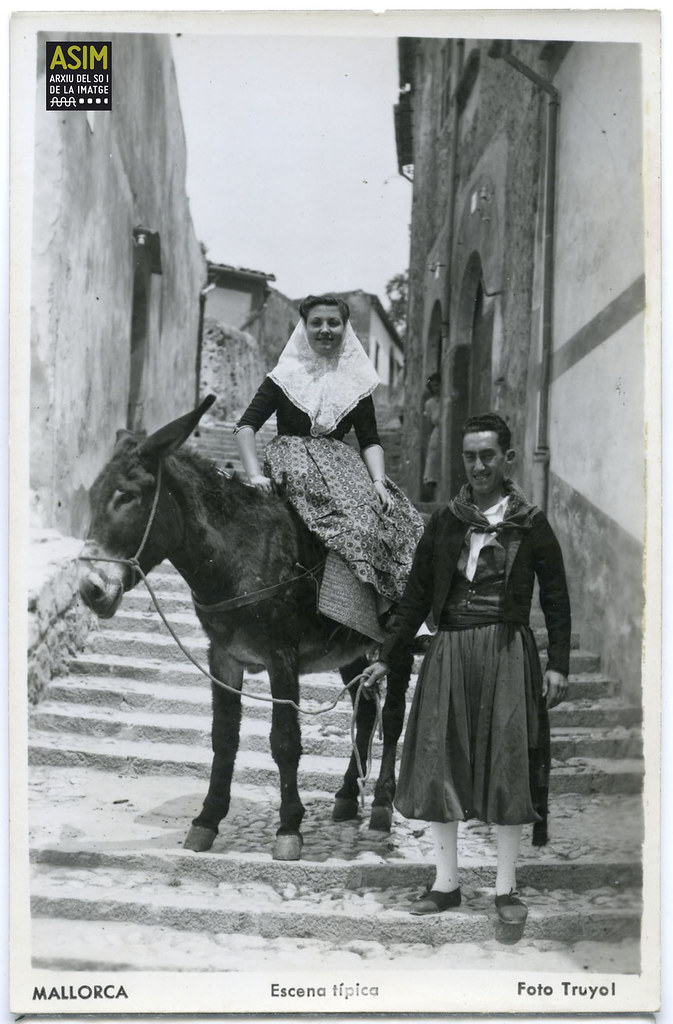
Photo: “Parella i ase” by Arxiu del So i de la Imatge de Mallorca is licensed under CC BY-NC-ND 2.0.

Short poem: RHL, ‘I Started Out Alone’

I started out alone,
No numbers and no words.
The people gave me food and clothes.
I loved the sun and birds.

And when I reach the end
Numbers and words all done,
Have to be fed and dressed again,
I’ll love the birds and sun.

*****

This is one of my favourite poems, for several reasons:
First, it extols the combination of curiosity, enjoyment and acceptance that I believe is appropriate for this thing called life.
Second, it is simple in expression: simple words, simple rhythm, in iambics with simple full and slant rhymes.
And third (and perhaps most importantly) it is easy to memorise: it has lodged itself in my brain without any effort or even intent on my part and, as this blog frequently claims, that is the essence of poetry.

‘I Started Out Alone’ was originally published in Bewildering Stories in 2019. More recently it was included in a batch of my poems that Michael R. Burch spotlighted in The Hypertexts for August 2024.

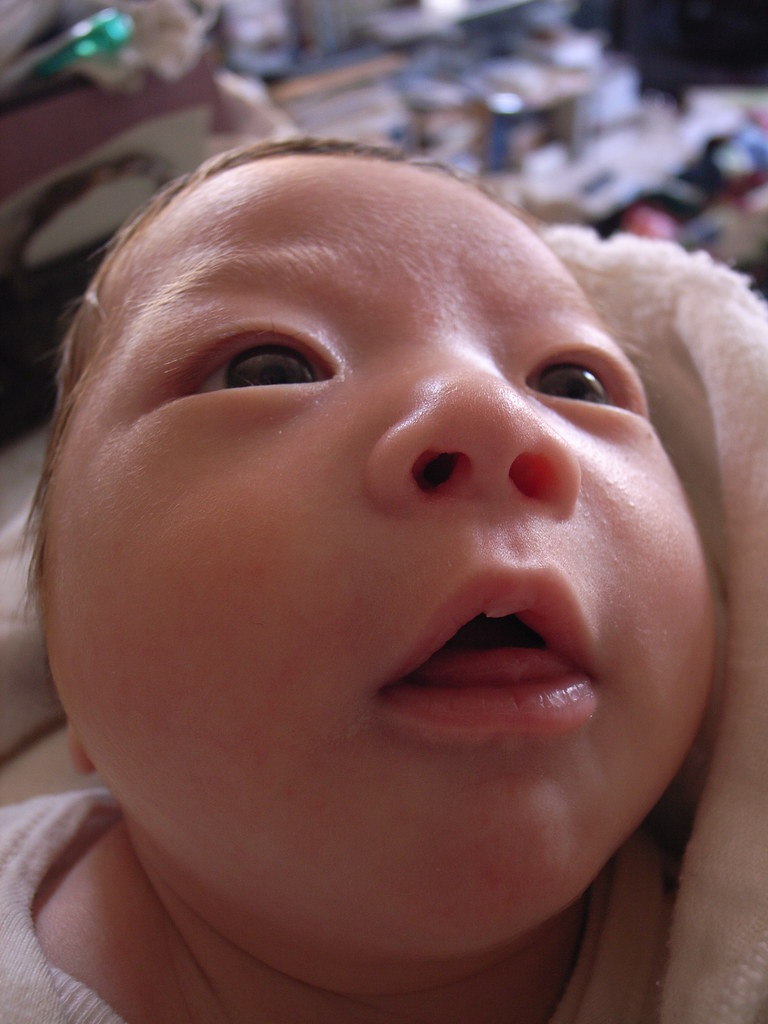
Photo: “Baby face” by matsuyuki is licensed under CC BY-SA 2.0.

Semi-formal: RHL, ‘Terminal’

Christian culture’s crucifixation
nails us to our seats as, station by station,
we travel the trammelled line
until we find
that terminal
more primal.

The humanstrain’s end-of-line stop
is Ragnarok.
Everyone please disembark
into the dark–
no light, no map.
Mind the Ginnungagap.

*****

This is as close as I get to religion: existential uncertainty. I’m a Militant Agnostic: “I don’t know… and neither do you!” Yet this attitude is apparently compatible with religion, being not that different from Eliot’s ‘East Coker‘:
O dark dark dark. They all go into the dark,
The vacant interstellar spaces, the vacant into the vacant,
The captains, merchant bankers, eminent men of letters

(…)
I said to my soul, be still, and let the dark come upon you
Which shall be the darkness of God.

But Christianity? I think not. Altogether too unlikely, with so many impossibilities packed into such a small understanding of the cosmos. We don’t know where we are headed, not just as individuals with finite lives, but as a species that is simultaneously developing space travel and genetic modifications… the possibilities are endless and the future, dark as well as light, is unknowable.

The poem is semi-formal with its loose iambics and paired rhymes or slant rhymes, but no structure beyond its natural flow. It was originally published in the Experimental section of a 2019 issue of Better Than Starbucks, and republished as part of work being spotlighted in The HyperTexts in August 2024.

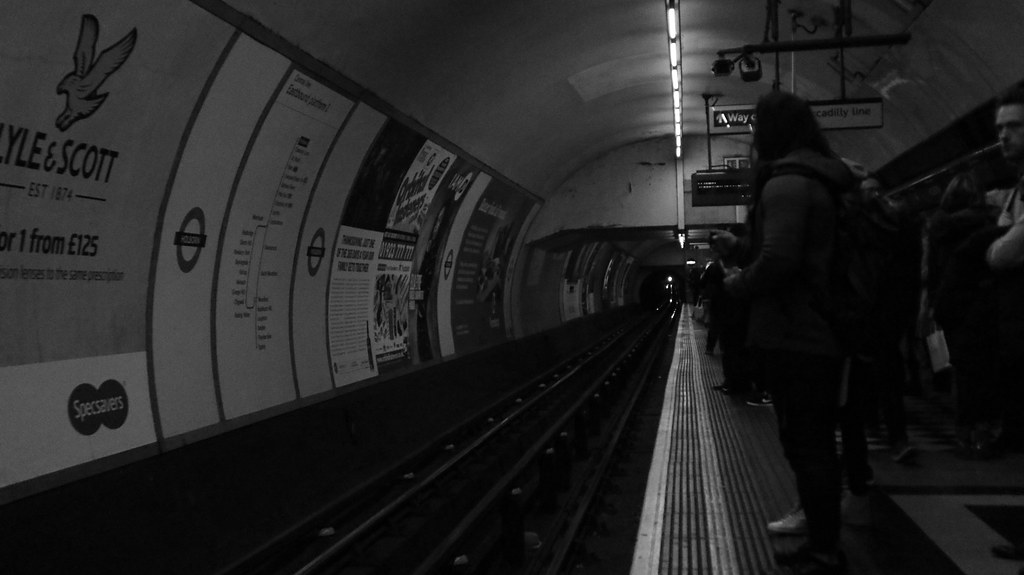
Photo: “London Holborn tube station in Black and White effect” by Patrick Cannon Tax Barrister is licensed under CC BY 2.0.

Semi-formal: RHL, ‘Laffable Religion’

No matter how seemingly affable,
a priest always hopes to be greased;
while others, invoking hellfire,
have us wait for our trip in the hearse
and preach in their suits neatly creased,
these fishers of men that are gaffable,
in this world that they’ve made mud and mire.
That the point of a flock’s to be fleeced
can only be said in light verse;
for religion is simply so laughable
it’s amazing it’s not yet deceased.

*****

Isn’t it amazing that the Pope can claim to have voluntarily taken a vow of lifelong poverty, and millions of his supporters who live in involuntary poverty send money to support him living in a palace? Is it different from a billionaire politician soliciting donations from his impoverished supporters? Is the human need to glorify the tribal god and the tribal leader never going to end?

This poem was first published in The HyperTexts, as part of the August 2024 Spotlight.

Using form: Ruba’i: RHL, ‘Ancient Tales of Love and War’

The pipes and women wail and skirl,
deaths following the flowering girl.
Ancient tales of love and war
show costs of dimple or a curl.

Tamil spear tips illustrate
intent before the towering gate;
bangles slide on her young wrists;
kings make war when made to wait.

Gods and goddesses choose sides:
a Trojan steals a youthful bride.
Who Trojans were we’ll never know –
Greeks burn the city, once inside.

A lovely face, a swelling bust –
and treasure, fame – inspired by lust
kings storm the ramparts, steal the girl,
before, like all, they turn to dust.

*****

This poem was inspired by a blog post in ‘Horace & friends’ on ‘Doing without consolation – Tamil poetry, Yeats and Simone Weil‘. The author, Victoria, touches on a lot more topics than my small piece does; visit her blog to see how Yeats’ “Like a long-legged fly upon the stream / Her mind moves upon silence” connects to ancient Tamil as well as ancient Greek poetry…

My poem here is in iambic tetrameter (with some liberties taken), rhyming AABA in English ruba’i form. It was published in the current (August 2024) Snakeskin, issue 320.

Illustration: The Fall of Troy by Johann Georg Trautmann (1713–1769)

Short poem: RHL, ‘Ghosts Twitter’

Ghosts twitter in my head like the memory of predawn birds.
Digging below my present house I find
a structural supportive past with rock veins to be mined.
Upstairs the future isn’t fully built or roofed.
Has someone goofed?
The Architect is vague on final thirds.

*****

I am finding many ways to say I don’t understand existence at all; this is one of them.

This short, semi-formal poem was published recently in The Lyric.

Photo: “unfinished house” by Lodigs is licensed under CC BY-NC-ND 2.0.

Semi-formal poem: RHL, ‘Layered Understanding’

The Universe with which we grapple
searching for structure, meaning, is no apple
with glossy skin outside, substance beneath,
where deep within its core it meets our needs
to find its meaning: seeds.
No, it’s an onion – peel off the outer sheath
of sensory impressions,
and you uncover explanations
coming first from mystic revelations
and then from faith’s and Science’s professions.
Research from Galileo through to Quantum realms
reveals, and contradicts, and overwhelms
until you take away the final layer
and find: there’s nothing there.

*****

I’m a Militant Agnostic: “I don’t know, and neither do you!” We keep searching and probing, the certainties get disproved, new lines of enquiry open up… and off we go again, Quixote-like, because we’re humans.
This poem rhymes irregularly, and is in iambics of different line lengths. Semi-formal.

‘Layered Understanding’ was first published in the Shot Glass Journal #43.

Photo: “half onion peeled” by Hanna Khash is licensed under CC BY 2.0.

Semi-formal? or Spoken Word? RHL, ‘Life is a Bubble’

A life is a bubble:
somewhere the Grand Druid
dips his wand into the universal fluid
and then a new life is formed, floating
on chance breezes until it – pops –
and the thin skin coating
falls back to earth as mere drops,
the shape and rare rainbow glint gone to air,
and the bubble is where?

Earth is a bauble
in the universal flux,
as it foams, boils and freezes,
just dust from God’s various mucks,
sneezes afloat on chance trans-solar breezes.

The humans babble,
rabble rising from the rubble of other lives cut to stubble,
they burble some Bible as they gab, grab and gobble,
cobbling conning towers of Babel and Hubble,
their progress hobbled by their wobbly bobble,
reams of hopes, dreams and schemes
just a bubble.

*****

Sometimes a chance-occurring phrase in some moody mode of thought lets me ramble wildly through tangled words and ideas. It’s not amenable to regular form, but it’s fun. It seems in the spirit of Spoken Verse, though I’ve never performed. The earliest poem I wrote in this style is from over 50 years ago… which is 30 years before I ever had a poem accepted for publication. I was definitely out of step with the non-verse that then controlled the poetry industry to the exclusion of almost all actual verse. Things have eased in recent years, and dozens of poems from those early years have since been published. (Note to struggling young poets: Don’t give up! But have another career that pays money!)

Anyway, ‘Life is a Bubble’ only needed a couple of years to be published in 2024 in The Lyric.

Photo: “Blowing bubbles” by Song_sing is licensed under CC BY 2.0.