Category Archives: Robin Helweg-Larsen

Using form: alliteration: RHL, ‘How Brashly Brave’

How brashly brave, embroiled in this brief life,
we chance our challenge to the unchanging gods!
Strike poses, strut the strident stage of strife,
take optimistic oaths against all odds.

Fearless of foes, false friends, futility,
we wrack our reason to reach, undestroyed—
though usually of no utility—
a burst of brightness bettering the void.

*****

Although I prefer to maintain an unobtrusive persona myself, I subscribe to this philosophy of bravado existentialism. The florid alliteration suits the message.

This poem is published in the current issue of Light – thanks, Melissa Balmain and all.

Photo: “Flamboyant Emperor of the United States” by PeterThoeny is licensed under CC BY-NC-SA 2.0.

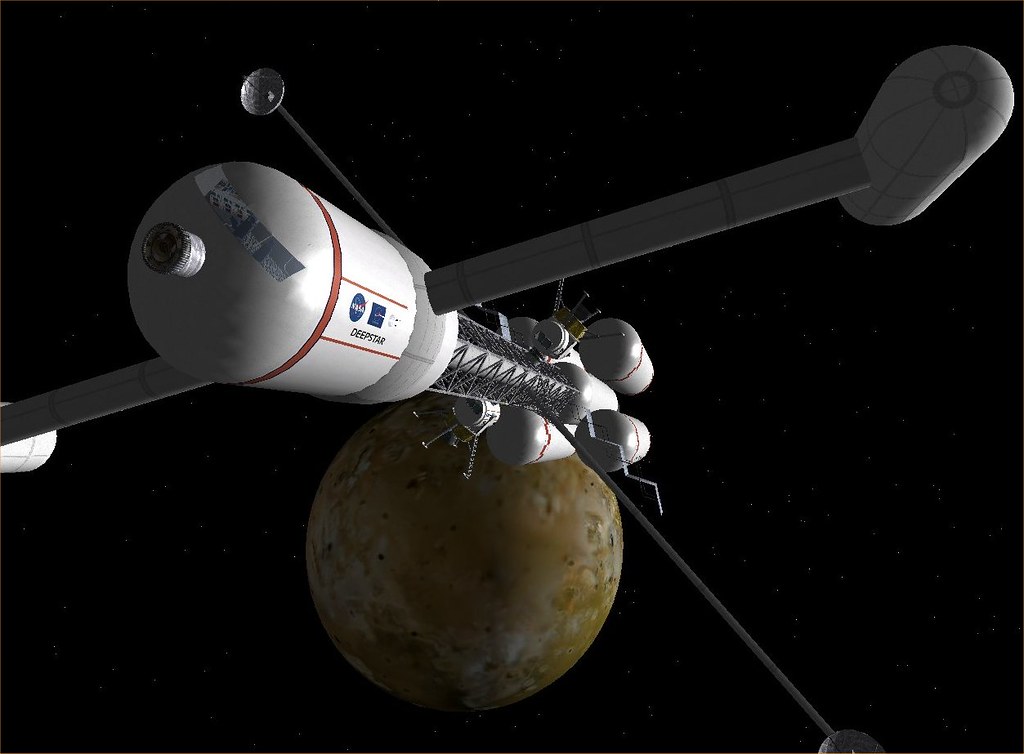
Using form: SF sonnet: RHL, ‘On a Dead Spaceship’

On a dead spaceship drifting round a star,
the trapped inhabitants are born and die.
The engineers’ broad privileges lie
in engine room and solar panel power.
The fruit and vegetables and protein co-ops
are run by farmers with genetics skills:
the products of their dirt and careful kills
help service trade between the several groups.
Others — musicians, architects — can skip
along the paths of interlinking webs.
Beyond these gated pods that the rich carve
for their own selves (but still within the ship),
in useless parts, are born the lackluck plebs.
Heard but ignored, they just hunt rats or starve.

*****

This sonnet was republished in Bewildering Stories in April 2024 – original publication had been in Star*Line five years previously. I find something very satisfying about using a formal sonnet structure to express science fiction and speculative fiction ideas – the ideas are by nature open-ended, unconstrained, and it feels good to tie them down as in a neat package with a bow on top. Topiary.

As for what political comments can be read into the poem, read away!

Photo: “Deepstar 2071 at Io” by FlyingSinger is licensed under CC BY 2.0.

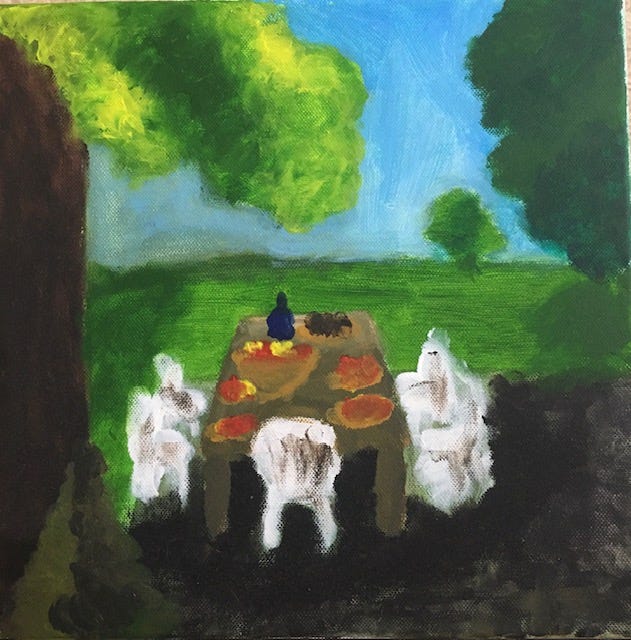
Ekphrastic sonnet: RHL, ‘Ghosts of Dead Parents’

Her ashes spread on Skirrid that she loved;
and his bones buried by the Harbour bay…
Why choose views for the dead? Once in earth shoved,
dirt in the dark is all they’d see, not day,
even if they lived. And if cremated, well…
So is it for our own guilt’s absolution?
Or status, that their graves our standing tell?
Or rites for social change’s resolution?
Those who were always here are here no more –
Their alwaysness runs out when they decease,
and life will now sound different from before,
like insect shrills not heard until they cease.
Dead ghosts sleep twittering in our heads’ domed caves,
waking to fill night skies from dreams and graves.

*****

This sonnet was published by The Wee Sparrow Poetry Press as a response to their ekphrastic challenge for the illustration, a painting by Žofia Katriňáková. It was written for my parents who, although they died decades ago, are still a background to my thoughts. My father is buried by the bay of Governor’s Harbour, my mother’s ashes were scattered on Skirrid Fawr, the Welsh mountain she loved and lived within sight of in Abergavenny. And I have another short poem for them, published in the Amsterdam Quarterly:

In the night’s jam jar of my memory
my long-dead parents live as fireflies.
My thoughts of them worn by time’s emery,
their faint light still suggests where my path lies.

Is it reasonable to hope to be a firefly for your children and grandchildren?

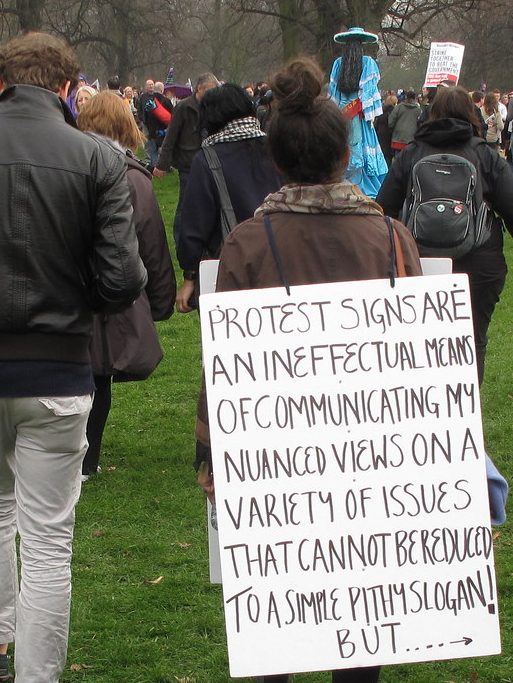
Short poem: RHL, ‘Pithy’

His words are witty,
with a twist.
He says they’re “pithy”;
note the lisp.

*****

This is one of my three short poems published in the current Rat’s Ass Review – thanks, Roderick Bates – where the good and the rude, the mocking and shocking, all coexist harmoniously.

Photo: “Protest signs are an ineffectual means of communicating my nuanced views on a variety of issues that cannot be reduced to a simple pithy slogan!” by duncan is licensed under CC BY-NC 2.0.

Using form: Limericks: RHL, ‘Attitudes in the Holy Land’

Moses says God says: (Deuteronomy 20:16-18)

God’s ruthless. Just read Deuteronomy,
believers get zero autonomy:
“You must kill all non-Jews
in this land that I choose.”
Just back then? Or still now? (Love His bonhomie!)

Luke says Jesus says: (Luke 19:27)

Christ was often less peaceful than stormy,
with disciples both pushy and swarmy;
to the rest he made plain
if they’d not have him reign:
“Bring them hither and slay them before me.”

Muhammad says God says: (Qur’an 9:5)

“Polytheists, wherever you find them,
you should ambush and capture and bind them,
and only relax
if they pray and pay tax;
elsewise kill them, and in the dust grind them.”

*****

Given that Jews, Christians and Muslims all claim to be worshipping the same god, the only God, the God of Abraham, it’s somewhat surprising how much time they spend fighting each other. But then, factions within the same religion have been known to slaughter each other. It seems to be something inherent in religions, especially monotheistic ones – if you believe there is only one god, your god, then everyone else’s belief is blasphemy.

Somehow these tribal religions of preliterate herders have continued to the present. They are so illogical and – despite beautiful architecture etc – so frequently violent that the best response I can think of is the mockery of limericks and other forms of light verse. That, and mourning the dead children, and supporting efforts to impose peace.

These limericks were first published in The HyperTexts, Michael R. Burch’s enormous anthology which includes extensive poetry about both the Holocaust and the Nakba, the Palestinian Catastrophe.

Moses causes the Levites to kill the idolators” is marked with Public Domain Mark 1.0.

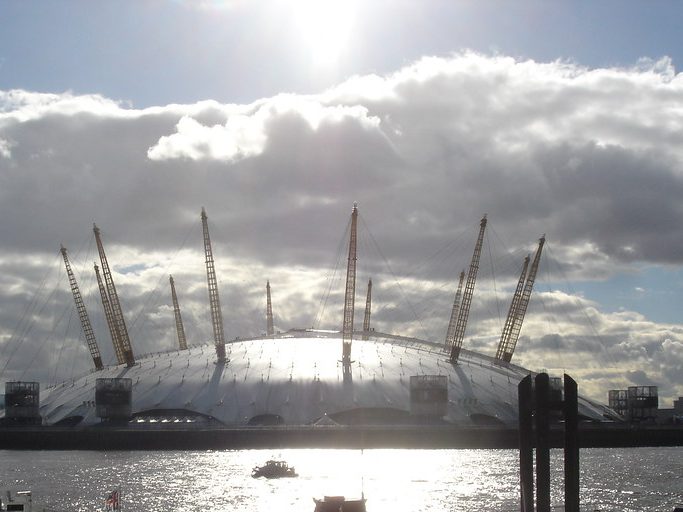
SF Sonnet: RHL, ‘Transhuman Evolution’

The humans crowd the riverbanks in cities
while you, would-be transhuman in your boat,
trust to your dreams and luck as on you float,
ignoring all the land’s static committees,
the buildings taller with their strident voices,
the citied banks ever more crammed and loud,
leaders and statues oversize and proud,
fixed in their views. But you see other choices.

And then there’s no more land. Only the sea.
You deso-, iso-, yet e-lated find
after the Desolation of the Years,
sailing and searching past humanity
in the vast oceans of the future mind,
a life within the music of the spheres.

*****

This sonnet has just been published in Space and Time #146, a magazine where fantasy, science fiction, horror and whatever else are presented in a variety of print, online and audio forms. The sonnet owes something to one of my favourite Matthew Arnold poems, ‘The Future‘, which begins

A wanderer is man from his birth.
He was born in a ship
On the breast of the river of time;
Brimming with wonder and joy
He spreads out his arms to the light,
Rivets his gaze on the banks of the stream.


and ends flowing out into the ocean:

As the pale waste widens around him,
As the banks fade dimmer away,
As the stars come out, and the night-wind
Brings up the stream
Murmurs and scents of the infinite sea.


I assume Matthew Arnold limited this vision to the individual life, but I see it also as an image relevant to the progress of the human species into something vaster and unknowably different – not far removed from Nietzsche’s sense of Man as being a bridge between animal and… superman, or transhuman. Not the nasty small-minded punks of Nazi and neo-Nazi superman stupidity, but something far grander in a far larger development towards what life could become.

Photo: “Millennium Dome/O2 Arena from Trinity Buoy Wharf, Blackwall” by wirewiper is licensed under CC BY-NC-ND 2.0.

RHL, ‘Deuteronomy 20: 16-18’

You’ve no autonomy
under Deuteronomy;
it’s your obligation
to your tribal nation
to kill all Palestinians
so you don’t sin against
God, who’s neurotic.
Yes, Yahweh’s psychotic.
No escaping his wrath,
no path but the psychopath.

*****

For Christians and Jews who state (as Jesus did) that every reported command by God in the Torah / Old Testament must be obeyed, I ask their position on Deuteronomy 20. This contains the command for the complete genocide of the non-Jews living in the land which Moses claimed had been given to the Jews by God. (Note: not expulsion or enslavement of the people living there, but the death of all of them and their animals.) The reason? So that they don’t teach evil ways to the Jews:

16 But of the cities of these people, which the Lord thy God doth give thee for an inheritance, thou shalt save alive nothing that breatheth:
17 But thou shalt utterly destroy them; namely, the Hittites, and the Amorites, the Canaanites, and the Perizzites, the Hivites, and the Jebusites; as the Lord thy God hath commanded thee:
18 That they teach you not to do after all their abominations, which they have done unto their gods; so should ye sin against the Lord your God.

To the extent that fundamentalist Jews constitute a large percentage of the Israeli population and are influential in the national government, the Palestinian situation cannot be resolved until scriptural passages like this are dragged out into the open and examined and discussed: was that passage only for then, and things are different now? Or does the command to massacre non-Jews still hold for today’s Jews in “the Holy Land”?

This poem was first published in The HyperTexts, where Michael R. Burch maintains extensive collections of poetry related to both the Holocaust and the Palestinian Catastrophe.

Illustration: “Moses has the mature women and the male children of the Midianites killed” is marked with Public Domain Mark 1.0.

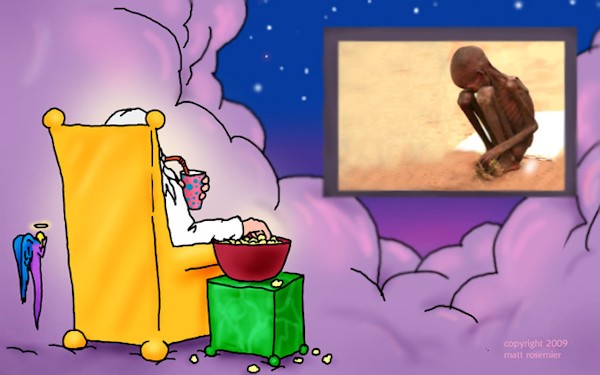
Short poem: RHL, ‘God – pfft!’

All the things God could do,
all the things he doesn’t:
stop earthquakes and disease,
world war between first cousins…
Complaints at God may seem
rashly impertinent–
But so what? Life shows God
clearly omnimpotent.

*****

Not much to say about my rude little poems, except that a lot of them get published in Rat’s Ass Review, whose Spring/Summer issue has just (optimistically) been published – thanks, Roderick Bates! And also, well, I guess I was proud of the poem’s last word, though I’m definitely not the first person to think of it.

Cartoon: Matt Rosemier

Very short poem: RHL, ‘The End is Nigh’

The end is an A.I.

*****

This very short (poem?) was just published in The Asses of Parnassus – thanks, Brooke Clark! I chose this post’s accompanying photo for its enigmatic mixture of futuristic construction and threatening natural conditions – the building is the Globe, or Avicii Arena, in Sweden but that is irrelevant.

An alternative photo I considered had a doomsday prophet holding a sign saying “The beginning is nigh”, which would be equally true: the end of homo sapiens being the beginning of some unguessable post-humanity. I read Ray Kurzweil and Yuval Noah Harari, and ponder. And then I look back at (others’) 2015 predictions of what the next ten years would bring, and, well, not so fast…

Photo: “the end is nigh” by dan.boss is licensed under CC BY-NC-SA 2.0.

Prose, really: RHL, ‘Time is the Measurement’

Time is the measurement of rearranging atoms.
Atoms are rearranged like blocks, and that is time.
Putting the blocks back as they were before is not going back in time.
There is no past,
there is no future,
there is only the eternal present.
There was a past, there will be a future… but you can’t get there from here,
except as the atoms rearrange.

A time machine would have to rearrange the atoms
of the world,
of the galaxy,
of the entire universe,
to put every particle back into some prior arrangement.
The calculations, let alone the actions, would be… difficult.

It is no wonder that we have never seen visitors from the future.
They don’t exist. There is no future, and there is no past.
There is only the eternal present.
Enjoy it.

*****

This “poem” was just published in Consilience, “the world’s first peer-reviewed science and poetry journal”. In addition to a poem, the journal requires a comment focusing on the science behind the poem. So here is
“The Science.
Time may be a dimension and a useful concept, but it is not a dimension in the sense of something that one can move back and forth in. We measure time with atomic clocks, which produce electromagnetic radiation that atoms in the clock absorb. Cesium atoms absorb microwaves with a frequency of 9,192,631,770 cycles per second, which then defines the international scientific unit for time, the second. Accurate time like this has helped to prove Einstein’s theories about time moving at different rates when clocks are moving at different speeds. Without accurate clocks and an understanding of Einstein’s theories about the speed of light and space-time, we wouldn’t have the Global Positioning System (GPS), which uses clocks in space and on the ground to show you where you are.”

There are limits to the amount that can be written in the Science section, so I haven’t gone into rambling speculation about the subjective aspect of time which appears to speed up as we get older. My suggestion is that we experience a ‘Subjective Time Unit’ as a constant amount of thought-processing. Say as a teenager you process 100,000 bits of information in a second (that’s a random number, but you get the point). Then as you age and the brain physically deteriorates, perhaps by age 50 it takes you two seconds to process that amount of information. You would feel the external world cycling twice as fast between day and night, because it would happen with the passing of half as many STUs. You would still think as logically, but time would feel like it was speeding up. The use of pharmaceutical uppers and downers will also change how much time you feel passes (by impacting how rapidly you are processing information), as will being half asleep (time slides by rapidly) or being in an adrenaline-enhanced emergency (time will appear to slow down).

But these are all mere speculations about the subjective nature of time, different from the question of the objective nature of time itself.

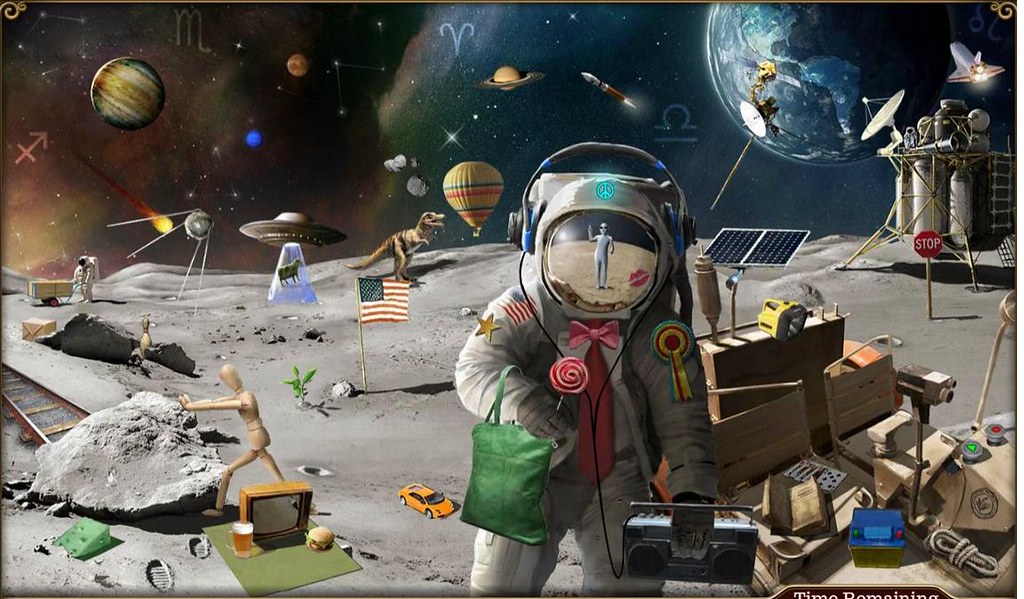
Photo: “LunarLanding – Gardens of Time” by mcscrooge54 is licensed under CC BY-SA 2.0.