Category Archives: poets

Review: ‘Archaic Smile’ by A.E. Stallings

‘Archaic Smile’ was the debut poetry collection by A.E. Stallings, an American who moved to Athens, Greece, a couple of decades ago. Published in 1999, it won that year’s Richard Wilbur Award and its opening poem, ‘A Postcard from Greece’, is perhaps my favourite of all her work. It is a sonnet with slant rhymes describing a car accident:
Hatched from sleep, as we slipped out of orbit
Round a clothespin curve new-watered with the rain,
I saw the sea, the sky, as bright as pain
That outer space through which we were to plummet.
Stallings lives in the modern world of cars and planes and thinks in terms of orbits and outer space; the Greece of this poem is not there yet – there is no guardrail on the cliff-sided road, the only warnings are the memorials to those who have died there, who
sliced the tedious sea once, like a knife.
Luckily, her car hits an olive tree on the edge of the cliff and they don’t go over.
We clung together, shade to pagan shade,
Surprised by sunlight, air, this afterlife.
And so the ancient world steps in to save her from rash modernity, and in this first poem she weaves the present and the past together, living as a pagan shade in a refreshed existence. And the rest of the book, and indeed all her work, carries on this integration of past and present.

The first section of the book is titled ‘Underworld’, appropriate for that near-death event, but mostly being poems such as ‘Hades Welcomes his Bride’ and ‘Persephone Writes a Letter to her Mother’ – there is a lot of Greek mythology in Stallings’ work, but filtered through a modern sensibility:
Death, the deportation officer,
Has seen your papers and has found them wanting.

In the second section, ‘A Bestiary’, she writes of her American experiences of animals and birds, in life and death and freedom and captivity, with her customary detached amusement. Take ‘Watching the Vulture at the Road Kill’:
We stopped the car to watch. Too close.
He bounced his moon-walk bounce and rose
With a shrug up to the kudzu sleeve
Of a pine, to wait for us to leave.
She observes that most other birds have to get in and out in a hurry, whether raptors or prey, and draws a lesson from it:
There is no peace but scavengers.

The third section, ‘Tour of the Labyrinth’, returns to Greek themes, but again weaving past and present, as in the reaction to an antique pot being broken. The final section is ‘For the Losers of Things’, echoing the sense of loss or near-loss in the rest of the book, but staying in the present – ‘Watching the News After the Tornados’ – or even the far future, with another of my personal favourites, ‘The Machines Mourn the Passing of People’:
The air now is silent of curses or praise.
Jilted, abandoned to hells of what weather,
Left to our own devices forever,
We watch the sun rust at the end of its days.

As can be seen from the excerpts quoted, Stallings is a formalist, and very comfortable with whatever form and metre is appropriate for the particular piece she is producing. ‘Archaic Smile’ is a superb collection, readable and rereadable, memorable, quotable. Her subsequent collections have been equally impressive. If there is a better poet currently writing in English, I haven’t run across them.

Photo of A.E. Stallings by Milos Bicanski
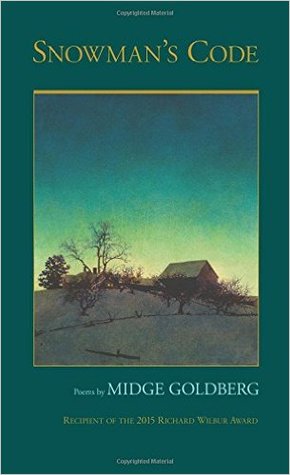
Review: ‘Snowman’s Code’ by Midge Goldberg

‘Snowman’s Code’ won the 2015 Richard Wilbur Award. And the first poems are all right, most of them being competent sonnets with a strong final line or couplet – ‘On Getting a Record Player for Christmas’ strongly evoked that era when a high point of childhood was having a couple of albums that you could replay when you wanted, ending with
I memorized not only every word,
But all the scratchy silences I heard.

But gradually the collection goes downhill, into villanelles (a verse form that is exceptionally difficult to make interesting, needing the oratorical power of a Dylan Thomas), and short insights arranged on the page as though they were verse – as in the title poem, with its
Be proud of lumpy hereness,
made by hands that carry
you, scoopful by scoopful,
to this place, at this moment,
patting you into existence.

In short, though there are poems I like in this book, I didn’t find enough to justify it as a prize-winning collection.

Potcake Poet’s Choice: Tom Vaughan, ‘Afterwards’

Afterwards, I’ll shake the hand
of total strangers in the street
as though they were my oldest friend
and as and when that friend I’ll meet

we’ll stroll across Green Park towards
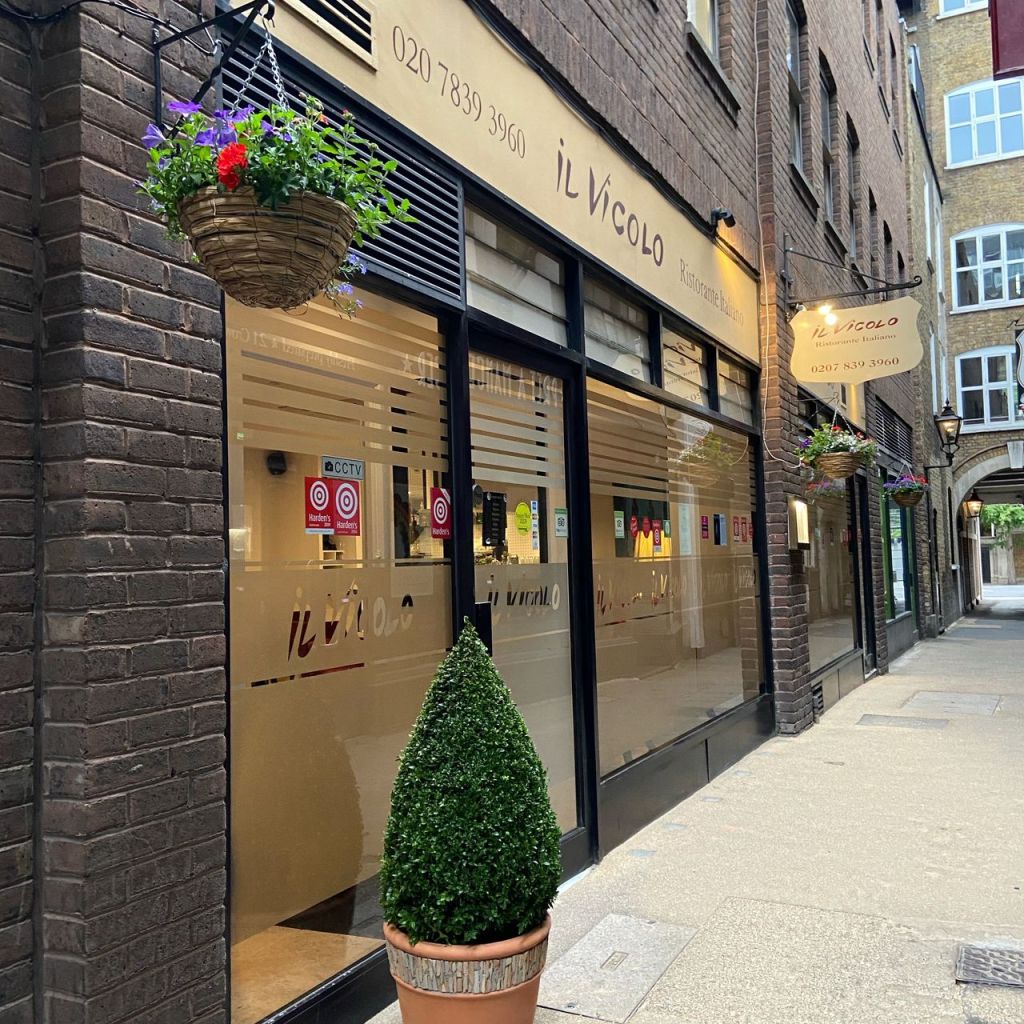
Crown Passage’s Il Vicolo
to dip our bread in olive oil
and drink wine till our faces glow

and talk of this and maybe that
as if we had all day to kill
then we’ll argue who should pay, aware
we’ll agree at last to split the bill

and when we say goodbye, we’ll know
how rare and wonderful it was
to be together, even though
neither will say so. Why? Because

why even hint the day might come
when public or private fresh disaster
prevents we two from sitting there
to share a salad and a pasta?

First published in Snakeskin 276, September 2020.

Tom Vaughan writes: “I have a soft spot for Afterwards because I hope it strikes the balance I often try to achieve between light-heartedness and seriousness. Plus it’s pinned in the real world: a London restaurant I very much like. I had submitted it originally The Spectator, which originally rejected it. George Simmers then accepted it for the September 2020 Snakeskin. Shortly thereafter I noticed a very positive restaurant review of Il Vicolo in The Spectator and, apparently quite independently, their poetry editor came back to me saying that on reflection he wanted to publish it, which he then did in October that year (with a suitable acknowledgement to Snakeskin as its first home). Then I learnt that the much-loved owner of Il Vicolo had died a few months previously – although not of Covid – but that his admirable daughters had decided to continue to run the restaurant. So, somewhere underneath the poem, the note of all-too-actual human mortality.”

Tom Vaughan is not the real name of a poet whose previous publications include a novel and two poetry pamphlets (A Sampler, 2010, and Envoy, 2013, both published by HappenStance). His poems have been published in a range of poetry magazines, including several of the Potcake Chapbooks:
Careers and Other Catastrophes
Familes and Other Fiascoes
Strip Down
Houses and Homes Forever
Travels and Travails.
He currently lives and works in London.
https://tomvaughan.website

Potcake Poet’s Choice: Susan McLean, ‘Deep Cover’

Nakedness is the best disguise.
When you discard the final veil,
it always takes them by surprise.

Because men think that compromise
is weak—that if you yield, you fail—
nakedness is the best disguise.

Though you expose your breasts and thighs,
your mind is as opaque as shale.
It always takes them by surprise

to find out that the body lies.
Surrender can conceal betrayal.
Nakedness is best. Disguise,

equivocation, alibis
can be seen through. To lay a trail
that always takes them by surprise,

hide nothing and you’ll blind their eyes.
Go ask Judith. Go ask Jael.
Nakedness is the best disguise.
It always takes them by surprise.

Susan McLean writes: “When I think of which subjects have lasting appeal in poems, I think of the subjects that have never changed and never will, such as human nature, but also of the questions that have no definitive answers, such as the nature of truth.  This poem expresses several paradoxes: that overt shows of openness are the most successful ways to deceive someone; that everyone lies, so telling the truth is always surprising–and is often not believed; that no matter how much truth you tell, there is always much that you don’t say; that when there is a power difference between two people, surrendering can be a tool of resistance. 

“Another thing that I think gives a poem lasting appeal is the use of rhythm and sound to create a music with words.  Though we live in a time in which free verse is dominant and ubiquitous, I don’t think people will ever lose their innate love of the songlike in poetry, a quality that also makes poems easier to remember. One of the most songlike of poetic forms is the villanelle, and it has been one of my favorite forms for many years.  Though I know that many readers find the repeating lines in villanelles to be tedious, small variations in the lines, in their punctuation, and in the surrounding lines can enable the narrative to move forward without losing the appeal of a songlike refrain.” 

Susan McLean grew up in Oxon Hill, Maryland, attended Harvard University and Rutgers University, and taught English for thirty years at Southwest Minnesota State University. She has published two books of poetry, The Best Disguise (winner of the 2009 Richard Wilbur Award) and The Whetstone Misses the Knife (winner of the 2014 Donald Justice Poetry Prize), and one book of translations of the Latin poet Martial, Selected Epigrams. She lives in Iowa City, Iowa.

‘Deep Cover’ was originally published in Mezzo Cammin, a journal of modern formalist poetry by women. Susan McLean’s ‘Lessons From A Fool’ appears in the Potcake Chapbook Careers and Other Catastrophes.

https://www.pw.org/directory/writers/susan_mclean

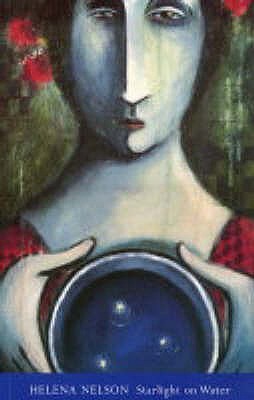
Review: Helena Nelson, ‘Starlight on Water’

Helena Nelson’s 2003 poetry collection ‘Starlight on Water‘ is quiet, reflective, beautiful and intensely intimate. Not necessarily personal – in some of the poems the poet has no children, in others a daughter or two, so there is no guarantee Nelson is writing of herself – but intimate with the senses and memories of existence. One of my favourite poems is ‘Ironing Day’:

I’ve never had an ironing board cover that fits
or a baby of my own.
None of the doors here properly shuts
and the garden wall’s come down.

But I shouldn’t ever want to lose my iron.
Pressing hard, I remember
grass between my toes
and the soft rain of September.

This speaks to several of my biases: going barefoot, enjoying rain, tolerating imperfection, triggering memories… and the music of casually rhythmical rhymed verse.

Not all of her verse is in the same style. Some poems are formally structured, some are free; the bulk of the book wanders all over internal and external landscapes, while the last third circles around and around Mr. and Mrs. Philpott, first one and then the other, a very caring couple of very distinct individuals in their mature second marriage. Here are some opening lines at random from the 19 Philpott Poems:

At the kitchen window
in his dressing gown,
Philpott stands alone
his sons have gone.
He’s on his own.

and

The sweetness of June, a summons conveyed
from strawberry fields, calls her to pick.
She drives to the farm, the car arrayed
with Tupperware tubs.

and

His father died at fifty-eight
and so he will die at fifty-eight.
He fetches a tumbler.
Two years to go.

and

Philpott’s anger lives in his shoes.
It tangles in the laces
and he wrestles like a lover

The first part of the book is about all manner of things – the spirit of a dead cat, say, or a night in an isolated Scottish cottage, or the teasing poem ‘Genderalisation’:

Women keep scales in their bedrooms;
Men keep weights.

The latter part of the book is just the Philpotts. What the whole book has in common is, without any sentimentality, the deep love that comes from respect, patience and close observation. It is all very intimate, and Nelson appropriately ends the Philpotts and the book with this short poem, ‘Love’:

He has tipped, he has spilled
his soul into her
and she carries it still
like starlight on water.

Review: ‘The Lesser Mortal’ by Geoff Lander

Geoff Lander has produced a score of full-page formal poems about various scientific luminaries: Maxwell, Einstein, Mendeleev and so on, combining career highlights with odd trivia about them. The poems are technically very skilful, with a variety of forms and metres being used (though the book is marred in a couple of places by the typesetting failing to follow the structure of lines and rhymes). Here is an excerpt from ‘On the Shoulders of Others’:

Does the gentle polymath,
Monsieur Henri Poincaré,
buried there in Montparnasse,
ponder how it came to pass
Einstein’s name now dominates
all things relativité?
(…)
In the central USA
near St. Louis one fine day
in 04 he first declared
E might equal mc2.

That was news to me. And it does raise the question of why Einstein should get all the recognition. Another of Lander’s poems, ‘Socks Off to Einstein’, suggests a possible answer:

While others may claim to have seen mc2,
they weren’t sock-eccentric, they weren’t spiky haired.
Their names are forgotten. Quite rightly that rankles–
the price you might pay if you coddle your ankles.
So three cheers for Albert, and get your heels bared!

Lander is a chemist by training and a computer programmer by profession, and poetry only came along when he started writing out other people’s verse to help his right hand recover from a stroke. Then, “encouraged from Scotland by Helena Nelson and from the grave by John Betjeman”, he started writing his own verse of which only a tiny fraction has been published.

New historical information and skilful light verse makes for a powerful combination! This very interesting little book from HappenStance Press contains most of what Geoff Lander has published to date.

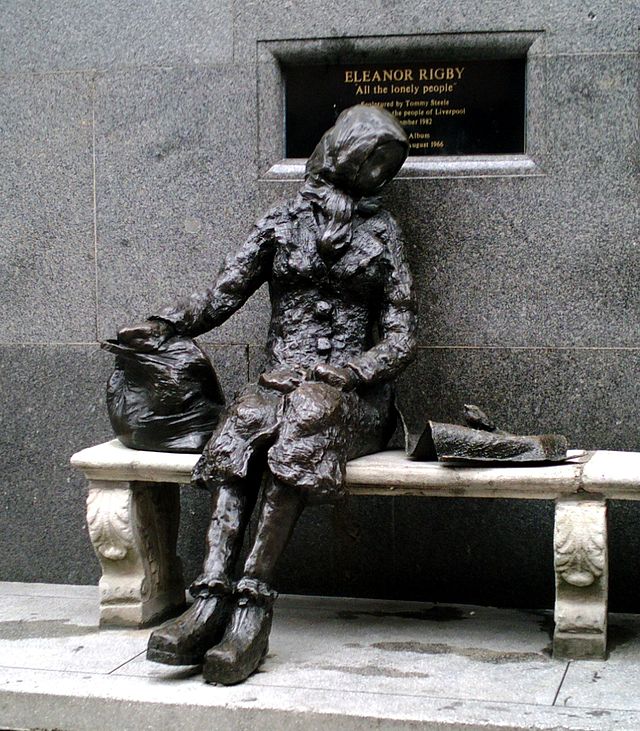
Songs as poems: Lennon-McCartney, ‘Eleanor Rigby’

Eleanor Rigby picks up the rice in the church where a wedding has been,
Lives in a dream.
Waits at the window, wearing the face that she keeps in a jar by the door,
Who is it for?

All the lonely people,
Where do they all come from?
All the lonely people,
Where do they all belong?

Father McKenzie writing the words of a sermon that no one will hear,
No one comes near.
Look at him working, darning his socks in the night when there’s nobody there,
What does he care?

All the lonely people, (etc)

Ah, look at all the lonely people!

Eleanor Rigby, died in the church and was buried along with her name,
Nobody came.
Father McKenzie, wiping the dirt from his hands as he walks from the grave,
No one was saved.

All the lonely people, (etc)

Written and released in 1966 on the Revolver lp and also as a double-A-side single with Yellow Submarine, ‘Eleanor Rigby’ was part of the Beatles’ dramatic move away from simple pop love songs into a vastly larger realm of portraits and social concerns and musical experimentation. Here, in a few lines, we have the protagonist’s lonely day-to-day life and unattended funeral, weaving back and forth with the empty church and its equally lonely priest. If Paul Simon’s ‘I Know What I Know’ is like a condensed Alice Munro short story, ‘Eleanor Rigby’ could be a full-length novel by Knut Hamsun or Kazuo Ishiguro… reduced to three 4-line verses and a refrain or two. The ideas are expressed as simple visual events, without speech. The words are straightforward, the rhymes uncomplicated–and some are slant rhymes, almost unnoticeable in song: been/dream, from/belong, grave/saved. But the impact is very powerful.

So who is the poet behind the song? Its article in Wikiwand states:

McCartney wrote the first verse by himself, and the Beatles finished the song in the music room of John Lennon’s home at Kenwood. John Lennon, George Harrison, Ringo Starr and Lennon’s childhood friend Pete Shotton all listened to McCartney play his song through and contributed ideas. Harrison came up with the “Ah, look at all the lonely people” hook. Starr contributed the line “writing the words of a sermon that no one will hear” and suggested making “Father McCartney” darn his socks, which McCartney liked. It was then that Shotton suggested that McCartney change the name of the priest, in case listeners mistook the fictional character in the song for McCartney’s own father.

McCartney could not decide how to end the song, and Shotton finally suggested that the two lonely people come together too late as Father McKenzie conducts Eleanor Rigby’s funeral. At the time, Lennon rejected the idea out of hand, but McCartney said nothing and used the idea to finish off the song, later acknowledging Shotton’s help.

Lennon was quoted in 1971 as having said that he “wrote a good half of the lyrics or more” and in 1980 claimed that he wrote all but the first verse, but Shotton remembered Lennon’s contribution as being “absolutely nil”. McCartney said that “John helped me on a few words but I’d put it down 80–20 to me, something like that.” Historiographer Erin Torkelson Weber has studied all available historical treatments of the issue and has concluded that McCartney was the principal author of the song, while speculating that Lennon’s assertions to the contrary were the result of lingering unresolved anger and the influence of manager Allen Klein.

John Lennon may have the stronger reputation as a poet, but this gem appears to be Macca’s. (Sorry; Sir Paul’s.)

Wikiwand credit: CC BY-SA 4.0 license

R.I.P. Susan de Sola

Wonderfully warm and witty poet Susan de Sola passed away last week after a short battle with cancer–she was only 59, very active, and had recently published ‘Frozen Charlotte‘ with Able Muse Press. Tributes in Snakeskin’s blog and Light Poetry Magazine have shown some of her charming, amusing work.

Her work appeared in a couple of the Potcake Chapbooks–‘Family and Other Fiascoes’ and ‘Strip Down’–but I think the most fitting poem for showing her spirit is the last poem in ‘Frozen Charlotte’. She likens the lives of humans to the brief lives of fruit flies and ends, acceptingly, with
“The fruit is fine, the day is long.
Let us feed, buzz, rejoice
.”

Indeed. But many of us miss you, all the same.

New magazine’s Call For Submissions – Pulsebeat Poetry Journal

Poet (and engineer) David Stephenson contacted me recently with the message “I am starting a new journal, Pulsebeat Poetry Journal, for poems with a strong musical element, especially poems in meter and rhyme. I don’t think there are enough venues for rhyming poetry.” He is putting out a general Call for Submissions on his web page https://pulsebeatpoetry.com/guidelines/

“Poems full of music, using meter and rhyme or other means, previously unpublished… Theme should be the human condition… Submissions by December 31, 2021, for the first issue to be posted in January, 2022.” More submission details are at that link above.

David Stephenson has published in The Formalist, The Lyric, etc. His ‘Rhythm and Blues‘ won the Richard Wilbur Award in 2007, which puts him in excellent company. On the Masthead page of his web site you can find links to more recent poems of his, published in Autumn Sky Poetry and Avatar Review.

I look forward to reading the Pulsebeat Poetry Journal, and wish David Stephenson good luck with the venture.

Songs as poems: Paul Simon, ‘I Know What I Know’

She looked me over and I guess she thought I was all right–
All right in a sort of a limited way for an off-night–
She said, “Don’t I know you from the cinematographer’s party?”
I said, “Who am I to blow against the wind?”

I know what I know
I’ll sing what I said
We come and we go
That’s a thing that I keep in the back of my head

She said, “There’s something about you that really reminds me of money,”
She is the kind of girl who could say things that weren’t that funny
I said, “What does that mean I really remind you of money?”
She said, “Who am I to blow against the wind?”

I know what I know, etc

She moved so easily all I could think of was sunlight
I said, “Aren’t you the woman who was recently given a Fulbright?”
She said, “Don’t I know you from the cinematographer’s party?”
I said, “Who am I to blow against the wind?”

I know what I know, etc

Paul Simon’s 1986 ‘Graceland‘ album is packed full of these little character sketches and snippets of conversation – and all done with rhythm, part-rhyme, and structured repetition in both verse and chorus. The song gives him the right to a repetitive chorus (as well as memorable tune), but he moves away from a traditional song’s full narrative into fragmented images that give a complete impression – here, an upscale event with two people assessing each other’s social and economic status and relationship possibility, as they talk of Fulbright Scholarships and a previous “cinematographer’s party”. It all sounds very New York.

It is a very extensive picture in a few words, leaving the sort of impression you get from an Alice Munro short story. And it is backed by the chorus that appears to verify that the conversation was real, as well as to state Simon’s recognition of how his mind and creativity work. So the song’s structure allows him to enrich the verses’ pictured conversation by stepping back to be more reflective and philosophical in the chorus.

And as it’s a song, he is carried by melody and instrumentation and can be a little free with metre without it being in any way jarring.

I view songs as a branch of formal verse. But in many ways, as shown here, song can easily flex into areas that are less natural for pure verse.

Photo by Luise Gub