Tag Archives: Able Muse

Using form: Triolet: Susan McLean, ‘In Arcadia’

We hadn’t pictured paradise
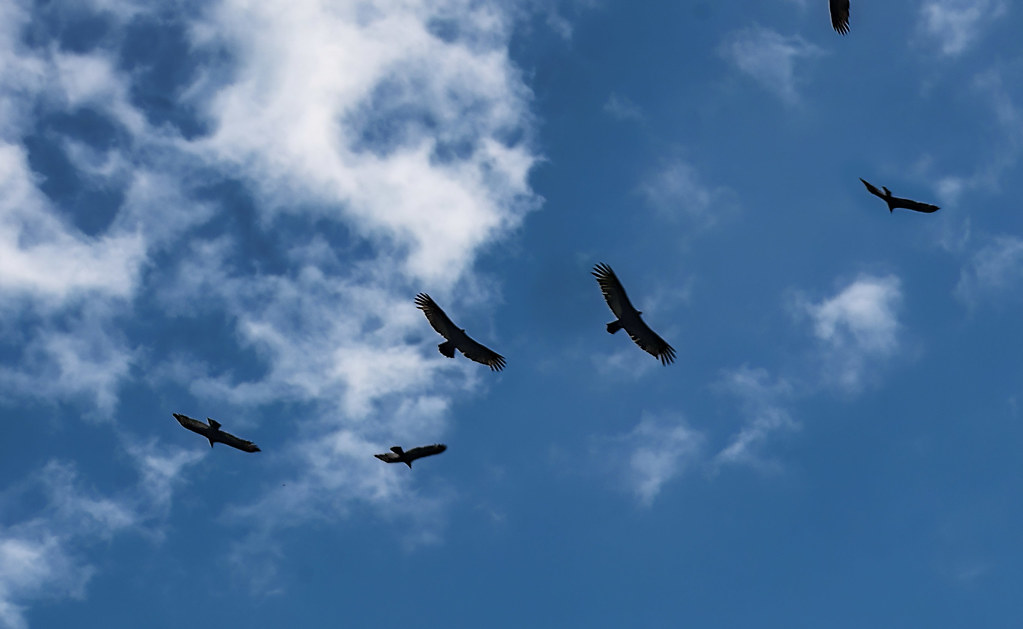
with vultures circling overhead.
Edenic lushness has a price
we hadn’t pictured. Paradise
seems changeless, but its clock’s precise.
“It’s feeding time,” the watchers said.
We hadn’t pictured paradise
with vultures, circling overhead.

*****

Susan McLean writes: “This triolet was inspired partly by the Latin phrase “Et in Arcadia ego” (which means “I too [am or was] in Arcadia”), partly by the famous Nicolas Poussin painting in which that phrase appears on a tombstone surrounded by gawking Arcadian shepherds, and partly by a family trip to Florida at Christmas, to celebrate my parents’ sixtieth wedding anniversary. Arcadia, a region in Greece, was made famous by Vergil in his Eclogues as an idyllic rural land mainly populated by shepherds. “Arcadia” thus came to be associated with a relaxed bucolic paradise. Yet the Latin phrase reminds us that no earthly location is immune to death.

“In contemporary America, one of the locations associated with tropical warmth and pleasant leisure is Florida, where many Americans from more northerly locales go to vacation or retire. While my family was staying at a rented home near Sarasota Bay, on the highway we often passed signs for Arcadia, Florida, which was not far away. The weather and the natural beauty of Sarasota came up to our expectations, but we did not foresee that every time we went outside we would see vultures circling overhead. Given our parents’ ages, the vultures were a poignant reminder of mortality.

“A triolet is one of the shorter French repeating forms. One of the challenges it presents is how to vary the repeated lines so that they do not become boring, usually done by adding slight changes to the punctuation of those lines. This poem originally appeared in Able Muse and later in my second poetry book, The Whetstone Misses the Knife.”

Susan McLean has two books of poetry, The Best Disguise and The Whetstone Misses the Knife, and one book of translations of Martial, Selected Epigrams. Her poems have appeared in Light, Lighten Up Online, Measure, Able Muse, and elsewhere. She lives in Iowa City, Iowa.
https://www.pw.org/content/susan_mclean

Photo: “Road Trip Santa Clara to Camajuani via Central Road of Cuba (banda Placetas) passing through La Movida, Pelo Malo, Manajanabo, Miller town and Falcon city. Villa Clara province, Cuba, November 2023” by lezumbalaberenjena is licensed under CC BY-NC-ND 2.0.
Semi-formal poem: Susan de Sola, ‘Bounty’

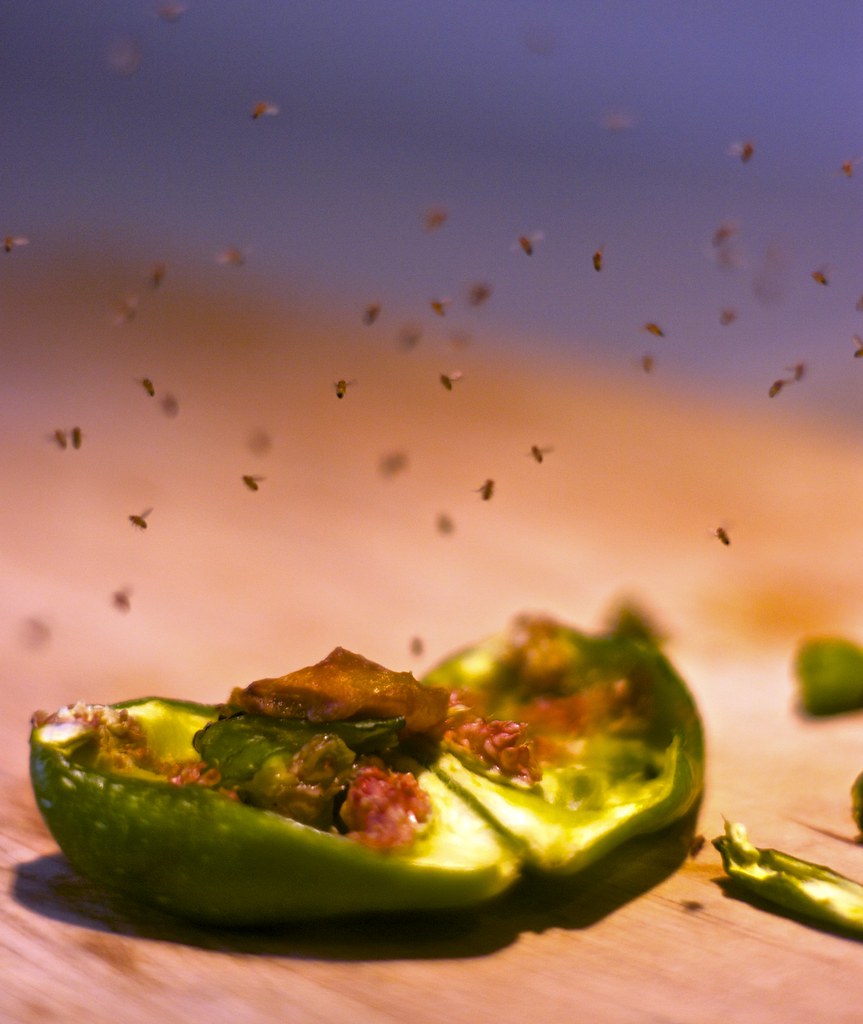
The fruit flies find our fruit, they slip
beneath the lid, a silver dome.
The dark fruit scent has drawn them in,
no other lures them out again.
They settle on apples, puckered figs,
they gorge in perpetuity,
may never fly back to their home,
(if they have ever had a home).
An allegory of choice? Well, yes–
in that we have no choice.
The fruit is fine, the day is long.
Let us feed, buzz, rejoice.

*****

Susan de Sola was a native New Yorker who earned a PhD in English Literature at Johns Hopkins, took a job at Amsterdam University… and stayed, married, raised five children. Published in the Hudson Review, PN Review, and The Dark Horse, she won the David Reid Poetry Translation Prize and the Frost Farm Prize. Her less serious work appeared in Snakeskin, Light, Lighten Up Online, and a couple of her poems were reprinted in Potcake Chapbooks. She was widely loved for her creativity, warmth, and sense of fun. She died from lymphoma in 2021, age 59.

‘Bounty’ is the final poem in her only published collection, Frozen Charlotte, published by Able Muse Press in 2019.

Photo: “Fruit flies from fig” by Alejandro Erickson is licensed under CC BY-NC-SA 2.0.

Stephen Kampa, ‘Someone Else’s Gift’

Always to long for someone else’s gift—
To blow that blistering alto sax, to lift
Into the flash-bulbed air

For a reverse slam dunk while stunned guards gawk,
To have a punster’s cheek or porn star’s cock,
To capture, share by share,

Gold-plated Wall Street fame, to meditate
Beyond nirvanic depths or radiate
Beatitudes of prayer

Like any frescoed saint, even to make
A perfect triple-decker dark-fudge cake
Or master the éclair—

Means answering a roguish shout we follow
Down some smashed-bottle alley to a hollow
Recess, a doorway, where

If luck has tailed us on that lonely walk,
When we knock, because we have to knock,
No one will be there.

*****

‘Someone Else’s Gift’ was first published in Literary Matters, and then in Best American Poetry 2024. As I was unable to capture the original indentation, I have taken the liberty of introducing line spaces as an alternative way of clarifying the structure; it will sound the same when read aloud… – RHL

Stephen Kampa has three books of poems: Cracks in the Invisible (Ohio University Press, 2011), Bachelor Pad (Waywiser Press, 2014), Articulate as Rain (Waywiser Press, 2018), and World Too Loud to Hear (Able Muse Press, 2023). He teaches at Flagler College in St. Augustine, FL and works as a musician.

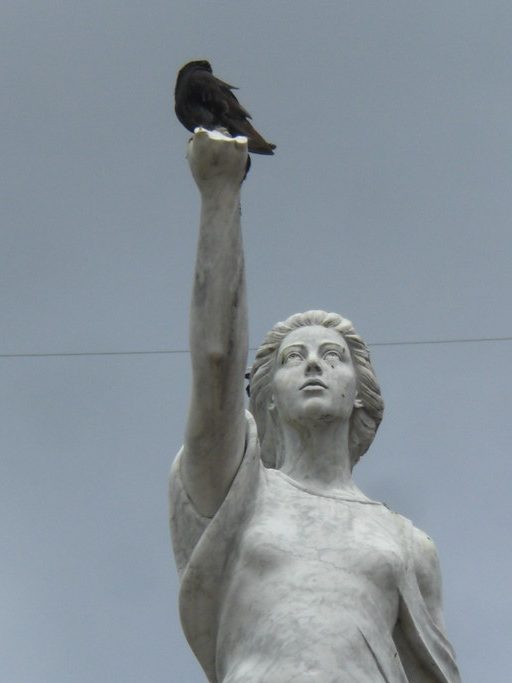
Photos: “Dreams” by яғ ★ design is licensed under CC BY-NC 2.0.
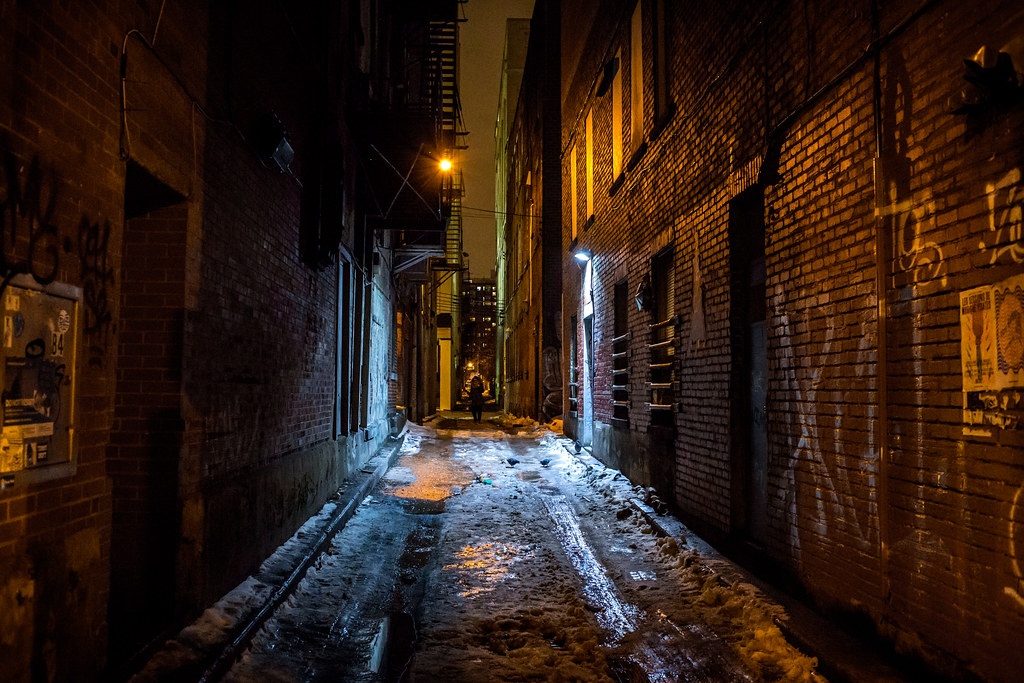
Dark Alley #2 [Explored]” by _Franck Michel_ is licensed under CC BY 2.0.

Using form: Heterometric verse: Susan McLean, ‘Teaching to the Test’

I know you have no use for them,
poems with their sly quicksilver words
that won’t just speak their minds,
but carom through your head like startled birds.
Is that despair or longing in their cries?
Their dolors make no sense.
They’ll never buy you larger-screened TVs
or seats at sports events.

But someday, as you watch a pair hold hands
and leap from a burning tower,
as you wait for test results or hear
your phone ring at an unaccustomed hour,
what you feel will circle wordlessly—
tense, accusing, gaunt.
You’ll find that you are tested and found wanting,
and these are what you’ll want.

*****

Susan McLean writes: “As a professor myself and a person who once worked on writing standardized tests, I am familiar with the complaint of teachers that they are often forced to “teach to the test,” i.e., teach only the sort of knowledge and skills that students need for passing that sort of test. But as a poet, I know that we are tested in life in all sorts of ways. Most people think that they can get through life just fine without poetry. They tend to find poetry annoying and impenetrable, something that needs to be decoded, that has no practical use. Yet in tragedies, when all hope and comfort are gone, there is some comfort in hearing that others who have been in similar situations were able to put into words the feelings that you can’t. And the most memorable and condensed of those responses are often poems.
This poem is rhymed and metrical, but the lines are of different lengths in unpredictable patterns, a form called “heterometric,” and the rhymes occur only every other line. That unpredictability is meant to mirror life, in which the bad news always seems to come out of nowhere. The poem originally appeared in Able Muse and later in my second poetry collection, The Whetstone Misses the Knife.”

Susan McLean has two books of poetry, The Best Disguise and The Whetstone Misses the Knife, and one book of translations of Martial, Selected Epigrams. Her poems have appeared in Light, Lighten Up Online, Measure, Able Muse, and elsewhere. She lives in Iowa City, Iowa.
https://www.pw.org/content/susan_mclean

Photo: “When Young Children ‘Hate’ School” by wecometolearn is licensed under CC BY 2.0.

Melissa Balmain, ‘Bird in the Hand’

It doesn’t caw or hunt or fly.
It can’t peck anybody’s eye,
or even grow a single lousy feather.
One-clawed, no match for any tom,
it’s stranded on a leafless palm,
regardless of the season, time or weather.

Yet what’s the bird that, all alone,
sticks up for you when gibes have flown
and you don’t care to verbalize or linger;
when someone’s mocked you to your face
or cut you off or swiped your space –
what bird? The one that moonlights as a finger.

*****

Melissa Balmain writes: “I’m pretty sure this would have been the Sphinx’s riddle if she had guarded the Brooklyn Bridge.”

‘Bird in the Hand’ was first published in The Rotary Dial and is collected in Walking in on People © Melissa Balmain, 2014. Used by permission of Able Muse Press.

Melissa Balmain’s third poetry collection, Satan Talks to His Therapist, is available from Paul Dry Books (and from all the usual retail empires). Balmain is the editor-in-chief of Light, America’s longest-running journal of light verse, and has been a member of the University of Rochester’s English Department since 2010. She will teach a three-day workshop on comic poetry at the Poetry by the Sea conference in Madison, CT, in May 2024.

Photo: “A bird in hand” by Whatsername? is licensed under CC BY-SA 2.0.

Melissa Balmain, ‘Shopper’s Life List’

Nine thousand quarts of orange juice
Five thousand loaves of bread
Eight hundred fifty bars of soap
Three hundred lipsticks (red)
A gross of bras
A score of scarves
A dozen wallets (black)
Ten cars
Eight dogs
Six cats
Three homes
Two canes
One granite plaque

*****

From Walking in on People © Melissa Balmain, 2014. Used by permission of Able Muse Press.

Editor’s note: If this poem doesn’t look like formal verse to you, and the only structure you see is the declining number of the items listed, then read it aloud to pick up the swing!

Melissa Balmain writes: “As you might guess, this one came about when I’d been doing some birdwatching. I considered starting one of those ‘life lists’ that birders have—then thought: what if there were other kinds of life lists? I never did get around to listing birds.”

Speaking of shopping, Melissa Balmain’s third poetry collection, Satan Talks to His Therapist, can be preordered from Paul Dry Books (and from all the usual retail empires). Balmain is the editor-in-chief of Light, America’s longest-running journal of comic verse. Her poems and prose have appeared in such places as The American Bystander, McSweeney’s Internet Tendency, The New Yorker, The New York Times, Lighten Up Online,The Hopkins Review, Poetry Daily, Rattle, and The Washington Post. Her other poetry collections are Walking in on People (chosen by X.J. Kennedy for the Able Muse Book Award) and The Witch Demands a Retraction: Fairy Tale Reboots for Adults.A member of the University of Rochester’s English Department since 2010, she lives nearby with her husband and (for now) one of their two children. She is a recovering mime.

Missing Plaque” by QuesterMark is licensed under CC BY-SA 2.0.

Using form: villanelle: Melissa Balmain, ‘Villain Elle’

Whenever I wake up and don’t feel well,
I like to read a women’s magazine.
I know that I can count on Vogue or Elle,

Cosmo or Glamour, Self or Mademoiselle,
instead of pills, elixirs or caffeine,
whenever I wake up and don’t feel well.

Page Eight has bathing suits that look just swell
if you’re six foot and live on Lean Cuisine.
I know that I can count on Vogue or Elle.

Page Nine’s a list of “wardrobe musts” that sell
at reasonable prices—for a queen.
Whenever I wake up and don’t feel well,

Page Ten says how to age, yet stay a belle.
The photo? It’s a model of eighteen.
I know that I can count on Vogue or Elle

to make my time in bed such living hell,
I’m out of there in sixty seconds clean.
Whenever I wake up and don’t feel well,
I know that I can count on Vogue or Elle.

*****

Editor: The villanelle is a highly structured poem, its two key lines rhyming and repeating several times. One of its challenges is to make each repetition fresh and interesting, either by developing and deepening the context, or by varying the repeated lines slightly or, as with this one, by having the same words resonate differently. Here “I know that I can count on” gives an initial impression of a favourable attitude to women’s magazines, but at the end the words show total disgust. This ‘Villain Elle‘ is typical of Balmain’s twists and puns and absolute control of form.

Melissa Balmain edits Light, America’s longest-running journal of light verse. Her poems and prose have appeared widely in the US and UK. She’s the author of the full-length poetry collection Walking in on People (Able Muse Press), chosen by X.J. Kennedy for the Able Muse Book Award, and the shorter, illustrated The Witch Demands a Retraction: Fairy-Tale Reboots for Adults (Humorist Books). Her next full-length collection, Satan Talks to His Therapist, is due out in fall 2023.

‘Villain Elle‘ is from Walking in on People © Melissa Balmain, 2014. Used by permission of Able Muse Press.

Photo: “304/365 – 8/8/2011” by GabrielaP93 is licensed under CC BY 2.0.

Calls for Submission: formal verse

Of the various publication opportunities specifically for formal/traditional poets, three are taking submissions until July 15, and four other formal-friendly publications have submission deadlines of July 31. There is no submission fee for any of them. Here they are – the links are to the submission requirements:

Able Muse (magazine) Deadline, July 15.
Submit one to five metrical poems (or one long poem), rhymed or unrhymed. (A poem of more than 40 lines is considered a “long” poem.)
All types of formal poetry are welcome, from traditional to boundary-pushing. We want well-crafted poems that use meter skillfully and imaginatively (with rhyme or not), in a contemporary idiom that reads as naturally as free verse.

Able Muse Press (book-length manuscript) Deadline, July 15.
At least 50 pages of poems – same preferences as for the magazine.
There’s NO reading fee.
“We respond within 9 months or so.”

Helen Schaible International Sonnet Contest Deadline, July 15.
Categories:
1 Traditional Sonnet – Shakespearean or Petrarchan
2 Modern Sonnet
Open to All. Free. Enter only one poem in either Category #1 or #2, or one poem in each.
Prizes for both categories: First Prize: $50. Second Prize: $30. Third Prize: $20.

Formal-friendly magazines, themed and with July 31 cut-offs:

Snakeskin (short poem issue, nothing over 10 lines). At the link, read the tabs on the left side for submission details. Submit earlier than the very end of July, as publication is scheduled for August 1st. Editor: George Simmers.

Allegro (theme: Freedom) Four poems max. Editor: Sally Long.

Amsterdam Quarterly (theme: City and/or Country) Two poems max. Editor: Bryan R. Monte.

Rat’s Ass Review (unthemed – the editor publishes whatever he damn well feels like publishing, as you might have guessed.) Five poems max. Editor: Roderick Bates.

In addition:

Rhizome Press (not to be confused with Rhizome Books) publishes anthologies of formal verse. Editor Beth Houston is taking submissions of up to 10 sonnets for Extreme Sonnets III, and up to 10 “extreme formal poems of at least twelve lines” for Extreme Formal Poems II. The submission deadlines are not given on the website, but will presumably follow on the publication of Extreme Sonnets II which is currently in the works.

UPDATE from Beth Houston, 11 July 2022: “At long last Extreme Sonnets II is published and available on Amazon! Will there be an Extreme Sonnets III? Likely, but not for awhile. In the meantime I’ll be putting together an anthology of love sonnets—extreme sonnets, of course. I’ll post submission details on the Rhizome Press website soon. All sonnets included in Extreme Sonnets, Extreme Sonnets II, and Extreme Formal Poems will automatically be considered. Stay tuned for more details.”

Potcake Poet’s Choice: Max Gutmann, ‘Old Growth’

So rooted
seem couples to a child! Firm-trunked and tall.
Some scrawny: sparsely leaved or badly fruited,
but fixed and solid, works of nature all.
It challenges imagination
that choice was part of the creation.

That they,
these halves, weren’t mingled always, childhood fails
to comprehend. The stories of the way
one’s parents met are magic, fairy tales.
To know the seed becomes the tree
does not dispel the mystery.

Divorce,
unless it strikes our parents, flashes where
it cannot burst our faith. A sudden force
that leaves the broken trunks deformed but there,
disaster-stricken, strangely ill,
but giving partial shelter still.

We feel
this all collapse as childhood’s shed. The trees
we thought so firm and fixed were never real.
To navigate by them can only tease.
Whatever fantasies persist,
unmoving couples don’t exist.

To find
one’s half and gather height and leaves are less
like acts of nature than like hiking blind.
Soil shifts and landmarks vanish. We must guess,
our one-time orchard morphing to
a wood no map can guide us through.

Max Gutmann writes: “It took me a long time to make a poem I liked of this thought/experience. The form supports emphasis where it’s helpful, and that it varies from the iambic pentameter some readers expect mirrors the sense. I rarely feel my verse quotable, but I feel that about ‘To know the seed becomes the tree/does not dispel the mystery’.”

Max Gutmann has worked as, among other things, a stage manager, a journalist, a teacher, an editor, a clerk, a factory worker, a community service officer, the business manager of an improv troupe, and a performer in a Daffy Duck costume. Occasionally, he has even earned money writing plays and poems.

‘Old Growth’ was first published in Able Muse. Some of his ‘Travels with Alice’ limericks appear in the Potcake Chapbook ‘Travels and Travails‘. You can find more of his work at maxgutmann.com

Potcake Poet’s Choice: Daniel Galef, ‘Proverbs for Engraving onto Imperial Monuments’

War is the price of freedom. Depths bewilder.
The blow aimed at the beast hits him who shields it.
The sword of Justice best serves him who wields it.
The gibbet’s final victim is its builder.
A round coin rolls to him who most deserves it.
A tree outlives its leaves; an age, its fashions.
A carthorse needs its blinders; man, his passions.
The word of Justice best shields him who serves it.
The ardent spirit breaks the firm retort.
Power bears scrutiny like the sun the gaze.
God speaks His queer commands one thousand ways.
The worm awaits. The butterfly is dreaming.
The price of peace is bondage. Chains support.
Persuasion is a proof. Seeing is seeming.

Daniel Galef writes: “I majored in philosophy in college, and it’s very rare that I get a chance to use my degree in any way! (Even everyday critical thinking I engage in not without a little self-conscious embarrassment to be reliving those madcap cogitating days of my youth.) This sonnet began as an un-metrical list of aphorisms, vaguely inspired by Blake’s Marriage of Heaven and Hell, but with an eye less to individual ideas and more to “ideology.” I’m very interested in how philosophy is appropriated by the state, in the form of slogans or anthems or little red books—it’s all fine and dandy to debate competing theories of morality until it’s time to order the transplant waiting list, or convene the board of censors.

“I don’t always do a lot of surgical revision on a poem, but it was after about two years of lying in a drawer [a digital drawer] that I took the loose collection of prose sentences and started pruning, finding and inserting rhymes, and arranging them into pentameter. I’m a poor free verse poet, and verses that start off free end up in metrical shackles much more often than the reverse, even though logically it ought to be tougher to turn prose into verse than vice-verse-a.

“I could write a page on every line in this sonnet, which says much more about my own pretentiousness than about the poem, but will limit myself to saying I chucked in snips and snatches from Plato, Maimonides, Zhuangzi, Lucullus, David Hume, Thomas Jefferson, Aesop, W. H. Auden, Slavoj Žižek, Wernher von Braun, George Orwell, and Groucho Marx. Just about every maxim in the poem has certain levels, interpretations, or applications that I agree with and others which lead to perverse, abhorrent, or outright dangerous positions—which is of course what makes them so useful.

“The poem was published in Philosophy Now, a glossy magazine with a specialized readership but a glossy magazine nonetheless, and one of the highlights of the first summer after I graduated was driving to the Barnes and Noble in Clifton Commons and finding myself there on the shelf along with the movie tie-in reprints and tote bags with snarky quotations on them. It’s probably normal for most poems published, even in larger or well-respected publications, to go essentially unnoticed. I don’t hear back from strangers about the majority of poems I send out into the world and my meager stream of fanfiction is archived in an email folder I dip into when depths start to bewilder. Yet this is the poem that keeps coming back—and the comments I receive on it indicate that different readers draw very different conclusions from it. The year after it was published it was awarded second place in the “Best Poems of 2020” list at the Society of Classical Poets Journal. Someone sent me a Chinese blog where it had been translated into Mandarin, with (Google Translate revealed) a spirited discussion in the comments section as to whether the “blinders” were the same device whether the line was translated as “horse” or as “donkey” (the verdict: they are distinct: the blindfold put on a donkey driving a wheel totally blocks its vision, whereas the blinders put on a horse drawing a vehicle do so only selectively).”

Daniel Galef is a graduate instructor of English at Florida State University and Associate Poetry Editor of Able Muse. His poetry has appeared in Atlanta Review, Able Muse, Measure, The Lyric, Light, First Things, The Christian Century, and Philosophy Now. He is listed in Webster’s dictionary under the entry for “interfaculty (adj.),” which means “brilliant and handsome.” Besides poems he also writes short fiction, humor, and plays, with a story published last year in Juked just awarded a spot in the 2020 Best Small Fictions anthology. He is currently searching for a publisher for a debut poetry collection, Imaginary Sonnets.

More of his work is listed at http://goo.gl/mpRUrs