Tag Archives: Africa

Dialect verse: Louise Bennett, ‘Back to Africa’

Back to Africa, Miss Mattie?
You no know wha you dah seh?
You haf fe come from somewhe fus
Before you go back deh!

Me know say dat you great great great
Granma was African,
But Mattie, doan you great great great
Granpa was Englishman?

Den you great granmader fader
By you fader side was Jew?
An you granpa by you mader side
Was Frenchie parlez-vous?

But de balance a you family,
You whole generation,
Oonoo all barn dung a Bun Grung–
Oonoo all is Jamaican!

Den is weh you gwine, Miss Mattie?
Oh, you view de countenance,
An between you an de Africans
Is great resemblance!

Ascorden to dat, all dem blue-yeye
White American
Who-fa great granpa was Englishman
Mus go back a Englan!

What a debil of a bump-an-bore,
Rig-jig an palam-pam
Ef de whole worl start fe go back
Whe dem great granpa come from!

Ef a hard time you dah run from
Tek you chance! But Mattie, do
Sure a whe you come from so you got
Somewhe fe come back to!

Go a foreign, seek you fortune,
But no tell nobody say
You dah go fe seek you homelan,
For a right deh so you deh!

*****

The trick with dialect verse is to read it aloud, and let it make sense. Then a word like “doan” will clarify itself as “don’t”. Perhaps the most difficult line in this poem is “Oonoo all barn dung a Bun Grung–” which is “You all born down in Burnt Ground”, a rural community in Jamaica.

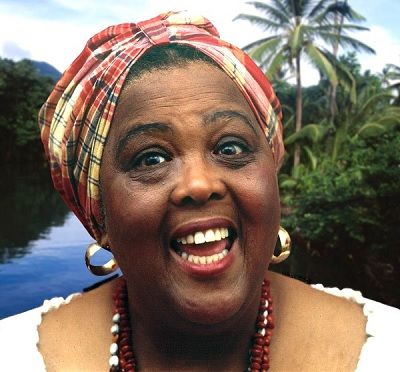
Louise Bennett (1919 – 2006), more formally Louise Simone Bennett-Coverley OM OJ MBE, more commonly known by her pen name Miss Lou, was a Jamaican poet, folklorist, actress, writer and educator. She wrote and performed her poems in Jamaican Patois. Raised in Jamaica, educated at RADA on a British Council scholarship, she built her career in Jamaica but moved to Canada in her later years.
Odd poem: Kwame Nkrumah, ‘Ethiopia Shall Rise’

Ethiopia, Africa’s bright gem
Set high among the verdant hills
That gave birth to the unfailing
Waters of the Nile
Ethiopia shall rise
Ethiopia, land of the wise;
Ethiopia, bold cradle of Africa’s ancient rule
And fertile school
Of our African culture;
Ethiopia, the wise
Shall rise
And remould with us the full figure
Of Africa’s hopes
And destiny.

*****

Kwame Nkrumah delivered this poem at the end of his speech on May 25, 1963, in Addis Ababa at the close of the meeting that created the Organisation of African Unity.

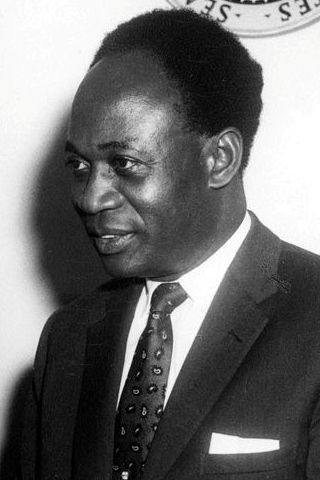
Born and raised in the British colony of the Gold Coast, Nkrumah had received his university education in the United States. He got both his Bachelor of Arts and Bachelor of Theology from Lincoln University, then his Masters of both Philosophy and Education from the University of Pennsylvania. Back in the Gold Coast he led non-violent resistance to British rule, was sentenced to a year in prison, but when his party did well in the colony’s first General Election he was released, and he became Prime Minister in 1952. In 1957 he helped lead the Gold Coast and British Togoland to independence as Ghana.

Initially popular because of new roads, schools and hospitals and the Africanisation of employment, his government became increasingly authoritarian, corrupt and incompetent while Nkrumah himself focused on his Pan-African vision and Third World solidarity. He was a driving force in creating the OAU in Addis Ababa in 1963. He was ousted in a military coup in 1966.

Technically there isn’t much in his OAU poem to justify the term in the sense of “verse”; there are two pairs of rhymes in the middle of the piece (rise/wise; rule/school), but none of the rhythms or structures that English-language poetry is built on. But though Nkrumah was fluent in English, his mother tongue was Fante – so for all I know, the poem above is a translation of his original thoughts… and translations are notoriously unpoetic, especially when the two languages have different poetic traditions. But equally the poem may be no more than a rhetorical flourish at the end of his OAU speech.

Photo: Kwame Nkrumah during a state visit to the United States, by Abbie Rowe, 8 March 1961; John F. Kennedy Presidential Library and Museum