
Tag Archives: dialect verse

Dialect verse: Louise Bennett, ‘Back to Africa’

Back to Africa, Miss Mattie?
You no know wha you dah seh?
You haf fe come from somewhe fus
Before you go back deh!

Me know say dat you great great great
Granma was African,
But Mattie, doan you great great great
Granpa was Englishman?

Den you great granmader fader
By you fader side was Jew?
An you granpa by you mader side
Was Frenchie parlez-vous?

But de balance a you family,
You whole generation,
Oonoo all barn dung a Bun Grung–
Oonoo all is Jamaican!

Den is weh you gwine, Miss Mattie?
Oh, you view de countenance,
An between you an de Africans
Is great resemblance!

Ascorden to dat, all dem blue-yeye
White American
Who-fa great granpa was Englishman
Mus go back a Englan!

What a debil of a bump-an-bore,
Rig-jig an palam-pam
Ef de whole worl start fe go back
Whe dem great granpa come from!

Ef a hard time you dah run from
Tek you chance! But Mattie, do
Sure a whe you come from so you got
Somewhe fe come back to!

Go a foreign, seek you fortune,
But no tell nobody say
You dah go fe seek you homelan,
For a right deh so you deh!

*****

The trick with dialect verse is to read it aloud, and let it make sense. Then a word like “doan” will clarify itself as “don’t”. Perhaps the most difficult line in this poem is “Oonoo all barn dung a Bun Grung–” which is “You all born down in Burnt Ground”, a rural community in Jamaica.

Louise Bennett (1919 – 2006), more formally Louise Simone Bennett-Coverley OM OJ MBE, more commonly known by her pen name Miss Lou, was a Jamaican poet, folklorist, actress, writer and educator. She wrote and performed her poems in Jamaican Patois. Raised in Jamaica, educated at RADA on a British Council scholarship, she built her career in Jamaica but moved to Canada in her later years.
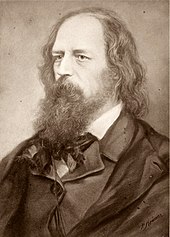
Odd poems: Tennyson dialect verse, ‘The Northern Farmer’, Old Style and New Style

Wheer ‘asta beän saw long and meä liggin’ ‘ere aloän?
Noorse? thoort nowt o’ a noorse: whoy, Doctor’s abeän an’ agoän;
Says that I moänt ‘a naw moor aäle; but I beänt a fool;
Git ma my aäle, fur I beänt a-gawin’ to breäk my rule.

This is the opening stanza of Alfred, Lord Tennyson‘s poem ‘The Northern Farmer: Old Style’. The farmer is dying, but obstinately overrules the doctor’s order that he not drink any more ale, just as he obstinately clings to traditional attitudes towards land and class, farming and money.

Where have you been so long and me lying here alone?
Nurse? You’re no good as a nurse; why, the doctor’s come and gone:
Says that I mayn’t have any more ale; but I’m not a fool;
Get me my ale, because I’m not going to break my rule.

It’s one of a series of poems he wrote that recapture the dialect of his Lincolnshire youth, and that reflect the old traditions and the modern changes of that part of the country. It is paired specifically with ‘The Northern Farmer: New Style’–Here the “new style” farmer, out in a cart with his son Sammy, hears the horse’s hooves clip-clopping “Property, property” and chides his son for not thinking enough about money:

Me an’ thy muther, Sammy, ‘as been a’talkin’ o’ thee;
Thou’s beän talkin’ to muther, an’ she beän a tellin’ it me.
Thou’ll not marry for munny–thou’s sweet upo’ parson’s lass–
Noä–thou ‘ll marry for luvv–an’ we boäth of us thinks tha an ass.

Seeä’d her todaäy goä by–Saäint’s-daäy–they was ringing the bells.
She’s a beauty, thou thinks–an’ soä is scoors o’ gells,
Them as ‘as munny an’ all–wot’s a beauty?–the flower as blaws.
But proputty, proputty sticks, an’ proputty, proputty graws.

or, in more modern words:

Me and your mother, Sammy, have been talking of you;
You’ve been talking to mother, and she’s been telling me.
You don’t want to marry for money–you’re sweet on the parson’s daughter–
No, you want to marry for love–and we both think you’re an ass.

Saw her today going by–Saint’s day–they were ringing the bells.
She’s a beauty, you think–and so are scores of girls,
Those with money and everything–what’s a beauty?–a flower that fades.
But property, property sticks, and property, property grows.

Tennyson was meticulous in trying to recapture the life and language of his youth. He wrote:

When I first wrote ‘The Northern Farmer’ I sent it to a solicitor of ours in Lincolnshire. I was afraid I had forgotten the tongue and he altered all my mid-Lincolnshire into North Lincolnshire and I had to put it all back.

And apart from the accuracy of the dialect, Tennyson was as skilled as ever with his carefully conversational metre, and natural rhymes working comfortably with the natural breaks of the lines.