Tag Archives: autumn

Using form: Susan Jarvis Bryant, ‘To Autumn’

Your flare of red turns Winter’s hoary head
To gaze upon your blaze and feel the heat
      And fever of your beat.
Your spice and sizzle catch his breath and spread
Through icy sighs to melt the lick of frost
      That dusts the dawn
With hints of chill intent. His plot is lost
In honeyed-apple charm and plummy balm.

You temper smitten Winter’s bitter breeze.
Your foxy bronze and lush rufescent blush;
      Your gold and ruby rush
 Ignite the leaves that shiver on the trees.
You burn through thickest wisps of morning mist.
      Birds laud your glow.
The granite skies grow blue as clouds are kissed
By dreams so hot they thaw all thoughts of snow.

When it’s your time to go you’ll fade with grace
As branches shed their tawny tears of grief –
      Each crisp and crinkled leaf
Will pool and pile. As Winter shows his face
Your fluffy, brush-tailed fans will slump and sleep.
      They’ll hit the sack
Until they spy the coyest crocus peep –
Spring’s message to the world that you’ll be back!

*****

Susan Jarvis Bryant writes: “My poem is a quirky nod to Keats’ timeless and beautiful ode with a much louder and sassier version of the fall with not a mellow trait in sight.  There is no time for mourning loss in this poem. Autumn vows (in true Terminator style) she’ll be back! The form I chose is a nod to the traditional but with two short lines in each stanza – an act of rebellion in keeping with this fiery season.”

‘To Autumn’ was originally published in Snakeskin 321.

Susan Jarvis Bryant is originally from the U.K., but now lives on the coastal plains of Texas. Susan has poetry published on The Society of Classical Poets, Lighten Up Online, Snakeskin, Light, Sparks of Calliope, and Expansive Poetry Online. She also has poetry published in The Lyric, Trinacria, and Beth Houston’s Extreme Formal Poems and Extreme Sonnets II anthologies. Susan is the winner of the 2020 International SCP Poetry Competition and has been nominated for the 2024 Pushcart Prize. She has just published her first two books, Elephants Unleashed and Fern Feathered Edges.

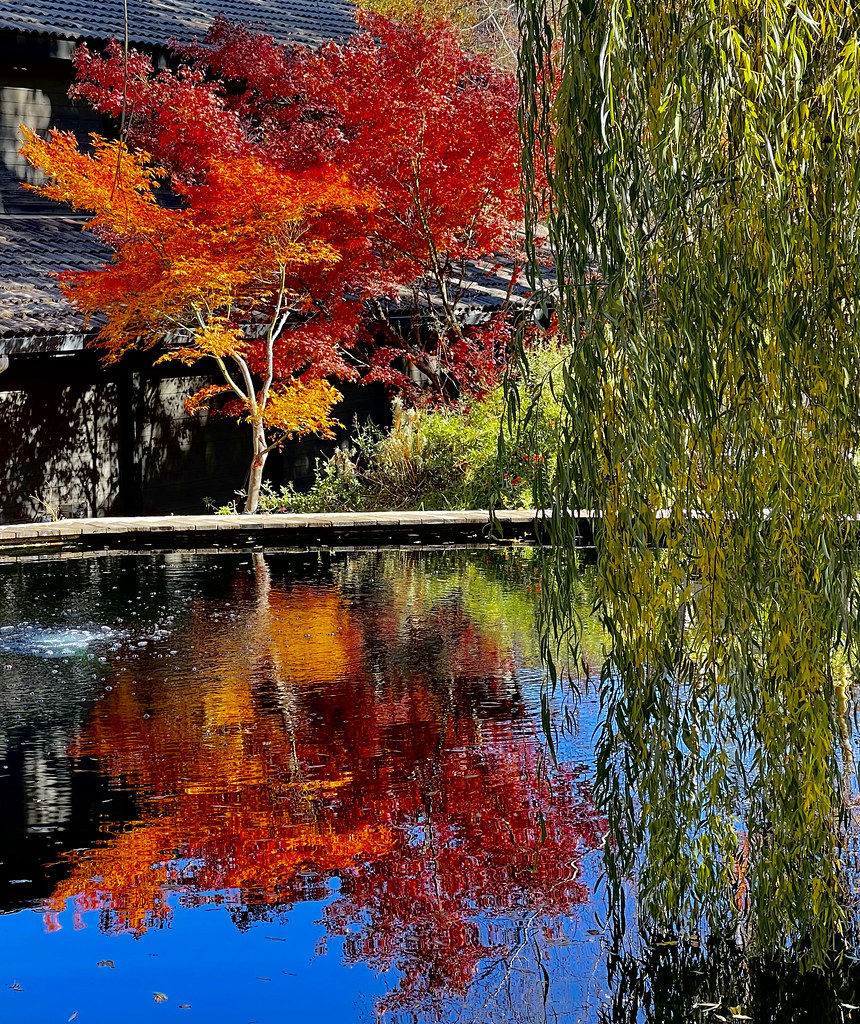
Photo: “Fall Color on the Pond” by fossiled is licensed under CC BY-NC-SA 2.0.
Sonnet: Janice D. Soderling, ‘September Morning’

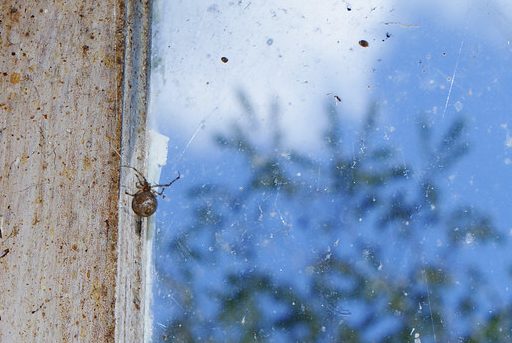
Across a sun-lit pane, deft, unconcerned,
a spider struts the steps of an old dance,
a set design, in no part happenstance:
and I again to sun and rune returned.
Stumbling along, half blind, half deaf, half-learned,
in yet a day of quarrel and circumstance,
I turn from cluttered web to view askance
night’s daughter, she who never can be turned.

Sleek spider dame with one plan, to consume,
to suck the juice from each unwary fly,
with no grand need to query or presume
if there was meaning in your quarry’s sigh.
Here, in the corner of my fog-filled room,
Atropos grins, her scissors lifted high.

*****

Janice D. Soderling writes: “I don’t write much these days, preferring to use the shortening days to read. But I woke up this morning with the last two lines in my head, and knowing it was an ending to a sonnet, I proceeded to write the rest. Perhaps it asks too much of the reader. Perhaps it is a pretentious piece, of interest only to me. Never mind, I shall keep it, having poured three hours into it.”

Janice D. Soderling has published poems, fiction and translations in hundreds of print and online journals and anthologies over the years. Her most recent poetry collection is ‘Rooms and Closets‘ available at all online bookshops.

Photo: “Spider In Window” by trekkie313 is licensed under CC BY 2.0.

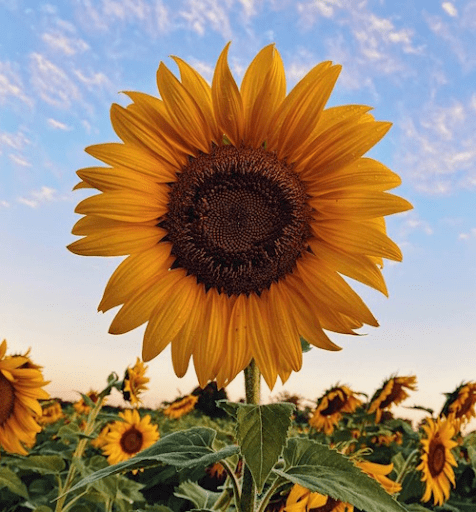
Joe Crocker, ‘What Sunflowers See’

They lift and fix their heavy insect eyes
upon the East, from where the sun will send
the bees to stroke and lick and fertilize.
 
They wait, where once they craned their necks to see
his passing arc. They wait, amazed. Surprise
has painted yellow lashes, perfectly
 
coronal round a crowded, dark eclipse.
Its buzzing beauty pixelates and stares.
An alien array of cells unzips.
 
A thousand thousand sisters nurse the same
regret. His warmth is gone. And left behind
to hang their heads, disconsolate, they blame
themselves. Their tears drop hard and black and blind

*****

Joe Crocker writes: “The French call them Tournesols because, when they are growing, the follow the sun. But when the flowerhead is fully formed, they all face East so they warm up quickly and are more attractive to the bees. The poem came about because I’ve been seeing them more frequently in our local supermarkets and my wife grew some this year. Seeing them close up, I was reminded of the reaction a friend from many years ago used to have. She liked them but kept her distance because she was spooked by their dense busy centres. So the insect eye was the starting metaphor and then the poem led me on. Big, beautiful, disturbing, and in the end, sad.”

Joe Crocker is no relation of the Sheffield-born rock singer. But he does live in Yorkshire and gets by (with a little help from his friends). He is a bit old now to be starting out in poetry but was infected by the muse during Covid lockdown a couple of years ago and has had a few things published, mainly in Snakeskin magazine (where this poem first appeared) and other online venues. He doesn’t have a website but if you Google him, you’ll learn a lot more about a certain Sheffield-born rock singer.

Photo: accompanied the poem in Snakeskin.

Sonnet: “From the Sudden Sun”

Life bioengineers its seamless rounds
with green leaves scarleting in fierce blue skies,
falling from sudden sun or winds that rise
with violin-sad sighing, dying, sounds.
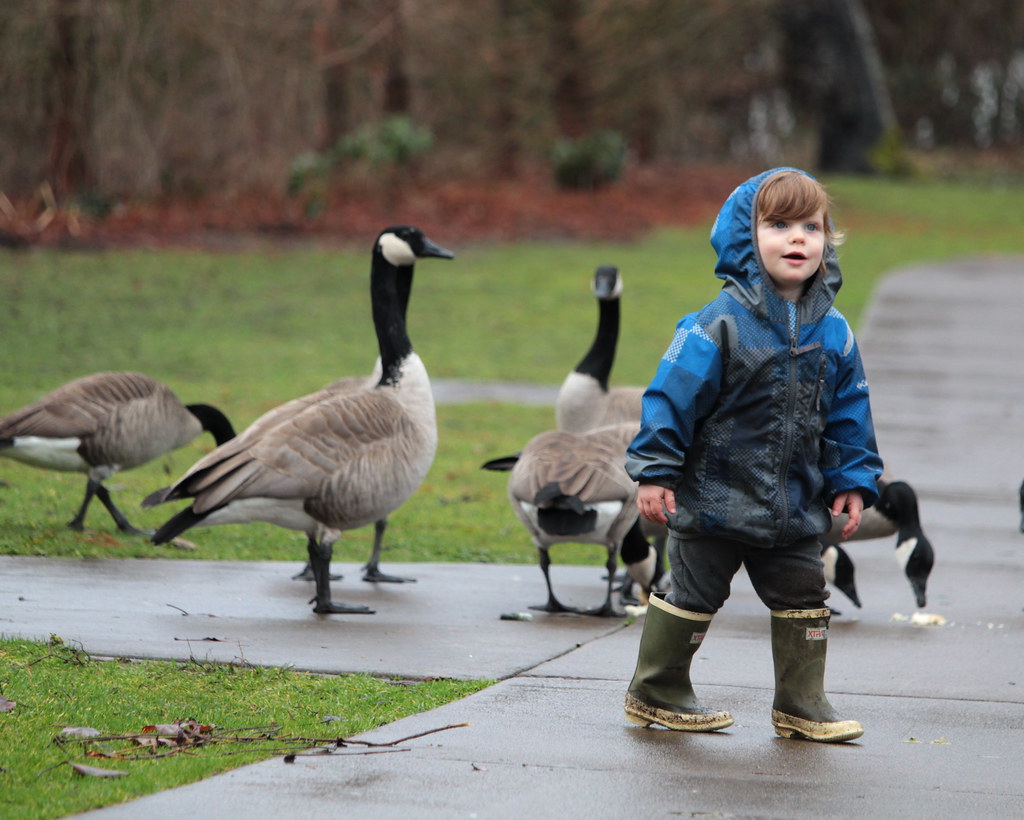
Toddlers in pointlessly expensive clothes
with pregnant women breadily approach
some non-migrating geese which with reproach
lift in unfrantic flight to lake’s repose.
Despite such fertile life, the living leaves
blaze with the imminence of winter’s touch
and dead leaves blow beyond the groundsman’s clutch
in a wind chilled for one who disbelieves
that life entails the sudden cutting short
of your expression flowering in mid

Another of my existential sonnets, first published by Bewildering Stories (thanks, Don Webb). And, again, Don gave it a crisper title than my original “The Interplay of Life and Death in Fall”. I wrote this in Chapel Hill, North Carolina, watching the Canada geese at a small lake behind an upscale not-really-rural office building. Fall is, like every season, intensely evocative of human life.

I admit the ending involves a cheap trick–but leaving off the last word is designed to drive home the thought of mortality, and the missing rhyme is a perfect one… at least with an English accent, if not an American one…