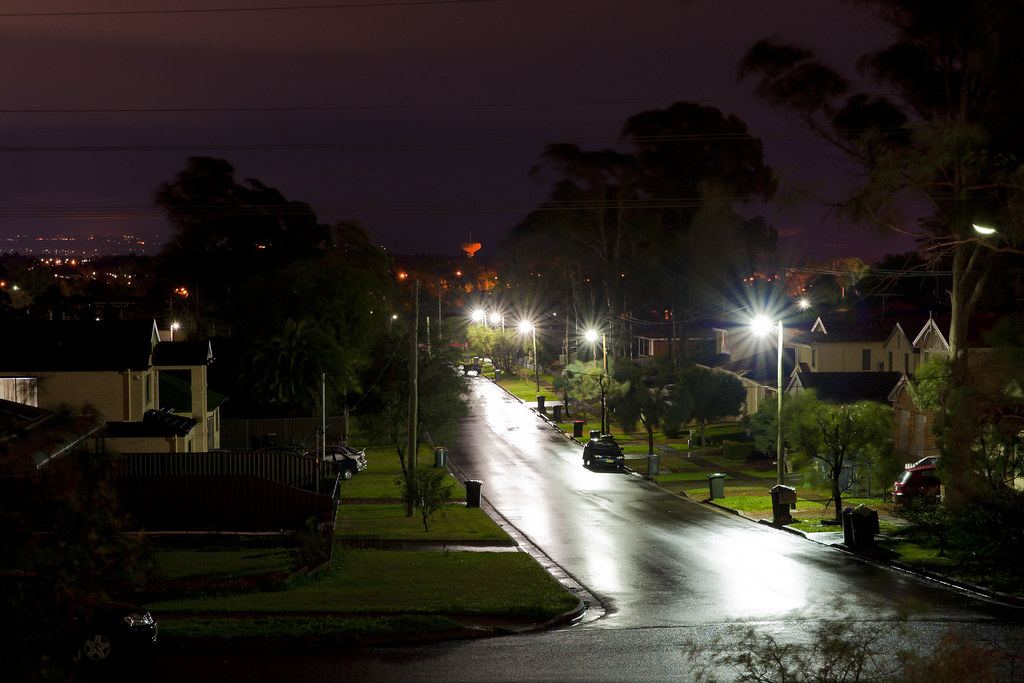
I fail at them, these scenes where beauty is married to fear. I have failed before with this one. How can I make it clear
when the moment itself was a blur? My son and I, that night, stepped through the warm, wet air that had magicked every light
to a wide, all-hallowing halo. He said–I think he was ten, still with his clear soprano– It’s lovely out here. And then
the edge of every nimbus, pale gold through a fog scrim, shivered, knowing that beauty soon would be bullied out of him.
*****
Maryann Corbett writes: “This poem (first published in Mezzo Cammin) is indeed based on one of those indelible memories, the sort that lodge in a parent’s brain for decades. And I have in fact tried to write about it before without succeeding. I’ve never asked my very adult son whether he remembers this moment at all.”
Maryann Corbett earned a doctorate in English from the University of Minnesota in 1981 and expected to be teaching Beowulf and Chaucer and the history of the English language. Instead, she spent almost thirty-five years working for the Office of the Revisor of Statutes of the Minnesota Legislature, helping attorneys to write in plain English and coordinating the creation of finding aids for the law. She returned to writing poetry after thirty years away from the craft in 2005 and is now the author of two chapbooks and six full-length collections, most recently The O in the Air (Franciscan U. Press, 2023). Her work has won the Willis Barnstone Translation Prize and the Richard Wilbur Award, has appeared in many journals on both sides of the Atlantic, and is included in anthologies like Measure for Measure: An Anthology of Poetic Meters and The Best American Poetry.
Small vandal, parked on your padded bum on a cheerful rug in the Children’s Section next to a bottom shelf, yanking the volumes one by one till they strew the aisle in every direction, loudly pleased with yourself at the way your brightly patterned havoc obstructs the traffic,
keep to your task. Disrupting order is evolution’s eternal purpose. Surely it’s been your goal from the hour two gametes burst their border and two tame selves went wild as a circus. Systems that once felt whole eyeballed each other, laughed, and gambled, and lives got scrambled.
Do your worst, then, with giggles, rage, and all the smackdown-loud rebellion grown-ups are now too tired for. These sleepless two, in a golden age, were a black-clad goth and a hard-rock hellion. Change is the charge we’re wired for. small changer, blessings. Though elders frown, pull the world down.
*****
Maryann Corbett writes: “Like many poems, this one (first published inLIGHT) is part memory and part pure fiction. “Anti-librarian” was our joke term for our daughter as an infant when (long years ago) she sat on her tush next to the bookshelves and pulled the books off just because she could. The image of young parents as reformed characters is imaginary. The hope that the young will change the world seems to be eternal.”
Maryann Corbett earned a doctorate in English from the University of Minnesota in 1981 and expected to be teaching Beowulf and Chaucer and the history of the English language. Instead, she spent almost thirty-five years working for the Office of the Revisor of Statutes of the Minnesota Legislature, helping attorneys to write in plain English and coordinating the creation of finding aids for the law. She returned to writing poetry after thirty years away from the craft in 2005 and is now the author of two chapbooks and six full-length collections, most recently The O in the Air (Franciscan U. Press, 2023). Her work has won the Willis Barnstone Translation Prize and the Richard Wilbur Award, has appeared in many journals on both sides of the Atlantic, and is included in anthologies like Measure for Measure: An Anthology of Poetic Meters and The Best American Poetry.
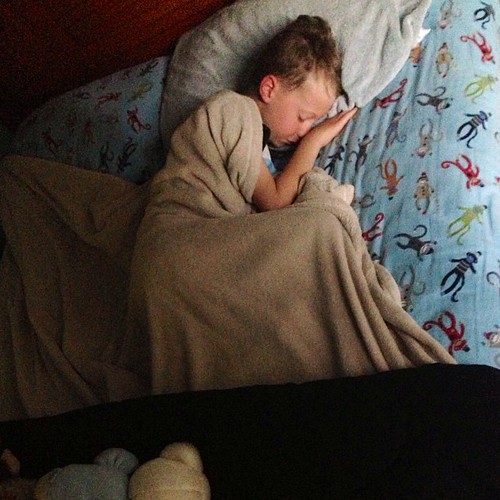
They live at bottom of the deep In ocean waters or in fresh. They feed with greed on human flesh. They kill the ones who oversleep.
You never will be fully grown. They shoot with arrows while you dream, Then drag you down like cod or bream, But first replace you with a clone.
They leave it sleeping in your tent. It has your eyes. It has your cheeks. It wakes up early and it speaks. The tribe won’t wonder where you went.
It does your chores and may amaze. Like you, it plays and even thinks But very soon, your double shrinks And it will die in seven days.
Your people will not ever know. You’ll never love. You’ll never marry. Your twin’s the one that they will bury For you’ve gone where the fish bones go.
But if you listen you will thrive: Get out of bed and brush your hair. The hunter’s coming. Be aware Lest you be swallowed up, alive.
*****
Jennifer Reeser’s ‘Nursery Rhyme for Lazy Children’ was first published in New Verse Review. She cites the following Cherokee myth, ‘The Water Cannibals‘:
Besides the friendly Nûñnë’hï of the streams and mountains there is a race of cannibal spirits, who stay at the bottom of the deep rivers and live upon human flesh, especially that of little children. They come out just after daybreak and go about unseen from house to house until they find some one still asleep, when they shoot him with their invisible arrows and carry the dead body down under the water to feast upon it. That no one may know what has happened they leave in place of the body a shade or image of the dead man or little child, that wakes up and talks and goes about just as he did, but there is no life in it, and in seven days it withers and dies, and the people bury it and think they are burying their dead friend. It was a long time before the people found out about this, but now they always try to be awake at daylight and wake up the children, telling them “The hunters are among you.”
This is the way they first knew about the water cannibals: There was a man in Tïkwäli’tsï town who became sick and grew worse until the doctors said he could not live, and then his friends went away from the house and left him alone to die, They were not so kind to each other in the old times as they are now, because they were afraid of the witches that came to torment dying people.
He was alone several days, not able to rise from his bed, when one morning an old woman came in at the door. She looked just like the other women of the settlement, but he did not know her. She came over to the bed and said, “You are very sick and your friends seem to have left you. Come with me and I will make you well.” The man was so near death that he could not move, but now her words made him feel stronger at once, and he asked her where she wanted him to go. “We live close by; come with me and I will show you,” said the woman, so he got up from his bed and she led the way down to the water. When she came to the water she stepped in and he followed, and there was a road under the water, and another country there just like that above.
They went on until they came to a settlement with a great many houses, and women going about their work and children playing. They met a party of hunters coming in from a hunt, but instead of deer or bear quarters hanging from their shoulders they carried the bodies of dead men and children, and several of the bodies the man knew for those of his own friends in Tïkwäli’tsï. They came to a house and the woman said “This is where I live,” and took him in and fixed a bed for him and made him comfortable.
By this time he was very hungry, but the woman knew his thoughts and said, “We must get him something to eat. She took one of the bodies that the hunters had just brought in and cut off a slice to roast. The man was terribly frightened, but she read his thoughts again and said, “I see you can not eat our food.” Then she turned away from him and held her hands before her stomach–so–and when she turned around again she had them full of bread and beans such as he used to have at home.
So it was every day, until soon he was well and strong again. Then she told him he might go home now, but he must be sure not to speak to anyone for seven days, and if any of his friends should question him he must make signs as if his throat were sore and keep silent. She went with him along the same trail to the water’s edge, and the water closed over her and he went back alone to Tïkwäli’tsï. When he came there his friends were surprised, because they thought he had wandered off and died in the woods. They asked him where he had been, but he only pointed to his throat and said nothing, so they thought he was not yet well and let him alone until the seven days were past, when he began to talk again and told the whole story.
*****
Jennifer Reeser is the author of seven books of poetry. She is an author with Penguin Random House, London’s “Everyman’s Library” series, and Able Muse. Her poems, translations, essays and critical reviews have appeared internationally in POETRY, The Hudson Review, RATTLE, and elsewhere, with new work forthcoming in Nimrod from the University of Tulsa. She divides her time between her Gulf Coast estate and home on the Cherokee reservation in Indian Country, Oklahoma.
Dear Unruly Backyard Maple: I’ve been clipping you for years, convinced that efforts to reshape’ll pay for one who perseveres.
But now I get it, stubborn maple – though I’ve trained your docile peers, my double-bladed snip and scrape’ll never give you classic tiers.
And I am seeing, steadfast maple, how your tousled crown endears: you shelter birds; come spring, your drape’ll glow just like a chandelier’s.
So please forgive me, patient maple, if it’s not too late, for here’s my blessing, solemn as the papal. Grow your way. Love, Pruning Shears
*****
Melissa Balmain writes: “Looking back at poems I’ve written for and about my family, I realize many are metaphorical. I suspect that metaphor–like rhyme and meter–helps steer me toward interesting thoughts and away from over-sentimentality. (Whether my son agrees has yet to be seen!)”
‘A Super-Subtle Metaphor’ is the lead poem in the current issue of Lighten Up Online.
Melissa Balmain’s third poetry collection, Satan Talks to His Therapist, is available from Paul Dry Books (and from all the usual retail empires). Balmain is the editor-in-chief of Light, America’s longest-running journal of light verse, and has been a member of the University of Rochester’s English Department since 2010. She is a recovering mime.
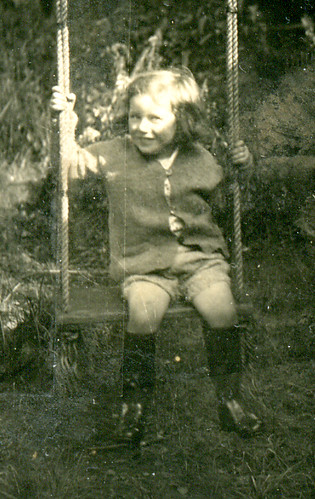
I hold you on my lap; I think you’re dead. Next to us hangs a rusty, creaking swing. I look down as my white dress blooms with red.
Such fun to pull the seat right back, then fling it free. You’re two, I’m four, so I’m to blame; now I’m screaming bloody murder to bring
someone to the garden to witness my shame where swaying grimly like a tolling bell the swing is the proof of the deadly game.
It’s a story my mother liked to tell while tracing the faint white mark on your brow: how she found me soothing you after you fell.
The truth is, I can’t remember why or how I hurled that dead weight directly at you. Did she wonder at all, as I do now
if I pushed it so hard because I knew the swing’s unpredictable to and fro showed love and jealousy can both be true?
You never reproached me, but even so I still bear the scar of that reckless throw.
*****
Louise Walker writes: “The Swing was my second effort at writing a poem in terza rima; my first was a complete disaster, written in response to an assignment set by Cahal Dallat during a course I did with Coffee-House Poetry earlier this year. That novice attempt followed the rules of the form perfectly, with 3-line stanzas rhyming aba bcb cdc ded efe fgf gg. However, my poem was pompous, stilted and vacuous. It also took me an entire day. The next morning, a memory from early childhood came to me and I thought I would try terza rima one more time. To my surprise (and joy!) the poem called ‘The Swing’ came very quickly, was a pleasure to write and didn’t require my usual endless revisions and tweakings. What’s more, I found that the terza rima form became a little engine for generating my poem – for example, searching for a rhyme for ‘you’ threw up the word ‘fro’ which made think of the swing as a metaphor for the oscillating feelings of a child when a younger sibling arrives. I also found that the chain-like effect of the form, swinging back for rhymes, and then forward, suited the subject matter perfectly. Deep in my subconscious, the terza rima form had been working its magic overnight!
I was not at all delighted to get the terza rima assignment at first, but I learnt such a valuable lesson: sometimes one has to write a really bad poem to be able to write a decent one. ‘The Swing’ became an important poem in my recent debut collection ‘From Here to There’ published by Dithering Chaps, which has at its core my journey from childhood, through the death of my brother in our twenties, then onwards.”
Louise Walker was born in Southport and now lives in London. After reading English at Magdalen College, Oxford, where she was a member of the Florio Society, she taught English for 35 years at girls’ schools. Her work has been published in journals such as Acumen, Oxford Poetry, South, Prole and Pennine Platform. Highly Commended in the Frosted Fire Firsts Award and longlisted in in The Alchemy Spoon Pamphlet Competition, in 2023 she was shortlisted in the Bedford Competition and won 3rd prize in the Ironbridge Poetry Competition. Commissions include Bampton Classical Opera and Gill Wing Jewellery for their showcase ‘Poetry in Ocean’. She has recently published her debut collection with Dithering Chaps: https://www.ditheringchaps.com/from-there-to-here Instagram @louise_walker_poetry
I hope you will forgive me for having given you hope— Too late for youthful indiscretion, though I believed my story and felt young in it until the metal facts fell.
I’d still like to imagine some god would help, but that line looks broken like the water, the gas and electricity.
What we have is hours, and in them you should have the bread and fruit before they feed the rats. I am keeping the wine for myself. It is piss-poor, anyway, and I have far more to forget.
J.D. Smith, ‘Slant Psalm’
My right hand has never known cunning, yet I remember thee, O Jerusalem, not as others’ sacred city but capital and emblem of loss, origin of far wandering without prophecy of return.
My right hand has never known cunning. May I have, as recompense, forgetting.
Michael R. Burch, ‘Starting from Scratch with Ol’ Scratch’ for the Religious Right
Love, with a small, fatalistic sigh went to the ovens. Please don’t bother to cry. You could have saved her, but you were all tied up complaining about the Jews to Reichmeister Grupp.
Scratch that. You were born after World War II. You had something more important to do: while the children of the Nakba were perishing in Gaza with the complicity of your government, you had a noble cause (a religious tract against homosexual marriage and various things gods and evangelists disparage.)
Jesus will grok you? Ah, yes, I’m quite sure! Your intentions were noble and ineluctably pure. And what the hell does THE LORD care about Palestinians? Certainly, Christians were right about serfs, slaves and Indians. Scratch that. You’re one of the Devil’s minions.
Gail Foster, ‘On The Heights Above Jezreel’
War’s harvest then is of these bitter fruits Hot shards of shrapnel buried in the flesh Of children, olives ripped up from the roots The horrid cries that fly from the nephesh And blinded eyes. Who benefits from this? Warmongers, metal forgers, men who plan Whole cities while still smoking ruins hiss Black marketeers and strategists. Who can Sleep peacefully while others have to hide Their families beneath their mothers’ skirts And bury them before their tears have dried? When will this harvest of these bitter hurts Be over? On the heights above Jezreel The storm clouds gather. Over soon I feel
Martin McCarthy, ‘The Unkillables’
There’s no great reason here to sing, but still they sing and play once more … the filthy, ragged children of the poor, who shall, as always, inherit nothing.
There’s no beckoning paradise beyond these war-torn streets of dirt, where chalked slogans outline their hurt, and yet, the unkillables rejoice!
Robin Helweg-Larsen, ‘Photo of a Dead Palestinian’
Hard to describe blown-off-ness of a head: no head, neck, shoulder – only flopping flesh, unfinished ending of a smooth-limbed, fresh, strong, naked body on white-sheeted bed; a tangled, mangled churning; then, instead of the anticipated face (serene as marble statue, Christmas figurine) instead, disorganised meat, spilling red.
No face or brains or hair. We’re sick, confused. The torn-off torso seems to have the calm proportions of an adult – look again: the genitalia of a boy of ten. “Collateral damage” is the term that’s used. Beside the body, on the sheet, an arm.
Marcus Bales: Right-Wing Semite-Murderer’s Song
Netanyahu: I am the very model of a right-wing Semite-murderer, Since I’m a Semite, too, the thing cannot get much absurderer. My people were abused by every tribe and nationality, So I, instead of empathy, embraced provinciality. Because we were oppressed I’m now oppressing weaker other folks, It gives me cover that we’re killing our Semitic brother-folks. It isn’t ethnic cleansing if I swear that in my piety I’m killing and I’m maiming only folks of my variety.
Nazi Chorus: It isn’t ethnic cleansing if we swear that in our piety We’re killing and we’re maiming only folks of our variety. We’re killing and we’re maiming only folks of our varie- riety.
Netanyahu: The same way each religion has its zealots kill for true-ishness Islamic zealots have declared that they’ll erase all Jewishness, And we have trained our own to act with criminal lethality To counterbalance enemies of lethal criminality.
Nazi Chorus: And we have trained our own to act with criminal lethality To counterbalance enemies of lethal criminality. To counterbalance enemies of lethal criminali- nality.
Netanyahu: I play the left against the right. My politics are strenuous. I say “If you hate one Jew …” Well, the rest is disingenuous. That propaganda works so well is not much of a mystery By pointing out how badly Jews were treated throughout history. We’ve rarely had an easy time, with ghettos, rape, and slavery, Our holidays still celebrate the mass of unmarked gravery. But we survived because we had our own ulteriority — And now we’re in a place at last where I am the authority.
Nazi Chorus: But we survived because we had our own ulteriority, And now we’re in a place at last where we are the authority. And now we’re in a place at last where we are the authori- thority.
Netanyahu: The Stern Gang and the Irgun were the Hamas of their day and time They killed and maimed the British, and they justified dismaying crime, And now my brave Israeli right-wing zealots take that bow for theirs, And use exactly those excuses Hamas uses now for theirs.
Nazi Chorus: And now our brave Israeli right-wing zealots take that bow for theirs, Exactly with the same excuses Hamas uses now for theirs. Exactly with the same excuses Hamas uses now for now for theirs.
Netanyahu: When everyone is furious that everyone is furious, And injury is contemplating things yet more injurious; When money spent on arms and planning how to break the breakerage Could buy opponents whole, including buildings, stock, and acreage; When every group is cheering zealots’ grim religiosity And everyone is trembling with the fear of new atrocity, I stay in office by appealing to the prejudicial dumb — While filling my Swiss bank accounts just like Hamas officialdom.
Nazi Chorus: I stay in office by appealing to the prejudicial dumb — While filling my Swiss bank accounts just like Hamas officialdom. While filling my Swiss bank accounts just like Hamas official- licialdom.
Netanyahu: No policy’s absurd enough that mine is not absurderer. I am the very model of a right-wing Semite-murderer. It isn’t ethnic cleansing if I say that in my piety I’m killing and I’m maiming only folks of my variety.
Nazi Chorus: It isn’t ethnic cleansing if we say that in our piety We’re killing and we’re maiming only folks of our variety. We’re killing and we’re maiming only folks of our vari- variety.
Robin Helweg-Larsen, ‘Roots of Terrorism’
Step back a moment, and reflect: not saying that it’s good or right that chained, starved, beaten dogs would bite– but what did you expect?
*****
Michael R. Burch, ‘Starting from Scratch with Ol’ Scratch’, first published in The HyperTexts Martin McCarthy, ‘The Unkillables’, first published in The HyperTexts Robin Helweg-Larsen, ‘Photo of a Dead Palestinian’ and ‘Roots of Terrorism’ first published in The HyperTexts
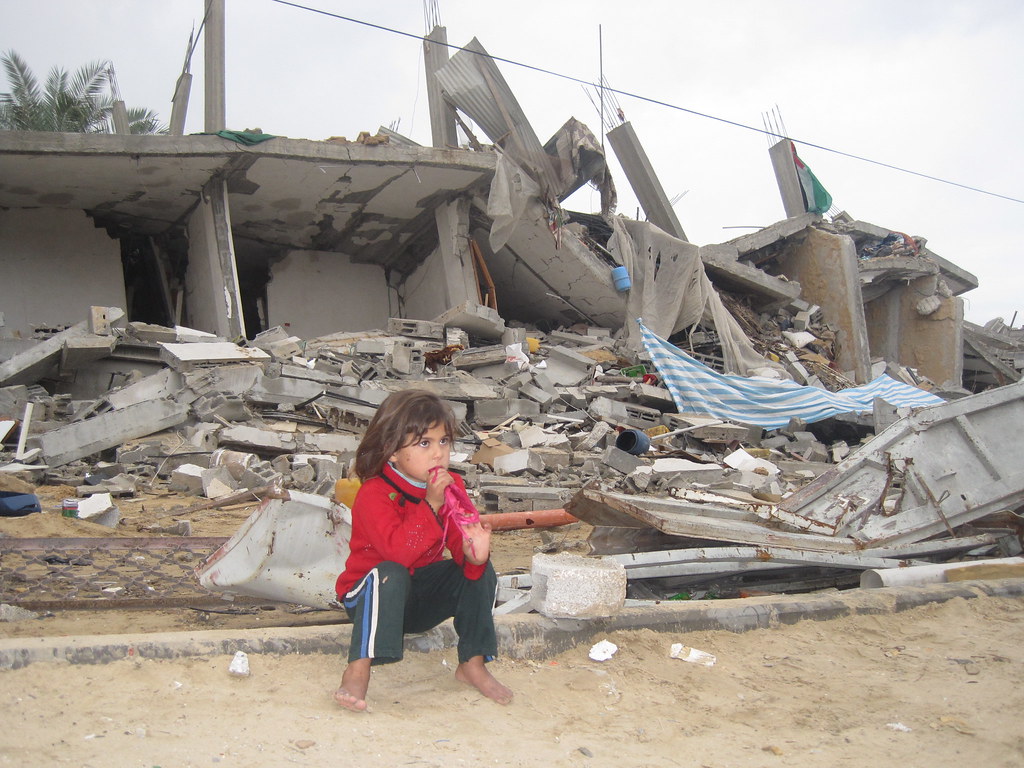
Only six, she stands before a tank, looking at its armour, while inside soldiers heed orders from a higher rank. There isn’t any place for her to hide, no door to head for, no abandoned car to slide beneath. Pure terror rules her land. When finally crushed, she rises past the star of David, with a stone clutched in her hand.
Janet Kenny: ‘Didn’t They Know?’ (In memory of a lost poem by Robert Mezey)
Didn’t they know that when they swarmed and slashed and slaughtered what they saw as an oppressor’s nest, the rage that they aroused would turn and pour with molten heat back on their house?
Their captive children now must pay, small targets in a concrete cage. No treaty, pact, no peace no truce. Didn’t they know? Didn’t they know?
No map to show another way. Olive farmers pay for crimes of other nations, other times. No mercy here, no one is just. Two agonies, two brains concussed.
Nothing to see here. False alarm. Police not needed to disarm two weeping peoples each aware that no solution slumbers there. Hearth and cradle now makes clear an ancient poem brought them here.
Where is the psalm that both can share? Where is the psalm that both can share?
Robin Helweg-Larsen: ‘Both Sides Justify Their Terrorism’
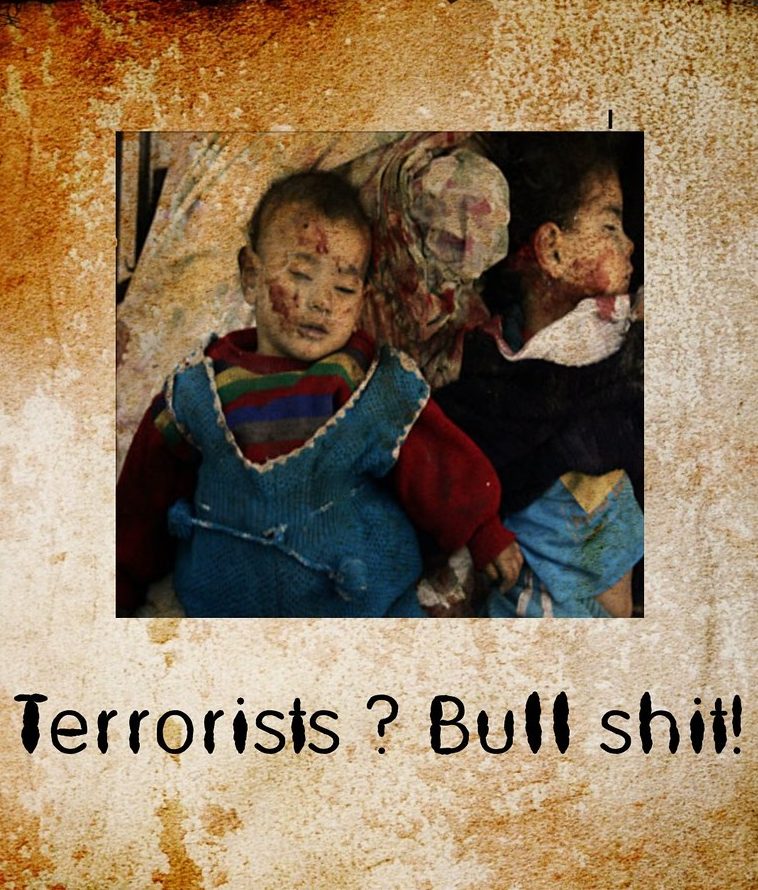
When pleas for justice are of no avail, when governments praise death and theft, and courts say you’re in error; when the UN is blocked to fail, the only recourse left is terror.
When no one cares that Yahweh willed that Jews alone should have this land (and God’s never in error) and prior residents must be killed, yet they won’t leave, they force your hand: to terror.
Gail Foster: ‘On The Occasion of Benjamin Netanyahu Quoting Dylan Thomas’
Don’t tell me that you fight a righteous fight How many children have you killed today I’ll give you rage. I’ll give you rage alright
Your anger and your ego burning bright Are razing all that’s standing in your way Don’t tell me that you fight a righteous fight
How many have you sent into the light Before they even had the time to pray I’ll give you rage. I’ll give you rage alright
How many have you saved or sent in spite Up to the sky in ashen clouds of grey Don’t tell me that you fight a righteous fight
In clouds as those who in the fog and night Were put in trains and disappeared away I’ll give you rage. I’ll give you rage alright
You speak as if your soul was white as white Yet deep inside you darkness holds its sway Don’t tell me that you fight a righteous fight I’ll give you rage. I’ll give you rage alright
Tom Vaughan: ‘The Land’
Let’s pretend that the war could be over, and peace reigned even if only this evening. O please
pick up your anger and soak it with mine in six large barrels of miracle wine
and then let us dance like lovers, as though this land’s many meanings didn’t all signal no
and we could make ploughshares out of our swords and translate the past into one shared world
and even if dawn will scatter the night and send us both stumbling into the light
where smooth olives glisten in the warm sun like belts of bright bullets ripe for a gun.
Jean MacKay Jackson: ‘War’
Some say that war is bright flares and drama, A glory of fireworks illumining skies. This is all lies. War is a child calling out for his mama And getting no answer. War is a merchant of hatred and grief: War is a thief, War is a cancer. Some say that war is hell. Perhaps that is so. Yet hell has a lack Of innocent bystanders, hell has no Collateral damage, no accidental black Body-bags for old women and babies. Hell has no maybes; Everything makes sense. In hell there is no defense: You belong there. You chose your path. Hell has a cold, hard justice drained of wrath. War is the horrified look in the eye Of a young person dying without knowing why.
Tom Vaughan: ‘Aleppo’
Never again we say, each time never, never again, and every time we mean it so when it happens again
we watch it on our screens, and say never, never again
we meet and vote and all agree never, never again.
Marcus Bales: ‘Genocide is Genocide’
Genocide is genocide. There’s no Legitimacy on the table. None. Your killing and your maiming only show What horrors piled on horrors you have done.
The US taught the method to the Germans The Trail of Tears leads to the Holocaust. And now Israeli policy determines They’ll do the same in Gaza. That boundary’s crossed.
Why not, instead, a reconciliation, Where all the old and evil wounds can be Accepted by each side without probation? With zealotry forgiven, all are free.
Until that happens, hate corrupts you all, With “Ams Yisrael Chai” the new decree — Unless it turns out that the final call That wins is “From the river to the sea.”
And that’s the choice: that each side does the worst That it can do to keep the hatreds growing, Shouting slogans of revenge, and cursed To trade atrocities that keep the business going.
The other choice is reconciliation. Yes, all the old and evil wounds will be Accepted by each side without probation, And zealotry forgiven, to be free.
If “Look at what they did to us!” is your Refrain, then all you’ve done is to condemn Your children to a world where they’ll endure Their children’s gloat: “Look what we did to them!”
There’s always someone left to live resenting The evils your revenges made you do — And they will spend their hearts and souls inventing A suitable revenge to take on you.
Be strong enough for reconciliation Where all the old and evil wounds must be Accepted by each side without probation. With zealotry forgiven, all are free.
Michael R. Burch: ‘Epitaph for a Palestinian Child’
I lived as best I could, and then I died. Be careful where you step: the grave is wide.
*****
Acknowledgements:
Leo Yankevich: ‘The Terrorist’, collected in ‘Tikkun Olam & other poems’, Counter Currents, 2012 Tom Vaughan: ‘The Land’, published on Hull University Middle East Study Centre website, 2022, and in Professor Raphael Cohen-Almagor’s December 2022 Politics Newsletter Tom Vaughan: ‘Aleppo’, published in Snakeskin 233, October 2016 Michael R. Burch: ‘Epitaph for a Palestinian Child’, first published in Romantics Quarterly, and many places since. Michael R. Burch is the founder and editor-in-chief of The HyperTexts, and its extensive collections of poetry include ones on both the Holocaust and the Nakba.
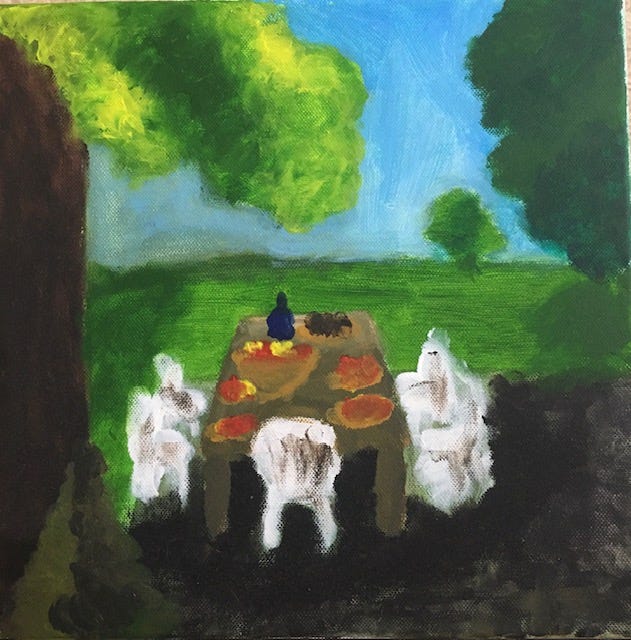
Her ashes spread on Skirrid that she loved; and his bones buried by the Harbour bay… Why choose views for the dead? Once in earth shoved, dirt in the dark is all they’d see, not day, even if they lived. And if cremated, well… So is it for our own guilt’s absolution? Or status, that their graves our standing tell? Or rites for social change’s resolution? Those who were always here are here no more – Their alwaysness runs out when they decease, and life will now sound different from before, like insect shrills not heard until they cease. Dead ghosts sleep twittering in our heads’ domed caves, waking to fill night skies from dreams and graves.
*****
This sonnet was published by The Wee Sparrow Poetry Press as a response to their ekphrastic challenge for the illustration, a painting by Žofia Katriňáková. It was written for my parents who, although they died decades ago, are still a background to my thoughts. My father is buried by the bay of Governor’s Harbour, my mother’s ashes were scattered on Skirrid Fawr, the Welsh mountain she loved and lived within sight of in Abergavenny. And I have another short poem for them, published in the Amsterdam Quarterly:
In the night’s jam jar of my memory my long-dead parents live as fireflies. My thoughts of them worn by time’s emery, their faint light still suggests where my path lies.
Is it reasonable to hope to be a firefly for your children and grandchildren?
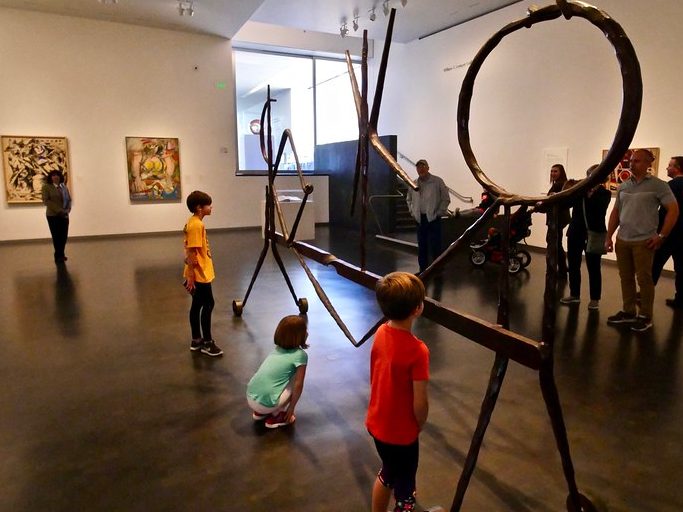
The art museum behind the big bronze door. The yellow buses lining up outside. The little children eager to explore.
The chirpy docent: Who’s been here before? Please pay attention. I will be your guide. At this museum, behind that big bronze door,
there’s nudity, depravity, and gore to take your little psyches for a ride. You children will be able to explore
the beauty born of fear, of faith, of war, of ancient ritual and genocide that cannot hide behind a brazen door.
Beheadings hardly happen anymore. Most artists have avoided suicide. You children are encouraged to explore
the human drama we cannot ignore, the shape of visions and the forms of pride collected here behind the big bronze door.
You’ll find despair, anxiety, and more. Your eyes will bleed. Your skulls crack open wide. Have fun. Enjoy yourselves as you explore the art museum behind the big bronze door.
*****
Barbara Loots writes: “I have served fourteen years as a volunteer Docent at the renowned Nelson-Atkins Museum of Art in Kansas City. For our school-age visitors, the methods we use to encourage looking and thinking are prescribed, professional, and age appropriate. However, often on my mind are the dark, unspoken underpinnings of art. The repetitive nature of museum tours suggested a villanelle.”
Barbara Loots resides with her husband, Bill Dickinson, and their boss Bob the Cat in the historic Hyde Park neighborhood of Kansas City, Missouri. Her poems have appeared in literary magazines, anthologies, and textbooks since the 1970s. She is a frequent contributor to lightpoetrymagazine.com. Her three collections are Road Trip (2014), Windshift (2018), and The Beekeeper and other love poems (2020), at Kelsay Books or Amazon. More bio and blog at barbaraloots.com
I saw the carnage . . . saw girl’s dreaming heads blown to red atoms, and their dreams with them . . .
saw babies liquefied in burning beds as, horrified, I heard their murderers’ phlegm . . .
I saw my mother stitch my shroud’s black hem, for in that moment I was once of them . . .
I saw our Father’s eyes grow hard and bleak to see his roses severed at the stem.
How could I fail to speak?
*****
Michael R. Burch writes: “Three decades ago, I began working with Jewish Holocaust survivors and other Jewish poets to publish translations of previously unpublished poems written in Polish and Yiddish by victims of the Holocaust. Some were written by children. In some cases the poems survived but the names of the poets did not. I considered it a sacred task and believed we were saying “Never again!” to any and all Holocausts. But in my discussions with my Jewish friends, it became apparent that “Never again!” did not apply to the Palestinians. When I asked questions about Israel’s brutal abuses of Palestinians and the theft of their land – armed robbery – my Jewish friends became defensive and told me, essentially, to shut up and never question Israel. Their sudden change in attitude convinced me that something was wrong, deeply wrong. I decided to research the subject independently, invested considerable time, and came to the conclusion that the Palestinian Nakba (“Catastrophe”) is a Holocaust sans ovens, a modern Trail of Tears. And while my country, the United States, has opposed other Holocausts, it is funding this one and supplies Israel with terrible weapons that are being used to mass murder children and their mothers, fathers and families. I will continue to say “Never again!” to any and all Holocausts and invite readers to join me and do what they can to end and prevent such atrocities.”
‘Suffer the Little Children’ has been published by Art in Society (Germany), Pick Me Up Poetry,Jadaliyya (Egypt), The HyperTexts andMESPI (Middle East Studies Pedagogy Institute). According to Google the poem now appears on 462 web pages.
Michael R. Burch is an American poet who lives in Nashville, Tennessee with his wife Beth, their son Jeremy, two outrageously spoiled puppies, and a talkative parakeet. Burch’s poems, translations, essays, articles, reviews, short stories, epigrams, quotes, puns, jokes and letters have appeared in hundreds of literary journals, newspapers and magazines. He is also the founder and editor-in-chief of The HyperTexts, a former columnist for the Nashville City Paper, and, according to Google’s rankings, a relevant online publisher of poems about the Holocaust, Hiroshima, the Trail of Tears and the Palestinian Nakba. Burch’s poetry has been taught in high schools and universities, translated into 19 languages, incorporated into three plays and two operas, set to music by 31 composers, and recited or otherwise employed in more than a hundred YouTube videos. To read the best poems of Mike Burch in his own opinion, with his comments, please click here: Michael R. Burch Best Poems.



 Form in Formless Times