Tag Archives: D.A. Prince

D.A. Prince, ‘Leaving’

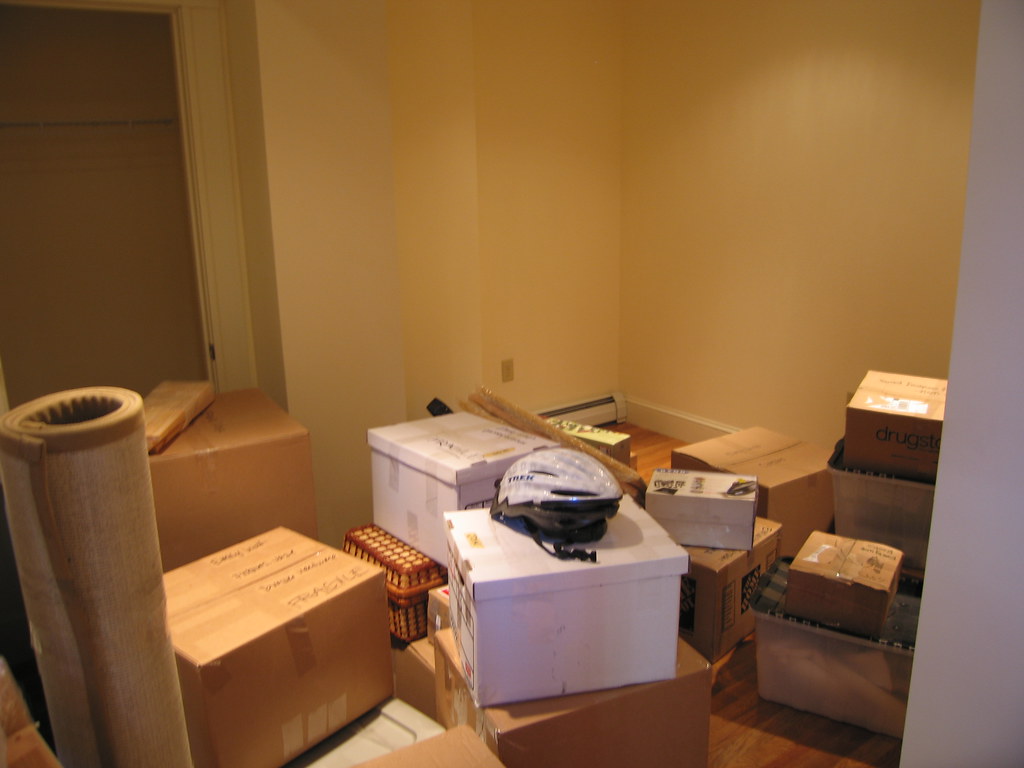
The date has come; the boxes are all stacked,
leaving pale squares where once the pictures hung.
The ghosts of photos, souvenirs, are packed,
the clocks are stopped, the pendulums have swung;
familiar noises banished. Here we sit,
nothing to do, for once: suspended time
can hold its breath and let the minutes knit
the final rows, and then cast off. The climb

into the future’s not so very hard
now all the work is done: decisions made,
the papers signed, that border crossed, the yard
cleared of dead plants, and every last bill paid.
The clocks are stopped, the pendulums have swung,
The ghosts of photos, souvenirs, are packed,
leaving pale squares where once the pictures hung.
The date has come. The boxes are all stacked.

*****

D.A. Prince writes: “This is a memory of a house move in 1982 when, somehow, I found time to sit and reflect. Having moved house last month was a rather different experience  –  and not an experience for the faint-hearted –  but I’m hopeful that eventually, there will be time to sit down. If poetry is ‘emotion recollected in tranquility’ I look forward to some restorative peace in the future.”

‘Leaving’ was first published in Snakeskin.

D.A. Prince lives in Leicestershire and London. Her first appearances in print were in the weekly competitions in The Spectator and New Statesman (which ceased its competitions in 2016) along with other outlets that hosted light verse. Something closer to ‘proper’ poetry followed (but running in parallel), with three pamphlets, followed by a full-length collection, Nearly the Happy Hour, from HappenStance Press in 2008. A second collection, Common Ground, (from the same publisher) followed in 2014 and this won the East Midlands Book Award in 2015. HappenStance subsequently published her pamphlet Bookmarks in 2018, with a further full-length collection, The Bigger Picture, published in 2022. New Walk Editions published her latest pamphlet, Continuous Present, in 2025.

Photo: “Moving Day” by jthetzel is licensed under CC BY 2.0.
Quatrains: D.A. Prince, ‘Weeds’

for Helena Nelson

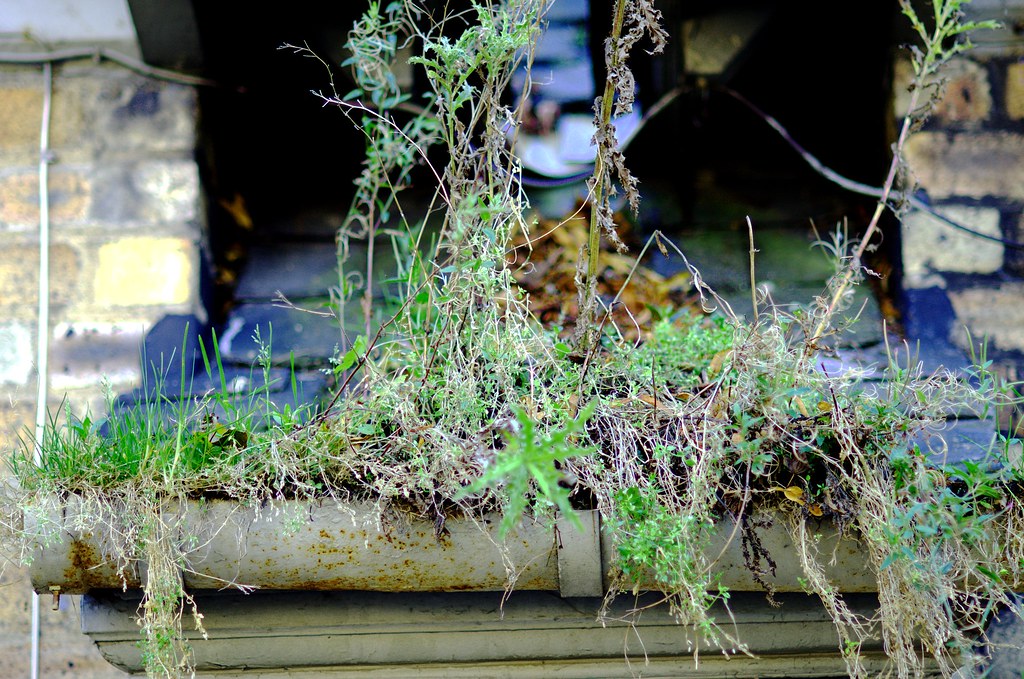
Let’s celebrate those seeded in guttering
high overhead — bird-dropped or wind-blown
in shy, shaded corners, not cluttering
the road-edge like litter or casually sown

on the garden’s margins. Buddleia, birch —
slender and whippy, fretful and restless,
only a small claw-hold on their high perch,
a loose version of themselves in endless

inventive air. No one, much, bothers them,
leaving their roots exploring the secret cracks
between bricks and flashing. Unless a stem
strangles a cable or a branch unpacks

some weathered pointing, troubling it, they’re safe:
every airhead, living only to dance
the delights of lightness, each sinuous waif
born from easy freedom, sun and rain and chance.

*****

D.A. Prince writes: “There’s a tradition of poets printing some of their work privately for circulation to friends. Now that Helena Nelson (aka HappenStance Press) is making more time for her own writing she has created a series of pamphlets about those unregarded — and usually unloved — plants generally dismissed as ‘weeds’, in which each is accorded its own sonnet. Richard Mabey’s Weeds: The Story of Outlaw Plants is the source for the botanical information while she brings a poet’s attention to what makes each one individual. She has sent these pamphlets to friends so, for the moment, only a few of us have seen them.

“I don’t habitually write poems dedicated to named people: this is, I think, the first time I’ve done it but I wanted to respond, as a way of thanking her both for long friendship and for all the poetic ongoings we’ve shared. I asked her, somewhat cautiously, if she’d agree to a dedication, then — later — if she’d agree to the poem appearing in a pamphlet.

“Her poems were sonnets so if I’d written a sonnet it could have looked competitive — and that wasn’t the point. Four quatrains, rhymed, seemed to suit the subject. In its original layout it appeared as a solid sixteen-line block but when we were working on the poems that make up my latest pamphlet (Continuous Present, New Walk Editions, 2025) Nick Everett, my editor, suggested that setting it in quatrains would suit the air and space those rooftop-rooted weeds have around them, and to my mind that’s lifted the poem in a way it needed. 

“As for gardening, I’m now very happy to let the weeds flourish.”

D.A. Prince lives in Leicestershire and London. Her first appearances in print were in the weekly competitions in The Spectator and New Statesman (which ceased its competitions in 2016) along with other outlets that hosted light verse. Something closer to ‘proper’ poetry followed (but running in parallel), with three pamphlets, followed by a full-length collection, Nearly the Happy Hour, from HappenStance Press in 2008. A second collection, Common Ground, (from the same publisher) followed in 2014 and this won the East Midlands Book Award in 2015. HappenStance subsequently published her pamphlet Bookmarks in 2018, with a further full-length collection, The Bigger Picture, published in 2022. New Walk Editions published her latest pamphlet, Continuous Present, in 2025.

*****

Photo: “guttered” by bigbahookie is licensed under CC BY-NC-ND 2.0.

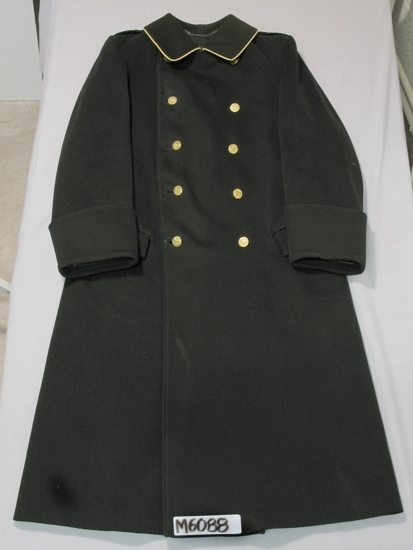
D.A. Prince, ‘The Coat’

It should have gone to Oxfam years ago
yet it clings on—through house moves, clearings-out,
declutterings—while fashion’s dictats show
just how unwearable it is. No doubt
of that. It’s heavy: woollen cloth
you’d never find these days, its tailoring
too buttoned-up, too stiff. Even the moth
finds food in something with more flavouring.

I haven’t worn it since the funeral,
that time when death demanded decency
of sober colours, darkness integral
to paying one’s respects. The legacy
hangs here, as though in waiting for some end
I can’t foresee. Then someone else will face
the final clearing, wondering where to send
this coat, and why it takes up so much space.

*****

D.A. Prince writes: “This was my coat and very much as described in the poem. It had followed me around from house to house for over fifty years. It was bought for my father’s funeral, had been worn for a couple of winters afterwards and then consigned to the wardrobe. I imagine most people have some sort of item — not necessarily clothing, just something freighted with the past — that they hesitate to part with.” The poem was published in the February 2024 Snakeskin (issue 314).

D.A. Prince lives in Leicestershire and London. Her first appearances in print were in the weekly competitions in The Spectator and New Statesman (which ceased its competitions in 2016) along with other outlets that hosted light verse. Something closer to ‘proper’ poetry followed (but running in parallel), with three pamphlets, followed by a full-length collection, Nearly the Happy Hour, from HappenStance Press in 2008. A second collection, Common Ground, (from the same publisher) followed in 2014 and this won the East Midlands Book Award in 2015. HappenStance subsequently published her pamphlet Bookmarks in 2018, with a further full-length collection, The Bigger Picture, published in 2022.

Photo: “Rock” is licensed under CC BY 4.0.

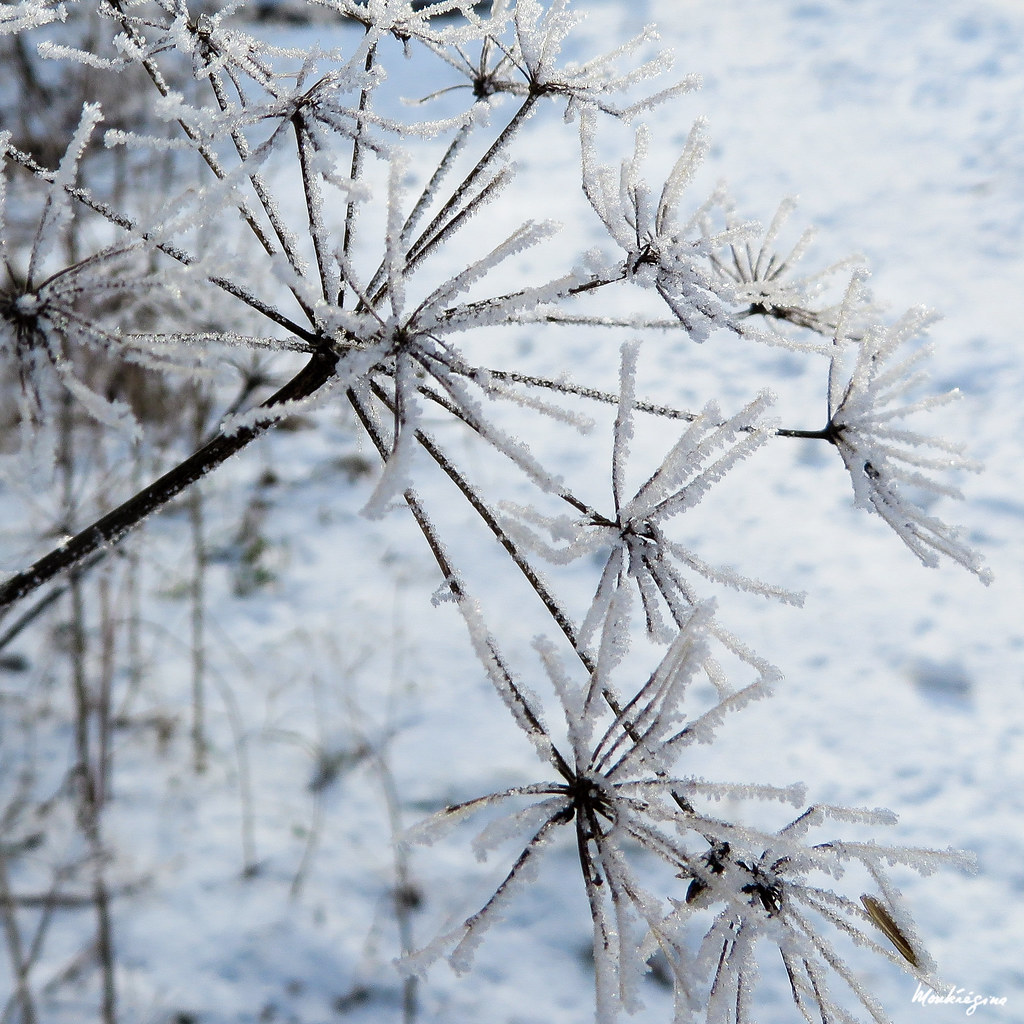
Using form: Monorhyme: D.A. Prince, ‘Cold’

Outside the glittering air is bright,
frost crystals glisten in the light,
a bitter wind sharpens its bite,
teasing a few stiff leaves to flight.
It finds in restlessness a tight
fierce chill, like muscles clenched to fight,
needling uncovered skin with spite
and then breathes out a cloud of white,
a moment’s ghost, a shape so slight
it freezes almost before sight
has marked its passing. Snowflakes write
their shaky message to unite
cold’s elements in silver night.

*****

D.A. Prince writes: “This poem came together very quickly: the garden thick with frost and the idea of catching the vowel sound in ‘ice’ as a way of capturing the sharpness of the scene. A mono-rhyme, playing with this crispness, seemed the way forward. It was fun, and that’s an important element in poetry.” The poem was published in the February 2024 Snakeskin (issue 314).

D. A. Prince lives in Leicestershire and London. Her first appearances in print were in the weekly competitions in The Spectator and New Statesman (which ceased its competitions in 2016) along with other outlets that hosted light verse. Something closer to ‘proper’ poetry followed (but running in parallel), with three pamphlets, followed by a full-length collection, Nearly the Happy Hour, from HappenStance Press in 2008. A second collection, Common Ground, (from the same publisher) followed in 2014 and this won the East Midlands Book Award in 2015. HappenStance subsequently published her pamphlet Bookmarks in 2018, with a further full-length collection, The Bigger Picture, published in 2022.

Frost Blooms – Fleurs de givre” by monteregina is licensed under CC BY-NC-SA 2.0.

Potcake Poet’s Choice: D.A. Prince, ‘Horatio’

Always in shadow, on the edge, the light
falling on someone else. I’m used to it—
fidus Achates, and half-acolyte.
Besides, the sidelines are a safer bet
so I survive—at least, upon the page,
though never in imagination.
The curtain falls: I vanish with the stage.
Even Rosencrantz and Guildenstern live on
in other times but I—the dutiful
and sober pal, the philosophic friend—
dissolve. I fade. Meanwhile, the beautiful
capture your soul beyond the play’s neat end
where I’m to set, with due fidelity,
the record straight. You won’t remember me.

From: Common Ground, HappenStance Press, 2014.

D.A. Prince writes: “In the middle of a lively debate about which actor had played the definitive Hamlet, I realised I had no memory at all of any actor playing Horatio. There would have been an equal number, obviously. Horatio is on Elsinore’s battlements in the opening scene, questioning the existence of ghosts, and he’s there in the final scene, surrounded by corpses, giving the penultimate speech. In between he hovers in Hamlet’s shadow, necessary but—if I’m a typical theatre-goer—unmemorable. He doesn’t even get to cross the stage in Tom Stoppard’s Rosencrantz and Guildenstern are Dead. The world is full of people like Horatio so I thought I would give him a brief
acknowledgement: for turning up, for hanging on, for being there.”

D A Prince lives in Leicestershire and London. Her first appearances in print were in the weekly competitions in The Spectator and New Statesman (which ceased its competitions in 2016) along with other outlets that hosted light verse. Something closer to ‘proper’ poetry followed, with three pamphlets, followed by a full-length collection, Nearly the Happy Hour, from HappenStance Press in 2008. A second collection, Common Ground, (from the same publisher) followed in 2014 and this won the East Midlands Book Award in 2015. HappenStance published her pamphlet Bookmarks in 2018 and will bring out a further collection in 2022. There’s just the little matter of a title to resolve first.

Illustration: Hamlet and Horatio in the Graveyard (Eugène Ferdinand Victor Delacroix)

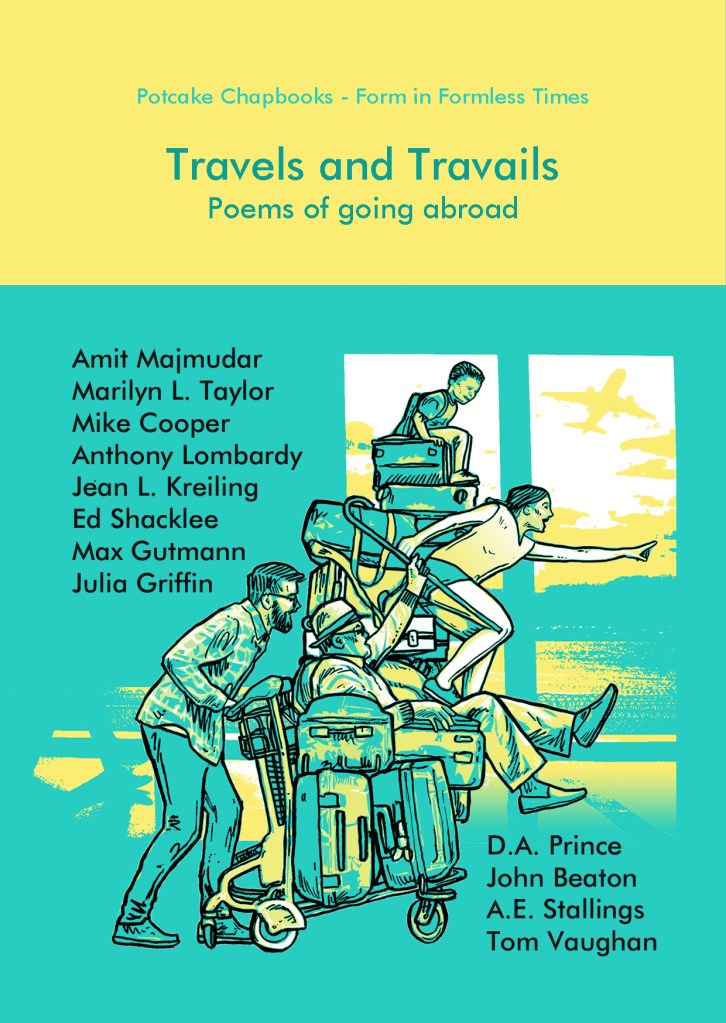
Launch: Potcake Chapbook 10, ‘Travels and Travails’

Maybe it’s just wishful thinking, but surely we’re going to get back to casual international travel again some day soon? The 10th chapbook in the Potcake series is now being mailed out from London, and I trust it augurs well for the happily peripatetic. As usual, the chapbook contains an assortment of the bright (D.A. Prince), the dark (Tom Vaughan) and the flippant (Max Gutmann), with everything in between, and all in rhythm and rhyme–and illustrated of course by Alban Low!

Returning poets are A.E. Stallings, John Beaton, Julia Griffin, Anthony Lombardy, Marilyn L. Taylor, D.A. Prince and Tom Vaughan; joining them are Amit Majmudar, Mike Cooper, Jean L. Kreiling, Ed Shacklee and Max Gutmann. (The links in the names are a mixture of websites, bios, and places to buy their books.) Most, but not all, of the poets are listed on Sampson Low’s webpage of Potcake Poets.

Let’s get everyone vaccinated so we can all start travelling again!

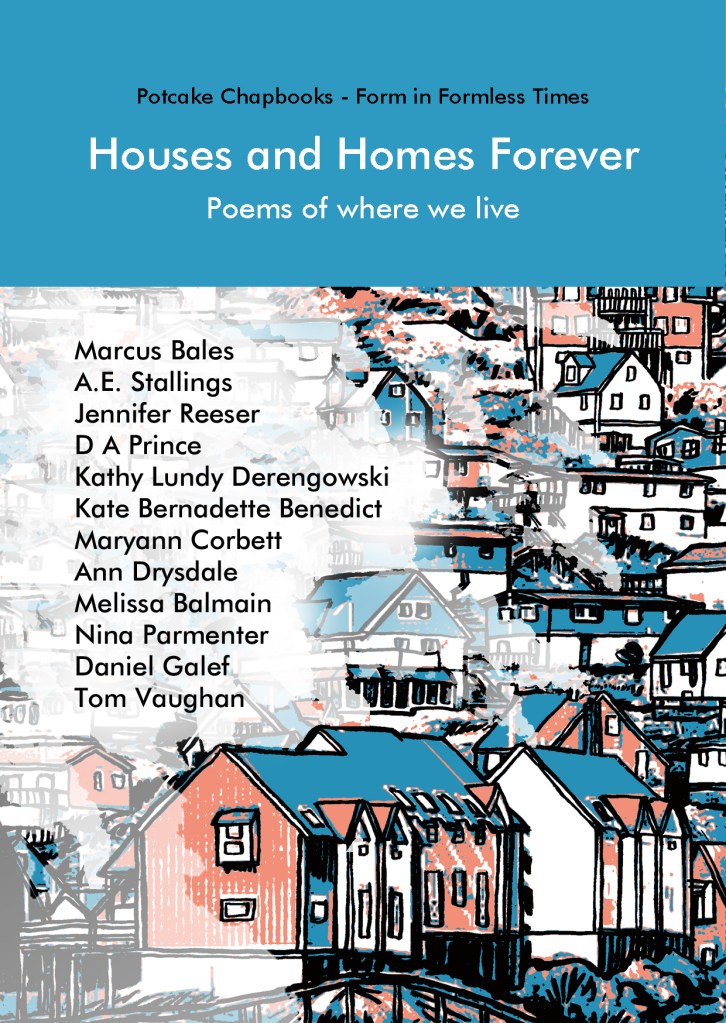
Launch: Potcake Chapbook 8, ‘Houses and Homes Forever’

Home is where you hang your hat, as they say, but it’s more than that. It can be a place of endless work and frustration, or a place of peace and relaxation and deep, strong memories. Houses and homes are part of what makes us who we are.

These poems–all formal, of course!–are as usual in a variety of forms. They were authored by Potcake newcomers Melissa Balmain, Kate Bernadette Benedict, Kathy Lundy Derengowski, Nina Parmenter and Jennifer Reeser, and returning contributors Marcus Bales, Maryann Corbett, Ann Drysdale, Daniel Galef, D A Prince, A.E. Stallings and Tom Vaughan. And well illustrated, as always, by Alban Low.

For the price of a fancy greeting card you can, through the wonders of PayPal, get this 16-page chapbook online for £2.60 + £1.20 P&P to a UK or European address, or £2.60 + £2.20 P&P to a Worldwide address; the seven earlier chapbooks in the series are available as well.

An overview with photos and bios of all the Potcake Chapbook poets is here, all having a home in this big, rambling house.

Potcake Poet’s Choice: D.A. Prince, “The Window”

D.A. Prince

That was my first job, he said, as we gazed
at the insignificant window. Down
the slate steps, and looking from the raised
salt-pitted pavement, where this end of town
gets hammered by the sea, it looked so small.
But sturdy, strongly-made enough to prove
that here his father fitted him with all
the craftsmanship he’d need. It wouldn’t move
or crumble. Each year he’d return, to see
his work enduring. Then brought me, to know
a detail of our family history
and let this shabby mullioned window show
something inherited – that stone and wood,
well-built, can last a lifetime and go on
drawing the clean light in and doing good.
I think about it often now he’s gone.

D A Prince writes: “Sometimes a poem travels far further than expected. When I wrote ‘The Window’ I felt it was a quiet and, for me, unusually personal poem which would have a limited readership. It was published in South, and the editors subsequently submitted it to the Forward 2020 Anthology. I was pleased they had chosen it but given the cutting-edge nature of the Forward anthologies I never thought it would be selected. After all, it’s formal; that’s not how twenty-first century poetry is. To my astonishment it was selected and included — perhaps a reminder that rhyme and metre are still part of our landscape.”

D A Prince lives in Leicestershire and London. Her first appearances in print were in the weekly competitions in The Spectator and New Statesman (which ceased its competitions in 2016) along with other outlets that hosted light verse. Something closer to ‘proper’ poetry followed, with three pamphlets, followed by a full-length collection, Nearly the Happy Hour, from HappenStance Press in 2008. A second collection, Common Ground, (from the same publisher) followed in 2014 and this won the East Midlands Book Award in 2015. HappenStance published her pamphlet Bookmarks in 2018.
Light verse continues to be an essential part of her writing as a way of honing technical skills while having fun.

http://www.happenstancepress.com

Poems: “Beach and Mountain”, “Now I Know Death”

This month’s edition of Snakeskin has two of my poems in it – and neither is formal. How Linda Ronstadtembarrassing! All the more so as the issue also contains two very nice sonnets by D.A. Prince and Diane Elayne Dees, and a truly excellent transforming poem by Daniel Galef which can be read as either a loose-rhythm 14-line sonnet or, with identical words broken into shorter lines and different rhymes, as five quatrains in the style of Robert Service.

But having given you the links to those, I return to my own poor contributions:

Beach and Mountain

Oh! I said, Look at that Beach!
What! said the Mountain, So go live down there.
See if I care.
Oh Mountain, I said, don’t be so silly,
I choose to live here,
complex and craggy, rich in forests and streams,
here where you rise up, taller than the clouds,
up where the air itself is rarefied
with views over all the world below.
But still… look at that pretty little beach
with its soft white sand,
its smooth clear water…

Now I Know Death

I know how I will die – sadly, slowly,
Regretting all I leave behind
In the spirit of taking a train to school,
Of seeing the holidays pass without a girl,
Of moving out of a good house, leaving the keys
On the table, carefully locking myself out.
Watching the first leaves fall, warning that
The summer comes to an end.
Going to bed only because I am so tired.
Hearing the wind in the pines, hinting at loss.
Feeling without my children, grown,
Transcontinental, unreachable.
The sadness that comes from depths of happiness
And knowing I’m too frail to hold it.