Tag Archives: God

Using form: Couplets/Sonnet: Gail White, ‘Prayer Updated’

To Anyone who still may be
attentive from Infinity,
we bless you from our dot in space
and thank you for our privileged place.

Give us this day on which to feed
a bit more gluten than we need,
and when we’re adequately fed,
help us to get and stay ahead
and save for our retirement
enough plus twenty-five per cent.

May old age find us cheerful still,
our life in order like our will,
with neither pain nor care nor debt.
Thy kingdom come, but not just yet.

*****

Gail White writes: “Religion and irony are not incompatible I find that a good deal of poetry comes from taking a speculative or questioning view of Bible stories (e.g, how did Adam and Eve react to the murder of Abel by Cain? We don’t hear a peep out of them about it.) And I’ve often said that if God hadn’t wanted at least one cynical feminist poet, I wouldn’t exist.”

‘Prayer Updated’ was published in the current issue of Lighten Up Online.

Gail White is the resident poet and cat lady of Breaux Bridge, Louisiana. Her books ASPERITY STREET and CATECHISM and the chapbook SONNETS IN A HOSTILE WORLD are available on Amazon. She is a contributing editor to Light Poetry Magazine. “Tourist in India” won the Howard Nemerov Sonnet Award for 2013. Her poems have appeared in the Potcake Chapbooks ‘Tourists and Cannibals’, ‘Rogues and Roses’, ‘Families and Other Fiascoes’, ‘Strip Down’ and ‘Lost Love’.

Illustration: “Global Prayer” by thorntonsdigital is licensed under CC BY-ND 2.0.

Weekend read: George Simmers, ‘Hymn’

All things dull and ugly, all creatures gross and squat,
All things vile and tedious, the Lord God made the lot.

He made the sly hyena, the hookworm and the slug,
Your moaning Auntie Margaret and pervy Uncle Doug.

He made that dreary Welshman who so often reads the news,
And he made us, the ragtag lot who worship at St. Hugh’s.

We’re far from high achievers, we don’t have gorgeous bods;
At best you’d call us humdrum, a group of odds and sods.

We’re verging on the useless and we have got a hunch
No deity could think we were a preposessing bunch.

That’s why we’re rarely cheerful, but feel a bit less blue
When thinking how the mighty Lord can be ham-fisted too.

‘Cause frankly we’d be daunted by a more efficient chap.
We feel a lot more comfy with a God who’s slightly crap.

*****

George Simmers writes: “This is a poem that would never have existed had it not been for the Spectator magazine, which each week sets a challenge to its readers, demanding produce a short piece of writing (it might be 16 lines of verse or 150 words of prose) on a particular theme. The task is often a silly one. A couple of years ago the demand was for a hymn beginning ‘All things dull and ugly…’

“Competitive light verse is a tradition that stretches back a long way in Britain. In the early years of the twentieth century Naomi Royde-Smith of the Saturday Westminster Gazette set challenges that were responded to by up-and-coming writers like Rupert Brooke and Rose Macaulay, among others. In the thirties the Weekend Review was notable for its literary competitions, and when that magzine was incorporated into the New Statesman, the comp came with it.

“Those New Statesman competitions became a notable feature of English literary life, producing star writers such as Allan M. Laing, Stanley J. Sharpless, Roger Woddis, E.O. Parrott, Martin Fagg, Bill Greenwell and Basil Ransome-Davies.. look in any good anthology of light verse, and you’ll find glittering examples of some of their work. The Spectator and Punch were later in running competitions that attracted many of the same writers.

“I first entered a New Statesman competition in 1981, earning a pound for a one-line joke. Easy money! I entered a few more, mostly prose, and it was a while before I had a verse winner. Before that my verse writing had been a bit modernist and self-indulgent; no more. To succeed in the comps you need to master rhyme and metre. It’s a great training ground. Wendy Cope, one of the best writers of neat epigrammatic verse today began in New Statesman competitions (Much of her first, and arguably best, book, Making Cocoa for Kingsley Amis, is made up of her competition winners.) At about the same time, D.A. Prince began her competition career, which continues in the Spectator today (and I’m proud to have her as regular poet in Snakeskin.)

“From the thirties to the seventies, the New Statesman was a crucial publication in British culture, with a left-wing front-end but back half that was welcoming to all sorts of attitudes and points of view. A couple of dull editors diminished its appeal and importance in the eighties, but the comps continued to flourish, though in the twenty-first century they mostly seemed to welcome only rather predictable political humour. A few years ago the editor, Jason Cowley arbitrarily cancelled them. I’ve not looked at the magazine since then, but I’m told that it has gone from bad to worse.

“The Spectator, meanwhile, has flourished. My first Spectator winner (which imagined Wordsworth doing a snooker commentary) was in 1983. It was the top winner that week, and in addition to a small cash prize I was sent a very good bottle of wine. Those were the days. At that time the competition was run by James Michie, himself a good poet notable for his translations of Horace and Catullus. His was a generous welcoming personality, and many talents flowered under his watch.

“After him, Lucy Vickery ran the comp for many years, showing good judgement Though when she went away on maternity leave for a while, a substitute was brought in who gave prizes to some very inept stuff. It’s not an easy job. At present Victoria Lane is the adjudicator. I like her, because she has awarded me a good few prizes. Others may have grumbled.

“The Spectator competition is today just about the only forum for light verse in Britain. While the respectable poetry outlets have mostly given up on traditional rhyme and metre (Have you ever tried to read the stuff printed in the heavily subsidised Poetry Review?) the Spectator comp still demands well-formed and witty verse. Bill Greenwell and Basil Ransome-Davies are still star turns, and they have been joined by Adrian Fry, Janine Beacham, Sylvia Fairley, Chris O’Carroll and others.

” ‘All things dull and ugly…’ was a task that appealed to me, because I’ve always been struck by the way church congregations can make even sprightly tunes like ‘All Things Bright and Beautiful’ sound really drab and tedious. The ‘dreary Welshman’ is Huw Edwards, a BBC news-reader whom I had always found obnoxious, especially when toadying to the Royals. I’m rather proud of having had a dig at him in this poem, which pre-dates his fall from grace when he was dismissed after his appalling taste in pornography was discovered.”

George Simmers used to be a teacher; when he retired he then amused himself by researching a Ph.D. on the prose literature of the Great War. He now spends his time pottering about, walking his dog and writing a fair bit of verse. He is currently obsessed by the poetry of Catullus, and may be issuing a volume of translations within the next year or so. He has edited Snakeskin since 1995. It is probably the oldest-established poetry zine on the Internet. His work appears in several Potcake Chapbooks, and his recent diverse collection is ‘Old and Bookish‘. ‘

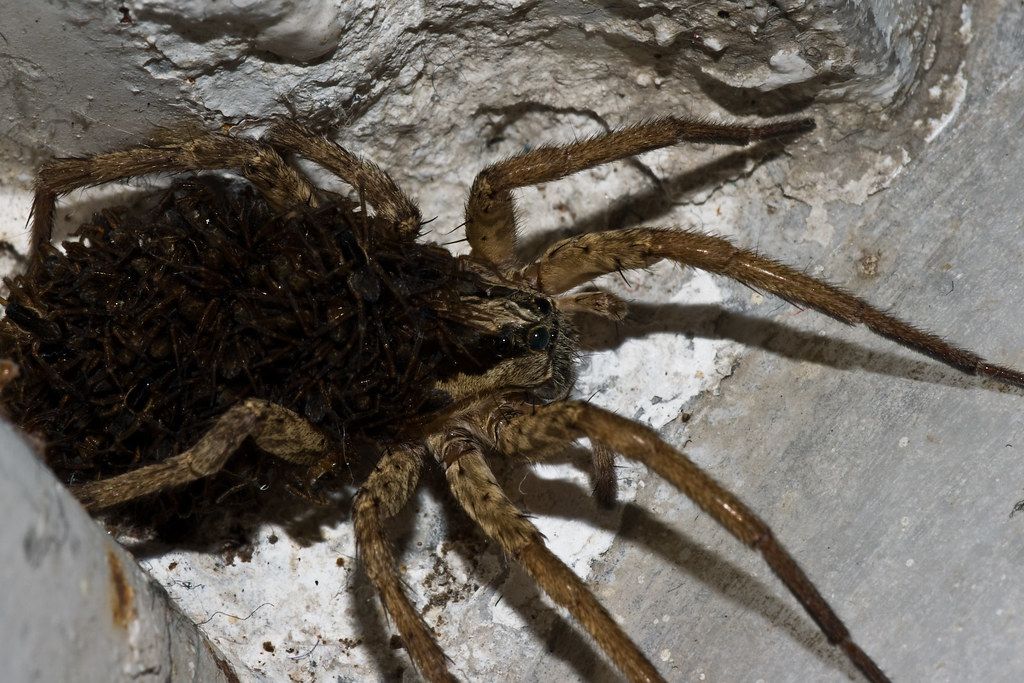
Photo: “Mother Spider” by agelakis is licensed under CC BY-NC-SA 2.0.

Weekend read: Michael R. Burch, ‘Modern Orpheus, or, William Blake’s Whistle’

I.
Many a sun
and many a moon
I walked the earth
and whistled a tune.

I did not whistle
as I worked:
the whistle was my work.
I shirked

nothing I saw
and made a rhyme
to children at play
and hard time.

II.
Among the prisoners
I saw
the leaden manacles
of Law,

the heavy ball and chain,
the quirt.
And yet I whistled
at my work.

III.
Among the children’s
daisy faces
and in the women’s
frowsy laces,

I saw redemption,
and I smiled.
Satanic millers,
unbeguiled,

were swayed by neither girl,
nor child,
nor any God of Love.
Yet mild

I whistled at my work,
and Song
broke out,
ere long.

******

Michael R. Burch writes: “W. H. Auden famously (or infamously) said “poetry makes nothing happen.” I sympathize with his sentiment but beg to differ. William Blake has been a profound influence on modern culture and societies, not only through his own poetry, art and engravings, but also through his influence on singer-songwriters like Bob Dylan, John Lennon and Jim Morrison. When Dylan met the Beatles the first time, things were a bit cool at first, until Allen Ginsberg broke the ice by bringing up Blake. It turned out that everyone in the room was a fan. Morrison named his group the Doors after Blake’s ‘Doors of Perception’.

“William Blake has been a primary influence on my work, not only as a poet, but also as a translator, editor and publisher of poems about the Holocaust, the Palestinian Nakba, the Trail of Tears, and other similar instances of Blake’s three-headed hydra of church, state and industry doing its worst to make life on earth hell.

A Passing Observation about Thinking Outside the Box’ by Michael R. Burch

William Blake had no public, and yet he’s still read.
His critics are dead.

“William Blake was not an “art for the sake of art” adherent. Quite the contrary. Blake was an ardent reformer. For instance, he and Charles Dickens, who from what I understand lived on the same London street or nearby, wrote movingly about the plight of child chimneysweeps and other minors forced to work long, gruelling, sometimes dangerous, hours by unscrupulous businessmen, and before long England and other nations like the United States were passing child labor laws. Some poets do make things happen with their poetry…”

*****

Michael R. Burch is an American poet who lives in Nashville, Tennessee with his wife Beth, their son Jeremy, two outrageously spoiled puppies, and a talkative parakeet. Burch’s poems, translations, essays, articles, reviews, short stories, epigrams, quotes, puns, jokes and letters have appeared in hundreds of literary journals, newspapers and magazines. He is also the founder and editor-in-chief of The HyperTexts, a former columnist for the Nashville City Paper, and, according to Google’s rankings, a relevant online publisher of poems about the Holocaust, Hiroshima, the Trail of Tears and the Palestinian Nakba. Burch’s poetry has been taught in high schools and universities, translated into 19 languages, incorporated into three plays and two operas, set to music 61 times by 32 composers, from swamp blues to classical, and recited or otherwise employed in more than a hundred YouTube videos. To read the best poems of Mike Burch in his own opinion, with his comments, please click here: Michael R. Burch Best Poems.   

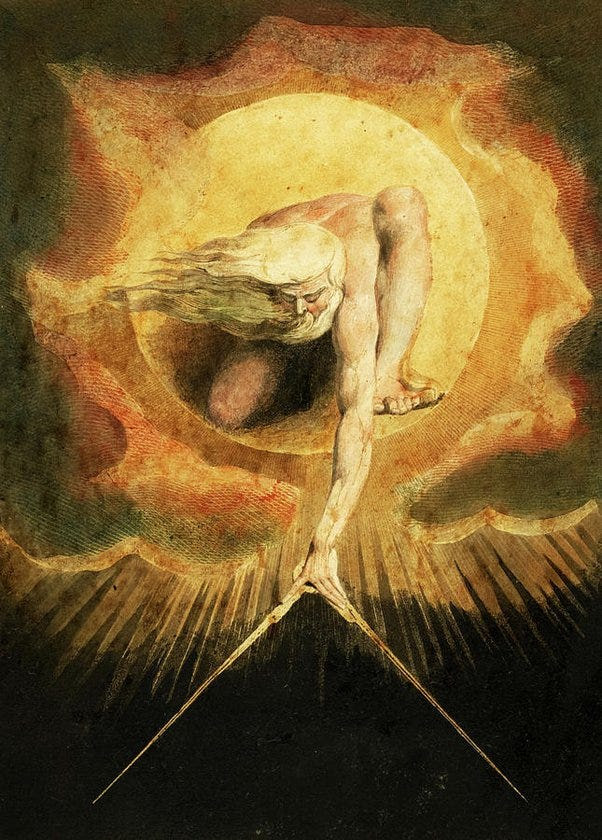
Illustration: ‘Ancient of Days’ by William Blake
RHL, ‘Deuteronomy 20: 16-18’

You’ve no autonomy
under Deuteronomy;
it’s your obligation
to your tribal nation
to kill all Palestinians
so you don’t sin against
God, who’s neurotic.
Yes, Yahweh’s psychotic.
No escaping his wrath,
no path but the psychopath.

*****

For Christians and Jews who state (as Jesus did) that every reported command by God in the Torah / Old Testament must be obeyed, I ask their position on Deuteronomy 20. This contains the command for the complete genocide of the non-Jews living in the land which Moses claimed had been given to the Jews by God. (Note: not expulsion or enslavement of the people living there, but the death of all of them and their animals.) The reason? So that they don’t teach evil ways to the Jews:

16 But of the cities of these people, which the Lord thy God doth give thee for an inheritance, thou shalt save alive nothing that breatheth:
17 But thou shalt utterly destroy them; namely, the Hittites, and the Amorites, the Canaanites, and the Perizzites, the Hivites, and the Jebusites; as the Lord thy God hath commanded thee:
18 That they teach you not to do after all their abominations, which they have done unto their gods; so should ye sin against the Lord your God.

To the extent that fundamentalist Jews constitute a large percentage of the Israeli population and are influential in the national government, the Palestinian situation cannot be resolved until scriptural passages like this are dragged out into the open and examined and discussed: was that passage only for then, and things are different now? Or does the command to massacre non-Jews still hold for today’s Jews in “the Holy Land”?

This poem was first published in The HyperTexts, where Michael R. Burch maintains extensive collections of poetry related to both the Holocaust and the Palestinian Catastrophe.

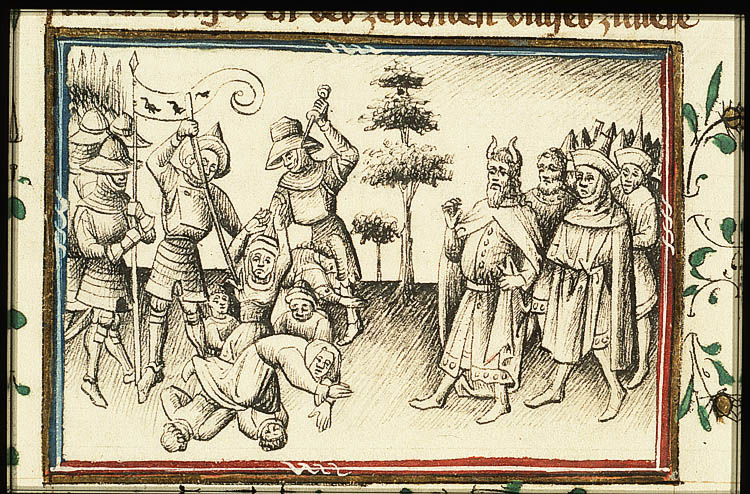
Illustration: “Moses has the mature women and the male children of the Midianites killed” is marked with Public Domain Mark 1.0.

Short poem: RHL, ‘God – pfft!’

All the things God could do,
all the things he doesn’t:
stop earthquakes and disease,
world war between first cousins…
Complaints at God may seem
rashly impertinent–
But so what? Life shows God
clearly omnimpotent.

*****

Not much to say about my rude little poems, except that a lot of them get published in Rat’s Ass Review, whose Spring/Summer issue has just (optimistically) been published – thanks, Roderick Bates! And also, well, I guess I was proud of the poem’s last word, though I’m definitely not the first person to think of it.

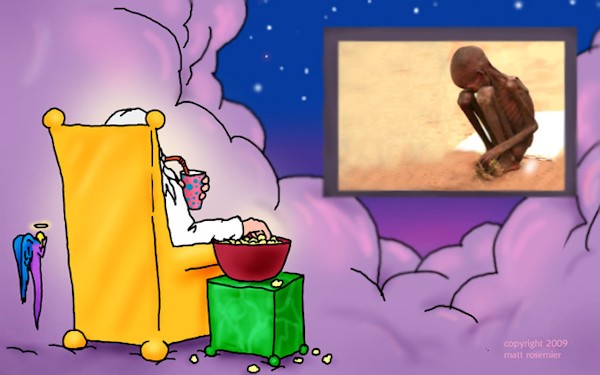
Cartoon: Matt Rosemier

Brian Allgar, ‘Genesis’

One sunny morning, strolling in my garden,
I stumbled, and my foot crushed something’s head.
“Me dammit!” I exclaimed, “I beg your pardon”,
Looked down, and saw my Serpent lying dead.
 
Now this was most vexatious, for I’d planned
That this poor snake would implement my scheme
To give my little friends a helping hand,
And lead them gently from their childish dream.
 
The Serpent was supposed to tempt the couple
With luscious fruit that Eden’s trees bedecks;
My chosen agent, sinuous and supple,
Would lead the pair to knowledge – and to sex.
 
Omniscience can have its limitations,
And even Godly schemes may gang agley.
I’d once envisaged teeming populations,
But this, perhaps, was better, in its way.
 
No Spanish Inquisition, no Crusades,
No slaves, and no Industrial Revolution,
No mining sites where once were leafy glades,
No factory chimneys belching out pollution.
 
No nation-states, no border wars to settle,
No Holocaust, no tribal genocide,
No Rap, no Hip-Hop, Punk or Heavy Metal,
No hamburgers with coleslaw on the side.
 
No guns, no bullets, no demented shooters,
Since nothing could be made, except of wood;
No mobile phones (thank Me!) and no computers …
I looked on all of this, and found it good.
 
Yet what of those who should have lived hereafter?
No Homer, Shakespeare, Mozart, Botticelli?
No P. G. Wodehouse? (I was fond of laughter,
Though, being God, I didn’t have a belly).
 
Descendants all, but only if they had ’em.
(No Michelangelo, no Sistine Chapel?)
My mind made up, I called to Eve and Adam:
“I wondered if you’d care to try an apple?”

*****

Brian Allgar writes: “As a devout atheist, I felt it my duty to shed some light on the truth behind the Creation myth.”

Brian Allgar was born a mere 22 months before Adolf Hitler committed suicide, although no causal connection between the two events has ever been firmly established. Despite having lived in Paris since 1982, he remains immutably English. He started entering humorous competitions in 1967, but took a 35-year break, finally re-emerging in 2011 as a kind of Rip Van Winkle of the literary competition world. He also drinks malt whisky and writes music, which may explain his fondness for Mendelssohn’s Scottish Symphony.

He is the author of “The Ayterzedd: A Bestiary of (mostly) Alien Beings” and “An Answer from the Past, being the story of Rasselas and Figaro”, both available from Kelsay Books and Amazon.

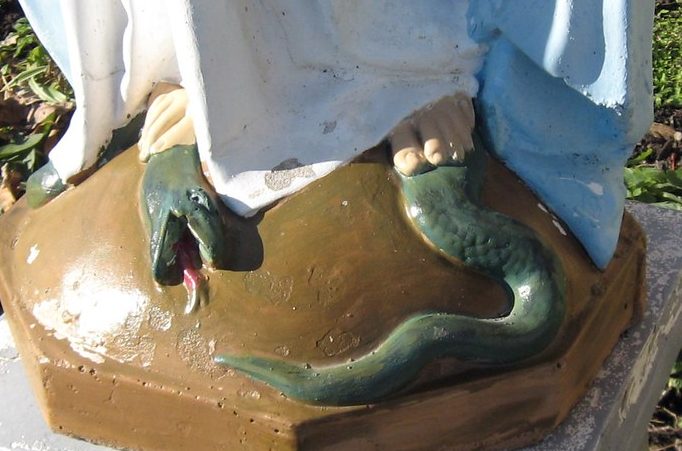
Photo: “Mary’s Feet” by elycefeliz is licensed under CC BY-NC-ND 2.0.

Edmund Conti, ‘Two’s Company’

Sweet are the uses of divinity
And sweeter yet in keeping us engrossed
Is the simple complex concept of the trinity
The Father, Son and Holy Ghost.

Is making sense of Them too much a bother?
Is there any way to master Three-in-One?
The son, the Holy Ghost and Father,
The Holy Ghost, the Father and the Son.

I use this ancient form, the cranky sonnet
To crank out my aberrant Dunciad
And what evolves from overthinking on it:
The Spook, the Kid and–dare I say it?–Dad.

It’s true that poems are made by fools like me
But only God can make himself a three.

*****

Edmund Conti writes: “I wasn’t going to get into any interpretations of the Trinity. Just noting that scholars writing about it don’t shed much light. So I decided to shed my own. Somewhere along the line I may have gone a little overboard. (Pray for me.) I think my cranky sonnet has its own rhyme scheme, not one from the books. Meanwhile I’ve forgotten what ”Dunciad” means except that it was a good rhyme word. Forgetting all that, I guess this whole thing was inspired by Joyce Kilmer’s memorable last line.”

Edmund Conti has recent poems published in Light, Lighten-Up Online, The Lyric, The Asses of Parnassus, newversenews, Verse-Virtual and Open Arts Forum. His book of poems, Just So You Know, released by Kelsay Books
https://www.amazon.com/Just-You-Know-Edmund-Conti/dp/1947465899/
was followed by That Shakespeherian Rag, also from Kelsay
https://kelsaybooks.com/products/that-shakespeherian-ragHis poems have appeared in several Potcake Chapbooks: Tourists and Cannibals
Rogues and Roses
Families and Other Fiascoes
Wordplayful
all available from Sampson Low Publishers

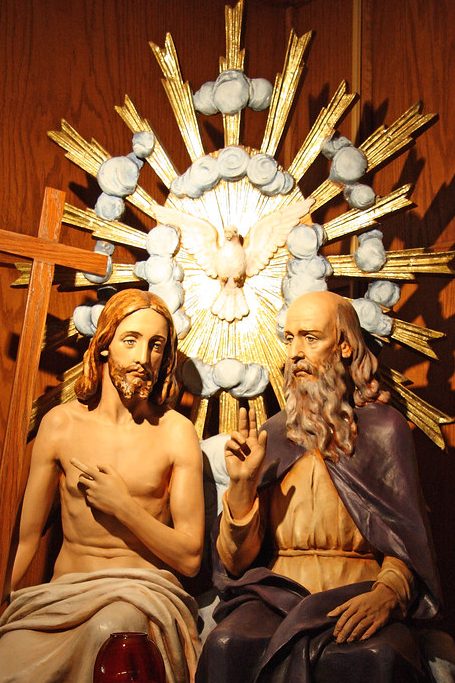
Photo: “Father, Son & Holy Ghost” by elston is licensed under CC BY-NC-ND 2.0.

Short poem: ‘Rainbow’

God made the rainbow as a sign
for post-Flood men to see.
The sign says, “I am Merciful–
and you better fucking agree.”

*****

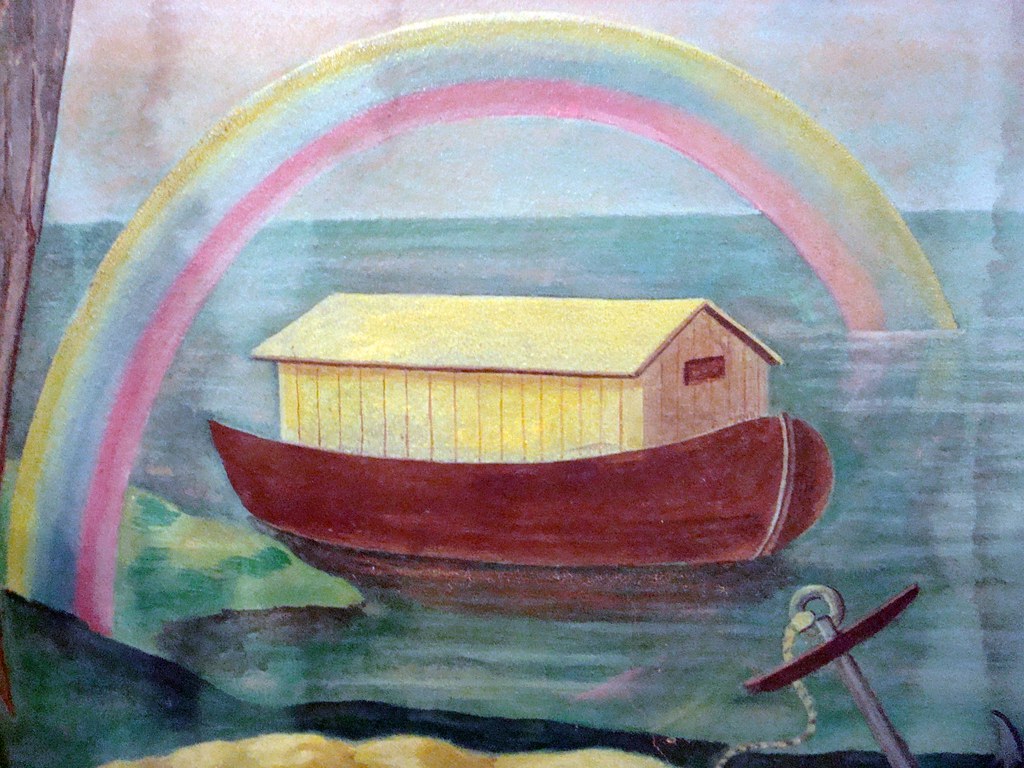
According to the Book of Genesis, after God flooded the entire world He told the one surviving family: “I have set my rainbow in the clouds, and it will be the sign of the covenant between me and the earth. I will remember my covenant between me and you and all living creatures of every kind. Never again will the waters become a flood to destroy all life.”

There are so many things to love in all this: the Noah’s Ark story, and the toys of it that delight children; the beauty of rainbows themselves; the alternative explanation that Irish leprechauns make rainbows to mark where they bury their gold; the Biblical suggestion that water droplets didn’t cause refraction of light before the Flood; the calculation that rain, to have flooded Mount Everest in 40 days, must have fallen at 29 feet per hour for that entire time… and above all the idea that God needed the rainbow to remind Him not to kill everyone whenever He gets angry.

But hey – rainbows are beautiful, at least we can all agree on that.

This poem was published in the most recent issue of Light.

Noah’s Ark” by Svadilfari is licensed under CC BY-ND 2.0.

Potcake Poet’s Choice: Michael R. Burch, ‘Bible Libel’

If God
is good,
half the Bible
is libel.

Michael R. Burch writes: “This may be the first poem I wrote. I read the Bible from cover to cover at age 11, and it was a traumatic experience. But I can’t remember if I wrote the epigram then, or came up with it later. In any case, it was probably written between age 11 and 13, or thereabouts. It would be kinda cool to be remembered by a poem I wrote at such an early age. Plus, it’s short, so readers would probably finish it!

I have been using Google results to determine which of my poems are the most popular on the Internet. Some of my poems have gone viral, appearing on hundreds or thousands of web pages. That’s a lot of cutting and pasting, and I like to think people must like a poem in order to take the time to replicate it. This epigram, which I wrote around age 11 to 13, at one time returned over 405,000 results for the last two lines, and over 51,000 results for the entire poem. The last time I checked, it still returned over 292,000 results. I was especially pleased to see one of the first poems I wrote, and possibly the first, go viral. If I wrote anything earlier, I don’t remember it.

Michael R. Burch has over 6,000 publications, including poems that have gone viral. His poems have been translated into fourteen languages, incorporated into three plays and two operas, and set to music by seventeen composers. He also edits TheHyperTexts.

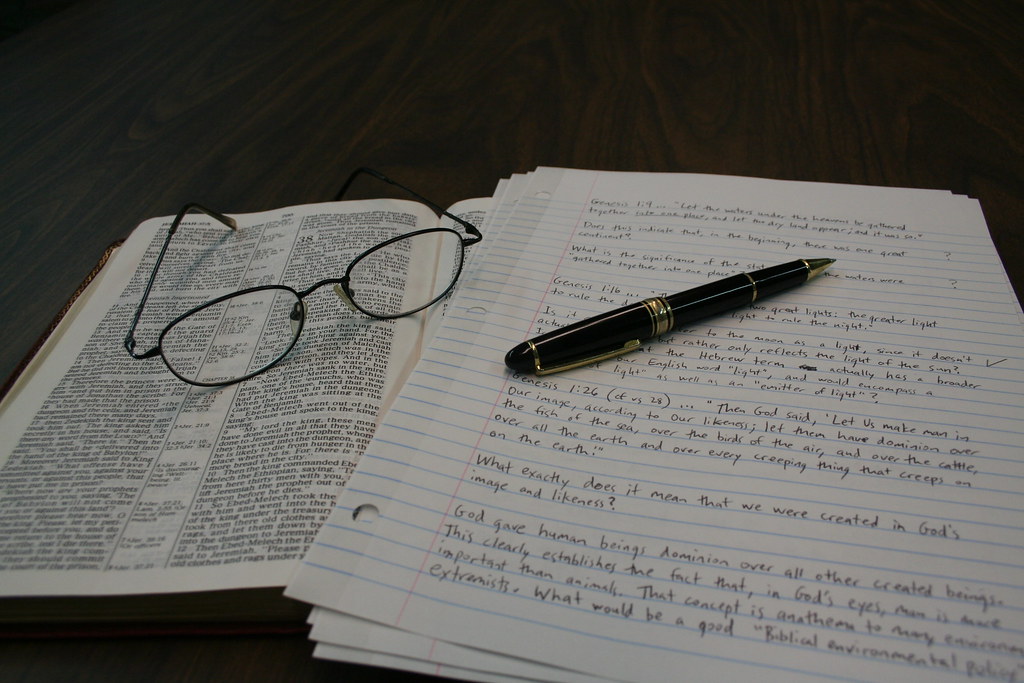
Photo: “Bible, Reading Glasses, Notes and Pen” by paul.orear is licensed under CC BY-SA 2.0

Sonnet: ‘Maya’

When God took Time to spin a length of Matter,
And, nothing at each end, tied the ends together,
He held between his fingers and surveyed
The first cat’s-cradle, and since then has played.

Flames flicker, flare, re-form as a friend’s face;
Dogs mime all features of the human race;
The willow weaves a walker from the air;
All Nature helps us see things that aren’t there.

To read Life’s Meanings, we must write the text:
What’s Right one day is often Wrong the next –
I’m rich or poor only as I profess,
Must ask your love or hate, for you can’t guess.

If love’s illusion, so are hate and fear…
Why not choose love?, when it’s so great, and near?!

Reareading this poem after a number of years, I have my doubts about it. It seems to start strong, and ends weak. What to do about a poem like that? The stuff about Maya, the illusory nature of the universe, is OK; but maybe cut it off after eight lines, before it starts preaching. But then maybe it would be lacking an ending, and I’d have to come up with something better than what’s there now.

As it is, it was first published in the defunct ‘Rubies in the Darkness’, and republished in India’s ‘Metverse Muse’. But I’m not happy with the poem…

“Cat’s Cradle by N.O. Bonzo” by wiredforlego is licensed under CC BY-NC 2.0