So far the nights feel lonelier than the days. In light, the living keep me company, and memories of voices through the years.
Each summer threads a green familiar maze. Emerging sun-struck, you can barely spy the slow kaleidoscope of clouds and hours.
Those flannel nightshirts chilly sleepers wear as summer wanes: I’m giving them away. Pass it on: you keep at the same time.
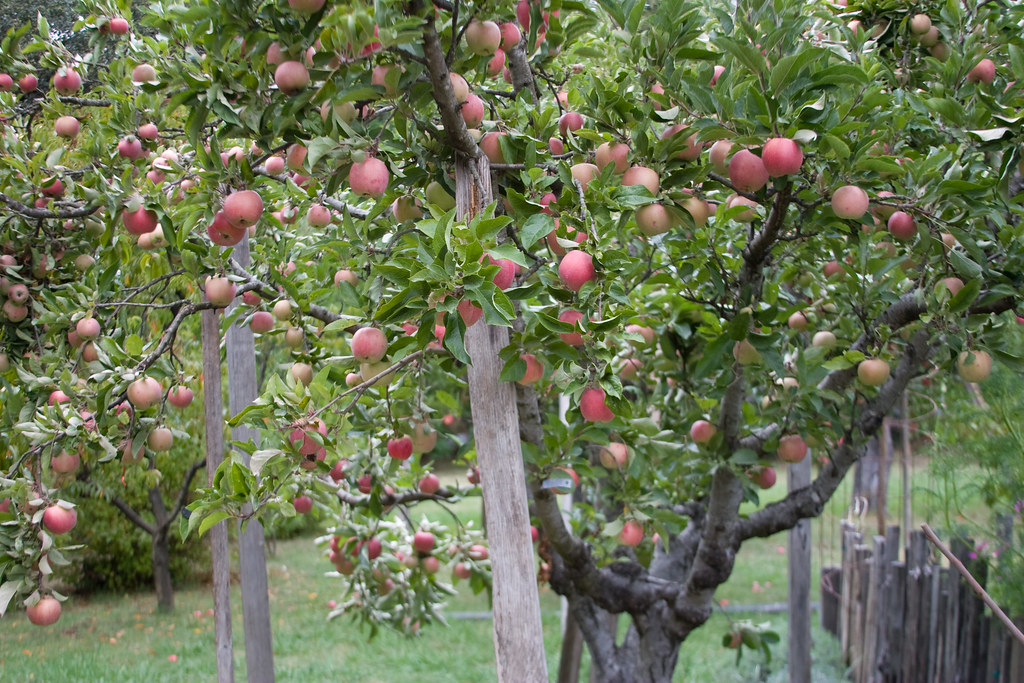
A bough has broken from the Duchess tree. Rain swelled the apples. Too much lightness weighs heavy: the heft of the idea of home tempered with the detachment of a dream, or tidal pulls, like ocean, like moonrise.
*****
Rachel Hadas writes: “Summer Nights and Days, from perhaps 2009-2011, is one of a number of pieces written in and about Vermont which I recently tightened into short prose texts and collected in my latest book, Pastorals (2025); as it appears here, it’s still in its poem format. This piece may or may not have been written after my late husband’s death in 2011, but is certainly refers to a time when I was essentially living alone. My son and his visiting friends were the recipients of old nightshirts (more recycling).”
Rachel Hadas’s recent books include Love and Dread, Pandemic Almanac, and Ghost Guest. Her translations include Euripides’s Iphigenia plays and a portion of Nonnus’s Tales of Dionysus. Professor Emerita at Rutgers-Newark, where she taught for many years, she now teaches at 92Y in New York City and serves as poetry editor of Classical Outlook. Her honors include a Guggenheim fellowship and an award from the American Academy-Institute of Arts and Letters.
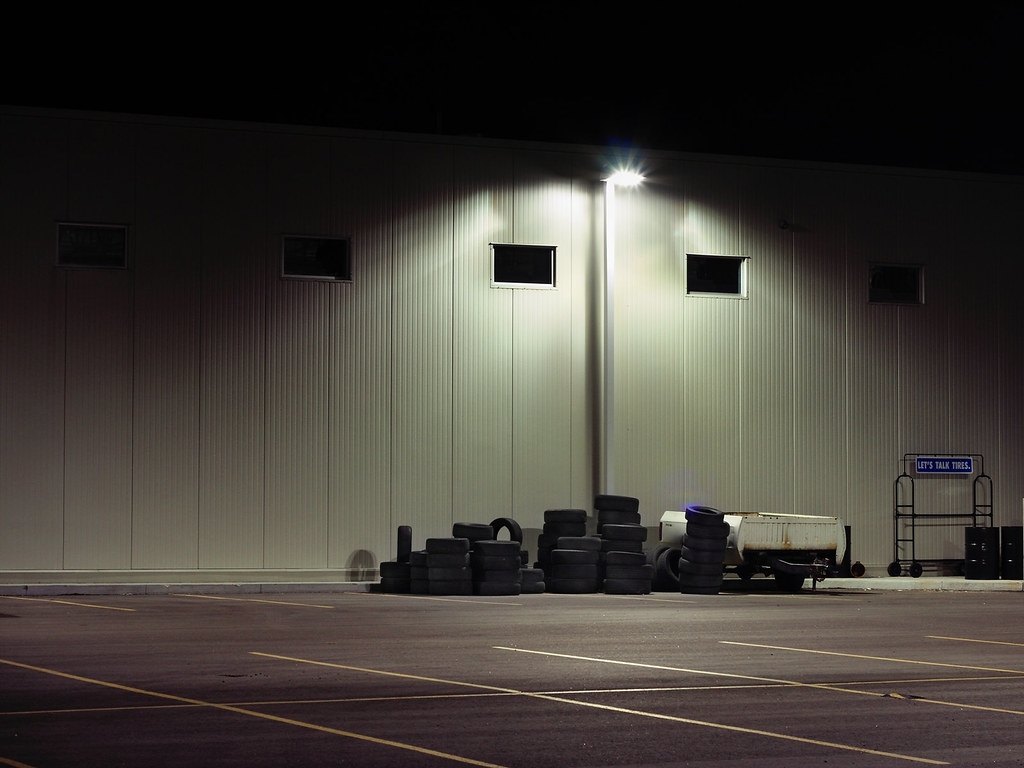
The car mechanic’s counting out his bills behind the E-Z Mart at one a.m.; he’ll toss rocks at beer bottles just for thrills until his dealer comes, it’s fine with him.
He draws in a deep breath and sees the light swerve from the highway, puzzling the back wall he leans against just to keep out of sight. A quarter bag and some fentanyl, that’s all.
His phone vibrates again though nothing’s wrong. For two years he’s been living in a trailer with a girl who works at Publix. They get along even if sometimes she says he’s a failure—
what can he say to that? Sure. He lives cheap. They’ll fight until she forces a decision, then roll around on the couch. Once she’s asleep he’ll take a dose and watch some television.
At night he dreams of cylinders and sprockets, the trucks and cars too busted up to fix; startled awake, eyes aching in their sockets, he’ll watch the clock hands grope their way to six.
A car pulls up but he can see it’s not his hookup. Just kids with nothing else to do but drink a six-pack in the parking lot before they head out to the lake to screw.
He had his share of mischief, too, Lord knows. The girls don’t eye him in the check-out aisle much anymore, the ones with painted toes. A few years back, at least, they used to smile.
The boys can see the grease that stains his hands; they all think, damn, who wants to work that hard? He spends the day beneath their dads’ sedans while they play tackle football in the yard.
Chasing a football blew out both his knees and broke his wrist. That was three years ago. Customers say, “go Stags,” and toss their keys, then look at him real close as if they know.
A text says no one’s coming. The BP sign flickers over the pumps, and though it’s half- past two now, and he’s tired, he’s feeling fine enough to think it’s all a bust, and laugh.
And, anyway, it’s good to be alone with the gas fumes and blinking traffic light and fifteen missed calls lighting up his phone. Later, he thinks, once he and his girl fight,
and once she falls asleep on his left arm, he’ll stare at the divots on the ceiling tile and wait to hear the clock sound its alarm while the night’s odometer counts one more mile.
*****
Morri Creech comments: “As Mark Strand once said, I write to find out what I have to say. I don’t start a poem with an idea; I start with a line, an image, a rhetorical stance. Then I write in search of context: how can I situate this in a situation, a narrative moment, an argument, a meditation? The language takes me wherever I end up. This poem was constructed like that. I started with a first line and then wrote toward trying to figure out the context of the line. In this case, it led me to a character sketch. It was fine to discover what this character was about; the decisions I made about his character and circumstances were largely directed by rhymes. They steered me in what I hope was the right direction.”
Morri Creech is the author of five collections of poetry, including the Sleep of Reason, a finalist for the Pulitzer Prize, Blue Rooms, and The Sentence (published by LSU Press, and which includes this poem). A recipient of NEA and Ruth Lilly Fellowships, as well as North Carolina and Louisiana Artists Grants, he teaches at Queens University of Charlotte. www.morricreech.com
Rita is in her summer dress. She’s got the mixer out and she is hard at work perfecting home-made mousse au chocolat. I for my part am typing like a clerk
at my computer. Rita’s got cacao and mascarpone and banana, all to form her own concoction. And just now, she brings a spoon to sample it. You’d call
her labor sui generis – you won’t turn up this recipe. And yet, the tongue delights – the eyes close – as the do or don’t of custom pales. The mousse is made. I’ve sung
my wife in her blue dress with its red spots, I’ve sung the kitchen where she takes her ease – the house’s heart, with all its pans and pots. I’ve sung the afternoon. Bring more of these.
*****
John Claiborne Isbell writes: ” ‘Mousse au chocolat’ is a true story inspired by my wife Rita’s taste for improvisation when cooking. The results are invariably delicious. As for the form, it’s just four quatrains of iambic pentameter. My volume Allegrois light verse; I ought really to write more of it.”
‘Mousse au chocolat’ was published in Snakeskin 321, October 2024.
John Claiborne Isbell is a writer and now-retired professor currently living in Paris with his wife Margarita. Their son Aibek lives in California with his wife Stephanie. John’s first book of poetry was Allegro (2018), with a cello on the cover and available on Amazon; he also publishes literary criticism, for instance An Outline of Romanticism in the West (2022) and Destins de femmes: Thirty French Writers, 1750-1850 (2023) both available free online. John spent thirty-five years playing Ultimate Frisbee, representing France in the European Championships in 1991, and finds it difficult not to dive for catches any more.
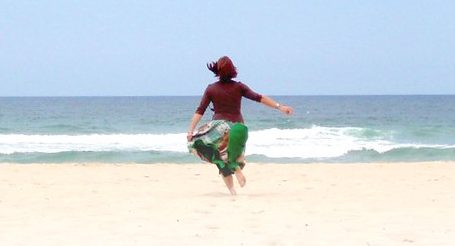
After your city feet in socks and shoes, After your crowded evening with its booze, Your air is tainted with your body’s sweat, Unclean and laden with a vague regret. But we are free Who live beside the sea, Can choose what our life spurns or craves. Surely we reach Purity on a beach, Daily dallying barefoot in the waves.
I grew up barefoot. The only downside came when I was sent away to school, and shoes were always too tight even if they were EEE width. That in turn meant that in England I suffered from chilblains all winter. As an adult I still go barefoot, wear sandals in town, have shoes for rare stuations. But let’s face it – shoes make your feet sweat, and also make it hard to climb trees and to swim.
The form of the poem reflects the argument: the first four lines about shoe-wearing are regimented: iambic pentameters, rhyming AABB. The barefoot lines are less constrained, more playful, rhyming CCDEED – the short lines could be written together as iambic pentameters, but the rhymes work against seeing and hearing them that way. And the seventh line is the most unorthodox, having only four feet, while the last line is the most whimsical with its ‘daily dallying’.
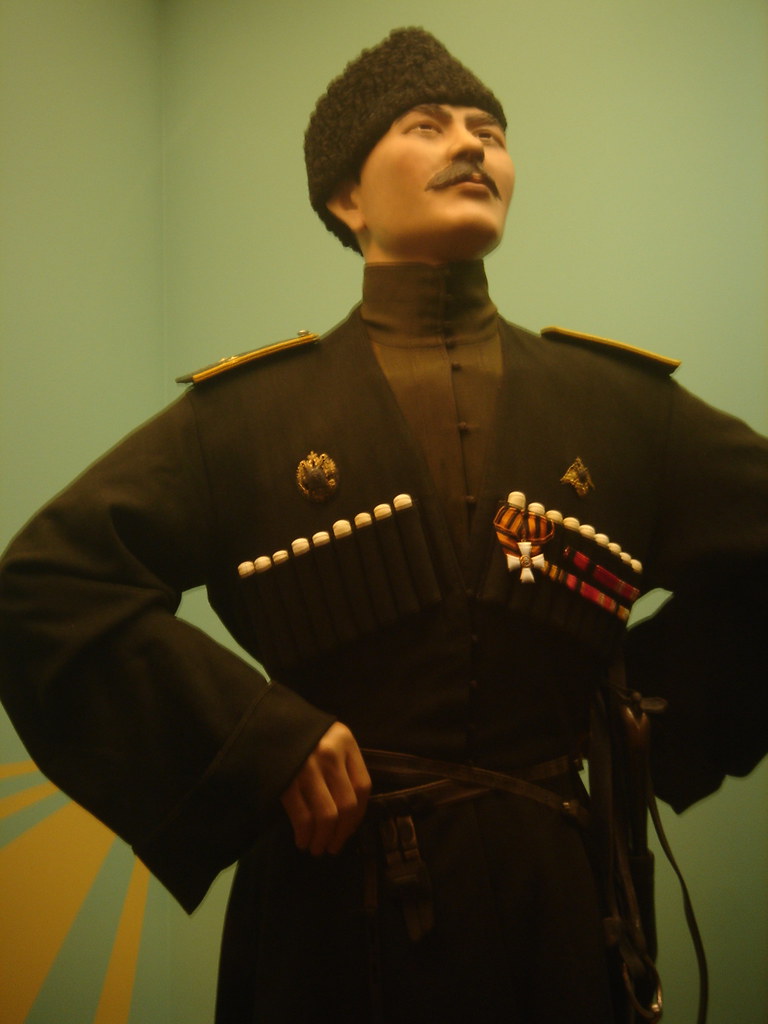
An Austrian army, awfully arrayed, Boldly by battery besieged Belgrade. Cossack commanders cannonading come, Dealing destruction’s devastating doom. Every endeavour engineers essay, For fame, for fortune fighting – furious fray! Generals ‘gainst generals grapple – gracious God! How honours Heaven heroic hardihood! Infuriate, indiscriminate in ill, Just Jesus, instant innocence instill! Kindred kill kinsmen, kinsmen kindred kill. Labour low levels longest, loftiest lines; Men march ‘mid mounds, ‘mid moles, ‘mid murderous mines; Now noxious, noisy numbers nothing, naught Of outward obstacles, opposing ought; Poor patriots, partly purchased, partly pressed, Quite quaking, quickly “Quarter! Quarter!” quest. Reason returns, religious right redounds, Suwarrow stops such sanguinary sounds. Truce to thee, Turkey! Triumph to thy train, Unwise, unjust, unmerciful Ukraine! Vanish vain victory! vanish, victory vain! Why wish we warfare? Wherefore welcome were Xerxes, Ximenes, Xanthus, Xavier? Yield, yield, ye youths! ye yeomen, yield your yell! Zeus’, Zarpater’s, Zoroaster’s zeal, Attracting all, arms against acts appeal!
Belgrade was besieged nine times between 1440 and 1806. It is right on the edge of the area the Ottoman Turks were able to wrest from the Christians, and control went back and forth. This poem is about the 1789 Siege of Belgrade, when the Austrians showed up in mid September with 120,000 troops and 200 siege guns to try to take control of the Belgrade fortress that was held by 9,000 Ottoman troops with 456 cannon. On 6th October the Austrians began a devastating bombardment. Two days later, in exchange for the surrender of Belgrade, the Ottoman garrison was given a free passage with their personal and private possessions to Orșova; a prisoner exchange was also arranged between the combatants.
The poem was written by British journalist and poet Alaric Alexander Watts (1797-1864) and published in 1828. There are a couple of versions floating about on the internet, with various spellings and typos, and with and without the ‘Just Jesus’ line which deteriorates from J’s to I’s. The rhyme pairing isn’t perfect, the metre is imperfect, the syntax is stretched in places, and meanings and references are sometimes obscure. (‘Suwarrow’ for instance is the brilliant Russian general Alexander Suvorov who, though instrumental in winning battles with Turkey and others in the late 18th century, was not present at the 1789 Siege of Belgrade. He was defeating the Turks elsewhere at the time, but how can you ignore a general credited with winning 63 major battles, and never losing one?)
My initial impression is that the metre is an easy-to-read, easy-to-recite ‘four beats to the bar’, but the number of syllables varies with the needs of the alliteration:
But then it dawns on me that the poem is actually in iambic pentameter, with five beats… but the first line is so technically weak that it’s misleading: it has eleven syllables instead of ten unless you pronounce the second word ‘Austrin’, and also requires the ‘-ly’ of ‘awfully’ to be a stressed syllable. But once you reinterpret the rhythm of that line, the poem settles down properly. (There is a good lesson in poetics here: the technical purity of your opening line is super important!)
Anyway, I think we can cut Watts some slack: I don’t know of any other alliterative abecedarian poem at all, though surely there must be some. Wikipedia quotes this fragment from the Harper Handbook to Literature:
An abecedarius always alliterates Blindly blunders, but blooms: Comes crawling craftily, cantering crazily, Daring, doubtless, dark dooms.
Under our armoured mirrors of the mind
where eyes watch eyes, trying to pierce disguise,
an ape, incapable of doubt, looks out,
insists this world he sees is trees, and tries
to find the scenes his genes have predefined.
This ape I am
who counts “One, two, more, more”
has lived three million years in empty lands
where all the members of the roving bands
he’s ever met have totaled some ten score;
so all these hundred thousands in the street
with voided eyes and quick avoiding feet
must be the mere two hundred known before.
This ape I am
believes they know me too.
I’m free to stare, smile, challenge, talk to you.
This ape I am
thinks every female mine,
at least as much as any other male’s;
if she’s with someone else, she can defect –
her choice, and she becomes mine to protect;
just as each child must be kept safe and hale
for no one knows but that it could be mine.
This ape I am
feels drugged, ecstatic, doped,
hallucination-torn, kaleidoscoped,
that Earth’s two hundred people includes swirls
of limitless and ever-varied girls.
This ape I am
does not look at myself
doesn’t know about mirrors, lack of health,
doesn’t know fear of death, only of cold;
mirrorless, can’t be ugly, can’t be old.
This is one of my favourite poems. Originally published in Ambit ten years ago, it has been reprinted in magazines as diverse as Better Than Starbucks, Verse-Virtual and, last month, Bewildering Stories. It speaks to what I believe is a largely overlooked truth, that we are genetically predisposed to function best in social groups or households of 20 to 30 people, within a larger network of six to ten such groups. These provide the numbers of people that we can know well (the social group) and people that we can also recognise and interact with comfortably (the larger network). This is the world of chimpanzees and bonobos, and of the hunter-gatherer existence of early humans.
In practical terms, I am in favour of recreating the sense of community of the village, even within the context of cities. Develop housing complexes that become neighbourhoods – keep schools small – reintegrate nursing homes into the community, let the children and the old people interact – and (a further step in acknowledging our hunter-gatherer humanity) keep everyone in touch with parks, with gardens of fruit, flowers and vegetables, with trees and birds, and with a variety of animals.
Technically the poem is written in iambic pentameters, loosely structured in stanzas of varying length, with lines mostly rhymed but with no set rhyme scheme. (And note: a stanza’s initial “This ape I am” needs to be counted with the next line to produce the pentameter.) Iambic pentameters provide a natural mode for meditative or expository verse. The rhythm is comfortable for quiet reflection or narration. The rhyme in this case is a secondary enhancement.


 Form in Formless Times