Tag Archives: marriage

RHL, ‘How Sweet It Is’

To be loved by you is like floating on my back,
falling asleep in the sea’s slack.
Sometimes. Sometimes it is more unnerving,
leaping with a wave for bodysurfing,
being swept facedown up the beach,
hair and ears full of sand.
That too is love, and grand.
Sometimes, again, I hope for more that’s out of reach –
(and you do too – don’t glower!)
and sometimes we get gifts hard to believe,
dolphins swimming with us half an hour
till mutually we and they
just turn away,
they to sea and we to shore,
and then they come back suddenly once more
and leap, so close, and leap, and leap again… and leave.

All those are in “loved by” –
the calm; the turbulent rift,
the sparkling fizz,
the sudden unexpected gift.
What can I say? I couldn’t, wouldn’t, choose to deny
how sweet it is.

*****

Thirty-five years with Eliza and still going strong. Who knew.

‘How Sweet It Is’ was published in the current Snakeskin.

Free sea summer scenery background image” by Ajda Gregorčič is licensed under CC BY-SA 2.0.

Using form: Tritina: Nicole Caruso Garcia, ‘Love Poem in Winter, with Blackout Shades’

Beginning with a line by Aimee Nezhukumatathil

My husband is a pale blur. The dark
turns grainy as the blue hour tints our bedroom,
my glasses somewhere near the nightstand’s edge.

He could almost be U2’s guitarist, Edge:
goatee, pale arms, black T-shirt, trademark dark
wool skull cap. Me: his groupie. His hotel room.

Distortion fades. Before he leaves the room,
I feel a toe-squeeze, hear an air-kiss: edge
of day, his way of sugaring the dark,

our portrait in the darkroom of a marriage.

*****

Nicole Caruso Garcia writes: “The inspiration for the tritinaLove Poem in Winter with Blackout Shades‘ came from a workshop led by Matt. W. Miller at the 2022 Poetry by the Sea Conference. He had us select one line from among a dozen or so poems by other poets, then use the line use as a springboard and incorporate it somewhere in a new poem of our own. My poem’s first sentence is a line from the middle of Aimee Nezhukamatathil’s ‘I Could Be a Whale Shark‘.” 

Love Poem in Winter with Blackout Shades‘ was first published in Crab Orchard Review.

Nicole Caruso Garcia’s full-length debut OXBLOOD (Able Muse Press) received the International Book Award for narrative poetry. Her work appears in Crab Orchard ReviewLightMezzo CamminONE ARTPlumeRattleRHINO, and elsewhere. Her poetry has received the Willow Review Award and won a 2021 Best New Poets honor. She is an associate poetry editor at Able Muse and served as an executive board member at Poetry by the Sea, an annual poetry conference in Madison, CT. Visit her at nicolecarusogarcia.com.

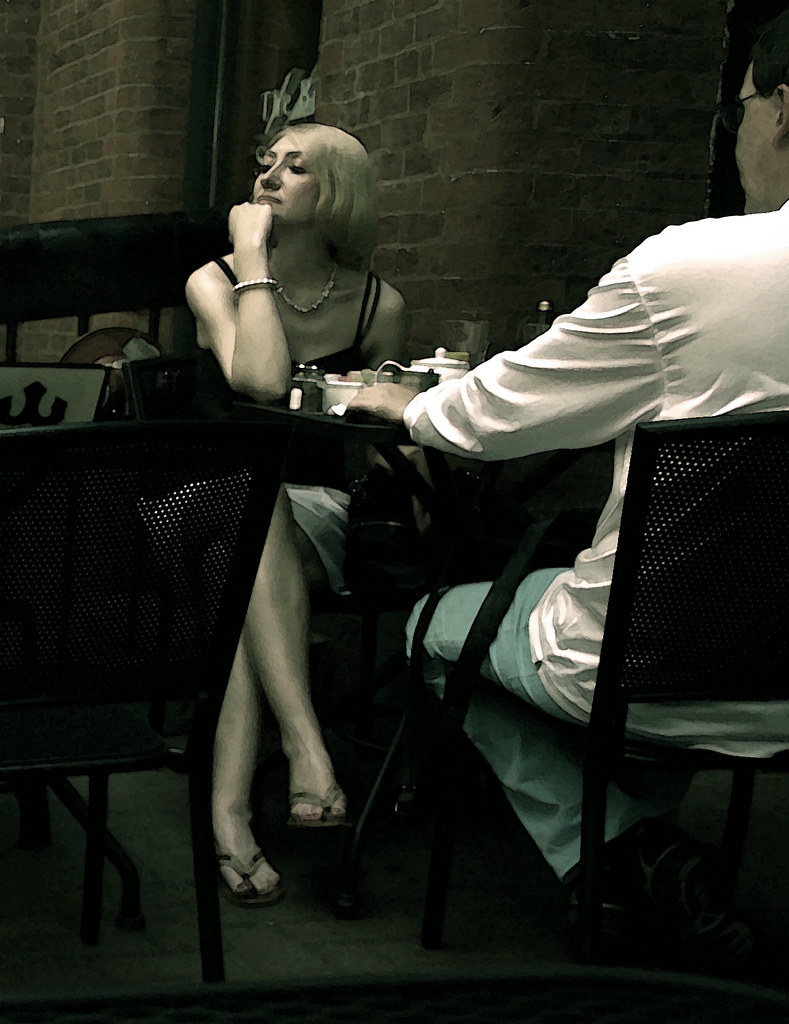
Photo: “29/05/2009 (Day 3.149) – We Are Sane” by Kaptain Kobold is licensed under CC BY-NC-SA 2.0.

Short poem: Robin Helweg-Larsen, ‘Moving On’

“How old are you?” she asked. “Too old,” I said;
“sadly, my youth is gone.”
She looked like wanting to move on, though wed;
I had no wish to be the one moved on.

*****

Published yesterday in The Asses of Parnassus – thanks, Brooke Clark!

how dark how cold” by Stuti ~ is licensed under CC BY 2.0.

Lindsay McLeod, ‘She’

She drinks a bit more
she loves a bit less
she no longer fits
in her wedding dress.

She’s given up trying,
accepted her fate,
feels herself thinning
while she stacks on the hate.

Doesn’t feel like his partner
his mate or his wife,
all she feels is as hard
and as sharp as a knife.

She reels her mind back
but can’t seem to recall,
what she ever saw in him,
why she married at all.

It’s a dead man’s float,
face down on the bed,
they sleep separate, unsound
in their queen sized dread.

So she’ll tread bitter water
as she has done for years,
not so much married to him
as she is to her fears.

*****

Lindsay McLeod writes: “‘She’ was written in my head, wearing ear protection in a factory. It was about my (then) partner who had recently escaped a toxic relationship.” The poem was originally published in Fine Flu.

Lindsay McLeod is an Australian writer who lives quietly on the coast of the great southern penal colony with (yet another ferocious Aussie animal) his cattle dog,  Mary. Lindsay still drives a forklift to support his poetry habit.

Photo: “fulla-ocell / leave-bird ( Every little thing she does is magic )” by Jordi@photos is licensed under CC BY-NC-SA 2.0.

Sonnet: Joe Crocker, ‘Stick and Twist’

The more that you dislike the way I am,
the less I worry what it is you like.
I let go the way that you don’t like
the rattled heart of me, the way I am.

 
Perhaps we’re going through a sticky patch.
The patch that stuck us down long years ago
is not as sticky now. But even so,
its tar has held us close enough to catch.
 
It covers up the cracks and hides the shabby
seams we couldn’t mend. We still pretend
to rub along regardless. In the end,
perhaps we are just averagely unhappy.
 
The way we blister love and twist its scar.
We sort of stick it out. And peel apart.

*****

Joe Crocker writes: “I wrote this poem a year or two ago as an expression of frustration and sadness about the slow decline of a long marriage. The title is  an allusion to the UK card game Pontoon (Blackjack in the States?) where you can either hold your cards (stick) or ask the dealer for another (twist). It’s written from the perspective of one person in two voices. The italic lines are pained and self-pitying and the middle stanzas are him trying to figure out what has happened.”

‘Stick and Twist’ was originally published in the current Rat’s Ass Review.

Joe Crocker has a 25 yds breast-stroke certificate, several Scouting badges and “O” level Epistemology. He has won prizes – bubble bath mostly, a bottle of Baileys once. His poems squat in obscure corners of the internet. He doesn’t have a pamphlet or a website but if you Google his name and add “poetry” you’ll find most of his published work (as well as links to a deceased Sheffield rock singer.) He gets by with little help from friends.

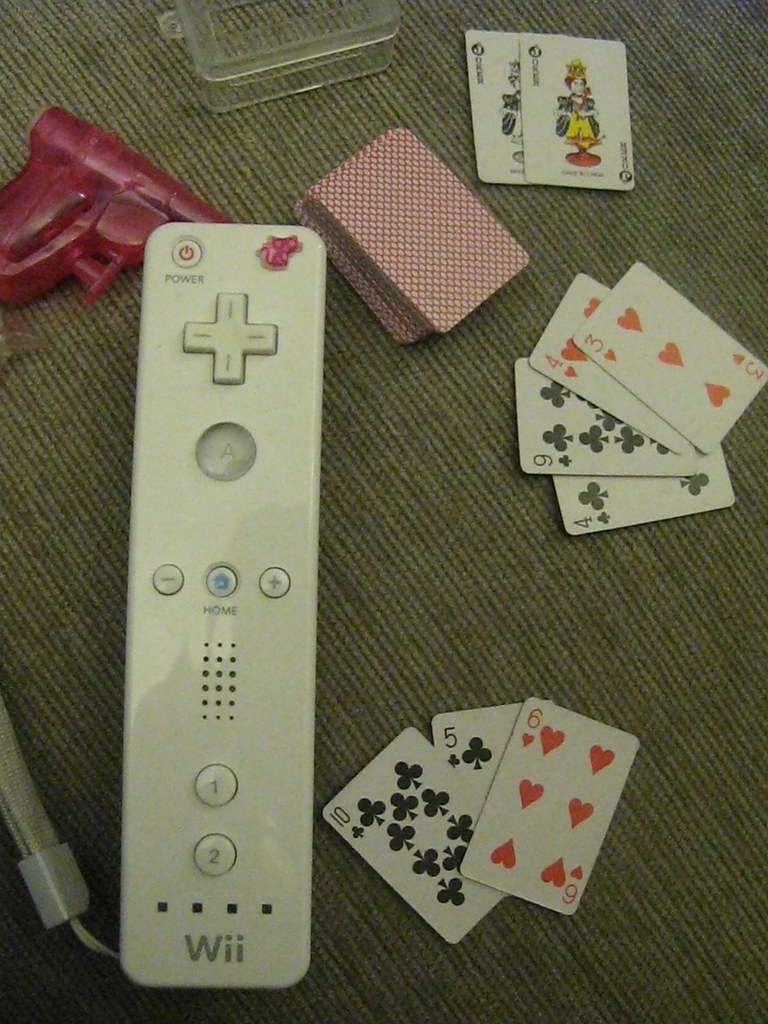
Photo: “Playing Pontoon with tiny cracker cards” by Rain Rabbit is licensed under CC BY-NC 2.0.

Helena (“Nell”) Nelson, ‘Separation’

i

Mrs Philpott goes to bed alone.
The clock in the hall ticks on.
Philpott turns to cut glass, then stone.

All the things we do to be loved,
all of them pointless.
The clock ticks on.

Nothing but moonlight dawns.
The distance from downstairs
to upstairs yawns.

Philpott sags and snoozes alone
in the wishing chair,
in the wishing air.

All the things we do to be loved –
in the night they slip far away.
It will never be day.

The clock ticks on
as well it may.

ii

She wakes first. He has not slept
in the chair all night.

At first light
he has crept

into the bed on the other side.
He will not (cannot) say it, but

everything about him is sorry –
only half of him is under the duvet

and his eyes aren’t really shut.
She pulls the covers over them both and he falls

into a sleep as deep and sound
as a lost child who has wandered far out of sight

(while his mother calls and calls and calls)
and is finally found.

*****

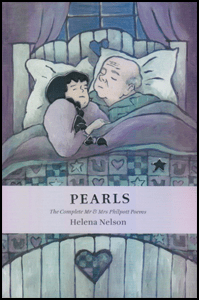
This poem is one of over 80 in Helena Nelson’s ‘Pearls – the Complete Mr & Mrs Philpott Poems’. Starting with poems of the end of their first marriages, it tracks their decades-long second marriage through (as the blurb says) “dreams, anxieties and needs – even sudden spurts of happiness – despite the rainy holidays, arguments and illness. The ordinariness of their love is magical and miraculous. Because ordinary love is a kind of miracle.”

People talk about “novels in verse” but those often don’t capture the poetry of verse. This is definitely a novel in poetry, and the most rereadable novel I’ve come across in a long time.

Helena Nelson writes: “happy that you like Pearls. I made it as well as I could, but it largely came unasked for. I don’t think I have anything to say about it.”

Helena Nelson runs HappenStance Press (now winding down) and also writes poems. Her most recent collection is Pearls (The Complete Mr and Mrs Philpott Poems). She reviews widely and is Consulting Editor for The Friday Poem.

Max Gutmann: Planet of Love

Venus, our neighbor that lies toward the sun,
    Is a sultry and amorous spot;
The astrologers tell us our passion and fun
   Are engendered right there, where it’s hot.

She’s the brightest of stars yet she’s hidden in cloud,
  So her pull on our psyches is double,
An enticing enigma concealed in her shroud
  And, like all such allurements, big trouble.

To the faithfully married, the word from above
  About passionate partnership stings.
There’s a planet we’re told governs all earthly love,
   And it isn’t the one with the rings.

*****

Max Gutmann writes: “I’m afraid I can’t think of anything interesting to say about ‘Planet of Love,’ which exists to support its punchline. The joke popped into my mind, so I wrote the poem.”

‘Planet of Love’ was published in the March 2025 issue of Lighten Up Online.

Max Gutmann has contributed to New StatesmanAble MuseCricket, and other publications. His plays have appeared throughout the U.S. (see maxgutmann.com). His book There Was a Young Girl from Verona sold several copies.

Photo: “Venus” by katmary is licensed under CC BY 2.0.

Semi-formal at best, RHL, ‘Remembering Winter’

I remember winter when it was only
Mostly too cold to swim –
The churning suck and drag of waves under the rock.
Yes, there are flowers – there are always flowers –
But, with the poinciana stripped of leaves,
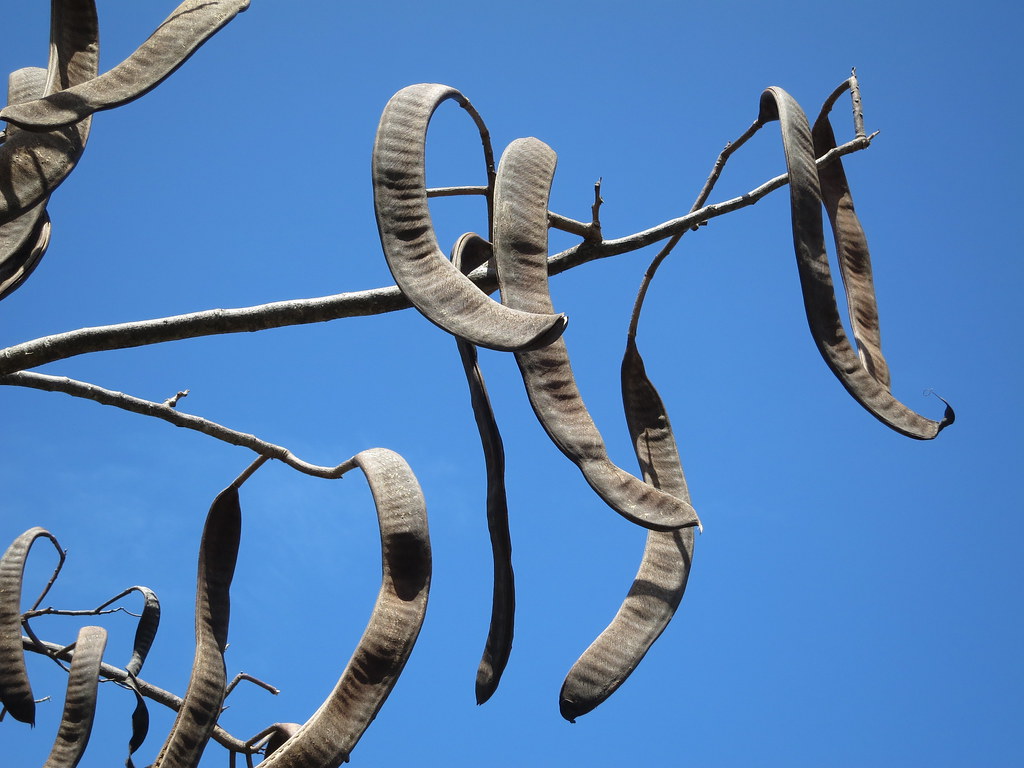
Its pods like forearms thinned and bent with age,
The rattling of sticks, the hiss of wind,
The broken sea stuck futilely on Wash
With endless turning, churning, foaming pulse –
How long can waves beat on a rock before
The tired rock gives up?

Yes, I remember later northern winters –
The bitter satisfaction of a too-thin sun,
Beauty without the joy, light without heat.
Feet always cold, clothes never quite enough;
Skin drying back from fingernails, lips chapped, throat raw,
The smell of damp coats, never fully dry.

I dream of alternating south and north
And never having to be cold again,
Turning, returning, always in the sun –
Or settling in an equatorial land
And swimming year-round, mellowing on the sand
Flattening my temperature, my will,
Soaking up sun, and dreaming I’m asleep.

Bitter it is, the winter argument,
Betrayed by world that slices off the years,
I have no love of winter, and I feel
Trapped, and betrayer of true kids of mine –
But look – they love it, so I’m further trapped,
Bound to the year that crushes as it turns,
And has become their home – are they then kids of mine?
Ice – snow – the winding down of life and year.

And I’ve known other winters all too well –
Where years of spring gave way to years of warmth,
Blossoms to children sparkling in the light,
The wonders of the world’s sharp sense delight;
Then years of fruit, as independent seeds
Form their own thoughts and follow darkening paths
Falling away, on purpose shrivel up,
And days grow shorter, moods swing soft and harsh
Drizzle sets in for weeks, cold in the bones,
Cold in the head, and colder in the heart –
That’s how the years of endless winter start.

Bleakness to bleakness, blackness into black;
Lives dry and crack,
Sap gone from tree and house and bone.
Who knew that emptiness could weigh so much?
Give me the strength to last to Spring, or start my own.

*****

This poem is from decades ago, in one of those periods where life felt bleak. (But such seasons pass!) For a long time I was unsure of the poem because it always feels like sloppiness and cheating when my rants are low on rhythm and rhyme; but George Simmers liked it enough for inclusion in Snakeskin, and that’s more than good enough for me.

Photo: “Shack-Shacks” by Chris Hunkeler is licensed under CC BY-SA 2.0.

Using form: unconventional couplets: Helena Nelson, ‘The Hill’

His heart is okay (it has been checked)
but not far from the top his pace is checked

and he stops. ‘Enough. Let’s go back.’
Mrs Philpott doesn’t want to go back.

If they get to the summit, they’ll see the view.
He doesn’t give tuppence about the view.

‘It’s not far,’ she says. ‘Too far,’ he says.
She doesn’t care a bit what he says,

she wants to get to the top of the hill. ‘Come on,’
she says. ‘Best foot forward.’ ‘You go on,’

he says. ‘I’ll wait here.’ So she walks on her own
and quickly sets up a pace of her own

not pausing and not once looking back
until for some reason she stops and looks back

and he’s quite out of sight, could be anywhere
and a sort of fear catches her where

head and heart meet. This stupid emotion is love
and because of that, because of her love,

if he won’t get to the top of the hill,
then she won’t get to the top of the hill

either. Anyway, a few drops of rain
fall on her hair and she knows he hates rain.

He might even have turned
and gone home without her. She turns

and half-runs down the path. He’s waiting for her,
sitting on his coat and waiting for her.

‘About time,’ he says. ‘Where have you been?’
She says, ‘Where do you think I’ve been?’

He doesn’t ask about the view from the top.
She doesn’t tell him she didn’t get to the top.

She might think, ‘This is the story of my life,’
but although this is the story of her life

that is not what she thinks.
She thinks something else.

*****

This poem comes from midway through Helena Nelson’s 2022 book ‘Pearls – The Complete Mr & Mrs Philpott Poems‘, some 100 poems (I haven’t counted) detailing their years of marriage, starting with a couple of references to their first marriages, through to their own noticeable ageing.

The book’s blurb asks: ‘Where did Mr and Mrs Philpott come from? The author has no idea. They popped into her head over twenty years ago and have refused to go away. Their story is one of ordinary, difficult, everyday love. And yet they themselves aren’t ordinary. Their dreams, anxieties and needs, their separate and difficult pasts, have somehow coalesced into mutual understanding–even sudden spurts of happiness–despite the rainy holidays, arguments and illness. The ordinariness of their love is magical and miraculous. Because ordinary love is a kind of miracle.’

Helena Nelson writes: “I didn’t choose this absorption with the Philpotts. It just happened, and it seems I really have stopped writing them now. But I’m terribly fond of them and often think about them. Probably one of my top favourite Philpott poems is ’The Hill’. Nearly all the poems have some kind of formal pattern underpinning them. Even when they appear to be free, the rhythms are deliberate. I don’t know if I could say any more about them. I feel as though they’ve gone off on their own now, for better or worse, and I’m happy about that.”

Helena Nelson runs HappenStance Press (now winding down) and also writes poems. Her most recent collection is Pearls (The Complete Mr and Mrs Philpott Poems). She reviews widely and is Consulting Editor for The Friday Poem.

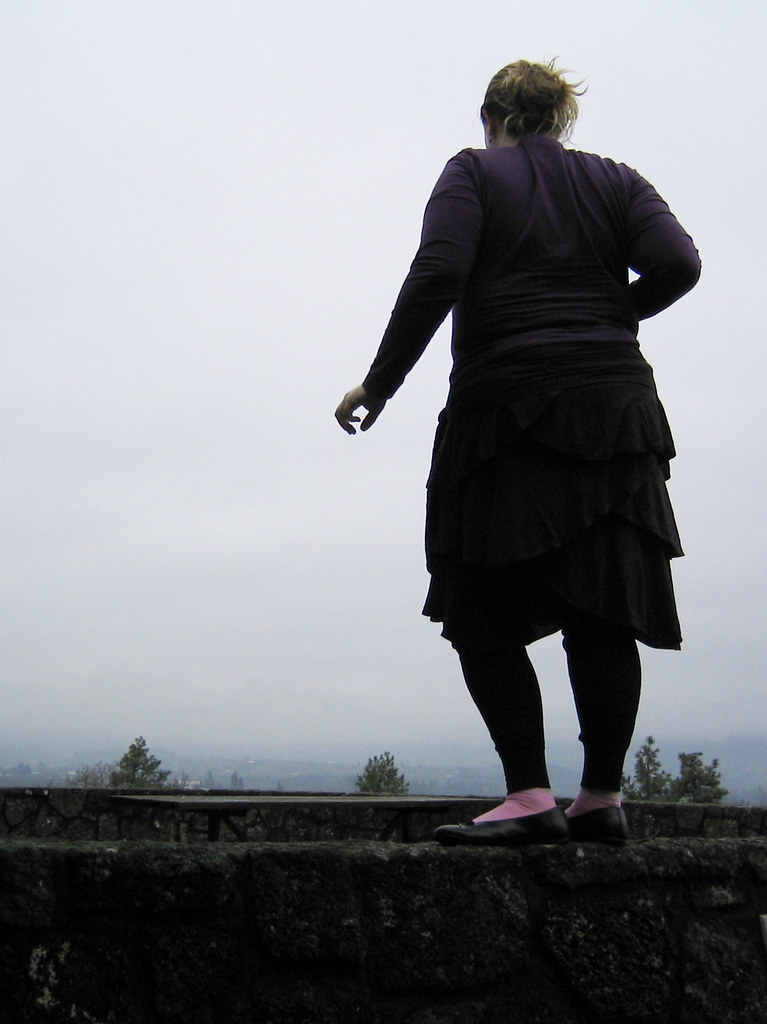
Photo: “Day 40: Grey Skies” by amanky is licensed under CC BY-NC-ND 2.0.
Short poem: RHL, ‘Many Marriages’

Lots of marriage is good –
go ahead! We all should…
but bigamy sadly‘s illegal.
The solution, of course,
is: Encourage divorce!
And remarry. Kings do it. Be regal!

*****

Just published in The Asses of Parnassus – thanks, Brooke Clark!

Photo: “Charles Camilla Jamaica 2008” by Mattnad is licensed under CC BY-SA 3.0.