Tag Archives: memories

Iambic hexameter: Martin Parker, ‘Man of the Match’

You swore at me and hurled your ring into the pond
then drove off back to London “for some bloody fun”
with friends whose Chelsea coven held you in its bond.
I was next in, scored twelve and hit the winning run.

The beers were long and cool, the Captain shook my hand.
Dusk shaded in, a final liquid blackbird sang.
A coughing tractor crawled a strip of fading land.
An owl flew low across the pitch, a church bell rang.

Two muddy urchins with a shrimp-net dredged the pond
their hopeful piping rippling in the cooling air
while you choked on exhaust at Guildford or beyond
along your golden road to Knightsbridge and Sloane Square.

Another world and just two perfect hours away
your eyes had been bright green. Or brown. Or were they blue?
I still recall the details of that Summer day
so much more clearly than I now remember you.

*****

Martin Parker writes: “The only point I might add is my hope that if the muddy urchins’ dredging efforts were rewarded they were not too disappointed to learn that the ring’s diamond might not have been a real one! The intervening sixty-five-plus years have, mercifully, erased the fact that I may have been nothing but a cheapskate!”

‘Man of the Match’ was first published in Snakeskin.

Martin Parker is a writer of mainly light and humorous verse much of which has appeared in national publications including The Spectator, The Oldie and The Literary Review. In 2008 Martin founded the quarterly light verse webzine, Lighten Up Online at www.lightenup-online.co.uk, now edited by Jerome Betts. His website at www.martinparker-verse.co.uk gives details and excerpts from his two “hopefully humorous and only occasionally wrily depressing books”.

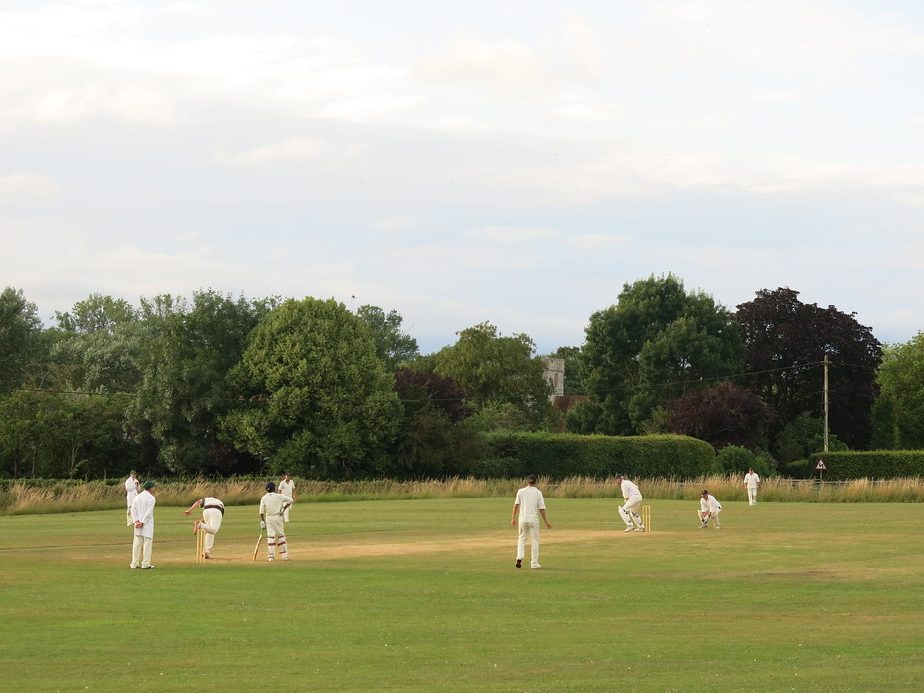
Photo: “Village cricket” by Peter Curbishley is licensed under CC BY 2.0.

Short Poem: Andrew Sclater, ‘Dear Mother’

Dear Mother come softly across your grey veil
and onto the path in the dark where the snail
is crossing obliquely and nightjars sing sweetly
and put down your toilet bag quietly, discreetly
on the rim of the cemetery fountain. Now wash
your hair free of this mud and these worms, and squash
those white maggots that gleam in your ears,
then smile as you used to. We’ll have no more tears.

*****

Andrew Sclater writes: “I think everyone who loses a parent probably wants to resurrect them somehow. But memory is a false friend. We can’t see them clearly enough: we know, with vagueness, what they were like, but not who they were. We’d like to go back but we can’t, though this poems attempts to. Then, the realisation that we stand alone, orphaned, comes slowly, painfully and (awkward as it is) angrily as we grieve. This poem was delivered almost complete to me. It simply flowed out of the first line in a rare and rather magical way. I still like it more than almost everything I’ve written, placing my discomfort so tidily into its formal box.”

‘Dear Mother’ first appeared in Poetry Review.

Andrew Sclater is a Scottish poet currently living in Paris. He has published poems in Ambit, Best Scottish Poems, The Dark Horse, Magma, New Writing Scotland, Poetry Review, Shearsman and elsewhere. He co-founded Butcher’s Dog poetry magazine and the National Botanic Garden of Wales. He has been an editor of Charles Darwin’s correspondence and his Dinner at the Blaws-Baxters’ was published in 2016 by HappenStance Press. His newest pamphlet Quite Joyful is from Mariscat Press.

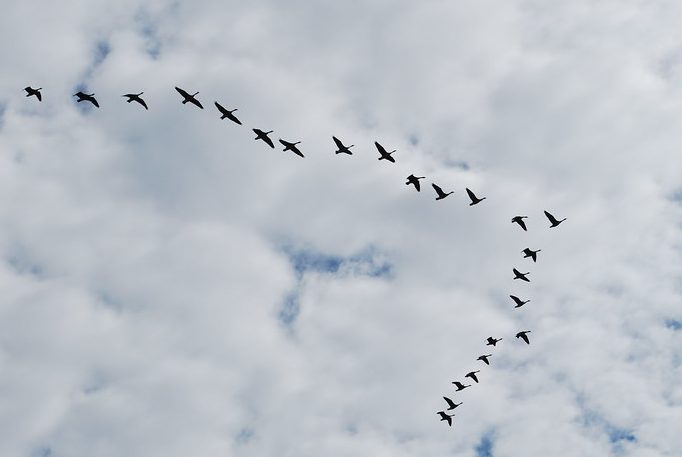
Photo: “.a…d.i.s.t.a.n.t…memory.” by DeeAshley is licensed under CC BY 2.0.

Short poem: RHL, ‘Ghosts Twitter’

Ghosts twitter in my head like the memory of predawn birds.
Digging below my present house I find
a structural supportive past with rock veins to be mined.
Upstairs the future isn’t fully built or roofed.
Has someone goofed?
The Architect is vague on final thirds.

*****

I am finding many ways to say I don’t understand existence at all; this is one of them.

This short, semi-formal poem was published recently in The Lyric.

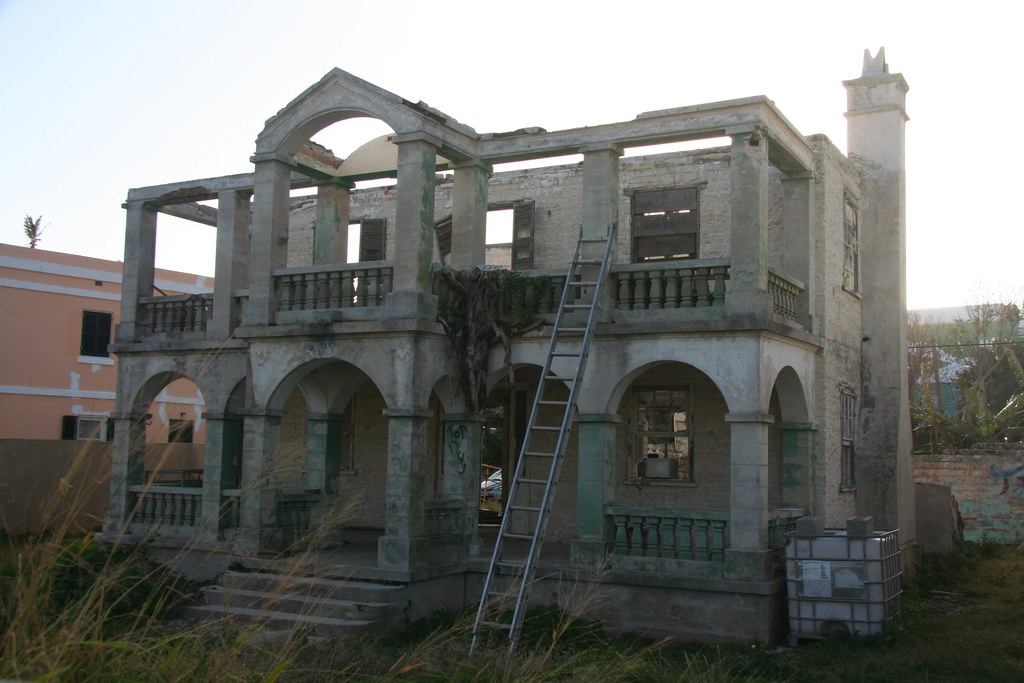
Photo: “unfinished house” by Lodigs is licensed under CC BY-NC-ND 2.0.

Susan McLean, ‘Dead Giveaway’

Who’ll take my dead? I’ve carried them so long
my mind is swaybacked from their aching weight.
I can’t just cast them off. It would be wrong
to leave them in some shed, like unclaimed freight.
How could I walk away as Cathy’s smile
collapsed, as Brian gently said “Take care,”
and Grammy begged “Please take me home now” while
I shut them in the dark and left them there?

I’ve jettisoned so much I took to heart—
the afterlife, belief in justice, prayer.
I’ll have to lay my dead down too, I know.
After a party, when my friends depart,
I wash up, stow away what’s left, yet they’re
still here. The dead are always last to go.

*****

Susan McLean writes: “I love the way a cliché can take on new life if the words are interpreted in a nontraditional way. The title of this poem seemed painfully poignant to me when I imagined it applying to the dead we all carry around with us. It would be nice to be able to walk away from that sadness, but of course who among us could bring ourselves to do it? Though I try to keep the voice of the poem sounding natural, I pay attention to the play of sounds in the words, as in the echoes of consonant and vowel sounds in the first two lines: “take,” “swaybacked,” “aching,” and “weight.” In the sestet of the sonnet, the imagined action of the speaker’s leaving her dead behind in the octave is reversed when she is herself left behind by her departing friends, with only her dead to keep her company.
This poem first appeared in the online journal 14 by 14, and later was published in my
second poetry book, The Whetstone Misses the Knife.”

Susan McLean has two books of poetry, The Best Disguise and The Whetstone Misses the Knife, and one book of translations of Martial, Selected Epigrams. Her poems have appeared in Light, Lighten Up Online, Measure, Able Muse, and elsewhere. She lives in Iowa City, Iowa.
https://www.pw.org/content/susan_mclean

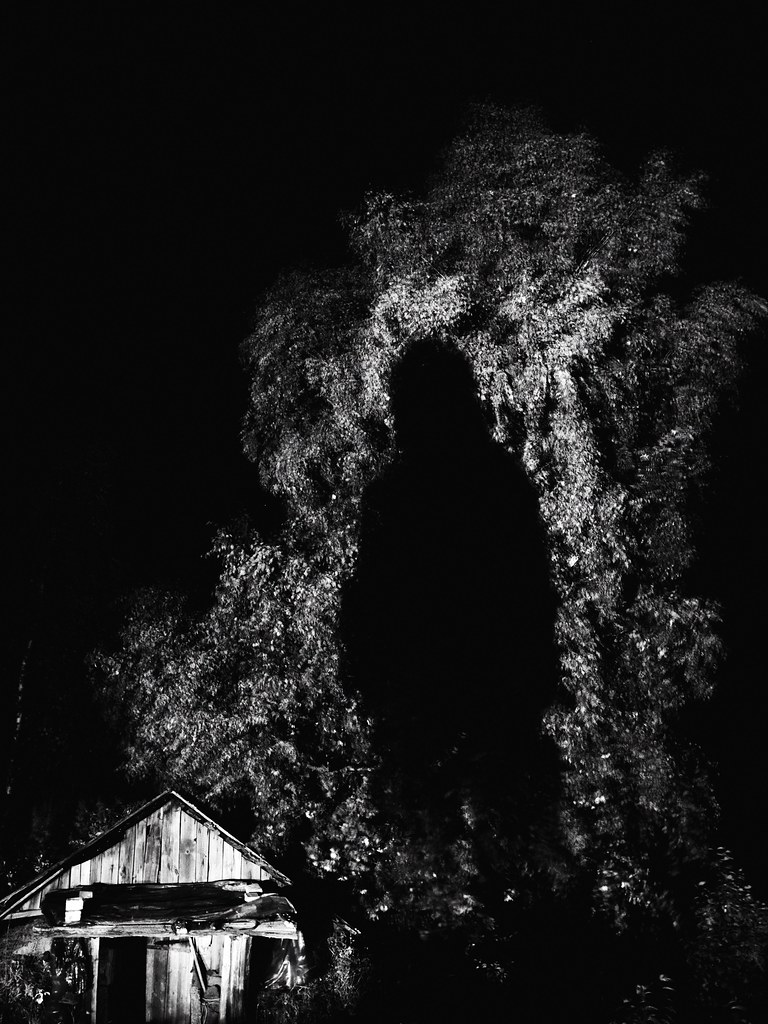
Photo: “Ghosts of the old house” by Tree Leaf Clover is licensed under CC BY 2.0.

Quincy R. Lehr, ‘Lines for my father’

I think I owe some kind of explanation
As I grow tired and listless fingers writhe
Above the unpecked keyboard pad. I’m not
Quite out to blame you or your generation
For where I’m at tonight. You paid the tithe
That life exacts. It’s sanctimonious rot
If we deny the pain of paying it–
And our denials never help one bit.

Unlike you, I found myself involved
In protest politics when I was young.
I spouted crap about the working class
While searching for a problem to be solved.
I mocked you then, since stirring tunes are sung
In brayed crescendos, with a blaze of brass
Booming triumphs won against the odds–
Unjust societies and jealous Gods.

You seemed so cautious–tastefully attired
With modest ties and polished wing-tipped shoes,
A cautious, kindly smile that reached your eyes.
A man to be respected, not admired,
Neither adulated nor abused.
Ambitions of an ordinary size
Were often past your reach. A nagging doubt
Set in, and now I know what that’s about.

Tonight, I type these words as it gets late,
And no one calls to beckon me to bed.
I scoffed at what you’d craved–the tenure track,
The slow-accruing pension from the state,
The wife (who left you). Though you’re good and dead
(And at this hour, my eyes are going slack)
And though you cannot answer, I’ll report
–While having to imagine your retort–

That we’re no happier than you, and can’t
Quite seem to sit for tests that you had failed.
Our phones are packed with numbers we won’t call.
The televisions blast a constant rant
That we ignore like letters still unmailed–
Or unconceived. Clichés about a ball
That’s dropped don’t work–or maybe don’t apply.
We never picked it up. I wonder why.

This recognition’s only dawning now
As streetlights speckle glimmers on your urn
Beside my unmade bed, and as I write
These words to you in lieu of sleep. Somehow,
The brays of drunks outside my window turn
Almost comforting, as if the night
Is full of us–insomniac, astray,
And muttering defiance at the day.

*****

Quincy R. Lehr writes: “As for that poem, my father died in 2003, when I was twenty-seven. The content pretty much speaks for itself, I think. I was young, lonely, and frequently drunk when I wrote it.”

Editor’s comment: I admire the technical skill of the poem: the steady iambic pentameter; the abcabcdd rhyme scheme with the final couplet providing a punch; the integrity of the individual stanzas, each patiently laying out a mood, a thought, a situation. And I relate to the young man’s restless, unquiet, unsettled life, and the comparison to his father’s existence, his dismissal of his father’s achievements, his simultaneous recognition of the inevitable connections. It is a satisfying telling of an individual’s unique early life, in the context of the universal discord between generations.

Born in Oklahoma, Quincy R. Lehr is the author of several books of poetry, and his poems and criticism appear widely in venues in North America, Europe, and Australia. His book-length poem ‘Heimat‘ was published in 2014. His most recent books are ‘The Dark Lord of the Tiki Bar‘ (2015) and ‘Near Hits and Lost Classics‘ (2021), a selection of early poems. He lives in Los Angeles.
https://www.amazon.com/Quincy-R.-Lehr/e/B003VMY9AG