Tag Archives: sonnet

Using form: Acrostic Sonnet: Mike Mesterton-Gibbons, ‘Lonely As A Cloud’

Life’s trials left me lonely as a cloud
On high until I found some daffodils,
Not in an adventitious golden crowd
Extending by a lakeside near some hills
Like Wordsworth in his poem, but below
York’s city walls on sloping grassy banks,
Arrayed in row upon enticing row.
So I plucked half a dozen from the ranks
And clasped them and, like Wordsworth, felt a rapt
Companionship that filled me with renewed
Light-heartedness … until a copper tapped
On my left shoulder and rebuked me—”Dude,
Unlicensed flower picking’s stealing”—then
Detained my blooms … to leave me lone, again.

*****

Editor’s comment: Mike Mesterton-Gibbons has produced a Shakespearean sonnet acrostically spelling out the title and theme that references one of the best-known poems in the English language. A full discussion of Wordsworth’s original (text, background, modifications, reception, various photos, etc) is in Wikipedia – including the suggestion that Wordsworth originally came up with “I wandered lonely as a cow” until his sister Dorothy told him “William, you can’t put that.” But rather than Wordsworth’s blissed-out ending, Mesterton-Gibbons goes full circle to a rueful police-induced return to loneliness.

Mike Mesterton-Gibbons is a Professor Emeritus at Florida State University who has returned to England to live in York, where he once attended university after going to school in Cumbria near the Lake District.  His poems have appeared in Autumn Sky Poetry Daily, Better Than Starbucks, the Creativity Webzine, Current Conservation, the Ekphrastic Review, Grand Little Things, Light, Lighten Up Online, MONO, the New Verse News, Oddball Magazine, Rat’s Ass Review (where this poem was first published), the Satirist, the Washington Post and WestWard Quarterly.  Links to all these poems can be found at  https://www.math.fsu.edu/~mesterto/Unscramble/wordplay.html

Photo: “York: City Walls and Daffodils” by jack cousin is licensed under CC BY-NC-ND 2.0.

Sonnet: J.D. Smith, ‘Elegy’

We weren’t allowed the time to contemplate
What talents he in time might come to show,
What fame or wealth he might accumulate,
What love and other passions he might know.

We had, instead, the chance to see him crawl
And graduate to solid food, to take
Some wobbling steps that ended in a fall,
To hand an uncle’s dog a piece of cake.

To say more is to claim a flare’s bright arc
Could have reached high, though it had scarcely flown
Before dissolving in the larger dark.
We fall back on the facts, which stand alone.

He seldom cried. He used to point at birds.
And now he will be missed beyond all words.

*****

J.D. Smith writes: “I will not say much about this poem, as it is based on actual events. I took  liberties with details in following formal constraints, but the sense of devastation is unchanged.”

J.D. Smith has published six books of poetry, most recently the light verse collection Catalogs for Food Loversand he has received a Fellowship in Poetry from the United States National Endowment for the Arts. This poem is from The Killing Tree (Finishing Line Press, 2016). Smith’s first fiction collection, Transit, was published in December 2022. His other books include the essay collection Dowsing and Science. Smith works in Washington, DC, where he lives with his wife Paula Van Lare and their rescue animals.
X: @Smitroverse

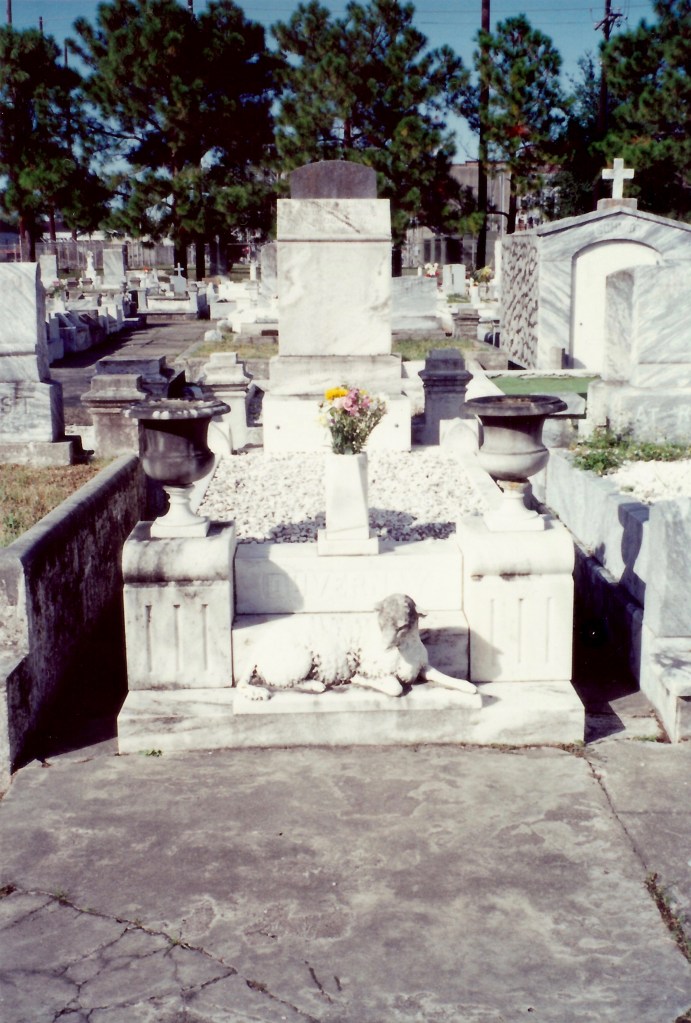
Photo: “Sleeping Child Tombstone Baby Grave Woodlawn 115-1593” by Brechtbug is licensed under CC BY-NC-ND 2.0.

Barbara Lydecker Crane, ‘Justin Case’

Justin Case is a very cautious man.
He keeps a cache of bottled water, food
and a pair of spares in the trunk of his sedan.
Others think that he’s aloof or rude
when he inspects each fork and spoon for germs.
His sisters know he swivels out of kisses.
He navigates the office on his terms;
Justin shuns each outstretched hand–and misses
clinching business deals. He cannot fathom
why colleagues eye him strangely when he hits
an elevator button by lifting past them
his wing-tipped toe. With snakebite kit
and mosquito netting, he’s ready to embark 
upon his lunchtime stroll in Central Park.

*****

Barbara Lydecker Crane writes: “This poem, first published in the Atlanta Review, was one of the first persona poems I wrote: I’ve written several dozen over the years, and I find I love trying to speak for another person, real or imaginary. Maybe the process develops empathy, as well–who knows?”

Barbara Lydecker Crane was a finalist for two recent Rattle Poetry Prizes. She has received two Pushcart nominations and various awards from the Maria W. Faust and the Helen Schaible Sonnet Contests. Her poems have appeared in Atlanta Review, Ekphrastic Review, First Things, Light, THINK, Valparaiso Literary Review, Writer’s Almanac, many others, and in several anthologies. Her fourth collection, You Will Remember Me (ekphrastic, persona sonnets) was recently published by Able Muse Press, and is available from Amazon: https://www.amazon.com/You-Will-Remember-Me-Ekphrastic/dp/1773491261. Barb lives with her husband near Boston.

Photo: “i’m so scared you know” by timsnell is licensed under CC BY-ND 2.0.

Sonnet: Shamik Banerjee, ‘A Lesson From Zaheer, Our Fishmonger’

All things are measurable, son: the food
You have, the sprawling mains, for man has power
Over the world; He deems what’s bad or good;
Determines if a plant should wilt or flower.
But ordeals measure us—we take the test
Of mercy when affliction’s cavalry
Threatens to loot the kindness off one’s chest
As in the massacre of ’83,
When every lane had reeked of Muslim blood,
My Abba Jaan had fallen to the sword
Held by your neighbours; trembling on the mud,
He mumbled, “What’s my sin? My faith? O’ Lord,
Don’t charge them for their deeds.” Love was his wish
That lives through me, for I still feed them fish.

*****

Shamik Banerjee writes: “This poem was first published in Fevers of the Mind. The incident described by our fishmonger is the Nellie Massacre, which took place in central Assam (an Indian state) during a six-hour period on February 18, 1983. The massacre claimed the lives of 1,600–2,000 people. The victims were all Muslims. Abba Jaan is an affectionate term for one’s father (used by Muslims).”

Shamik Banerjee is a poet from India. He resides in Assam with his parents. When he is not writing, he can be found strolling the hills surrounding his homestead. His poems have appeared in Fevers of the Mind, Lothlorien Poetry Journal and Westward Quarterly, among others and some of his poems are forthcoming in The Hoogly Review, Dreich and Sparks of Calliope.

Photo: “Old man inside Jamu Masjid, Fatapur Sikri” by nilachseall is licensed under CC BY-NC-ND 2.0.

Using form: Semi-formal: RHL, ‘Hunting’

The Osprey splashes, misses, and flies by
skimming the waves, rising, five yards away.
What’s its success rate? Does it care?
The Stingray searches, gliding, mouth to sand
five yards beyond the shallows where I stand.
Its Roomba-work’s its own affair.
The water splishes, burbles random rhythms.
The sun confuses, over-hot, then hidden.
The Oystercatcher calls. The Osprey rocks
on its branch in a casuarina,
flaps down-beach to another.
Along the margins of the shore, alone, each stalks.
They hunt for food
and I hunt them for what they mean, or could.

*****

There are elements of the sonnet about this semi-formal poem: it’s in iambics (though with uneven lengths of line); it has rhyme (though some only slant rhyme, and not patterned); it has 14 lines and a final couplet (though not with a clear volta where you would hope, after the 8th line). But I think the disjointed nature of the poem, its stop-and-go lines of different length, is suitable for the nature of the hunt: the searching, the sudden swoop, the pause, the restarting. In that sense the form is appropriate for the subject matter, and therefore good. It may be that I was too lazy to beat the whole thing into pentameters with a regular rhyme scheme… but it may also be that this was the right place to stop for this particular poem.

‘Hunting’ was originally published in Obsessed With Pipework, and has just been reprinted in Green Ink Poetry (motto: “We Welcome Chaos, Calamity, And The Natural World. Hope Punks & Witches” in their current collection with the theme of ‘Forage’.

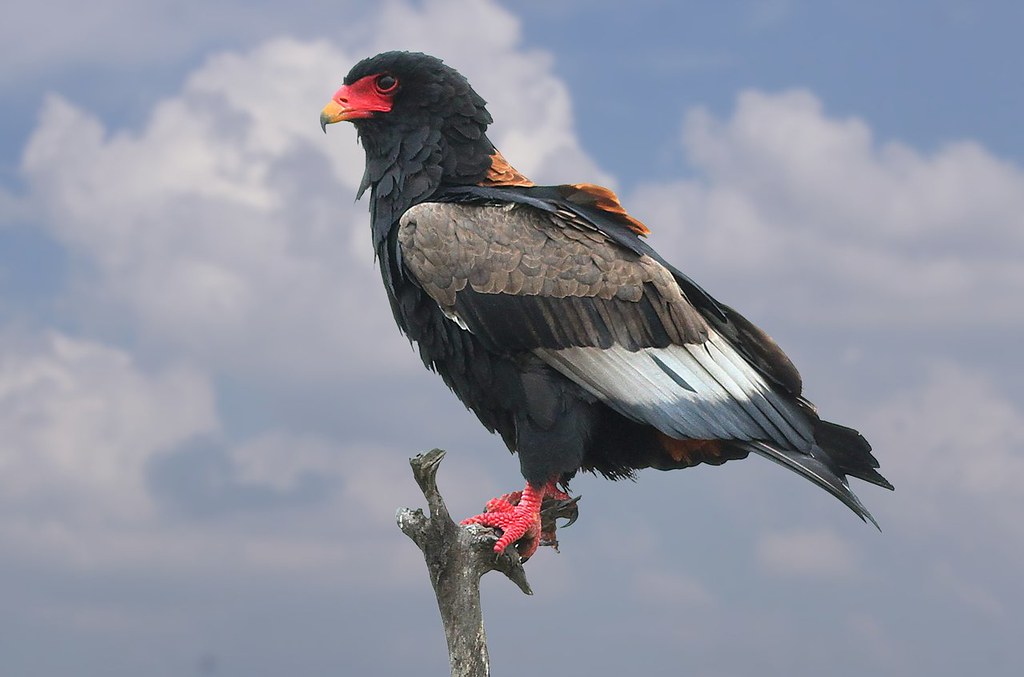
Photo: “Osprey” by Mick Thompson1 is licensed under CC BY-NC 2.0.

Sonnet: RHL, ‘Your Lot’

From prairie city to an island town;
from city festivals to empty sea;
from continental seasons, white, green, brown
to changeless warmth and high humidity.
No one could hope for love more fierce, more loyal,
more honest, constant through good times, harsh tests,
raising our varied children as they boil
off along individual paths and quests
with a fierce love for them in their success
and even more, their fulfilled happiness.
You miss the north’s reliable forethought,
but not your parents, siblings and cold strife.
There’s always trade-offs, getting where you’ve got.
Just don’t look back. You chose your lot in life.

*****

Two questions: Is it a “sonnet” if the rhyme scheme is non-standard and there’s no real volta? And is it better to accept the unconventional form that the poem was comfortable in, or to try to beat it into more standard shape?

Obviously, I chose to leave it with its imperfections as I wrote it; but that might be from laziness more than anything else. Yes, I *do* work on poems after the first draft… usually… but once I’ve got something halfway acceptable I tend to stop. If I’ve got it to the point where I could easily learn to recite it, then it’s good enough.

But non-traditional sonnets are simply not as engaging, as well-balanced, as rhetorically forceful, as either the Petrarchan or the Shakespearean can be. Those forms have an elegance, a beauty, a structure that leads to a sudden insight or a punchline in a way that at its best (partly due to the rhyme scheme and partly due to the unbalanced “halves” separated by the volta) feels not just well-phrased but unquestionably true.

So this sonnet, if it is a sonnet, is second best. Still good enough to have been published recently in Pulsebeat – thanks, David Stephenson!

Photo: “Part of Governor’s Harbour, Across the Bay” by tylerkaraszewski is licensed under CC BY 2.0.

Susan McLean, ‘High School Pride’

Sleek in their strength and beauty, haughty, lithe,
prowling alone or stalking in a pack,
they cut down herds of victims like a scythe,
then search for fresh meat, never looking back.
The world is theirs, and all the grazers in it.
They cull the weak, the callow, the unwary.
The pack itself can change at any minute,
for all alliances are temporary.

How fine to be the hunters, not the prey,
to ambush, wound, or take down all they see!
While we, their hapless quarry, would contrive
to be as cruel and merciless as they
if we could share in their ascendancy—
not noticing how few of them survive.

*****

Susan McLean writes: “High school can be as harsh as any nature documentary in demonstrating Darwinian survival of the fittest. It is a time when popularity and fitting in can seem all-important, and when those at the top of the social hierarchy often take pleasure in harassing or snubbing those below. Two scientific studies gave the impetus for this poem. One was a study of apex predators such as lions, which showed that despite their power and ferocity, they had a surprisingly high mortality rate. The other was a study of people who were unpopular in high school, which found that later in life they tended to be happier and better adjusted than those who had been popular in high school. The whole concept of “high school pride,” which stoked artificial rivalries between schools that were then played out on the battlefield of sports and other competitions, was part of a mentality that endorsed winning and belittled losers.

“This sonnet first appeared in the online journal 14 by 14, and later was published in my second poetry book, The Whetstone Misses the Knife. The octave follows the pattern of an English sonnet, with quatrains rhymed in alternating lines: ABABCDCD. But the sestet switches to the less predictable rhyme scheme of the Italian sonnet: in this case, EFGEFG. The surprises of the rhyme scheme are meant to mirror the surprises in the twists of the conclusion.”

Susan McLean has two books of poetry, The Best Disguise and The Whetstone Misses the Knife, and one book of translations of Martial, Selected Epigrams. Her poems have appeared in Light, Lighten Up Online, Measure, Able Muse, and elsewhere. She lives in Iowa City, Iowa.
https://www.pw.org/content/susan_mclean

Photo: “Clique” by San Diego Shooter is licensed under CC BY-NC-ND 2.0.

Non-traditional sonnet: Marcus Bales, ‘The Durable Rain’

The durable rain was conducting its drumming descent
Without any decent regard for the dawning of day
As if a dim evening was all of the morning it meant
To allow from a sun that was doing a landscape in grey.
Never begin with the weather the boffins have said.
If nature’s as stormy and dark as a novelist’s mind
The reader will sneer at the metaphor. Offer instead
A prose that’s so difficult readers are left far behind.
But back to my tale. Is it cozy inside, or does rain
Express what discursive description would talk past in vain?
Does a cry break a heart when the kettle releases its steam
Or, piping, awaken a lover up out of their dream?
What it will mean will depend on your context and age.
A poem exists in the reader and not on the page.

*****

Marcus Bales writes: “The first four lines rolled out without much trouble. I had let the dogs out after they’d woken me at what they thought was the right time but which to me was five in the a.m. It was cold and grey but not rainy at all. Who can figure how the brain works. I did worry briefly about the alliteration but finally put it off, hoping it would sound like rain on the roof. Sort of. And it seemed portentous and poetry-like, but where to go from that?

“I don’t know where I first heard that you’re not supposed to open with the weather. It sounds like one of those pieces of advice the internet kicks up from time to time purportedly by Elmore Leonard, along the lines of “You know those parts that readers skip over? Don’t write those.” Or “You got to know when to hold ‘em and know when to fold ‘em.” Advice that is absolutely both spot-on and worthless at one and the same time. If you know you don’t need any advice; if you need advice, it’s because you don’t know. It makes sense in that maddening way of all advice, but it is untakeable. However much you may agree that the reader doesn’t care what the weather is, they care what happens and who it happens to, there I still was without anyone there to have something happen to, except the damn rain.

“Sitting at breakfast reading my usual dollop of Wodehouse, I noticed that when things are going well for his characters the weather gets some generous play, and when not, not. Then I reflected that really I don’t have a large supply of written descriptions of the weather from anywhere. There’s ‘Neutral Tones’, of course, where the weather is a metaphor for the breaking relationship, and “Nothing that is not there and the nothing that is.” And ‘Stopping By Woods’ where the weather is the reason for the stopping, or the first lines of ‘Journey of the Magi’. There’s Auden’s ‘In Memory of Yeats’, Housman’s cherries hung like snow, if that even works, though who Snow was and how Housman knew is a mystery. And after that it’s vague references to this or that month or season generally in Keats, Poe, Byron, or Shelley, and the inference that all of Yeats happens in the summer what with swans and people fighting the horses of the sea, and all. And finally, again, all those descriptions of the morning in the Blandings and the golf stories. After that my memory starts to flail about. This isn’t the sort of thing where research is indicated at five in the ack emma. Perhaps you remember more examples of how the weather is used in prose and poetry, but it’s too late now, isn’t it.

“I wasn’t sure how to go on. It seemed as if nearly the whole practice of poetry in English was against me, aside from the sub-genre of song with all those deep and crisp and evens, and sleigh rides that began to echo in the back of my head, along with all those singers who seem to be perpetually crying or dancing or walking in the rain. Then I thought well, why not use that? I might get three or four lines out of it, and then maybe something else would occur to me. Well, I got my four lines and arrived at the volta of the sonnet, if sonnet it turned out to be. What now?

“Turning at the question that had stopped me I trod upon that patch for a few lines, and then I had got to the couplet. Well, I really had nothing, did I, among all this meta- bit, and what I had seemed to call for some digging into the whats and whys of how literature worked. Well, of course no one knows. I worried some about having failed to provide any context for the reader to see me through, and put it aside to eat breakfast.

“After that, and a shower, and a bit of humor watching the dogs return to the scene of the five o’clock crime outside to chase a squirrel in the yard, somehow the notion of context reasserted itself, and I remembered a sort of juicy quote from a professor 50 years ago who was gassing on about how a poem isn’t the sounds or the words or the meanings as the poet meant them, but rather the unpredicatable ways that the people misread poems. I recall he had half a dozen examples right to hand, as scholars so annoyingly seem to do, but I couldn’t bring a single one to mind. Fortunately, I’m a poet, not a scholar, so I don’t have to be able to give good – or any – examples, so I decided to steal his assertion and let it go at that.

“And there it is. A complete mishmash of false starts, interrupted middles, and squishy endings. Enjoy!”

Not much is known about Marcus Bales except that he lives and works in Cleveland, Ohio, and that his work has not been published in Poetry or The New Yorker. However his ‘51 Poems‘ is available from Amazon. He has been published in several of the Potcake Chapbooks (‘Form in Formless Times’).

Photo: “Rainy Day” by SammCox is licensed under CC BY-NC-ND 2.0.

Gail White, ‘In Answer to Your Questions’

Your Uncle Harry doesn’t know himself
where he left his will. You’ve tried his desk? The dresser?
the farthest reaches of the kitchen shelf?
The dead are under a great deal of stress,

and they forget. As for your other question–
whether you’ll find true love–Venus and Mars
are conjoined over Pisces, which suggests an
absolute negative on singles bars.

It’s a good year for travel, cooking classes,
learning the waltz and the electric slide.
Go where the people are. Going to Mass is
recommended if you’ve never tried.

In late July, beware of traffic fines.
That’s it. You’ve only paid for fourteen lines.

*****

Gail White writes: “This is a favorite of mine. I was trying to think like a medium. (I don’t believe in fortune-telling really, but I was once told to beware of traffic fines, and I got one.) Also, I think I really stuck the landing on this one.”

Gail White is the resident poet and cat lady of Breaux Bridge, Louisiana. Her books ASPERITY STREET and CATECHISM are available on Amazon. She is a contributing editor to Light Poetry Magazine. “Tourist in India” won the Howard Nemerov Sonnet Award for 2013. Her poems have appeared in the Potcake Chapbooks ‘Tourists and Cannibals’, ‘Rogues and Roses’, ‘Families and Other Fiascoes’, ‘Strip Down’ and ‘Lost Love’. ‘In Answer to Your Questions’ is collected in ‘Asperity Street‘. Her new light verse chapbook, ‘Paper Cuts‘, is now available on Amazon.

Photo: “Fortuneteller” by eric.minbiole is licensed under CC BY-NC 2.0.

Using form: biform poem: Daniel Galef, ‘A Poke of Gold to the Lady That’s Known as Lou’

I saw the sigh in your pretty eye
    When you dreamed that I’d be yours,
But those who steal me fast reveal
    My shine is the start of wars.

First I passed through the purse of a miner who nursed
    A chill. He seemed to be
Just a helping of hurt in a flannelette shirt
    From Plumtree, Tennessee.

It’s the goal of gold to be bought and sold
    And melted and poured in a mould.
From the day they scratched me out of that patch
    Of dirt, I’ve been near as cold.

Now again I change hands, and again the sands
    Run out, and men lie dead.
Good chances, I’d rate, that the heftier weight
    Is a couple of rounds of lead.

I’ve been sought by those men—half a dozen or ten—
    Who flash gold in pokes and pounds,
Who begged you for dances and killed for your glances—
    It’s not as nice as it sounds.


I saw the sigh in your pretty eye when you dreamed
That I’d be yours, but those who steal me fast
Reveal in my shine is the start of wars. First I passed
Through the purse of a miner who nursed a chill. He seemed
To be just a helping of hurt in a flannelette shirt
From Plumtree, Tennessee. It’s the goal of gold
To be bought and sold and melted and poured in a mould.
From the day they scratched me out of that patch of dirt,
I’ve been near as cold. Now again I change hands, and again
The sands run out, and men lie dead. Good chances,
I’d rate, that the heftier weight is a couple of rounds
Of lead. I’ve been sought by those men—half a dozen or ten—
Who flash gold in pokes and pounds, who begged you for dances
And killed for your glances—It’s not as nice as it sounds.

*****

Daniel Galef writes: “Last month Robin posted ‘Casey to His Bat,’ a poem which scans as both a sonnet and as fourteeners in ballad meter. The intro mentioned that I’d written a few more of this type of poem after ‘Casey,’ one of which was titled ‘A Poke of Gold to the Lady That’s Known as Lou.’
As much as I loved the challenge of writing the Casey sonnet, I felt the form had to be justified somehow by the subject, and so, just as ‘Casey’ followed Ernest Thayer* in its alternate scheme of iambic heptameter couplets, each of the subsequent convertible sonnets, part of my Imaginary Sonnets series of persona poems, is also a response to or parody of a specific existing poem in a different meter which the sonnet doubles.
The second convertible sonnet, ‘A Poke of Gold to the Lady That’s Known as Lou’, is a riff on the famous narrative poems of Robert Service ‘The Shooting of Dan McGrew’ and ‘The Cremation of Sam McGee’ in his 1907 collection Songs of a Sourdough. (Like Thayer, Service is sometimes scorned as a jingle-writer partly because of his popularity and his populism, writing in the vernacular voice of Yukon prospectors.) Both of these narrative poems are written in a much looser anapestic ballad meter with more inversions and extra syllables than sonnets normally allow. While ‘McGrew’ has the basic ballad rhyme scheme, scanning as heptameter couplets like ‘Casey,’ ‘McGee’ has a much denser scheme, adding on top of these end-rhymes a pattern of dimeter internal rhyme. I loved the much greater challenge of compounding this rhyme scheme with that of a Petrarchan sonnet, but, due to the anapests, the finished product feels less like a sonnet than ‘Casey ‘did.
This poem appeared in Snakeskin Poetry in 2017, and, although it is not included in my book Imaginary Sonnets published this year, you will find, in the poems there, these same immortal threads: gold (p. 41), murder (p. 71), poetic parody (p. 72), and Canada (p. 19). danielgalef.com/book/
*Thayer’s poem, possibly the last American poem to have massive popular appeal to the extent that it was commonly memorized for fun and performed on the vaudeville stage, was published in 1888, the same year as the florid Victorian sonneteer Eugene Lee-Hamilton published Imaginary Sonnets, which inspired my book.”

*****

Daniel Galef’s first book, Imaginary Sonnets, is a collection of persona poems all from the point of view of different historical figures and objects, including Nossis the Epizephyrian, Christopher Smart’s cat, and a breakfast taco. Besides poetry, he has written plays that won the McGill University Drama Festival, flash fiction selected for the Best Small Fictions anthology, and last year he placed second in the New Yorker cartoon caption contest, which doesn’t really mean anything but he’s been telling everyone anyway.