Tag Archives: summer

Rachel Hadas, ‘Summer Nights and Days’

So far the nights feel lonelier than the days.
In light, the living keep me company,
and memories of voices through the years.

Each summer threads a green familiar maze.
Emerging sun-struck, you can barely spy
the slow kaleidoscope of clouds and hours.

Those flannel nightshirts chilly sleepers wear
as summer wanes: I’m giving them away.
Pass it on: you keep at the same time.

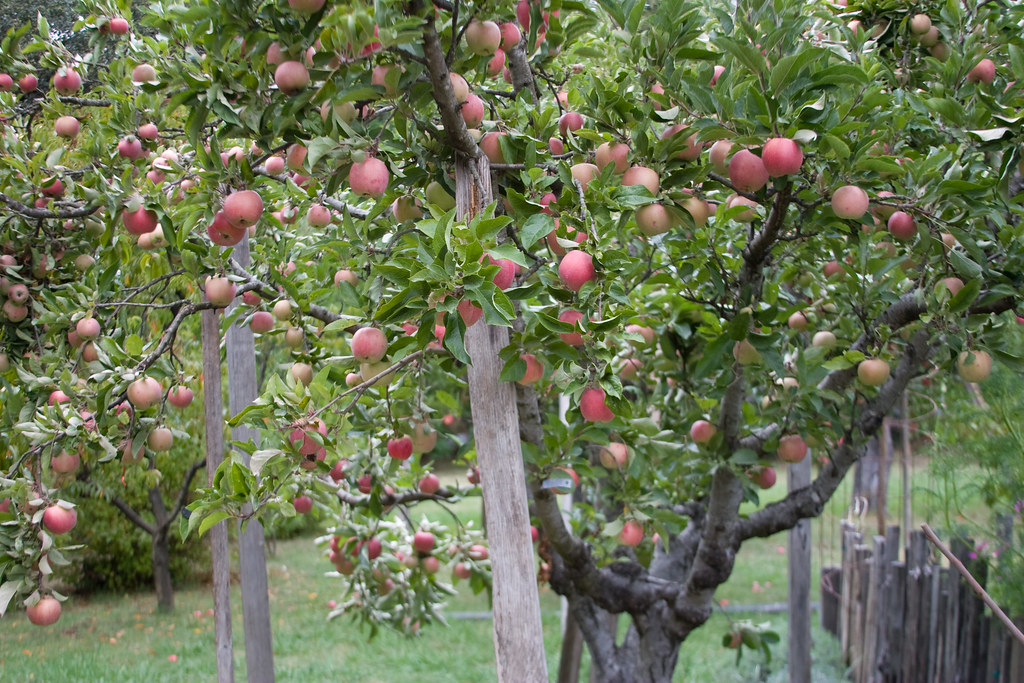
A bough has broken from the Duchess tree.
Rain swelled the apples. Too much lightness weighs
heavy: the heft of the idea of home
tempered with the detachment of a dream,
or tidal pulls, like ocean, like moonrise.

*****

Rachel Hadas writes: “Summer Nights and Days, from perhaps 2009-2011, is one of a number of pieces written in and about Vermont which I recently tightened into short prose texts and collected in my latest book, Pastorals (2025); as it appears here, it’s still in its poem format. This piece may or may not have been written after my late husband’s death in 2011, but is certainly refers to a time when I was essentially living alone. My son and his visiting friends were the recipients of old nightshirts (more recycling).”

Rachel Hadas’s recent books include Love and Dread, Pandemic Almanac, and Ghost Guest. Her translations include Euripides’s Iphigenia plays and a portion of Nonnus’s Tales of Dionysus. Professor Emerita at Rutgers-Newark, where she taught for many years, she now teaches at 92Y in New York City and serves as poetry editor of Classical Outlook. Her honors include a Guggenheim fellowship and an award from the American Academy-Institute of Arts and Letters.

Photo: “Apple Tree” by bgreenlee is licensed under CC BY 2.0.

Daniel Brown, ‘Isn’t That The Way’

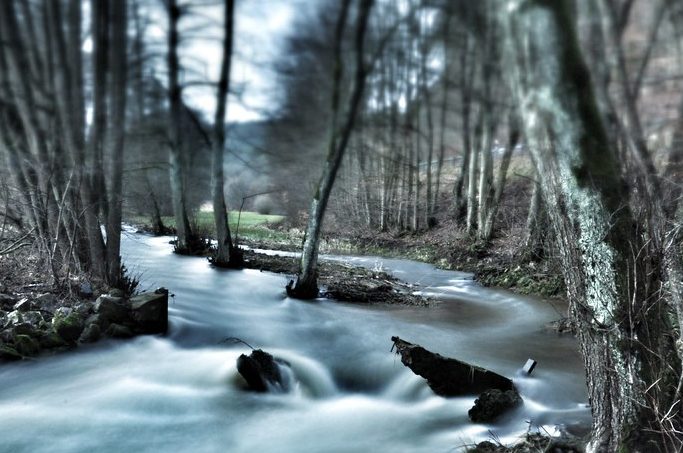
A river’s winter-silver
Discerned through screening trees
Takes on a certain sorrow
From the barrenness of these;

Of these whose summer glory
Can seem a little sad,
There being not a glimmer
Of river to be had.

*****

Daniel Brown writes: “I used to live in a seventh-story apartment in Manhattan whose kitchen window gave on Riverside Park and the Hudson River beyond. But this prospect had its limitations. I could see the river’s grandeur only in winter, when the intervening trees in the park were bleakly bare.  In the summer the trees were in glorious leaf—thereby blocking my view of the river. I wrote to a friend that this impossibility of having it all, view-wise, was “an emblem of our plight.”  Over the years I’d occasionally think about doing this predicament up as a poem, but my heart would sink at the anticipated tedium of laying out the situation’s physical set-up—the apartment, its location and elevation, its view—so I never attempted the piece. Then, not long ago, I found myself re-interrogating the poem’s possibilities—and recalling the phrase “emblem of our plight.”  It occurred to me that the poem could be cast as, well, emblematic: that laying out the physical set-up needn’t be burdensome because I didn’t have to lay it out; I could leave it out. Suddenly the poem seemed worth a try.”

‘Isn’t That The Way’ was published some years ago in a journal called Parnassus: Poetry in Review.

Daniel Brown’s poems have appeared in Poetry, Partisan Review, PN Review, Raritan, Parnassus, The New Criterion and other journals, as well as in a number of anthologies including Poetry 180 (ed. Billy Collins) and The Swallow Anthology of New American Poets (ed. David Yezzi). His work has been awarded a Pushcart prize, and his collection Taking the Occasion (Ivan R. Dee, 2008) won the New Criterion Poetry Prize. His latest collection is What More?  (Orchises Press, 2015). Brown’s criticism of poets and poetry has appeared in The Harvard Book Review, The New Criterion, PN Review, The Hopkins Review  and other journals, and the LSU Press has published his critical book, Subjects in Poetry. His Why Bach? and Bach, Beethoven, Bartok are audio-visual ebooks available at Amazon.com. His website is danielbrownpoet.com .

Photo: “Riverside Park South, June 2014 – 01” by Ed Yourdon is licensed under CC BY-NC-SA 2.0.

Shamik Banerjee, ‘A Summer Evening’

The sky begins to cloak its face,
Removing every streak of red.
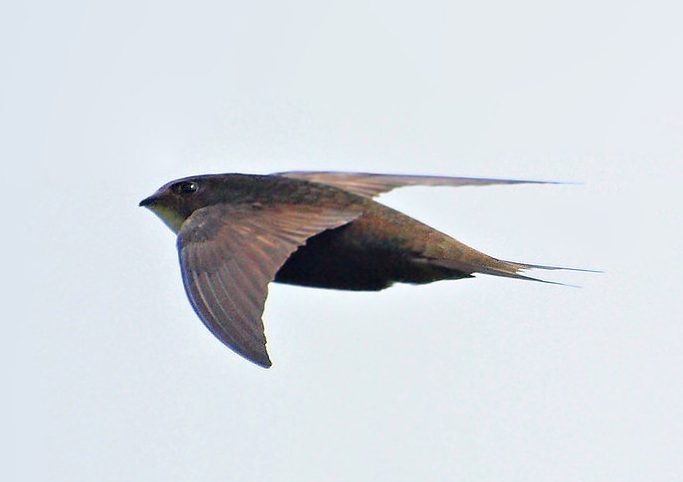
Above, two weary fliers trace
The way back to their bough-held bed.

A boy, awash with joy, returns
Soil-vested from a football field.
To celebrate the victory earned,
He swaggers with his pride revealed.

Along the lined tobacco stands,
Pen-pushers at long last release
Workloads with cigarettes in their hands,
Exhaling little rings of peace.

Now earthen lamps begin to glow
In homes–it’s time for evening prayer.
Sweet wafts of scented incense flow,
Cleansing the jaded summer air.

*****

‘A Summer Evening’ was first published in 3rd Wednesday.

Shamik Banerjee is a young poet from Assam, India where he resides with his parents. His poems have been published by The Society of Classical Poets, The Hypertexts, Third Wednesday, Thimble, Ink Sweat and Tears, Shot Glass, and The Pierian, among others.

Photo: “Purity and” by HumanityAshore is licensed under CC BY-NC-ND 2.0.

Joe Crocker, ‘What Sunflowers See’

They lift and fix their heavy insect eyes
upon the East, from where the sun will send
the bees to stroke and lick and fertilize.
 
They wait, where once they craned their necks to see
his passing arc. They wait, amazed. Surprise
has painted yellow lashes, perfectly
 
coronal round a crowded, dark eclipse.
Its buzzing beauty pixelates and stares.
An alien array of cells unzips.
 
A thousand thousand sisters nurse the same
regret. His warmth is gone. And left behind
to hang their heads, disconsolate, they blame
themselves. Their tears drop hard and black and blind

*****

Joe Crocker writes: “The French call them Tournesols because, when they are growing, the follow the sun. But when the flowerhead is fully formed, they all face East so they warm up quickly and are more attractive to the bees. The poem came about because I’ve been seeing them more frequently in our local supermarkets and my wife grew some this year. Seeing them close up, I was reminded of the reaction a friend from many years ago used to have. She liked them but kept her distance because she was spooked by their dense busy centres. So the insect eye was the starting metaphor and then the poem led me on. Big, beautiful, disturbing, and in the end, sad.”

Joe Crocker is no relation of the Sheffield-born rock singer. But he does live in Yorkshire and gets by (with a little help from his friends). He is a bit old now to be starting out in poetry but was infected by the muse during Covid lockdown a couple of years ago and has had a few things published, mainly in Snakeskin magazine (where this poem first appeared) and other online venues. He doesn’t have a website but if you Google him, you’ll learn a lot more about a certain Sheffield-born rock singer.

Photo: accompanied the poem in Snakeskin.

Poem: “Seasonal”

When Mr. Warm-as-winter-under-the-covers
Meets Cool-as-summer-in-the-evening-breeze
He’ll spring to leave ideas they could be lovers –
But her thoughts fall away like leaves from trees.

First published in Lighten-Up Online.