Monthly Archives: May 2024

Ekphrastic sonnet: RHL, ‘Ghosts of Dead Parents’

Her ashes spread on Skirrid that she loved;
and his bones buried by the Harbour bay…
Why choose views for the dead? Once in earth shoved,
dirt in the dark is all they’d see, not day,
even if they lived. And if cremated, well…
So is it for our own guilt’s absolution?
Or status, that their graves our standing tell?
Or rites for social change’s resolution?
Those who were always here are here no more –
Their alwaysness runs out when they decease,
and life will now sound different from before,
like insect shrills not heard until they cease.
Dead ghosts sleep twittering in our heads’ domed caves,
waking to fill night skies from dreams and graves.

*****

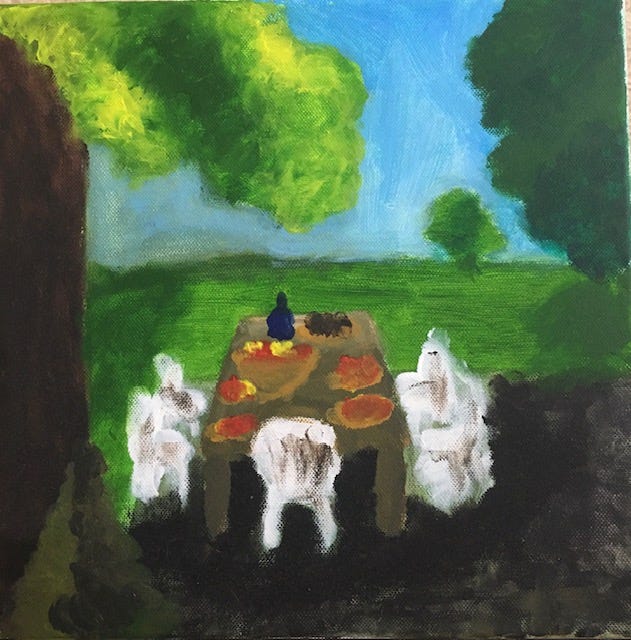
This sonnet was published by The Wee Sparrow Poetry Press as a response to their ekphrastic challenge for the illustration, a painting by Žofia Katriňáková. It was written for my parents who, although they died decades ago, are still a background to my thoughts. My father is buried by the bay of Governor’s Harbour, my mother’s ashes were scattered on Skirrid Fawr, the Welsh mountain she loved and lived within sight of in Abergavenny. And I have another short poem for them, published in the Amsterdam Quarterly:

In the night’s jam jar of my memory
my long-dead parents live as fireflies.
My thoughts of them worn by time’s emery,
their faint light still suggests where my path lies.

Is it reasonable to hope to be a firefly for your children and grandchildren?

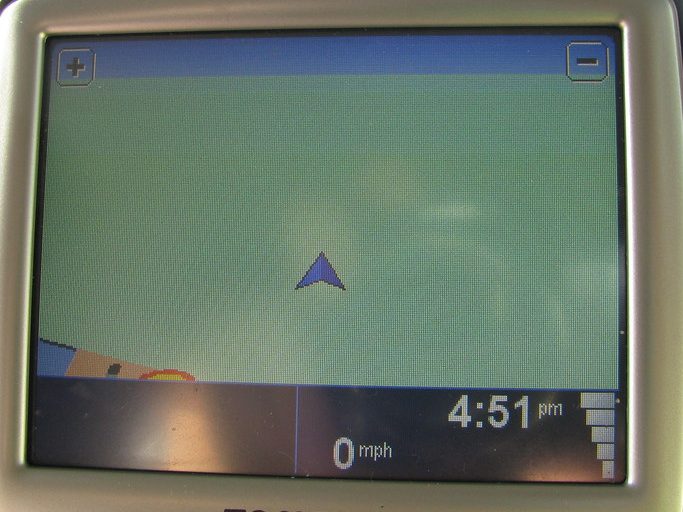
Barbara Loots, ‘Villanelle for the Road’

The true way may be found, but at a cost.
The dashboard deity presides and judges.
Recalculating really means You’re lost.

Is this a bridge that I’ve already crossed?
I wonder as the snake of traffic nudges
between the tollbooths.  What’s it going to cost?

I have my doubts, refusing to be bossed
by bland advice a nagging voice begrudges,
recalculating how you got so lost.

This muse would never suit you, Mr. Frost.
Bear left.  Turn right.  Take ramp.  She never fudges.
The road not taken clearly has a cost.

But I’m footloose again, my baggage tossed
behind me.  Good-bye, all you drudges!
Recalculating, nothing to be lost,

I roll along the road, a stone unmossed,
a stubborn certainty that never budges,
finding my way regardless of the cost,
recalculating, yes, but never lost.

*****

Barbara Loots writes: “A villanelle seemed like the perfect form to capture the frustration of getting around (or going around and around) with the “help” of a technology I reluctantly employ. This poem and another villanelle of mine appear in Extreme Formal Poems (Rhizome Press). I’m also pleased to be among the 60 poets in Love Affairs at the Villa Nelle (Kelsay Books), an anthology as delicious as it sounds.”

Barbara Loots resides with her husband, Bill Dickinson, and their boss Bob the Cat in the historic Hyde Park neighborhood of Kansas City, Missouri. Her poems have appeared in literary magazines, anthologies, and textbooks since the 1970s. She is a frequent contributor to lightpoetrymagazine.com. Her three collections are Road Trip (2014), Windshift (2018), and The Beekeeper and other love poems (2020), at Kelsay Books or Amazon. More bio and blog at barbaraloots.com

Photo: “gps fail” by marichica88 is licensed under CC BY-NC-SA 2.0.

Using form: Sonnet: Max Gutmann, ‘How to Inspire a Sonnet – advice from the pros’

Inspire amore first, but molto forte
If in sonetti dolci you’d be sung.
Then see that you stay bella. You’ll support a
Passione deep and long by dying young.
— Laura

If thou upon his stage the Muse’s part
Wouldst play, each act thou study’st must prolong
Thy Poet’s pain. ‘Tis pain shall prompt great Art.
Then con thy lines with style, and do him wrong.
— The Dark Lady

Stay always by her. Never for a day
Be from her cherished side. ‘Tis paramount
To share the highest love. (And, by the way,
It helps to choose a lover who can count.)
— Robert Browning

‘Tis mystery that fires the crucial spark,
So make him wait–and keep him in the dark.
— Milton’s blindness

*****

Max Gutmann writes: “A reader of Light Quarterly (the marvellous Light back in its days as a print journal) was so offended by a poem of mine ridiculing a lousy president that he cancelled his subscription. Beloved editor John Mella forwarded a copy of the note to me. It was a sonnet! I’d never thought I could inspire a sonnet. I had a ways to go before rivaling Laura or the Dark Lady, but I’d taken the first step. That inspired this poem.

“John declined the poem, so it first appeared in a journal that didn’t specialize in light verse, one highly thought of. (Digging it out now, I see that contributors to the issue the poem appeared in included, among others I admire, Updike, Espaillat, Turner, Gioia, and Hadas.) But the journal goofed. They changed sonnetti dolci to sonnetti dolce (plural noun, singular adjective). This must have been a typo, I imagined, but when I asked, the chief editor not only admitted the change had been intentional, but defended the decision. Dolce being the more familiar form, he argued, it was reasonable to make the change without consulting the writer. I never sent them anything again

“This story calls for a shout-out to Jerome Betts, who reprinted ‘How to Inspire a Sonnet’ in Lighten Up Online (LUPO). (To avoid the impression that Jerome is less than meticulous about acknowledgements–or about anything–I should make clear that I asked him not to acknowledge the earlier journal, and I didn’t name it for him.) Jerome, like most editors I’ve worked with, always asks before making changes–and his proposed changes are usually improvements, often big ones!”

Editor’s note: This poem suggests what might be appropriate ways to inspire sonnets, according to the subjects of sonnets: Petrarch’s Laura, Shakespeare’s Dark Lady, Elizabeth Barrett Browning’s Robert and Milton’s blindness. Self-referentially, the poem is itself a Shakespearean sonnet, written in response to being the subject of a sonnet. Gutmann is therefore both sonneteer and sonnetee, and has the credentials to write a “How to –“

Max Gutmann has worked as, among other things, a stage manager, a journalist, a teacher, an editor, a clerk, a factory worker, a community service officer, the business manager of an improv troupe, and a performer in a Daffy Duck costume. Occasionally, he has even earned money writing plays and poems.

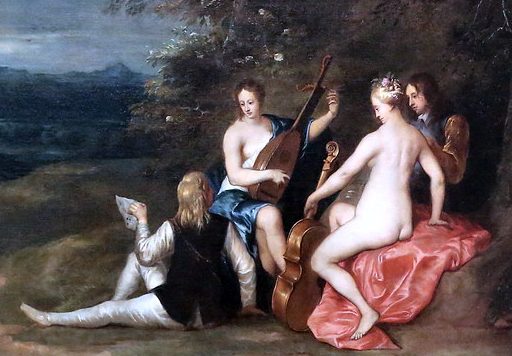
Photo: “IMG_0323C Frans Wouters. 1612-1659. Antwerp. The rural concert. 1654. Dole” by jean louis mazieres is licensed under CC BY-NC-SA 2.0.
Using form: simple, classical: Sara Teasdale, ‘May Day’

A delicate fabric of bird song
Floats in the air,
The smell of wet wild earth
Is everywhere.

Red small leaves of the maple
Are clenched like a hand,
Like girls at their first communion
The pear trees stand.

Oh I must pass nothing by
Without loving it much,
The raindrop try with my lips,
The grass with my touch;

For how can I be sure
I shall see again
The world on the first of May
Shining after the rain?

*****

Sometimes clean and simple is best for capturing the uncomplicated emotion of appreciating nature. Sara Teasdale in her element. As Louis Untermeyer commented on her verse: its “beauty is in the restraint” of its “ever-present though never elaborated theme.”

Photo: “Leonardslee Lakes and Gardens May 2022 18” by Timelapsed is licensed under CC BY-NC 2.0.