Monthly Archives: January 2025

Using form: Shakespearean sonnet: Susan McLean, ‘Foreshadowing’

You’re a holiday.
—”Holiday,” The Bee Gees

One month from when you met me, when you brought
the first of many gifts, a 45
of plaintive praise and longing, who’d have thought
that forty-five years later we’d survive
on weekends, holidays, and summer breaks,
a foretaste of the end in every start,
anticipation ballasted with aches
as we put love on hold and live apart?

You are a holiday. The working week
unspools like toilet paper from a roll.
My attitude goes airborne when we speak,
and when we meet, my heart swoops like a shoal
of fish. Would we have lost this giddy glow,
living together? Better not to know.

*****

Susan McLean writes: “It makes me feel ancient to realize that for younger readers I will have to explain that a 45 was a record with one song on each side, which played on a record player at 45 revolutions per minute. Love poems themselves tend to feel old-fashioned these days, though this one is about a relatively modern problem, the long-term, long-distance relationship in which both people are employed full time at jobs far apart from one another. The form, a Shakespearean sonnet, mirrors the content, in that the rhymes are separated from one another until the end, when they are reunited. The poem was originally published in the online journal of female formalist poets Mezzo Cammin, and it later appeared in my second book of poetry, The Whetstone Misses the Knife.

Photo: “File:45 record.png” by laurianne is marked with CC0 1.0.

Weekend read: George Simmers, ‘Hymn’

All things dull and ugly, all creatures gross and squat,
All things vile and tedious, the Lord God made the lot.

He made the sly hyena, the hookworm and the slug,
Your moaning Auntie Margaret and pervy Uncle Doug.

He made that dreary Welshman who so often reads the news,
And he made us, the ragtag lot who worship at St. Hugh’s.

We’re far from high achievers, we don’t have gorgeous bods;
At best you’d call us humdrum, a group of odds and sods.

We’re verging on the useless and we have got a hunch
No deity could think we were a preposessing bunch.

That’s why we’re rarely cheerful, but feel a bit less blue
When thinking how the mighty Lord can be ham-fisted too.

‘Cause frankly we’d be daunted by a more efficient chap.
We feel a lot more comfy with a God who’s slightly crap.

*****

George Simmers writes: “This is a poem that would never have existed had it not been for the Spectator magazine, which each week sets a challenge to its readers, demanding produce a short piece of writing (it might be 16 lines of verse or 150 words of prose) on a particular theme. The task is often a silly one. A couple of years ago the demand was for a hymn beginning ‘All things dull and ugly…’

“Competitive light verse is a tradition that stretches back a long way in Britain. In the early years of the twentieth century Naomi Royde-Smith of the Saturday Westminster Gazette set challenges that were responded to by up-and-coming writers like Rupert Brooke and Rose Macaulay, among others. In the thirties the Weekend Review was notable for its literary competitions, and when that magzine was incorporated into the New Statesman, the comp came with it.

“Those New Statesman competitions became a notable feature of English literary life, producing star writers such as Allan M. Laing, Stanley J. Sharpless, Roger Woddis, E.O. Parrott, Martin Fagg, Bill Greenwell and Basil Ransome-Davies.. look in any good anthology of light verse, and you’ll find glittering examples of some of their work. The Spectator and Punch were later in running competitions that attracted many of the same writers.

“I first entered a New Statesman competition in 1981, earning a pound for a one-line joke. Easy money! I entered a few more, mostly prose, and it was a while before I had a verse winner. Before that my verse writing had been a bit modernist and self-indulgent; no more. To succeed in the comps you need to master rhyme and metre. It’s a great training ground. Wendy Cope, one of the best writers of neat epigrammatic verse today began in New Statesman competitions (Much of her first, and arguably best, book, Making Cocoa for Kingsley Amis, is made up of her competition winners.) At about the same time, D.A. Prince began her competition career, which continues in the Spectator today (and I’m proud to have her as regular poet in Snakeskin.)

“From the thirties to the seventies, the New Statesman was a crucial publication in British culture, with a left-wing front-end but back half that was welcoming to all sorts of attitudes and points of view. A couple of dull editors diminished its appeal and importance in the eighties, but the comps continued to flourish, though in the twenty-first century they mostly seemed to welcome only rather predictable political humour. A few years ago the editor, Jason Cowley arbitrarily cancelled them. I’ve not looked at the magazine since then, but I’m told that it has gone from bad to worse.

“The Spectator, meanwhile, has flourished. My first Spectator winner (which imagined Wordsworth doing a snooker commentary) was in 1983. It was the top winner that week, and in addition to a small cash prize I was sent a very good bottle of wine. Those were the days. At that time the competition was run by James Michie, himself a good poet notable for his translations of Horace and Catullus. His was a generous welcoming personality, and many talents flowered under his watch.

“After him, Lucy Vickery ran the comp for many years, showing good judgement Though when she went away on maternity leave for a while, a substitute was brought in who gave prizes to some very inept stuff. It’s not an easy job. At present Victoria Lane is the adjudicator. I like her, because she has awarded me a good few prizes. Others may have grumbled.

“The Spectator competition is today just about the only forum for light verse in Britain. While the respectable poetry outlets have mostly given up on traditional rhyme and metre (Have you ever tried to read the stuff printed in the heavily subsidised Poetry Review?) the Spectator comp still demands well-formed and witty verse. Bill Greenwell and Basil Ransome-Davies are still star turns, and they have been joined by Adrian Fry, Janine Beacham, Sylvia Fairley, Chris O’Carroll and others.

” ‘All things dull and ugly…’ was a task that appealed to me, because I’ve always been struck by the way church congregations can make even sprightly tunes like ‘All Things Bright and Beautiful’ sound really drab and tedious. The ‘dreary Welshman’ is Huw Edwards, a BBC news-reader whom I had always found obnoxious, especially when toadying to the Royals. I’m rather proud of having had a dig at him in this poem, which pre-dates his fall from grace when he was dismissed after his appalling taste in pornography was discovered.”

George Simmers used to be a teacher; when he retired he then amused himself by researching a Ph.D. on the prose literature of the Great War. He now spends his time pottering about, walking his dog and writing a fair bit of verse. He is currently obsessed by the poetry of Catullus, and may be issuing a volume of translations within the next year or so. He has edited Snakeskin since 1995. It is probably the oldest-established poetry zine on the Internet. His work appears in several Potcake Chapbooks, and his recent diverse collection is ‘Old and Bookish‘. ‘

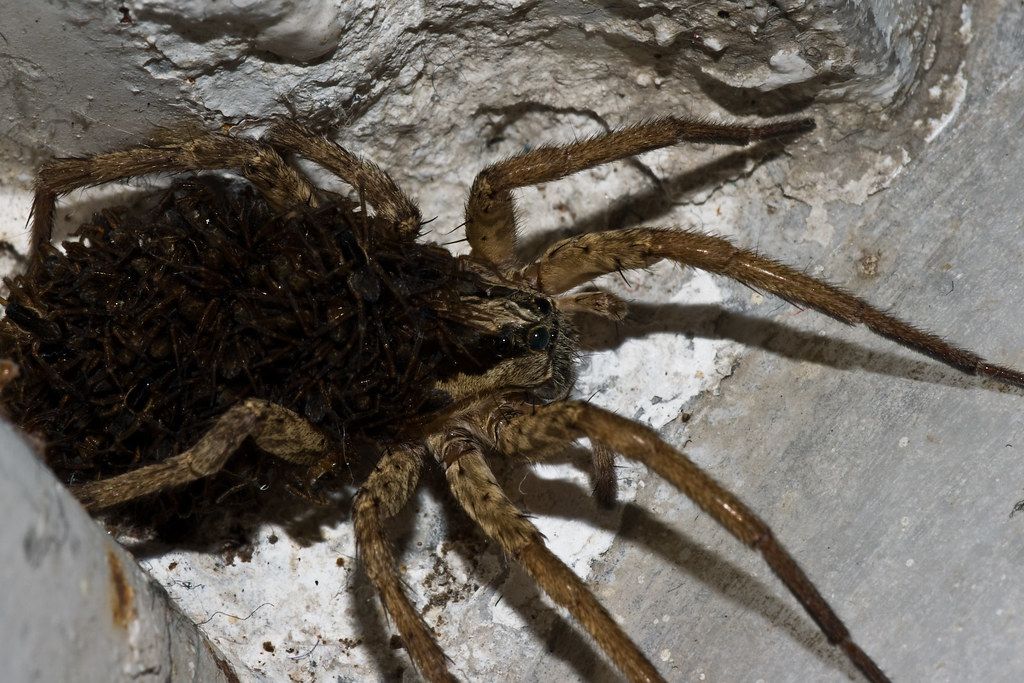
Photo: “Mother Spider” by agelakis is licensed under CC BY-NC-SA 2.0.
Sonnet variation: J.D. Smith, ‘Lullaby for the Bereaved’

Your hours of tears won’t let you follow
Those who’ve left you alone.
Tonight your head lies on a pillow,
Not beneath earth and stone.

The dead won’t be returning,
Not for all of your pleas,
Not for all your candles burning.
Get up off your knees.

The deceased, removed from their rest
Can take up all your hours
Until your mind, denied a fair rest,
Is deprived of its powers.

The road set before you is rocky and steep,
So seize the night’s respite and drift off to sleep.

*****

J.D. Smith writes: “Though I do not sing, play an instrument or read music, I had Brahms’ Lullaby in the back of my mind while attempting to deal with various losses, and the poem roughly follows its tune. In adjusting to a new reality (I hesitate to say “move on” or “get over,” phrases that smack of empathic failure), sometimes all one can do is rest.”

J.D. Smith has published six books of poetry, most recently the light verse collection Catalogs for Food Loversand he has received a Fellowship in Poetry from the United States National Endowment for the Arts. This poem is from The Killing Tree (Finishing Line Press, 2016). Smith’s first fiction collection, Transit, was published in December 2022. His other books include the essay collection Dowsing and Science, and his seventh collection, The Place That Is Coming to Us, will be published by Broadstone Books in 2025. Smith works in Washington, DC, where he lives with his wife Paula Van Lare and their rescue animals.
X: @Smitroverse

Photo: “Grief” by That One Chick Mary is licensed under CC BY-NC-ND 2.0.

Short poem: Richard Fleming, ‘Now’

The future’s inconceivable.
The past is irretrievable.
So all we have is now: that’s it,
yet half the time we miss that bit.

*****

Richard Fleming writes: “Four short lines, two rhyming couplets, succinct, hopefully not preachy, just something that we need to take to heart and not forget.”

Richard Fleming is an Irish-born poet (and humorist) currently living in Guernsey, a small island midway between Britain and France. His work has appeared in various magazines, most recently Snakeskin, Bewildering Stories, Lighten Up Online, the Taj Mahal Review and the Potcake Chapbook ‘Lost Love’, and has been broadcast on BBC radio. He has performed at several literary festivals and his latest collection of verse, Stone Witness, features the titular poem commissioned by the BBC for National Poetry Day. He writes in various genres and can be found at www.redhandwriter.blogspot.com or Facebook https://www.facebook.com/richard.fleming.92102564/

Photo from Richard Fleming

Nonce form: Aaron Poochigian, ‘Reunion Show’

Remember rage the way we used to love it
and what mad masks we wore when we began.
Think of the shrieking eagle on our van,
the decal, with its wings aflame
and our prophetic name,
The Downward Spiral,
the viral
expansion of it,
the perks and packed arenas
before the groupies got between us,
the label dropped us, and the fad wound down.

Boys, since this bar is in a nowhere town
let’s pound out, with our amps cranked up to ten,
sincerer tribute to the angry art
than we could handle at our start.
The blasphemy we hurled
against the world
back then
was out of season.
Now we have damned good reason
to smash things up like ruined men,
and all my lyrics will be from the heart.

*****

Aaron Poochigian writes: “I played in punk bands in high school and college and wrote that poem after I had gone all-in on poetry. I imagined what it would be like to get back together with my former band-mates at a later age. ‘Reunion Show’ is one of the first poems in which I let the nonce form discover itself with various line lengths and rhyme scheme. I tried to just let it all come together. Here is another later one like that: https://newcriterion.com/article/happy-birthday-herod/

‘Reunion Show’ was first published in The Dark Horse.

Aaron Poochigian earned a PhD in Classics from the University of Minnesota and an MFA in Poetry from Columbia University. His latest poetry collection, American Divine, the winner of the Richard Wilbur Award, came out in 2021. He has published numerous translations with Penguin Classics and W.W. Norton. His work has appeared in such publications as Best American Poetry, The Paris Review and Poetry.
aaronpoochigian.com
americandivine.net

Twitter: @Poochigian
Facebook: Aaron Poochigian
Instagram: aaronpoochigian

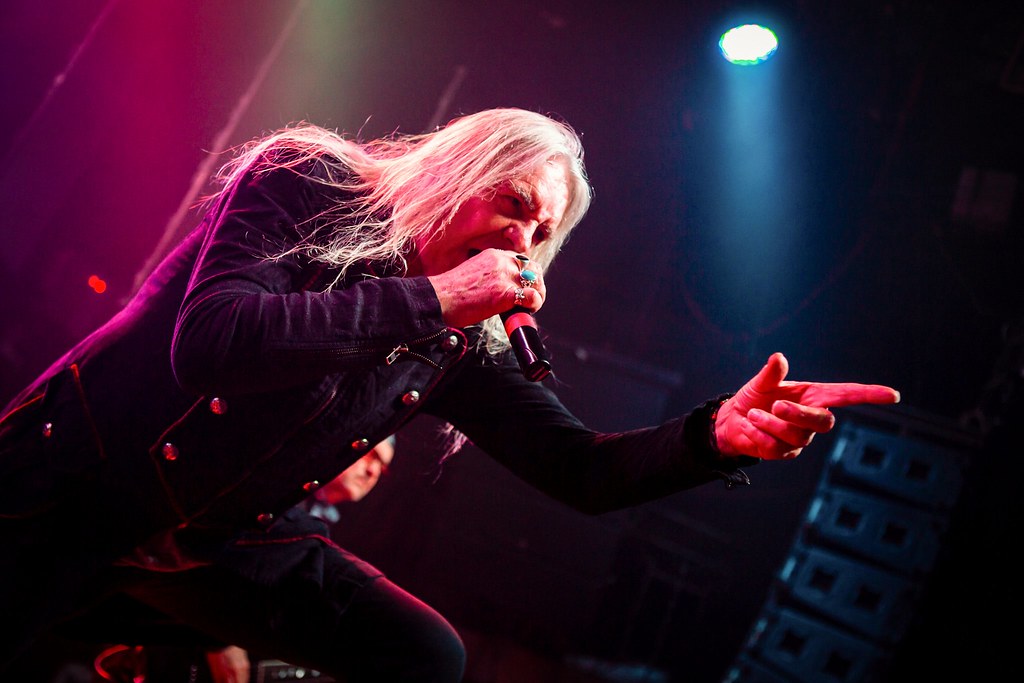
Photo: “Saxon Blondie 08.03.2019 Fotografías para iRock ______________ #multienfoque #picoftheday #photography #photo #photographer #photooftheday #nofilter #sinfiltro #instapic #instacool #wacken #woa #rock #show #alemania #festival #metal #rock #saxon #nibb” by ISENGARD is licensed under CC BY-NC-ND 2.0.

Sonnet: Jenna Le, ‘Guilty Pleasures’

Half of my favorite works of fanfiction
are stories that anesthetize the pain
produced by the original’s depiction
of harsh events: the person whom the main
character loved who met a tragic end
is resurrected in the fan-made sequel;
the star-crossed couple gets a chance to mend,
and consummate, a bond that has no equal.

The other half are stories that prolong
the pain and also boost its magnitude
deliciously until my nerves all tingle:
near-misses multiply, and roadblocks throng;
epiphanies loom close yet still elude;
misunderstandings keep our heroes single.

*****

Jenna Le writes: “I believe there’s been a fair amount of published scholarship in recent years about fanfiction and fanfiction culture. I admit I’m not up-to-date on any of it, really, and am only really conversant with such aspects of it as I have personally chanced to encounter. I can only say there seems to have been recent movement toward increased legitimization of the field: in 2019, one of the prestigious Hugo Awards for speculative fiction was awarded to a body of fan-work/transformational work, for instance. Just as for other flavors of fiction, there are probably infinitely many ways to classify and subclassify fanfiction. Novelist Naomi Novik‘s work and interviews are maybe a good place to start looking, for people curious to learn more.”

Jenna Le (jennalewriting.com) is the author of three full-length poetry collections, Six Rivers (NYQ Books, 2011), A History of the Cetacean American Diaspora (Indolent Books, 2017), and Manatee Lagoon (Acre Books, 2022), https://press.uchicago.edu/ucp/books/book/distributed/M/bo185843950.html The sonnet ‘Guilty Pleasures’ was first published in Snakeskin.

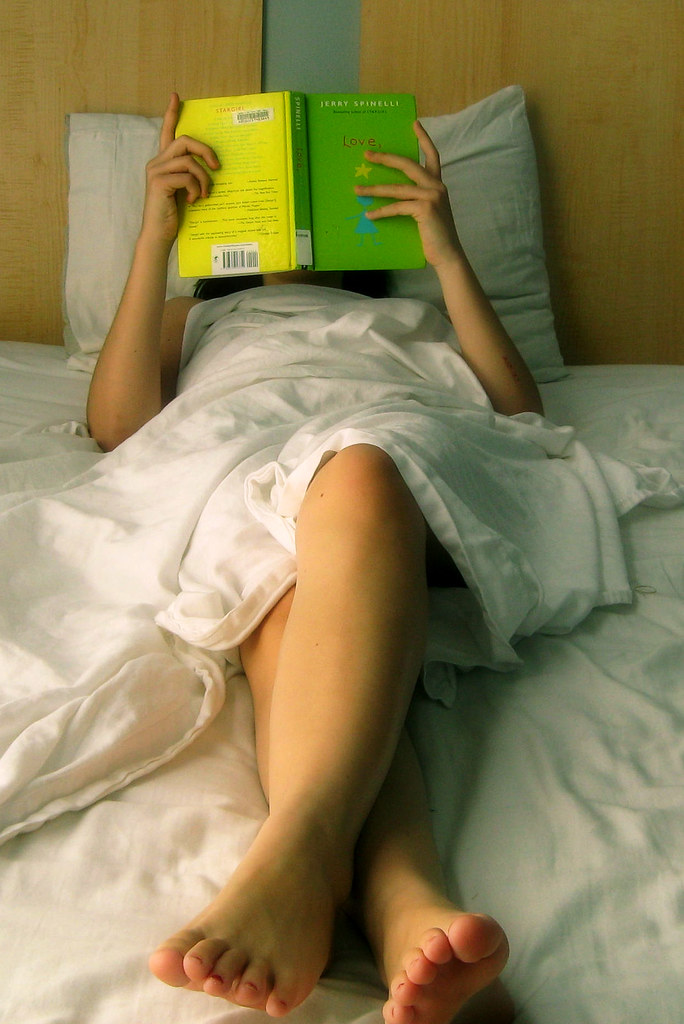
Photo: “guilty pleasure” by ohmann alianne is licensed under CC BY-NC-ND 2.0.

Barbara Loots, ‘Love Song’

You are the butterfly whose wings
stir up a rainfall in Peru.
The tropic fern unfurled that brings
an earthquake in Tibet is you.

The cry bursting from blackbirds’ throats
that turns the tide on Iceland’s shore
is you, and Sahara’s dusty motes
rosing the sunset in Lahore.

Who is the breath of an infant’s sigh
that sparks the heart of a unicorn?
The rock streaking the moonless sky
that wafts a feather around Cape Horn?

You, the invisible silver thread
between Zanzibar and Amsterdam.
Even by thought unlimited,
whatever the you may be, I am.

*****

Barbara Loots writes: “On my way to copy out the poem I meant to send you, I ran across this one. It has appeared only once in print, so I decided to give it another chance at immortality. Love is too small a word to contain the energy field of creation, evolution, and eternity. But this little verse (published in my second collection Windshift, from Kelsay Books, 2018) helps connect me with ‘whatever the you may be‘ right here and now.”

Barbara Loots resides with her husband, Bill Dickinson, and their boss Bob the Cat in the historic Hyde Park neighborhood of Kansas City, Missouri. Her poems have appeared in literary magazines, anthologies, and textbooks since the 1970s. She is a frequent contributor to lightpoetrymagazine.com. Her three collections are Road Trip (2014), Windshift (2018), and The Beekeeper and other love poems (2020), at Kelsay Books or Amazon. More bio and blog at barbaraloots.com

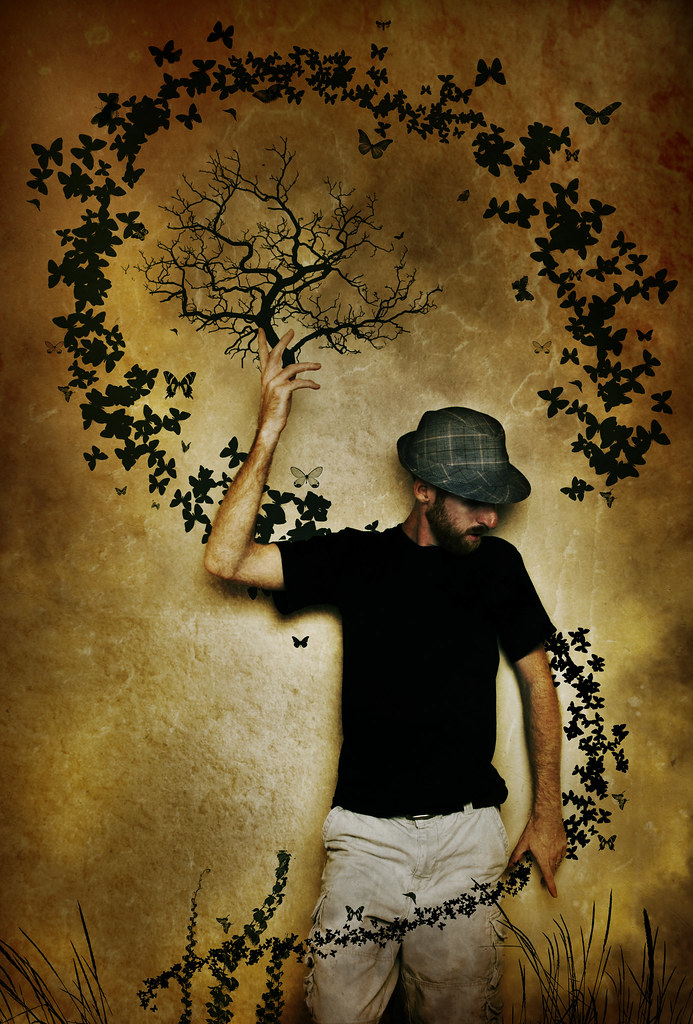
Photo: “September 1st 2008 – They’re Back” by Stephen Poff is licensed under CC BY-NC-ND 2.0.

Happy 2025… RHL, ‘The Sun is Always Setting’

The sun is always setting, always setting on your day;
you sense the dark approaching, wish that it would stay away.
Do you want a life unchanging? Wish to still be a newborn?
Don’t you know life’s not a rosebud, but has root and leaf and thorn?

The sun is always setting and the black drapes are unfurled;
but notice that the sun sets on your world, not on the world:
it’s rolling into brightness in another’s happy land,
and the dark is evanescent and the brightening is grand.

The sun is always setting on the dinosaurs, but birds
are flocking into being, as are Serengeti herds;
and the sun that lights humanity? Of course it’s going to set,
and elsewhere light new tales of which we’ll just be a vignette.

The sun is always setting, but that view is just your choice;
I say the world is turning and evolving; I rejoice.

*****

The winter solstice and the turning of the calendar drive a feeling of sunset that I can’t shake. I may be fit, still climbing trees and running on beaches, but at 74 there is both an awareness of gradual decline and a recognition that you can only hope for another 20 years with a fair amount of luck. “And of my three score years and ten, / None of them will come again…” as it were. That’s the personal bit.

Add to that the strongest country in (and quondam leader of) the world, breaking everything into pieces and throwing them all up in the air with no idea of how anything will land and what will be broken; taking all branches of the federal government (including unfortunately the Supreme Court) and those of half the states and just piling them up for a bonfire.

Add the possibility of runaway AI (such as concerns Harari) being jumpstarted by the Luciferic billionaire firestarter… and it feels like the End of the World.

But let’s be reasonable: it always feels like the end of the world, at least to those no longer in their youth. Because it is, for them. (For us. For me.) Jesus saying the end of the world would come within that generation… Last Days prophecies bubbling up in all religions… Preppers expecting nuclear war, ethnic uprising, climate catastrophe overnight… Doomsday is always imminent, and yet things keep going; just not as before… This is the End of the World as we know it, but will not be as we expected it. (And always the unfortunate eternal evils, regardless of era: Israelis committing genocide on Palestinians since the days of Deuteronomy, and so on.)

I swear there is a highly ambivalent poem in there somewhere, but I haven’t dug it out yet. But hey… Happy 2025!

Photo: Keith McInnes | City of Sydney