Monthly Archives: February 2026

Richard Meyer, ‘Sapiens’

By evolution born and bred
with something extra in the head
(and maybe also in the heart)
that sets us markedly apart

from all the teeming life on Earth,
we sapiens, for what it’s worth,
create and feel and comprehend,
but to what purpose, to what end?

Wisely foolish, cruelly kind,
with jumbled passions, muddled mind,
we’re oxymorons through and through.
In what we do or fail to do

a pestilential gifted ape
with a history we can’t escape.
Our future tenuous and stark,
we stumble onward in the dark.

*****

Richard Meyer writes: “I’ve always been amused that our species defines itself as Homo sapiens, meaning “wise man” or “wise human.” The history of humanity contains much that is wonderful, beautiful, and commendable, but it also records much that is horrible, dreadful, and appalling. The verdict as to which tendency will prevail remains uncertain. It’s difficult to be optimistic when the Doomsday Clock was recently set at 85 seconds to midnight. In addition, the political situation in the United States is grim. So, we stumble onward.”

‘Sapiens’ was originally published in the Alabama Literary Review (2023, Vol. 32)

Richard Meyer, a former English and humanities teacher, lives in Mankato, MN. His book of poems Orbital Paths was a silver medalist winner in the 2016 IBPA Benjamin Franklin Awards. He was awarded the 2012 Robert Frost Farm Prize for his poem “Fieldstone.” His poetry has appeared in a variety of print and online journals and has also received top honors several times in the Great River Shakespeare Festival sonnet contest. He is also the author of Wise Heart, a memoir of his mother Gert who was born in poverty, came of age during the Great Depression, enlisted in the army during World War II, served overseas, achieved the rank of first sergeant, and was awarded the Bronze Star for meritorious service performed during the Battle of the Bulge. Richard’s most recent book is Stumbling Onward, a collection of new and selected poems. His books are available on Amazon. 

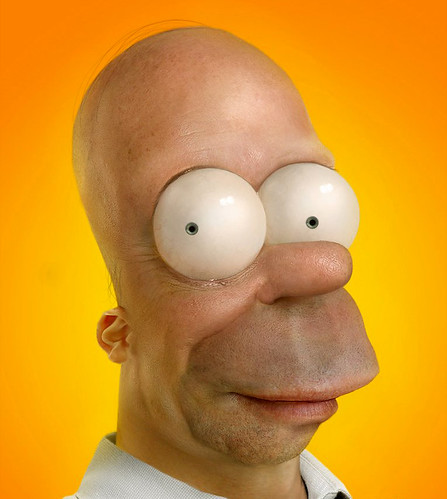
Photo: “Homer Sapiens” by Brett Jordan is licensed under CC BY 2.0.

R.I.P. – X.J. Kennedy, ‘Epitaphs’

I who in life stood upright as a tree
Have found a still more basic way to be.

Dirt was I made from, back to dirt I went.
Envy me now. I’m in my element.

The hardest part of dying is to turn
Your back on that deep calm for which you burn.

*****

X.J. Kennedy, one the greatest and most active formalists of the late 20th century, died last week at the age of 96. Short pieces like his ‘Epitaphs’ can be found in the Brief Poems blog; longer and somewhat less flippant pieces all over the place, including in Poetry. He published dozens of collections of verse for adults and children.

Midge Goldberg, ‘Words My Mother Didn’t Know’

Starting with the obvious:
iPad, cell phone, cannabis,

Mitochondrial DNA—
but science changes every day—

sushi, pad thai, jasmine rice,
almost any kind of spice,

zipline, snowboard, kayaking,
tongue or belly-button ring.

Then, things she’d heard of, so she knew,
but not imagined one could do:

Go to Iceland, make French bread,
care what anybody said,

watch a sunrise, touch a bug,
want to give your child a hug.

*****

Midge Goldberg writes: “Often I’ll find myself in situations or places that my parents never would have encountered or dreamed of. That got me thinking of even words that they would not have known. I started writing the funnier couplets, then all of a sudden the poem took a darker turn that I hadn’t expected. Writing in rhyme and meter does that for me sometimes, leads me to a more complicated poem than I had originally imagined.”

‘Words My Mother Didn’t Know’ was originally published in Light, and nominated by them for a Pushcart Prize.

Midge Goldberg has published three books of her own poetry, including To Be Opened After My Death, a children’s book, and was the editor of Outer Space: 100 Poems, published by Cambridge University Press. She lives in New Hampshire, where her newly expanded tomato garden is now under two feet of snow. She still has the same approximate number of chickens.

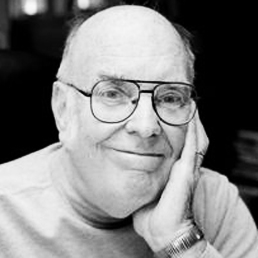
Photo: “Untitled” by Leon Fishman is licensed under CC BY 2.0.