Monthly Archives: November 2026

Hilaire Belloc, ‘On a General Election’

The accursed power which stands on Privilege
(And goes with Women, and Champagne, and Bridge)
Broke—and Democracy resumed her reign:
(Which goes with Bridge, and Women and Champagne).

**

It is nice to see American democracy, flawed as it is, starting to restore itself. Welcome back, America! We don’t entirely trust you and your archaic mindset, but you have a lot of strengths.

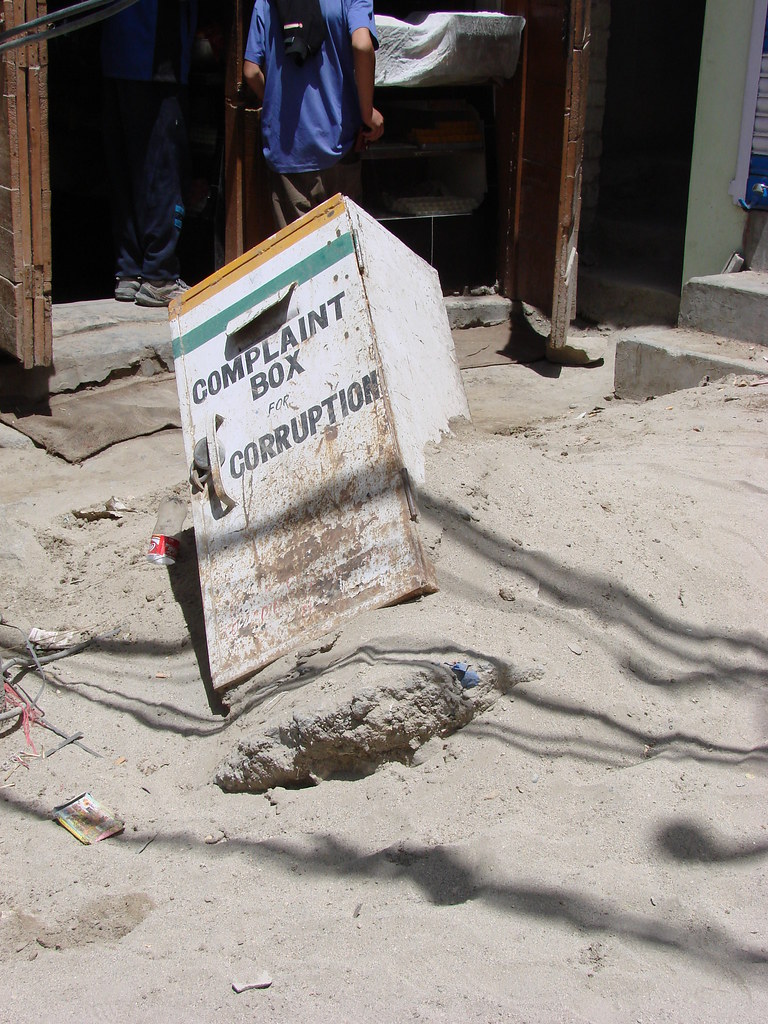
Hilaire Belloc (1870 – 1953) was a prolific Anglo-French author, best known today for his ‘Cautionary Tales for Children‘ (“Matilda: Who told Lies, and was Burned to Death”, etc). His 1923 ‘On a General Election’ has a universal and timeless quality to it – though the introduction of women as players instead of game pieces over the past 100 years has arguably raised the level of honesty and morality… somewhat. You may disagree with the politics of both Dick Cheney and his daughter Liz, but there is still a difference of political character between them.

Image: “Corruption box” by watchsmart is licensed under CC BY 2.0.

Odd Poem: Rudyard Kipling, ‘Rejection’, with commentary in verse by Julie Steiner

‘We will lay this thing here’
    Thus spake the voice of the sea,
    Murmuring wearily—
In the rock’s ear—

Then the green laver rose,
    Shook out her folds & cried,
    Before the rising tide
‘Let me repose—

Stir not my rest O sea,
    With dead things in these silent deeps,
    Surely wave tossed he sleeps
As heavily’—

The weedhung chambers then
    Made answer—’O thou sea,
    The beasts that feed in me
What need they men’—

Rock limpets cowering,
    Murmured gloom shaded—’There is meat
    Enough for all to eat
Bear hence this thing—

In thy strong arms O sea,
    Out, even to the quicksands’ brink,
    It shall be that he sink—
There, utterly.’

‘We will lay this thing here’
    Thus spake the voice of the sea,
    Ever persistently
In the rock’s ear.

*****

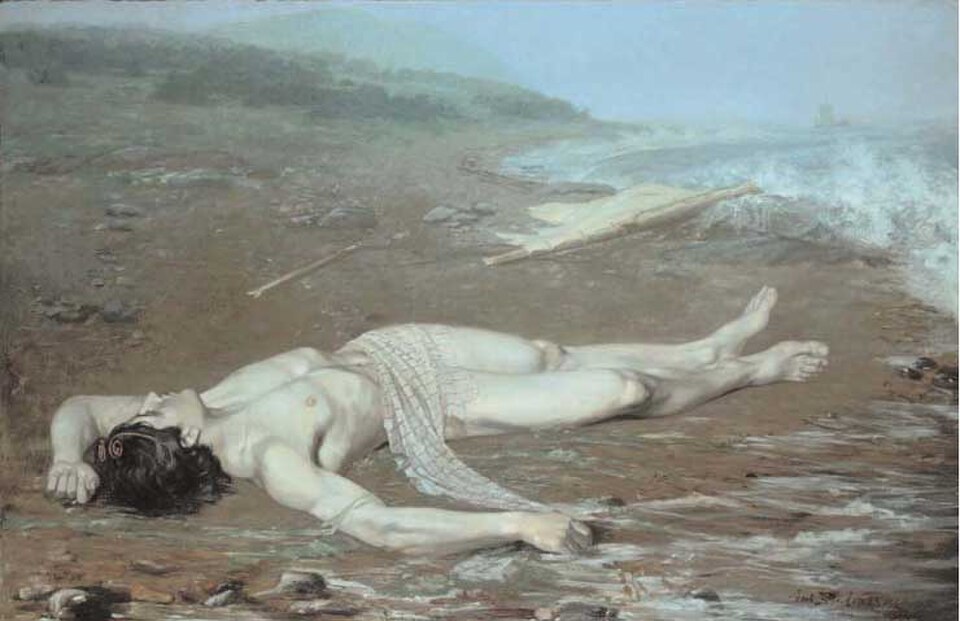
Julie Steiner writes: “Even Kipling seems to have had doubts about this metrically fluid, grisly poem about a wave-battered corpse, since he never included it in any of his collections. When I encountered it on the website of the Kipling Society, I immediately started writing a glosa about how strange the poem seemed to me. (A glosa is a Spanish form that meditates on another poem, by turning each line of a four-line excerpt into the refrain of a ten-line stanza.)

“To my surprise, my glosa turned into an ars poetica statement about why I’ve kept returning to certain grim topics (including child sexual abuse) in my own work, despite repeated rejection from those who turn a “rock’s ear” to them. As is their right, of course.”

*****

Glosa on Kipling’s ‘Rejection’

‘We will lay this thing here’

  Thus spake the voice of the sea,

  Murmuring wearily—

In the rock’s ear—

Off-kilter, this odd composition.
    Kipling’s, you say?
    It counters cognition
to think such a tub-thump musician
had noodled with meter that way.
Anapestic? Syllabic, at times?
    The scansion’s unclear.
    Both margins career.
Irregular pulses. Wrenched rhymes.
‘We will lay this thing here’:

So tidal vicissitudes shrug
    with listless resistance,
    refusing to lug
what a shove against gravity’s tug
can abandon. And yet there’s persistence
within this passivity, too.
    It wills itself free,
    determined to be
unburdened of what it can spew.
Thus spake the voice of the sea.

Its shape-shifting cadences show
    the moon-manic force
    as lines ebb and flow.
The sea’s letting everything go:
this thing that it wants to divorce;
    poetic convention;
attention to naysayers. (Three
    say no with esprit,
but the matter’s not up for contention.)
Murmuring wearily

becomes, by the end of the song,
Ever persistently. Yes,
    as obsessions prolong,
    revulsions grow strong.
Push on, then, Subconscious. Express
    what silent deeps hide.
We will lay this thing here.
Set it down on these pages, to clear
    the rot-ridden tide
In the rock’s ear.

*****

Julie Steiner is a pseudonym in San Diego, California. Most of her published poems—many of them in repeating forms—are available on Substack at Off-Piste on Mount Parnassus (offpisteonmountp.substack.com).

Painting: Axel Johan Gustaf Acke, ‘Leander’s Body Washed Ashore’. Public domain
Sonnet: Susan McLean, ‘Day of the Dead’

As if the day took on her warmth and calm,
above the blazing maple trees extends
a sky serenely blue. While kin and friends
assemble, breezes gentle as a balm
flutter the tablecloths and vibrant vases
of cannas and zinnias. Do we still remember,
given our lively chat and smiling faces,
we’re picnicking in volatile November?

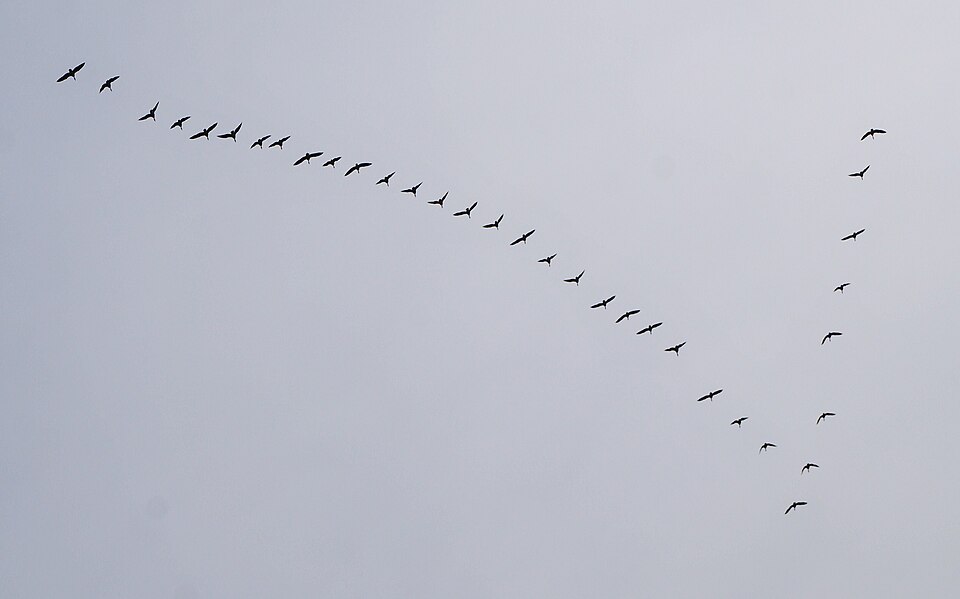
Above the tableful of photos flies
a vee of geese, still low, in close formation,
honking in concord as they carry on
their sociable long-distance conversation.
We pause to watch them as they slowly rise
and fade until, like Mother, they are gone.

*****

Susan McLean writes: “My mother did not want a funeral, so when she died, my siblings and I were trying to find a way to commemorate her in a celebration that her family and friends could attend. Though she died in late October, the weather in Maryland had been freakishly warm for that time of year, so we chose to hold a picnic at her favorite park. I had learned about the Hispanic tradition of celebrating the Day of the Dead from my colleague Lupe Solis, so I thought that holding the picnic on November 1, with photos, flowers, and my mother’s favorite foods, would be appealing. Fort Washington Park is right on the Potomac River, and just as we had finished setting the tables, a vee of geese flew over us, still very close to the ground. The moment felt surprising and symbolic as we all stopped to watch them depart.”

This sonnet was originally published on Ken Gordon’s Substack The Sonneteer.

Susan McLean has three books of poetry: The Best Disguise, The Whetstone Misses the Knife, and her latest, Daylight Losing Time (Able Muse, 2026). She had also published a book of translations of Martial, Selected Epigrams. Her poems have appeared in Light, Lighten Up Online, Crab Orchard Review, Able Muse, and elsewhere. She lives in Iowa City, Iowa.

Photo: Flying geese Jiaqian AirplaneFan Creative Commons Attribution 3.0