Author Archives: Robin Helweg-Larsen

Unknown's avatar

About Robin Helweg-Larsen

Director, Andromeda Simulations International, Bahamas: a global education company providing online and in-person workshops in business finance. Series Editor, Sampson Low's 'Potcake Chapbooks'. Formal verse about traveling, family, love, etc...

Michael R. Burch, ‘How It Goes, or Doesn’t’

My face is getting craggier.
My pants are getting saggier.
My ear-hair’s getting shaggier.
My wife is getting naggier.
I’m getting old!

My memory’s plumb awful.
My eyesight is unlawful.
I eschew a tofu waffle.
My wife’s an Eiffel eyeful.
I’m getting old!

My temperature is colder.
My molars need more solder.
Soon I’ll need a boulder-holder.
My wife seized up. Unfold her!
I’m getting old!

*****

Michael R. Burch adds the disclaimer “that the poem is pure comedy and my wife Beth is an absolute jewel. I’m lucky to have her. (Rodney Dangerfield put me up to it!)”

Michael R. Burch’s poems have been published by hundreds of literary journals, taught in high schools and colleges, translated into 23 languages, incorporated into three plays and four operas, and set to music, from swamp blues to classical, 75 times by 34 composers. He is also the founder and editor-in-chief of The HyperTexts.

OLD old Man” by bixentro is licensed under CC BY 2.0.

Marcus Bales, If Elizabeth Browning Had Written “I Will Survive”

How do I love you? Well, not any more —
I love you? Not even to bread slice height
That has been toasted, buttered, rye or white,
And dropped the wrong side down upon the floor.
I love you like a mildew or a spore
Or pestilential fungal blastocyte
That makes one’s breath itself a mortal fight
And living life seem like a choking chore.
I love you? The one who made the try
To break me with goodbye, yet kept that key
Because you thought that I’d lay down and die
If you returned, assuming I’d be free?
Oh no — I snarl and spit, deny your lie,
And save my love for one who’s loving me.

*****

I Will Survive‘ – Song by Gloria Gaynor ‧ 1978 on YouTube

At first I was afraid, I was petrified
Thinking I could live without you by my side
And after spending nights
Thinking how you did me wrong
I grew strong
And I learned how to get along

Now you’re back
From outer space
And I find you here
With that sad look upon your face
I should’ve changed that stupid lock
Or made you leave your key
If I’d’ve known for a second
You’d be back to bother me

Go on, go, walk out the door
Turn around now
You’re not welcome anymore
You’re the one who tried to hurt me with goodbye
Think I’d crumble?
You think I’d lay down and die?

No, not I, I will survive
Long as I know how to love, I know I’ll stay alive
I’ve got my life to live
And all my love to give and
I will survive
I, I, I will survive

It took all my strength not to fall apart
Trying with all my might to mend my broken heart
I spent so many nights feeling sorry for myself
How I cried
But now I hold my head up high

And you see me, somebody new
I’m not that lonely little person
Still in love with you
Now you come droppin’ in
Expectin’ me to be free
Now I’m saving my lovin’
For someone who’s loving me

Go on and go, walk out the door
Turn around now
You’re not welcome anymore
You’re the one who tried to hurt me with goodbye
Thinkin’ I’d crumble
Did you think I’d lay down and die?

No, not I, I will survive
Long as I know how to love, I know I’ll stay alive
I’ve got my life to live, and all my love to give
And I will survive
I, I will survive

Go on, go, walk out the door
Turn around now
You’re not welcome anymore
You’re the one who tried to hurt me with goodbye
Think I’d crumble?
You think I’d lay down and die?

No, not I, I will survive
Long as I know how to love
I know I’ll stay alive
I’ve got my life to live
And all my love to give and
I will survive
I, I, I will survive

Songwriters: Frederick J. Perren / Dino Fekaris

Marcus Bales writes: “It started after I’d posted If Shakespeare Had Written ‘Itsy Bitsy Spider’ to Sonnet Central, and Mike Alexander asked me if I was going to do the entire Mother Goose in Shakespearean sonnets. That sounded too much like real work to me, so I said I hadn’t thought of it, but I did have another “If Shakespeare Had Written” poem, “If Shakespeare Had Written ‘I Will Survive‘”. Looking that up in my files produced “If Yeats Had Written ‘I Will Survive‘”, as well, so I posted both those, and then Milton tapped me on the shoulder and cleared his throat. So I wrote that one. 

“My method is to find a stash or cache of poems by the next poet who seems particularly likely — or unlikely — to have written ‘I Will Survive‘ if they’d been asked, and read through it, looking for characteristic modes, moods, tones, concerns, and sometimes just an old favorite that seems ripe for it. A sort of instant immersion in a poet’s work, and then try to flow into their tonality. Like a singer interpreting a song I try to inhabit the poet’s mise en scene.  Some are more successful than others.”

Marcus Bales has now produced a dazzling array of his “If X Had Written ‘I Will Survive‘”, over 40 and still growing, with a dozen in the current Brazen Head, including this Elizabeth Browning as well as Dorothy Parker, Dylan Thomas, Wendy Cope, Robert Frost and of course Shakespeare. Go ahead, give them a try! – RHL

Not much is known about Marcus Bales, except he lives and works in Cleveland, Ohio, USA, and his work has not appeared in Poetry or The New Yorker. His latest book is 51 Poems; reviews and information at http://tinyurl.com/jo8ek3r

Illustration: Portrait of Elizabeth Barrett Browning in 1859. Public domain

RHL, ‘The Beat Goes On’

A pounding beat to drug, enhance, enfold –
iambics are the dance floor of the old.

*****

Published in The Asses of Parnassus, home of “short, witty, formal poems”. Thanks, Brooke Clark!

Illustration: ‘Iambics’ by RHL and ChatGPT

D.A. Hosek, ‘Chicago Sonnet 26’

 Ain’t no one gon’ choose to live in no tent
Inna park with the trash and the dirt and the cold,
But you fresh outta jail ain’t got one damn cent
And every single place you go you told,
 
“This ain’t no place for you we got children here,
Folks with jobs, responsibility and you—and you—
Some broke, broke-down ex-con. You wanna be near
These straight folk with your criminal life? Who

Would ever stand for such a thing?” So I got
Myself a tent, don’t ask how or where,
Claimed me a patch of grass with this whole lot.
Now I gotta leave cause the straight folk get scared.
 
Spent all day looking for a place, started at dawn,
The city came by and took my shit while I was gone.

*****

D.A. Hosek writes: “The Chicago Sonnets sequence is a planned sequence of fifty sonnets, one for each Aldermanic Ward of the city. This is a rare bit of reported poetry in that I went out and talked briefly to one of the people in a homeless encampment (not the one that’s in the poem though) wondering how he ended up living in a tent on the streets. Then, after discovering that I’d already written a sonnet for the ward that his encampment was in, I had to find a different encampment in a different ward and learned about the city destroying a camp in Humboldt Park and that provided the last pieces of the poem.”

D. A. Hosek’s poetry has appeared or is forthcoming in Hanging LooseBig Score Lit, Dodging the RainAfter HoursRat’s Ass Review (including this sonnet) and elsewhere. He earned his MFA from the University of Tampa. He lives and writes in Oak Park, IL and spends his days as an insignificant cog in the machinery of corporate America.  https://dahosek.com @dahosek.bsky.social 

Photo: “IMG_2971a” by Elvert Barnes is licensed under CC BY-SA 2.0.

Anushka Sen, ‘Good Neighborhood’

Another poisoned squirrel hits the street,
stopping short your jaunty midday tread.
The city lays its secrets at your feet.
 
It rots more still and slow than fallen leaves;
the resting pose as definite as lead.
Another poisoned squirrel hits the street.
 
Classic mixup: rat for squirrel, bait for feed.
POISON, posters scold, PROTECT YOUR PET.
The city lays its secrets at your feet.
 
Someone went too far, we all agreed,
and left the vermin running wild instead!
And yet, a poisoned squirrel hits the street,
 
so stiff, so angular, no longer sweet,
the stare indecent on the outsize head.
The city lays its secrets at your feet—
 
you learn how light your step is, how discreet,
how intricate the alleys of your dread.
Another poisoned squirrel hits the street.
The city lays its secrets at your feet.

*****

Anushka Sen writes: “This poem was inspired by a rat-induced furore in Rogers Park, my Chicago neighborhood. Someone (or some people) had finally flipped a switch and started putting out rat poison indiscriminately. The poem takes off from that point. It seems relevant to me all over again, since I’m now encountering a slew of dead birds. Residential life is built on a gnarly underbelly.”

‘Good Neighborhood’ was originally publlished in the current Rat’s Ass Review.

Anushka Sen is originally from Kolkata, India and now teaches English Literature at Loyola University, Chicago. She is drawn to musicality, animals, and a strong sense of place in art. She occasionally translates from Bengali to English and her poems (original and translated) have been published in Rust and Moth the Asymptote blog, and Eunoia Review, among other places.

Photo: “Alvin? Alvin? Alvin?” by lionelvaldellon is licensed under CC BY-NC 2.0.

Sonnet: Joe Crocker, ‘Stick and Twist’

The more that you dislike the way I am,
the less I worry what it is you like.
I let go the way that you don’t like
the rattled heart of me, the way I am.

 
Perhaps we’re going through a sticky patch.
The patch that stuck us down long years ago
is not as sticky now. But even so,
its tar has held us close enough to catch.
 
It covers up the cracks and hides the shabby
seams we couldn’t mend. We still pretend
to rub along regardless. In the end,
perhaps we are just averagely unhappy.
 
The way we blister love and twist its scar.
We sort of stick it out. And peel apart.

*****

Joe Crocker writes: “I wrote this poem a year or two ago as an expression of frustration and sadness about the slow decline of a long marriage. The title is  an allusion to the UK card game Pontoon (Blackjack in the States?) where you can either hold your cards (stick) or ask the dealer for another (twist). It’s written from the perspective of one person in two voices. The italic lines are pained and self-pitying and the middle stanzas are him trying to figure out what has happened.”

‘Stick and Twist’ was originally published in the current Rat’s Ass Review.

Joe Crocker has a 25 yds breast-stroke certificate, several Scouting badges and “O” level Epistemology. He has won prizes – bubble bath mostly, a bottle of Baileys once. His poems squat in obscure corners of the internet. He doesn’t have a pamphlet or a website but if you Google his name and add “poetry” you’ll find most of his published work (as well as links to a deceased Sheffield rock singer.) He gets by with little help from friends.

Photo: “Playing Pontoon with tiny cracker cards” by Rain Rabbit is licensed under CC BY-NC 2.0.

Sonnet: RHL, ‘Wine Cellar’

Down in the cobwebbed cellars of the mind
fabulous wines you don’t dare drink are stored,
each carrying a price you can’t afford;
so you pass by, deliberately blind.
Upstairs a loved one, dreamier than a vision,
displays each quality your soul desires –
or is a mere projection from the fires
the building’s furnace stokes with soft derision.
Your passions aren’t alive, alight, upstairs:
your love a mere projection of the schemes
the animated house evolves. Your dreams
live in your basement, though you’re unawares.
Though Bacchus urge you to uncork that wine,
the world would find it filthy, not divine.

*****

What I like about Rat’s Ass Review is that the editor will acknowledge and deal with the darker sides of being human… Not horror stories which are mostly pretty simplistic; but poems about the darkness built into all social animals. RAR is a rare journal: full spectrum, light and dark. This sonnet is in the current issue; thanks, Roderick Bates!

Photo: “Wine barrels in an old cellar” by Ivan Radic is licensed under CC BY 2.0.

Using form: Quatern: Susan McLean, ‘Cropped’

He doesn’t care for flowers or for fruit,
so don’t implore him not to clip or prune
the fig trees and camellias. His pursuit
of geometric form makes him immune

to luscious tastes and beauties others crave.
He doesn’t care for flowers or for fruit,
so once the buds appear, don’t try to save
them from his trimmer. All your pleas are moot.

He holds a tidy yard in high repute,
a verdant symbol of his mastery.
He doesn’t care for flowers or for fruit,
but takes some pleasure in your misery

as he destroys what you had hoped to see.
His need to have control is absolute,
and you can’t argue with machinery.
He doesn’t care for flowers or for fruit.

*****

Susan McLean writes: “This poem started with my desire to write a quatern, a form that I had encountered in Chad Abushanab’s workshop on rare poetic forms at the Poetry by the Sea conference in 2024. A quatern is four quatrains long, and the first line of stanza one becomes the second line of stanza two, and so on. As for the poem’s content, it grew out of a dispute about gardening practices with someone I know well. I was unable to convince him to change his ways. I should add that his ascribed motives are all conjectural on my part, not based on anything he said. But poets don’t really lose an argument; they just take the opportunity to restate it as a poem. This poem first appeared in the August 2025 issue of Snakeskin.”

Susan McLean has two books of poetry, The Best Disguise and The Whetstone Misses the Knife, and one book of translations of Martial, Selected Epigrams. Her poems have appeared in Light, Lighten Up Online, Measure, Able Muse, and elsewhere. She lives in Iowa City, Iowa.
https://www.pw.org/content/susan_mclean

Photo: Snakeskin

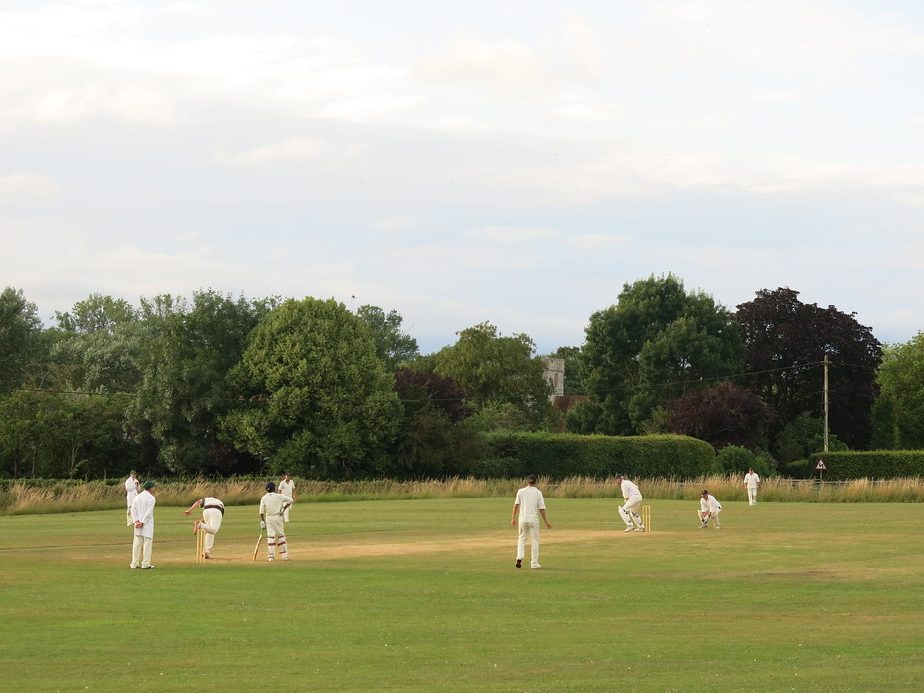
Odd poem: Sir Arthur Conan Doyle, ‘A Reminiscence of Cricket’

Once in my heyday of cricket,
One day I shall ever recall!
I captured that glorious wicket,
The greatest, the grandest of all.

Before me he stands like a vision,
Bearded and burly and brown,
A smile of good humoured derision
As he waits for the first to come down.

A statue from Thebes or from Knossos,
A Hercules shrouded in white,
Assyrian bull-like colossus,
He stands in his might.

With the beard of a Goth or a Vandal,
His bat hanging ready and free,
His great hairy hands on the handle,
And his menacing eyes upon me.

And I – I had tricks for the rabbits,
The feeble of mind or eye,
I could see all the duffer’s bad habits
And where his ruin might lie.

The capture of such might elate one,
But it seemed like one horrible jest
That I should serve tosh to the great one,
Who had broken the hearts of the best.

Well, here goes! Good Lord, what a rotter!
Such a sitter as never was dreamt;
It was clay in the hands of the potter,
But he tapped it with quiet contempt.

The second was better – a leetle;
It was low, but was nearly long-hop;
As the housemaid comes down on the beetle
So down came the bat with a chop.

He was sizing me up with some wonder,
My broken-kneed action and ways;
I could see the grim menace from under
The striped peak that shaded his gaze.

The third was a gift or it looked it-
A foot off the wicket or so;
His huge figure swooped as he hooked it,
His great body swung to the blow.

Still when my dreams are night-marish,
I picture that terrible smite,
It was meant for a neighboring parish,
Or any place out of sight.

But – yes, there’s a but to the story-
The blade swished a trifle too low;
Oh wonder, and vision of glory!
It was up like a shaft from a bow.

Up, up like a towering game bird,
Up, up to a speck in the blue,
And then coming down like the same bird,
Dead straight on the line that it flew.

Good Lord, it was mine! Such a soarer
Would call for a safe pair of hands;
None safer than Derbyshire Storer,
And there, face uplifted, he stands

Wicket keep Storer, the knowing,
Wary and steady of nerve,
Watching it falling and growing
Marking the pace and curve.

I stood with my two eyes fixed on it,
Paralysed, helpless, inert;
There was ‘plunk’ as the gloves shut upon it,
And he cuddled it up to his shirt.

Out – beyond question or wrangle!
Homeward he lurched to his lunch!
His bat was tucked up at an angle,
His great shoulders curved to a hunch.

Walking he rumbled and grumbled,
Scolding himself and not me;
One glove was off, and he fumbled,
Twisting the other hand free.

Did I give Storer the credit,spo
The thanks he so splendidly earned?
It was mere empty talk if I said it,
For Grace had already returned.

*****

A Reminiscence of Cricket is a poem written by Arthur Conan Doyle. On 23-25 August 1900, Conan Doyle played in a first class cricket match against W.G. Grace where he scored 4, and took the wicket of Grace who had scored 110.

The creator of Sherlock Holmes, Sir Arthur Ignatius Conan Doyle played in ten first-class matches, mainly for the MCC, between 1900 and 1907. As a lower-order right-handed batsman and occasional slow bowler, he scored 231 runs, average 19.25, in 18 innings with a top score of 43. His only first-class wicket came against London County at Crystal Palace on 25 August 1900 when he had WG caught by the wicket-keeper off a skier for 110.

I found this poem with an extensive commentary by someone called Shamanth: “I’ve loved it primarily because of the allure of an amateur lifestyle that it portrays – an age where you could study medicine, play first class cricket, referee boxing bouts and marathons, and still produce brilliant literature, when you could live without sacrificing any dimension of your life, without putting your head down to specialize in any one field, when you did something simply because you loved it without having to forfeit other aspects of your life that you loved just as much. It makes you long for a lifestyle with such freedom.”

Credit: “From photo by E. Hawkins & Co., Brighton” – K. S. Ranjitsinhji, The Jubilee Book of Cricket Third Edition