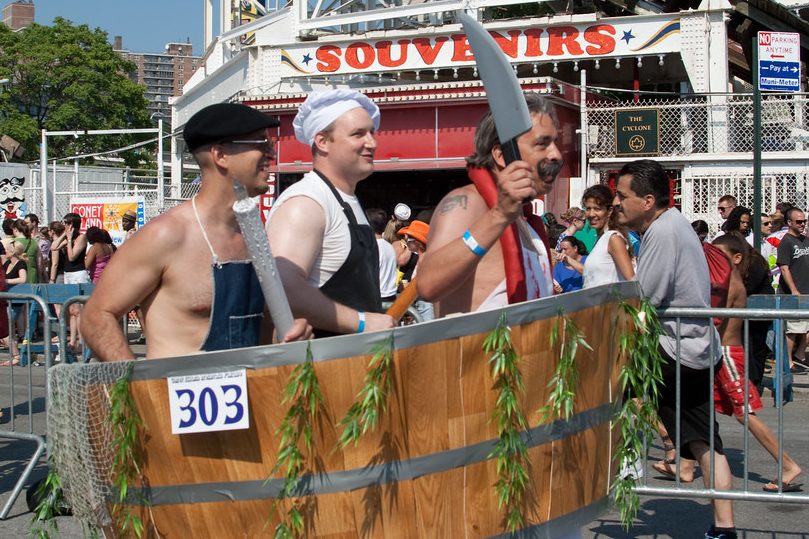
“One thing you must accept,” Said the butcher—”and I don’t intend this meanly: To live is to get divided up And to live well is to divide up cleanly.”
“One thought that made sense of things,” Said the baker—“perhaps even solved life’s riddle: To live is to harden in the heat And to live well is to stay soft in the middle.”
“One principle strikes me as ultimate,” Said the candlestick-maker—“if not downright holy: To live is to burn down And to live well is to burn down slowly.”
*****
Fergus Cullen writes: “These stanzas are about that state in which work comes to occupy one’s mind so utterly that one begins to see the rest of life through it. They do not make any statement on the subject: we just hear from some personalities living in this condition.I wanted contrast. On the one hand, the form is so light as to be barely there (speech rhythms in long lines, stanzas only pulled together by trite rhymes); and the characters originate in the world of nursery rhyme. On the other, these characters take on the biggest subject; and what they say may sound rueful, even bitter. It was certainly written that way; though, returning to it after some time, I see that it need not be read that way. This is one of two versions of the poem and was published in The Borough. I hope the other, rather different, shall appear soonish.”
Fergus Cullen is a postgraduate researcher in history at Queen Mary, University of London, and an occasional writer and translator of prose and verse.
The management has gauged how much you’ll take before you buckle or walk out. They care about your health—at least until you break, use up your sick leave, or require repair.
The management endorses your retiring early. They will help you out the door, so that they can economize by hiring fresh blood for half of what they paid before.
The management can’t monetize your gain in knowledge or experience. They doubt that anything you’d do if you remain could beat their savings if you’re shunted out.
They needn’t lay you off, just raise your stress through higher workloads and adverse conditions, until exhaustion, strain, and hopelessness force you to leave, fulfilling their ambitions.
*****
Susan McLean writes: “In my lifetime, I’ve worked in private businesses, government agencies, and academia; most of them abused or exploited workers at some level, which is not surprising when power relations are one-sided. However, I was most shocked by what happened when the business model was applied to education. Education suffers when students are treated as products to be turned out as cheaply as possible, and when teachers are treated as easily replaceable cogs in a machine. But the mistreatment of workers to increase profitability is widespread across many forms of employment, so I did not want to limit the poem’s relevance to the academic world.
“Over the thirty years that I taught at a state university, states reduced the amount they paid for public higher education, shifting the economic burden more and more to the students, and creating budget crises for the universities. In response, university administrators reduced their hiring of professors, often increasing class sizes dramatically, shifting teaching of many classes to ridiculously underpaid grad students or adjunct instructors with no job security, and shutting down departments in order to lay off tenured professors. Students were paying more and getting less; professors were overworked and fearful of losing their jobs at ages at which no one else would be likely to hire them; recent PhDs were unable to find teaching jobs with a livable wage or any prospect of long-term employment. Meanwhile, administrative jobs were burgeoning, adding more deans and assistant deans to bolster the status and shoulder the duties of those in charge.
“The stress and overwork that many professors experienced under the business model of higher education took a physical toll on many, with some disciplines suffering more than others. Those who had to spend endless hours at computers or grading papers tended to develop back pain and a host of other ailments common to sedentary jobs. When administrators offered incentives for them to accept early retirement, so that the university could save money by replacing them with lower-paid workers, many retired. I was one of them.
“This poem got its start when I noticed that “pain management” (usually associated with using analgesics or other methods to reduce pain) could also mean “management by means of pain.” It was published in New Verse Review.”
Susan McLean has two books of poetry, The Best Disguise and The Whetstone Misses the Knife, and one book of translations of Martial, Selected Epigrams. Her poems have appeared in Light, Lighten Up Online, Measure, Able Muse, and elsewhere. She lives in Iowa City, Iowa. https://www.pw.org/content/susan_mclean
You are the butterfly whose wings stir up a rainfall in Peru. The tropic fern unfurled that brings an earthquake in Tibet is you.
The cry bursting from blackbirds’ throats that turns the tide on Iceland’s shore is you, and Sahara’s dusty motes rosing the sunset in Lahore.
Who is the breath of an infant’s sigh that sparks the heart of a unicorn? The rock streaking the moonless sky that wafts a feather around Cape Horn?
You, the invisible silver thread between Zanzibar and Amsterdam. Even by thought unlimited, whatever the you may be, I am.
*****
Barbara Loots writes: “On my way to copy out the poem I meant to send you, I ran across this one. It has appeared only once in print, so I decided to give it another chance at immortality. Love is too small a word to contain the energy field of creation, evolution, and eternity. But this little verse (published in my second collection Windshift, from Kelsay Books, 2018) helps connect me with ‘whatever the you may be‘ right here and now.”
Barbara Loots resides with her husband, Bill Dickinson, and their boss Bob the Cat in the historic Hyde Park neighborhood of Kansas City, Missouri. Her poems have appeared in literary magazines, anthologies, and textbooks since the 1970s. She is a frequent contributor to lightpoetrymagazine.com. Her three collections are Road Trip (2014), Windshift (2018), and The Beekeeper and other love poems (2020), at Kelsay Books or Amazon. More bio and blog at barbaraloots.com
If this isn’t what you’ve yearned for or indeed what you are craving then cup your hands, drink deeply of a sweeter misbehaving.
If you cannot find your wine inside the glass that you were given, taste the new with eyes and thighs and dye your lips a deep vermillion
with a juice that has been pressed from vines let grow out of control that taste of summertime and sex and drugs and rock and roll
because if you…
find distaste in your final breath dressed in another’s ill fit clothes remember, this did not just happen sweetheart, this is what you chose.
*****
Lindsay McLeod is an Australian poet that has won a few things and is widely published. He just had to start messing about with words again lately. You’d think he’d know better by now, but oh no. Some of his most recent work can be found in DILLYDOUN REVIEW, GRAND LIL THINGS, DRAWN TO THE LIGHT, POETiCA and MORTAL MAGAZINE.
RHL: In addition to Mr McLeod’s self-description, let me add that I have been trying and failing to contact him. I don’t even have permission to post this poem. If anyone can put me in touch with him, I would be grateful.
Like other teenage girls in ‘65, I learned to knit, embroider, and crochet, so if I’m teleported back in time a century or two, I’ll do okay.
I learned the way to wrap a package neatly, to tie a range of plain and froufrou bows, to minimize my body flaws discreetly, using the cut and pattern of my clothes.
I also learned to iron, hem, and baste, to sew on zippers, trim, and appliqué, to choose a hairdo that would suit my face— and nothing that I ever use today.
*****
Susan McLean writes: “In the mid-Sixties, the times were changing, but the education of teenage girls was not. In junior high school home economics classes, which girls were required to take, the girls were trained in sewing and cooking skills as preparation for their future roles as wives and mothers. The ideas that men might need to know any of those skills or that women might have full-time careers were not considered. In addition to teaching girls domestic skills, the classes served to reinforce the gender roles and expectations of the time (which had not changed significantly from those of the previous few centuries).
“I slightly overstate my case when I say that I never use anything now that I learned in the two years of sewing classes I took. I still wrap a package and sew on a button occasionally, but I had learned both of those skills well before I took the classes. And even when I was taking the classes, I was already determined to have a career of my own. I petitioned successfully to be allowed to skip the cooking classes so that I could take art classes in their place (though, ironically or not, I am now an enthusiastic home cook). I didn’t mind learning various sewing skills, which had an artistic side, but I had no interest in spending a lot of time using them afterwards, and the view of my options that the classes conveyed was quite dispiriting. No one foresaw how radically the roles of many women would be changing soon afterwards. But I am very glad that they changed.
“The rhymed quatrains that the poem is written in are a standard poetic form, though the mix of slant rhymes with true rhymes suggests an underlying dissonance that ties in with the poem’s themes. The poem originally appeared in the online journal Umbrellaand was later published in my second poetry book, The Whetstone Misses the Knife.”
Susan McLean has two books of poetry, The Best Disguise and The Whetstone Misses the Knife, and one book of translations of Martial, Selected Epigrams. Her poems have appeared in Light, Lighten Up Online, Measure, Able Muse, and elsewhere. She lives in Iowa City, Iowa. https://www.pw.org/content/susan_mclean
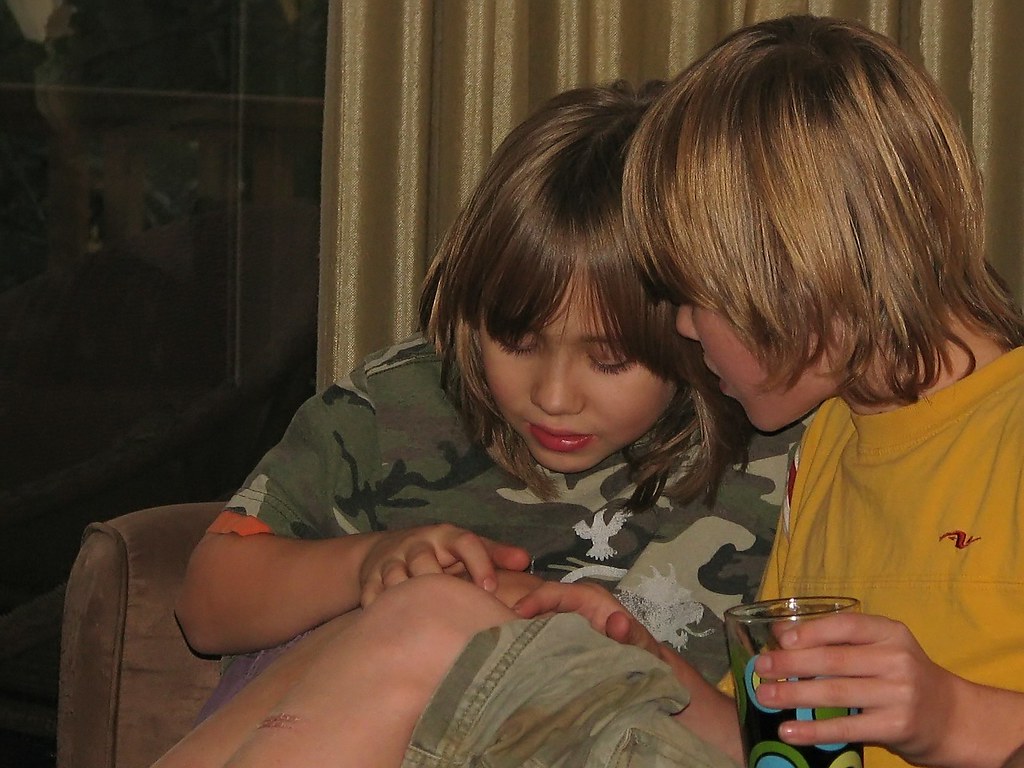
The boy he’s always been still takes delight In testing scabs on elbows, knees, To see if fingernails can assert their right To lift with satisfying ease The lid from off the mystery healing box And see the flesh beneath the skin Where the wise body-mind slowly unlocks Corpuscles and white pus within. The hint of pain, like some itch that you scratch, Is fun alongside look-and-see. What does the boy do with that useless patch, The scab? Easy: autophagy.
*****
Curiosity is a useful aspect of intelligence. This poem first published in Lighten Up Online (aka LUPO). Thanks, Jerome Betts!
The car mechanic’s counting out his bills behind the E-Z Mart at one a.m.; he’ll toss rocks at beer bottles just for thrills until his dealer comes, it’s fine with him.
He draws in a deep breath and sees the light swerve from the highway, puzzling the back wall he leans against just to keep out of sight. A quarter bag and some fentanyl, that’s all.
His phone vibrates again though nothing’s wrong. For two years he’s been living in a trailer with a girl who works at Publix. They get along even if sometimes she says he’s a failure—
what can he say to that? Sure. He lives cheap. They’ll fight until she forces a decision, then roll around on the couch. Once she’s asleep he’ll take a dose and watch some television.
At night he dreams of cylinders and sprockets, the trucks and cars too busted up to fix; startled awake, eyes aching in their sockets, he’ll watch the clock hands grope their way to six.
A car pulls up but he can see it’s not his hookup. Just kids with nothing else to do but drink a six-pack in the parking lot before they head out to the lake to screw.
He had his share of mischief, too, Lord knows. The girls don’t eye him in the check-out aisle much anymore, the ones with painted toes. A few years back, at least, they used to smile.
The boys can see the grease that stains his hands; they all think, damn, who wants to work that hard? He spends the day beneath their dads’ sedans while they play tackle football in the yard.
Chasing a football blew out both his knees and broke his wrist. That was three years ago. Customers say, “go Stags,” and toss their keys, then look at him real close as if they know.
A text says no one’s coming. The BP sign flickers over the pumps, and though it’s half- past two now, and he’s tired, he’s feeling fine enough to think it’s all a bust, and laugh.
And, anyway, it’s good to be alone with the gas fumes and blinking traffic light and fifteen missed calls lighting up his phone. Later, he thinks, once he and his girl fight,
and once she falls asleep on his left arm, he’ll stare at the divots on the ceiling tile and wait to hear the clock sound its alarm while the night’s odometer counts one more mile.
*****
Morri Creech comments: “As Mark Strand once said, I write to find out what I have to say. I don’t start a poem with an idea; I start with a line, an image, a rhetorical stance. Then I write in search of context: how can I situate this in a situation, a narrative moment, an argument, a meditation? The language takes me wherever I end up. This poem was constructed like that. I started with a first line and then wrote toward trying to figure out the context of the line. In this case, it led me to a character sketch. It was fine to discover what this character was about; the decisions I made about his character and circumstances were largely directed by rhymes. They steered me in what I hope was the right direction.”
Morri Creech is the author of five collections of poetry, including the Sleep of Reason, a finalist for the Pulitzer Prize, Blue Rooms, and The Sentence (published by LSU Press, and which includes this poem). A recipient of NEA and Ruth Lilly Fellowships, as well as North Carolina and Louisiana Artists Grants, he teaches at Queens University of Charlotte. www.morricreech.com
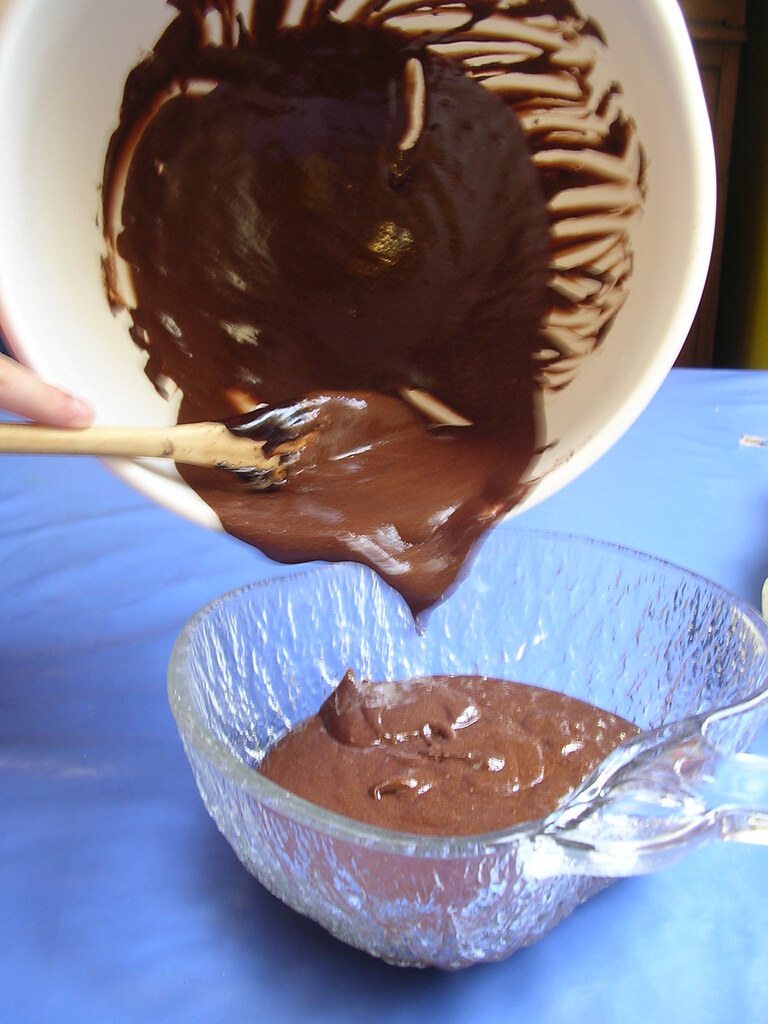
Rita is in her summer dress. She’s got the mixer out and she is hard at work perfecting home-made mousse au chocolat. I for my part am typing like a clerk
at my computer. Rita’s got cacao and mascarpone and banana, all to form her own concoction. And just now, she brings a spoon to sample it. You’d call
her labor sui generis – you won’t turn up this recipe. And yet, the tongue delights – the eyes close – as the do or don’t of custom pales. The mousse is made. I’ve sung
my wife in her blue dress with its red spots, I’ve sung the kitchen where she takes her ease – the house’s heart, with all its pans and pots. I’ve sung the afternoon. Bring more of these.
*****
John Claiborne Isbell writes: ” ‘Mousse au chocolat’ is a true story inspired by my wife Rita’s taste for improvisation when cooking. The results are invariably delicious. As for the form, it’s just four quatrains of iambic pentameter. My volume Allegrois light verse; I ought really to write more of it.”
‘Mousse au chocolat’ was published in Snakeskin 321, October 2024.
John Claiborne Isbell is a writer and now-retired professor currently living in Paris with his wife Margarita. Their son Aibek lives in California with his wife Stephanie. John’s first book of poetry was Allegro (2018), with a cello on the cover and available on Amazon; he also publishes literary criticism, for instance An Outline of Romanticism in the West (2022) and Destins de femmes: Thirty French Writers, 1750-1850 (2023) both available free online. John spent thirty-five years playing Ultimate Frisbee, representing France in the European Championships in 1991, and finds it difficult not to dive for catches any more.
They know well when I clock out. Sharp At five, on K.G. Street, They welcome me with every tooth And lead me to their seat.
Five friends—senescent, pyknic, bald, In Khakis—ironed, clean, With brand-new autorickshaws that Are painted taupe and green.
One masticates areca nuts. The shortest one takes khaini. The other two smoke beedis by A tall Mahogany.
They fall in with a mental pact That tells them not to seek To win me, for each one’s assigned A fixed day of the week
To drive me home. “Today’s my turn,” One says and bids me in. While driving he tells stories that Block off the traffic’s din:
The student loan he’s willing to Take for his only daughter; The municipal board has swelled The price of urban water.
Arrived, I ask about the fare. “Ah! Saab“, he shyly says. I take a fifty rupee note— A glow upon his face.
*****
Shamik Banerjee gives the following word meanings: “Khaki: A type of cloth. Khaini: A type of chewable tobacco Beedi: Indian cigarette Saab: Sir K.G. stands for Kasturba Gandhi, the wife of Mahatma Gandhi. Most streets/ lanes/ roads in India are named after famous personalities, especially those who fought for our freedom.” ‘The Auto Drivers of K.G. Street’ was first published by Willow Review.
Shamik Banerjee is a poet from Assam, India, where he resides with his parents. His poems have been published by Sparks of Calliope, The Hypertexts, Snakeskin, Ink Sweat & Tears, Autumn Sky Daily, Ekstasis, among others. He secured second position in the Southern Shakespeare Company Sonnet Contest, 2024.