Category Archives: short poems

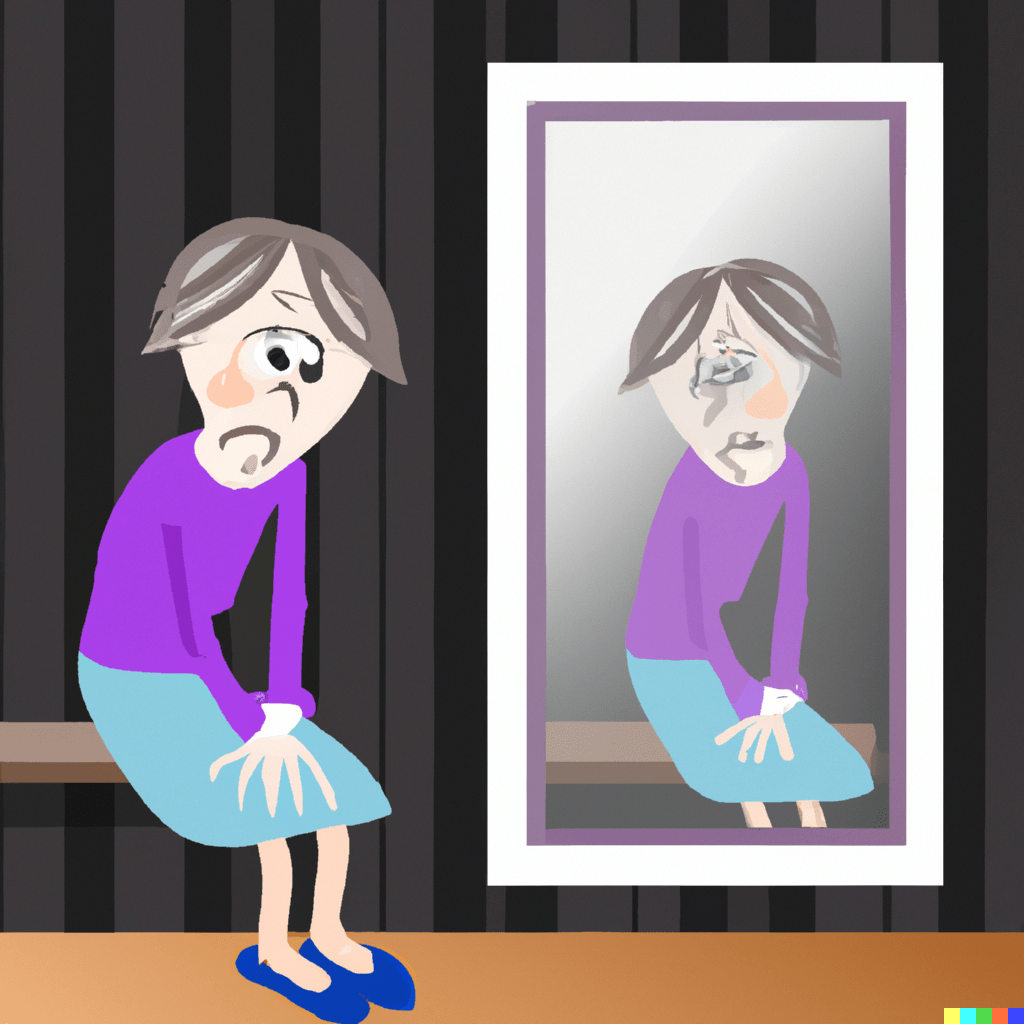
Susan McLean, ‘The Mirror’s Desolation’

Once you adored me. I would bask
in looks you saved for me alone,
giving no hint—if any ask—
of secrets only I have known.
But now you find me hard to face.
I care for you too much to lie,
copying lines you would erase.
You hurry past, head down, and I,
sensing your pained indignity,
return your look of mute distress.
Though you no longer cherish me,
I do not love you any less.

*****

Susan McLean writes: “I took the idea of a talking mirror from Sylvia Plath’s poem ‘Mirror,’ but whereas she presents the mirror as being totally dispassionate, my mirror reflects the emotions as well as the faces of those who look into it. Sometimes, if you see someone beautiful, you may think “the mirror loves her (or him).” But it occurred to me that mirrors love everyone. They just as gladly reflect the old and ugly as the young and beautiful. In this poem, I imagine the mirror’s sorrow that its love is not returned. In French, “I’m sorry” is “je suis désolé” (“I’m desolated”), which always seemed charmingly over-the-top to me. It occurred to me that the phrase “the mirror’s desolation” could refer both to the sorrow the mirror feels and to the devastation it causes. This poem first appeared in Valparaiso Poetry Review, and then in my second poetry book, The Whetstone Misses the Knife.

Susan McLean has two books of poetry, The Best Disguise and The Whetstone Misses the Knife, and one book of translations of Martial, Selected Epigrams. Her poems have appeared in Light, Lighten Up Online, Measure, Able Muse, and elsewhere. She lives in Iowa City, Iowa.
https://www.pw.org/content/susan_mclean

Illustration: DALL-E
Short poem: ‘Raven’

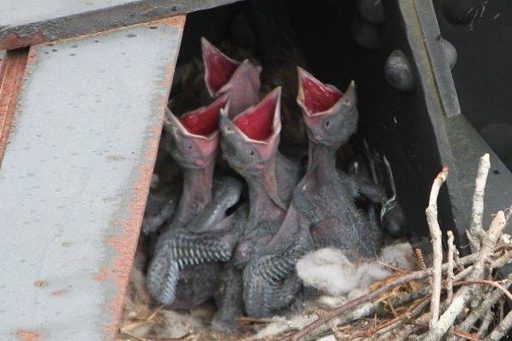
Every raven started as a naked nestling,
every fox was a blind nursing pup,
helpless… then looking, reaching, wrestling
into the wilderness of growing up.

*****

Written for my grandson Raven (born in October last year, and dressed by his parents in a fox outfit for Halloween). The poem was published recently in The Asses of Parnassus – thanks, Brooke Clark!

Photo: “HBT Raven Chicks” by vastateparksstaff is licensed under CC BY 2.0.

Edmund Conti, ‘The Straight Skinny’

To say that only I am fat,
To say that I am only fat,
To say only that I am fat,
To only say that I am fat,
Is not to say, however, that
They equally are definitive.

One statement says fat’s mine alone,
One says no other trait I own,
One just has a plaintive tone,
And–overlooked and overblown–
One just splits the infinitive.

*****

Edmund Conti writes: “I guess this began with the observation that ‘only I am fat’ and ‘I am only fat’ have different meanings depending on the placement of one word. Which made me wonder if placing ‘only’ in other parts of the sentence would change it again. Which it did. Why did I use ‘fat’ as a trait? Well, it’s an easy rhyme and people can relate to it—in themselves or others. Also, it gave me a good excuse for the title.
I thought writing the second stanza would be trickier, but the rhymes just fell into place. And noticing the split infinitive and using it saved the poem. Assuming it was worth saving.”

Edmund Conti has recent poems published in Light, Lighten-Up Online, The Lyric, The Asses of Parnassus, newversenews, Verse-Virtual and Open Arts Forum. His book of poems, Just So You Know, released by Kelsay Books
https://www.amazon.com/Just-You-Know-Edmund-Conti/dp/1947465899/
was followed by That Shakespeherian Rag, also from Kelsay
https://kelsaybooks.com/products/that-shakespeherian-rag

His poems have appeared in several Potcake Chapbooks:

Tourists and Cannibals
Rogues and Roses
Families and Other Fiascoes
Wordplayful
all available from Sampson Low Publishers

Photo: “Why Am I So Fat?” by morroelsie is licensed under CC BY-NC 2.0.

Richard Fleming, ‘Memento Mori’


An ambulance howls like a hurt cat;
parts traffic as Moses did the waves.
Worms burrow in awaiting graves.
A police car buzzes like a gnat.

Stuck in a jam of steaming cars,
I contemplate how life transforms
in moments. How they wait, those worms,
so patiently, for us, for ours.

*****

Richard Fleming writes: “Ambulance sirens have been part of the soundtrack of my adult life, from the troubled years in Belfast to, more recently, my relatively tranquil life on the island of Guernsey.
There’s something about the sound, like that of a modern-day banshee, that chills the blood like no other. In common with all those who love unreservedly, I live with a constant fear of loss and a keen awareness of the terrible fragility of those things that we hold dear. This short poem attempts to articulate that fear.”

Richard Fleming is an Irish-born poet currently living in Guernsey, a small island midway between Britain and France. His work has appeared in various magazines, most recently Snakeskin, Bewildering Stories, Lighten Up Online, the Taj Mahal Review and the Potcake Chapbook ‘Lost Love’, and has been broadcast on BBC radio. He has performed at several literary festivals and his latest collection of verse, Stone Witness, features the titular poem commissioned by the BBC for National Poetry Day. He writes in various genres and can be found at www.redhandwriter.blogspot.com or Facebook https://www.facebook.com/richard.fleming.92102564/

Photo: “Ambulance” by gwire is licensed under CC BY 2.0.

Short poem: ‘Avalanche’

I wandered nowhere special in my past,
just drifted, looking, lonelyish, half-arsed.
Nor in my present is there brilliant light–
I drift, doze, dream, enjoy the day and night.
What then will help me through a magic door?
Sensing the future’s avalanche downroar.

*****

This was published a couple of months ago in Snakeskin. Thanks, George Simmers!

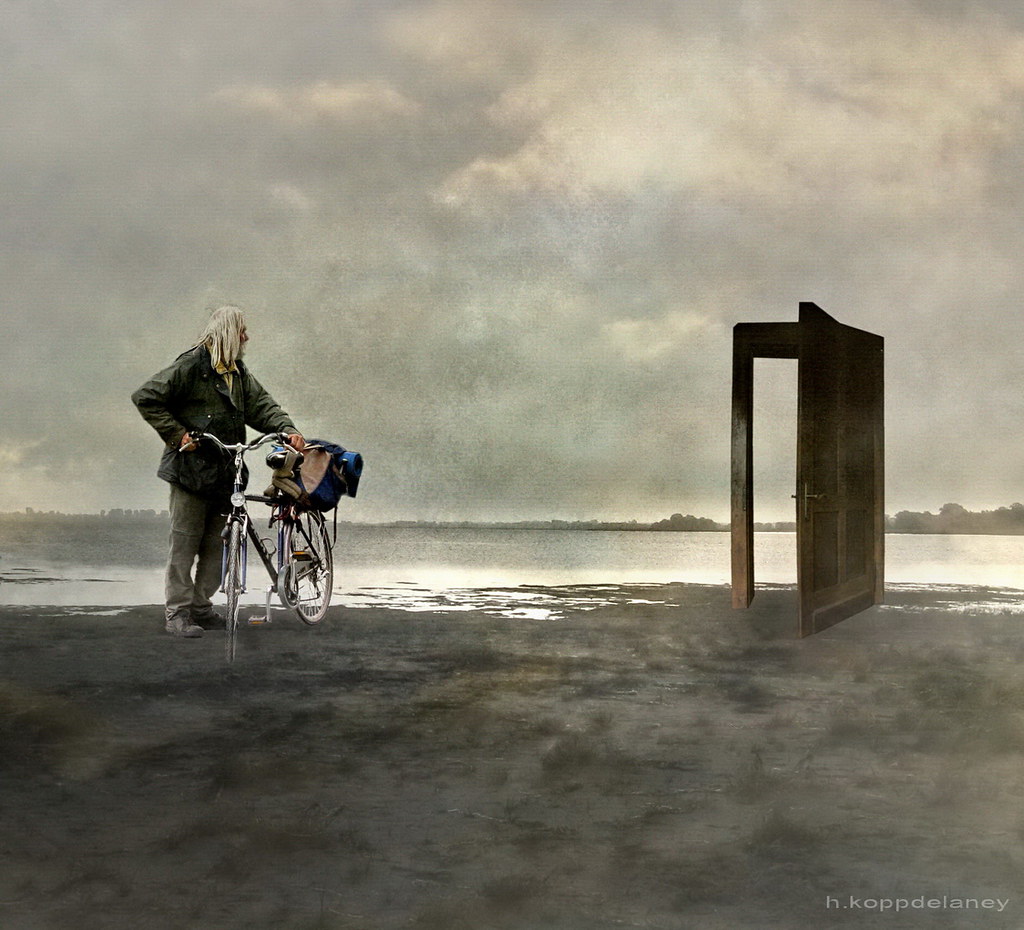
“The Magic Door” by h.koppdelaney is licensed under CC BY-ND 2.0.

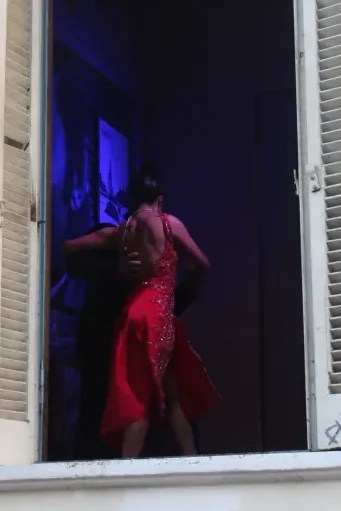
Lisa Marshall, ‘Tango’

The night was cloaked
In disarray
My heart was soaked
In chardonnay
The joint I smoked
In shades of grey
The music broke
A new song played
And then you spoke
Looking my way
A need awoke
Swept me away
Feelings evoked
I dare not say

*****

Lisa Marshall writes: “The poem is one long stanza with alternating lines rhyming.  It is about a woman who is feeling forlorn on a night that isn’t going her way.  She uses substances like cannabis and alcohol to forget her feelings and herself.  But suddenly the music changes and she is asked to dance (tango) by a love interest. Suddenly her mood changes and she starts to feel something which she expresses through dance instead of words.”

Lisa Marshall is a poet and author who resides in beautiful Dartmouth, Nova Scotia – also known as the City of Lakes.  She is the author of Black Olive: A Novel and Poetry for the Feminist’s Soul, both of which are available on Amazon Kindle. 
Read more at Not Another Nice Girl Blog.

J.D. Smith: ‘A Cremation’

Fire steals from slow decay the frame
Of one who wished for us to claim
This small relief:

The words are said, the ashes flown.
What’s left? A weight, a shard of bone
Still sharp as grief.

*****

J.D. Smith writes: “This poem came about in response to the death of a very beloved and quirky dog. Though she was already 10, she was a small dog and could have been expected to live longer. Her ashes, and those of her littermate, were interred with those of my parents.”

J.D. Smith has published six books of poetry, most recently the light verse collection Catalogs for Food Lovers, and he has received a Fellowship in Poetry from the United States National Endowment for the Arts. This poem is from The Killing Tree (Finishing Line Press, 2016). Smith’s first fiction collection, Transit, was published in December 2022. His other books include the essay collection Dowsing and Science. Smith works in Washington, DC, where he lives with his wife Paula Van Lare and their rescue animals. Twitter: @Smitroverse

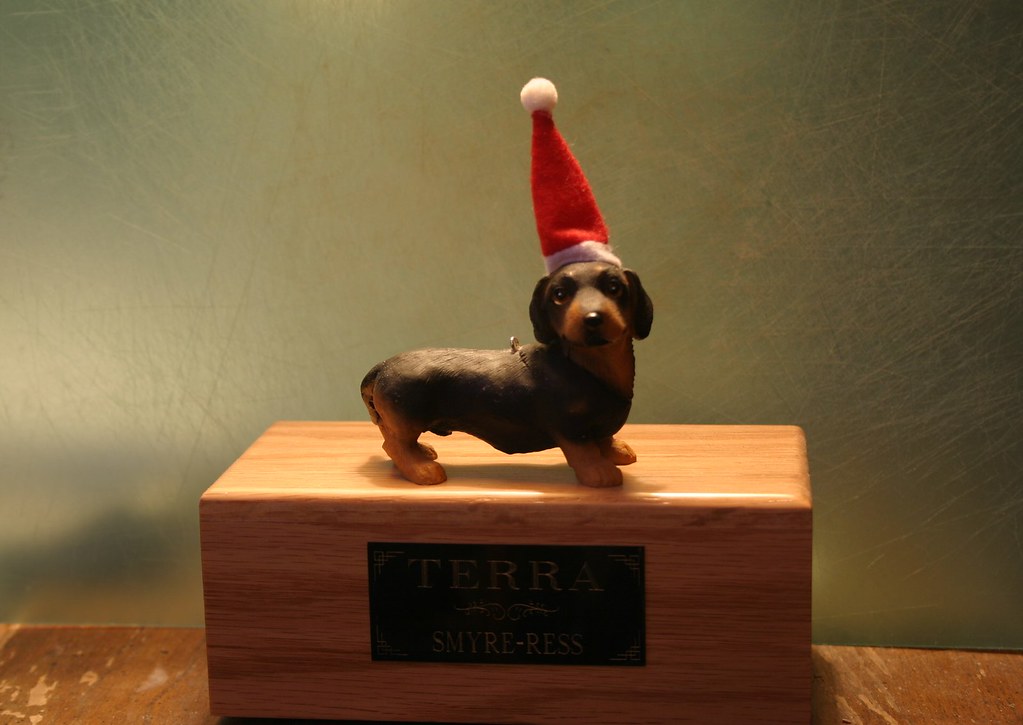
Photo: “gone but remembered: dog ashes” by safoocat is licensed under CC BY-NC-ND 2.0.

Susan McLean, ‘The Whetstone Misses the Knife’

I answered your desire to meet
resistance and be honed by friction.
Sharp as you were, you couldn’t beat
the zero-sum of contradiction.

Abrasion was your privilege,
the only stroking I have known.
Now you have lost your cutting edge
and I am just another stone.

*****

Susan McLean writes: “This poem was inspired indirectly by the suicide of a talented poet whom I had seen at conferences, but had never had a conversation with. I heard that she had killed herself on Christmas Eve because of an unhappy love affair. Since I knew nothing about her personal life, this poem is not about her, but her fate made me think about unhappy relationships, particularly those in which both partners have strong but conflicting personalities. I had in mind such stormy creative relationships as those of Sylvia Plath and Ted Hughes, Diego Rivera and Frida Kahlo, Camille Claudel and Auguste Rodin, in which the clashes are initially part of the attraction, yet turn destructive eventually. However, the imaginary relationship depicted in this poem is not based on the specifics of any of those relationships.
Balance and antithesis are the key characteristics of the theme of this poem, so I thought two quatrains with a rhyme scheme of ABAB would give equal weight to the “I” and the “you” of the poem.
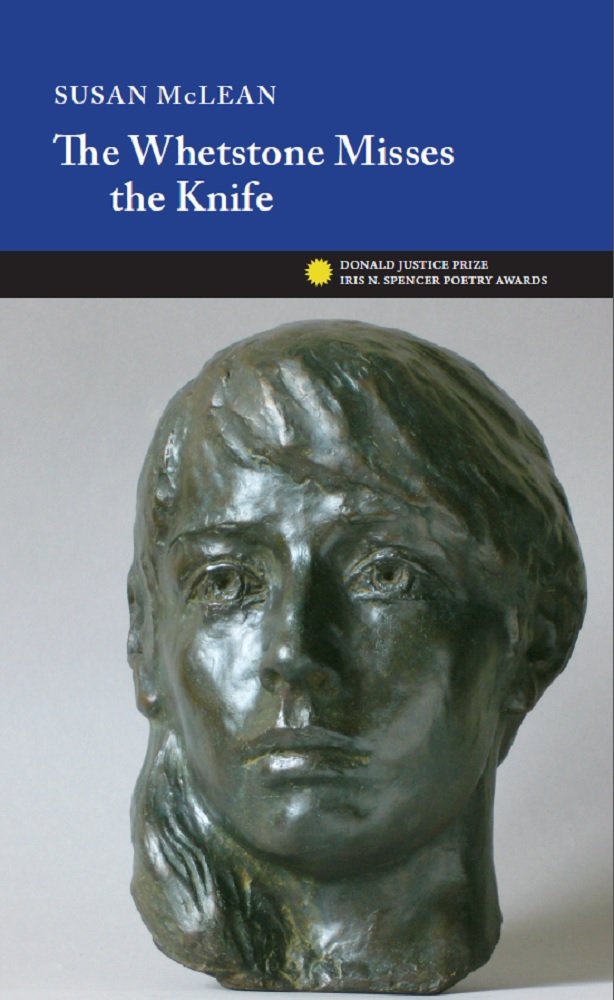
This poem first appeared in Mezzo Cammin, an online journal of female formalist poets, and later was published in my second book, The Whetstone Misses the Knife, which featured a bronze bust of Camille Claudel by Jacques Chauvenet on the cover.”

Susan McLean has two books of poetry, The Best Disguise and The Whetstone Misses the Knife, and one book of translations of Martial, Selected Epigrams. Her poems have appeared in Light, Lighten Up Online, Measure, Able Muse, and elsewhere. She lives in Iowa City, Iowa.
https://www.pw.org/content/susan_mclean

Short poem: ‘Possessions’

What do you want possessions for?
You’ll die, then you’ll have nothing more.
You lost your house in a fire? The fact is
That was just for practice.

*****

We live (as always) in a time of existential threat to us as individuals and as a species. This short poem was recently published in The Asses of Parnassus – thanks, Brooke Clark! “Light verse”? I like to think so…

Photo, popularly known as ‘Disaster Girl‘. The young Zoë Roth had been taken by her parents to watch the controlled burning of a structure for training purposes when her father took this prize-winning picture of her. To her ongoing delight, the photo became a viral internet meme, and its NFT sold two years ago for close to $500,000.

Short poem: ‘Punster’

The artist said the wit
was “full of it”,
disparaged him.
The punster tore the painter limn from limn.

*****

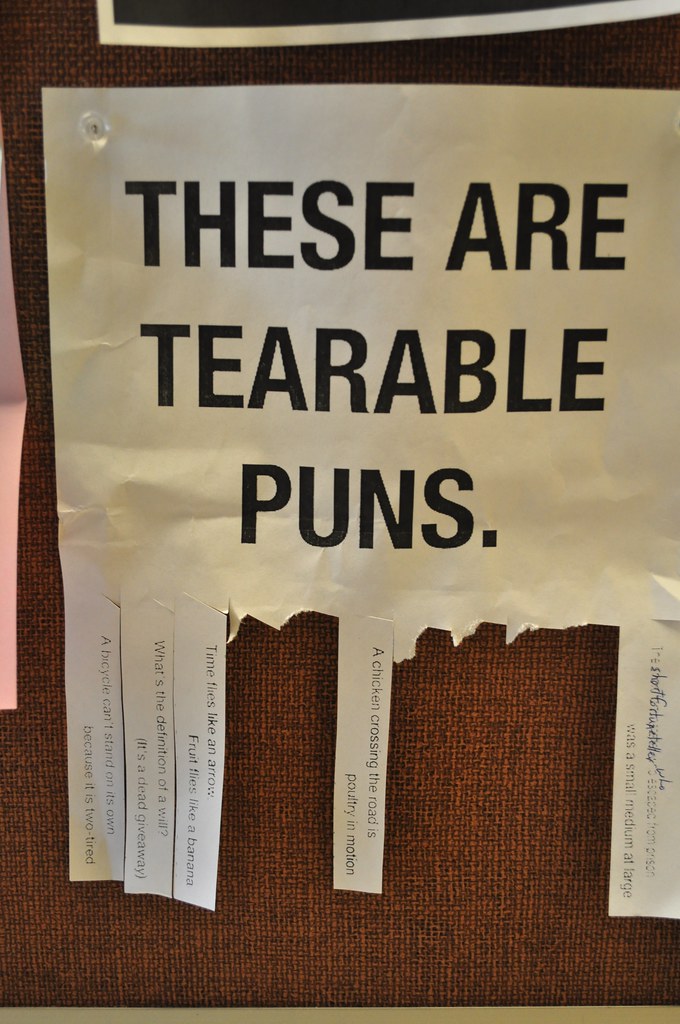
Apparently some people believe that puns are “the lowest form of humour”, but I would suggest that those people are not good at wordplay, and therefore have no poetic sensibility. Look to Homer, Shakespeare and Samuel Johnson for puns; enjoy more discussion and examples here.

This short poem was published in The Asses of Parnassus, home of “short, witty, formal poems”. Thanks, Brooke Clark!

Photo: “punster” by danbruell is licensed under CC BY-NC-SA 2.0.