Eenie meenie miny mo Apple orange mango grape Snap on the news and what da ya know Looting murder pillage rape
Do what you will you can’t escape Looting murder pillage rape
Parents who lock their kids away Binding their eyes and ears with tape Struggle vainly to keep at bay Looting murder pillage rape
Yeah lock ’em up they won’t escape Looting murder pillage rape
We sit like ghouls in front of screens Watching helpless with mouths agape As men go mad with war machines Looting murder pillage rape
Rectangular is now the shape Of looting murder pillage rape
Darwin showed us time and again That we’re descended from the ape But do genetics help explain Looting murder pillage rape?
Yeah, dig down deep the spade will scrape On looting murder pillage rape
*****
Les Brookes writes: “The inspiration for this poem came “unbidden”, as Hopkins wrote of his “Terrible” Sonnets. I usually watch the news while having supper and am always struck by the violent contrast between my situation and the howling grief of people, especially parents, in war-torn regions of the world. It therefore seemed appropriate to express this contrast through the innocence of a child’s skipping song.”
Les Brookes lives in Cambridge UK. He writes poetry and fiction, and his work has appeared on webzines and in anthologies published by Cambridge Writers and Paradise Press. Website: http://www.lesbrookes.com
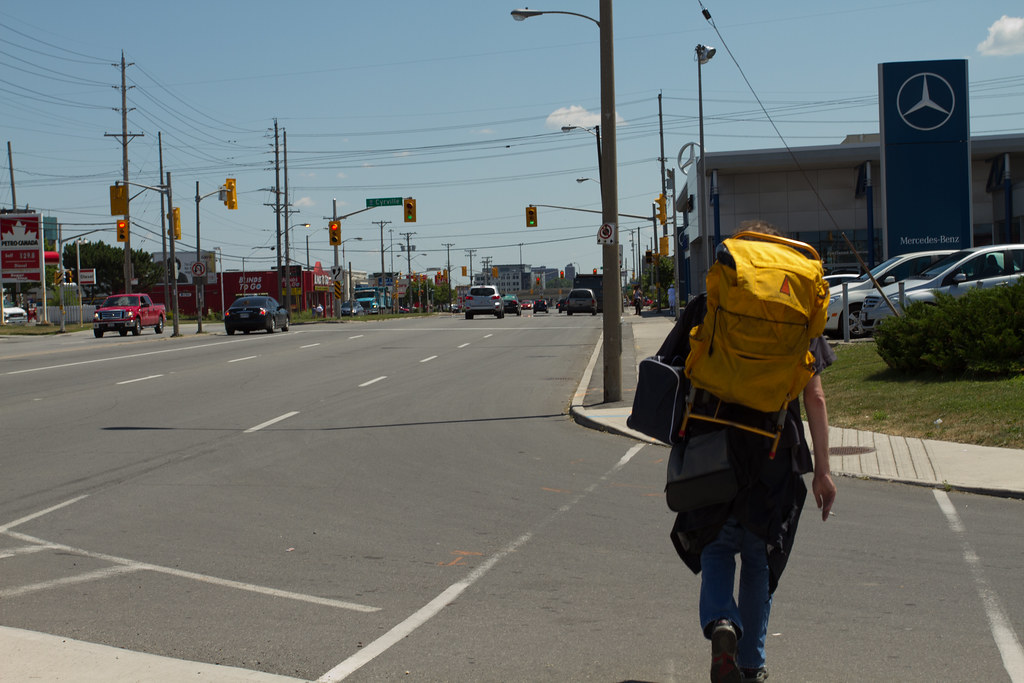
Well, he was near played out when I went on and took him in. His mind and body like his clothes were worn. His self-control and wallet like his boots were mighty thin. I patched him up wherever he was torn. He needed somewhere safe and warm so maybe he’d begin To grow a callus back someone had shorn. There wasn’t much he’d ask that I’d refuse Until he got those got-to-leave-you blues.
He said “I’ve got those got-to-leave-you blues, You understand the way it is, I’m sure. But I’ve got ramblin’ fever in my shoes That only walkin’ lonesome roads can cure.”
I smiled and nodded and I thought there always comes a day When being treated well will get to you When hurt so bad you lash out in that narcissistic way And all the good I’ve done or might yet do Is twisted with dependence, and it’s something you can’t say. So you are acting out now right on cue. I said “I kept your outfit, every rag, So here’s your boots and there’s your travelin’ bag.”
When they’ve got ramblin’ fever in their shoes I give them back the worn-out stuff they brought, Since if they think they’re giving me the blues They won’t be gettin’ anything I bought.
He doesn’t know and I don’t say he’s not the only one I’ve helped who’s helped me make it through a night Or several whether in the short or in the medium run, Nor will he be the last to find the sight Of those white center-lines out on that road there in the sun Will make him feel he’s never been not right, And he’ll regret he’s giving me bad news That he has got the got-to-leave-you blues.
He doesn’t see it’s me who gets to choose. There’s half a dozen others just like him Who’ll washed up here whose ramblin’ fever shoes Are looking for a road a bit less grim.
He takes his stuff and tries to not look back To see if I will notice that he does. I give him one sad smile, then eye the pack To pick the next one care-worn as he was.
And he’ll be near played out when I go on and take him in. His mind and body like his clothes are worn. His self-control and wallet like his boots are mighty thin I’ll start to patch him up where he’s been torn. He’s needing somewhere safe and warm so maybe he’ll begin To grow a callus back someone had shorn. There isn’t much he’ll ask that I’ll refuse Until he gets those got-to-leave-you blues.
*****
Marcus Bales writes: “One of the song tropes my brother John and I used to enjoy mocking the most as we listened to records or the radio in our shared bedroom in the late 60s in Columbus, Ohio in our early teens was an odd one for a pair of Air Force brats whose whole life experience had been saying goodbye to new friends whose parents were being irrevocably transferred somewhere else, never to be seen again, or we were being similarly transferred away, and that trope was the country or blues song addressed to the woman by the ramblin’ man whose litany of reasons to leave seemed, to us, whose leavings and arriving were dictated by unequivocal orders, thin-to-non-existent. The singer was constantly moaning about how, despite how good he had it, he was movin’ on . John and I thought it was hilarious that civilians would voluntarily abandon situations in which, by their own accounts, they simply had no good reason to leave. We’d left, or been left, by that time, by a decade and a half of friends. The very notion that some cowboy or bluesman felt like there must be greener grass down the road that never ends seemed ludicrous. We’d seen those pastures. We’d ridden down those roads. We’d flown that wild blue yonder to other states and countries. We thought that plea of desperate yarning was a load of crap.
What’s the woman’s side of the story? It occurred to me that she probably thought that ramblin’ fever was a load of crap, too. And, maybe, that it made for a nice change from time to time, since in all those songs and stories he wanders off, but she gets the house. Maybe she got the better deal. And, so, voila.”
Not much is known about Marcus Bales, except he lives and works in Cleveland, Ohio, USA, and his work has not appeared in Poetry or The New Yorker. His latest book is 51 Poems; reviews and information at http://tinyurl.com/jo8ek3r
O my luve’s like a red, red rose That’s newly sprung in June: O my luve’s like the melodie That’s sweetly play’d in tune.
So fair art thou, my bonnie lass, So deep in luve am I; And I will luve thee still, my dear, Till a’ the seas gang dry.
Till a’ the seas gang dry, my dear, And the rocks melt wi’ the sun: And I will love thee still, my dear, While the sands o’ life shall run.
And fare thee weel, my only luve! And fare thee weel awhile! And I will come again, my luve, Tho’ it were ten thousand mile!
*****
January 25th being the birthday of Robert Burns (and the opportunity for a Burns Night celebration), it seems the right day to post an interesting fact that I was unfamiliar with until reading a 1964 Canadian high school poetry text book: ‘A Red, Red Rose’ was fashioned from three distinct songs that Burns had heard in the Highlands of Scotland. Part of each song was reworked by him into a single poem:
(Song 1) Her cheeks are like the roses That blossom fresh in June; O, she’s like a new-strung instrument That’s newly put in tune.
(Song 2) The seas they shall run dry, And rocks melt into sands Then I’ll love you still, my dear, When all these things are done.
(Song 3) Altho’ I go a thousand miles I vow thy face to see, Altho’ I go ten thousand miles, I’ll come again to thee, dear love, I’ll come again to thee.
Wikipedia (as often) is a good place to look for more information, and here is an extensive quotation from its article on the poem:
Sources Burns is best understood as a compiler or a redactor of “A Red, Red Rose” rather than its author. F.B. Snyder wrote that Burns could take “childish, inept” sources and turn them into magic, “The electric magnet is not more unerring in selecting iron from a pile of trash than was Burns in culling the inevitable phrase or haunting cadence from the thousands of mediocre possibilities.”
One source that is often cited for the song is a Lieutenant Hinches’ farewell to his sweetheart, which Ernest Rhys asserts is the source for the central metaphor and some of its best lines. Hinches’ poem, “O fare thee well, my dearest dear”, bears a striking similarity to Burns’s verse, notably the lines which refer to “ten thousand miles” and “Till a’ the seas gang dry, my dear”.
A ballad originating from the same period entitled “The Turtle Dove” also contains similar lines, such as “Though I go ten thousand mile, my dear” and “Oh, the stars will never fall down from the sky/Nor the rocks never melt with the sun”. Of particular note is a collection of verse dating from around 1770, The Horn Fair Garland, which Burns inscribed, “Robine Burns aught this buik and no other”. A poem in this collection, “The loyal Lover’s faithful promise to his Sweet-heart on his going on a long journey” also contains similar verses such as “Althou’ I go a thousand miles” and “The day shall turn to night, dear love/And the rocks melt in the sun”.
An even earlier source is the broadside ballad “The Wanton Wife of Castle-Gate: Or, The Boat-mans Delight”, which dates to the 1690s. Midway through the ballad, Burns’ first stanza can be found almost verbatim: “Her Cheeks are like the Roses, that blossoms fresh in June; O shes like some new-strung Instrument thats newly put in tune.” The provenance for such a song is likely medieval.
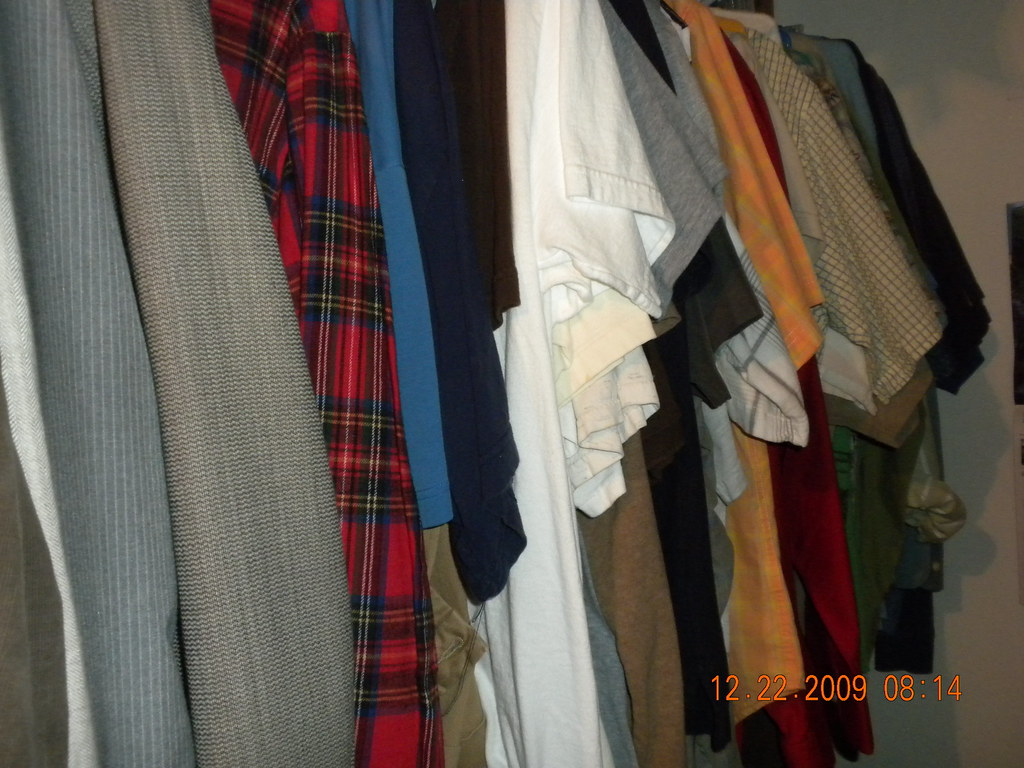
I remember you some mornings in the midst of getting dressed Surprised that I recall exactly when I wore you last
The paisley patterns spilling over sleeves The Nehru collars nobody believes … were popular The turtlenecks no turtle ever wore Those V-neck disco shirts that dance no more … Spectacular!
Are you lurking in the closet among other clothes I own? I gently touch your shoulder—a brief flash, then you’re gone
The concert souvenir shirts we outgrew The obligation gifts we always knew … were wrapped in haste Thick cotton plaids lost lumberjacks would covet That college T tossed out, but how we loved it … still, such a waste
You promised transformation, but what else did you require The full ensemble led us toward transcendence or desire (Attire of another age, accessories all the rage)
Bell-bottom flares that took flight as we walked Embroidered jeans so tight that people talked … of nothing else Those bomber jackets earthbound boomers froze in Those leather wristlets grunge guitar gods posed in … with death’s head belts
You folded in your fabric everyone I used to be Now that you’re gone, I realize I’m left with only me But if I run across you in some thrift shop bargain rack Or rummaging recycling bins, what else would you bring back? Who else will you bring back?
Some nights I see you in my dreams of places far away I’m wearing you as if I haven’t aged a single day Shirts of the distant past, shirts of the distant past
*****
Ned Balbo writes in Rattle #85, Fall 2024 (where you can hear the song performed): “I’ve played guitar since I was 5, keyboards since I was 13, and ukulele since I was 42, but my time as a ‘professional’ musician—someone paid to play—is scattershot and humble. Ice rinks, a Knights of Columbus Hall, a campers’ convention in Yaphank, a crowd of disco-loving retirees at Montauk’s Atlantic Terrace Motel, company picnics, school dances, private parties, and more—these were where I played guitar, sang, and devised versions of the Beatles, Bowie, et al. in two Long Island cover bands. The Crows’ Nest or Tiffany’s Wine-and-Cheese Café hosted noise-filled solo acoustic gigs, with more receptive listeners for original songs and covers of Elvis Costello or Eno at my undergrad college’s coffeehouse. More recently, I’ve written lyrics to Mark Osteen’s preexisting jazz scores (look for the Cold Spring Jazz Quartet on Spotify, Amazon, CDBaby, and elsewhere) and returned to solo songwriting and recording with ‘ned’s demos’ at Bandcamp. As a relic from the age when lyrics were sometimes scrutinized with poetry’s intensity, I listen closely to the sonics of language, whether sung or spoken, and look up to lyricists whose words come alive both aloud and on the page.”
Balbo: Robin, thanks for posting ‘Shirts from the Distant Past’, my little song-poem hybrid. I’ll be happy to answer any questions you have.
Editor: For myself, I see a continuum from womb heartbeat to dance to music to song to formal verse. I would love to have any additional comments on the subject in general, or on the creation of this poem in particular, related to these elements.
Balbo: I love what you’re saying about womb, heartbeat, and dance. A formative text for me is Donald Hall’s essay on poetic form’s psychic origins, ‘Goatfoot, Milktongue, Twinbird‘. You probably know it. Hall proposes three metaphors for poetry’s deepest sources: Goatfoot, the impulse toward dance, rhythm, movement; Milktongue, the pure pleasure of language, the texture of words when spoken; and Twinbird, our desire for form, symmetry, wholeness, which is complicated and energized by the contradictions it contains and reconciles. To me, Hall’s terms just sound like different ways of envisioning exactly what you’re talking about. They apply as much to song as they do to verse. The meter varies by stanza or section: iambic heptameter (seven iambs) in the couplet verses—not so different, after all, from the tetrameter to trimeter shifts we find in many ballads. The “shirts” title refrain, which doesn’t appear in print till the last line, are two trimeter phrases. It was fun to find surprising rhymes to hold the whole song together.
Editor: Regarding ‘Shirts’, quite apart from the charming idea, I like the work that has gone into the metre, rhyme, idiosyncratic structure.
Balbo: Thank you. I wrote and sung ‘Shirts’ as a poetic song lyric—one that could be read and enjoyed but, ideally, would be heard. I view its structure as that of a call-and-response song in traditional format. (In rock, for example, I think of George Harrison’s ‘Taxman’ with John and Paul harmonizing “Taxman, Mr. Wilson, Taxman, Mr. Heath” in answer George’s lead vocal.) In ‘Shirts’, the call-and-response comes from using the title as a refrain: it explains who the “you” is in each verse (when you hear it, anyway—I cut it from the visual text for fear it would seem repetitious without the music). Sometimes the title refrain answers a statement in the verse: “I gently touch your shoulder—a brief flash, then you’re gone” sounds like I might be talking (or singing) about a person, but it turns out to be those long-lost shirts—a playful fake-out.
Then there are the brief call-and-responses of the bridge sections which comment on the previous line or complete an unfinished thought: “Those V-neck disco shirts that dance no more…spectacular!” or “Embroidered jeans so tight that people talked…of nothing else.” They’re in iambic pentameter, with the second and fourth changing to heptameter if we count the two extra beats (set off on their own line) answering them.
The so-called “middle 8” (usually eight bars used to break up the verse-chorus/verse-chorus model) is delayed till just before the end: “You folded in your fabric everyone I used to be, etc.” That’s meant to set up the payoff: it’s not the shirts but our lost selves— along with loved ones, lost ones, everyone—we’re missing or mourning. But writing or singing about shirts—clothing that shapes and defines us—makes the lyric less depressing, leavens it with wit (I hope) so that what’s more poignant comes at the very end where more dramatic music can counterbalance the mood—the contradictions reconciled, as Donald Hall might have put it.
Of course, the very end is quieter – wistful again.
As I mentioned in Rattle (thanks again to Tim Green for giving both words and music a home), I grew up in the era when lyrics were often analyzed as seriously as poetry (and not just by undergraduates in long-ago dorm rooms under black light posters). Whether I’m writing poetry or songs, I listen closely to the different ways words sound—what works when sung doesn’t always work as well when spoken or encountered on the page—so when I do write lyrics, I try to make them both readable and singable.
Poems and song lyrics operate differently, but there’s lots of overlap between them. I wanted ‘Shirts’ to operate on both levels, even if it tilts more toward song lyric than poem.
*****
Ned Balbo’s six books include The Cylburn Touch-Me-Nots (New Criterion Prize), 3 Nights of the Perseids (Richard Wilbur Award), Lives of the Sleepers (Ernest Sandeen Prize), and The Trials of Edgar Poe and Other Poems (Donald Justice Prize and the Poets’ Prize). He’s received grants or fellowships from the National Endowment for the Arts (translation), the Maryland Arts Council, and the Mid Atlantic Arts Foundation. Balbo has taught at Iowa State University’s MFA program in creative writing and environment and, recently, the Frost Farm and West Chester University poetry conferences. His work appears in Contemporary Catholic Poetry (Paraclete Press), with new poems out or forthcoming in Able Muse, The Common, Interim, Notre Dame Review, and elsewhere. He is married to poet and essayist Jane Satterfield.
Victoria Moul writes: When I hear or read people — often though not only American “formalists” — discussing “correct” metre in English, and the supposed dominance of accentual-syllabic forms in general and the iambic pentameter in particular, I often think rather impatiently of poets like Arnold and Yeats. Arnold’s verse is musical, highly memorable and — to my ears at least — mostly very straightforward to speak correctly. But it’s often not very iambic at all and he typically uses lines of very varying syllable length. ‘Rugby Chapel’ is a good example of this — its pattern is, technically speaking, more trochaic (rugby) than iambic (endured), the trochaic pattern is established very clearly at the outset (‘Coldly, sadly descends’) and the lines have between six and nine syllables each. If you (inexplicably) wanted to spend an hour “scanning” it you’d find a complex variety of combinations of stressed and unstressed syllables. But its music is easy to hear and read, and very easy to remember, because regardless of the number of the syllables all the lines have three stresses.
Repeated three-stress lines are relatively unusual in English, especially in longer poems, but the four-stress line is very common, perhaps in fact the most natural English line of all, and indeed a lot of so-called iambic pentameter has a tendency to drift towards four rather than five stresses. ‘The Wild Swans at Coole’ establishes an iambic pattern at the outset (‘The trees are in their autumn beauty / The woodland paths are dry’) but is in stanzas of 4/3/4/3/5/3 stresses, with quite varied syllable length and relatively few perfectly iambic lines. Day-Lewis’ poem, by contrast, looks to the eye like it might be iambic pentameter, since the line-length hovers around 10 syllables (ranging from 9 to 12). But most of the lines are spoken naturally with four stresses, not five (‘A sunny day, with leaves just turning’; ‘Wrenched from its orbit, go drifting away’), and only a handful of lines certainly have five.
As far as I know — do comment if you can think of any counter-examples — there are no really good poems about rugby itself, so the poems I discussed today were just those which came into my mind as I watched the practices. None of these English poems are obscure — all are by poets who were considered major in their own lifetime, and all three have been very well-known at some point even if they are not now — and not one of them is in iambic pentameter. In fact, not one of them is obviously in a ‘syllabic’ metre, strictly speaking, at all (as in the familiar statement that traditional English verse is ‘accentual-syllabic’, i.e. where both the number of stresses and the number of syllables are set by the metrical pattern). These poems, like a great deal of English poetry, establish and follow an accentual pattern — of a certain number of stresses in a line, though this too is open to variation — but not, or only very loosely, a syllabic one. Verse of this kind is very common in the English tradition, and the hundred years of poetry between the mid-19th and mid-20th century, even if you set aside the full-blown “modernists” completely, is particularly rich in metrical variety. It is puzzling that this is not better reflected in most discussions of English metre and form. But the best way to get a feel for the actual — rather than imagined — conventions of a literary tradition is, of course, by reading it.
*****
Editor: The passage above is excerpted with permission from a recent Substack post by Victoria Moul in her ‘Horace & friends’ – the full thing is at https://vamoul.substack.com/p/on-rugby-and-metre. In it, with thoughts inspired by watching her nine-year-old son playing rugby, she discusses Cecil Day-Lewis’ ‘Walking Away’, Yeats’ ‘The Wild Swans at Coole’ and Arnold’s ‘Rugby Chapel’. The piece is engaging in several ways, but the point that stands out the most for me is this: “These poems, like a great deal of English poetry, establish and follow an accentual pattern — of a certain number of stresses in a line, though this too is open to variation — but not, or only very loosely, a syllabic one.”
This is much on my mind when I consider the forms that create formal verse. From my school days on, I have felt that analysing English grammar with Latin rules was wrong, just as straightjacketing English verse into syllabic requirements was not always useful, beautiful or appropriate. English is a Germanic language, and plays effectively by looser accentual rules: perhaps harder to define and analyse, but truer to the work of poetry which is to be word-for-word memorisable. Rhythm is one of the essential tricks of memorisation, along with rhyme, alliteration, assonance and a host of rhetorical tricks; and rhythm plays a variety of casual games. Also, accentual pattern corresponds to the continuum that I see at the root of poetry: from womb heartbeat, to dance, to music, to song, to formal verse. Formal verse is at its best when it is rhythmic and rich in musicality as well as in ideas and images and wordplay. Without the music, without the rhythm, it is prose… no matter how well expressed.
So rap and spoken word are inherently more poetic because more memorisable than 99% of what has been published as ‘poetry’ in the past 50 or 60 years. All songwriters are of course genuine poets – not all are good ones, but Bob Dylan certainly deserves his Nobel Prize (and I wish it could have been shared with Leonard Cohen).
Another point is that French too, and other Romance languages, are more accentual than professors often claim. When Françoise Hardy sang Tous les garçons et les filles de mon âge Se promènent dans la rue deux par deux she was following the accentual beat, not giving every syllable equal weight, and completely skipping a couple of unstressed syllables. (Are French professors still teaching that all syllables have equal weight in French verse? Surely not! I hope that died out some time last century…)
Not all poetry is singable – but at its best it has a musicality that both creates enjoyment and enhances its ease of memorisation.
On her way to work one morning Down the path ‘longside the lake A tender-hearted woman saw a poor half-frozen snake His pretty colored skin had been all frosted with the dew “Oh well,” she cried, “I’ll take you in and I’ll take care of you” “Take me in, tender woman Take me in, for heaven’s sake Take me in, tender woman,” sighed the snake
She wrapped him up all cozy in a comforter of silk And laid him by thе fireside with some honеy and some milk She hurried home from work that night, and soon as she arrived She found that pretty snake she’d taken in had been revived “Take me in, tender woman Take me in, for heaven’s sake Take me in, tender woman,” sighed the snake
She clutched him to her bosom, “You’re so beautiful,” she cried “But if I hadn’t brought you in, by now you might have died” She stroked his pretty skin again and kissed and held him tight Instead of saying thanks, that snake gave her a vicious bite “Take me in, tender woman Take me in, for heaven’s sake Take me in, tender woman,” sighed the snake
“I saved you,” cried the woman “And you’ve bitten me, but why? And you know your bite is poisonous and now I’m gonna die” “Oh shut up, silly woman,” said the reptile with a grin “You knew damn well I was a snake before you took me in” “Take me in, tender woman Take me in, for heaven’s sake Take me in, tender woman,” sighed the snake “Take me in, tender woman,” sighed the snake “Take me in, tender woman,” sighed the snake
*****
Donald Trump has repeatedly read this poem in his political rallies as a way of attacking immigrants and the US Government’s immigration policies. The ironies are endless: – that two of Trump’s wives are themselves immigrants (the current one having a very sketchy background as a “model”); – that Trump always fails to credit Oscar Brown Jr as the song’s author, consistently naming Al Wilson instead; – that Oscar Brown was a civil rights activist and for ten years a member of the Communist Party (he left when he decided he was “too black to be red”); – that the song’s message, a variant on one of Aesop’s Fables, is that kindness can be betrayed; – that Oscar Brown’s daughters have sent Trump cease-and-desist letters because Trump’s message is antithetical to all their father stood for; – and as one of the daughters said on CNN, “the elephant in the room is that Trump is the living embodiment of the snake that my father wrote about in that song.“
I’ve always loved to sing an’ dance. I’m better at the first. An’ given even half a chance, I’m bound to do my worst. I’ve struggled sometimes with romance, succumbed to alcohol, but at least I had a ball.
I liked to smoke a lot of weed an’ hash while in my prime. I’d barely write an’ hardly read, just wasted space an’ time. I didn’t think that I’d succeed with anything at all, but at least I had a ball.
I did some LSD an’ coke, but didn’t dare touch smack. The people on it weren’t a joke. I’ve never sampled crack. I still enjoy a drink an’ smoke. Like everyone, I’ll fall, but at least I had a ball.
I wasn’t any good at jazz. I tried it on trombone. I’ve stayed away from razzmatazz. I’d rather be alone. I’ll never be as famous as that guy from Montreal, but at least I had a ball.
I found myself in poetry, then turned it into song. I see it as my destiny. It’s here that I belong. I may end up in poverty with nobody to call, but at least I had a ball.
*****
Duncan Gillies MacLaurin writes: “I’ve been wanting to do songs like Cohen and Dylan for years – ones that have a repetend at the end, and I’ve finally achieved that.” This poem was published in the current edition of Snakeskin.
Duncan Gillies MacLaurin is a Scottish poet who was born in Glasgow in 1962. He studied Classics at Oxford, left without a degree, and spent two years busking in the streets of Europe. He met a Danish writer, Ann Bilde, in Italy in 1986 and went to live in Denmark, where he teaches English and Latin. His collection of 51 sonnets, I Sing the Sonnet (2017), is online at Snakeskin. He blogs here. His experiences as an ex-pat poet are described in the first issue of the e-zine, The Chimaera.
When blizzards blow under the tiles and the dishcloth crisps on the draining board and the snowscape stretches for miles and miles and only the idiot ventures abroad. When it’s early to bed, and thank heavens for that, then coldly keens the cast-out cat: Miaow! Miaow! – a doleful din – and who will rise and let him in?
When slippery stones by the pond make filling a bucket an effort of will and you’re walled-up for weeks in the back of beyond in a farm at the foot of a hell of a hill then it’s early to bed, and thank heavens for that, till coldly keens the cast-out cat: Miaow! Miaow! – a doleful din – and who will rise and let him in?
*****
Ann Drysdale writes: “It was published in my very first collection, The Turn of the Cucumber (Peterloo Poets 1995) and dates from a time when I was bringing up three children as a single mum on a hand-to-mouth smallholding on the North York Moors.”
Editor’s note: Ann Drysdale takes the structure, but not the precise metre, of Shakespeare’s ‘Winter Song’ from Love’s Labours Lost. Her rollicking metre allows her “and the snowscape stretches for miles and miles” and the wonderful “in a farm at the foot of a hell of a hill”, for a bigger wintry landscape than Shakespeare shows.
Ann Drysdale now lives in South Wales and has been a hill farmer, water-gypsy, newspaper columnist and single parent – not necessarily in that order. Her eighth volume of poetry, Feeling Unusual, has recently joined a mixed list of published writing, including memoir, essays and a gonzo guidebook to the City of Newport. http://www.poetrypf.co.uk/anndrysdalepage.html http://www.shoestring-press.com
Lucinda G. from Podunk City, A gal what big-time mens call pretty. Her lips is red. Her eyes is dead. I’m lookin’ for Lucinda.
Lucinda G., she be my sister. One night she tell me in a whisper She ain’t gon’ stay She leave next day, Cause Johnny drop Lucinda.
Lucinda G., she head for Dallas. She get a job at Girlie Palace. She write one time, She doin’ fine. The mens all love Lucinda.
Lucinda G., she made for lovin’. But all she get is push and shovin’. She write once more, She ain’t no whore. I’m lookin’ for Lucinda.
Lucinda G, she make big dough. How she do it, I don’ know. She say she soon Come home. Real soon. I’m lookin’ for Lucinda.
Lucinda G. from Podunk City. She used to be what folks call pretty. Tell me mister, You seen my sister? I’m lookin’ for Lucinda.
*****
Janice D. Soderling writes: “I like to try my hand at various genres, both poetry and prose, both light and serious. This sprouted in a songwriting workshop but later was published by Anna Evans, at Barefoot Muse. I’ve had a few Swedish poems set to music and one recorded which I used to hear on the radio every Midsummer weekend. Maybe some musician will find it worthwhile to set to music. That would be nice.”
Janice D. Soderling has published poems, fiction and translations in hundreds of print and online journals and anthologies over the years. Her most recent poetry collection is ‘Rooms and Closets‘ available at all online bookshops.
You are changing from day to day And from night to night You are changing before I say Let there be light You are changing your smile, your hair And even your eyes You are changing what isn’t there Making truth of lies
You are changing the coins you bet And the games you win You are changing what has been set Outside and in You are changing from old to new And again to old You are changing all that we knew But were never told
You are changing along the way And across the sea You are changing the things that may Be the last we see You are changing your blood to sweat And yourself to me So keep changing but don’t forget How it used to be
Vadim Kagan writes: “Life is all about changes. People change, countries change, the world changes. Are we walking in circles or are we ascending (or descending) some universal helix? Opinions differ but as I got older I realized that to me it matters less where we are going than where we came from. This poem was written during a tumultuous time in my life, when I realized that, no matter how well I try to plan, tomorrow will be different from what I imagined. The poem was, in a way, a kind of therapy – and is probably even more relevant than several years ago. It is also more musical than many of my poems, and made a great (if little known) song.”
Vadim Kagan writes poetry and prose in English, Russian and, occasionally, a combination of both languages. He runs an AI company in Bethesda, MD and is a member of the DC Poetry Collective. His poems have been published in The Lyric, The Road Not Taken, Founder’s Favorites, DC Poetry Collective Inkblots anthologies and the latest Potcake Chapbook, ‘Lost Love’. He often posts on Facebook (@vadimkagan) and Instagram (@wines_and_rhymes.)





 Form in Formless Times