Category Archives: sonnets

Sonnet: Amit Majmudar, ‘Homing’

My parents stacked the best years of their youth as
Bricks to build me. Taught me words I taught
Myself to shout them down with when we fought.
My parents loved me, though I could be ruthless
Hurting myself with things I poured or burned
And those who loved me with the things I said.
My parents never gloated once I learned,
Just held me through my sobs, and kissed my head.

Now, in the living room I stormed out of,
They tell me I can stay the month, or year,
Because my room will never not be here
No matter where I go, or who I love.
I am their blood, they tell me. I depart
From them as blood does from a beating heart.

*****

Amit Majmudar writes: “A homing pigeon knows where its home is by training, as the falcon knows the falconer’s arm. But there are deeper instincts at work in nature that science still struggles to explain fully, like the way birds know how to migrate by looking at the stars, and the way monarch butterflies find their way to the same vast swath of oyamel trees in Mexico every year. Human beings have something of that in them. Not just for the neighborhoods where we grew up, but for the people, the family, who were there with us. This poem is about that. I distinctly recall its writing; I woke up at the “witching hour,” as I often do, while visiting my sister-in-law’s house in Texas over Christmas break. Ten family members were asleep in the same house, and, unable to fall back asleep, I picked up my phone and found an invitation to submit to a new sonnet journal in my inbox. Immediately, still in the awoken, excited, “witching hour” state (which the Indian tradition calls the Hour of Brahma, the time of peak creativity), I wrote this poem about the bond between the far-afield child and the fixed star of family, first line to last.”

‘Homing’ was just published in The Sonneteer which can be accessed at thesonneteer@substack.com. It offers a free, partial service as well as an upgraded paid subscription.

Amit Majmudar’s recent books include Twin A: A Memoir (Slant Books, 2023), The Great Game: Essays on Poetics (Acre Books, 2024), and the hybrid work Three Metamorphoses (Orison Books, 2025). More information about his novels and poetry collections can be found at www.amitmajmudar.com.

“There are many things in life that will catch your eye, but only a few will catch your heart…pursue those.”~Michael Nolan” by katerha is licensed under CC BY 2.0.

My own favourites: Sonnet: RHL, ‘Death Will Be Harsher Now’

Death will be harsher now, as, year by year,
we solve the clues of immortality:
emotions sink to animality
as false hopes tighten screws of desperate fear.
Hormone control will make age disappear—
after false starts, most horrible to see—
but those already old must beg to be
frozen for the genetic engineer.
While war, starvation, pipe Earth’s gruesome jigs,
successful businessmen will fight to gain
some dead teen’s body, to transplant their brain,
the already-old beg to be guinea-pigs.
Children, look back, hear our despairing cry:
we bred immortals, but we had to die!

*****

I wrote this poem on 3 January 1982 – twenty years before I began to get poems published. (Formal verse was an almost absolute no-no in late 20th century magazines… although consistently taught and highly praised in schools and universities, of course.) It was finally published in Ambit in October 2007 – the magazine started and managed for 50 years by Martin Bax and the stomping ground of J.G. Ballard, Ralph Steadman, Carol Ann Duffy, etc.

In April 2018 the poem was reprinted in Bewildering Stories, an online weekly headquartered in Guelph, Ontario; and in 2024 I accepted Maryann Corbett‘s suggestion to change the title and first line and instead of “harder” use the word “harsher”… the earlier word incorrectly suggesting that we might be finding it more difficult to achieve death.

The ideas behind the poem were not new to science fiction, but were less common in formal verse. The ideas continue to inch their way towards reality; continue to be explored in popular culture (Piraro, Futurama…); and in the last 44 years I have continued to explore SF and existential themes in verse.


Cartoon: “piraro brain transplant” by Dreaming in the deep south is licensed under CC BY 2.0.

Semi-formal Sonnet: Rachel Hadas, ‘Out of Reach’

Our lost ones drift down a dark stream,
surfacing at the brink of dream.
The crack of dawn: they’re gone again.
What have they left for us to keep?
Night’s dialect, a coded speech
beyond our reach.

Birds on the bank of a calm pond:
each one is still and poised, then dives.
Mornings we wake into our lives,
blind to what lies beyond, below,
the chasms where black rivers flow,
and flickering deeper, darkly clear,
that coded speech beyond our reach,
words we can’t hear.

*****

Rachel Hadas has a group of sonnets appearing, one a week, in The Sonneteer. For the first she wrote: “The sonnets that will be appearing in the coming weeks weren’t conceived as a sequence. Encouraged by Ken Gordon’s enthusiasm to take a look at some of my unpublished shorter poems, I speedily found one fourteen-liner, “Tectonic Plates.” Three other poems were so close to sonnet length that they almost begged to be tweaked or tightened or gently expanded; this group includes “Out of Reach,” “Winter,” and “My Best Friend’s Mother.” In every case, the sonnetification (Ken’s helpful coinage) improved the poem. (…) I now realize that, while not conceived as a sequence, all five of these sonnets (now that they are all sonnets) do share themes. They’re about time and memory, aging and loss, what we lose and what we retain. So are many other sonnets, infinitely greater than mine. It’s a privilege to be able to join in the conversation, to swell the chorus.

Rachel Hadas (born November 8, 1948) is an American poet, teacher, essayist, and translator. Her most recent essay collection is Piece by Piece: Selected Prose (Paul Dry Books, 2021), and her most recent poetry collection is Ghost Guest (Ragged Sky Press, 2023). Her honors include a Guggenheim Fellowship, Ingram Merrill Foundation Grants, the O.B. Hardison Award from the Folger Shakespeare Library, and an Award in Literature from the American Academy and Institute of Arts and Letters.

https://www.rachelhadas.net/

Photo: “Kingfisher fishing” by Bob Hall Photos is licensed under CC BY-NC-ND 2.0.
Sonnet: Jerome Betts, ‘Fly-By’

(For S. H. W.)

Bench slats, warm-sleeved in lichen’s rough grey-green,
Sandwiches, ivy’s shade, the garden scene,
Dozens of white-tailed bumblebees, a hum
Among the clustered heads of marjoram.

Background to thoughts that intertwine and drift . . .
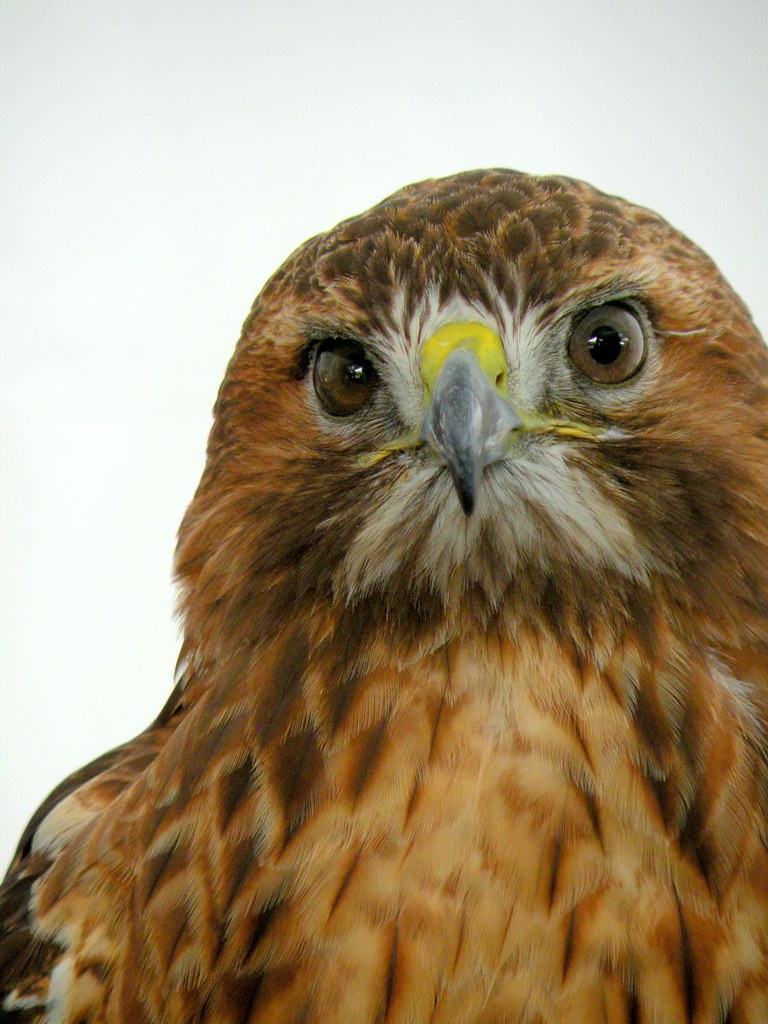
sudden sombre sickle shape – a swift
So low, so near, not distant in the sky,
Skims past, a flash of wings and beak and eye.

Why come that strangely close? Drawn down in chase
Of food, despite the human form and face?
Why did it circle once, then speed away
Towards the woods and cliffs that fringe Lyme Bay?

Soon, news – an old friend gone whose joy was birds.
It almost seemed a farewell without words.

*****

Jerome Betts writes: “The passage of the swift so close I could glimpse its shining eye was a memorable moment in these times when I see only a very occasional two or three usually high in the sky. It resulted in a sunny and summery ten lines concluding, A brief encounter, but it made the day. Some hours later the news came of an old school friend’s death in France. This completely altered any feeling about the event. I suppose the subtext of the aftermath was something like Hardy’s Hoping it might be so, which nearly became the title.”  

‘Fly-By’ was first published in Snakeskin.

Jerome Betts edits Lighten Up Online in Devon, England. His verse appears in Amsterdam Quarterly, Light, The Asses of Parnassus, The New Verse News, The Hypertexts, Snakeskin, and various anthologies.

Photo: “Swift (Apus apus)” by Billy Lindblom is licensed under CC BY 2.0.

Couplets or sonnet? Julia Griffin, ‘Five Act Players’

After Shakespeare

Update: the world—in other words, the brain—
Has stages, yes, but scientists explain
That those old seven are in fact chimeras:
Five’s the true number of our mental eras.
First you’re an infant, puking still and mewling.
Then you turn nine and gripe about your schooling.
At thirty-two, you’re all grown up, so show it
By acting like a soldier, or a poet.
At sixty-six, it’s time for eating chicken
And learning law. If still alive and kickin’
When eighty-three comes round, your life’s adventures
Will shrink to hunting slippers, specs, and dentures.
So that’s the scoop. Of course you’re free to spike it;
We know truth isn’t always as you like it.

“Brain has five ‘eras’, scientists say—with adult mode not starting until early 30s:
Study suggests human brain development has four pivotal ‘turning points’ at around the ages of nine, 32, 66 and 83″
—The Guardian

*****

Shakespeare’s “All the world’s a stage” speech from ‘As You Like It’, updated by current scientific thinking…

Julia Griffin lives in south-east Georgia/ south-east England. She has published in Light (including with Five Act Players in Light’s Poems of the Week), LUPO, Mezzo Cammin, and some other places, though Poetry and The New Yorker indicate that they would rather publish Marcus Bales than her. Much more of her poetry can be found through this link in Light.  

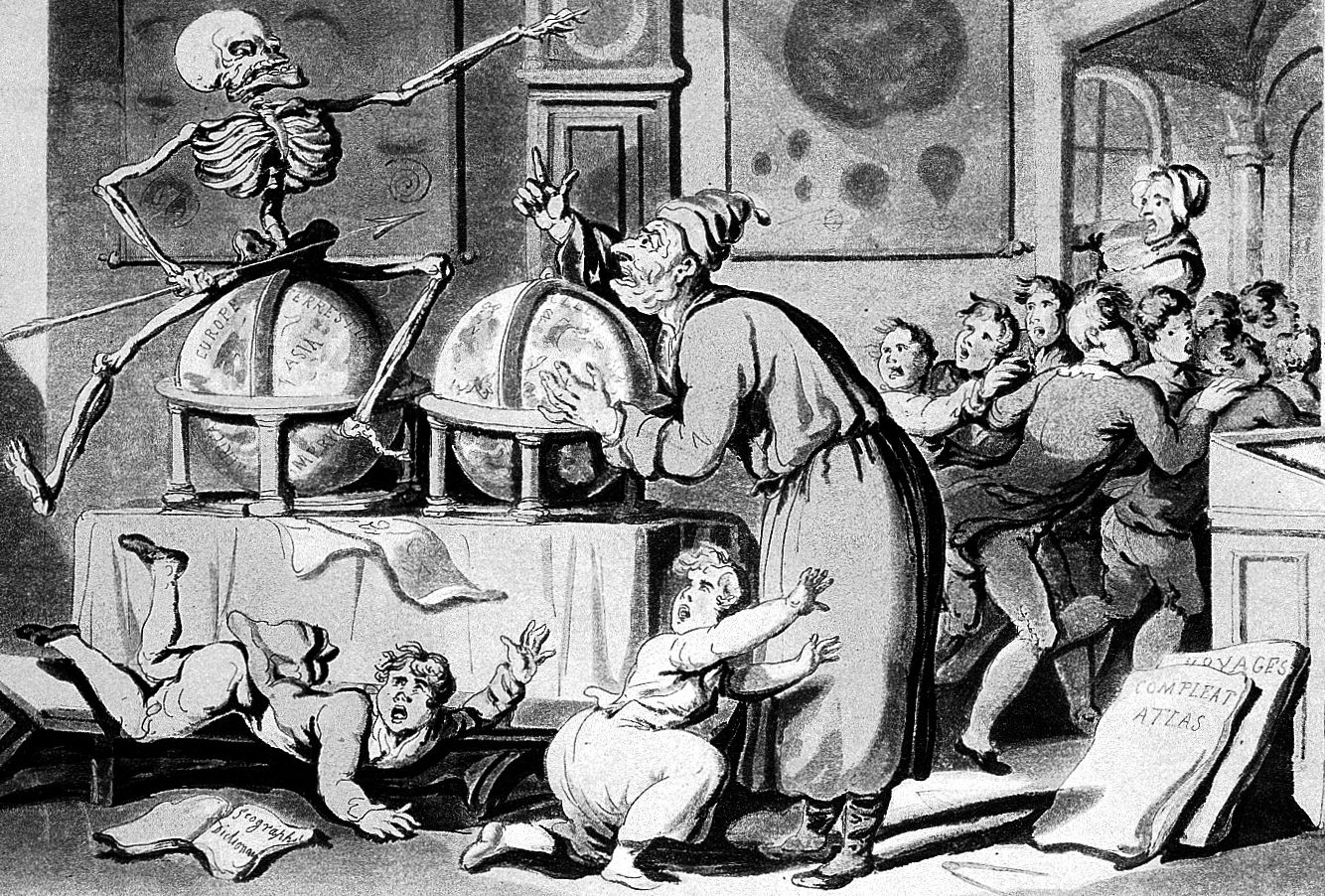
Steel Dust: Young and Old” by LarimdaME is licensed under CC BY-NC 2.0.

Sonnet: Barbara Loots, ‘An Old Man Makes Chili for Lunch’

Do you have a poem for an old man making chili for lunch? Like watery eyes from onion crunching–sneezing from pepper thrown… email from Dad 5/5/05

He shoves the onion pieces in a pile
to one side as he chops and chops some more.
This cutting board has lasted quite a while
through salty tears of choppers gone before,
but no use buying new equipment now.
Sometimes there’s comfort in a kitchenette
that holds what downsized spaces will allow
of former habits. He will not forget
those other hands that held this knife and chopped
for slaw and meatloaf, casseroles and stew,
and apple walnut salad. When they stopped,
he stepped up, making chili, making do,
sneezing on pepper, living on his own.
He cooks for one, but never eats alone.

*****

Barbara Loots writes: “Almost any story can be told in the compass of a sonnet. This one became an elegy cooked up in the mundane of a real moment.”

This sonnet was collected in ‘Road Trip’ (Kelsay Books, 2014)

After decades of publishing her poems, Barbara Loots has laurels to rest on, but keeps climbing.  The recent gathering at Poetry by the Sea in Connecticut inspired fresh enthusiasm. Residing in Kansas City, Missouri, Barbara and her husband Bill Dickinson are pleased to welcome into the household a charming tuxedo kitty named Miss Jane Austen, in honor of the 250th birthday year of that immortal. She has new work coming in The Lyric, in the anthology The Shining Years II, and elsewhere. She serves as the Review editor for Light Poetry Magazine (see the Guidelines at  lightpoetrymagazine.com)

Photo: “Chopping Onions” by TheDarkThing is licensed under CC BY 2.0.

Jean L. Kreiling, ‘Kitchen Cabinet Game’

It matters to me, much more than it should,
that drinking glasses stand sorted by size,
that bowls are neatly nested, that my good
dessert plates sparkle in their stack. The prize
that perfect order grants is hard to name.
It isn’t peace, exactly, but a sort
of temporary triumph in a game
that never ends, played not on field or court
but on these shelves, a three-dimensional
ungridded Scrabble board where dishes make
the words, unspellable but meaningful;
a plate misplaced means an unsettling break
in symmetry and sense. Neatness may not
win much, but there are times it’s all I’ve got.

*****

Jean L. Kreiling is the author of four collections of poetry, most recently Home and Away (2025). Her work has been awarded the Able Muse Book Award, the Frost Farm Prize, the Rhina Espaillat Poetry Prize, and the Kim Bridgford Memorial Sonnet Prize, among other honors.

‘Kitchen Cabinet Game’ was originally published in Crab Orchard Review.

Sonnet: RHL, ‘Last Building Standing’

When The End came, it was not the end–
it never is; the universe continues.
The millions died; I stand alone, no friend;
alone, but healthy in my bones and sinews.
One keeps on, staunchly, soldierly at post,
your day-to-day as other days have been…
though the past world (or you) is just a ghost,
a relic, fragment, hint, more felt than seen.
I’ve lived beyond my time; my world has gone,
my car-charged streets, my teeming meeting rooms,
the close-packed skyline-scrapers now redrawn
as nascent forest, trees standing as tombs
where flocks of birds replace friends whose lives fled,
with ghostly unseen me alone not dead.

*****

‘Last Building Standing’ is a Shakespearean sonnet, first published by The Orchards Poetry Journal. The Winter 2025 issue is now live on Amazon, as well as the Kelsay Books website.

Image: ‘Abandoned Skyscraper’ by RHL and ChatGPT

Sonnet: RHL, ‘Mirror Shades’

Trust’s been essential to our global rise,
and humans have a unique way to build trust:
we’ve left all other primates in the dust
because, alone, we have whites to our eyes.

With dark eyes, what they look at they disguise,
whether they see it with disgust or lust.
Why we look may leave other folks nonplussed,
but that they know what we’ve seen stops some lies.

We’ve sacrificed a natural secrecy
to raise our social aspects several grades.
Hiding your eyes now means active deceit.
So, those upholding laws and decency
can’t be allowed sunglasses; mirror shades,
especially, alienate and self-defeat.

*****

I guess this isn’t a good example of a sonnet. There’s no real turn, it’s just an essay beating on the same point over and over: the eyes being the windows of the soul (even to an agnostic), if you are trying to build trust and community you have to be able to see each other’s eyes. If you are just trying to dominate, then sure, go ahead, hide behind shades and mirrors and blinds and curtains… but you’re giving up one of the greatest innovations that let our species of ape achieve social complexity.

The poem was recently published in the weekly ‘Bewildering Stories‘.

As for the photo, it appears to be a selfie by a young Chinese police officer, more concerned with style and image than with making his community safer. But who knows what is important in his life and for his career.

Cutie Police” by Beijing Patrol is licensed under CC BY 2.0.

Sonnet: Paul Burgess, ‘Reynadine’s Farm’

“The chickens should have been a tighter group,
and Farmer should have purchased stronger locks
instead of whining now about the coop
and getting mad at Reynardine, the fox.

The chickens didn’t mend defensive flaws
or try to get a gun or sharper beak.
Why blame the beast with wits and stronger jaws
for weeding out the losers and the weak?

The victim here, whose name they’ve tried to harm,
has suffered public shame and sad disgrace.
To make it right, he must receive the farm.
I thank Your Honors now and rest my case.”

The judges ruled in Reynardine’s support
because the fox had also bought the court.

*****

Paul Burgess writes: “The Elizabethan sonnet, which I love to adapt to many purposes, is a natural fit for the structure I like best: a setup, a volta, and a jolt at the end.  Many of my best poems succeed, and my worst fail, because of my persistent embrace of tonal ambiguity. This poem is no exception. I like the tension between a seemingly folksy and witty parable and a traditionally serious, elegant form. For me, there’s humor in darkness and darkness in humor. The balance shifts, but I don’t think I could ever completely separate the two and still be myself, as a person or as a writer.”

‘Reynadine’s Farm’ was first published in Snakeskin.

Paul Burgess, an emerging poet, is the sole proprietor of a business in Lexington, Kentucky that offers ESL classes in addition to English, Japanese, and Spanish-language translation and interpretation services. He has recently contributed work to Blue Unicorn, Light, The Orchards, The Ekphrastic Review, Pulsebeat, The New Verse News, Lighten Up On Line, The Asses of Parnassus, and several other publications.

About

Photo: “Ely Cathedral: Stained Glass Museum” by Phil McIver is licensed under CC BY-NC 2.0.