Why are the senators resting their jaws? Why don’t they legislate? What about laws?
We’ve got the Barbarians coming today. Nobody knows how it’s going to play; If any legislate, it will be they.
Why is our Emperor out of his bed, Sitting in state at the gate there instead, Wearing a gorgeous great crown on his head?
We’ve got the Barbarians coming today. They must be met in an elegant way: Greeting their chieftain, the Emperor’s goal Is to award him an exquisite scroll, Giving him titles to make his eyes roll.
Why do our consuls and praetors appear Dressed to the nines in their purplest gear? Why are there amethysts all up their arms, Emeralds everywhere, greener than palms? What are those fabulous sceptres they hold, Fancily fashioned in silver and gold?
We’ve got the Barbarians coming today. This sort of thing’s their idea of cachet.
Why are our orators keeping us waiting, Not, as per usual, loudly orating?
We’ve got the Barbarians coming today. Oratory bores them. They like a display.
Why does it suddenly seem such a mess? Why the confusion, the seriousness? Why is there emptiness now in the square? Why the pervasively secretive air?
Not one of them came, and the day is now done. People are saying the war has been won; Hence there are no more Barbarians. None.
No more Barbarians – what shall we do? I’ve not come up with an answer yet. You?
*****
Julia Griffin writes: “I’ve always loved Cavafy’s ‘Waiting for the Barbarians’ and had the thought that it would go well into rhyme. This somehow necessitated changing the ending a little…” Her translation appears in the current Lighten Up Online.
Julia Griffin lives in south-east Georgia/ south-east England. She has published in Light, LUPO, Mezzo Cammin, and some other places, though Poetry and The New Yorker indicate that they would rather publish Marcus Bales than her. Much more of her poetry can be found through this link in Light.
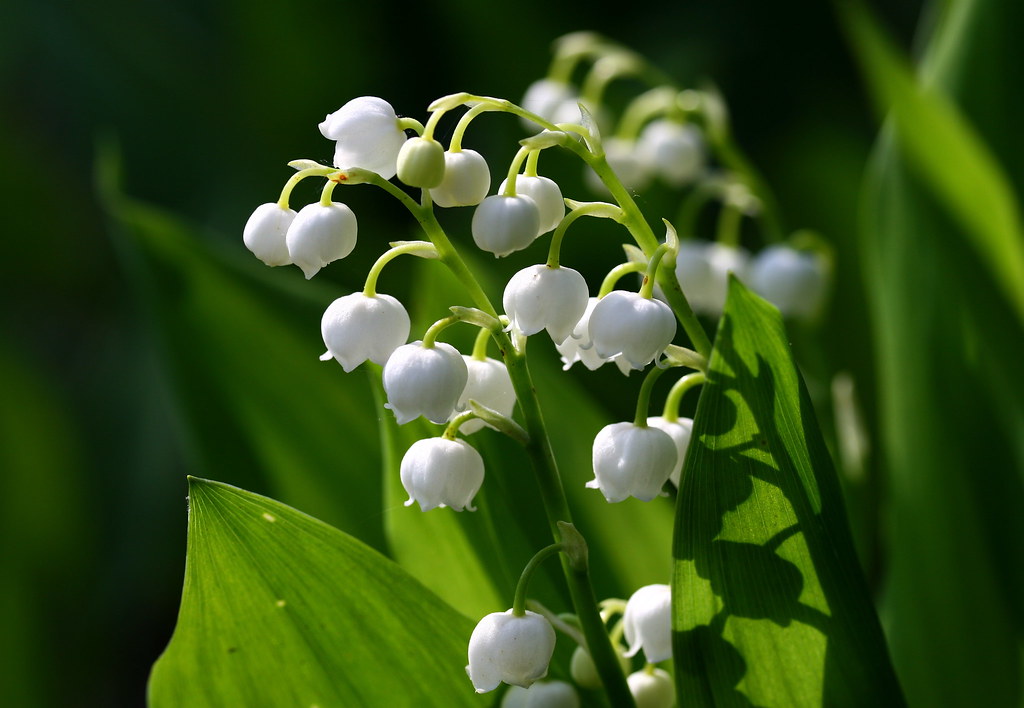
When at the end of spring I pick for the last time My favourite flowers— a yearning fills my breast, And to the future I urgently appeal: Let me but once again look upon the lilies of the valley.
Now they have faded. Like an arrow the summer has flown by, The days have grown shorter. The feathered choir is still, The sun more charily grants us its warmth and light, And already the wood has laid its leafy carpet.
Then when harsh winter comes And the forests don their snowy cover, Despondently I roam and wait with new yearning For the skies to shine with the sun of spring.
I find no pleasure in books, or conversation, Or swift-rushing sledges, or the ball’s noisy glitter, Or Patti, or the theatre, or delicate cuisine, Or the quiet crackling of smouldering logs on the fire
I wait for spring. And now the enchantress appears, The wood has cast off its shroud and prepares for us shade, And the rivers start to flow, and the grove is filled with sound, And at last the long-looked-for day is here!
Quick to the woods!—I race along the familiar path. Can my dreams have come true, my longings be fulfilled?— There he is! Bending to the earth, with trembling hand I pluck the wondrous gift of the enchantress Spring.
O lily of the valley, why do you so please the eye? Other flowers there are more sumptuous and grand, With brighter colours and livelier patterns, Yet they have not your mysterious fascination.
Where lies the secret of your charms? What do you prophesy to the soul? With what do you attract me, with what gladden my heart? Is it that you revive the ghost of former pleasures, Or is it future bliss that you promise us?
I know not. But your balmy fragrance, Like flowing wine, warms and intoxicates me, Like music, it takes my breath away, And like a flame of love, it suffuses my burning cheeks.
And I am happy while you bloom, modest lily of the valley, The tedium of winter days has passed without a trace, And oppressive thoughts are gone, and in my heart in languid comfort Welcomes, with you, forgetfulness of trouble and woe.
Yet now you fade. Again in monotonous succession The days will begin to flow slowly, and stronger than before Will I be tormented by importunate yearning, By the agonizing dream of the happiness of days in May.
And then someday spring again will call And raise the living world out of its fetters. But the hour will strike. I shall be no more among the living, I shall meet, like everyone, my fated turn.
And then what?—Where, at the winged hour of death, Will my soul, heeding its command, soundlessly soar? No answer! Be silent, my restless mind, You cannot guess what eternity holds for us.
But like all of nature, drawn by our thirst to live, We call to you and wait, beautiful Spring! The joys of earth are so near to us, so familiar— The yawning maw of the grave so dark!
*****
Lilies of the Valley (Ландыши) is a poem written by Pyotr Ilyich Tchaikovsky in December 1878 while he was in Florence.
“I am terribly proud of this poem”, he wrote when enclosing a copy to his brother Modest. “For the first time in my life I have managed to write a fairly good poem, which moreover is deeply heartfelt. I assure you that although it was very difficult, still I worked on it with the same pleasure as I do on music.”
Когда в конце весны последний раз срываю Любимые цветы, – тоска мне давит грудь, И к будущему я молитвенно взываю: Хоть раз еще хочу на ландыши взглянуть.
Вот отцвели они. Стрелой промчалось лето, Короче стали дни, умолк пернатый хор, Скупее солнце нам дает тепла и света, И разостлал уж лес свой лиственный ковер.
Потом, когда придет пора зимы суровой И снежной пеленой оденутся леса, Уныло я брожу и жду с тоскою новой, Чтоб солнышком весны блеснули небеса.
Не радуют меня ни книга, нибеседа, Ни быстрый бег саней, ни бала шумный блеск, Ни Патти, ни театр, ни тонкости обеда, Ни тлеющих полен в камине тихий треск.
Я жду весны. И вот волшебница явилась, Свой саван сбросил лес и нам готовит тень, И реки потекли, и роща огласилась, И наконец настал давно желанный день!
Скорее в лес!.. Бегу знакомою тропою: Ужель сбылись мечты, осуществились сны?.. Вот он! Склонясь к земле, я трепетной рукою Срываю чудный дар волшебницы-весны.
О ландыш, отчего так радуешь ты взоры? Другие есть цветы роскошней и пышней, И ярче краски в них, и веселей узоры, — Но прелести в них нет таинственной твоей.
В чём тайна чар твоих? Что ты душе вещаешь? Чем манишь так к себе и сердце веселишь? Иль радостей былых ты призрак воскрешаешь! Или блаженство нам грядущее сулишь?
Не знаю. Но меня твоё благоуханье, Как винная струя, и греет и пьянит, Как музыка, оно стесняет мне дыханье И, как огонь любви, питает жар ланит.
И счастлив я, пока цветешь ты, ландыш скромный, От скуки зимних дней давно прошел и след, И нет гнетущих дум, и сердце в неге томной Приветствует с тобой забвенье зол и бед.
Но ты отцвел. Опять чредой однообразной Дни тихо потекут, и прежнего сильней Томиться буду я тоскою неотвязной, Мучительной тоской о счастье майских дней. — И вот когда-нибудь весна опять разбудит И от оков воздвигнет мир живой. Но час пробьет. Меня – среди живых не будет, Я встречу, как и все, черед свой роковой.
Что будет там?.. Куда, в час смерти окрыленный, Мой дух, веленью вняв, беззвучно воспарит? Ответа нет! Молчи, мой ум неугомонный, Тебе не разгадать, чем вечность нас дарит.
Но, как природа вся, мы, жаждой жить влекомы, Зовем тебя и ждем, красавица весна! Нам радости земли так близки, так знакомы,- Зияющая пасть могилы так темна!
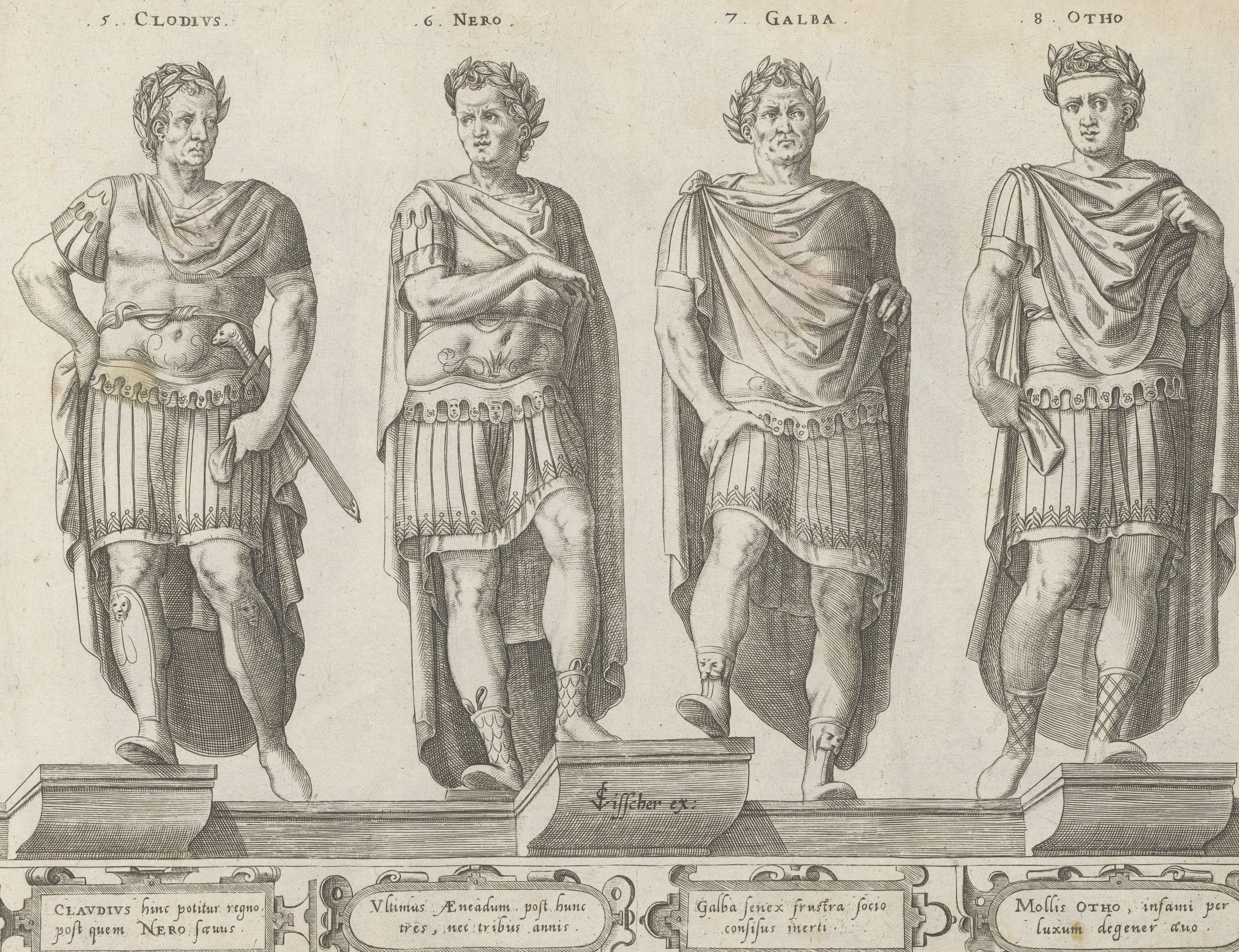
He gave a careless shrug when he had heard The Delphic Oracle’s prophetic word: “Beware, my lord, the age of seventy-three” (For Delphi was renowned for verity). “I’m thirty now with years to plan for knives Before the gods’ appointed day arrives.” Reclining in his litter, bound for home, Delighted Nero journeyed back to Rome.
When he returned, he felt a little drained; With news like this, how could he be restrained? Surrendering to pleasure on the way — To gardens and gymnasia by day, By night to dance and poetry and drink In torchlit theatres where bodies slink Whose dancing ever animates and soothes, The naked bodies of Achaean youths.
Thus Nero rests, while on an arid plain Far to the west of Rome, in distant Spain, Old Galba drills his legions secretly, Old Galba who was spry for seventy-three.
(After C. P. Cavafy’s ‘Η διορία του Νέρωνος’.)
*****
Drew Nathaniel Keane writes: “I’m enchanted by the verse of Constantine Cavafy — ‘a Greek gentleman in a straw hat, standing absolutely motionless at a slight angle to the universe’, as E. M. Forster once described him. In his wry and wistful, gossipy and subtle singing, the Alexandria of Cleopatra feels as immediate as one of his own one-night stands in modern-day Alexandria. It’s quite a contrast to the chest-thumping, hero-worshiping sort of classicism one too often sees on the app formerly known as Twitter. There are already many fine translations of the brief 1915 poem, Η διορία του Νέρωνος [‘The Deadline of Nero’], based upon an anecdote in Suetonius’s Life of Nero, of which my favorite is Ian Parks’s paraphrase, published in his little collection The Cavafy Variations (Rack Press, 2013). My paraphrastic version of the poem was inspired by Parks’s, of which one can hear echoes — the “shrug” of line 1, of course, and his turning the punchline into a rhyming couplet gave me the idea to give Η διορία του Νέρωνος the Drydenian-Popean treatment I have.
Δεν ανησύχησεν ο Νέρων όταν άκουσε του Δελφικού Μαντείου τον χρησμό. «Τα εβδομήντα τρία χρόνια να φοβάται.» Είχε καιρόν ακόμη να χαρεί. Τριάντα χρονώ είναι. Πολύ αρκετή είν’ η διορία που ο θεός τον δίδει για να φροντίσει για τους μέλλοντας κινδύνους.
Τώρα στην Ρώμη θα επιστρέψει κουρασμένος λίγο, αλλά εξαίσια κουρασμένος από το ταξίδι αυτό, που ήταν όλο μέρες απολαύσεως — στα θέατρα, στους κήπους, στα γυμνάσια… Των πόλεων της Αχαΐας εσπέρες… Α των γυμνών σωμάτων η ηδονή προπάντων…
Αυτά ο Νέρων. Και στην Ισπανία ο Γάλβας κρυφά το στράτευμά του συναθροίζει και το ασκεί, ο γέροντας ο εβδομήντα τριώ χρονώ.
D. N. Keane (PhD St And) is a Lecturer of English at Georgia Southern University. His verse has been published in Snakeskin (including ‘Seventy-Three’), Spirit Fire Review, Lighten UpOnline, Better Than Starbucks, Earth & Altar, and other venues. More of his work can be found at drewkeane.com.
I hate whatever novel everybody’s praising now, I hate any café that draws a crowd, I hate the kind of people who are friends with everyone— they’re always “dropping by,” always “have to run”— I hate, in truth, popularity and the eager horde it brings. I prefer to seek out rarer things, and beauty—beauty like yours—is vanishingly rare—but then, you’ve shared it with so many other men.
*****
Brooke Clark writes: “I hate all common things,” Callimachus says in the original of this poem, which is the Callimachean aesthetic in a nutshell: the search for the unusual word, the lesser-known version of the famous story, to lend your poetry the interest of the unusual. Like other poets of his time, he was searching for a way to get out of the massive shadow cast by Homer, the Epic Cycle, and the earlier lyric poets. I’ve always found the shift from the literary concerns of the first two thirds of the poem to the personal, romantic concerns at the end fascinating; do literary tendencies become a model for how one conducts one’s personal life? Or were the literary concerns just a metaphor for the personal? In those long-ago days when people criticized poetry on Twitter, I was criticized for repeating the phrase “I hate” when Callimachus uses a different verb for “hate” or “dislike” each time (the Callimachean aesthetic at work). I liked the anaphora, though, and I stuck with it.”
This poem originally appeared in Arion, Boston University’s Journal of Humanities and the Classics.
Brooke Clark is the author of the poetry collection Urbanitiesand has published work in Arion, Literary Imagination, THINK, The Walrus, LA Review of Books, and other places. He is also the editor of the online epigrams journal The Asses of Parnassus and the book reviews editor at Able Muse. Twitter: @thatbrookeclark Bluesky: @brookeclark.bsky.social
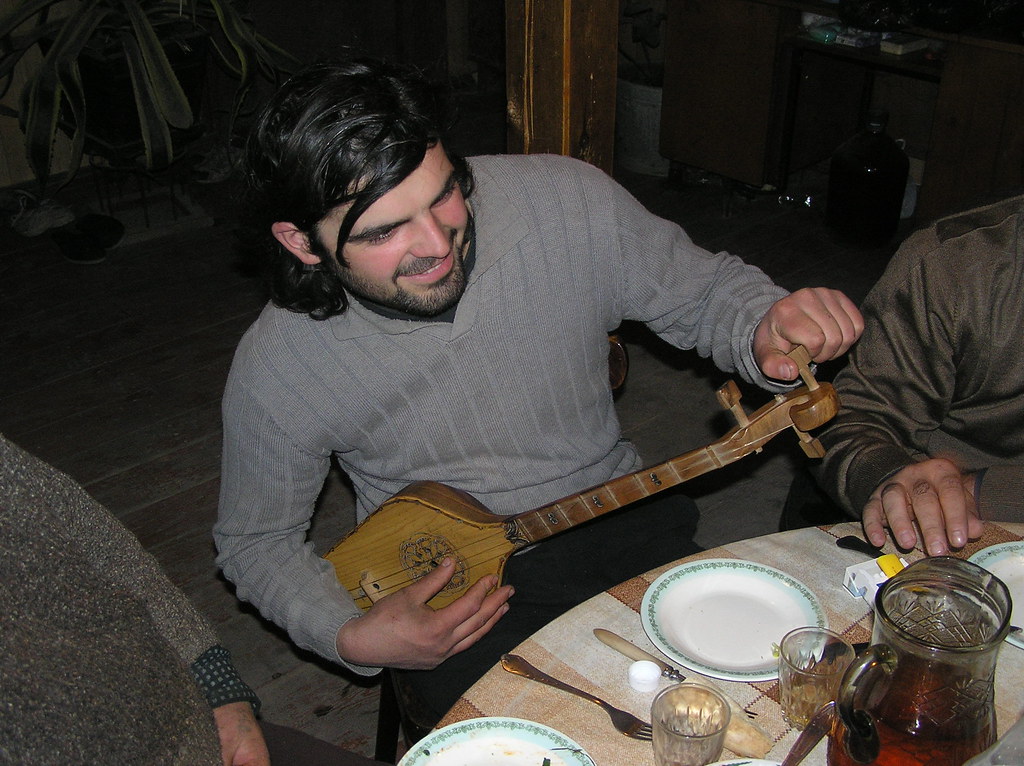
He knocked on strangers’ doors, Going from house to house, With an old oaken panduri And that simple song of his.
But in his song, his song— Pure as the sun’s own gleam— Resounded a truth profound, Resounded a lofty dream.
Hearts that had turned to stone Were made to beat once more; In many, he’d rouse a mind That slumbered in deepest murk.
But instead of the laurels he’d earned, The people of his land Fed the outcast poison, Placing a cup in his hand.
They told him: “Damned one, you must Drink it, drain the cup dry… Your song is foreign to us, We prefer to live in a lie!”
*****
Ioseb Besarionis dze Jughashvili was a Georgian romantic poet who led a million-dollar heist that killed 40 people and funded the Bolshevik revolution. We know him as Joseph Stalin. His story is fascinating… and he is the model for the anti-hero Cassian Andor (Diego Luna) in the Star Wars spin-off TV series Andor.
The BBC has an excellent background article on him and the Andor connection: https://www.bbc.com/culture/article/20250417-how-a-young-joseph-stalin-inspired-star-wars-series-andor: Yes, the troubled outlaw beloved by Star Wars fans everywhere is based in part on one of history’s most notorious mass murderers, as the series’ creator, Tony Gilroy, has acknowledged. “If you look at a picture of young Stalin, isn’t he glamorous,” Gilroy said in an interview in Rolling Stone in 2022. “He looks like Diego!”
The above poem and two others, all translated by David Shook, can be found here: https://molossusexperiment.tumblr.com/fall1/stalin. The link also contains Shook’s observations on Stalin’s qualities as a poet, and on his persecution of poets like Osip Mandelstam for the Stalin Epigram: ... the ten thick worms his fingers, his words like measures of weight,
the huge laughing cockroaches on his top lip, the glitter of his boot-rims.
Ringed with a scum of chicken-necked bosses he toys with the tributes of half-men...
Not having found a title for Stalin’s poem, in this blog post I titled it ‘The Outcast’, though I considered ‘Panduri’.
We met one night at a book launch, we drank, we talked, we laughed, I said, “I’m writing a novel,” and you said, “Send me a draft.”
So I sent it to your address hoping a well-placed word from you would get me started; I waited, but never heard.
Now you’ve published your latest and the critics fellate you in print, it’s a runaway bestseller and Hollywood’s taken the hint.
I read it myself last weekend and my entrails turned to stone— my book, but so badly rewritten you’d almost made it your own.
*****
Brooke Clark writes: “This two-liner by Martial (Epigrams I.38) is the basis of my poem: quem recitas meus est, o Fidentine, libellus: sed male cum recitas, incipit esse tuus. (The book you’re reciting is mine, Fidentinus; but when you recite it badly, it begins to be yours.) Originally read in Wheelock’s Latin, I think, when I was learning the language, this was one of the first versions of Martial I did that I was happy with. I obviously expanded it greatly (I hadn’t learned to appreciate Martial’s concision) but I liked the swingy rhythm and the treatment of it as a mini-narrative that I landed on. Also one of the first epigrams I published, in Light, which gave me some confidence that the project of turning ancient epigrams into contemporary poems might be worth pursuing.”
Brooke Clark is the author of the poetry collection Urbanitiesand has published work in Arion, Literary Imagination, THINK, The Walrus, LA Review of Books, and other places. He is also the editor of the online epigrams journal The Asses of Parnassus and the book reviews editor at Able Muse. Twitter: @thatbrookeclark Bluesky: @brookeclark.bsky.social
On a trip to Paris one day, little Sophie Met a giant lady lighting up the night sky. “What’s your name, you magical monster?” “My many visitors call me the Eiffel Tower.” “In all your attire, don’t you sometimes tire Of being seen only as a humdrum tower? You, a dragon, a fairy watching over Paris, An Olympic torch held aloft in grey skies?” “How you flatter me! So few poets these days Ever sing the praises of my Parisian soul, As did Cocteau, Aragon, Cendrars, Trénet and Apollinaire… Since you’re so good At seeing beneath the surface, you could – If you like, when you’re back from France – Take up your pen and write down Why you like me – it would be nice and fun!” “You can count on me! There’s so much to say! I’ll write twenty lines… but who will read them?” “Well, I know a man who’ll read your verse.” “Really? Who?” “The President of France.”
En voyage à Paris, la petite Sophie Croisa une géante illuminant la nuit. “Comment t’appelles-tu, monstre surnaturel?” “Mes nombreux visiteurs m’appellent Tour Eiffel.” “N’es-tu pas parfois lasse, avec tes mille atours Que l’on ne voie en toi qu’une banale tour? Toi le dragon, la fée, qui veille sur Paris, Toi, immense flambeau planté dans le ciel gris!” “Quel plaisir tu me fais! Ils sont devenus rares Ceux qui comme Cocteau, Aragon ou Cendrars, Trenet, Apollinaire, avaient su célébrer Mon âme parisienne aux charmes singuliers. Puisque tu sais si bien percer les apparences, Tu pourrais, si tu veux, à ton retour de France, Prendre à ton tour la plume et conter en anglais (It would be nice and fun) ce qui chez moi te plaît!” “Tu peux compter sur moi! Il y a tant à dire! Je t’écrirai vingt vers… Mais qui voudra les lire?” “Oh, moi j’en connais un qui lira ton cantique.” “C’est?” “Monsieur le président de la République.”
*****
This poem by French President Emmanuel Macron is in French alexandrine: 12 syllable lines, rhyming couplets. The translation is either by him (he is fluent in English) or by the French Embassy in London, as the poem was written for the English girl Sophie’s 13th birthday. She herself had initiated everything with the poem below, which she had sent in April 2017 to the French President… at that time the President was François Hollande, but Macron won the presidency later that year, and responded for Sophie’s birthday on November 1st. Her poem was 20 lines long, written out on her drawing of the Eiffel Tower; his response is also 20 lines long (counting the final question and answer as a single line, which it clearly is by metre and rhyme).
Here is 12-year-old Sophie’s ‘Centre of Attention’:
She has four beautiful legs, Which help her stand proud, She looks over everyone, With her head in the clouds, She is elegant and tall, Wears a pretty, lacy skirt, Whilst staring at her in awe, Your eyes will not avert, Her spine is amazingly straight, Whilst her head touches the sky, People look up and take pictures of her, As they are passing on by, You need to tilt your head up, To be able to see all of her, But when you do, She is as pretty as a picture, She is the centre of attention, Noticed by everyone. She is the Eiffel Tower, She is second to none.
Macron created a nice circularity with his response to Sophie’s poem, by pretending it was written first and caused Sophie’s poem, rather than the other way round. All very playful.
Would someone kindly tell me please Where the Roman, Flora, went? And where is Alcibiades, Her cousin? In what continent? And Echo, singing merriment… Speak up now, someone, if you know, Is Echo’s lovely timbre spent? And where did last year’s snowflakes go?
And where on earth is Heloise Whose lover’s private parts were rent, The subject of such cruelties Brought down in such a foul descent? And where’s the Queen whose heart was bent Against young Buridan so low She drowned him in the Seine, poor gent? And where did last year’s snowflakes go?
And Blanche, the Queen, who sang with ease, And Siren-like made men content? And Big Foot Bertha, Beatrice? And Arembourg, Maine’s resident? And Joan, who still would not relent Although the flames attacked her so? Virgin, my poor ears are bent! And where did last year’s snowflakes go?
Prince, don’t ask me to invent Responses that seem apropos. In this refrain my answer’s pent: And where did last year’s snowflakes go?
*****
Ballade des dames du temps jadis
Dictes moy où, n’en quel pays, Est Flora, la belle Romaine ; Archipiada, ne Thaïs, Qui fut sa cousine germaine; Echo, parlant quand bruyt on maine Dessus rivière ou sus estan, Qui beauté eut trop plus qu’humaine? Mais où sont les neiges d’antan!
Où est la très sage Heloïs, Pour qui fut chastré et puis moyne Pierre Esbaillart à Sainct-Denys? Pour son amour eut cest essoyne. Semblablement, où est la royne Qui commanda que Buridan Fust jetté en ung sac en Seine? Mais où sont les neiges d’antan!
La royne Blanche comme ung lys, Qui chantoit à voix de sereine; Berthe au grand pied, Bietris, Allys; Harembourges qui tint le Mayne, Et Jehanne, la bonne Lorraine, Qu’Anglois bruslerent à Rouen; Où sont-ilz, Vierge souveraine ? Mais où sont les neiges d’antan!
Prince, n’enquerez de sepmaine Où elles sont, ne de cest an, Qu’à ce refrain ne vous remaine: Mais où sont les neiges d’antan!
*****
Robert Schechter writes: “I wrote this translation of François Villon‘s Ballade several years ago and I don’t remember a whole lot about the process, other than there was a thread at Eratosphere where many people were trying their hand at a translation, and this was my own go at it. I tried to take a breezy tone, almost but not quite humorous, and to my amazement the rhymes I started with didn’t peter out before the ending.”
The poem is published in the current issue of Eclectica.
Robert Schechter is a past winner of the Willis Barnstone Translation Prize and the X.J. Kennedy Parody Award. His book of children’s poems, The Red Ear Blows Its Nose: Poems for Children and Others, was named one of the best books of 2023 by School Library Journal and Bank Street College, after receiving starred reviews from Kirkus Reviews, Booklist, and School Library Journal. His poems have appeared in The Washington Post, The Spectator, Highlights for Children, Cricket, Spider, Ladybug, The Caterpillar, The School Magazine, The Paris Review Online, Poetry East, Measure, Snakeskin, The Evansville Review, and Light, where he also appeared as a featured poet, as well as in several anthologies such as the Everyman’s Library Villanelles and The National Geographic Book of Nature Poetry.