Using form: nonce form; John Beaton, ‘Wolves’

I’m wakened, drawn towards the ice-thin window,
to witness scenes as faint and still as death.
How bleak the moon; how bare the trees and meadows;
sky’s pale maw overhangs
Earth bleached beneath star fangs.
Night’s curled lip sneers on shadows
of mountains set like teeth.

Two bow waves shear the median of the valley,
iced hayfield yields as feral muscles glide–
hoarfrost disturbed by wakes of live torpedoes.
Grey shoulders breach and lope,
implode and telescope,
impelled by ruthless credos
of chilled and vicious pride.

The wolves tear savage furrows down the nightscape;
their eyes are shined with blood, their mission clear.
Grass springs back shocked to green behind their passage–
twin tracks traverse the vales,
cold comets trailing tails
leave scarred in frost their message:
the wolves, the wolves passed here.

*****

John Beaton writes: “This describes a real incident on our acreage when I woke in the middle of a frosty night for no apparent reason and looked out the window. I was struck by the grace, power, and sense of danger the wolves evoked.
“The first three lines are pentameter and the endings alternate—feminine, masculine, feminine. The next four lines contract to trimeter to give a sense of speed and acceleration. Lines two and seven have a masculine rhyme that closes the stanza and ties its parts together. The overall rhyme-scheme is xabccba. My intent was to convey the power and motion of the wolves running and I built in alliteration and internal rhyme to help with this.”

John Beaton’s metrical poetry has been widely published and has won numerous awards. He recites from memory as a spoken word performer and is author of Leaving Camustianavaig published by Word Galaxy Press. Raised in the Scottish Highlands, John lives in Qualicum Beach on Vancouver Island.
https://www.john-beaton.com/

Photo: “Wolves With Northern Lights (Color Corrected)” by edenpictures is licensed under CC BY 2.0.

Using form: alliterative verse: A.M. Juster, ‘Three Visitors’

Mist on moonspill as midnight nears.
Adrift but not dreaming our drowsy son
is covered and kissed. At the kitchen door
our old basset is barking; coyotes out back
are standing like statues down by the dogwoods.
Across the crystal of crusted snow,
they search for stragglers to startle and chase.
Their vigil reveals no victims this night.

Trash would be trouble; they trot away
unbothered by bloodthroated growling and baying.
No star distracts their stealthy march.
As the highway hums they howl through the calm,
then savor new scents that spice their path
in this world awash in wonder and wrath.

*****

Editor’s comments: “Alliterative verse is a form found across the old Germanic language family including Old English, Middle English, Old Norse, Old High German and Old Saxon. It relies on a chant-like use of stressed syllables and does not count all syllables in the way that Romance poetry tends to; and it relies on alliteration rather than rhyme as its key memory-aid for recitation. Although there are many regional variations in the structure, most include these key points:
each line is divided into two halves by a heavy caesura;
each half has two heavily stressed syllables (“lifts”) as well as some unstressed ones (“dips”);
the two lifts of the first half alliterate with the first lift of the second half, but not with the second.
There is a good article on alliterative verse in Wikipedia which goes into more detail and also quotes or references a range of modern poets who have experimented with the form: Tolkien, C.S. Lewis, Auden, Richard Wilbur, Ezra Pound, Heaney… and Alaric Watts for his alliterative abecedarian ‘Siege of Belgrade‘. Alliterative verse can work smoothly and powerfully in English.”

A.M. Juster writes: “After translating the anonymous long Old English poem ‘The Phoenix‘ for a stalled book, I became interested in the possibilities for original alliterative verse—this poem is the first of those poems. A reader should also be able to detect the ghost of a sonnet in it due to the length of the stanzas, the turn, and the closing rhymed couplet.
“The poem started in my mind with the real invasion of coyotes in our suburban Boston neighborhood, but as I struggled with the poem it seemed to be situated in a beautiful place I have never seen—a fusion of our house and the house my bride’s parents used to have in Vermont (where I set an experimental sonnet in my first book).
“Although I think the religious undercurrents are fairly subtle, Micah Mattix & Sally Thomas did include the poem in their recent Paraclete Press anthology of Christian Poetry in America since 1940.”

A.M. Juster’s poems and translations have appeared in Poetry, The Paris Review, The Hudson Review and other journals. His tenth book is Wonder and Wrath (Paul Dry Books 2020) and his next book will be a translation of Petrarch’s Canzoniere, which W.W. Norton will release in early 2024. He also overtweets about formal poetry @amjuster.

Photo: “LZGC coyote” by animaltourism.com is licensed under CC BY-NC-ND 2.0.

George Simmers, ‘Leonard’

Old Leonard said it straight: ‘Let’s not pretend
That death is anything except the end.
You die, you’re done; you’re fed to flames or worms.’
He’d make his point in no uncertain terms,
And Jess recalls the loud and booming laughter
With which he greeted talk of the hereafter.
‘The here and now is all that we have got;
It’s real; the vicar’s fairytales are not.’
She thinks of how he’d neatly phrase a joke;
She clearly hears the forceful way he spoke,
And that ‘Oh but surely…’, with a dying fall
Which clinched an argument once and for all
His words come back to her today as clear
As if the ancient atheist was here.
It’s just as though he’s with her in the room
Though he’s spent years now mouldering in his tomb.

She smiles to think of him, and smiles again
To think how he’s a fixture in her brain.
She even caught herself the other day
Clinching her point in just old Leonard’s way,
With ‘Oh but surely…’ Should she then infer
A trace of him is still alive in her?
Well — a man of such large humour and such drive —
Why be surprised if something should survive?

Now, ten years on, Jess too is dead and gone,
But some things have a way of lingering on.
That ‘Oh but surely…’ with that intonation
Has somehow reached another generation.
Jane, Jess’s daughter, last week floored the board
Of the college with it, and so neatly scored
Her point that they in unison agreed
To fund her project. Phrasing’s what you need,
And Jane knows that, but what she doesn’t know,
Is that trick came from Leonard long ago,
And Leonard learned it many years before
From his Latin teacher. So, how many more
Homes will this little trick of speaking find
As it nips cleverly from mind to mind?

Though death is death, and funerals are for tears,
Some things can oddly echo through the years.

*****

George Simmers has written many poems “about people dealing with what life has given them, for better or for worse.” Fifteen of them are collected in his book ‘Old, Old’. His other recent and more diverse collection is ‘Old and Bookish’.

George Simmers used to be a teacher; now he spends much of his time researching literature written during and after the First World War. He has edited Snakeskin since 1995. It is probably the oldest-established poetry zine on the Internet. His work appears in several Potcake Chapbooks.
https://greatwarfiction.wordpress.com/
http://www.snakeskinpoetry.co.uk/

Photo: “Danger of Death By Failing” by AlmazUK is licensed under CC BY-NC-SA 2.0.

Sonnet: ‘Visiting Earth’ (from the series ‘Voices From The Future’)

I like to visit Earth sometimes; I find
the too-brief lives and simple cares a change
from the infinities in which we range,
we who now live unbodied in vast Mind.

I love to watch the children at a zoo,
careering up and down, shrieking to see
the strange lives in the weird captivity
they also share…and as their parents do.

Visiting in – of course – a human guise,
I can be young or old, female or male;
sex, power, seduction never seem to stale,
to give gifts seems fair pay for all my lies.

Sailors and tourists visit and then leave;
it’s best their hosts have something to believe.

*****

This sonnet was published in the current Alchemy Spoon, which had ‘Gift’ as its theme. It is one of a series of ‘Voices From The Future’ sonnets which I wrote in an attempt to present more diversity than the bleakness that Maryann Corbett had identified in my writing of what I see coming. Others are ‘Ultimate Control’ (Pulsebeat), ‘Exiled Leader’ (Star*Line) and ‘Dreaming of Flying’ (unpublished). Well, some people may find them all bleak, in the same way that Victorians would have found a description of today to be bleak; but what with travel, the Internet, dentistry… I’d rather be alive now than in the past. Similarly, I look forward to the future, no matter how much change is involved.

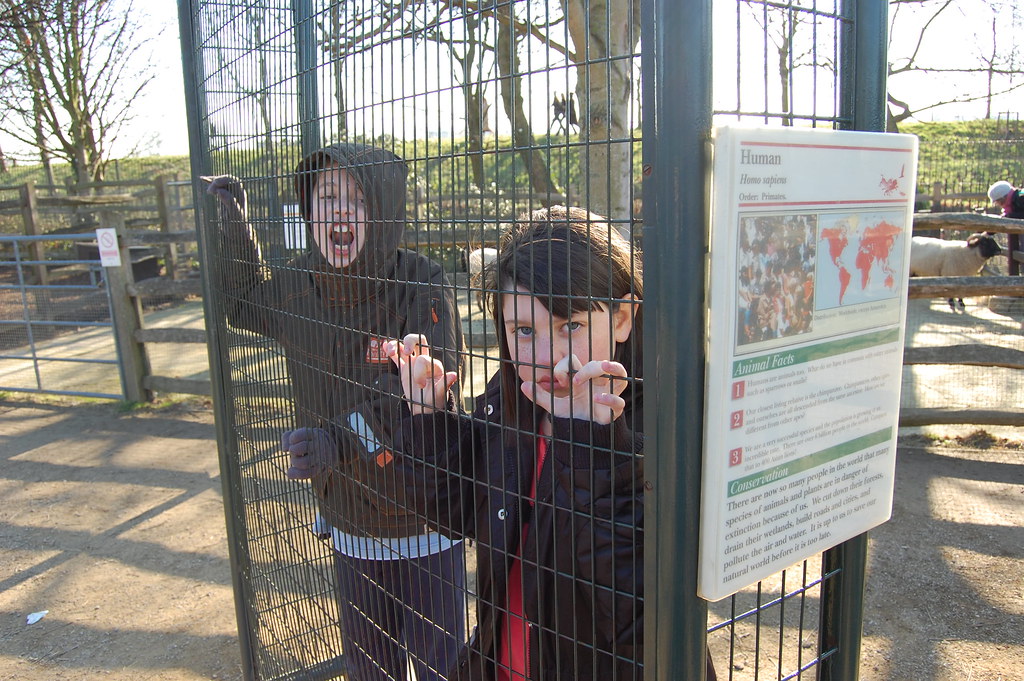
“London Zoo, Human Exhibit” by fhwrdh is licensed under CC BY 2.0.

Ed Shacklee, ‘I Think Continually Of Men Dressed As Catherine The Great’

I think continually of men dressed as Catherine the Great,
Betty Boop or Greta Garbo, queens of film and state
who hitched their wagons to a star and switched the sex of Fate.

I think of fervid men in furs, the Humphries and the Dannies,
those lads who walked the walk in highest heels and padded fannies
and promenaded on the stage with debutantes and grannies –

the young, the old, the gayly bold who sashayed with panache
through droll burlesque or discotheques and made a spangled splash
in rainbow-hued ensembles that, while loud, would never clash.

They shaved and plucked, then nipped and tucked, ignoring boring foes
whose morals lagged while knuckles dragged around their unclipped toes.
These Joans – both Crawford and of Arc – and Marilyn Monroes

were kicked for kicks and picked upon, but got back up again;
and whether they were women inside men, or simply men
who liked to paint their nails and put on lipstick now and then,

I think continually of those whose vampy, cutting wit
and campy fame enflamed, then tamed, the bigot and the twit,
who were hammered till they stammered by their glamour and their grit
until a world a size too small became the perfect fit.

*****

This poem by Ed Shacklee, with its reference to Stephen Spender’s ‘I think continually of those who were truly great‘, was published in the current issue of Lighten Up Online.

Ed Shacklee lives on a boat in the Potomac River. His first collection, “The Blind Loon: A Bestiary,” was published by Able Muse Press.

And for those who like odd information and representations of animals, The Blind Loon: A Bestiary Facebook group is worth joining.

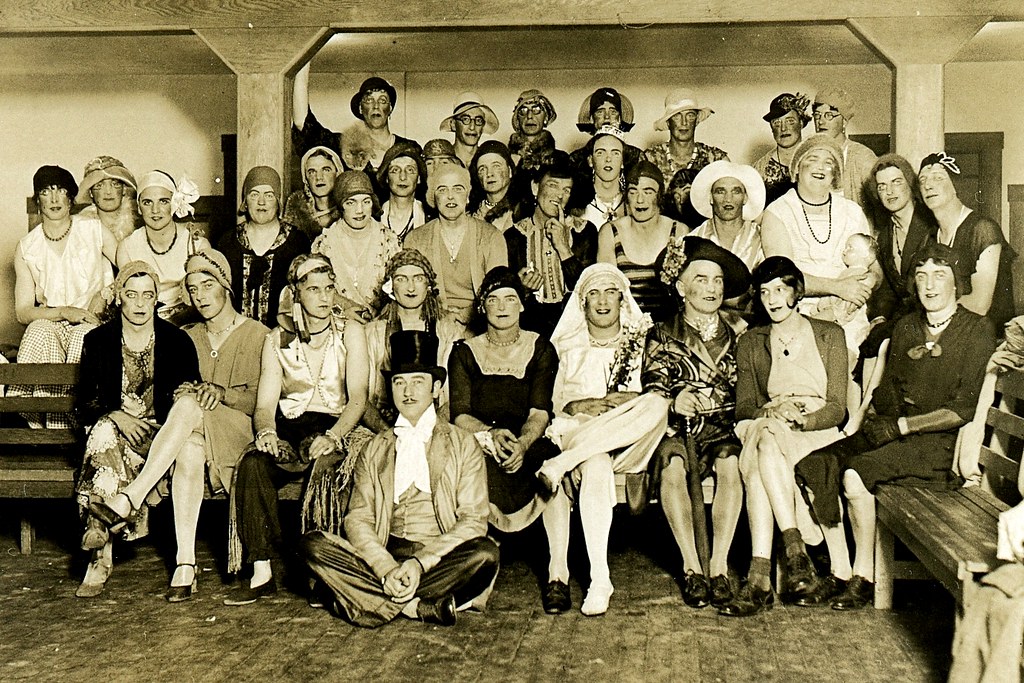
Photo: “Men in Drag” by jacki-dee is licensed under CC BY-NC-ND 2.0.

Marcus Bales, ‘Me and the Moon’

Her presence was the organizing spice
that made the dish; the multivalent pun;
the compliment whose humor takes you twice
as far aback in unexpected fun,
her laughter tinkling like a scoop of ice
cubes thrown on glass bottles in the sun
that heats a summer vacation afternoon.
This morning though it’s only me and the moon.

Me and the distant moon, who’s not as far
away as she and I have now become.
She laughs that laugh while I sit in this bar
and wonder how I could have been so dumb
to leave where all the things I value are
and vanish in this alcoholic slum,
regretting what I’ve kept and what I’ve strewn
this morning when it’s only me and the moon.

And now the moon is pretty far advanced
along its ambit’s arc above this place
where one is propositioned, not romanced,
and conversation lacks both wit and grace.
I shuffle now where once I might have danced
and face the fact that this is what I face,
however jaded or inopportune,
this morning while it’s only me and the moon.

L’envoi
Barman! Bring another tinkling glass
or two, and we will claim that we’re immune
to all this pitiful alas alas
this morning, you, and me, and the goddamned moon.

*****

Marcus Bales writes: ” ‘Me and the Moon’ was prompted by Cleveland singer-songwriter Alex Bevan’s post on Facebook back in the oughties, I think. He posted early in the morning that he was looking out the window at the dark and reflecting on his life, thinking that it was just ‘me and the moon’. He’s happily married, and so am I, but the poignance of the phrase somehow seemed significant, and I instantly absconded with his idea. As I recall, the poem was pretty quickly written because however happy we may now be, we all have regrets or unhappinesses to remember. I’ve never been much into the bar life but at the time my wife and I had discovered a wine bar we liked to hang out at where we knew the bartender, and I was eased into just going to the bar to chill and observe and listen. Of course Western culture is soaked in alcohol, but I had not been. It was interesting to see how the whole thing worked — and didn’t work.”

Not much is known about Marcus Bales except that he lives and works in Cleveland, Ohio, and that his work has not been published in Poetry or The New Yorker. However his ’51 Poems’ is available from Amazon. He has been published in several of the Potcake Chapbooks (‘Form in Formless Times’).

“LAS VEGAS, NEVADA 100” by Mikes Camera is licensed under CC BY 2.0.

Gail White, ‘The Solitary Woman’

In a tiny cottage called the Laurel Tree,
my neighbor lived alone. Nobody came
to see her and she had no family,
so week by week her life was much the same:
she went to church and said the rosary,
took in the mail for neighbors out of town,
adopted cats, watched MSNBC,
and at a roll-topdesk she wrote things down–
things no one ever saw, although we guessed
a novel, memours, poetry, and more–
but we saw nothing, though we did our best.
And when she died alone, at eighty-four,
with no companion but a big gray cat,
we pitied her. We were such fools as that.

*****

Gail White writes: “People often pity someone who lives alone for being lonely. But the Solitary Woman isn’t lonely; she’s complete. I’m always pleased when readers like this one, because I know they got the point.”

Gail White is the resident poet and cat lady of Breaux Bridge, Louisiana. Her books ASPERITY STREET and CATECHISM are available on Amazon. She is a contributing editor to Light Poetry Magazine. “Tourist in India” won the Howard Nemerov Sonnet Award for 2013. Her poems have appeared in the Potcake Chapbooks ‘Tourists and Cannibals’, ‘Rogues and Roses’, ‘Families and Other Fiascoes’, ‘Strip Down’ and ‘Lost Love’.
https://www.amazon.com/Asperity-Street-Gail-White/dp/1927409543

“Woman on Empty Solitary Red Chair in Desolate Landscape” by Amaury Laporte is licensed under CC BY-NC 2.0.

Short poem: ‘Poetic Tours de Force’

We aim to sing
Boldly as the brave acrobat on his thin string
Across the air.
But yet, no matter how we juggle words and dare,
And think ourselves stupendous,
We’re risking nothing… we’re no Flying Wallendas.

*****

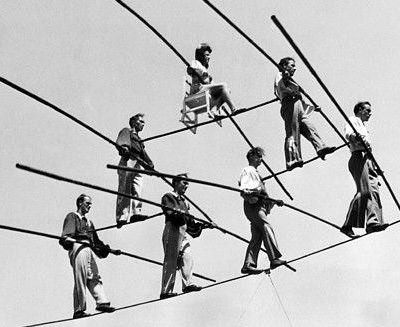
The Seven-Person Pyramid, the creation of Karl Wallenda, cost a couple of the acrobats their lives in 1962. https://www.heraldtribune.com/story/news/2012/06/10/wallendas-history-one-of-greatness-and-tragedy/29102856007/ Poetry may also try for spectacular effects, but without the inherent dangers of the highwire. Poets are more likely to risk their lives through their livers than anything else.

This short poem was just published in Lighten Up Online (thanks, Jerome Betts!)

J.D. Smith, ‘Consultative’

The noted scholars of the institute
Are tasked with framing issues and debate.
Through data and the values they impute
By proxy–or assume—they correlate

The wealth of nations and their policies,
Distinguishing phenomenon and cause
Until equations cut through fallacies,
Assuming over time the air of laws.

Accordingly, with every factor weighed,
The State will be apprised of how to spend.
In high demand, proportionately paid,
Those who’ve advanced their field approach day’s end

With puzzles yet to solve, but satisfied,
And step around the beggars stretched outside.

*****

J.D. Smith writes: “The poem arises from the daily–and uneasy–contrast between ‘Washington’, the arena of politics and policy that draws players from around the world, and ‘DC’, the place that most residents know, with all the attendant problems of urban life in the United States. (I work in the former, though in a minor capacity, and live in the latter.) A complex society needs experts, so I won’t get on the bandwagon of anti-intellectualism, but I remain deeply troubled by the disconnect between many of those experts’ abstract work, accompanied by ambition, and how they address or refuse to address the actual human beings they encounter.”

J.D. Smith has published six books of poetry, most recently the light verse collection Catalogs for Food Lovers, and he has received a Fellowship in Poetry from the United States National Endowment for the Arts. Smith’s first fiction collection, Transit, will be published in December 2022. His other books include the essay collection Dowsing and Science. Smith works in Washington, DC, where he lives with his wife Paula Van Lare and their rescue animals. Twitter: @Smitroverse

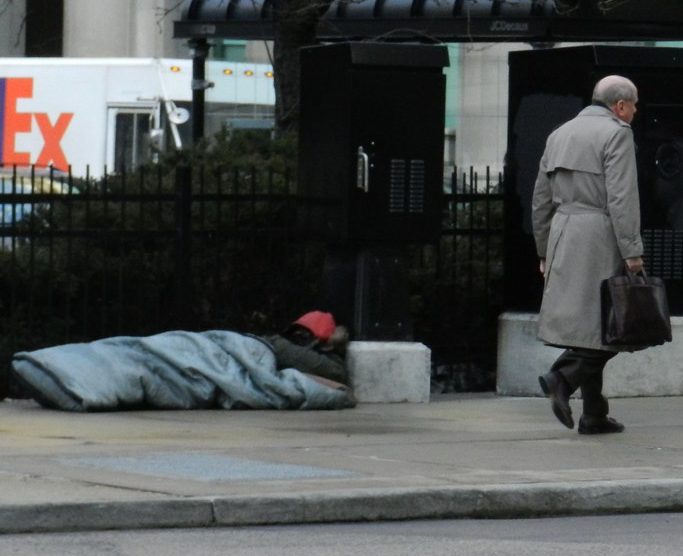
“Separated at Berth” by Chicago Man is licensed under CC BY-NC 2.0.

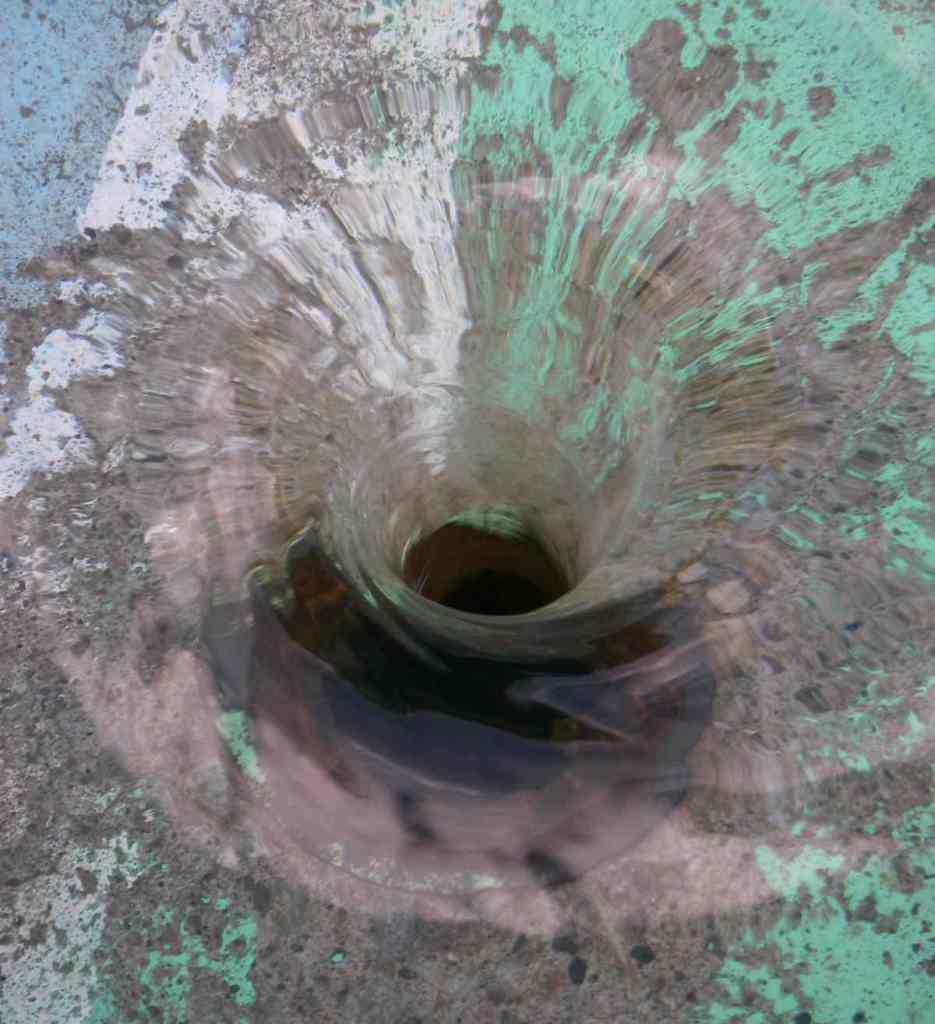
Short poem: ‘Death Spiral’

We spiral round the sun, like water
spirals round a drain;
herded like sheep to the slaughter,
it’s an old refrain–
what you coulda, what you oughta…
so few years remain.

*****

This short poem was recently published in The Asses of Parnassus – thanks, Brooke Clark! Btw sorry if the poem seems morbid – fall/winter has always made me reflective; I’ve been feeling time running out since my teens.

“File:Pool drain vortex as viewed from above the water at Grange Park wading pool.jpg” by Glogger at English Wikipedia is licensed under CC BY-SA 3.0.