Using form: Refrain; Nina Parmenter, ‘Sense’

I am a bag of chemicals
with charge for eighty years,
I am a gassy mirage
that winks as oblivion nears.
Around me swill the stars,
my thoughts, the gods and insanity,
and nothing makes sense but this leaf
as it dances, drunk on gravity.

I am a pointless voice track
on a puff piece of DNA,
I am the ooze that awoke
and decided to live anyway.
Around me swings the void,
nirvana and calamity,
and nothing makes sense but the sea
as it dances, drunk on gravity.

*****

Nina Parmenter writes: “In 2021, in my strenuous efforts not to write pandemic poems, I probably wrote a lot of pandemic poems. This one, about focusing on tiny moments in nature to avoid thinking about the big scary things is a great example! I made it a foreword to my collection ‘Split, Twist, Apocalypse‘ because its slightly jolly air of existential dread sets the tone for the book nicely, I think.”

Editor’s comment: As with popular songs as well as verse forms such as the ballade, villanelle, triolet and rondeau, the use of a refrain (whether exact or varied) strengthens the poem by bringing the conclusion of each stanza back to a core image or message.

Nina Parmenter has no time to write poetry, but does it anyway. Her work has appeared in Lighten Up Online, Snakeskin, Light, The New Verse News, Ink, Sweat & Tears, and the Potcake Chapbook ‘Houses and Homes Forever’. Her home, work and family are in Wiltshire.
https://ninaparmenter.com/

“Time Lapse of Stars During Earth’s Rotation” by Image Catalog is marked with CC0 1.0.

Humorous Verse: Chris O’Carroll, ‘Sounds Insensible’

We fireproof our buildings asbestos we can.
Dutch cheeses taste Gouda; to Edam’s the plan.
Urine the money with pay-to-pee loos.
Why pick one’s own footwear? Have Jimmy Choo’s.
On the value of avarice all are agreed,
And we’re searching in vein to find out why we bleed.
Uncouth at the centaur of ancient myth action,
Half-horse plus half-man equals one whole infraction.
You’ve eyed it before, so this sight’s deja view.
If you’re an identical twin, I’m one, two.
The teacher drew circles but said pie are squared.
I’ve lost my left arm; my right’s left unimpaired.
Do the rich suffer gilt in a gold-toilet suite?
Does a one-legged marathon mean half defeat?
Those hotdogs were bad, but these brats are the wurst.
This poem is arse-backwards. It must be reversed.

*****

Chris O’Carroll writes: “It was Oscar Levant, I believe, who said that a pun is the lowest form of humor unless you are the first person to think of it. A while back The Spectator ran a contest that called for poems riddled with puns. John Whitworth used to distinguish between ‘real poems’ and ‘competition poems’, and this effort of mine is probably a candidate for the latter category, but it did win me a few quid.”

Chris O’Carroll appears in New York City Haiku and The Great American Wise Ass Poetry Anthology, yet has won British poetry prizes from Flash 500, Literary Review, the Spectator, and elsewhere.  His collections ‘The Joke’s on Me’ and ‘Abracadabratude‘ are available from Kelsay Books.
http://lightpoetrymagazine.com/summerfall-2015-issue-table-of-contents/

Short poem: ‘Punster’

The artist said the wit
was “full of it”,
disparaged him.
The punster tore the painter limn from limn.

*****

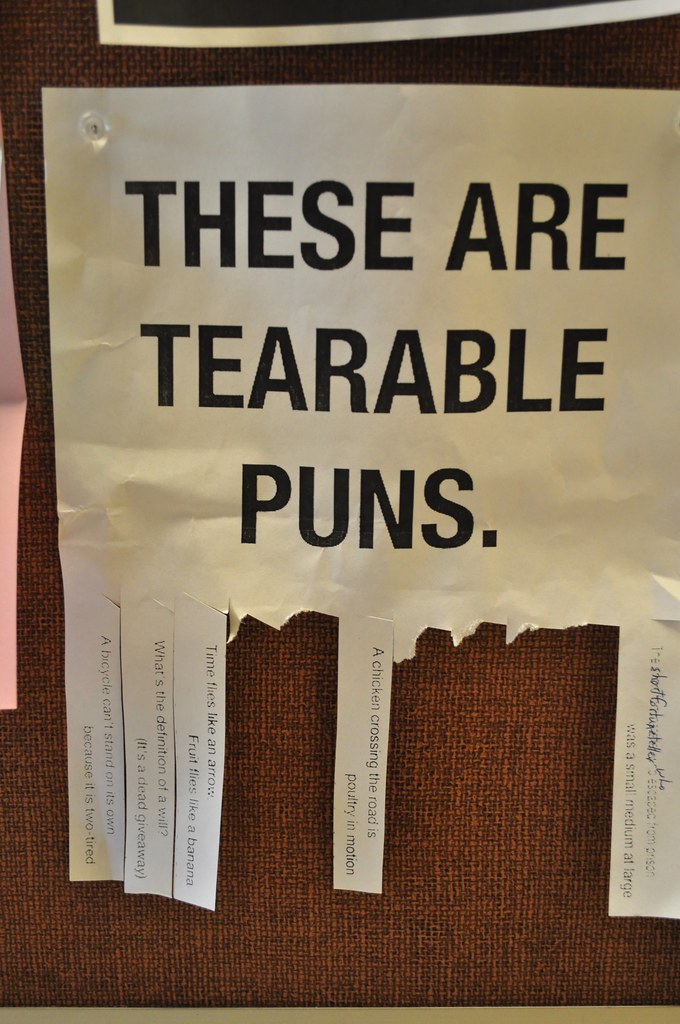
Apparently some people believe that puns are “the lowest form of humour”, but I would suggest that those people are not good at wordplay, and therefore have no poetic sensibility. Look to Homer, Shakespeare and Samuel Johnson for puns; enjoy more discussion and examples here.

This short poem was published in The Asses of Parnassus, home of “short, witty, formal poems”. Thanks, Brooke Clark!

Photo: “punster” by danbruell is licensed under CC BY-NC-SA 2.0.

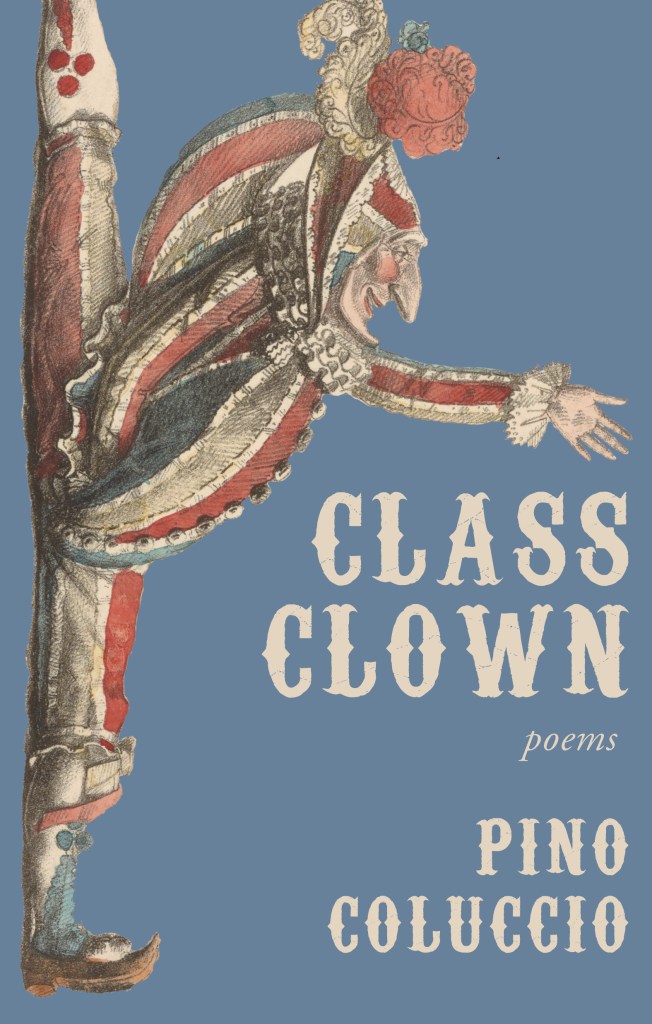
Pino Coluccio, ‘Class Clown’

They’d all be like, never say never
in classes we had, but whatever.
I turned to the windows and hallways
that always said always say always.

*****

Editor’s comments: From Pino Coluccio you should expect light and dark combined, light but deep, usually short, always well-phrased… and always existential. This, the eponymous piece of his 2017 collection, is tucked away in the middle of the book. The book won a Trillium Award, putting Coluccio in the company of Margaret Atwood, Michael Ondaatje and Alice Munro. He has given me permission to republish more of his pieces from Class Clown periodically.

Pino Coluccio lives in Toronto.

Using form: Roundel: Susan McLean, ‘No Thanks’

No one wants to be the damsel in
distress, the one in need of chivalry,
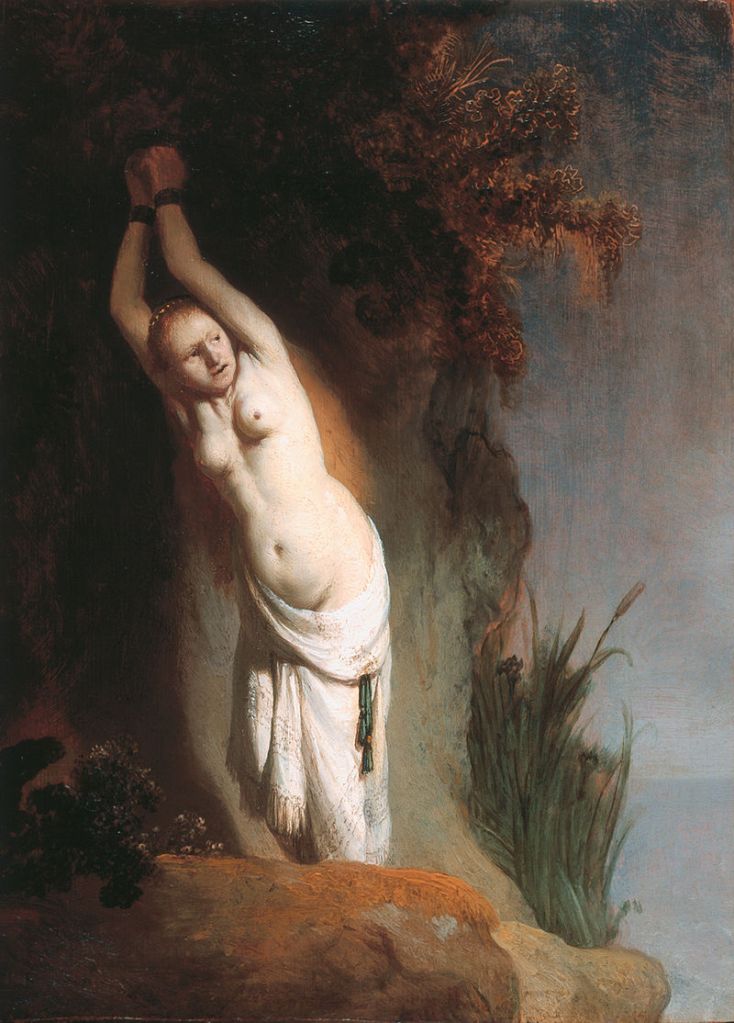
chained to a rock in nothing but her skin.
No!  One wants to be

the one who skirts the trap and steals the key,
testing the rope bridge with a shaky grin.
Whoever longs for victims he can free

is not a hero, but the villain’s twin.
So save yourself.  Don’t go expecting me
to play the clingy wimp, the might-have-been
no one wants to be.

*****

Susan McLean writes: “This poem got its start when I heard that Kirsten Dunst said, about playing Mary Jane in Spider-Man (2002), “I just don’t want to be the damsel in distress. I’ll scream on the balcony, but you’ve got to let me do a little action here.” It struck a chord with me. I was so tired of watching action movies in which the male hero does all of the derring-do and the female lead exists only to be saved, over and over again. Men still write, direct, and produce most films, so I guess it is not surprising that most movies reflect male fantasies. But women have fantasies, too, and screaming while I wait to be saved is not one of mine.
“The poem is a roundel, a poetic form invented by Algernon Swinburne. As in a rondeau, the poem has only two rhymes, and the first part of the first line appears twice more. Part of the fun of writing it lies in finding ways to vary the repeating line, and part lies in the challenge of finding five rhyme words for each rhyme. English averages fewer rhymes per word than French, the language in which the rondeau originally appeared. Swinburne chose to make the roundel shorter than the rondeau (which is fifteen lines long) in order to make it easier to write in English.
” ‘No Thanks‘ originally appeared in Mezzo Cammin, an online journal that features female formalist poets. It was also included in my second poetry book, The Whetstone Misses the Knife.”

Susan McLean has two books of poetry, The Best Disguise and The Whetstone Misses the Knife, and one book of translations of Martial, Selected Epigrams. Her poems have appeared in Light, Lighten Up Online, Measure, Able Muse, and elsewhere. She lives in Iowa City, Iowa.
https://www.pw.org/content/susan_mclean

Painting: ‘Andromeda Chained to the Rocks‘ by Rembrandt Harmensz. van Rijn, ca. 1630

Using form: Ballade: Marcus Bales, ‘Scary Home-Life’ (for GTZ)

Get up, get out, and get away–I went
as early as I could to leave one vile
exposure for another. School. It meant
escape from home at least a little while,
not long enough, and trading family guile
for reading sullen peers and teacher spin,
except for you, beside me on the aisle–
I was the girl with the scary home-life and bad skin.

I was first to homeroom every day.
And how did Mr Romo ever know
that half a sausage sandwich was the way
a skinny girl survived. He’d always go
“Good morning,” handing me a half as though
that half were mine and we were somehow kin;
I’d nod my thanks and sit in the back row–
I was the girl with the scary home-life, and bad skin.

And you, who sat beside me, always kind
to me, and always kind of sassy tough
to other kids who other years combined
to make me almost miserable enough
to stay at home, from you I learned to bluff
my inner fear, to fake a cocky grin,
and start to walk as if it wasn’t rough
to be the girl with the scary home-life, and bad skin.

L’envoi
Yeah, it was you and Mr Romo, in the end,
who gave me things that I could not begin
to pay you back for, so even I’d befriend
the girl with the scary home-life, and bad skin.

*****

Marcus Bales writes: “I have a modest file of poems that have got me unfriended, blocked, or banned by people or publications, for one reason or another. Sometimes, as in this case, the reason is unknown to me. 

“Back in the old days when I was a working salesman at the sort of retail store where it takes an hour or two to walk around the store with your salesperson and discuss wants and needs and preferences, it is often the case that the customer gets comfortable enough to tell things about themselves or their lives that they might hesitate to repeat without canny encouragement. Here, a vivacious and attractive young couple were moving in together and needed furniture and a bed. They were excited, and money was not an issue. It turned out the young woman had been an officer in the Marines or the Army — I forget which at this distance — in one of the rougher, tougher units, and I admired her for having the stuff to lead in that mise en scene. She recounted that she had felt driven to it by a harrowing early family life, complete with the sort of acne that is every teen’s nightmare. A scary home-life and bad skin was her description of it. After the sale was completed I wrote most of this poem in the break room in the back, after climbing on the table to turn off the Muzak speaker so I could think. 

“I discovered she had friended me on Facebook and had written some nice things about me at the store, which was very nice of her. Of course even back then I was posting my poems on Facebook, and posted this one, without her name, but with her initials. All the details are entirely fictional. I made them all up, except for that one line. She blocked me right away.”

Editor’s note: a ballade is a very suitable form for this poem, with iambics for thoughtful mood, claustrophobically restricted rhyme scheme, steady refrain, and final summation addressed to a superior person. From the Wikipedia entry ‘Ballade (forme fixe)‘: “The ballade as a verse form typically consists of three eight-line stanzas, each with a consistent metre and a particular rhyme scheme. The last line in the stanza is a refrain. The stanzas are often followed by a four-line concluding stanza (an envoi) usually addressed to a prince. The rhyme scheme is therefore usually ababbcbC ababbcbC ababbcbC bcbC, where the capital C is a refrain.”

Not much is known about Marcus Bales except that he lives and works in Cleveland, Ohio, and that his work has not been published in Poetry or The New Yorker. However his ’51 Poems’ is available from Amazon. He has been published in several of the Potcake Chapbooks (‘Form in Formless Times’).

Photo: “skinny girl” by Villegación is licensed under CC BY-NC-SA 2.0.

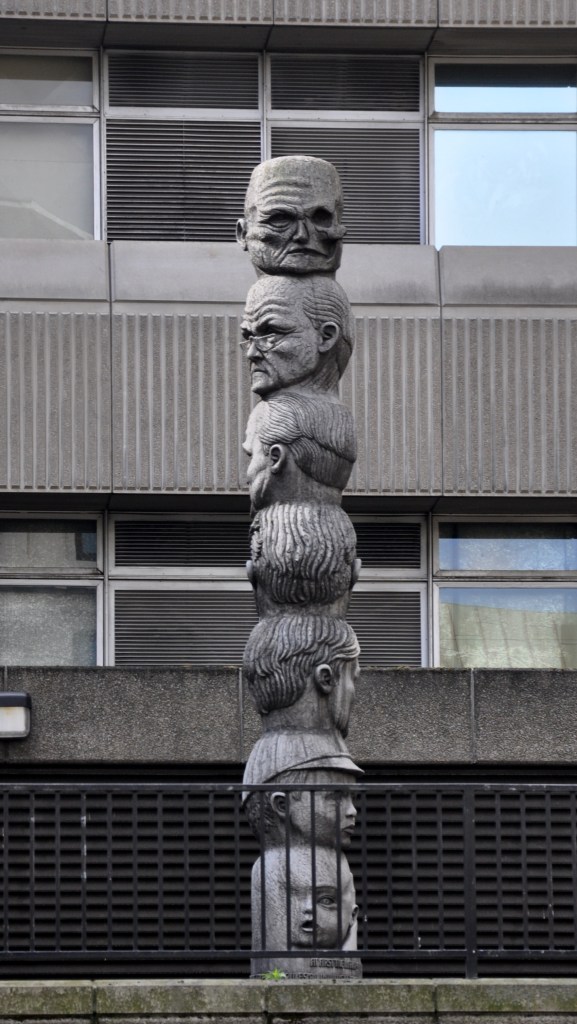
J.D. Smith, ‘Seven Ages of Man’

I puked and cried–that’s what Mom said.

School sucks. Why can’t I stay in bed?

I want that girl. What is her name?

I’ll kick some ass and stake my claim.

I’m fat. So what? I’ve won the game.

I limp these days, and feel the gout.

Say, now, what was all that about?

*****

J.D. Smith writes: “I hesitate to say very much about this poem, as it plays so blatantly off of Shakespeare, but a short explanation seems in order. The third-person eloquence and loftiness of the original stands in contrast to how we experience the stages of life, and it occurred to me to bring the discussion down to earth with a series of plain first-person statements.”

J.D. Smith has published six books of poetry, most recently the light verse collection Catalogs for Food Lovers, and he has received a Fellowship in Poetry from the United States National Endowment for the Arts. This poem is from The Killing Tree (Finishing Line Press, 2016).Smith’s first fiction collection, Transit, will be published in December 2022. His other books include the essay collection Dowsing and Science. Smith works in Washington, DC, where he lives with his wife Paula Van Lare and their rescue animals. Twitter: @Smitroverse

Photo: “File:Baynard House Seven Ages of Man.jpg” by Photo: Andreas Praefcke is licensed under CC BY 3.0.

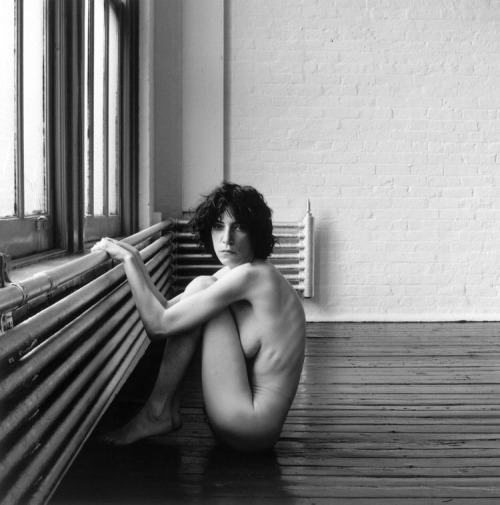
Ekphrastic poem: Jenna Le, ‘Patti Smith, 1976’

This photo, black-and-white, where Mapplethorpe
portrays his dark-mopped ex in profile, seated
nude on wooden floorboards, knees drawn up
against her breasts to hide her nipples, heated
by the sideways radiator pipes
on which she rests her palms, her bulging ribs
a set of parallel oblique gray stripes
rippling her bare white skin, unsmiling lips
a short flat line–
these were my first parameters,
my inspirations, when I learned to write.
On Patti’s ribs, the wooden flooring’s planks,
the stacked pale pipes, I modeled my pentameters.
The aim: amid such sharp lines, to be frank
and raw, yet still control what sees the light.

*****

Jenna Le writes: “I first became intrigued by the friendship and creative partnership of Patti Smith and Robert Mapplethorpe some years ago. I confess the personas of these two artists and the touted relationship between them interests me even more than either artists’ actual creative output. Based on what I have read in biographies and so forth, their friendship seems to me to represent an ideal: a dyadic connection characterized by remarkable intensity, an intimacy transcending sex and conventional relationship definitions, facilitating both parties’ creative flourishing. As one gets older and it becomes ever harder to form new meaningful adult friendships, such bonds seem to me ever more mythic and miraculous. I think this awe, this wistfulness, is the principal emotion that makes me keep returning to the photograph this ekphrastic poem is about.”

Jenna Le (jennalewriting.com) is the author of three full-length poetry collections, Six Rivers (NYQ Books, 2011), A History of the Cetacean American Diaspora (Indolent Books, 2017), and Manatee Lagoon (Acre Books, 2022). She won Poetry By The Sea’s inaugural sonnet competition. Her poems appear in AGNI, Pleiades, Verse Daily, West Branch, and elsewhere. She works as a physician in New York City.

Photo: Robert Mapplethorpe’s sole full nude portrait of Patti Smith, taken at his Bond Street Studio, 1978 © Robert Mapplethorpe Foundation. Courtesy Sean Kelly Gallery

Using form: sonnet variation: Amit Majmudar, ‘A Pedestrian’

He window shops. He yawns. He checks his watch.
He sips his Starbucks through a spillproof lid.
No one knows who he is or what he did
except a black van loitering down the block.
He buys a pack of gum. Briefly he stops
to crouch and read the headlines of the Times
before continuing up 12th and Vine.
His neck prickles. He slows. The coffee drops

and before it has landed he’s off like a hound at the races
he is hurdling strollers and ducking a chilidog raised
to the mouth checkered taxis grow fists as he cuts
into oncoming traffic our cellular phones snap shut
in amazement look billowing trenchcoats give chase
fleshcolored earpieces dangling a flush to their faces

*****

Amit Majmudar writes: “The actor Alfred Molina recorded ‘A Pedestrian‘ for the Poetry Foundation many years ago: https://www.wnyc.org/story/52133-poetry-off-the-shelf-amit-majmudar/ . It’s an excellent rendition. I remember feeling, when I heard that recording back in 2006 (at the tender age of 27), that I had finally “arrived” as a poet—after all, the guy from the opening sequence of Raiders of the Lost Ark had spoken my words! I don’t often write sonnets, but ‘A Pedestrian‘, with its metrical shift from walking to running at the volta (dovetailing with the idea of metrical “feet”), was a fun poem to write.”

Amit Majmudar is a poet, novelist, essayist, translator, and the former first Poet Laureate of Ohio. He works as a diagnostic and nuclear radiologist and lives in Westerville, Ohio, with his wife and three children. 
      Majmudar’s poetry collections include 0’, 0’ (Northwestern, 2009), shortlisted for the Norma Faber First Book Award, and Heaven and Earth (2011, Storyline Press), which won the Donald Justice Prize, selected by A. E. Stallings. These volumes were followed by Dothead (Knopf, 2016) and What He Did in Solitary (Knopf, 2020). His poems have won the Pushcart Prize and have appeared in the Norton Introduction to Literature, The New Yorker, and numerous Best American Poetry anthologies as well as journals and magazines across the United States, UK, India, and Australia. Majmudar also edited, at Knopf’s invitation, a political poetry anthology entitled Resistance, Rebellion, Life: 50 Poems Now. 
      Majmudar’s essays have appeared in The Best American Essays 2018, the New York Times, and the Times of India, among several other publications. His forthcoming collection of essays, focusing on Indian religious philosophy, history, and mythology, is Black Avatar and Other Essays (Acre Books, 2023). Twin A: A Life (Slant Books, 2023) is the title of a forthcoming memoir, in prose and verse, about his son’s struggle with congenital heart disease. 
      Majmudar’s work as a novelist includes two works of historical fiction centered around the 1947 Partition of India, Partitions (Holt/Metropolitan, 2011) and The Map and the Scissors (HarperCollins India, 2022). His first children’s book also focuses on Indian history and is entitled Heroes the Colour of Dust (Puffin India, 2022). Majmudar has also penned a tragicomic, magical realist fable of Indian soldiers during World War I, Soar (Penguin India, 2020). The Abundance (Holt/Metropolitan, 2013), by contrast, is a work of contemporary realism exploring Indian-American life. Majmudar’s long-form fiction has garnered rave reviews from NPR’s All Things Considered, the Wall Street Journal, Good Housekeeping, and The Economist, as well as starred reviews from Kirkus and Booklist; his short fiction won a 2017 O. Henry Prize.   
      Majmudar’s work in Hindu mythology includes a polyphonic Ramayana retelling, Sitayana (Penguin India, 2019), and The Mahabharata Trilogy (Penguin India, 2023). His work as a translator includes Godsong: A Verse Translation of the Bhagavad-Gita, with Commentary (Knopf, 2018).

Photo: “a hot drink” by [ embr ] is licensed under CC BY-NC-SA 2.0.

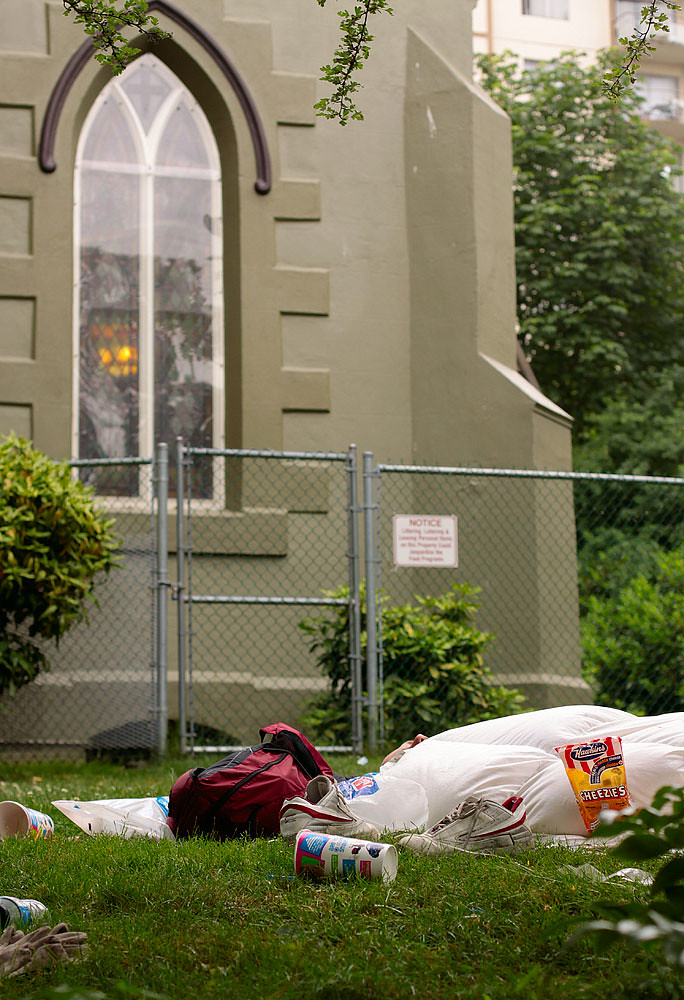
Using form: Couplets: Maryann Corbett, ‘Fugue in October’

Baroque chamber ensemble and homeless encampment, Saint Paul

Perfect: the singers, strings, and keyboards. Perfect
Bruised sky above the tents of the squatters’ district
the little jewel-box church, its bright acoustic
calm in the year’s last mildness, the only music
softened a little in the candles’ lighting,
the mumbling underpass. The wind. No fighting
for this is God’s mind, woven of harmonies
for once. Tonight, for once, no one ODs—
and our souls thread through the flame of the vigil lamp
someone got lucky at the entrance ramp
as we hold, hold to Monteverdi’s line
(panhandling, on this warm day, with a sign)
and stop our breath until the last string dies
and parcels out his manna of salty fries
in the last great chord of his Beatus vir
while sirens wail some sorrow, far from here.

*****

Editor’s comments: “In case it isn’t clear from whatever device you are reading this on, each couplet here is comprised of a line about a musical ensemble in a church followed by a line about a homeless encampment under a highway. You can read it straight through as a soft-voiced line followed by a harsher one; or you can read every other line in one voice and the remaining lines in a different voice; either way, you are blending two very different aspects of city life into a larger, richer picture of community sharing, whether in glamour or squalor. This is an unusual and remarkably effective use of rhymed couplets of iambic pentameter.
The contrast built into the poem, and the skill with which it was done, made it a natural poem for inclusion in the ‘City! Oh City!‘ Potcake chapbook. It first appeared in Measure Review; and is included in the collection In Code.“

Maryann Corbett writes: “Events that trigger a poem need not be as simultaneous as the poem makes them seem. The choral concert in this poem took place on a subzero night during the Christmas season; the rise of homeless encampments occurred at a warmer time of year–but both could be happening in my city at any time, and they probably still are.”

Maryann Corbett earned a doctorate in English from the University of Minnesota in 1981 and expected to be teaching Beowulf and Chaucer and the history of the English language. Instead, she spent almost thirty-five years working for the Office of the Revisor of Statutes of the Minnesota Legislature, helping attorneys to write in plain English and coordinating the creating of finding aids for the law. She returned to writing poetry after thirty years away from the craft in 2005 and is now the author of two chapbooks, five full-length collections already published, and a forthcoming book. Her fifth book, In Code, contains the poems about her years with the Revisor’s Office. Her work has won the Willis Barnstone Translation Prize, has appeared in many journals on both sides of the Atlantic, and is included in anthologies like Measure for Measure: An Anthology of Poetic Meters and The Best American Poetry 2018.

Her web page: http://maryanncorbett.com

Photo: “sleeping on the rock of ages” by waferboard is licensed under CC BY 2.0.