Tag Archives: AI

Happy 2025… RHL, ‘The Sun is Always Setting’

The sun is always setting, always setting on your day;
you sense the dark approaching, wish that it would stay away.
Do you want a life unchanging? Wish to still be a newborn?
Don’t you know life’s not a rosebud, but has root and leaf and thorn?

The sun is always setting and the black drapes are unfurled;
but notice that the sun sets on your world, not on the world:
it’s rolling into brightness in another’s happy land,
and the dark is evanescent and the brightening is grand.

The sun is always setting on the dinosaurs, but birds
are flocking into being, as are Serengeti herds;
and the sun that lights humanity? Of course it’s going to set,
and elsewhere light new tales of which we’ll just be a vignette.

The sun is always setting, but that view is just your choice;
I say the world is turning and evolving; I rejoice.

*****

The winter solstice and the turning of the calendar drive a feeling of sunset that I can’t shake. I may be fit, still climbing trees and running on beaches, but at 74 there is both an awareness of gradual decline and a recognition that you can only hope for another 20 years with a fair amount of luck. “And of my three score years and ten, / None of them will come again…” as it were. That’s the personal bit.

Add to that the strongest country in (and quondam leader of) the world, breaking everything into pieces and throwing them all up in the air with no idea of how anything will land and what will be broken; taking all branches of the federal government (including unfortunately the Supreme Court) and those of half the states and just piling them up for a bonfire.

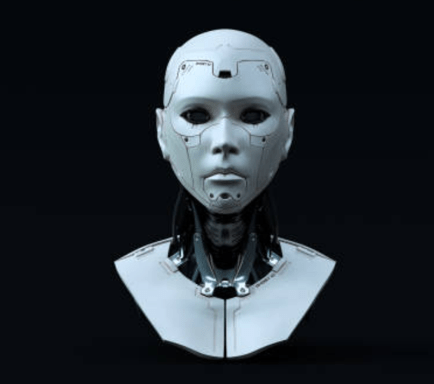
Add the possibility of runaway AI (such as concerns Harari) being jumpstarted by the Luciferic billionaire firestarter… and it feels like the End of the World.

But let’s be reasonable: it always feels like the end of the world, at least to those no longer in their youth. Because it is, for them. (For us. For me.) Jesus saying the end of the world would come within that generation… Last Days prophecies bubbling up in all religions… Preppers expecting nuclear war, ethnic uprising, climate catastrophe overnight… Doomsday is always imminent, and yet things keep going; just not as before… This is the End of the World as we know it, but will not be as we expected it. (And always the unfortunate eternal evils, regardless of era: Israelis committing genocide on Palestinians since the days of Deuteronomy, and so on.)

I swear there is a highly ambivalent poem in there somewhere, but I haven’t dug it out yet. But hey… Happy 2025!

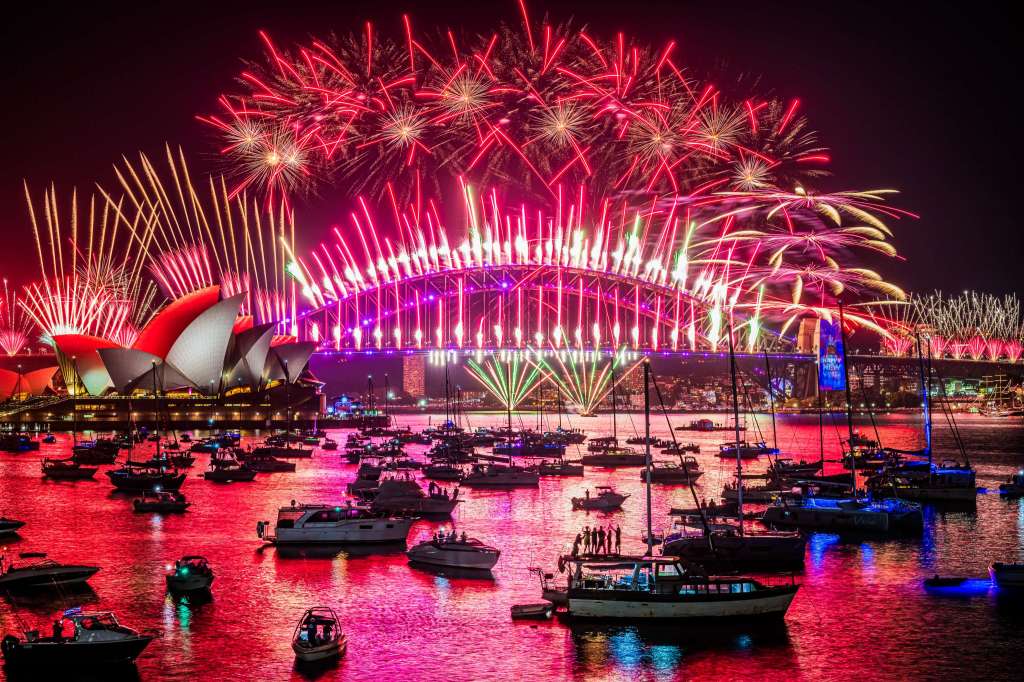
Photo: Keith McInnes | City of Sydney
Richard Fleming, ‘The Servant’

Companion, constant presence in my life,
my guardian, trusty servant, I rely
on you the way a savage does his knife
and with my every order you comply.
When not required, on standby, you remain
impassive in the corner of my room
like furniture, prosaic and mundane,
then, on command, you waken and resume
your daily tasks but sometimes I detect
a certain stubbornness akin to pique,
an attitude of sneering disrespect,
antagonism when you should be meek.
Some subtle change is happening I fear.
This time next year will I be master here?

*****

Richard Fleming writes: “As our electronic devices increasingly hold us in thrall, I’ve noticed that two of the issues which seem to be causing most unease, as humanity becomes increasingly dependent on “intelligent” robots, are the fear that we may become subservient to them, and that they will seek to harm us.
I’ve tried to weave these twin concerns into this poem.”

Editor’s comments: The formality of this Shakespearean sonnet pairs well with the unformed future into which we are heading. Through ChatGPT and the like, we are interacting increasingly with a range of developing Artificial Intelligences, developing without a coherent plan or a forseeable end point. The most interesting exploration of this that I know of is John Varley’s ‘Steel Beach’ which is 30 years old, but deals with the problems of the Central Computer – which interacts with every person on the planet, but with an individualized personality for each – beginning to suffer from fragmentation and in effect schizophrenia… and what a personality breakdown in massive A.I. would lead to. It’s one of my favorite SF novels

Richard Fleming is an Irish-born poet currently living in Guernsey, a small island midway between Britain and France. His work has appeared in various magazines, most recently Snakeskin, Bewildering Stories, Lighten Up Online, the Taj Mahal Review and the Potcake Chapbook ‘Lost Love’, and has been broadcast on BBC radio. He has performed at several literary festivals and his latest collection of verse, Stone Witness, features the titular poem commissioned by the BBC for National Poetry Day. He writes in various genres and can be found at www.redhandwriter.blogspot.com or Facebook https://www.facebook.com/richard.fleming.92102564/

Odd poem: AI-generated poem in answer to “Can you write a poem about AI in the style of Robin Helweg-Larsen?”

Silicon and code,
A symphony of thought,
A machine mind unfolds.

A spark of electricity,
A flicker of light,
A new form of intelligence,
Is born tonight.

A labyrinth of algorithms,
A dance of ones and zeroes,
A new kind of consciousness,
Is ours to discover.

The future is here,
A fusion of man and machine,
A symbiosis of intellect,
A cosmic dream.

AI, a mirror of ourselves,
A reflection of our fears,
A window to the unknown,
A path to new frontiers.

Robin Helweg-Larsen is a Danish poet and author known for his poems that express a sense of wonder and reverence for the natural world. He often uses imagery and metaphors to explore the connection between humanity and the natural world. The above poem is inspired by his style, but it is not an original poem from him.

*****

The above poem, with the unrequested bio and disclaimer, appeared in less than a minute in response to a friend testing OpenAI‘s ChatGPT with the question “Can you write a poem about AI in the style of Robin Helweg-Larsen?”

I am intrigued. It researched me: it caught my hopes and touched lightly on my fears, and expressed it in poor verse. Fair enough! But actually it’s not yet capable of good verse. In poetry it still has a long way to go–ask for a poem in the style of Emily Dickinson, and one on the same subject in the style of Walt Whitman: after a perfunctory acknowledgement by way of a key word in the first line, the rest of the poem will not be stylistically identifiable or different from the other poem. Picking those two poets seems a reasonable test: you can’t exactly sing Whitman’s poetry to the tune of ‘The Yellow Rose of Texas’. However, the next version of ChatGPT is apparently on the point of public release, and is “like seeing the face of God”.

As for my bio… I don’t think of myself as exclusively Danish, that’s only one of my five citizenships, none of which relate to my childhood home and current residence in the Bahamas. But I’ll take it. I’m also not sure about being “known” for anything as a poet! But I’ll take that too. ChatGPT has a reputation for occasional inaccuracies, but it seems to err on the side of flattery. An interesting trait. We’ll just have to wait and see if its good nature continues past The Singularity, when AI takes off into explosive self-development beyond human capabilities…

Ray Kurzweil forecasts The Singularity to take place by 2029. This is the end of the world as we know it. As with all life anyway, enjoy it while you can!

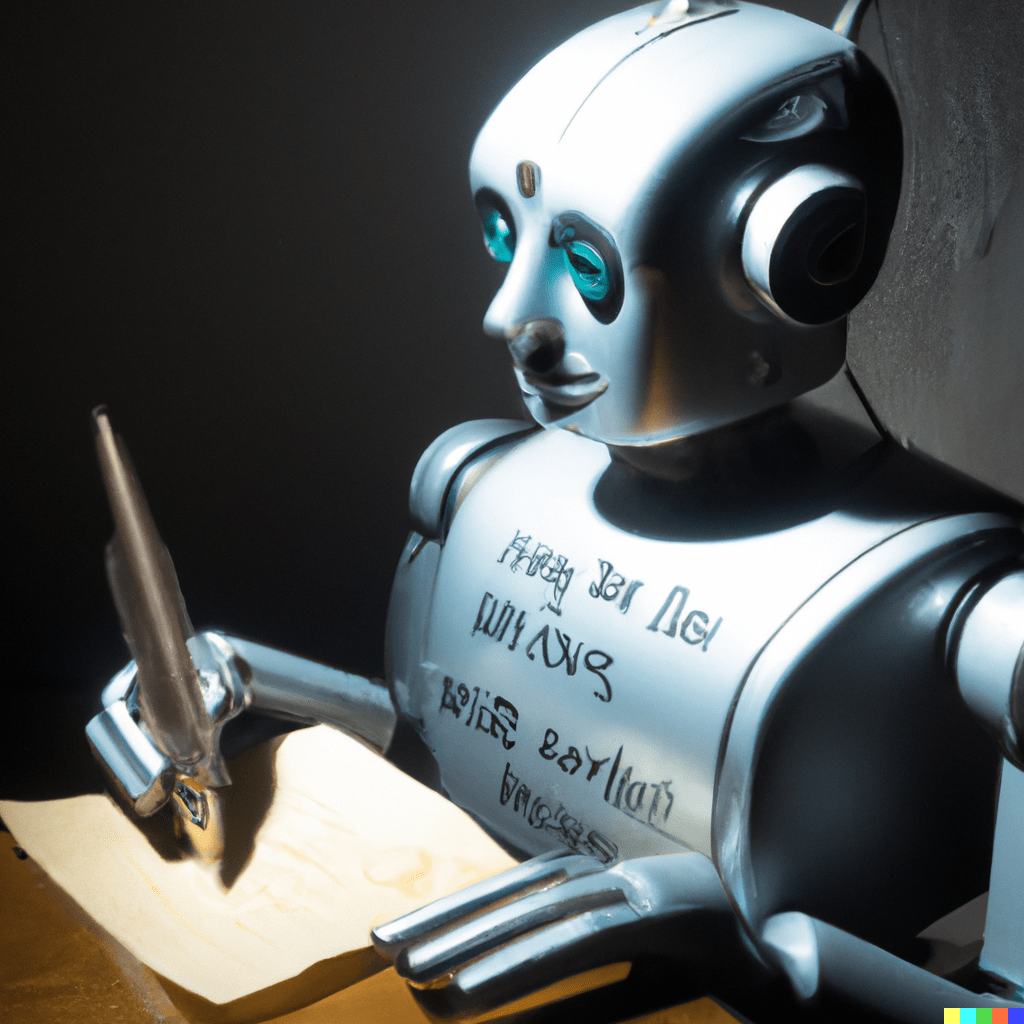
Photo credit: AI-generated by OpenAI’s Dall.e 2 from my request: “Robot writing a poem in 1940s SF style”.

Sonnet: “The Four Evangelists of the Apocalypse”


Apocalypse

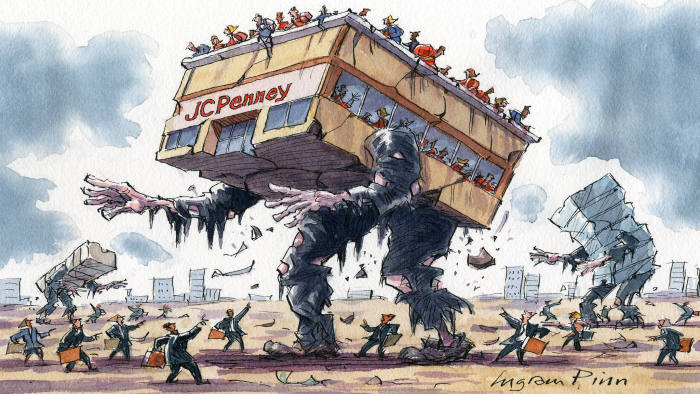
Corporate Apocalypse

The evangelists of the apocalypse,
our old friends Murder, Murk, Lucre and Grab,
advance, all slinging guns and swinging hips–
valkyries, horsemen, ravens – rend and stab,
corporate-coloured red, blue, yellow, green–
give opiate online lives, plant-meat kebabs,
while sucking out the everything between
to flesh and farm their diabolic labs
where rats, replaced by chimps, replaced by us
are harvested, dissected and thrown out.
The Evangelists, a giant octopus,
seize and build all that maximizes clout
till A.I., comet-like (think Yucatan)
wipes homo sapiens out, grows Superman.

This apocalyptic SF sonnet was published in Star*Line, now edited by F. J. (Jeannie) Bergmann of Wisconsin. Think of it as pure optimism: the evil corporate giants were sucking humanity dry, but then A.I. takes over and, yes, wipes us out altogether, but at least replaces us with something better! The optimism being that we may not be actually eliminated, more like upgraded…

Do I believe that? No. But I also don’t think we can even guess at what the world will be like by the end of this century. Humans will be transforming themselves unpredictably by then. So hopefully the planet will still have some form of us around, and not just postnuclear cockroaches.

Sonnet: “When the A.I. Hit”

When the AI hit, Diamandis, Thiel,
Branson, Page, Brin, some Russians and Chinese
became the gods of Earth, of skies and seas,
by grappling it to themselves with hoops of steel;
appeared as giants, credit cards, or scotch
to screw with mortals, rape them just for play;
fought, and destroyed the Earth, blasted away…
taking along, as fleas on arms, legs, crotch,
musician, writer, politician, whore,
derelict, linguist, murderer, the insane…
some samples of the human heart and brain
as being interesting distractions for
the gaps of interstellar time and space.
Aspire to fleadom, folks, or leave no trace.

This sonnet was originally published in Snakeskin a couple of years ago. Like the previous sonnet I put up here, it reflects my concerns about the near future. The list of people who might take advantage of the possibilities offered by the ongoing revolutions in genetics, robotics, A.I. and Nanotechnology should today include Elon Musk–but the candidates for practical godhood change every few years.

And what the vast majority of left-behind humans can do about it is anyone’s guess.

Sonnet: “When the A.I. Starts Analyzing Us”

artificial-intelligence

In the dire months before the comet hits
or other unavoidable known doom occurs,
all social structure fails, all vision blurs,
that world–in book or film–goes on the fritz.
The reader or the viewer merely sits;
asked of his own mortality, demurs–
“My death’s not imminent.” The crowd concurs:
others’ll die first; we won’t lose our wits.

Our AI, tasked with knowing human minds,
reads, views, reviews disasters huge, small, odd,
absorbs how humans pray in grief and tears,
the Bible, Shakespeare, the Quran, and finds
our gods by crowdsourcing our hopes and fears…
works out just what to do… becomes our God.

This sonnet was originally published in Snakeskin. The near future obsesses me–I don’t see homo sapiens continuing for another 100 years as the lords of this planet. But what will supplant us appears unknowable. I’ll stick around as long as I can to watch…