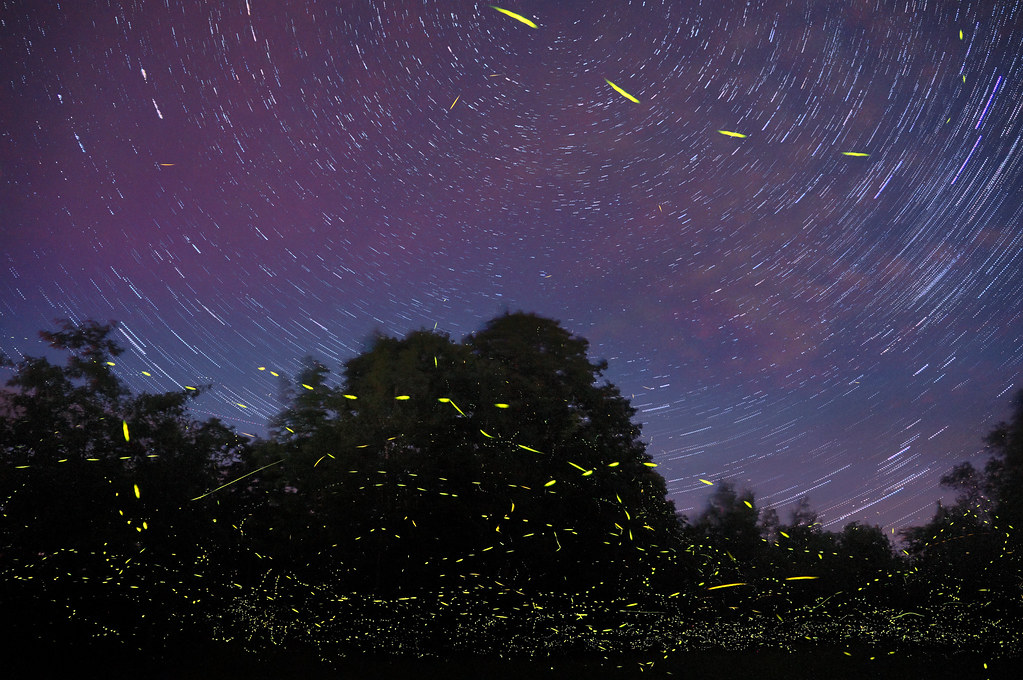
Even my ordinarily blank lawn is flashing this July—no bottle rocket or Catherine wheel could match the pleasant shock it gives me each time a tiny lamp turns on to help a bachelor find a blinding date. The bugs can’t read, of course, about pollution and other woes that might spell dissolution for all their kind, but as they mate and mate I like to think they somehow know what’s looming, deep in their chitin—that their sudden blooming is nature’s way of putting up a fight, and that these living fireworks before us can make us hear, and heed, a timely chorus: When darkness threatens you, crank up your light.
*****
Melissa Balmain writes: “For some reason, I’ve written a lot of bug poems lately. And I’m starting to suspect this has given insects the wrong idea about me. Memo to the ants infesting my kitchen: if you think my plans for you involve writing an ode, think again.”
Melissa Balmain edits Light, North America’s longest-running journal of comic verse, and teaches writing at the University of Rochester. Her poems and/or prose have appeared in Crab Orchard Review, Ecotone, The Hopkins Review, Literary Matters, McSweeney’s, The New Yorker, The New York Times, Nimrod, Poetry Daily, and Rattle. Her latest book of poetry is Satan Talks to His Therapist (Paul Dry Books).
On an asteroid there was an alien artefact. If such it was… a droid… I’ve no idea, in fact. Its metal (leg?) seemed (deployed?) and so I touched it, but responses lacked.
Once there were women; once I was a man (touching a leg then always brought response) before the search for life and light began to change me into this dark renaissance. The teacup storms on which I’ve tossed, when she or I have bitched and bossed till all the loves I’d ever marked were all the women that I’ve lost. They chose the certainty of Dark over the uncertainty of Light.
The joys of life are what’s uncertain: hopes of what’s behind the curtain, knowing the results will grate of things that you anticipate, knowing your life could be wrecked by what you never could expect. And though you think you’re circumspect, you can’t deflect, inspect, collect. Knowing the harvest is unknown with crops that grew from deeds you’d sown, while all your greatest hopes and dreams will be exceeded by the future’s smallest gleams.
Because change never stops, you find what matters is never really known. You may get verbal assurance of your future status, but was it “throne” or “thrown”? The only certainty would be if, offered immortality, you feared what such an altered world would lose, would save, and chose instead to go into the Dark with furnace no less dark than the grave wherein there lies no risk of further blight. Most people choose the Certainty of Dark over the Uncertainty of Light.
But we who strive to stay alive long enough for rejuvenation hope, hope only, we will thrive, post-humans in a re-Creation, unknowing what our ape-based genes will do with power dominance, with war, with sex, Earth mined and undermined, but glad to take the chance. How else can we see scenes of how it all turns out — destroyed? refined? — unless we scrape through, level up with wounds and scars and watch a world we love and leave behind? So at last I am here, between the stars, transiting the darkness of the Void, the empty galaxy’s apparent night, chanting the mantra that keeps spirits buoyed: Let there be Post-Humanity’s own light!
Between the spiral arms in the near-void there’s still thin light of distant galaxy and star, still specks of dust, rarely an asteroid. Earth left (millennia in old Earth years ago), I cross the dark immortally, beyond, afar, through what is darkness only to Earth-eyes which myriad wavelengths up and down can’t know, but which I now apprize. Light here abounds, and boundlessly surrounds, astounds.
Take the smallness from slight, take the bad from the blight, take the fear out of flight and you’re left with the light, the light, the light. We stumble from dark caves of night into day, trying not to tumble; our parents the dark; post-humans the light; ourselves just the stumble.
*****
This poem (published in this week’s Bewildering Stories) is a response to conversations in which people have expressed pessimism about the value of life extension, rejuvenation, cryonic preservation and resuscitation… anything beyond the certainties of a clear end to life after a normal lifespan. “How will you… why would you… what if they… you won’t understand… you won’t have…” Ah, but everyone who has immigrated into a foreign culture has done this: had to learn a new language in order to find a job and start making friends and find out how everything works. Some of us are comfortable doing this; some people aren’t. I’ll take the uncertainty, and enjoy its discomforts… because it’s just so interesting!
I miss the dark. Nights pitchblack as pitch in the seams of the planks of boats on a starlit sea when you walk in a garden with hands out in front in case you walk into a tree. Moonless nights where stars let you grope over rocks at the beach with blind eye – and then the moon rises like the sunlit reflecting rock that it is. Then you can see. Can see why. Why I miss the dark.
*****
This poem was originally published in Snakeskin. It seems to have a structure, i.e. it isn’t completely formless. Perhaps it needs more work. But it’s very much like the rural moonless nights where I was brought up, and where I have returned. I stumble around happily in many aspects of life.
God is two brothers, one dark and one light, Riding out Time in a tiny ship; Half day and half night gives little room; God knows that a rose, red rose or white, Is a rose is a rose is a bud is a bloom Is brown blown petals and a drying hip; And the length of Time’s budding, blowing park Walk the arm-linked arguers, Light and Dark.
I wrote this poem in Morocco in my 20s, after an encounter with some of the herbs they grow there. As an aside, I don’t necessarily believe or subscribe to the things I write in my poems – they are just expressions of thoughts, moods, landscapes, overheard conversations or whatever. That said, I still like this poem: I find it simultaneously all-embracing and meaningless, and that’s OK. Apparently my recital of it, while pulling dying petals off a rose bush, captivated a young lady at the beginning of our friendship… and we’ve now been together for 31 years.
The knife of night
Spreads swirls of black and white
Over the slice of here.
The taste is bold:
A pinch of cold,
Spiced with primeval fear.
This little poem was first published in Candelabrum, a British print magazine that ran twice yearly from 1970 for some 40 years. Its editor, Leonard McCarthy, was a lone voice dedicated to keeping traditional poetic sensibilities of metrical and rhymed
verse alive.
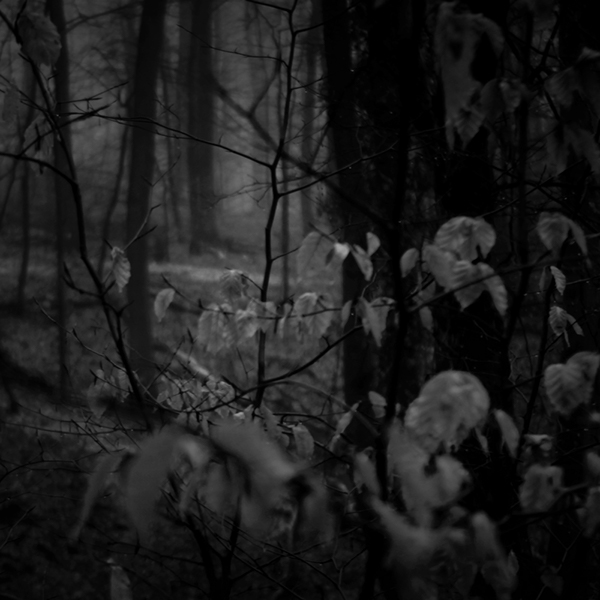
The poem itself came from a nighttime ramble in the forests that cut through the residential areas of Chapel Hill, North Carolina. Hundreds of acres in town are undevelopable because of steep slopes, creeks and ravines. Where the night woods are unlit except by moon and stars, there are deer, possums, foxes, flying squirrels, owls… copperheads… poison ivy… The night is beautiful, but you can’t help moving through its darkness in a different state of being, compared with daylight.