The candle, blown out, still retains a spark; Nor is it burnt up, though the room is dark. No one cares. Its job is done.
But sparks could still rekindle into flame Or stubs, restrung, redipped, refill its frame. But not both things together.
Yet if the candle could keep sparks in wick, We’d keep it live, remake it long and thick… Continuous, unsevered.
Like Lincoln’s axe, whose haft’s been replaced thrice, And the steel axe head changed out once or twice… Same axe? Or stupid-clever?
Then keep some spark alive when I have ‘died’; Freeze, then unfreeze, rebuild. No homicide Of brain cells lost forever.
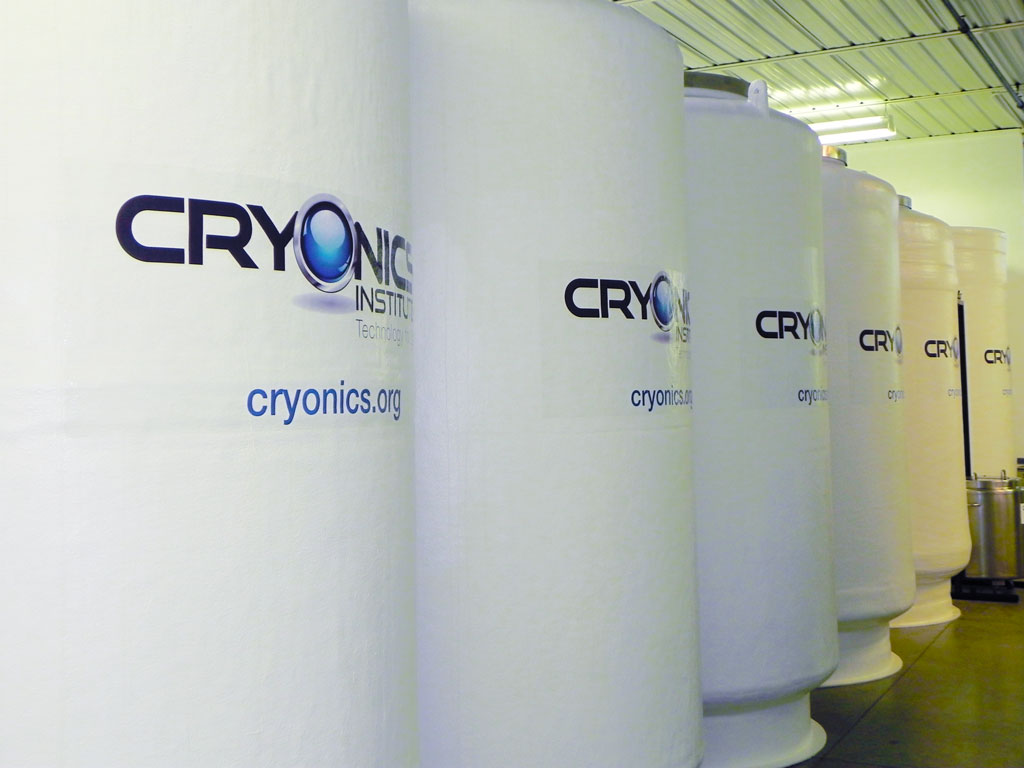
Come on, cryonics, sign me up, for one. That’s immortality’s first step begun. I would outlive the sun.
*****
I love this life, and am always interested to see how things are going to play out. Not interested in dying, but I’ve been fascinated by issues of death and extended lifespans since at least my teens; have been signed up with the Cryonics Institute for the last 30 years. Now with the rapidly increasing developments through AI, I hope we all soon reach the point where every additional year you live increases your life expectancy by more than one year, i.e. Longevity Escape Velocity. It’s coming, folks – hang on!
‘Cold Immortality’ was first published in a recent Bewildering Stories. Don Webb changed the title from just ‘Immortality’ – I’m not sure how much the addition of the word “cold” shifts the thrust of the poem… Certainly, cryonics is just an ambulance to the future, second-best to getting there unscathed.
On an asteroid there was an alien artefact. If such it was… a droid… I’ve no idea, in fact. Its metal (leg?) seemed (deployed?) and so I touched it, but responses lacked.
Once there were women; once I was a man (touching a leg then always brought response) before the search for life and light began to change me into this dark renaissance. The teacup storms on which I’ve tossed, when she or I have bitched and bossed till all the loves I’d ever marked were all the women that I’ve lost. They chose the certainty of Dark over the uncertainty of Light.
The joys of life are what’s uncertain: hopes of what’s behind the curtain, knowing the results will grate of things that you anticipate, knowing your life could be wrecked by what you never could expect. And though you think you’re circumspect, you can’t deflect, inspect, collect. Knowing the harvest is unknown with crops that grew from deeds you’d sown, while all your greatest hopes and dreams will be exceeded by the future’s smallest gleams.
Because change never stops, you find what matters is never really known. You may get verbal assurance of your future status, but was it “throne” or “thrown”? The only certainty would be if, offered immortality, you feared what such an altered world would lose, would save, and chose instead to go into the Dark with furnace no less dark than the grave wherein there lies no risk of further blight. Most people choose the Certainty of Dark over the Uncertainty of Light.
But we who strive to stay alive long enough for rejuvenation hope, hope only, we will thrive, post-humans in a re-Creation, unknowing what our ape-based genes will do with power dominance, with war, with sex, Earth mined and undermined, but glad to take the chance. How else can we see scenes of how it all turns out — destroyed? refined? — unless we scrape through, level up with wounds and scars and watch a world we love and leave behind? So at last I am here, between the stars, transiting the darkness of the Void, the empty galaxy’s apparent night, chanting the mantra that keeps spirits buoyed: Let there be Post-Humanity’s own light!
Between the spiral arms in the near-void there’s still thin light of distant galaxy and star, still specks of dust, rarely an asteroid. Earth left (millennia in old Earth years ago), I cross the dark immortally, beyond, afar, through what is darkness only to Earth-eyes which myriad wavelengths up and down can’t know, but which I now apprize. Light here abounds, and boundlessly surrounds, astounds.
Take the smallness from slight, take the bad from the blight, take the fear out of flight and you’re left with the light, the light, the light. We stumble from dark caves of night into day, trying not to tumble; our parents the dark; post-humans the light; ourselves just the stumble.
*****
This poem (published in this week’s Bewildering Stories) is a response to conversations in which people have expressed pessimism about the value of life extension, rejuvenation, cryonic preservation and resuscitation… anything beyond the certainties of a clear end to life after a normal lifespan. “How will you… why would you… what if they… you won’t understand… you won’t have…” Ah, but everyone who has immigrated into a foreign culture has done this: had to learn a new language in order to find a job and start making friends and find out how everything works. Some of us are comfortable doing this; some people aren’t. I’ll take the uncertainty, and enjoy its discomforts… because it’s just so interesting!
The future like an avalanche is roaring down the sky. If you’ve prepared no hiding place then be prepared to die. You never reason why.
The future like a question mark is scything humankind. If you can see, then handle it – you’ll be cut down if blind. The future doesn’t mind.
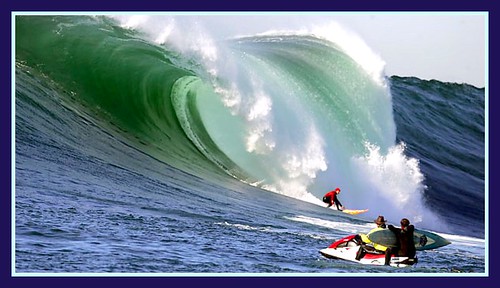
The future like a giant wave is heading for the shore. If you can ride that wall-like wave it’s no wall, but a door into forever more.
I was looking for one of my poems that might be appropriate for the aftermath of the 2020 US election, regardless of any of the possible outcomes. This is the best I could find: no matter who wins which election in any country in the next couple of decades, the world is going to be struggling to play catch-up with enormous changes happening in the climate, the sea, cyber warfare, space militarisation, A.I., genetic modifications… Trump, Biden, BoJo, Putin, Xi, they are all corks on an ocean with a hurricane coming.
‘The Future as Event’ was originally published in the much-lamented ‘Rotary Dial’, produced in Toronto by award-winning poets Pino Coluccio and Alexandra Oliver. A delightful monthly of formal verse, it ceased without warning. So it goes.
Forget that crap about some God or Devil –
you’re on your own against the Universe;
but till you’re free of our Stage One’s perverse
orientation, you won’t beat this level.
The Heaven idea is fraudulent, and worse:
Father McKenzie wields a deadly shovel.
Stage Two’s extended life – hard, but don’t snivel.
Stage Three: genetic change, youthful reverse.
You must want Life – must fight Death all the way,
ignoring social norms, pressure from peers;
such life will need a gamer’s vigilance.
Your other futures are: ashes, or clay.
And if help’s late, as you slide down the years,
cryonics is your waiting ambulance.
This sonnet, written over 20 years after the previous “Death Will Be Harder Now”, was first published as a pair to it in Ambit No. 190, October 2007. (Also like the earlier sonnet, it was reprinted in Bewildering Stories, edited by Don Webb.)
The theme is our age-long human dream of avoiding death, including that celebrated by Father McKenzie, “wiping the dirt from his hands as he steps from the grave.” (No one was saved.) For the first time in history we can see the realistic prospect of indefinite lifespans coming closer, if we can just live long enough for genetic modification to give us not only better hair and wrinkle-free skin, but actual rejuvenation. If you die before that happens, cryonic suspension is your ambulance to the future… you may not survive the ride, but you’ll have a better chance of a fresh lease of life than if you let them cremate you or pass you through the bodies of worms.
Technically the sonnet is unconventional, reversing the rhymes in the second quartet rather than echoing them, so that the poem reads ABBABAAB CDECDE. I don’t think that’s a problem; probablythe bigger sin was splitting noun from adjective in lines 3 and 4, breaking the rhythm of the pentameters, which the other lines hold comfortably.