Tag Archives: evolution

Maryann Corbett, ‘To the Anti-Librarian’

Small vandal, parked on your padded bum
on a cheerful rug in the Children’s Section
next to a bottom shelf,
yanking the volumes one by one
till they strew the aisle in every direction,
loudly pleased with yourself
at the way your brightly patterned havoc
obstructs the traffic,

keep to your task. Disrupting order
is evolution’s eternal purpose.
Surely it’s been your goal
from the hour two gametes burst their border
and two tame selves went wild as a circus.
Systems that once felt whole
eyeballed each other, laughed, and gambled,
and lives got scrambled.

Do your worst, then, with giggles, rage,
and all the smackdown-loud rebellion
grown-ups are now too tired for.
These sleepless two, in a golden age,
were a black-clad goth and a hard-rock hellion.
Change is the charge we’re wired for.
small changer, blessings. Though elders frown,
pull the world down.

*****

Maryann Corbett writes: “Like many poems, this one (first published in LIGHT) is part memory and part pure fiction. “Anti-librarian” was our joke term for our daughter as an infant when (long years ago) she sat on her tush next to the bookshelves and pulled the books off just because she could. The image of young parents as reformed characters is imaginary. The hope that the young will change the world seems to be eternal.”

Maryann Corbett earned a doctorate in English from the University of Minnesota in 1981 and expected to be teaching Beowulf and Chaucer and the history of the English language. Instead, she spent almost thirty-five years working for the Office of the Revisor of Statutes of the Minnesota Legislature, helping attorneys to write in plain English and coordinating the creation of finding aids for the law. She returned to writing poetry after thirty years away from the craft in 2005 and is now the author of two chapbooks and six full-length collections, most recently The O in the Air (Franciscan U. Press, 2023). Her work has won the Willis Barnstone Translation Prize and the Richard Wilbur Award, has appeared in many journals on both sides of the Atlantic, and is included in anthologies like Measure for Measure: An Anthology of Poetic Meters and The Best American Poetry.

Picture: ‘Anti-Librarian’ by RHL and ChatGPT.

Unforgettable nonsense: Samuel Wilberforce, ‘If I Were a Cassowary’

If I were a cassowary
On the plains of Timbuctoo
I would eat a missionary,
Cassock, bands, and hymn-book too.

*****

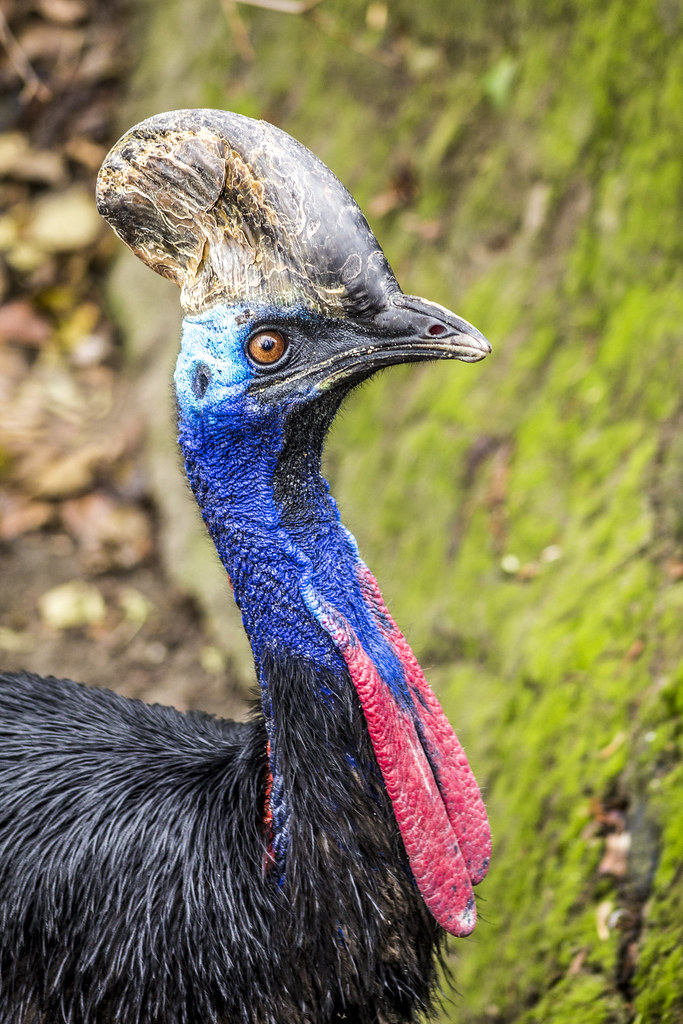
Yes, cassowaries are from Australia and New Guinea, and Timbuktu is in Africa… but so what? The rhymes are too good to ignore. ‘Bands’, btw, refers to the pseudo-necktie thingies that priest-types and lawyer-types affect in some countries – little cloth flaps, plural because you wear two of them.

The probable author is Bishop Samuel “Soapy Sam” Wilberforce, best known nowadays for debating  Thomas Henry Huxley on evolution in 1860. Huxley (Aldous Huxley’s grandfather) was commonly referred to as ‘Darwin’s bulldog’. Wilberforce is remembered for his question as to whether it was through his grandmother or his grandfather that Huxley considered himself descended from a monkey. Huxley is said to have replied that he would not be ashamed to have a monkey for his ancestor, but he would be ashamed to be connected with a man who used his great gifts to obscure the truth.  Apparently everyone enjoyed the debate, and they all went off happily to dinner together afterwards.

Cassowaries are more formidable than either Wilberforce or Huxley. Standing over six feet tall, capable of running at 30 mph (and good swimmers in rivers and sea), and able to leap and strike chest-high with razor-sharp 5-inch talons, they are omnivores not to be confronted. Yes, they might well eat a missionary. Also, the cassowary’s bands are more impressive.

Photo: “Cassowary at the Budapest zoo” by brenkee is marked with CC0 1.0.

RHL, ‘The Sun is Always Setting’

The sun is always setting, always setting on your day;
you sense the dark approaching, wish that it would stay away.
Do you want a life unchanging? Wish to still be a newborn?
Don’t you know life’s not a rosebud, but has root and leaf and thorn?

The sun is always setting and the black drapes are unfurled;
but notice that the sun sets on your world, not on the world:
it’s rolling into brightness in another’s happy land,
and the dark is evanescent and the brightening is grand.

The sun is always setting on the dinosaurs, but birds
are flocking into being, as are Serengeti herds;
and the sun that lights humanity? Of course it’s going to set,
and elsewhere light new tales of which we’ll just be a vignette.

The sun is always setting, but that view is just your choice;
I say the world is turning and evolving; I rejoice.

*****

Sometimes I’m told that my poetry is too bleak. But I think that’s only so if you want everything to stay as it is now. If, on the other hand, you expect change, and that change will ultimately provide more benefit than loss to the universe as a whole, then <shrug>… so it goes.

This poem has 14 lines but is hardly a sonnet. It was recently published in Pulsebeat Poetry Journal. Thanks, David Stephenson!

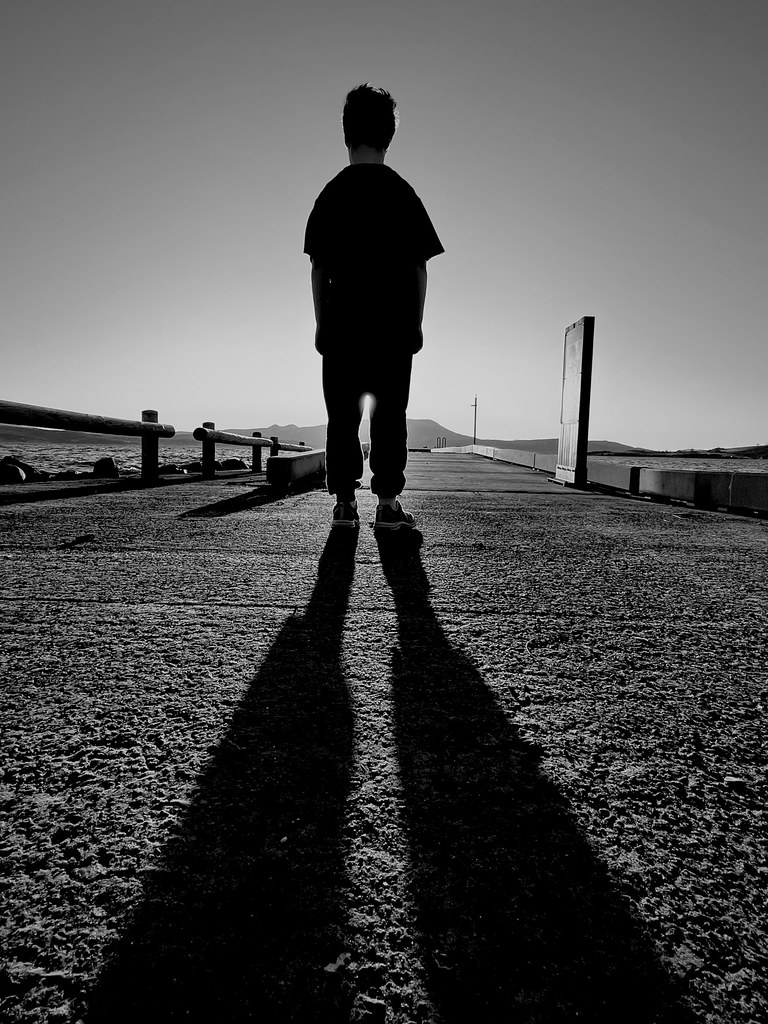
Photo: “Sunset Sadness” by BaboMike is licensed under CC BY-NC 2.0.