Tag Archives: existentialism

Short poem: RHL, ‘Ghosts Twitter’

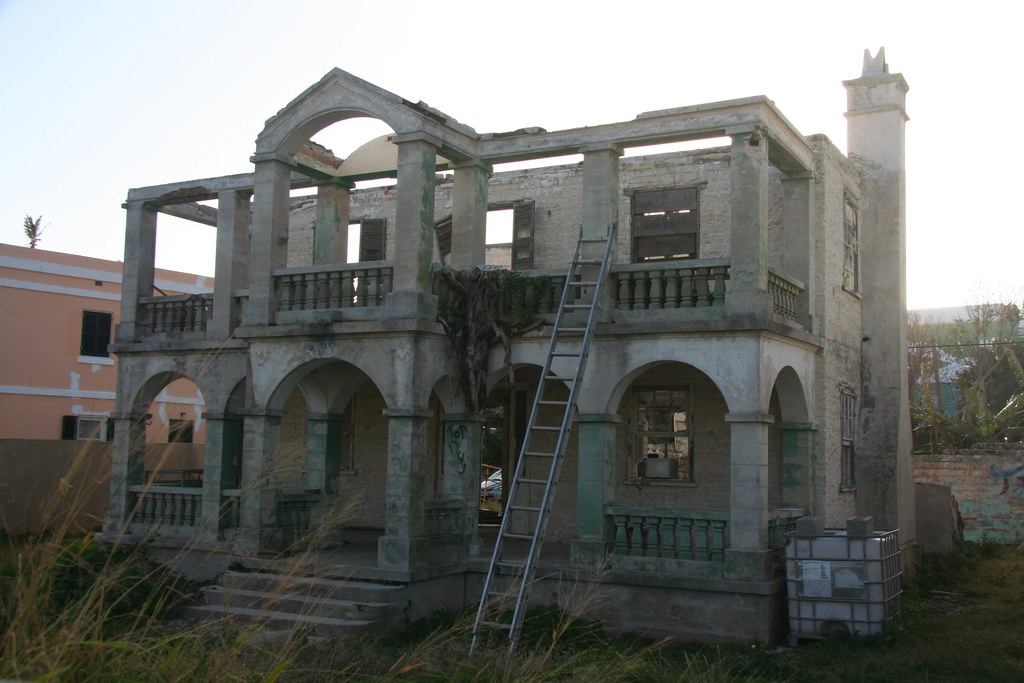
Ghosts twitter in my head like the memory of predawn birds.
Digging below my present house I find
a structural supportive past with rock veins to be mined.
Upstairs the future isn’t fully built or roofed.
Has someone goofed?
The Architect is vague on final thirds.

*****

I am finding many ways to say I don’t understand existence at all; this is one of them.

This short, semi-formal poem was published recently in The Lyric.

Photo: “unfinished house” by Lodigs is licensed under CC BY-NC-ND 2.0.

Semi-formal? or Spoken Word? RHL, ‘Life is a Bubble’

A life is a bubble:
somewhere the Grand Druid
dips his wand into the universal fluid
and then a new life is formed, floating
on chance breezes until it – pops –
and the thin skin coating
falls back to earth as mere drops,
the shape and rare rainbow glint gone to air,
and the bubble is where?

Earth is a bauble
in the universal flux,
as it foams, boils and freezes,
just dust from God’s various mucks,
sneezes afloat on chance trans-solar breezes.

The humans babble,
rabble rising from the rubble of other lives cut to stubble,
they burble some Bible as they gab, grab and gobble,
cobbling conning towers of Babel and Hubble,
their progress hobbled by their wobbly bobble,
reams of hopes, dreams and schemes
just a bubble.

*****

Sometimes a chance-occurring phrase in some moody mode of thought lets me ramble wildly through tangled words and ideas. It’s not amenable to regular form, but it’s fun. It seems in the spirit of Spoken Verse, though I’ve never performed. The earliest poem I wrote in this style is from over 50 years ago… which is 30 years before I ever had a poem accepted for publication. I was definitely out of step with the non-verse that then controlled the poetry industry to the exclusion of almost all actual verse. Things have eased in recent years, and dozens of poems from those early years have since been published. (Note to struggling young poets: Don’t give up! But have another career that pays money!)

Anyway, ‘Life is a Bubble’ only needed a couple of years to be published in 2024 in The Lyric.

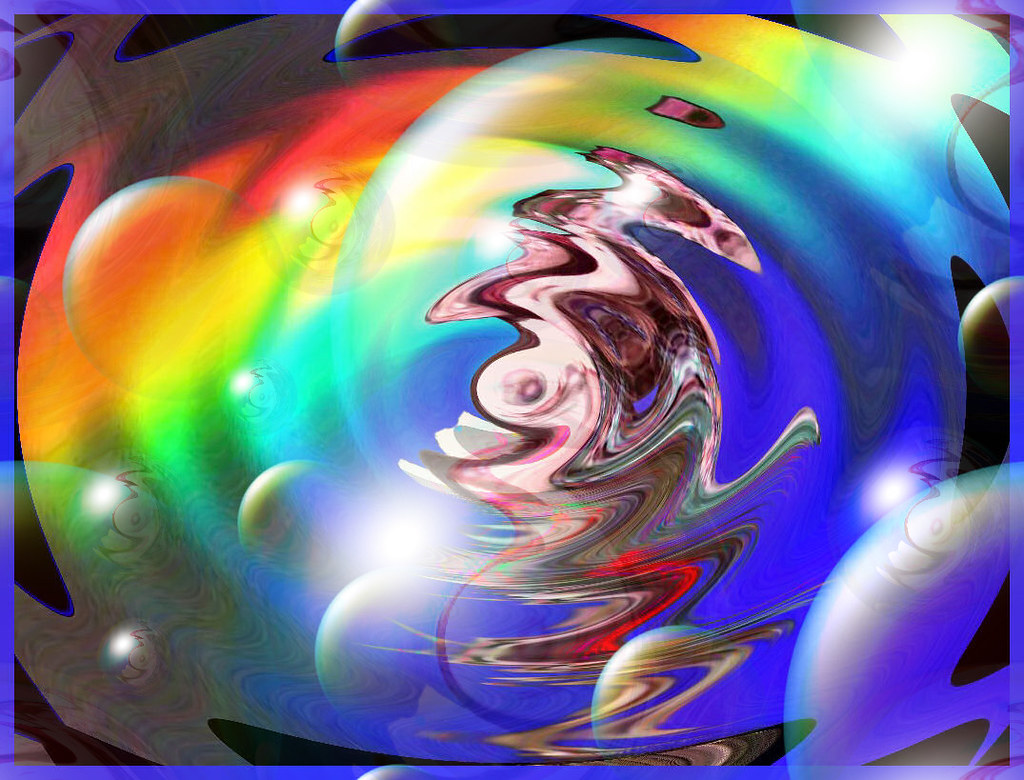
Photo: “Blowing bubbles” by Song_sing is licensed under CC BY 2.0.

Using form: alliteration: RHL, ‘How Brashly Brave’

How brashly brave, embroiled in this brief life,
we chance our challenge to the unchanging gods!
Strike poses, strut the strident stage of strife,
take optimistic oaths against all odds.

Fearless of foes, false friends, futility,
we wrack our reason to reach, undestroyed—
though usually of no utility—
a burst of brightness bettering the void.

*****

Although I prefer to maintain an unobtrusive persona myself, I subscribe to this philosophy of bravado existentialism. The florid alliteration suits the message.

This poem is published in the current issue of Light – thanks, Melissa Balmain and all.

Photo: “Flamboyant Emperor of the United States” by PeterThoeny is licensed under CC BY-NC-SA 2.0.

Light verse: RHL, ‘Question the Universe’

Odin wrote runey verse
Rumi wrote Sunni verse
Edward Lear? Loony verse.
Question the universe
with your buffoony verse.

*****

Sometimes you jot down a little light piece inspired more by wordplay than anything else, and the more you look at it the more it resonates. This is one such. The characters are diverse, coming from pre-literate Scandinavia, Renaissance-inspiring Islam, and Victorian England – they touch the roots of my cultural identity. They are from the past, but their searches are timeless, fully modern, quintessentially human. And I fully subscribe to the idea that we should question everything, and that the Fool‘s tools of succinct and enigmatic wordplay may be as good an approach as any in trying to formulate – let alone answer – all questions, physical and existential.

It further resonates for me in being published (which I find important); in being published just now in Light (which is a wonderfully reassuring place to be); in having been improved in response to Light’s editorial comments (meaning, yes, I am proud that sometimes I am open to criticism and it’s useful); and in being my 400th poem published (by one of my conflicting counts).

Nothing is definite, not the historical reality of historical and semi-historical figures, not the permanence of printed words, not the definition of a poem, not the count of things hard to define, not the nature of physical reality. So though we have to make prosaic choices based on appearances and best guesses, that should be balanced by questioning everything. Preferably in verse.

TL;DR: Even short poems can be unpacked.

Illustration: DALL-E by RHL, ‘Rumi, Odin and Edward Lear are writing poetry to question the universe’

Short poem: ‘Possessions’

What do you want possessions for?
You’ll die, then you’ll have nothing more.
You lost your house in a fire? The fact is
That was just for practice.

*****

We live (as always) in a time of existential threat to us as individuals and as a species. This short poem was recently published in The Asses of Parnassus – thanks, Brooke Clark! “Light verse”? I like to think so…

Photo, popularly known as ‘Disaster Girl‘. The young Zoë Roth had been taken by her parents to watch the controlled burning of a structure for training purposes when her father took this prize-winning picture of her. To her ongoing delight, the photo became a viral internet meme, and its NFT sold two years ago for close to $500,000.

Using form: Refrain; Nina Parmenter, ‘Sense’

I am a bag of chemicals
with charge for eighty years,
I am a gassy mirage
that winks as oblivion nears.
Around me swill the stars,
my thoughts, the gods and insanity,
and nothing makes sense but this leaf
as it dances, drunk on gravity.

I am a pointless voice track
on a puff piece of DNA,
I am the ooze that awoke
and decided to live anyway.
Around me swings the void,
nirvana and calamity,
and nothing makes sense but the sea
as it dances, drunk on gravity.

*****

Nina Parmenter writes: “In 2021, in my strenuous efforts not to write pandemic poems, I probably wrote a lot of pandemic poems. This one, about focusing on tiny moments in nature to avoid thinking about the big scary things is a great example! I made it a foreword to my collection ‘Split, Twist, Apocalypse‘ because its slightly jolly air of existential dread sets the tone for the book nicely, I think.”

Editor’s comment: As with popular songs as well as verse forms such as the ballade, villanelle, triolet and rondeau, the use of a refrain (whether exact or varied) strengthens the poem by bringing the conclusion of each stanza back to a core image or message.

Nina Parmenter has no time to write poetry, but does it anyway. Her work has appeared in Lighten Up Online, Snakeskin, Light, The New Verse News, Ink, Sweat & Tears, and the Potcake Chapbook ‘Houses and Homes Forever’. Her home, work and family are in Wiltshire.
https://ninaparmenter.com/

Time Lapse of Stars During Earth’s Rotation” by Image Catalog is marked with CC0 1.0.

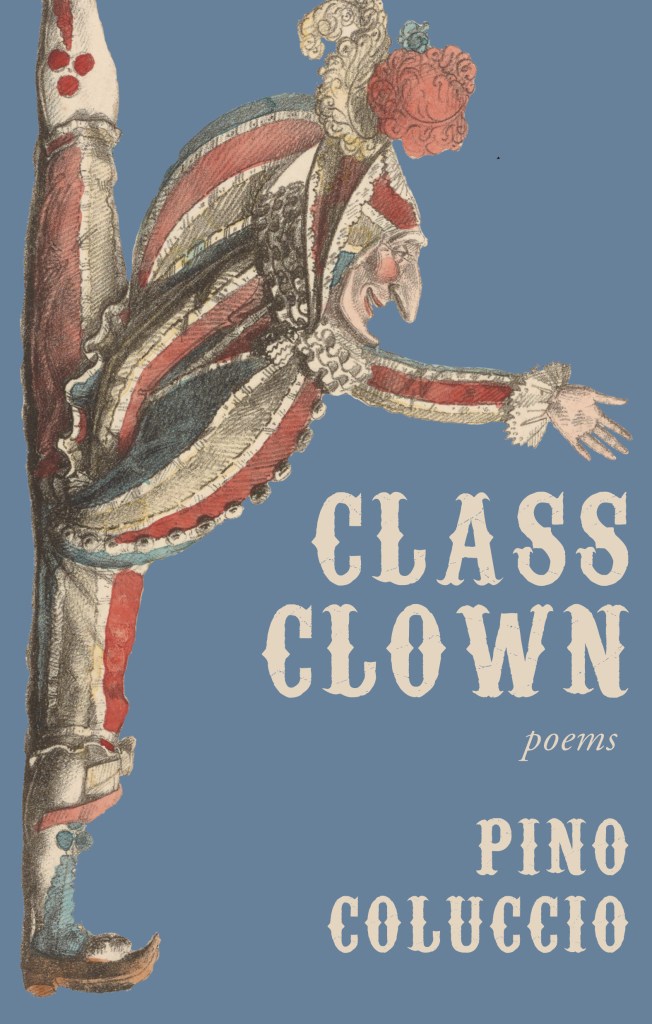
Pino Coluccio, ‘Class Clown’

They’d all be like, never say never
in classes we had, but whatever.
I turned to the windows and hallways
that always said always say always.

*****

Editor’s comments: From Pino Coluccio you should expect light and dark combined, light but deep, usually short, always well-phrased… and always existential. This, the eponymous piece of his 2017 collection, is tucked away in the middle of the book. The book won a Trillium Award, putting Coluccio in the company of Margaret Atwood, Michael Ondaatje and Alice Munro. He has given me permission to republish more of his pieces from Class Clown periodically.

Pino Coluccio lives in Toronto.

Short poem: ‘Death Spiral’

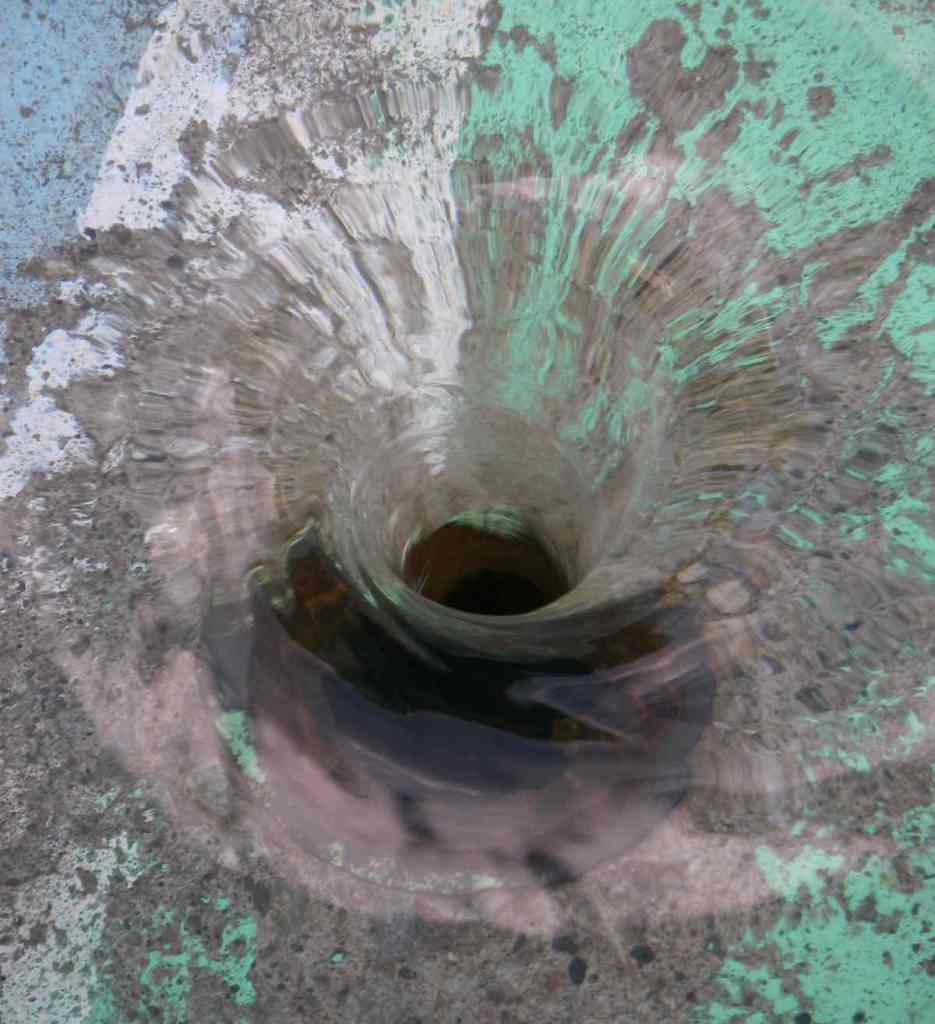
We spiral round the sun, like water
spirals round a drain;
herded like sheep to the slaughter,
it’s an old refrain–
what you coulda, what you oughta…
so few years remain.

*****

This short poem was recently published in The Asses of Parnassus – thanks, Brooke Clark! Btw sorry if the poem seems morbid – fall/winter has always made me reflective; I’ve been feeling time running out since my teens.

File:Pool drain vortex as viewed from above the water at Grange Park wading pool.jpg” by Glogger at English Wikipedia is licensed under CC BY-SA 3.0.

Pino Coluccio: ‘Where Has All The Mayo Gone?’

Hungry late, I clank around
the kitchen for a snack.
A pickle first and then, why not,
I peel apart a pack

of luncheon meat, some Swiss, a leaf
of something limp and wan,
and now — oh no, the lid’s on tight
but look — the mayo’s gone.

It feels like only yesterday
I parked my father’s car,
peeked at other shoppers’ carts
and tootled to a jar

for slathering on hotdogs
and for dolloping on frites —
there’s loads of foods whose fatty goodness
mayonnaise completes.

My pumpernickel won’t go down —
it’s like a warning bell,
the chilly clink of stainless steel
on glass. I know it well.

And wonder under nibbles if
at bottom human lives
aren’t always scraping empty jars
with tips of pointless knives.

*****

This is another of Pino Coluccio’s favourite poems from his first collection ‘First Comes Love‘. He doesn’t choose to comment on it, but I too like it; I like the way it clanks around the kitchen for a couple of verses, and then hits you with existential despair in the last lines. Which might be a matter of personal taste: I like eating limes and lemons, and I find Coluccio’s reflections equally tasty.

Pino Coluccio won Canada’s 2018 Trillium Award for English Poetry with his second collection, ‘Class Clown’. His poem ‘City Sunsets’ is featured in the most recent Potcake Chapbook, ‘City! Oh City!He lives in Toronto.

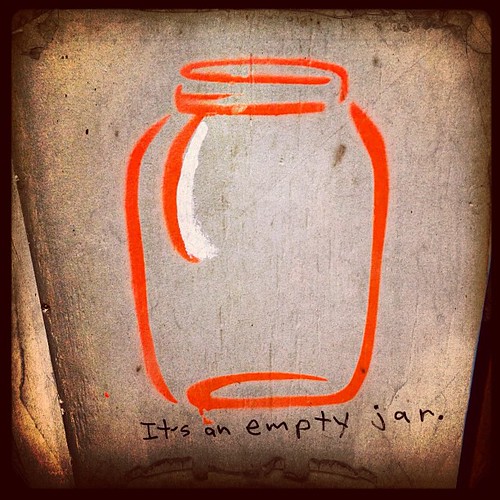
Photo: “It’s an empty jar #signage” by Stv. is licensed under CC BY-NC-SA 2.0.

My own favourites: ‘No No Nse Nse’

No
No
Nse
Nse
And things like that
May look like nonsense
But there is
No
No
Nse
Nse

*****

I know, I know… it’s not formal verse, but it’s one of my favourite pieces.

Ecstatic Posture” by Dreaming in the deep south is licensed under CC BY 2.0.