They’d all be like, never say never in classes we had, but whatever. I turned to the windows and hallways that always said always say always.
*****
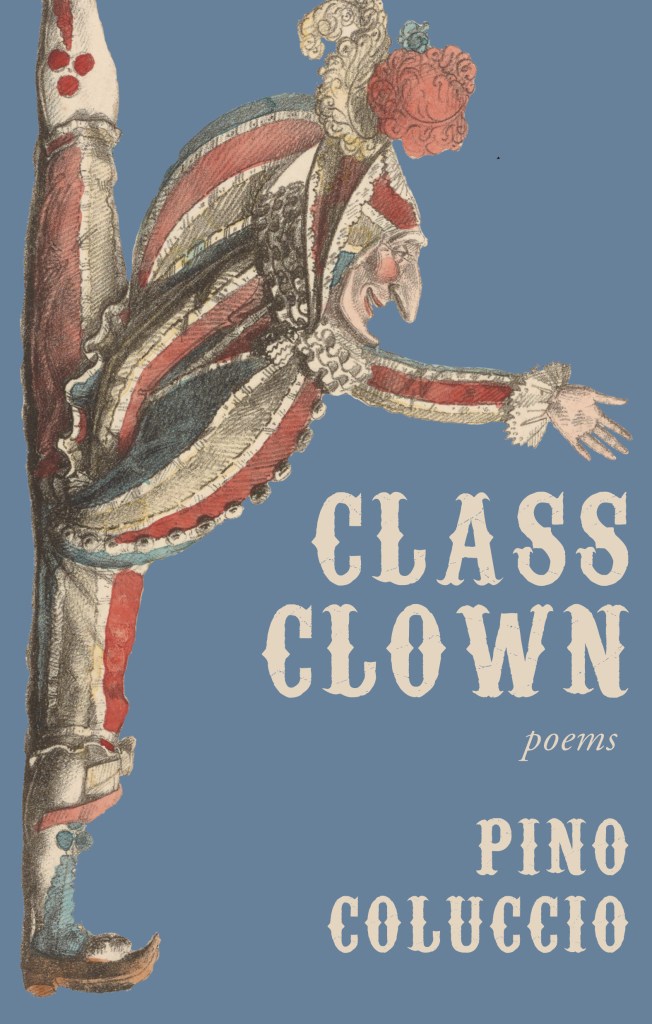
Editor’s comments: From Pino Coluccio you should expect light and dark combined, light but deep, usually short, always well-phrased… and always existential. This, the eponymous piece of his 2017 collection, is tucked away in the middle of the book. The book won a Trillium Award, putting Coluccio in the company of Margaret Atwood, Michael Ondaatje and Alice Munro. He has given me permission to republish more of his pieces from Class Clown periodically.
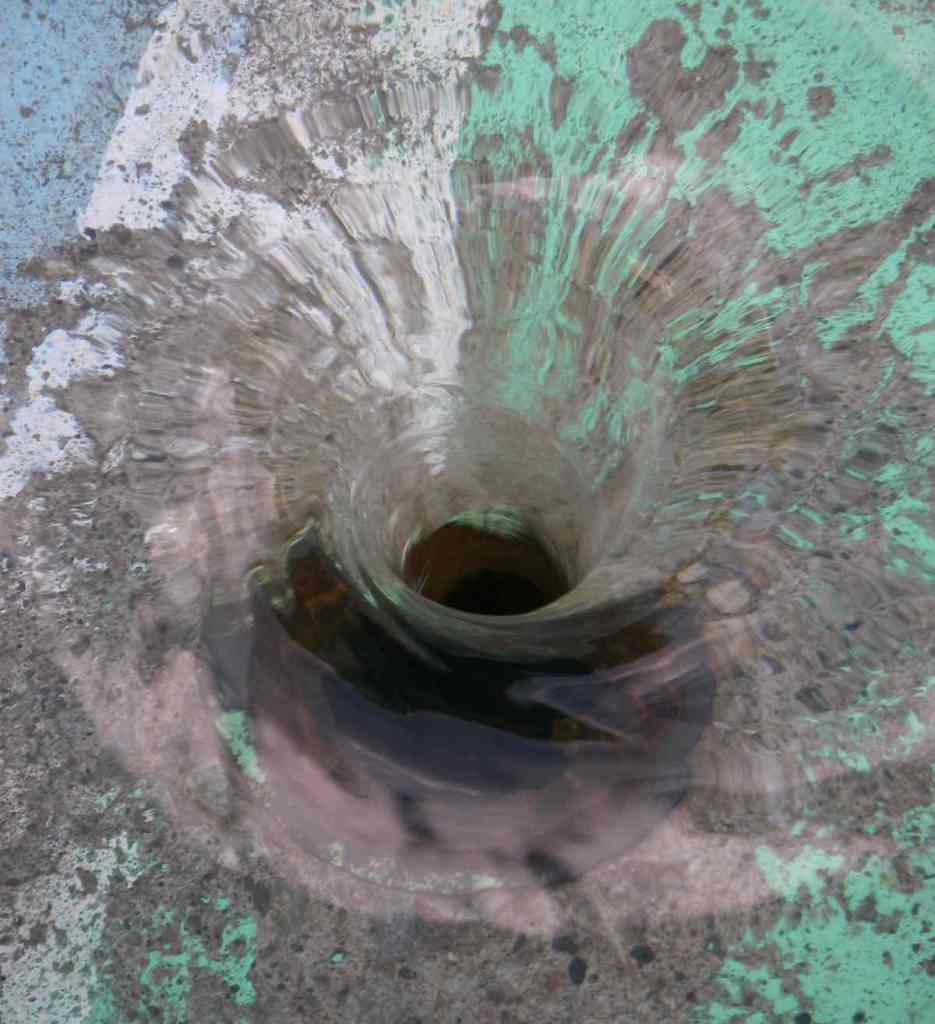
We spiral round the sun, like water spirals round a drain; herded like sheep to the slaughter, it’s an old refrain– what you coulda, what you oughta… so few years remain.
*****
This short poem was recently published in The Asses of Parnassus – thanks, Brooke Clark! Btw sorry if the poem seems morbid – fall/winter has always made me reflective; I’ve been feeling time running out since my teens.
Hungry late, I clank around the kitchen for a snack. A pickle first and then, why not, I peel apart a pack
of luncheon meat, some Swiss, a leaf of something limp and wan, and now — oh no, the lid’s on tight but look — the mayo’s gone.
It feels like only yesterday I parked my father’s car, peeked at other shoppers’ carts and tootled to a jar
for slathering on hotdogs and for dolloping on frites — there’s loads of foods whose fatty goodness mayonnaise completes.
My pumpernickel won’t go down — it’s like a warning bell, the chilly clink of stainless steel on glass. I know it well.
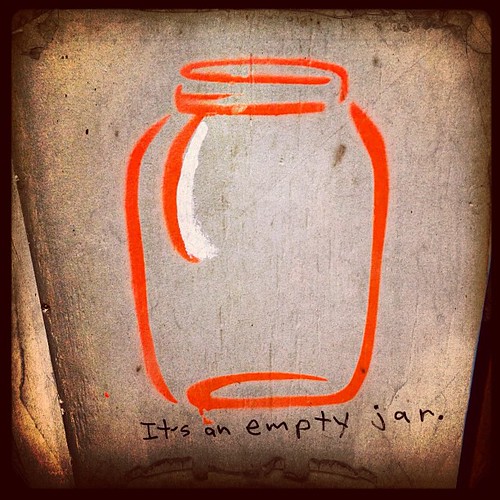
And wonder under nibbles if at bottom human lives aren’t always scraping empty jars with tips of pointless knives.
*****
This is another of Pino Coluccio’s favourite poems from his first collection ‘First Comes Love‘. He doesn’t choose to comment on it, but I too like it; I like the way it clanks around the kitchen for a couple of verses, and then hits you with existential despair in the last lines. Which might be a matter of personal taste: I like eating limes and lemons, and I find Coluccio’s reflections equally tasty.
Pino Coluccio won Canada’s 2018 Trillium Award for English Poetry with his second collection, ‘Class Clown’. His poem ‘City Sunsets’ is featured in the most recent Potcake Chapbook, ‘City! Oh City!‘ He lives in Toronto.
In the chronosynclastic infundibulum That is God’s fantastic waiting room, You’re always barely on the score, One show away from being shown the door.
“God’s waiting room” normally applies to places considered to have a large population of retirees, like Eastbourne in the UK, or Victoria, BC, or the state of Florida. But we are all mortal, and all facing an end at an unknown time. So Kurt Vonnegut’s dark existential humour seems universally applicable. He created the term ‘chrono-synclastic infundibulum’ in ‘The Sirens of Titan’ as a label for a place, or a moment, where all the different kinds of truths fit together, and where there are many different ways to be absolutely right about everything.
Take the concept of ‘God’. Though we can all agree on the meaning and validity of “God’s waiting room”, we may disagree vehemently on the meaning and validity of the word “God”. Can there be a place in which all the understandings of that word are simultaneously correct? Perhaps. We are only tiny-brained creatures in an obscure solar system in an unimportant galaxy, and can hardly presume to know all the answers, any more than any of our stone age ancestors did when they thought they knew everything.
Anyway, my poem (first published in Lighten-Up Online) pays homage to the author of ‘The Sirens of Titan’, ‘Cat’s Cradle’, ‘Slaughterhouse Five’… I put Kurt Vonnegut right up there with Tolstoy in the ranking of People Who Should Have Won A Nobel Prize But Didn’t.
The hyperspace viewer shows a flowing plane of treebark, roots; a distorted approximation of what we aren’t permitted to see. Clearing again with each rugose transformation, limited by the speed of post-quantum rendering, the map of our passage grows: an icebound dimensional lake thaws, remembering the hot pulse of its creation, shows palpable vestiges of times, energies and matters through which our wake will trace. The reflection of our ship shimmers, spatters light back to streaming stars. We race onward, out to where no atmospheres and skies of planets can frustrate our vision; the provocation of empty black where no suns rise unbearable without acquisition. Particular silence surrounds us like a felt of absence, itself the sinuous, tentacular touch of a void-god whose cult is abstinence, who meditates on dark too much— those distances between the stars and galaxies— and has a singular affection for black holes and cosmic fallacies.… Sometimes we overreach. Each direction (up? down? sideways?) seems different now; our ship’s brain’s blocked—no ability to calculate location. We tell it to go back: how— why these results? We’ve lost mobility, it says; the only options are charm and strange. We clear its cache, then re-install the route. On the viewscreen, no known space in range; nothing but the false stars of snow. About fifty-six hours in, the background gigahertz hiss of relic radiation is finally broken: our A.I. transmits a mad-dog growl. Something’s amiss. What does it mean? Unspoken fears flicker on our faces like shadows cast by entities we feel but cannot see, leaving invisible tracks across the vast cosmic chasm, preceding one more tangibly manifesting. A small silver embryo afloat in amnion of atrament, our ship is dwarfed by tentacles of terror. We’re but a mote in the eye of a demonic god, a blip cascading down through superimposed dimensions to our doom, where something pines beyond a threshold, longs to enter our attention— and hungers for the taste of human minds. Our Earth’s a pale blue memory, a ripe prize to harvest; our civilization will revert to a predawn whence no human can ever rise. The God Void sits in judgment—but won’t convert one soul. Its vastness grows, membranous and bloody, slithers back into the open portal of a queer dwelling where it withdraws to sleep and let the muddy waters of vacuum clear.
F. J. Bergmann writes: ” ‘Further’ first appeared in the Lovecraft eZine. I selected ‘Further’ because I’m fond of cosmic horror, and I was pleased with being able to maintain the form and narrative at this length. The process I used for this poem is what I call ‘transmogrification’: starting with a text source, which can be anything, from another poem to spam, I write a different poem or story using most or all of the words from the source, generally in reverse order. The source for this poem was ‘Let Muddy Water Sit and It Grows Clear,’ a considerably shorter nature poem by Ted Mathys, whose title is reflected in the last two lines of my poem.”
F. J. Bergmann is the poetry editor of Mobius: The Journal of Social Change (mobiusmagazine.com), past editor of Star*Line, the journal of the Science Fiction & Fantasy Poetry Association (sfpoetry.com), managing editor of MadHat Press (madhat-press.com), poetry editor for Weird House Press (weirdhousepress.com), and freelances as a copy editor and book designer. She lives in Wisconsin with a husband, intermittent daughters and a horse or two, and imagines tragedies on or near exoplanets. Her writing awards include SFPA Rhysling Awards for both long and short poems and SFPA Elgin Awards for two recent chapbooks: Out of the Black Forest (Centennial Press, 2012), a collection of conflated fairy tales, and A Catalogue of the Further Suns, first-contact reports from interstellar expeditions, winner of the 2017 Gold Line Press manuscript competition. She was a 2019 quarter-winner for Writers of the Future. Venues where her poems have appeared include Asimov’s SF, Missouri Review, Polu Texni, Spectral Realms and Vastarien; her speculative fiction has been published in Abyss & Apex, Little Blue Marble (CA), Pulp Literature (CA), Soft Cartel, WriteAhead/The Future Looms (UK), and elsewhere. She has competed at National Poetry Slam with the Madison Urban Spoken Word slam team. While she has no academic literary qualifications,. she is kind to those so encumbered. In a past life, she worked with horses. She thinks imagination can compensate for anything.
I, Robin, being of sound mind, declare
the Cryonics Institute shall have my corpse.
That’s where I’ll rest, if I can get shipped there,
no matter how friends stare, family gawps.
“I”, “corpse” and “rest” are contradictory, true,
because we’re into science frontier realms
where problem-solving causes problems anew,
where human thought both helps and overwhelms.
Limitless lifespan, or apocalypse?
Both feasible as we reach out through space.
Cryonics is a ticket for both trips…
or none at all, if humans lose our race.
Enjoy this puzzle-path, solve it and thrive.
Drive to arrive alive. Strive to survive.
Another of my existential sonnets, this one just published in Star*Line, the quarterly publication of SFPA, the Science Fiction & Fantasy Poetry Association, now in its 43rd year. Star*Line is one of those tolerant poetry magazines which will publish anything that appeals to editor Vince Gotera, from formal verse to experimental poetry–so long as it deals with space ships or time travel, dragons or golems and so on, of course.
Technically this is a Shakespearean sonnet, i.e. it’s in iambic pentameter and rhymes ABAB CDCD EFEF GG. Each of the 4-line blocks is a complete thought, describing the existential situation being faced. There is a volta or turn (but it’s weak) before the final couplet which moves from description to prescription: the couplet is a call to action.
By the way, I am changing the poem’s title with this blog post–it appears in Star*Line with the first line as the title.
Bring on the violins, the falling leaves,
the wistful ending to a misty day.
The long game’s over and we ride away
to sunset Heaven that no one believes.
Our world is dying, yet here no one grieves:
Earth warms, seas rise, but Wall Street’s still in play…
and we ourselves are aging anyway.
We all face death, and there’ve been no reprieves.
And yet, and yet…robotics and AI,
gene therapy, unlimited life span,
promise an almost-here-and-now sublime,
an unknown life, with our old life gone by.
Trumpet a fanfare for the Superman,
music for dancing to the end of time.
This sonnet has just been published in the Amsterdam Quarterly, this spring’s issue being on the theme of Beginnings and Endings. That may be relevant for our Covid-19 catastrophe, but of course the theme was determined a year ago, and life and death have merely decided to smile on AQ ironically.
But we were all facing death before this latest coronavirus came along. As the saying goes, “Perfect health is simply the slowest rate at which you can die.” And interwoven with death is always new life, never an exact repetition of the old life and often dramatically better. The real issue is, will the new life come at the expense of the old, or can the old reform and regenerate itself, renew itself without needing to die? The avoidance of death has been the quest of religion and medicine since those disciplines (or that discipline) originated. It is great driver of culture, and the pot of gold at the foot of the never-quite-reached rainbow.
Technically this is a correctly structured Petrarchan sonnet, with an initial octave (in this case of existential doom and gloom) rhyming ABBAABBA, followed by a volta (in this case a reversal to hope) for the sestet that rhymes CDECDE.
The sonnet is a marvellous structure for expressing an argument in a compact way.
“The train will stop for ten minutes at the next station.
If you wish to make this your annual vacation,
please reboard in nine minutes.” The travellers gaze
at the countryside slowing past, consider ways
to take more than nine minutes for a break
but, looking down a slight curve in the track,
see no way to get out and back
nor a real reason they should take
the risk. The train will go…
and what else do they know?
They’ll stay till dropped
at some end stop.
Descend.
The end.
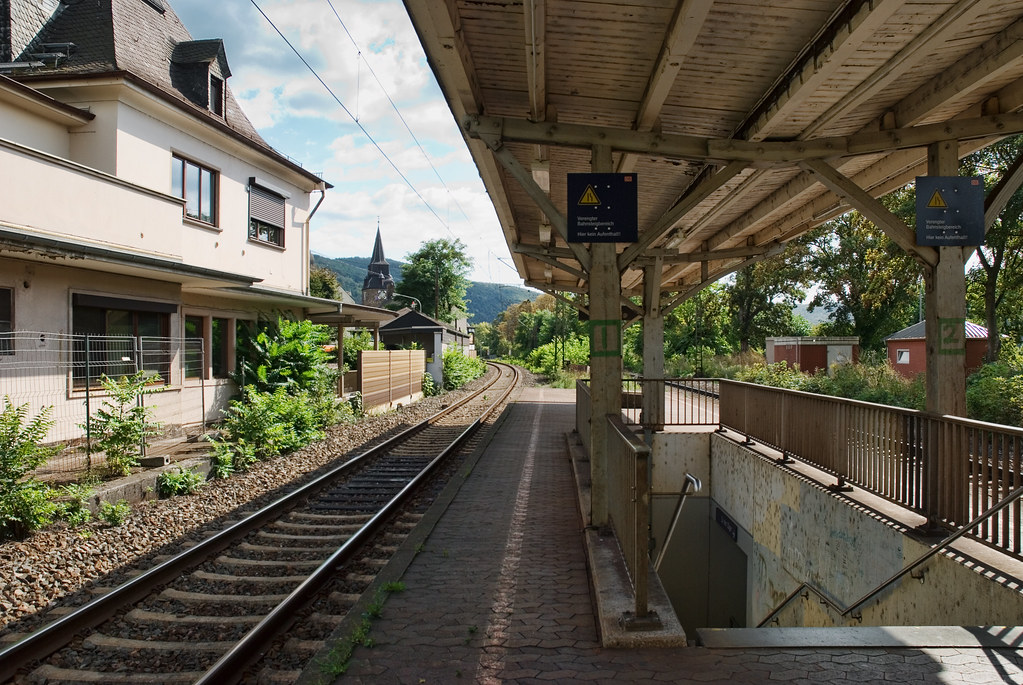
This little piece of existential angst appears in the current Bewildering Stories. It was written, submitted and accepted long before the current Covid-19 crisis came along, which it in no way relates to. In fact, in the awareness that we are all mortal and that everyone’s journey will have an end stop regardless, you might even say this suggests that in the Grand Scheme of Things the Covid-19 situation is trivial. The bigger issue is: eventually we all die. A solution to that would be far more dramatic than a successful Coronavirus vaccine.
Technically? Not a tightly formed poem – the initial lines are straggly, but as they shorten they tighten into iambics. The rhymes too are erratic, mostly in couplets but not quite. Not a perfect poem. Flippantly you could ask, In the Grand Scheme of Things and in the present circumstances, why should this matter? And the answer is, The level of artistic quality always matters; ultimately, it’s the most you can hope to achieve and be remembered by.


 Form in Formless Times