Tag Archives: fear

Maryann Corbett, ‘October’

I fail at them, these scenes
where beauty is married to fear.
I have failed before with this one.
How can I make it clear

when the moment itself was a blur?
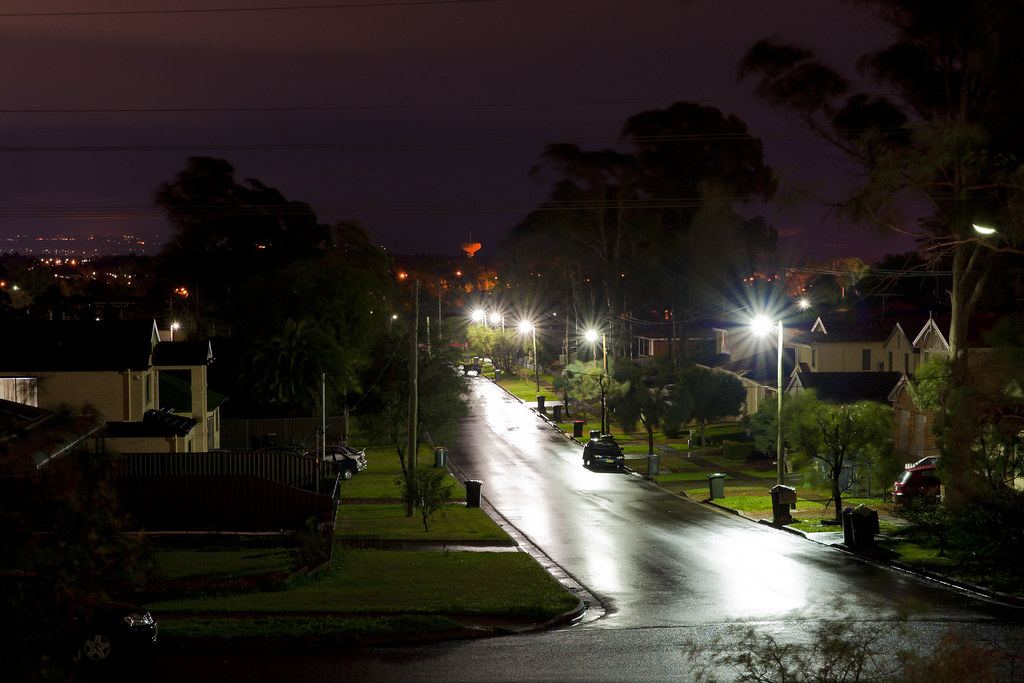
My son and I, that night,
stepped through the warm, wet air
that had magicked every light

to a wide, all-hallowing halo.
He said–I think he was ten,
still with his clear soprano–
It’s lovely out here.
And then

the edge of every nimbus,
pale gold through a fog scrim,
shivered, knowing that beauty soon
would be bullied out of him.

*****

Maryann Corbett writes: “This poem (first published in Mezzo Cammin) is indeed based on one of those indelible memories, the sort that lodge in a parent’s brain for decades. And I have in fact tried to write about it before without succeeding. I’ve never asked my very adult son whether he remembers this moment at all.”

Maryann Corbett earned a doctorate in English from the University of Minnesota in 1981 and expected to be teaching Beowulf and Chaucer and the history of the English language. Instead, she spent almost thirty-five years working for the Office of the Revisor of Statutes of the Minnesota Legislature, helping attorneys to write in plain English and coordinating the creation of finding aids for the law. She returned to writing poetry after thirty years away from the craft in 2005 and is now the author of two chapbooks and six full-length collections, most recently The O in the Air (Franciscan U. Press, 2023). Her work has won the Willis Barnstone Translation Prize and the Richard Wilbur Award, has appeared in many journals on both sides of the Atlantic, and is included in anthologies like Measure for Measure: An Anthology of Poetic Meters and The Best American Poetry.

Photo: “Bright Lights of Quakers on a Wet Night” by Frank.Li is licensed under CC BY-NC-SA 2.0.

Barbara Lydecker Crane, ‘Justin Case’

Justin Case is a very cautious man.
He keeps a cache of bottled water, food
and a pair of spares in the trunk of his sedan.
Others think that he’s aloof or rude
when he inspects each fork and spoon for germs.
His sisters know he swivels out of kisses.
He navigates the office on his terms;
Justin shuns each outstretched hand–and misses
clinching business deals. He cannot fathom
why colleagues eye him strangely when he hits
an elevator button by lifting past them
his wing-tipped toe. With snakebite kit
and mosquito netting, he’s ready to embark 
upon his lunchtime stroll in Central Park.

*****

Barbara Lydecker Crane writes: “This poem, first published in the Atlanta Review, was one of the first persona poems I wrote: I’ve written several dozen over the years, and I find I love trying to speak for another person, real or imaginary. Maybe the process develops empathy, as well–who knows?”

Barbara Lydecker Crane was a finalist for two recent Rattle Poetry Prizes. She has received two Pushcart nominations and various awards from the Maria W. Faust and the Helen Schaible Sonnet Contests. Her poems have appeared in Atlanta Review, Ekphrastic Review, First Things, Light, THINK, Valparaiso Literary Review, Writer’s Almanac, many others, and in several anthologies. Her fourth collection, You Will Remember Me (ekphrastic, persona sonnets) was recently published by Able Muse Press, and is available from Amazon: https://www.amazon.com/You-Will-Remember-Me-Ekphrastic/dp/1773491261. Barb lives with her husband near Boston.

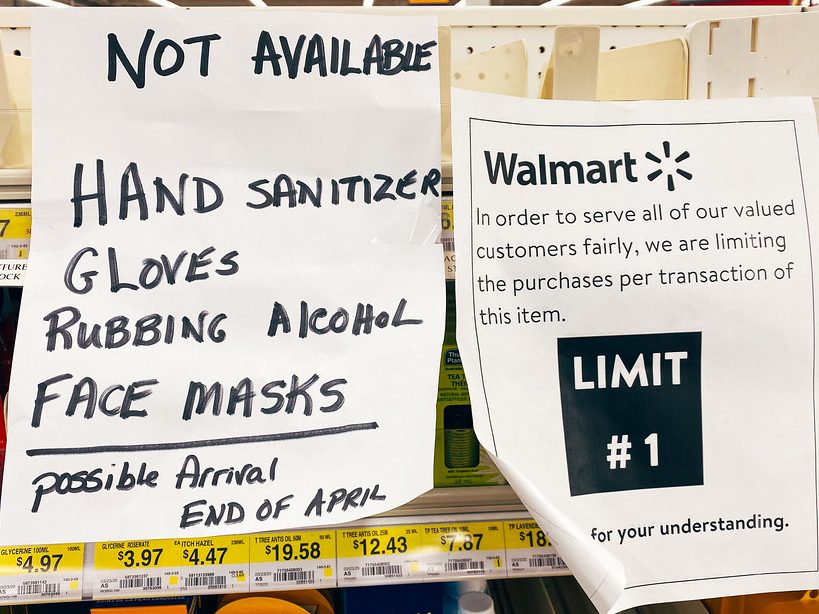
Photo: “i’m so scared you know” by timsnell is licensed under CC BY-ND 2.0.

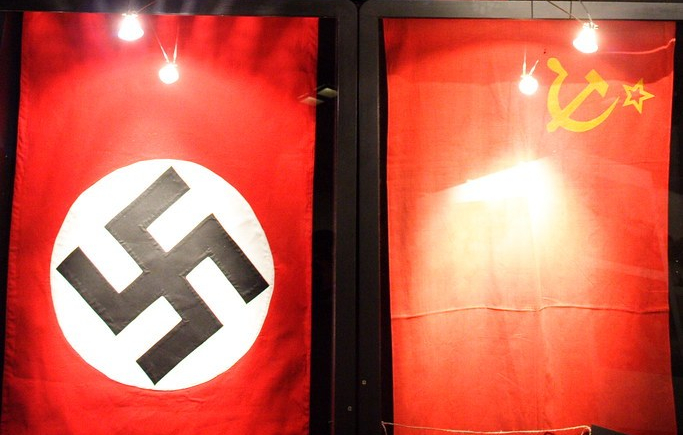
Sonnet: “Flags We Have Feared”

The Swastika, that ancient Vedic sign,
the lightning wheels with which the Aryan bands
in lightning war overrun other lands,
wheeled juggernauts that crush, self-claimed divine.
Hammer and Sickle, commoners’ work-tools;
weapons for rising up, and tearing down
the castle of the rich, the bourgeois town;
fake honour to the poor the Party rules.
A flag with Stripes, memorial for flogged slaves,
striped jail clothes for resulting underclass;
and Stars like bullets through the windshield’s glass
for leaders by the CIA shot down,
star earned for each election overthrown,
star for each land the flag invades, or ‘saves’.

This sonnet was originally and ironically published in Ambit in the UK. The irony being, of course, that the Union Jack is viewed by much of the world with as much fear and hostility as any of the other three flags. But you don’t learn that, or the reasons for it, in school in the UK–at least not in England. The British (at least the English) have a warm and fuzzy feeling toward their flag, and are innocent or puzzled that anyone else should find it negative. Similarly in the times of the other three flags, the Germans (at least the Aryans), the Soviets (at least the Russians) and the Americans (at least the whites) have been happy and proud of their flag, puzzled that anyone else should fear or dislike it.

Another irony: the jury is still out on to what extent one of the leaders shot down by the CIA was their own.

Technically it’s a sonnet with a non-standard rhyme scheme: ABBA CDDC EFFGGE. But the rhymes and the scansion are OK. As for the volta, the requisite turn of mood or argument between the octave and the sestet… well, after dealing with the two great enemies of western democracy, you weren’t expecting me to pick on the US, were you?

Poem: “The Knife of Night”

Dark Woods

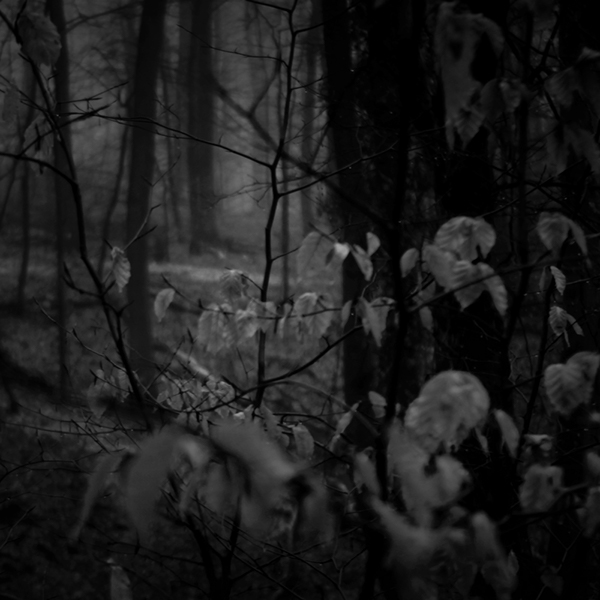
“Dark Trees” by MonoStep

The knife of night
Spreads swirls of black and white
Over the slice of here.

The taste is bold:
A pinch of cold,
Spiced with primeval fear.

This little poem was first published in Candelabrum, a British print magazine that ran twice yearly from 1970 for some 40 years. Its editor, Leonard McCarthy, was a lone voice dedicated to keeping traditional poetic sensibilities of metrical and rhymed
verse alive.

The poem itself came from a nighttime ramble in the forests that cut through the residential areas of Chapel Hill, North Carolina. Hundreds of acres in town are undevelopable because of steep slopes, creeks and ravines. Where the night woods are unlit except by moon and stars, there are deer, possums, foxes, flying squirrels, owls… copperheads… poison ivy… The night is beautiful, but you can’t help moving through its darkness in a different state of being, compared with daylight.