Tag Archives: floods

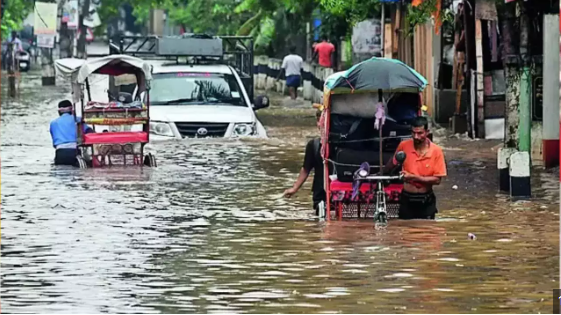
Shamik Banerjee, ‘Memories of a Flood’

For one full week, the sun was dead,
     unloosening the gray,
wild clouds that swamped each paddy bed—
     the plowman’s great dismay.

The regal night sky, once agleam,
     was purloined of its stars.
Each lane became a water stream.
     Dinghies replaced the cars.

Mazdoors, waist-hidden, waded to
     their distant factory sites.
The Tongas‘ (since they were a few)
     demand reached greater heights.

But our town did what it does best—
     it kept the hoo-ha going.
In every church and temple’s chest,
     hope’s candles were still glowing.

On the roadside estaminets,
     sports went with malt whisky,
and there were pleasant tête-à-têtes
     on every balcony.


Mazdoor: an unskilled labourer
Tonga: a light horse-drawn two-wheeled vehicle
‘Memories of a Flood’ was first published in the San Antonio Review..

Shamik Banerjee is a poet from Assam, India. Some of his recent publications include Spelt, Ink Sweat & Tears, St. Austin Review, Modern Reformation, San Antonio Review, The Society of Classical Poets, Third Wednesday, California Quarterly, and Amethyst Review, among others.

Photo: Times of India, July 5, 2024
Tom Vaughan, ‘Safe’

We hurried back, struggling to comprehend
the scale of devastation and what journey’s end
would mean – wondering indeed whether
we still had a home to go to. Aghast, we scanned
fields the dead had sown and reaped forever

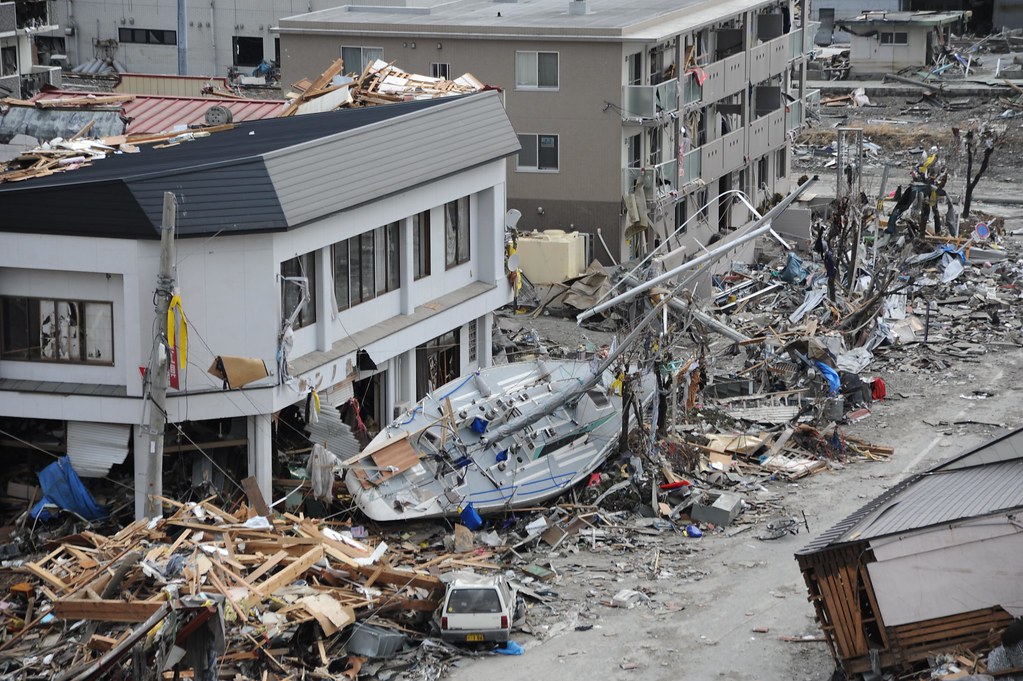
transformed to lakes, then villages where cars
had been tossed aside like toys, and scooped-out bars,
churches, schools, where dark lines marked
the height reached by the water, left as scars.
There’d been no warning signs, no Noah’s ark

though those of us who’d been on higher ground
could now inherit the world the tempest drowned
though too few to repopulate
that morning’s massive, muddy funeral mound,
reminding us what might have been our fate.

The radio was silent, even if the word
on the street was help would come – soon enough we heard
helicopters. But the broken men
who landed only muttered something blurred
about how this was it till God knows when.

A black market opened – which only the rich could afford.
The rest of us survived on what we’d stored
in better days, skimping until
re-learning the ancient ways, we could once more
live off the land with long-forgotten skills.

Sometimes I look back, yet I know the past
has gone for good, that no one can forecast
when the day will come we’ll dare to hope
the storm which killed so many was the last,
and trust again illusion’s horoscope.

*****

Tom Vaughan writes: ” ‘Safe‘s working title was Sanctuary, and the poem was inspired – if that’s the word – by the sense that there is none. The form reflects the fact that it was written during one of my regular bouts of reading Larkin. I was lucky enough to visit his office in the library at Hull University in July, with a copy of The Whitsun Weddings in my backpack for the train trip back to London . . . “

Tom Vaughan is not the real name of a poet whose previous publications include a novel and three poetry pamphlets (A Sampler, 2010, and Envoy, 2013, both published by HappenStance; and Just a Minute, 2024, from Cyberwit). His poems have been published in a range of poetry magazines, including several of the Potcake Chapbooks and frequently (as with ‘Safe‘) in Snakeskin.
He currently lives in Brittany.
https://tomvaughan.website

Photo: “Search-and-Rescue Workers Arrive in Ofunato [Image 1 of 23]” by DVIDSHUB is licensed under CC BY 2.0.

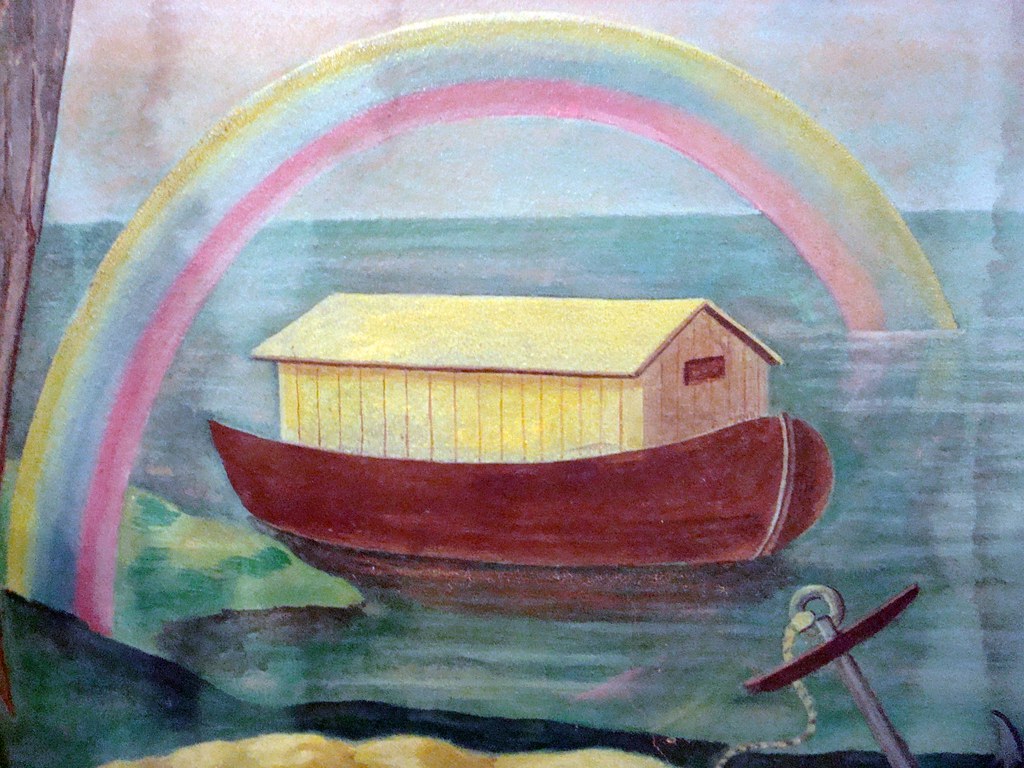
Short poem: ‘Rainbow’

God made the rainbow as a sign
for post-Flood men to see.
The sign says, “I am Merciful–
and you better fucking agree.”

*****

According to the Book of Genesis, after God flooded the entire world He told the one surviving family: “I have set my rainbow in the clouds, and it will be the sign of the covenant between me and the earth. I will remember my covenant between me and you and all living creatures of every kind. Never again will the waters become a flood to destroy all life.”

There are so many things to love in all this: the Noah’s Ark story, and the toys of it that delight children; the beauty of rainbows themselves; the alternative explanation that Irish leprechauns make rainbows to mark where they bury their gold; the Biblical suggestion that water droplets didn’t cause refraction of light before the Flood; the calculation that rain, to have flooded Mount Everest in 40 days, must have fallen at 29 feet per hour for that entire time… and above all the idea that God needed the rainbow to remind Him not to kill everyone whenever He gets angry.

But hey – rainbows are beautiful, at least we can all agree on that.

This poem was published in the most recent issue of Light.

Noah’s Ark” by Svadilfari is licensed under CC BY-ND 2.0.

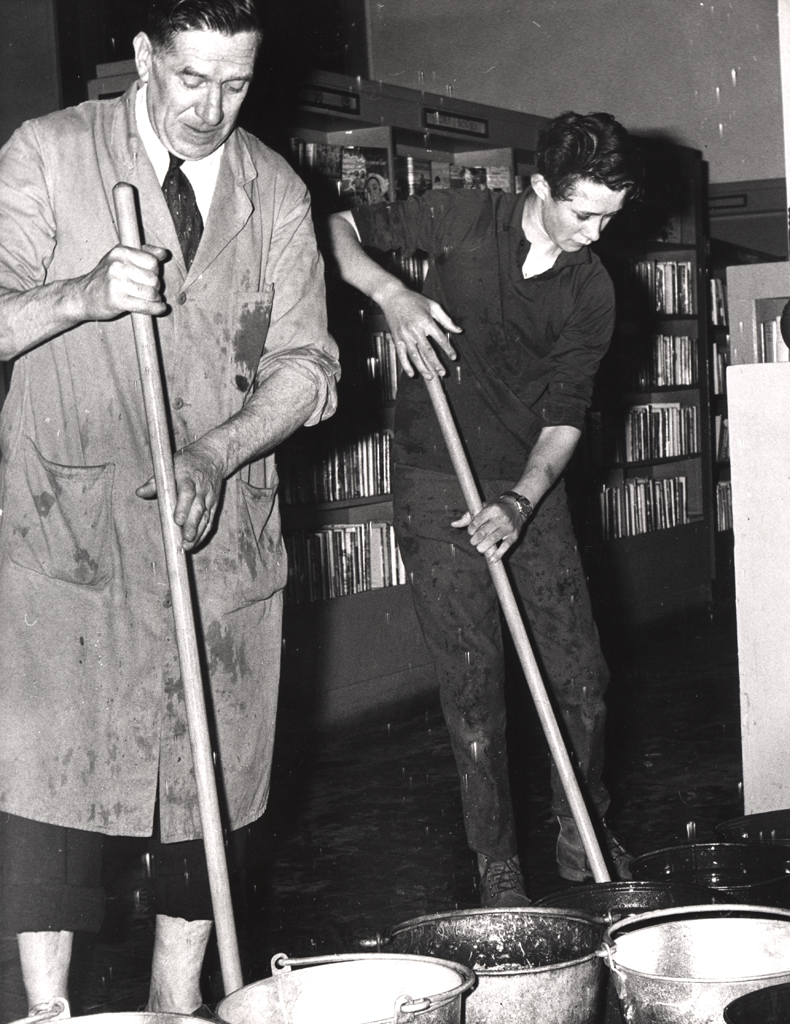
Poem: ‘Spring Sprang’

Spring sprang full force with sudden storms then stopped.
Of which vertu engendred were the floods. We mopped.
Summer so wet dried into humid dank.
Sweat dripped, dried, dripped, and as we worked we stank.

This little poem was published in The Asses of Parnassus, where poems range from the short to the very short. Epigrams translated from the Greek or Latin alternate with modern insults and with odd little observations such as this post’s verse. It is a site for people who enjoy the occasional small random thought.

Why I wrote the poem, I don’t know. It probably started with the evocative sounds of “spring sprang”. Spring rains always bring Chaucer’s Prologue to my mind, whence the “of which vertu engendred” phrase. The whole thing is inconsequential, except that in one very important sense no creative act, not even the most trivial, is inconsequential: your creativity speaks to you, and your decision of whether or not to act on it determines many aspects of your life: not just your creative output, but your sense of satsfaction, your happiness, your mental balance, even your physical health. When the muse speaks, listen and act – the output doesn’t have to be significant, but keeping the lines of communication open to the inner and unconscious (but in several ways wiser and more knowledgeable) parts of yourself is supremely important. Call it the soul, if you want. Call it God, for all I care. There is something essential there: honour it. Your happiness, maybe even your life, depends on it.

OK, rant over. Back to other inconsequentialities.

Photo: “025457:Floods Central Library New Bridge Street Newcastle upon Tyne Unknown 1966” by Newcastle Libraries is marked with CC PDM 1.0