Tag Archives: formal verse

Using form: Couplets: Maryann Corbett, ‘Fugue in October’

Baroque chamber ensemble and homeless encampment, Saint Paul

Perfect: the singers, strings, and keyboards. Perfect
Bruised sky above the tents of the squatters’ district
the little jewel-box church, its bright acoustic
calm in the year’s last mildness, the only music
softened a little in the candles’ lighting,
the mumbling underpass. The wind. No fighting
for this is God’s mind, woven of harmonies
for once. Tonight, for once, no one ODs—
and our souls thread through the flame of the vigil lamp
someone got lucky at the entrance ramp
as we hold, hold to Monteverdi’s line
(panhandling, on this warm day, with a sign)
and stop our breath until the last string dies
and parcels out his manna of salty fries
in the last great chord of his Beatus vir
while sirens wail some sorrow, far from here.

*****

Editor’s comments: “In case it isn’t clear from whatever device you are reading this on, each couplet here is comprised of a line about a musical ensemble in a church followed by a line about a homeless encampment under a highway. You can read it straight through as a soft-voiced line followed by a harsher one; or you can read every other line in one voice and the remaining lines in a different voice; either way, you are blending two very different aspects of city life into a larger, richer picture of community sharing, whether in glamour or squalor. This is an unusual and remarkably effective use of rhymed couplets of iambic pentameter.
The contrast built into the poem, and the skill with which it was done, made it a natural poem for inclusion in the ‘City! Oh City!‘ Potcake chapbook. It first appeared in Measure Review; and is included in the collection In Code.

Maryann Corbett writes: “Events that trigger a poem need not be as simultaneous as the poem makes them seem. The choral concert in this poem took place on a subzero night during the Christmas season; the rise of homeless encampments occurred at a warmer time of year–but both could be happening in my city at any time, and they probably still are.”

Maryann Corbett earned a doctorate in English from the University of Minnesota in 1981 and expected to be teaching Beowulf and Chaucer and the history of the English language. Instead, she spent almost thirty-five years working for the Office of the Revisor of Statutes of the Minnesota Legislature, helping attorneys to write in plain English and coordinating the creating of finding aids for the law. She returned to writing poetry after thirty years away from the craft in 2005 and is now the author of two chapbooks, five full-length collections already published, and a forthcoming book. Her fifth book, In Code, contains the poems about her years with the Revisor’s Office. Her work has won the Willis Barnstone Translation Prize, has appeared in many journals on both sides of the Atlantic, and is included in anthologies like Measure for Measure: An Anthology of Poetic Meters and The Best American Poetry 2018.

Her web page: http://maryanncorbett.com

Photo: “sleeping on the rock of ages” by waferboard is licensed under CC BY 2.0.

Using form: alliterative verse: A.M. Juster, ‘Three Visitors’

Mist on moonspill as midnight nears.
Adrift but not dreaming our drowsy son
is covered and kissed. At the kitchen door
our old basset is barking; coyotes out back
are standing like statues down by the dogwoods.
Across the crystal of crusted snow,
they search for stragglers to startle and chase.
Their vigil reveals no victims this night.

Trash would be trouble; they trot away
unbothered by bloodthroated growling and baying.
No star distracts their stealthy march.
As the highway hums they howl through the calm,
then savor new scents that spice their path
in this world awash in wonder and wrath.

*****

Editor’s comments: “Alliterative verse is a form found across the old Germanic language family including Old English, Middle English, Old Norse, Old High German and Old Saxon. It relies on a chant-like use of stressed syllables and does not count all syllables in the way that Romance poetry tends to; and it relies on alliteration rather than rhyme as its key memory-aid for recitation. Although there are many regional variations in the structure, most include these key points:
each line is divided into two halves by a heavy caesura;
each half has two heavily stressed syllables (“lifts”) as well as some unstressed ones (“dips”);
the two lifts of the first half alliterate with the first lift of the second half, but not with the second.
There is a good article on alliterative verse in Wikipedia which goes into more detail and also quotes or references a range of modern poets who have experimented with the form: Tolkien, C.S. Lewis, Auden, Richard Wilbur, Ezra Pound, Heaney… and Alaric Watts for his alliterative abecedarian ‘Siege of Belgrade‘. Alliterative verse can work smoothly and powerfully in English.”

A.M. Juster writes: “After translating the anonymous long Old English poem ‘The Phoenix‘ for a stalled book, I became interested in the possibilities for original alliterative verse—this poem is the first of those poems. A reader should also be able to detect the ghost of a sonnet in it due to the length of the stanzas, the turn, and the closing rhymed couplet.
“The poem started in my mind with the real invasion of coyotes in our suburban Boston neighborhood, but as I struggled with the poem it seemed to be situated in a beautiful place I have never seen—a fusion of our house and the house my bride’s parents used to have in Vermont (where I set an experimental sonnet in my first book).
“Although I think the religious undercurrents are fairly subtle, Micah Mattix & Sally Thomas did include the poem in their recent Paraclete Press anthology of Christian Poetry in America since 1940.”

A.M. Juster’s poems and translations have appeared in Poetry, The Paris Review, The Hudson Review and other journals. His tenth book is Wonder and Wrath (Paul Dry Books 2020) and his next book will be a translation of Petrarch’s Canzoniere, which W.W. Norton will release in early 2024. He also overtweets about formal poetry @amjuster.

Photo: “LZGC coyote” by animaltourism.com is licensed under CC BY-NC-ND 2.0.

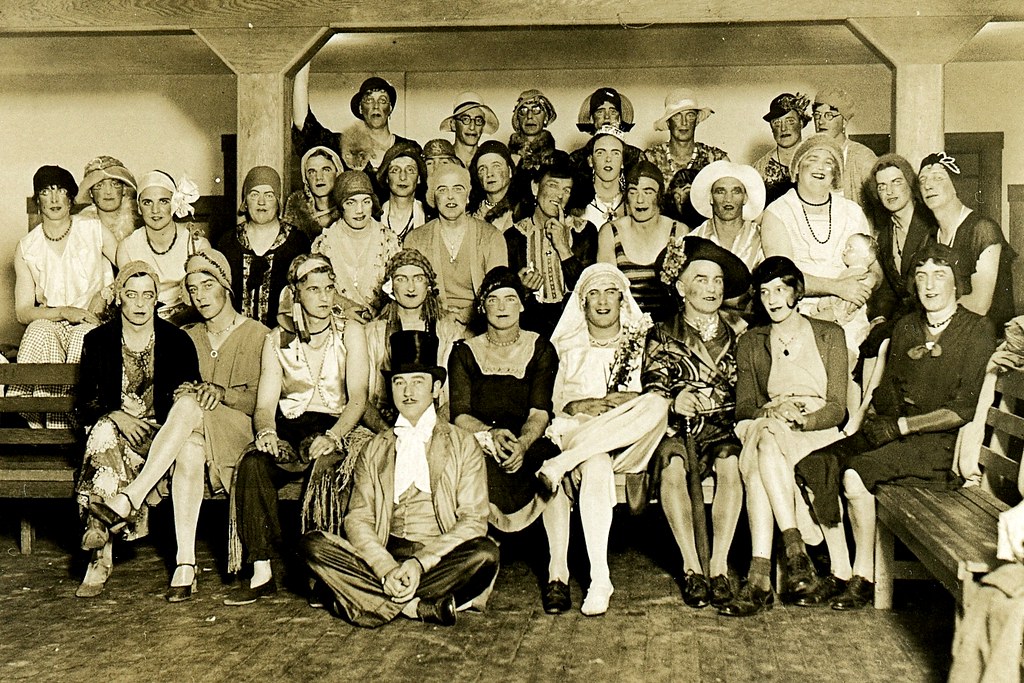
Ed Shacklee, ‘I Think Continually Of Men Dressed As Catherine The Great’

I think continually of men dressed as Catherine the Great,
Betty Boop or Greta Garbo, queens of film and state
who hitched their wagons to a star and switched the sex of Fate.

I think of fervid men in furs, the Humphries and the Dannies,
those lads who walked the walk in highest heels and padded fannies
and promenaded on the stage with debutantes and grannies –

the young, the old, the gayly bold who sashayed with panache
through droll burlesque or discotheques and made a spangled splash
in rainbow-hued ensembles that, while loud, would never clash.

They shaved and plucked, then nipped and tucked, ignoring boring foes
whose morals lagged while knuckles dragged around their unclipped toes.
These Joans – both Crawford and of Arc – and Marilyn Monroes

were kicked for kicks and picked upon, but got back up again;
and whether they were women inside men, or simply men
who liked to paint their nails and put on lipstick now and then,

I think continually of those whose vampy, cutting wit
and campy fame enflamed, then tamed, the bigot and the twit,
who were hammered till they stammered by their glamour and their grit
until a world a size too small became the perfect fit.

*****

This poem by Ed Shacklee, with its reference to Stephen Spender’s ‘I think continually of those who were truly great‘, was published in the current issue of Lighten Up Online.

Ed Shacklee lives on a boat in the Potomac River. His first collection, “The Blind Loon: A Bestiary,” was published by Able Muse Press.

And for those who like odd information and representations of animals, The Blind Loon: A Bestiary Facebook group is worth joining.

Photo: “Men in Drag” by jacki-dee is licensed under CC BY-NC-ND 2.0.

Marcus Bales, ‘Me and the Moon’

Her presence was the organizing spice
that made the dish; the multivalent pun;
the compliment whose humor takes you twice
as far aback in unexpected fun,
her laughter tinkling like a scoop of ice
cubes thrown on glass bottles in the sun
that heats a summer vacation afternoon.
This morning though it’s only me and the moon.

Me and the distant moon, who’s not as far
away as she and I have now become.
She laughs that laugh while I sit in this bar
and wonder how I could have been so dumb
to leave where all the things I value are
and vanish in this alcoholic slum,
regretting what I’ve kept and what I’ve strewn
this morning when it’s only me and the moon.

And now the moon is pretty far advanced
along its ambit’s arc above this place
where one is propositioned, not romanced,
and conversation lacks both wit and grace.
I shuffle now where once I might have danced
and face the fact that this is what I face,
however jaded or inopportune,
this morning while it’s only me and the moon.

L’envoi
Barman! Bring another tinkling glass
or two, and we will claim that we’re immune
to all this pitiful alas alas
this morning, you, and me, and the goddamned moon.

*****

Marcus Bales writes: ” ‘Me and the Moon’ was prompted by Cleveland singer-songwriter Alex Bevan’s post on Facebook back in the oughties, I think. He posted early in the morning that he was looking out the window at the dark and reflecting on his life, thinking that it was just ‘me and the moon’. He’s happily married, and so am I, but the poignance of the phrase somehow seemed significant, and I instantly absconded with his idea. As I recall, the poem was pretty quickly written because however happy we may now be, we all have regrets or unhappinesses to remember. I’ve never been much into the bar life but at the time my wife and I had discovered a wine bar we liked to hang out at where we knew the bartender, and I was eased into just going to the bar to chill and observe and listen. Of course Western culture is soaked in alcohol, but I had not been. It was interesting to see how the whole thing worked — and didn’t work.”

Not much is known about Marcus Bales except that he lives and works in Cleveland, Ohio, and that his work has not been published in Poetry or The New Yorker. However his ’51 Poems’ is available from Amazon. He has been published in several of the Potcake Chapbooks (‘Form in Formless Times’).

LAS VEGAS, NEVADA 100” by Mikes Camera is licensed under CC BY 2.0.

Short poem: ‘Poetic Tours de Force’

We aim to sing
Boldly as the brave acrobat on his thin string
Across the air.
But yet, no matter how we juggle words and dare,
And think ourselves stupendous,
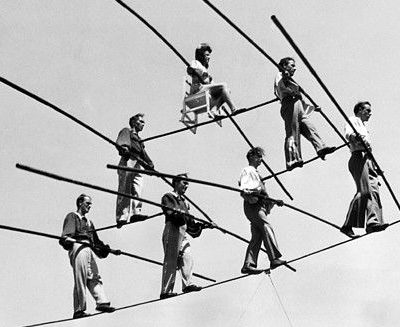
We’re risking nothing… we’re no Flying Wallendas.

*****

The Seven-Person Pyramid, the creation of Karl Wallenda, cost a couple of the acrobats their lives in 1962. https://www.heraldtribune.com/story/news/2012/06/10/wallendas-history-one-of-greatness-and-tragedy/29102856007/ Poetry may also try for spectacular effects, but without the inherent dangers of the highwire. Poets are more likely to risk their lives through their livers than anything else.

This short poem was just published in Lighten Up Online (thanks, Jerome Betts!)

Short poem: ‘Death Spiral’

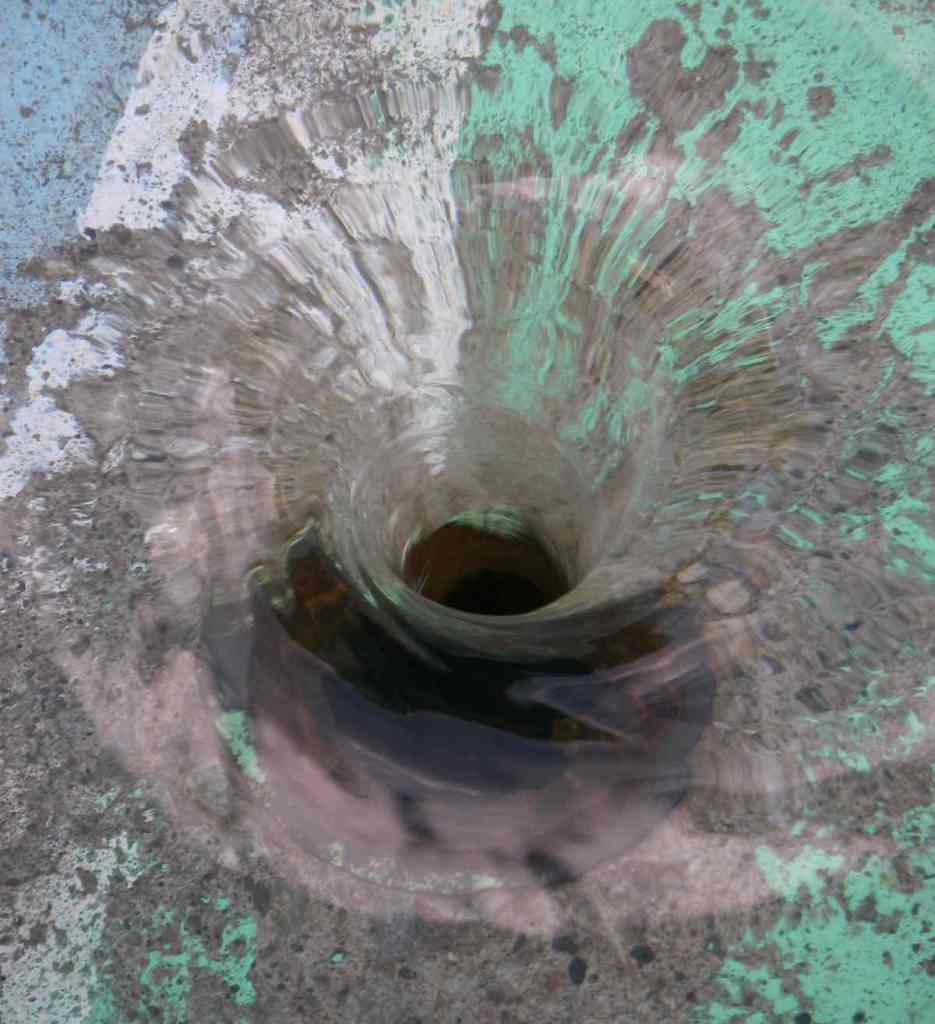
We spiral round the sun, like water
spirals round a drain;
herded like sheep to the slaughter,
it’s an old refrain–
what you coulda, what you oughta…
so few years remain.

*****

This short poem was recently published in The Asses of Parnassus – thanks, Brooke Clark! Btw sorry if the poem seems morbid – fall/winter has always made me reflective; I’ve been feeling time running out since my teens.

File:Pool drain vortex as viewed from above the water at Grange Park wading pool.jpg” by Glogger at English Wikipedia is licensed under CC BY-SA 3.0.

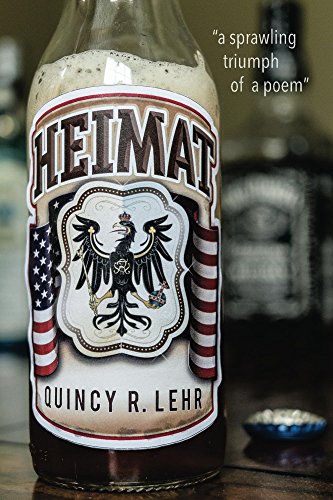
Quincy R. Lehr, ‘Heimat’ (short excerpt, ‘Observation’)

It’s in the observation, not the action–
asymmetries of night, the fractured day,
the bum note sung, the slightly tawdry way
the chiaroscuro plays against a curtain,
a moment of condescending satisfaction.
The problem’s hardly certain

except in observation, not the move
to rectify the flaws, to seek the feeling
but not offend or end up too revealing–
the phrase that’s blurted out, the sense of shame,
the passion, and the point one has to prove.
The love for one’s own name

is lost in observation, disconnected
from anything but this–a set of scenes,
possible debate on what it means,
and details of what may as well be fact
in present time or vaguely recollected.
It never is an act

but only observation that suffuses
this sense of permanence, a thing that’s set
not in the vapors trailing from a jet,
but in an observer’s blank and steady eye
that searches, not for things that have their uses,
but for the subtle lie

that even observation can’t dispel
but only note in hope of preservation
of something that will outlast a vacation
or office trauma. Shadows of a wraith
fall across the prosody and swell
to what resembles faith.

I’m just observing, as I said before.
Talk to the prophets hanging out next door.

*****

Quincy R.Lehr writes: “As for ‘Heimat‘ more generally, it was a reflection on the nation-state, its pull on one’s basic sense of self, even while it obscures other, more materially important things such as class and colonialism. I had been back in the U.S. for about a year after a two-year stint in Ireland when I started writing that poem, and being a foreigner for a time turbocharged my interest in nation and nationalism as political phenomena.

“I wrote ‘Heimat‘ over a roughly three-month period, fueled by chain-smoking and reckless levels of coffee consumption. I doubt I’m unhealthy enough to pull off a project of that scale and ambition these days. 2009 really was the summer of ‘Heimat‘ for me.”

Born in Oklahoma, Quincy R. Lehr is the author of several books of poetry, and his poems and criticism appear widely in venues in North America, Europe, and Australia. His book-length poem ‘Heimat‘ was published in 2014. His most recent books are ‘The Dark Lord of the Tiki Bar‘ (2015) and ‘Near Hits and Lost Classics‘ (2021), a selection of early poems. He lives in Los Angeles.
https://www.amazon.com/Quincy-R.-Lehr/e/B003VMY9AG

Susan McLean, ‘My Evil Twin’

My evil twin is full of feminine
self-deprecation. Don’t be taken in
by her rapt nods and deference, which mask
her sly, satiric humor. While you bask
in her respect, she’ll turn away and grin.

You think you’ve won an argument? Her chin
is cocked. She’s packing nitroglycerin.
Why can’t she let the matter slide? Don’t ask
my evil twin.

One minute she’s as sweet as saccharin,
but then, like any snake, she sheds her skin.
If you suspect that it’s a hopeless task
to coax this genie back into her flask,
you’re right. But don’t be fooled: I’ve always been
my evil twin.

*****

Susan McLean writes: “I have always loved the French repeating forms for their songlike appeal. The villanelle is my favorite among them, and I have also written a fair number of triolets, but the rondeau is a form I have rarely tried. At fifteen lines long, with only two rhymes, it is extremely demanding to write, since in English most words have relatively few rhymes. That difficulty made for a fascinating challenge and some unusual rhymes. It’s hard to imagine another poem in which I would use both ‘nitroglycerin’ and ‘saccharin.’

Twins have a long history of featuring in comedies of mistaken identity, from Plautus to Shakespeare and onward, but the ‘evil twin’ is a relatively recent development, I think, with origins in Stevenson’s Jekyll and Hyde. Soap operas, comic books, and serial dramas are full of them. Yet in real life, most people behave differently at different times and with different people. Actors often prefer playing the villain to playing the hero; viewers love to watch characters who break taboos with impunity, a sort of vicarious release from the inhibitions of civilized life. So, is this poem a self-portrait? More a self-caricature, but caricatures are often more recognizable than photographs.

This poem was originally published in the online journal Umbrella, and it also appears in my second book, The Whetstone Misses the Knife.”

Susan McLean has two books of poetry, The Best Disguise and The Whetstone Misses the Knife, and one book of translations of Martial, Selected Epigrams. Her poems have appeared in Light, Lighten Up Online, Measure, Able Muse, and elsewhere. She lives in Iowa City, Iowa.
https://www.pw.org/content/susan_mclean

Photo: “(Be Gone) Evil Twin Gum” by found_drama is licensed under CC BY-NC-SA 2.0.

Opposing Poems: Marcus Bales, ‘All the Blues’, ‘When the Sun Shines’

Since you left the sky’s expanse of grey
Is what the sun and clouds may briefly cruise
As light comes after dark for each dull day;
My lover leaving used up all the blues.

And since she left me I’ve been color-blind;
Now half the world’s in greys I cannot use
Since vivid red and yellow’s all I find:
My lover leaving used up all the blues.

My friends assure me better times will come,
But tinkly happy songs do not amuse
My soul still wants the searing wail and thrum
Of pain and sadness spreading like a bruise,
But now instead of tunes there’s just a hum —
My lover leaving used up all the blues.

Oh, since she left I don’t miss her at all
Though autumn leaves spread half a rainbow’s hues
Across a landscape ripening to fall:
My lover leaving used up all the blues.

*****

Marcus Bales writes: “Barbara Ehrenreich happened to read my poem ‘All the Blues’ on Facebook when I posted it some years back, and left the terse comment “It’s even worse when the sun shines.” I was at the moment so into the notion of the fall and the coming dark that I was startled by her insight, which prompted another poem, ‘When the Sun Shines’. I was gratified by her notice.

When The Sun Shines
for Barbara Ehrenreich

They sing their songs of their pure pain;
They lose their taste for the real wines
Of love and life when they weep rain.
It’s even worse when the sun shines.

When the sun shines
And the birds sing
And the green twines
On everything
And your love’s gone
And life’s a curse
In the dim dawn
Each poem’s lines
Are even worse
When the sun shines.

They write like they’ve known every hell
And mined despairing’s deepest mines;
But no one knew how far I fell.
It’s even worse when the sun shines.

Not much is known about Marcus Bales except that he lives and works in Cleveland, Ohio, and that his work has not been published in Poetry or The New Yorker. However his ’51 Poems’ is available from Amazon. He has been published in several of the Potcake Chapbooks (‘Form in Formless Times’).

Photo: “Shut out the world.” by Neil. Moralee is licensed under CC BY-NC-ND 2.0.

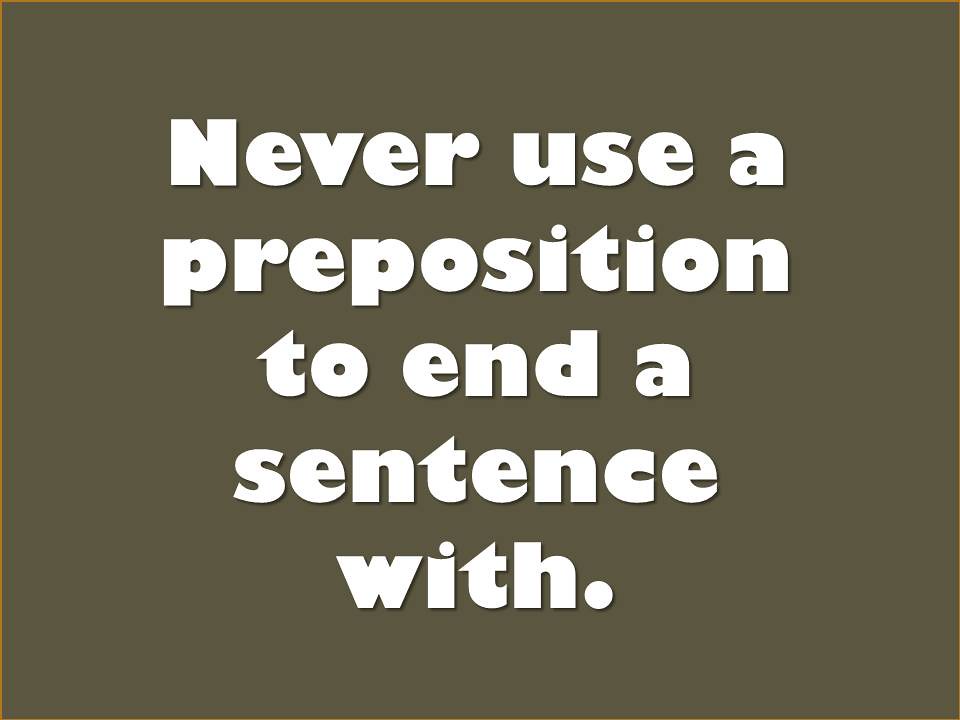
Odd poem: ‘The Naughty Preposition’ by Morris Bishop

I lately lost a preposition:
It hid, I thought, beneath my chair.
And angrily I cried: “Perdition!
Up from out of in under there!”

Correctness is my vade mecum,
And straggling phrases I abhor;
And yet I wondered: “What should he come
Up from out of in under for?”

*****

Morris Bishop had a high regard for light verse: “The aim of poetry, or Heavy Verse, is to seek understanding in forms of beauty. The aim of light verse is to promote misunderstanding in beauty’s cast-off clothes. But even misunderstanding is a kind of understanding; it is an analysis, an observation of truth, which sneaks around truth from the rear, which uncovers the lath and plaster of beauty’s hinder parts.”

Bishop was an acknowledged master of rhyme and meter, but that doesn’t imply that he would be limited by the grammatical restrictions of the apparently well-educated. He employed and enjoyed common speech.

Now this may sound strange coming from me, someone who writes a blog dedicated to the expansion of formal verse, but many “rules of grammar” are garbage. To me, correct speech is whatever unambiguously communicates what the speaker intended. This is naturally aided by the use of predictable patterns of word usage, because we are a pattern-recognition species, and this in turn leads to “rules”; but these rules are really only “commonly used patterns”.

Similarly the forms of traditional verse are there because they are useful: rhythm guides and builds emotion; rhyme, rhythm and wordplay all create engagement and help memorisation. The forms are neither arbitrary nor sacrosanct. The formality is purely useful (and part of its use is creating fun). Grammatical rules and formal verse have that in common.

Winston Churchill is often cited as the author of a scribbled comment on someone “correcting” his grammar: “This is the sort of nonsense up with which I will not put.” But that joke appears to predate his involvement with the issue: there is a lengthy discussion of it here in the Quote Investigator.

English has particularly confusing and contradictory rules because of the blending of several waves of Germanic speakers (Anglo-Saxons, followed by Danish invaders and later Dutch merchants) overrunning the British (i.e. Celtic speakers with their complicated auxiliary verbs: “How did you do that?”), in turn being overrun by French-speaking conquerors supported by Latin-speaking priests. (I recommend John McWhorter’s ‘Our Magnificent Bastard Tongue‘.) It was this latest ruling class that was averse to (among other things) ending a sentence with a preposition. But that’s a natural and correct part of speech for a Dane to end with.

And I’m an Anglo-Dane.

T-shirt Slogan: ‘Never use a preposition to end a sentence with.’” by Ken Whytock is licensed under CC BY-NC 2.0.