Tag Archives: formal verse

Kyrielle: ‘Desire is the Last Domino to Fall’

Religion starts as trying to explain,
Progresses to high priests’ financial gain.
I’ve tried religions, and seen through them all;
Desire is the last domino to fall.

Explore the world – well, fifty lands’ enough;
Novelty fades; folks are just folks; stuff’s stuff.
I’ve seen both rich and poor round this blue ball;
Desire is the last domino to fall.

And I’ve gone barefoot, and I’ve gone first class:
The trinkets pall beside bare feet on grass.
Markets go up and down and they too pall;
Desire is the last domino to fall.

The fearful right, the overtrusting left:
Politics, history, both of sense bereft.
Reagan’s road leads to Trump and hits a wall;
Desire is the last domino to fall.

My arts expression’s been in writing verse–
The arse end, clearly, of the universe.
There’s rarely silver in the nets I haul;
Desire is the last domino to fall.

I’ve had my fill of sex – but when I see
A vibrant youth, my thoughts are freshly free.
I want, though why I want I mayn’t recall…
Desire is the last domino to fall.

This poem, published by George Simmers in April’s Snakeskin, flowed straight out of a comment by Jackson Browne in a Guardian article on his latest album, ‘Downhill From Everywhere’. My thanks go to Mindy Watson, creator of poems in every form she hears of, for identifying this one as a kyrielle. I hadn’t set out to write within a specific form, I merely wrote a poem that used a repeating last line of the stanza. And this highlights one of the things about form: form follows function, in poetry as in architecture. Metre, rhyme scheme, line length, all these are chosen for their appropriateness for the mood and content of the poem. Ballads, sonnets, couplets, villanelles, each type finds its best use in a different situation, each evolved to provide a good expression of a different mood, each became popular as its expressive strength was demonstrated.

A kyrielle seems to me a natural poetic construct for an expression of prayer or despair or wherever all avenues of thought lead back obsessively to the same essential fact or wish. It was formalised in the time of the troubadours, and its name derives from the Late Latin phrase “kyrie eleison“, “Lord, have mercy”. Very appropriate.

Photo: “Where It All Began” by mckinney75402 is marked with CC BY 2.0.
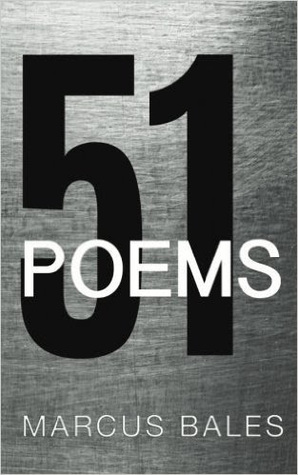
Review: ’51 Poems’ by Marcus Bales

This is poetry as it is meant to be: evocative and word-for-word memorable. Fair disclosure: I am an online friend of Marcus Bales – and I am so because his poetry is evocative, memorable, witty… and it all rhymes and scans in the most natural and elegant way.

His collection of ‘51 Poems‘ contains sections with very different moods. The first ones recapture childhood and wartime experiences and then give way to my personal favourites, a series of poems of love, love that in one way or another is unattained, incomplete: Pre-Flight, “I called goodbye. By then she couldn’t hear.//I pulled the chocks away, and she was gone.” Broken Sunlight “streaming down his face.” Have You Forgotten “it all, and all so soon?” Me and the Moon. Dancing with Abandon. And Precipice: “and knowing everybody knows//I’m dancing on a cliff edge, unaware//of where the precipice gives way to air.”

Others of his poems are portraits of very diverse people, political or social commentary, and (most memorably) flawless parodies of Keats, Poe, W.S. Gilbert, Auden, Shakespeare, Kipling among others. It is in the parodies that he shows the greatest diversity of rhyme and metre, because his ear catches the rhythms of other poets as easily as it understands iambic pentameters.

Online you will find him knocking out sarcastic little quatrains almost daily in Facebook. He was a standard contributor in The Rotary Dial (now sadly defunct), and frequently appears in the Potcake Chapbooks. Read 51 Poems for the wit and the human insights, and you will be rewarded with memorable earworms of wordplay and verbal dexterity.

Updated Call for Submissions: Potcake Chapbooks

I am always keen to read and consider rhymed and metered verse that has already been published. There are several chapbooks that are jostling in the queue for completion and publication:

City! Oh City! (urban life)
Just a Little Naughty
Portraits Unpleasant
Various Heresies (religion)
The Horror of Spring! (seasons)
a Christmas season chapbook, needs Hanukkah, Divali, Festivus, etc

and there are more; but a recent one, ‘Robots and Rockets’, wasn’t part of my original plans: I just ran across a bunch of Science Fiction poems that I liked, and they filled a chapbook nicely. So I’m an unashamed opportunist. I’ll modify my plans if I think something better is available. All the chapbooks listed above are nearly full already but, as with all of them, if I run across another poem I really like, I’ll include it. And if I receive enough good poems on an unplanned theme, that theme will get slotted in.

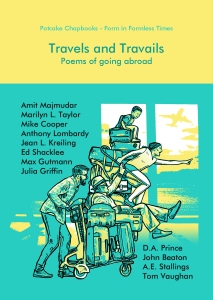
And if I receive more good poems than I can fit in a chapbook, there is a good chance of a second chapbook on the same theme. The most recent, ‘Travels and Travails’, is similar to the very first, ‘Tourists and Cannibals’; and the upcoming ‘Lost Love’ (which has gone to Alban Low for illustrating) is similar to the second chapbook, ‘Rogues and Roses’.

When there is enough good material on a single theme to fill 13 pages of a chapbook (still leaving room for Alban’s artwork, of course), then it may become the next project. But until a chapbook actually goes to print everything is subject to change. An even better poem may show up and displace one tentatively placed. A slew (or slough) of poems on a new theme may cause a reprioritisation of planned chapbooks.

This is one of the reasons that I prefer to consider only poems that have already been published–so that I don’t feel guilty about having a bunch of poems that will sit with me for months, years, and may or may not be included in the Potcake series. I have flagged a thousand poems that interest me; but I can only publish a dozen in a chapbook, and only a few chapbooks will get produced in a year.

Poems in the chapbooks run from two or three lines to some 40 lines in length–obviously, with space at a premium, poems over 20 lines and running over one page are less likely to be included… but it does happen. Other criteria: I’m looking for wit, elegance, a variety of traditional and nonce forms, a variety of voices and moods: happy, sad, angry, sardonic, meditative… anything interesting I can scrounge. If you have something you think I might like, on any topic, please send it along to robinhelweglarsen@gmail.com. Submit:

  • Formal, or traditional verse: rhymed and metrical
  • Previously published
  • Must be your own work, you must have the rights to it
  • Send 3 to 10 poems in a single attachment, or in the body of the email
  • In a covering note, include a link to where I can read more of your work

I can’t promise to use your work, but I will read it and reply!

Potcake Poet’s Choice: George Simmers, ‘Strip’

The pub’s old-fashioned, and is somewhat seedy.
The clientele, all male, look lumpish, needy,
And when the stripper comes, their eyes are greedy.

A smile fixed firm upon her painted face,
She starts gyrating with a teasing grace,
Smoothly undressing at a languorous pace.

She struts through routine choreography
Removes her bra, and lets her breasts go free
The silent men watch her impassively.

And still they stare unmoving as she slips
The golden panties from her mobile hips,
Pauses a sec, then sensually unzips

Her smooth pink skin, and flings it open wide, 
To show the flesh and beating heart inside.
Her audience observes all this, dead-eyed.

The flesh from bone she now expertly rends,
And now it’s just her skeleton bops and bends
Seductively until the music ends.

Silence. She picks up flesh and skin, and drawers
So often dropped before on grubby floors.
The men are stirred to offer mild applause.

She dresses quickly, picks up a pint glass,
And then begins the customary pass
Among the men, who goggle at her arse,

Say nothing, but poke fivers in the pot
Because that is expected. They do not
Even try to meet her eye, or speak of what

They’ve seen, but, weekly ritual complete,
Get up, and, bodies drooping with defeat,
They head out to the grey indifferent street.

George Simmers writes: “It must be thirty years ago that I was in a run-down district of some industrial city, looking for a pub that would sell me a pint and a sandwich. I passed one with a sign that said ‘Stripper: 1.30’ and I thought: ‘Why not?’
The audience was very much as described in the poem, though the performance was less extreme. It was a fairly melancholy occasion, and one that stayed in my memory. It was a long while ago, and the pot that day probably filled with £1 notes (maybe even ten bob) rather than fivers, but I thought £5 would be the appropriate donation today – if lunchtime pub strippers still exist. They’re an endangered species in the North of England, I gather, and lockdown has probably killed them off completely.
I wrote this in triplets because the first three lines came to me together, and I thought I’d see how well I could continue. I feel the form somehow suits the subject, or at any rate is better than couplets, which tend to be faster-moving. The triplets seem (to me at least) sluggish and a bit unusual.
I dimly remember years ago seeing an animated film in which a stripper goes on to unzip her skin, so to that extent the poem is not original. But it was the deliberately unimpressed audience I really wanted to write about, and making them still stolid even after watching the impossible made my point, I hoped.
This is one of a series of poems that I’ve written over the past couple of years, telling stories that are extreme or somewhat gothic. I may get some of them together into a short collection later in the year.”

George Simmers used to be a teacher; now he spends much of his time researching literature written during and after the First World War. He has edited Snakeskin since 1995. It is probably the oldest-established poetry zine on the Internet. His work appears in several Potcake Chapbooks.
https://greatwarfiction.wordpress.com/
http://www.snakeskinpoetry.co.uk/

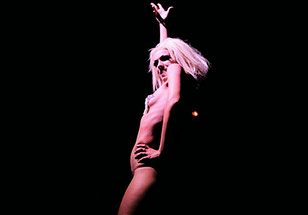
Photo: “luchavavoom stripper” by ourcommon is marked with CC BY-NC-ND 2.0.

Poem: ‘Leadership Transition’

Julius Caesar, Antony, King Lear,
Hamlet, Macbeth – corrupted, vain, impure,
Irrational, bombastic, insecure –
He’s no more clarity or veritas
Than the deceptions of a covert war,
All morals blurred.

That tyrant rant, Tyrannosaurus roar,
Forecasts he’ll suffer a dictator’s fate:
His proud obsessed confusion first seems great,
Then grates, unravels at the seams, slips gear,
Loses its moral metaphors, grows crass;
He dies absurd.

Octavius, Malcolm, Edgar, Fortinbras,
Comes from the wings and strides to centre stage –
Competent, measured, reasonable, sane –
To rule the wreckage of the tragic reign;
Restores some structure, closes out the age,
Speaks the last word.

This archetypal character’s strong thump
Will get his nation out of the morass;
The raucous self-styled hero being dead,
A truer leader takes the throne instead.
(How Shakespeare’d end the Tragedy of Trump
Can be inferred.)

The common fate of Shakespeare’s flawed protagonists–death, and replacement by a more worthy ruler–is a story that humans enjoy and wish applied in their own times and countries… although they may naturally disagree on which ruler is disgraceful and which would be more worthy. Speaking for myself, I don’t need to see a death–I’d be happy for Putin and Trump to avoid assassination or jail by going into comfortable exile at a golf hotel in southern Russia. (You read it first here.) But Shakespeare would deal with them more definitively.

This poem is the third of the five poems published this month in The Brazen Head. Its four stanzas are in iambic pentameter with a short 6th line. The rhymes largely carry over between stanzas–the 6th lines only rhyme with each other. The rhymes and the stanza structure are designed to create a sense of satisfactory achievement–exactly what I feel with Biden taking over from Trump. (Similarly I would love to see Navalny take over from Putin, and almost anyone replace Boris Johnson.)

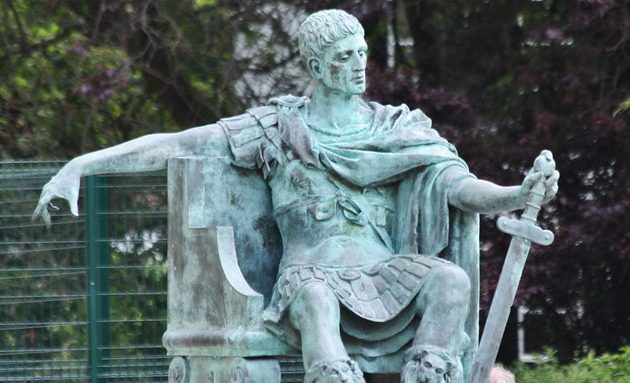
York Minster – June 2013 – Emperor Constantine – One Cool Dude” by Gareth1953 All Right Now is marked with CC BY 2.0.

Resources: Formal-friendly magazines for unknown poets

Some of the best-known and longest-established poetry magazines have either changed (often under a new editor) from being receptive to being hostile towards formal verse; others are receptive, but only to already well known poets. So it can be difficult for an unknown formalist to break into publication. For what it’s worth, here is a list of places where I have been able to publish my own uneven and very varied pieces, with some comments about what is appropriate for where.

Alabama Literary Review – US, lyrical, positive; only takes snailmail submissions (unless you have a genuine need for email)
Allegro – UK, contemporary, looking for more formal submissions than they receive
Amsterdam Quarterly – Netherlands, English-language, must address the issue’s theme
Asses of Parnassus – Canada, short, witty, formal poems, snarky is fine, hosted on Tumblr.
Better Than Starbucks – US/Canada, large magazine with many departments including formal; children’s; experimental; etc.
Bewildering Stories – Canada/UK/US, speculative and science fiction pieces
Bosphorus Review of Books – Turkey, English language
Brazen Head – UK, ideas-rich
Chained Muse – US, prefers classical themes
Libretto – Nigeria, prefers African/Afro-American/Afro-European/post-colonial pieces
Light – US, large biannual issue, also the home of weekly topical light verse
Lighten Up Online (LUPO) – UK, light formal verse, quarterly
Lyric – US, “Founded in 1921, The Lyric is the oldest magazine in North America in continuous publication devoted to traditional poetry.” Lyrical, positive… flowers and countryside.
Metverse Muse – India, publishes simple traditional verse. No website. The email for editor Dr. Tulsi is metverse_muse@yahoo.com
Obsessed With Pipework – UK, “strangeness and charm… prefers dreams to deathbeds”
Orchards Poetry Journal – US, more rural than urban
Penwood Review – US, religious streak
Poetry Porch – US, lyrical
Pulsebeat Poetry Journal – US, new; more urban than rural
Rat’s Ass Review – US, irreligious streak; whatever appeals to the editor, including things you can’t get published elsewhere.
Road Not Taken: The Journal of Formal Poetry – US, hard to find online because of its name, but a good small publication for formal and semi-formal verse.
Shot Glass Journal – US, max 16 lines, lots of international poets
Snakeskin – UK, probably the longest-established poetry zine in the world; has no interest in submission bios, only in the poems; likes work that begins light and becomes heavier.
Star*Line – US, Science Fiction poetry
The HyperTexts (THT) – US, an enormous assemblage of verse from all times and places; the editor’s preference for formal and leftist verse doesn’t rule out Walt Whitman or Ronald Reagan! The works are mostly republications, but if you have a body of strong work the editor may be interested in creating a page for you.
Verse-Virtual – US, a monthly publication for a caring community of poets
Visions International – US – I’m not sure what the status is of this magazine these days, or who is editing it…

This list doesn’t include magazines not relevant for me (like Mezzo Cammin: An Online Journal of Formalist Poetry by Women), or that moved away from formalism (like Ambit), or that have unfortunately folded (14 by 14, The Rotary Dial, Unsplendid). And there must be a lot more worthy magazines that I simply haven’t run across – I would be very glad of your recommendations about others to list.

And of course, as ever, don’t just fire off a handful of poems at random – read some samples online, determine the magazine’s orientation and moods, check whether the editor wants anything particular, note whether they love or loathe attachments, etc…

Good luck!

Magazines” by theseanster93 is marked with CC BY-SA 2.0.

Experimental Poem: ‘Pointillist’

(Note: this poem is so named because if you look at it closely you may not find as much meaning as if you step back, let it flow past you, and see an outline of a story.)

Awake
Anew
Awhile
Askew;
Afoot
Among
Amass
Along;
Abet
Aback
Ado
Alack;
Alas!

Abroad
Again
Astride
Amain;
Atop
Alight
Aglow
Afright;
Afar
Ahead
Aloft
Abed;
Alone!

Aware
Amused
Affair
Accused;
Away
Aboard
Affray
Abhorred;
Aground
Alive
Abound
Arrive;
Ahoy!

Array
Await
Assay
Abate;
Appraise
Accord
Amaze
Adored;
Apprise
Appoint
Arise
Anoint;
Adieu!

This poem started (if I remember correctly) as four or five of the early words coming into my head with a sense of rhyme and rhythm when I was on the point of falling asleep. I roused myself enough to write the words down, doing what I consider an essential part of the communication I long for with my unconscious, my Muse–acknowledge the Muse by writing whatever is offered to you, whether or not it is complete or makes sense.

The next day I wrote more, keeping to iambic monometer and words of Anglo-Saxon derivation beginning with A. As a hint of a story took shape, I kept writing. After the first two stanzas I moved over into words of Latin derivation and went for more intense rhyme. Long lists of words were involved. After four days I had the whole poem.

As for the story itself… I see a hero setting out, failing, trying again, under threat, escaping by boat, shipwrecked, and finally rewarded. Are they male or female, and of what age? Did they have a love affair? Did they end up at home or in foreign lands? If you look at the poem sideways you may find an answer that suits you. Or (of course) not.

‘Pointillist’ was the second of five poems recently published in the Poetry section of The Brazen Head.

Pointillistically abstracted” by readerwalker is marked with CC BY-NC-SA 2.0.

Poem: ‘His Mad Skull’s Like’

His mad skull’s like
a motorcycle cage of death,
the engines roaring over and beneath:
conflicting paths, crashless machinery –
the crowd roars, hoping for catastrophe.

an alchemist’s laboratory,
he strives through Universal symmetry
alone to conquer nature, friendlessly,
transmuting hopeless to hope endlessly.

a planet with its atmosphere,
blossoming gaudy after starting drear;
from grand extinctions and tectonic faults
life reaches out to loot galactic vaults.

a plant with taproot down the spine
side-nerve extractors reaching out to mine
the Universe’s minerals of sense,
make sense, and raise to Mind the mind’s pretense.

This poem along with four others of mine has just been published in The Brazen Head in the UK. I came across the magazine through Marcus Bales who published three sonnets in it in October 2021. The magazine is an idiosyncratic quarterly blog with a diversified structure and a wealth of unexpected ideas in poetry and prose. My poem felt quite at home. I will post the other poems in the next little while–a couple of them have even more unusual forms; the five make a nice set.

Sonnet: ‘We Know We Will Be Dead’

We know we will be dead, who are alive.
But should some element of us survive –
fragment of consciousness or memory –
what value could it have? What should it be
that the whole universe might benefit?
The atom matters – what’s not made of it?
And we’re not large – not like a conscious star
(if time will let us all evolve that far).
You’re not much different in real magnitude
from an ant crushed for going for your food,
a gnat rubbed out, its tiny consciousness
a dot… but does it build the universe?
If that gnat can’t, I don’t see how you can:
there’s not much difference between gnat and man.

Does a poem of 14 lines, rhymed in pairs, count as a sonnet? Perhaps, but it doesn’t feel quite right. Petrarchan and Shakespearian sonnet structures, with more complex structures of rhyme, produce a much greater impact with the final line–a sense of revelation, inevitability, an impression of absolute truth–purely by the successful rounding out of the pattern. I like this poem’s ending couplet… but it would be stronger if the previous 12 lines were better structured.

‘We Know We Will Be Dead’ was published in the most recent Allegro, edited by British poet Sally Long.

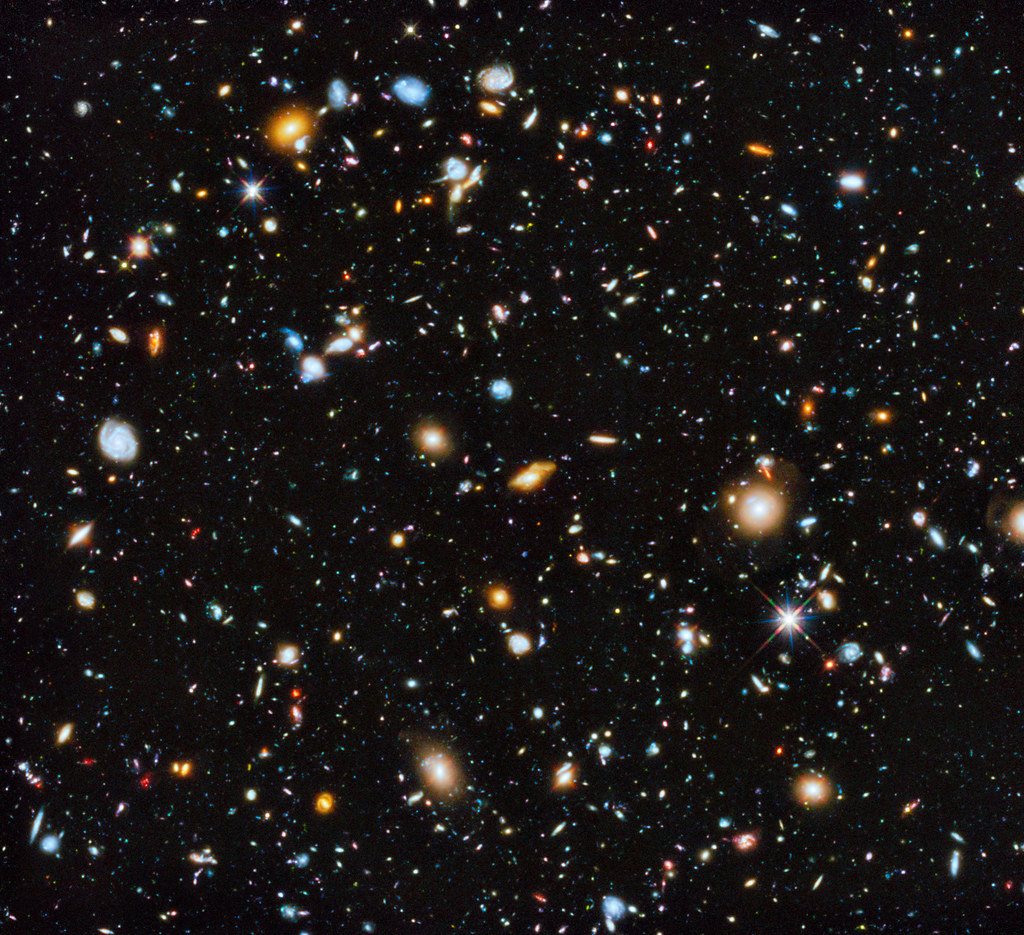
Hubble’s colourful view of the Universe” by Hubble Space Telescope / ESA is marked with CC BY 2.0.

Potcake Poet’s Choice: Max Gutmann, ‘Kindling’

The day his girlfriend’s father let him cut
The kindling was the cracking of a crust,
A heavy volume falling open at
A pleasant page. He felt the guard relax
At last: it takes some trust
To hand a man an ax.

They foraged for straight grain, which wouldn’t knot
The blade, but give hospitably, a quick
Clean breach, if he could hit the angle right.
The older man first watched, and then went in.
Alone, he chopped each stick
To almost pencil-thin,

Absorbed in seeking out that magic split,
Delicious every time that it occurred,
A touch of luck rewarding skill and sweat,
Though earned, still only half-anticipated,
Like just the sought-for word,
Or love reciprocated.

Max Gutmann writes: “I like the pattern—unique without being complex, rhyming throughout but ringingly only at the stanza ends. I hope the last simile feels both surprising and, like an ax biting a block, inevitable.”

Max Gutmann has worked as, among other things, a stage manager, a journalist, a teacher, an editor, a clerk, a factory worker, a community service officer, the business manager of an improv troupe, and a performer in a Daffy Duck costume. Occasionally, he has even earned money writing plays and poems.

‘Kindling’ was first published in The Formalist.

maxgutmann.com

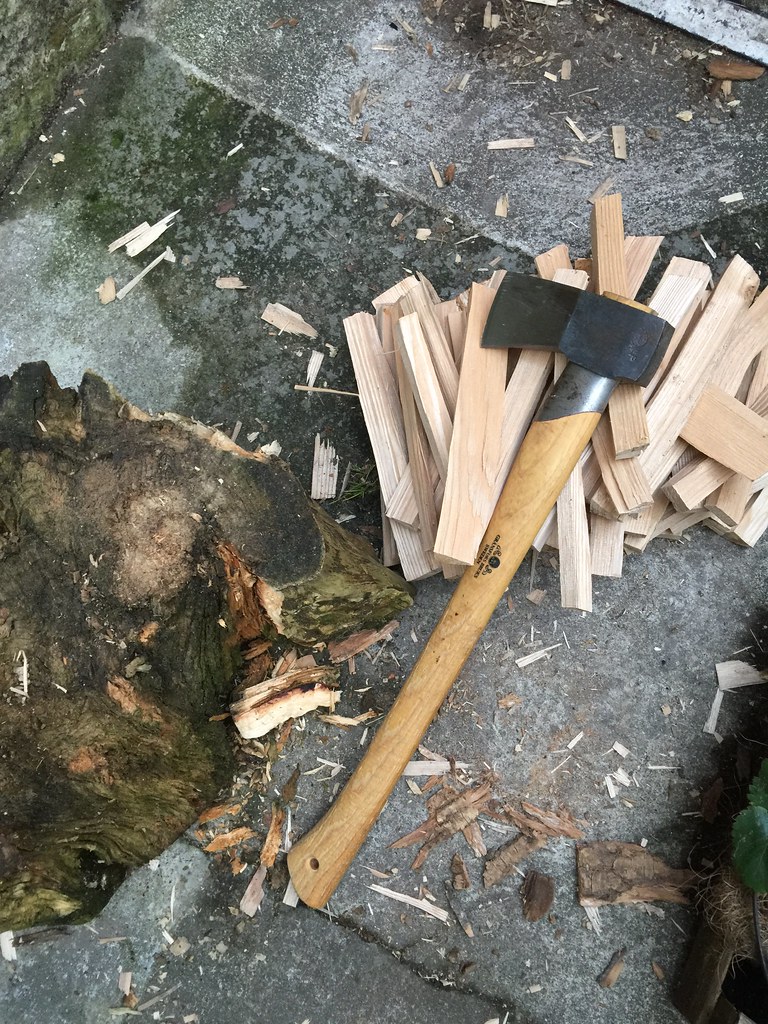
Chopping kindling” by *Tom* is marked with CC BY-NC-SA 2.0.