Tag Archives: formalism

R.I.P. Ann Drysdale… ‘Weirdness Observed’

What is she doing, the mad old bat,
Down on her knees in the garden?
In her busted boots and her happiness hat
She doesn’t know and she wouldn’t care
That the size of the arse sticking up in the air
Is shading so much of the garden.

She pulls out a weed, the mad old bat,
Out of the face of the garden.
She tuts at the trauma and fusses it flat
While the waste-not weed she will put to use
By turning it into salubrious juice
And giving it back to the garden.

What is she up to, the mad old bat
As she struts, stiff-kneed in the garden
With her doo-dah dog and her galloping cat?
Spreading compost and scattering seed
So one may sprout and the other may feed
In the windmill world of the garden.

She’s a cruel cartoon, is the mad old bat
As she talks to herself in the garden.
What on earth is this? and Good Lord, look at that!
And she squats and she mutters and giggles out loud
And informs her potatoes they’re doing her proud
As she creeps like a crone in the garden.

Where is she going, the mad old bat
As the sunset blesses the garden?
She is going nowhere, and that is that.
She will dig in the dark till the dawn sky pales
And the damp on her knees and the dirt in her nails
Go singing the song of the garden.

*****

Ann Drysdale, who died unexpectedly on August 16th (apparently in her sleep) was a superb poet and self-aware, self-directed, life-rich eccentric lover of the natural world, of gardens, of animals and birds, of unpretentious people in all walks of life. I knew her only through her poetry and our correspondence – which is to say, well enough to deeply regret that I never got to meet her in person.

The poem above was collected in Miss Jekyll’s Gardening Boots, Shoestring Press, 2015; as was the poem that I put up on this blog earlier this month, ‘When Mister Nifty Plays the Bones‘. Here is the bio that she chose to represent herself with:

Ann Drysdale still lives in South Wales. She has been a hill farmer, water-gypsy, newspaper columnist and single parent – not necessarily in that order. She has written all her life; stories, essays, memoir, and a newspaper column that spanned twenty years of an eventful life. Her eighth volume of poetry – Feeling Unusual – came together during the strange times of Coronavirus and celebrates, among other things, the companionship of a wise cat and an imaginary horse.”

She was a much-loved member of the world of (especially formalist) poetry. George Simmers posted her ‘Song of Wandering Annie’ in the Snakeskin blog, and there is a tribute (and an enormous selection of her verse) in The HyperTexts. She was a truly good person.

Sonnet: Melissa Balmain, ‘Memo to Self, in Bed’

Don’t think, while you are holding him, of deadlines,
of monster Visa bills you haven’t paid,
of NPR reports on gangs and breadlines
and kooks with nukes available for trade.

Don’t think of whom you owe a three-course dinner,
of editors you wish you had impressed,
of whether you should be two sizes thinner
and twice as nice to look at when undressed.

Above all, never think of how time’s racing
toward commonplaces you’re afraid to name–
white halls, bleak calls, the foregone mortal ending;

how you or he (which one?) will soon be facing
long nights where solitaire’s the only game.
Don’t think: just wink at him and keep pretending.

*****

From Walking in on People © Melissa Balmain, 2014. Used by permission of Able Muse Press.

Melissa Balmain writes: “Like many formalist poets, I miss the Nemerov Sonnet Award (for which this poem was a finalist). The Nemerov spurred many of us to write more sonnets, and gave us terrific ones to read when the winners and finalists appeared in The Formalist and, later, Measure. Other contests have emerged to fill the post-Nemerov void, including the wonderful Kim Bridgford Memorial Sonnet Contest, sponsored by Poetry by the Sea. Still, I’d love to see the Nemerov come back somehow–the more good sonnets, the merrier.”

Editor’s comment: In addition to the sonnet’s expected rhymes at the end of each line, Melissa Balmain has thrown in a bonus internal rhyme at the beginning of the last line of each quatrain and tercet. It is quietly done, but adds lightness to a poem that is both light and dark in subject matter.

Melissa Balmain’s third poetry collection, Satan Talks to His Therapist, is available from Paul Dry Books (and from all the usual retail empires). Balmain is the editor-in-chief of Light, America’s longest-running journal of light verse, and has been a member of the University of Rochester’s English Department since 2010.

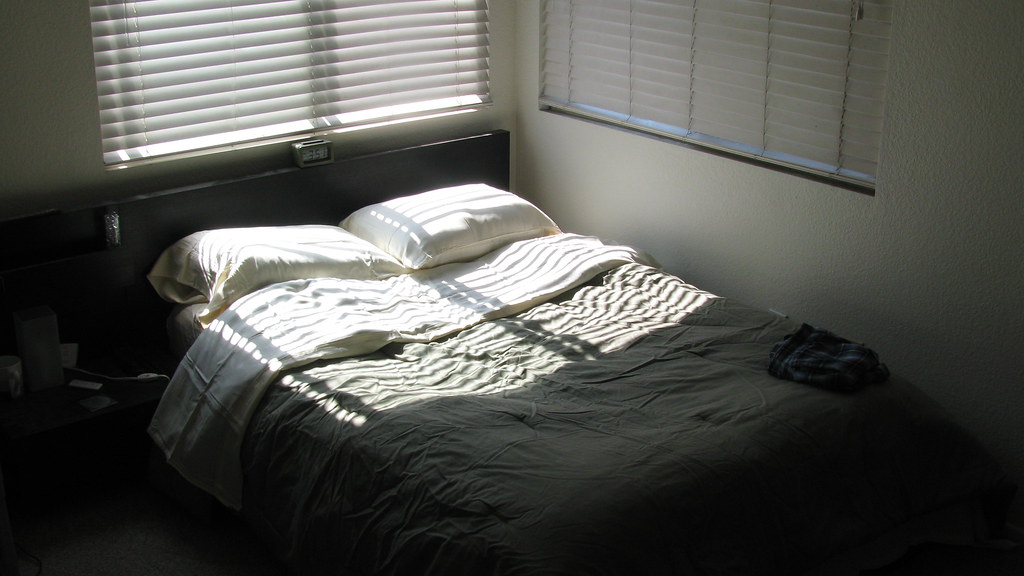
Photo: “New Bedding!” by Andrew Love is licensed under CC BY-NC-SA 2.0.

Formalist poet A.E. Stallings elected the next Oxford Professor of Poetry

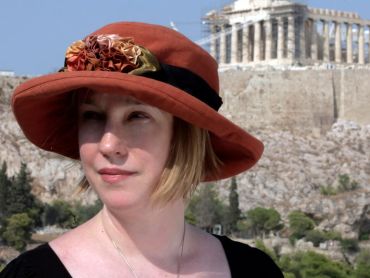
Congratulations to Alicia Stallings on winning election to one of the most prestigious poetry positions on the planet – the Oxford Professorship of Poetry! A thoroughly deserved success for one of the absolute best poets writing today. And how nice for all of us, that a formalist is recognised as the best choice. Her term of office begins in October and runs for four years.

Here is the University’s report on it: https://www.ox.ac.uk/about/oxford-people/professor-of-poetry

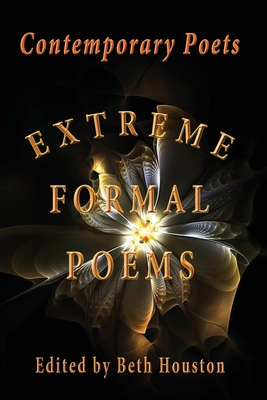
Review: ‘Extreme Formal Poems – Contemporary Poets’, ed. Beth Houston

Beth Houston has compiled an excellent anthology of formal verse (i.e. poems that use traditional structures of exact rhyme and tightly controlled meter; typically in familiar forms like the sonnet, villanelle, ballade, etc, but sometimes in a nonce form, a form specially created by the poet for that particular poem, and then rigorously maintained for all its stanzas). What is unusual in this day and age is these are all contemporary poets, for the most part American, though with half-a-dozen who at least started out in the UK. (In the interests of disclosure: two of my poems are in this book, and I am one of the non-Americans.)

The poems range in a variety of moods through a whole host of modern topics. With examples from first stanzas only, we have a flippant take on nature:

The female fly is nearly chaste.
She hasn’t any time to waste;
Her life’s a span of weeks, not months,
And so she copulates just once.

– Max Gutmann, The Fly

a rueful look at the military:

You’ve made us proud–the prosperous and free.
It doesn’t matter that a GED
was all the education you could get,
or that you signed up on a drunken bet.

– Barbara Loots, Thank You For Your Service

lighthearted memories:

In sloppy FM waves nostalgia rolls:
I wanna hold! You are the sunshine of!
Each oldie on the golden dial extols
Your soul, your body’s curves, your rockin’ love.

– Chris O’Carroll, Classic Hits

Villon-reflecting reflections on time and mortality:

Where are the flushed and frantic teens,
The hormones’ fevered ebbs and flows?

(Fire buckets, water, verbal screens.)
The girls–good grief!–that parents chose
And others–how the mind’s eye glows!
Who floated inches off the floor?

(Flout censor’s ruling–fish-net hose.)
With dodo, great auk, dinosaur.
– Jerome Betts, Ballade of Inevitable Extinction

pastoral descriptions of nature:

On moorland, on meadow, from dark sky I’m falling,
through peat, into pavement, I’m seeping, I’m sinking.
Above me the crows and the curlews are calling,
and of me the hares and the horses are drinking.

– Tim Taylor, Water of Holme

witty observations flavored with wordplay and interior rhymes:

I’m far from young enough to know it all.
With age my inner sage has paled and died.
My dimmer, dumber cerebellum’s fall
Leaves ever-clever youth aloof and snide.

– Susan Jarvis Bryant, I’m Far From Young Enough

But what you don’t get from the openings to the poems is that most of them pack a punch at the end. There will be a twist to the story, or a summation that recasts everything in a different light, or a straight-out contradiction of what the reader was being led to expect. The poems may be extremely formal. They are also extremely good.

The only regret I have is that some of the very best contemporary formal poets are missing: both the publicity-prominent (e.g. A.E. Stallings, Amit Majmudar, Gerry Cambridge, Wendy Cope) and the more reclusive (Pino Coluccio, Rose Kelleher, Marcus Bales). But happily there are still 37 excellent and prize-winning poets in Beth Houston’s well-selected anthology. So the good news is that a great many superb formalists are writing today, and–believe it or not–this looks like a Golden Age for formal verse. And ‘Extreme Formal Poems‘ is a very good manifestation of it.
Poem: ‘Oxford’

Purple voices, rich and rare,
Glowing in the jeweled air,
Handling esoteric themes,
Mysteries like running streams
Dammed with unexpected care
Into almost-answered prayer
Where you’d think no calmness could
In the wildest of the wood.
Thoughts and unknown meanings dance,
Wordwise weave you in a trance,
Darkly glowing, rich and rare,
Purple voices, glowing air.

This was first published in Candelabrum, the now-defunct journal dedicated to keeping formal/traditional poetry alive in the UK through the darkest days of free verse, i.e. from 1970 to 2010. I only discovered the magazine in 2004, better late than never–I had almost given up writing poetry, having been unable to publish anything at all up to that point. I remain grateful to its editor Leonard McCarthy, the Anglo-Irish formalist poet.

Photo: “Deep in conversation” by NatBat is licensed under CC BY-NC-SA 2.0