Tag Archives: future

Nonce form: Stephen Edgar, ‘In Search of Time to Come’

There’s not much noise above the sputtering fire.
They don’t speak much.
The children are settling to a private croon,
Though the baby whimpers, palping blindly to clutch
At a breast. Farther back, picked out by a
Final index finger of the sun, someone squats.
They’ll be changing their abode quite soon,
No doubt.
The time requires a tacit finishing touch,
From women working at rough pots
And men scraping a hide to peg it out.

This mood, this life, is like a circle, turning
Always back
On itself: expectation interlocking
Ritual; impulse to novelty, for lack
Of its not yet invented learning,
Subsiding again to things that they take pleasure from.
A hum. A mother’s body rocking,
They are, you would say, at home.

Only the cave mouth, that changeable screen,
Opens a gap
In the circumference; and when the light
Is gone, they have no words by which to trap,
Or the notions by which words could mean,
What that black window’s showing for them to detect,
As they look, perplexed, into the night
And stare,
Then turn towards each other’s bodies to tap
Their comfort. Someone, they suspect,
Is out there; and they’re right. We are out there.

*****

Stephen Edgar writes: “I can no longer remember the specific circumstances which gave rise to this poem, but it was possibly some television documentary about ancient hominins. As Philip Larkin said in a rather different context, “Truly, though our element is time,/ We are not suited to the long perspectives/ Open at each instant of our lives.” The vertiginous gulf of time between ourselves and our earliest ancestors is a subject that has always fascinated me, and I have written other poems dealing with it; indeed, my next book opens with a poem on a similar theme. The difference with In Search of Time to Come is the notion of these ancient humans attempting to peer forward into the deep future, rather than modern humans gazing back into the deep past.

“The poem is metrical with full rhyme. The stanza form, for stanzas one and three, is one of my own devising, with varying line lengths and complex rhyme scheme. Stanza two varies the pattern, breaking off after eight lines, with a slight adjustment to the rhyme scheme. Why? I can’t remember; it was a spontaneous idea that occurred to me in the writing.

As far as I can remember, this poem had no magazine publication and first appeared in my second book Ancient Music (Sydney, Angus & Robertson, 1988), which is out of print. It has been republished in The Strangest Place: New and Selected Poems (Melbourne, Black Pepper, 2020), which is available on the Black Pepper website.”

Stephen Edgar was born in 1951 in Sydney, where he grew up. From 1971 to 1974 he lived in London and travelled in Europe. On returning to Australia he moved with his then partner to Hobart, Tasmania, where he attended university, reading Classics, and later working in libraries. Although he had begun writing poetry while still at high school, it was in Hobart that he first began writing publishable poems and found his distinctive voice. He became poetry editor of Island Magazine from 1989 to 2004. He returned to Sydney in 2005. He is married to the poet Judith Beveridge.

He has published thirteen full collections: Queuing for the Mudd Club (1985), Ancient Music (1988), Corrupted Treasures (1995), Where the Trees Were (1999), Lost in the Foreground(2003), Other Summers (2006), History of the Day (2006), The Red Sea: New and Selected Poems (2012), Eldershaw (2013), Exhibits of the Sun (2014), Transparencies (2017), The Strangest Place: New and Selected Poems (2020) and Ghosts of Paradise (2023). A small chapbook, Midnight to Dawn, came out in 2025, and a new collection, Imaginary Archive,will be published in late 2025. His website is www.stephenedgar.com.au, on which publication details of his books, and where they can be purchased, are given.

He was awarded the Australian Prime Minister’s Award for Poetry in 2021 for The Strangest Place.

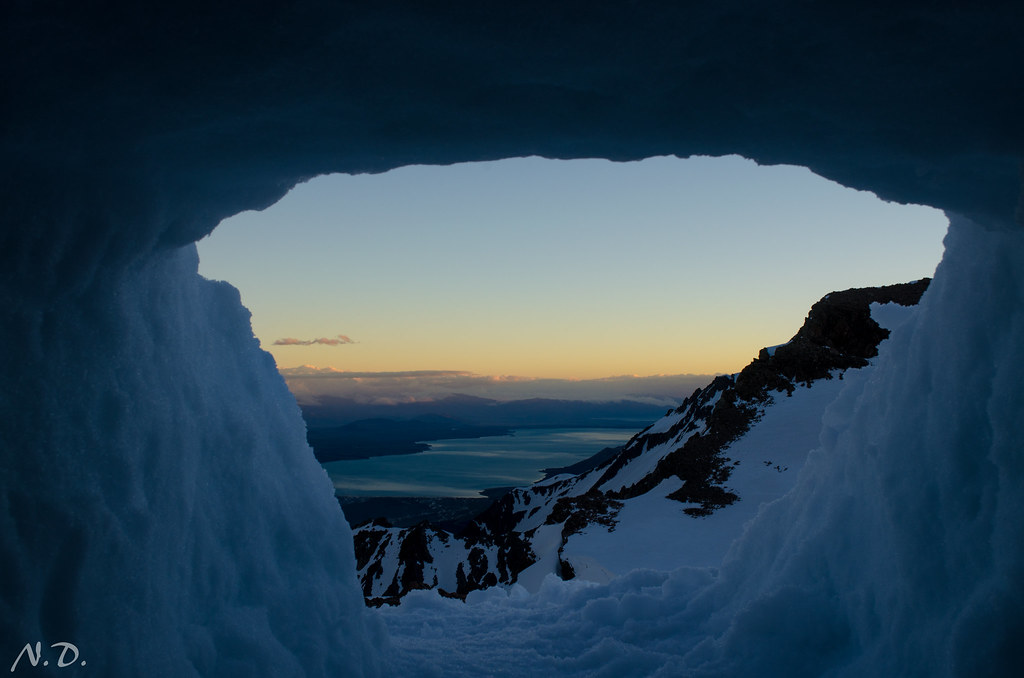
Photo: “Leave the door open!” by In Memoriam: VernsPics is licensed under CC BY-NC-ND 2.0.

Short poem: RHL, ‘Ghosts Twitter’

Ghosts twitter in my head like the memory of predawn birds.
Digging below my present house I find
a structural supportive past with rock veins to be mined.
Upstairs the future isn’t fully built or roofed.
Has someone goofed?
The Architect is vague on final thirds.

*****

I am finding many ways to say I don’t understand existence at all; this is one of them.

This short, semi-formal poem was published recently in The Lyric.

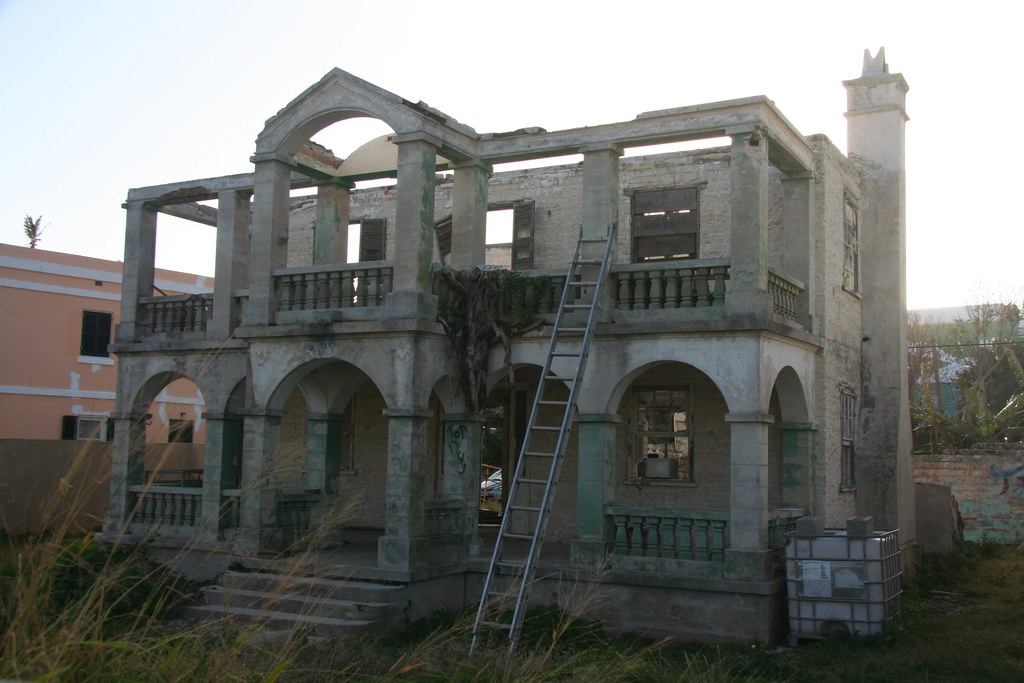
Photo: “unfinished house” by Lodigs is licensed under CC BY-NC-ND 2.0.

SF poem: RHL, ‘Outbreak of Humans’

Gods! Admire us;
we’re your virus
formed of land and sea.
Air and fire
take us higher,
a plague now breaking free;
a wild agent
of contagion
through the galaxy;
death-defying,
modifying…
infecting all we see.

*****

This brief poem was recently published in Bewildering Stories. Humans have already spread round the planet into all ecosystems like an uncontrollable virus; and now we’re seeing the beginnings of a far vaster expansion, presumably entailing endless mutations as we go. It’s going to be a wild ride and, once we’re established and self-sustaining off-planet, I don’t see anything stopping it.

(To those who don’t share this world view, I apologise for what must come across as a religious rant. Maybe it is. We’re all trying to make sense of a life that refuses to be pinned down, and quantum physics shows no more common sense than do tales of angels and demons.)

Having predicted the future in vague outline, I admit I think the future is unpredictable in detail. It is chaotic and formless… which is all the more reason for imposing what form we can in writing about it. Form is a good antidote to formless times. And understanding why we developed our cultural techniques over millennia, why we love song, dance, rhythm and rhyme, is useful in preparing ourselves for an unpredictably evolving future. We developed our cultural strengths for good reasons, and they speak to our evolving ape core. Yes, things will keep changing; but for good or ill we are social beings, and our rhythms and harmonies are part of what keep us grounded in society and prevent our mental collapse.

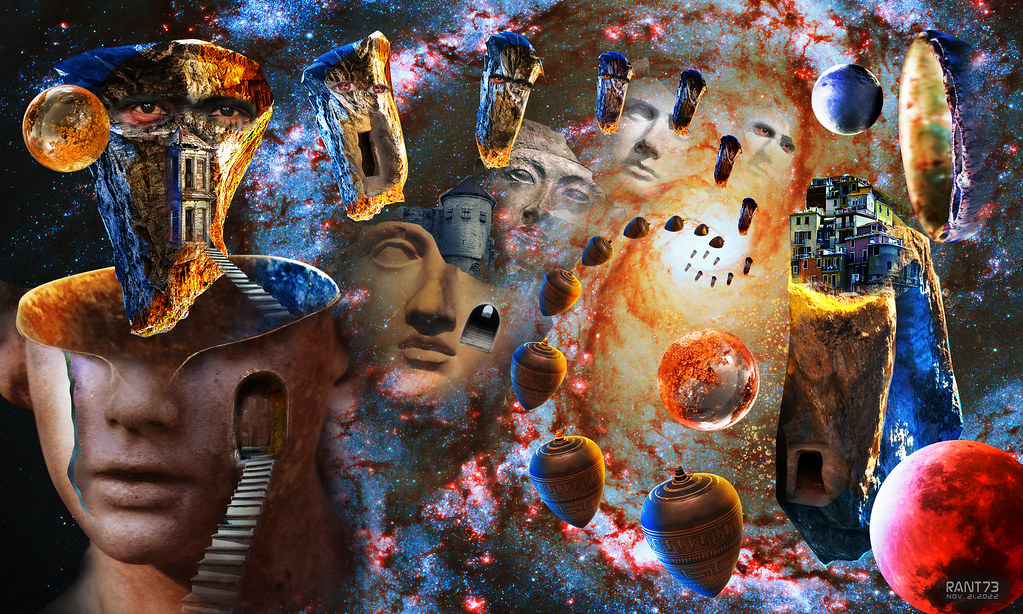
Photo: “NEXT GALAXY” by suRANTo dwi saputra is marked with CC0 1.0.

SF Poem: RHL, ‘Out Of Many…’

Two hundred million sperm
in one ejaculation;
and we are standing firm
and spouting with elation,
though but a single germ
survives to incarnation.

And much in nature throws
vast clouds into the ocean,
where myriad embryos
become a magic potion
consumed by all that goes
with food its only notion;

yet one or two survive
to adulthood and, later,
will make the species thrive
and serve up like a waiter
new young crowds that arrive
like cargo crammed on freighter.

This is how nature lives;
we should not think it foolish
eight billion of us gives
but forty fierce and mulish
posthuman narratives,
godlike as much as ghoulish,

in retrospect appearing nature’s plan
for how we cross to Nietzsche’s Superman.

*****

This poem was originally published in the Amsterdam Quarterly, although without the final couplet. I usually allow editors to make changes if they suggest them, and often the changes are an improvement that I retain. But in this case I’m afraid the science fiction speculation may be lost without those last lines: the idea that the present billions of us are on the point of being superseded by the first handful among us who achieve a godlike state of posthumanity… and that this ratio of 200,000,000 seeds being sacrificed to achieve one mature adult in the next generation is not unusual in nature.

Photo: “Stinging nettle stem with +/-15 billion seeds” by esagor is licensed under CC BY-NC 2.0.

SF Sonnet: RHL, ‘Transhuman Evolution’

The humans crowd the riverbanks in cities
while you, would-be transhuman in your boat,
trust to your dreams and luck as on you float,
ignoring all the land’s static committees,
the buildings taller with their strident voices,
the citied banks ever more crammed and loud,
leaders and statues oversize and proud,
fixed in their views. But you see other choices.

And then there’s no more land. Only the sea.
You deso-, iso-, yet e-lated find
after the Desolation of the Years,
sailing and searching past humanity
in the vast oceans of the future mind,
a life within the music of the spheres.

*****

This sonnet has just been published in Space and Time #146, a magazine where fantasy, science fiction, horror and whatever else are presented in a variety of print, online and audio forms. The sonnet owes something to one of my favourite Matthew Arnold poems, ‘The Future‘, which begins

A wanderer is man from his birth.
He was born in a ship
On the breast of the river of time;
Brimming with wonder and joy
He spreads out his arms to the light,
Rivets his gaze on the banks of the stream.


and ends flowing out into the ocean:

As the pale waste widens around him,
As the banks fade dimmer away,
As the stars come out, and the night-wind
Brings up the stream
Murmurs and scents of the infinite sea.


I assume Matthew Arnold limited this vision to the individual life, but I see it also as an image relevant to the progress of the human species into something vaster and unknowably different – not far removed from Nietzsche’s sense of Man as being a bridge between animal and… superman, or transhuman. Not the nasty small-minded punks of Nazi and neo-Nazi superman stupidity, but something far grander in a far larger development towards what life could become.

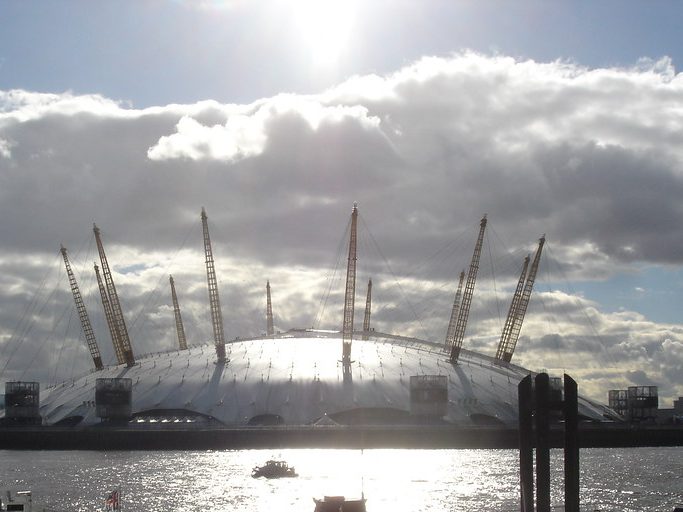
Photo: “Millennium Dome/O2 Arena from Trinity Buoy Wharf, Blackwall” by wirewiper is licensed under CC BY-NC-ND 2.0.

Very short poem: RHL, ‘The End is Nigh’

The end is an A.I.

*****

This very short (poem?) was just published in The Asses of Parnassus – thanks, Brooke Clark! I chose this post’s accompanying photo for its enigmatic mixture of futuristic construction and threatening natural conditions – the building is the Globe, or Avicii Arena, in Sweden but that is irrelevant.

An alternative photo I considered had a doomsday prophet holding a sign saying “The beginning is nigh”, which would be equally true: the end of homo sapiens being the beginning of some unguessable post-humanity. I read Ray Kurzweil and Yuval Noah Harari, and ponder. And then I look back at (others’) 2015 predictions of what the next ten years would bring, and, well, not so fast…

Photo: “the end is nigh” by dan.boss is licensed under CC BY-NC-SA 2.0.

RHL, ‘Walking then Running’

Like ants searching randomly across a table
like water dribbling across uneven ground
and pooling here, running to the side,
filling and flowing to the next dip,
so we have walked out of Africa
for a hundred, two hundred thousand years,
over the hills, around the coasts,
seeking the greener grass, the next best land,
glad of a tree, glad of a cave,
catching the lightning for our own hearth,
settling, pooling, then spilling out
over the next hill, round the next headland,
following bird flight, following game herds,
exploring then leading then fetching our families,
finding and fighting with those who were there before,
killing or trading, absorbing or raping,
loving, despising the different, the ogres and trolls,
like a stain spreading out round the world,
and walking then running up as though to take a free kick,
walking then running up as though to bowl,
walking then running as along a diving board to
bounce once, twice in the air and launch into space…
Here comes, there goes the human race.

*****

The future is unknowable beyond the point where AI becomes more intelligent than humans, and autonomous. Enjoy what you have now, you will be nostalgic for it soon enough…

I wrote this piece as a long rambling exploratory sentence which picks up speed and purpose towards the end and a concluding rhyme. This (not exactly formal) poem was first published in Bewildering Stories a few years ago.

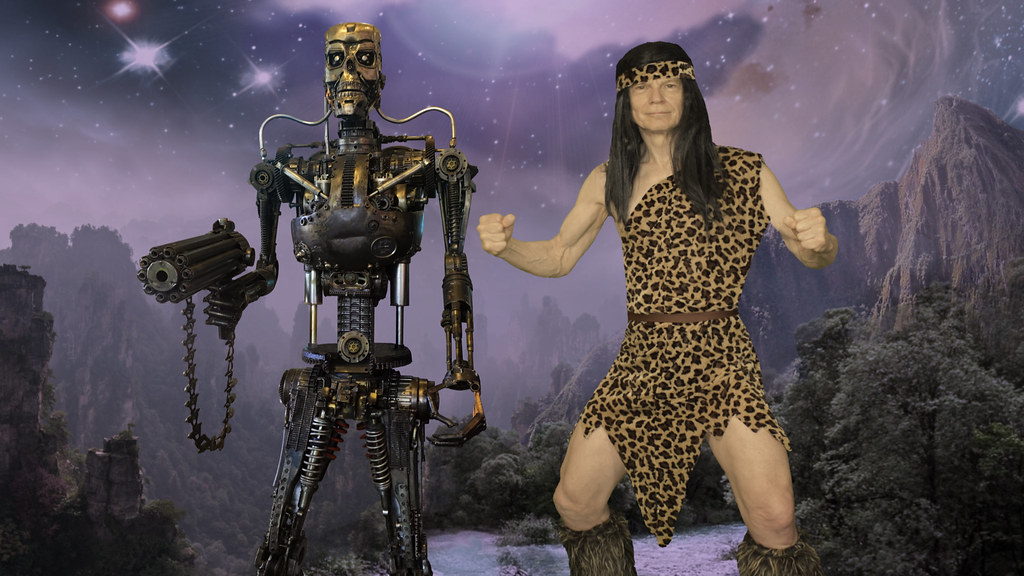
Aboard Starship Hedonian – The Terminators [809]” by TimWB2020 is marked with CC0 1.0.

Richard Fleming, ‘The Railway Line – in memory of John Simpson’

We walked together side by side,
at dusk along the disused line,
restless and glad to be outside.
I had Woodbines, you brought cheap wine.
Fifteen, unthinkingly alive,
truants from our suburban drive,
we talked excitedly of life
how we had cracked it, knew the score.
We worked the cork out with your knife
then drank sweet wine and wanted more.
We smoked our fags, ignored the cold,
could not imagine being old.

*****

Richard Fleming writes: “The Railway Line is an old poem, rescued from the archives, that remains dear to me. In it, I’ve attempted to recapture the heady recklessness of my early teenage years when the world seemed full mysteries, and friendships were more intense than those I later formed in adulthood. John didn’t make it past his early twenties so he remains, in my memories of him, forever rebellious and young.”

Richard Fleming is an Irish-born poet currently living in Guernsey, a small island midway between Britain and France. His work has appeared in various magazines, most recently Snakeskin, Bewildering Stories, Lighten Up Online, the Taj Mahal Review and the Potcake Chapbook ‘Lost Love’, and has been broadcast on BBC radio. He has performed at several literary festivals and his latest collection of verse, Stone Witness, features the titular poem commissioned by the BBC for National Poetry Day. He writes in various genres and can be found at www.redhandwriter.blogspot.com or Facebook https://www.facebook.com/richard.fleming.92102564/

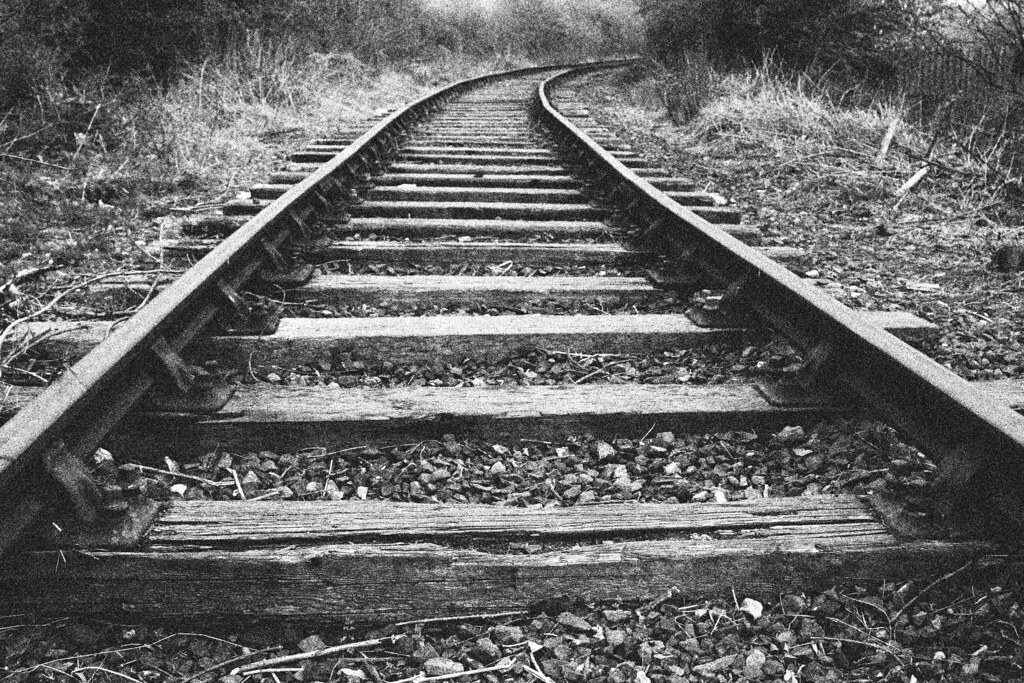
railway lines” by apdk is licensed under CC BY 2.0.

Short poem: ‘Avalanche’

I wandered nowhere special in my past,
just drifted, looking, lonelyish, half-arsed.
Nor in my present is there brilliant light–
I drift, doze, dream, enjoy the day and night.
What then will help me through a magic door?
Sensing the future’s avalanche downroar.

*****

This was published a couple of months ago in Snakeskin. Thanks, George Simmers!

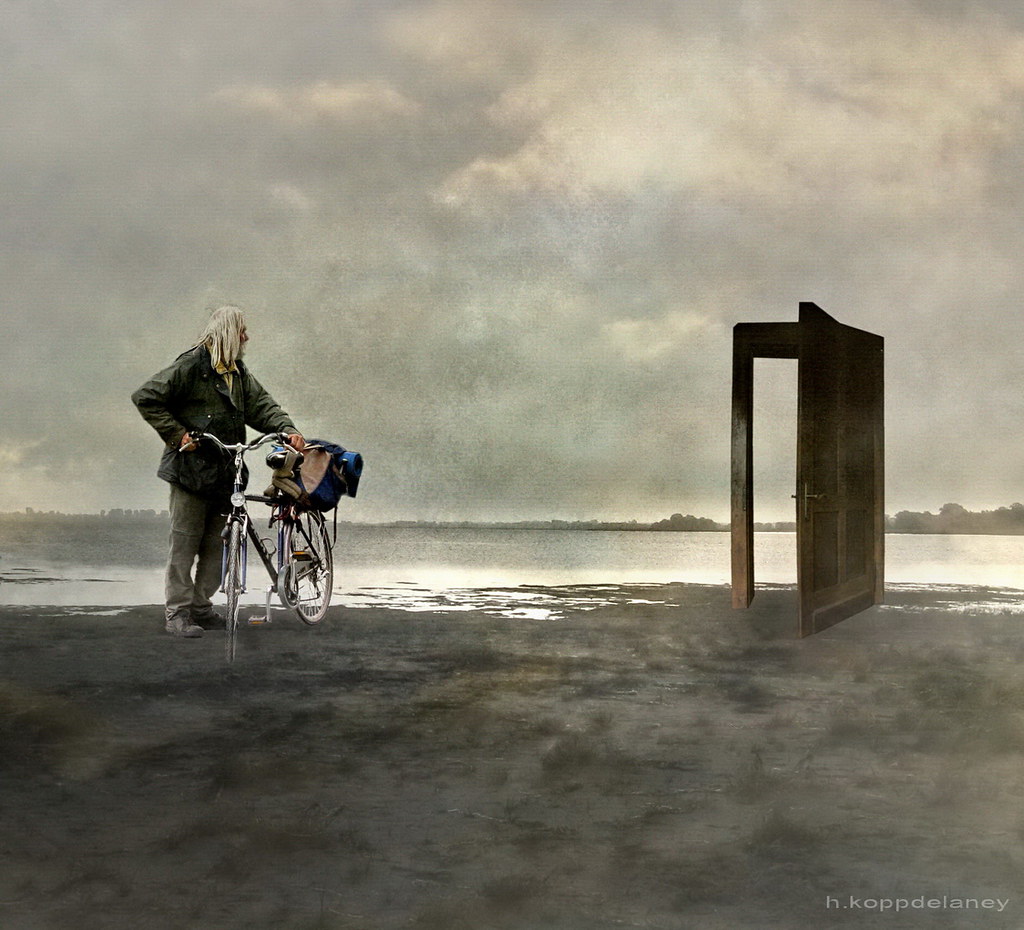
The Magic Door” by h.koppdelaney is licensed under CC BY-ND 2.0.

Richard Fleming, ‘The Servant’

Companion, constant presence in my life,
my guardian, trusty servant, I rely
on you the way a savage does his knife
and with my every order you comply.
When not required, on standby, you remain
impassive in the corner of my room
like furniture, prosaic and mundane,
then, on command, you waken and resume
your daily tasks but sometimes I detect
a certain stubbornness akin to pique,
an attitude of sneering disrespect,
antagonism when you should be meek.
Some subtle change is happening I fear.
This time next year will I be master here?

*****

Richard Fleming writes: “As our electronic devices increasingly hold us in thrall, I’ve noticed that two of the issues which seem to be causing most unease, as humanity becomes increasingly dependent on “intelligent” robots, are the fear that we may become subservient to them, and that they will seek to harm us.
I’ve tried to weave these twin concerns into this poem.”

Editor’s comments: The formality of this Shakespearean sonnet pairs well with the unformed future into which we are heading. Through ChatGPT and the like, we are interacting increasingly with a range of developing Artificial Intelligences, developing without a coherent plan or a forseeable end point. The most interesting exploration of this that I know of is John Varley’s ‘Steel Beach’ which is 30 years old, but deals with the problems of the Central Computer – which interacts with every person on the planet, but with an individualized personality for each – beginning to suffer from fragmentation and in effect schizophrenia… and what a personality breakdown in massive A.I. would lead to. It’s one of my favorite SF novels

Richard Fleming is an Irish-born poet currently living in Guernsey, a small island midway between Britain and France. His work has appeared in various magazines, most recently Snakeskin, Bewildering Stories, Lighten Up Online, the Taj Mahal Review and the Potcake Chapbook ‘Lost Love’, and has been broadcast on BBC radio. He has performed at several literary festivals and his latest collection of verse, Stone Witness, features the titular poem commissioned by the BBC for National Poetry Day. He writes in various genres and can be found at www.redhandwriter.blogspot.com or Facebook https://www.facebook.com/richard.fleming.92102564/