Tag Archives: Helena Nelson

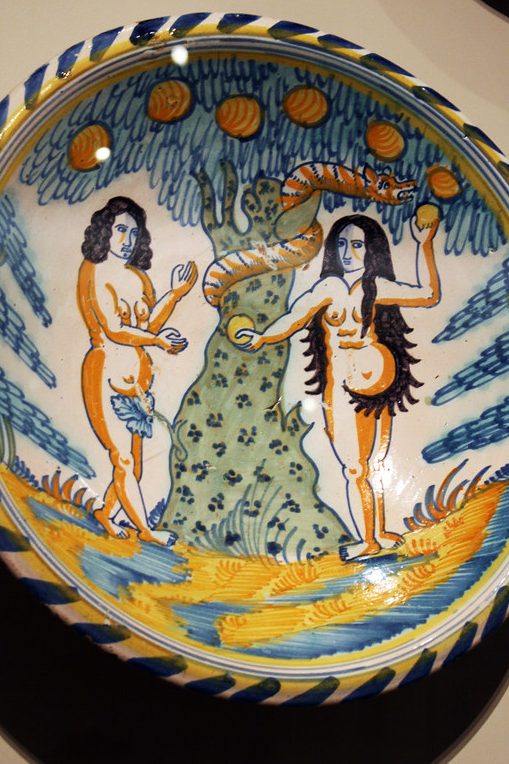
Helena Nelson, ‘The Fall (GM)’

The tree was genetically modified.
The apple was full of dioxins.
The leaves were too green;
any fool could have seen
they were vibrant with millions of toxins.

A helpful old friend (we called him ‘The Snake’)
announced he’d go up there and get it.
I said to my spouse
‘We’ve got pears in the house’
but what did he do? Adam ate it.

He snaffled a bite with a smirk of delight,
then laughed till he cried (he was manic).
‘You’ll love it my dear,’
he said, ‘and look here—
I got you some seed. It’s organic.’

Well what could I say? It wasn’t my day
for dodging his amorous athletics.
It led to sheer babel
from wee Cain and Abel—
I blame the whole thing on genetics.

*****

Helena Nelson writes: “I wrote it more than twenty years ago, and at the time people were going on endlessly about GM foods and the risks thereof. They seem to be worrying about other things these days. Anyway, this was the result, and I’ve always liked it, although it is very silly. Maybe too silly.”

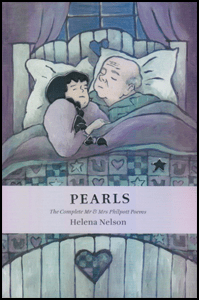
Helena Nelson runs HappenStance Press (now winding down) and also writes poems. Her most recent collection is Pearls (The Complete Mr and Mrs Philpott Poems). She reviews widely and is Consulting Editor for The Friday Poem.

Photo: “Everyone’s pregnant in the Garden of Eden!” by quinn.anya is licensed under CC BY-SA 2.0.

Helena (“Nell”) Nelson, ‘Separation’

i

Mrs Philpott goes to bed alone.
The clock in the hall ticks on.
Philpott turns to cut glass, then stone.

All the things we do to be loved,
all of them pointless.
The clock ticks on.

Nothing but moonlight dawns.
The distance from downstairs
to upstairs yawns.

Philpott sags and snoozes alone
in the wishing chair,
in the wishing air.

All the things we do to be loved –
in the night they slip far away.
It will never be day.

The clock ticks on
as well it may.

ii

She wakes first. He has not slept
in the chair all night.

At first light
he has crept

into the bed on the other side.
He will not (cannot) say it, but

everything about him is sorry –
only half of him is under the duvet

and his eyes aren’t really shut.
She pulls the covers over them both and he falls

into a sleep as deep and sound
as a lost child who has wandered far out of sight

(while his mother calls and calls and calls)
and is finally found.

*****

This poem is one of over 80 in Helena Nelson’s ‘Pearls – the Complete Mr & Mrs Philpott Poems’. Starting with poems of the end of their first marriages, it tracks their decades-long second marriage through (as the blurb says) “dreams, anxieties and needs – even sudden spurts of happiness – despite the rainy holidays, arguments and illness. The ordinariness of their love is magical and miraculous. Because ordinary love is a kind of miracle.”

People talk about “novels in verse” but those often don’t capture the poetry of verse. This is definitely a novel in poetry, and the most rereadable novel I’ve come across in a long time.

Helena Nelson writes: “happy that you like Pearls. I made it as well as I could, but it largely came unasked for. I don’t think I have anything to say about it.”

Helena Nelson runs HappenStance Press (now winding down) and also writes poems. Her most recent collection is Pearls (The Complete Mr and Mrs Philpott Poems). She reviews widely and is Consulting Editor for The Friday Poem.

Quatrains: D.A. Prince, ‘Weeds’

for Helena Nelson

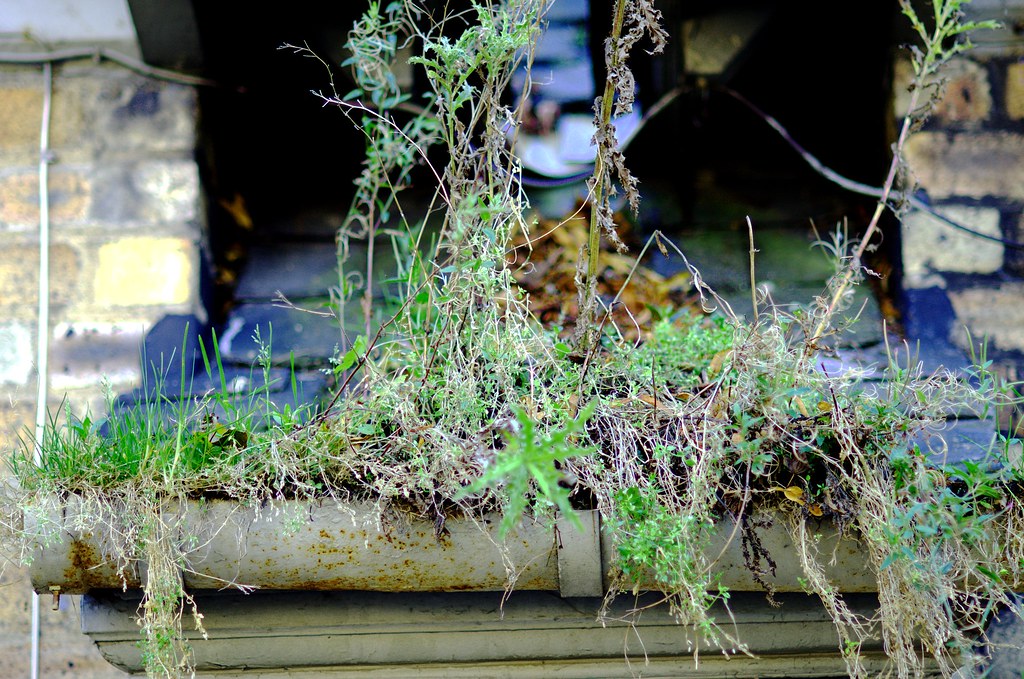
Let’s celebrate those seeded in guttering
high overhead — bird-dropped or wind-blown
in shy, shaded corners, not cluttering
the road-edge like litter or casually sown

on the garden’s margins. Buddleia, birch —
slender and whippy, fretful and restless,
only a small claw-hold on their high perch,
a loose version of themselves in endless

inventive air. No one, much, bothers them,
leaving their roots exploring the secret cracks
between bricks and flashing. Unless a stem
strangles a cable or a branch unpacks

some weathered pointing, troubling it, they’re safe:
every airhead, living only to dance
the delights of lightness, each sinuous waif
born from easy freedom, sun and rain and chance.

*****

D.A. Prince writes: “There’s a tradition of poets printing some of their work privately for circulation to friends. Now that Helena Nelson (aka HappenStance Press) is making more time for her own writing she has created a series of pamphlets about those unregarded — and usually unloved — plants generally dismissed as ‘weeds’, in which each is accorded its own sonnet. Richard Mabey’s Weeds: The Story of Outlaw Plants is the source for the botanical information while she brings a poet’s attention to what makes each one individual. She has sent these pamphlets to friends so, for the moment, only a few of us have seen them.

“I don’t habitually write poems dedicated to named people: this is, I think, the first time I’ve done it but I wanted to respond, as a way of thanking her both for long friendship and for all the poetic ongoings we’ve shared. I asked her, somewhat cautiously, if she’d agree to a dedication, then — later — if she’d agree to the poem appearing in a pamphlet.

“Her poems were sonnets so if I’d written a sonnet it could have looked competitive — and that wasn’t the point. Four quatrains, rhymed, seemed to suit the subject. In its original layout it appeared as a solid sixteen-line block but when we were working on the poems that make up my latest pamphlet (Continuous Present, New Walk Editions, 2025) Nick Everett, my editor, suggested that setting it in quatrains would suit the air and space those rooftop-rooted weeds have around them, and to my mind that’s lifted the poem in a way it needed. 

“As for gardening, I’m now very happy to let the weeds flourish.”

D.A. Prince lives in Leicestershire and London. Her first appearances in print were in the weekly competitions in The Spectator and New Statesman (which ceased its competitions in 2016) along with other outlets that hosted light verse. Something closer to ‘proper’ poetry followed (but running in parallel), with three pamphlets, followed by a full-length collection, Nearly the Happy Hour, from HappenStance Press in 2008. A second collection, Common Ground, (from the same publisher) followed in 2014 and this won the East Midlands Book Award in 2015. HappenStance subsequently published her pamphlet Bookmarks in 2018, with a further full-length collection, The Bigger Picture, published in 2022. New Walk Editions published her latest pamphlet, Continuous Present, in 2025.

*****

Photo: “guttered” by bigbahookie is licensed under CC BY-NC-ND 2.0.
Helena Nelson, ‘Invitation’

a homage to Donne’s ‘Nocturnal on St Lucies day’

The shortest day is soon. Time for a pact.
I don’t mean with Saint Lucy (Lucy’s day
falls earlier in the month). But hey
let’s meet and talk and counteract
such darkness of the heart
as coincides with winter’s formal start.
We can read Donne’s ‘Nocturnal’, view its art,
its provenance and what on earth it means.
Location doesn’t matter. We have screens.

Nobody writes a poem now like that —
not something so precise and well controlled.
Of course, we hear what we are told:
the world is round, a rhyme is flat,
‘poetics’ have moved on
and these days no-one wants to write like Donne
who was amazing, right? But dead and gone.
Or not that dead. I’d say he’s still alive
in stanza three and certainly in five.

They call Donne ‘metaphysical’, you know,
a word still popular in jacket blurbs
for living, writing bards where verbs
(or verbiage) propel the flow
but hard now to be sure
whether they mean what Johnson meant. The more
‘meta’ you get with blurbs, the more obscure.
When ‘metaphysical’ foretells a treat
it might be true; it might be mere conceit.

But in ‘Nocturnal’, metaphor leans out
and mystifies. It’s not the usual thing
like glass or compasses or string.
It’s nothing. No thing. Less than nowt.
He says what he is not
in several different ways. In fact, the knot
of nothingness becomes his central plot.
The poet in him can’t forget that ‘none’,
his rhyme for ‘run’, echoes both ‘sun’ and ‘Donne’.

So he’s the sum of everything he feels:
annihilated by the loss of one
without whom he is not a man,
just numb. And yet he still appeals
to logic to make clear
how dark existence is. Yes, she was dear.
Each syllable recounts her loss, his fear,
and this is now and then and now, since this
both the year’s and the day’s deep midnight is.

*****

Helena Nelson writes: “In 1617 when, after the death of his wife, John Donne wrote ‘A nocturnall upon S. Lucies day, Being the shortest day’, St Lucy’s Day coincided with the winter solstice in the author’s hemisphere. Then they changed the calendar, and these days, Saint Lucy’s Day is 13 December. But the winter solstice falls over a week later (this year 21 December).

“Every year on the solstice, I think about John Donne’s solstice poem, every year it gets more apposite, since it is essentially about death. Last year, I did a formal online discussion about it, and I wrote an invitation using the form that is Donne’s, though obviously for a less serious purpose. It allowed me to think it through. I’m thinking about the poem again today, so here’s the invitation.”

Helena Nelson runs HappenStance Press (now winding down) and also writes poems. Her most recent collection is Pearls (The Complete Mr and Mrs Philpott Poems). She reviews widely and is Consulting Editor for The Friday Poem.

Photo: “John Donne, Poet” by lisby1 is marked with Public Domain Mark 1.0.

Using form: unconventional couplets: Helena Nelson, ‘The Hill’

His heart is okay (it has been checked)
but not far from the top his pace is checked

and he stops. ‘Enough. Let’s go back.’
Mrs Philpott doesn’t want to go back.

If they get to the summit, they’ll see the view.
He doesn’t give tuppence about the view.

‘It’s not far,’ she says. ‘Too far,’ he says.
She doesn’t care a bit what he says,

she wants to get to the top of the hill. ‘Come on,’
she says. ‘Best foot forward.’ ‘You go on,’

he says. ‘I’ll wait here.’ So she walks on her own
and quickly sets up a pace of her own

not pausing and not once looking back
until for some reason she stops and looks back

and he’s quite out of sight, could be anywhere
and a sort of fear catches her where

head and heart meet. This stupid emotion is love
and because of that, because of her love,

if he won’t get to the top of the hill,
then she won’t get to the top of the hill

either. Anyway, a few drops of rain
fall on her hair and she knows he hates rain.

He might even have turned
and gone home without her. She turns

and half-runs down the path. He’s waiting for her,
sitting on his coat and waiting for her.

‘About time,’ he says. ‘Where have you been?’
She says, ‘Where do you think I’ve been?’

He doesn’t ask about the view from the top.
She doesn’t tell him she didn’t get to the top.

She might think, ‘This is the story of my life,’
but although this is the story of her life

that is not what she thinks.
She thinks something else.

*****

This poem comes from midway through Helena Nelson’s 2022 book ‘Pearls – The Complete Mr & Mrs Philpott Poems‘, some 100 poems (I haven’t counted) detailing their years of marriage, starting with a couple of references to their first marriages, through to their own noticeable ageing.

The book’s blurb asks: ‘Where did Mr and Mrs Philpott come from? The author has no idea. They popped into her head over twenty years ago and have refused to go away. Their story is one of ordinary, difficult, everyday love. And yet they themselves aren’t ordinary. Their dreams, anxieties and needs, their separate and difficult pasts, have somehow coalesced into mutual understanding–even sudden spurts of happiness–despite the rainy holidays, arguments and illness. The ordinariness of their love is magical and miraculous. Because ordinary love is a kind of miracle.’

Helena Nelson writes: “I didn’t choose this absorption with the Philpotts. It just happened, and it seems I really have stopped writing them now. But I’m terribly fond of them and often think about them. Probably one of my top favourite Philpott poems is ’The Hill’. Nearly all the poems have some kind of formal pattern underpinning them. Even when they appear to be free, the rhythms are deliberate. I don’t know if I could say any more about them. I feel as though they’ve gone off on their own now, for better or worse, and I’m happy about that.”

Helena Nelson runs HappenStance Press (now winding down) and also writes poems. Her most recent collection is Pearls (The Complete Mr and Mrs Philpott Poems). She reviews widely and is Consulting Editor for The Friday Poem.

Photo: “Day 40: Grey Skies” by amanky is licensed under CC BY-NC-ND 2.0.
Using form: Short poem: Helena Nelson, ‘Duel’

Your false self says to my true self, Hate.
My true self says to your false self, No.

Your false self says to my false self, Shit.
My false self says to your false self, Go.

Your true self says to my false self, Love.
My false self says to your true self, Late.

Late, too late, too late, too late.
My true self sings to your true self, Wait.

*****

Helena Nelson writes: “I can’t explain this easily. It’s both simple and obscure, like a sealed box holding the idea of opposition: a duel between two people, a duet; dual positions. Then there’s the idea of a two-sided self: the true or authentic self versus the manipulative side, the side that does deliberate damage. I don’t even believe in ‘the true self’; but I do in this poem. And I recognise a dispute where one person (especially if for some reason acting from twisted emotion) can push another to come back from that same position, even when they don’t want to. From experience, I’ve known this. The rhyming words trace the development. The slant rhyme between Hate and Shit, for me, has a dark twist. Hate is powerful but Shit is horrible. Late is potentially the last word. The poem could end there, but it doesn’t. Each of these two people summons a ‘true self’. Each dismisses the ‘false’. ‘Late, too late, too late, too late’ is the line that breaks the pattern. No direct speech in that line, perhaps because it’s not a spoken statement but a feeling experienced by both. For me, there’s intense sadness at this point, and the shadow of death too, and because of this—just in time—true speaks to true. Only seventy words in the whole thing but most repeated several times. If you go by unique usage, fifteen words in total. It reminds me of one of R. D. Laings’ Knots. The switch from ‘says’ to ‘sings’ at the end? Yes—significant.”

Helena Nelson runs HappenStance Press (now winding down) and also writes poems, one of which is ‘Duel’. It was originally published in PN Review, collected in Plot and Counter-Plot, Shoestring Press, 2010, and was reprinted in the Potcake Chapbook ‘Lost Love’. Her most recent collection is Pearls (The Complete Mr and Mrs Philpott Poems). She reviews widely and is Consulting Editor for The Friday Poem.

Photo: “Argument” by helena_perez_garcia is licensed under CC BY-NC-ND 2.0.

Sonnet: Helena Nelson, ‘Dream’

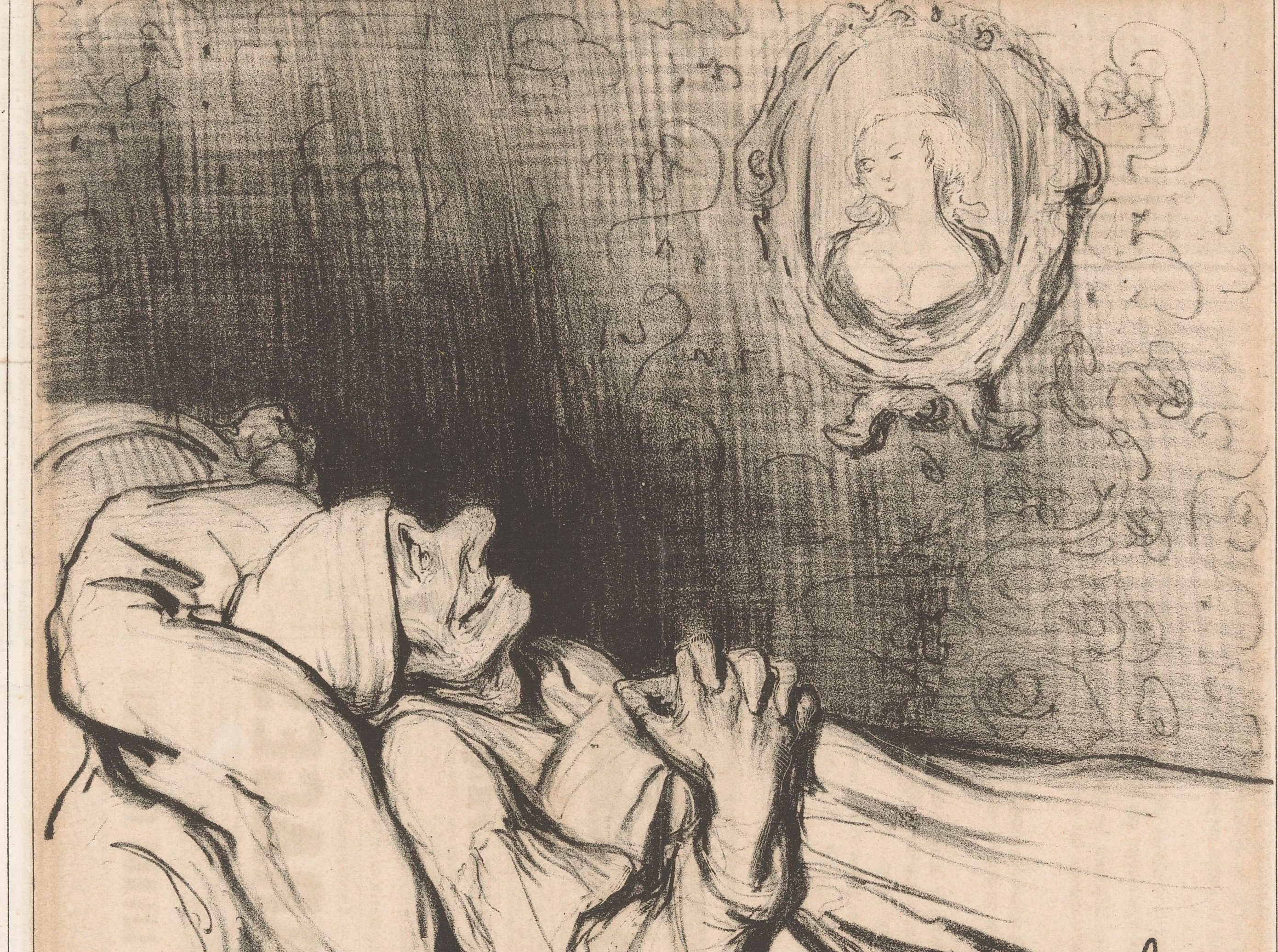
I found myself in bed with an old man.
His beard was silvery, his scrawny chest
a rack of ribs, his loose-lipped mouth open
and toothless as a baby. There he was,
there in our bed, as if he owned the place.
He snored and grunted like some ancient king
asleep after a banquet. But what feast
had led, dear heart, to this? What partying?
He turned his head to me. I saw his face—
a travesty. Some metamorphosis
had happened in our sleep, my love replaced
by a bag of windy bones. I need a piss,
he muttered, and got up. O then I knew
what age had done to us, and who was who.

*****

Helena Nelson writes: “Everyone experiences it eventually. You glance at your own reflection in the mirror and get a shock at how old you look. So that’s one of inspirations for this poem. The other spur to write this was a dream I had one night, though in the poem it’s intentionally unclear whether the experience is or isn’t real. I started with near rhymes in the octet and moved towards perfect rhyme at the end to convey the shock. I do hope the reader feels that shock at the end.” 

‘Dream’ was originally published in The Dark Horse.

Helena Nelson runs HappenStance Press (now winding down) and also writes poems, one of which appears in the Potcake Chapbook, ‘Lost Love’. Her most recent collection is Pearls (The Complete Mr and Mrs Philpott Poems). She reviews widely and is Consulting Editor for The Friday Poem.

Launch: Potcake Chapbook 11, ‘Lost Love’

‘Lost Love – poems of what never happened, and of the end of things that did’… how bittersweet; but what a collection of poets, and what a diversity of stories and observations!

Seventeen poets are packed into this chapbook. Seven have appeared before: Marcus Bales, Melissa Balmain, Michael R. Burch, Vera Ignatowitsch, Martin Parker, Gail White and myself. Ten are new to the series, with wicked little pieces from Brooke Clark, Cody Walker and three from Wendy Cope, and with longer poems from N.S. Thompson, James B. Nicola, Mary Meriam, Helena Nelson, David Whippman, Richard Fleming and Vadim Kagan. Bios, photos and links to read more of their work can all be found on the Sampson Low site’s Potcake Poets page, while all the chapbooks in the series, showing which poets are in which, are here. Each of the 11 chapbooks is profusely illustrated (of course) by Alban Low, and can be yours (or sent to an ex) for the price of a coffee.

Heartbreak has never had a happier manifestation!

Potcake Poet’s Choice: Helena Nelson, ‘On Gloom and Proper Respect’

He doesn’t exactly blame her for it. No,
it’s not her fault. She is the way she is—
incorrigibly optimistic. But
the strain of her unbridled cheerfulness

must tell. His gloom requires due diligence.
It’s there to serve a need, and needs a slow
and proper processing. That’s it—a proper pro-
cessing. To this he must commit, and hence

his necessary isolation. No,
he is not depressed. He’s just process-
ing. Some ‘thing’ is passing through. It will go
eventually, but it must run its course.

The weight of doom would be a minor stress
if she would just dispense with cheerfulness.

Helena Nelson writes: “This poem is part of a book-length sequence telling the story of an ordinary, conventional marriage (albeit a second marriage for each partner). It’s about love that struggles to survive the difficulties of aging, loss and illness. The husband, Mr Philpott, has always suffered from anxiety but he has bouts of depression too, when he withdraws into himself. In fact, he might fairly be described as a ‘difficult’ man, though he can’t help it. Here the sonnet form reflects his need for tight control, repressing his anxiety about depression, which gets squeezed uncomfortably across the line breaks. There’s humour here, too. Because how absurd it is, surely, to wish your wife were less cheerful? And yet he does. He certainly does.” 

Helena Nelson runs HappenStance Press and sometimes writes poems, one of which appears in the soon-to-be-released latest Potcake Chapbook, ‘Lost Love’. She has been writing the story of Mr and Mrs Philpott for over twenty years, and it can finally be found in its complete form as Pearls (The Complete Mr and Mrs Philpott Poems)

Review: Helena Nelson, ‘Starlight on Water’

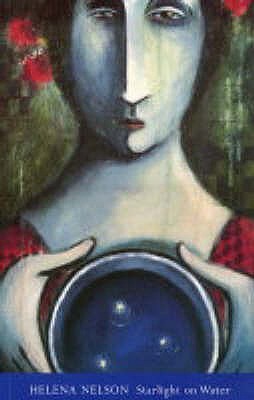
Helena Nelson’s 2003 poetry collection ‘Starlight on Water‘ is quiet, reflective, beautiful and intensely intimate. Not necessarily personal – in some of the poems the poet has no children, in others a daughter or two, so there is no guarantee Nelson is writing of herself – but intimate with the senses and memories of existence. One of my favourite poems is ‘Ironing Day’:

I’ve never had an ironing board cover that fits
or a baby of my own.
None of the doors here properly shuts
and the garden wall’s come down.

But I shouldn’t ever want to lose my iron.
Pressing hard, I remember
grass between my toes
and the soft rain of September.

This speaks to several of my biases: going barefoot, enjoying rain, tolerating imperfection, triggering memories… and the music of casually rhythmical rhymed verse.

Not all of her verse is in the same style. Some poems are formally structured, some are free; the bulk of the book wanders all over internal and external landscapes, while the last third circles around and around Mr. and Mrs. Philpott, first one and then the other, a very caring couple of very distinct individuals in their mature second marriage. Here are some opening lines at random from the 19 Philpott Poems:

At the kitchen window
in his dressing gown,
Philpott stands alone
his sons have gone.
He’s on his own.

and

The sweetness of June, a summons conveyed
from strawberry fields, calls her to pick.
She drives to the farm, the car arrayed
with Tupperware tubs.

and

His father died at fifty-eight
and so he will die at fifty-eight.
He fetches a tumbler.
Two years to go.

and

Philpott’s anger lives in his shoes.
It tangles in the laces
and he wrestles like a lover

The first part of the book is about all manner of things – the spirit of a dead cat, say, or a night in an isolated Scottish cottage, or the teasing poem ‘Genderalisation’:

Women keep scales in their bedrooms;
Men keep weights.

The latter part of the book is just the Philpotts. What the whole book has in common is, without any sentimentality, the deep love that comes from respect, patience and close observation. It is all very intimate, and Nelson appropriately ends the Philpotts and the book with this short poem, ‘Love’:

He has tipped, he has spilled
his soul into her
and she carries it still
like starlight on water.