Tag Archives: Housman

Brian Gavin, ‘Death Watch at the Nursing Home’

Two rows of heads puffed white for show
are turned to watch the gurney go
parade-like down the hall and through
the double doors, and out of view.

They linger, as the swinging doors
are gazed to stillness, and intercourse
is but the mingling of silhouettes.
Beyond the tumults of regret

and wonder, they are elsewhere, all
their architecture of recall
connecting lives to family plots,
or maybe – further back – in what

may be a keepsake memory – light
parade, perhaps – a child’s delight
in clowns and cotton candy, high
and wispy as puffed hair. Friends die

often, but not in violence –
not here, where death comes to the sense
in not-quite-joy, and not-quite-grief,
but trembling, lightly, like a leaf

that might be blown, or not, or light
as dandelion fields puffed white
and wispy, wavering. In slow surmise
they gaze on quiet with quiet eyes,

filling the hall with noiselessness,
and dreaming but to acquiesce
to dream, and but to linger some
in thrall to stillness yet to come.

*****

Brian Gavin writes: “My poem sort of rips off (shamelessly!) the form and rhyme scheme of the famous A E Housman poem ‘To An Athlete Dying Young‘. It is, however, about a different kind of death – extreme old age – and the gentleness of it. It’s based on something I actually saw in a nursing home, when white heads once leaned out of their rooms to see a friend taken away on a gurney. The image of a parade struck me, and the heads of puffed white hair reminded me of cotton candy at the parades of my youth. Eventually the images of puffed hair and puffed candy morphed into a field of puffed white dandelions wavering in the wind.
I almost left the title at ‘Death Watch‘ – which I kind of preferred for the double meaning – but opted to add the rest of it for the sake of clarity. This piece ran in my collection Burial Grounds.”

Brian Gavin is a retired Distribution Manager who started writing poetry 10 years ago. His poems have appeared in The Journal of Formal Poetry, Peninsula Poets and Snakeskin Magazine, and in the Potcake Chapbook ‘Careers and Other Catastrophes. He lives in Lakeport, Michigan, USA, with his wife Karen. ‘Burial Grounds’ is available from Kelsay Books.
You can see more of his work at briangavinpoetry.com

Photo: “Dandelions Gone to seed, Dandelion puff ball seeds weeds lawn infestation roundup herbicide Pics by Mike Mozart of TheToyChannel and JeepersMedia on YouTube #Dandelions #Weeds #DandelionSeeds #Lawn #DandelionFlowers #Dandelion” by JeepersMedia is licensed under CC BY 2.0.
Potcake Poet’s Choice: David Galef, ‘Justification’

And malt does more than Milton can
To justify God’s ways to man.
—A. E. Housman

When I am beaten down by work and love,
And others head for local dives to drink,
I clench my soul and strive to rise above,
For stimulating words to make me think.
O show me Milton’s paradisial route,
Far airier than the foamiest of stout.
Of man’s first disobedience and the fruit
Are all I need and all I care about.
A bottled brew’s sufficient for the poor
In spirits, not for spirituality.
How can a tankard filled with beer quench more
Than slaking drafts of a theodicy?
I’d bring it to the bar, but I get looks
When I enact the fall from all twelve books.

David Galef writes: “Justification is both an appreciation and dig at Milton, an attitude older than Samuel Johnson’s comment about Paradise Lost, ‘None ever wished it longer than it is.’ It came out in Light.”

David Galef has published over two hundred poems in magazines ranging from Light and Measure to The Yale Review. He’s also published two poetry volumes, Flaws and Kanji Poems, as well as two chapbooks, Lists and Apocalypses. In real life, he directs the creative writing program at Montclair State University.
www.davidgalef.com

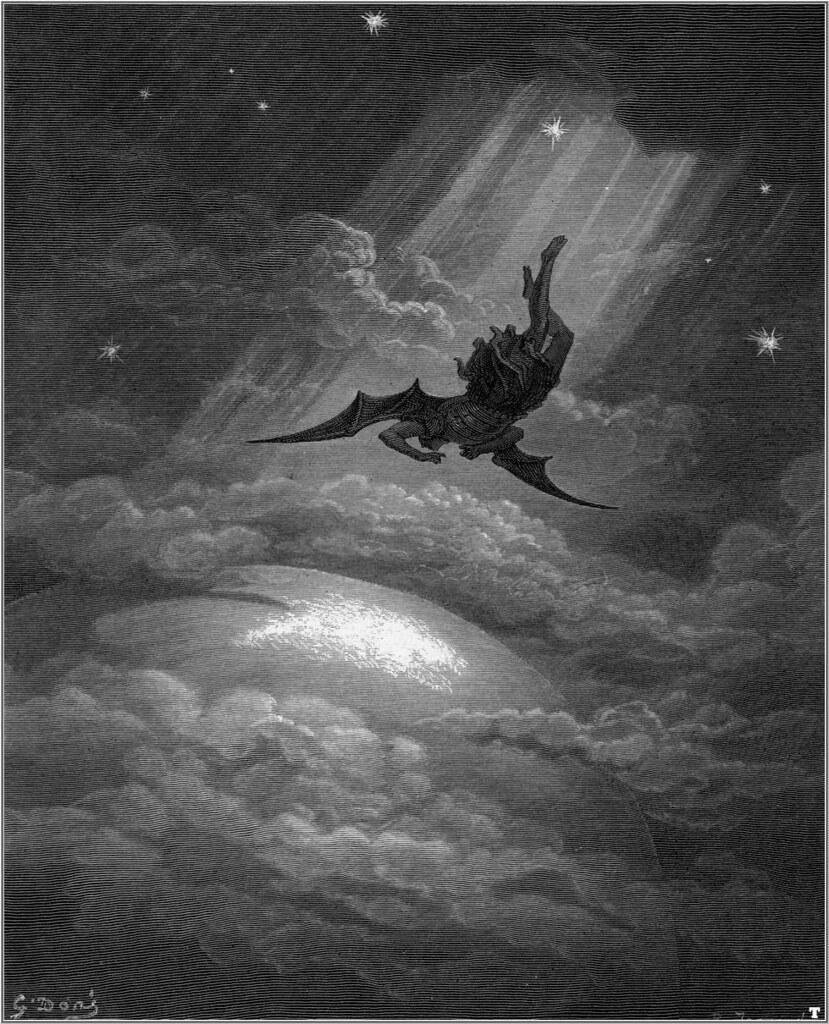
“DORÉ, Gustave Illustration for John Milton’s Paradise Lost 1866” by carulmare is licensed under CC BY 2.0

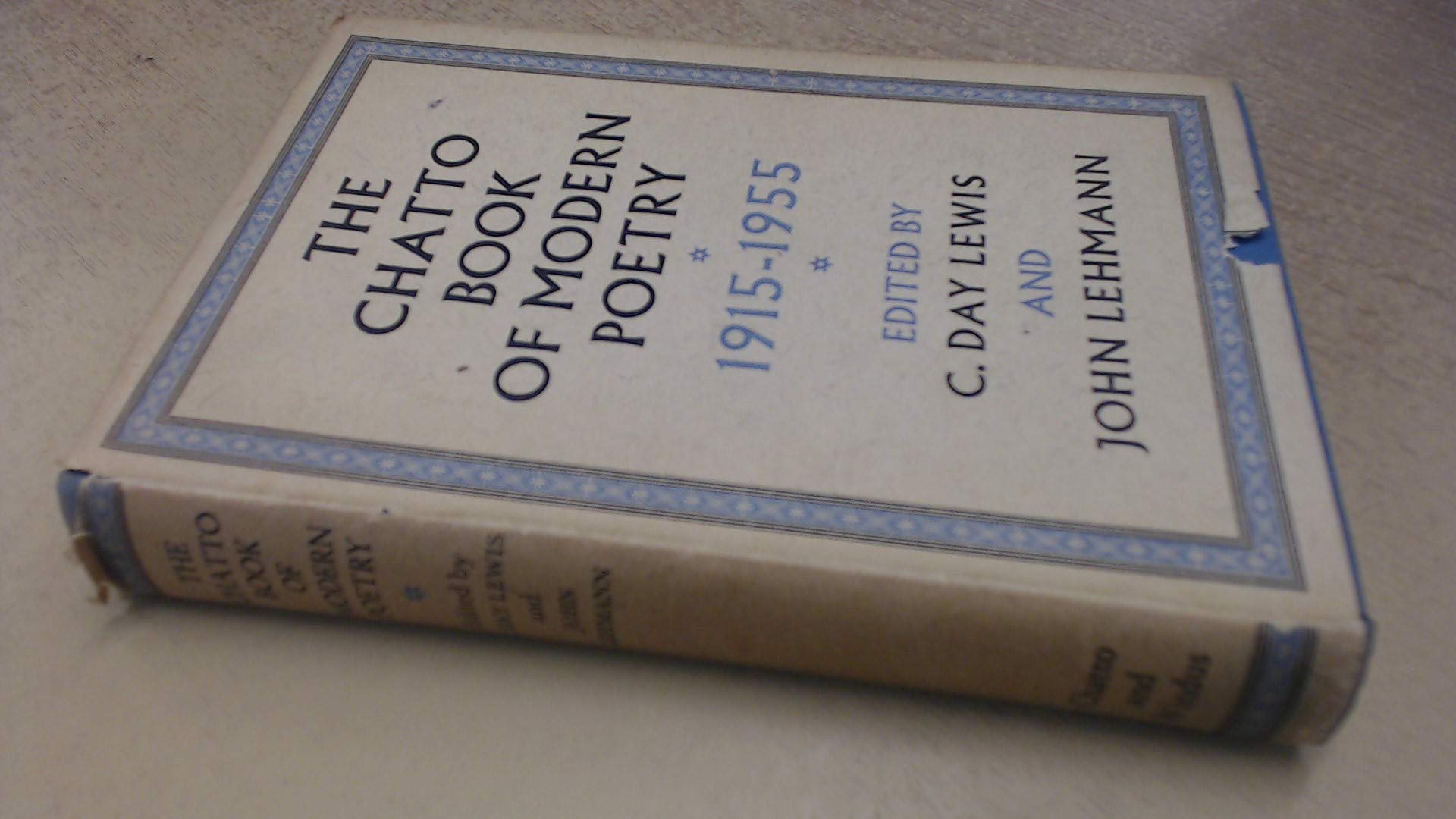
Review: “The Chatto Book of Modern Poetry, 1915-1955”

Chatto Modern Poetry

1915 to 1955 provides quite a range of poetry! From Hardy, Housman, Kipling, Yeats, through two world wars, to Dylan Thomas and twenty poets younger than him. Editors C. Day Lewis and John Lehmann confined themselves to (loosely defined) British poets, and to those aged at least 30 by their final selection. Among the 260 poems are many standards–Hardy’s ‘Afterwards’, Yeats’ ‘Sailing to Byzantium’, Eliot’s ‘East Coker’, Auden’s ‘Lay Your Sleeping Head’, Dylan Thomas’ ‘Fern Hill’–but the real joy is in discovering good work by less well known poets. I give a few excerpts as examples: pastoral, autobiographical, of mortality, a war poem, wistfulness:

Andrew Young, ‘Wiltshire Downs’

The cuckoo’s double note
Loosened like bubbles from a drowning throat
Floats through the air
In mockery of pipit, land and stare.

And one tree-crowned long barrow
Stretched like a sow that has brought forth her farrow
Hides a king’s bones
Lying like broken sticks among the stones.

Laurie Lee, ‘First Love’

Then it was she put up her hair,
inscribed her eyes with a look of grief,
while her limbs grew as curious as coral branches,
her breast full of secrets.

But the boy, confused in his day’s desire,
was searching for herons, his fingers bathed
in the green of walnuts, or watching at night
the Great Bear spin from the maypole star.

Alun Lewis, ‘Water Music’

Cold is the lake water
And dark as history.
Hurry not and fear not
This oldest mystery.

This strange voice singing,
This slow deep drag of the lake,
The yearning, yearning, this ending
Of the heart and its ache.

Keith Douglas, ‘How to Kill’

Now in my dial of glass appears
the soldier who is going to die.
He smiles, and moves about in ways
his mother knows, habits of his.
The wires touch his face: I cry
NOW. Death, like a familiar, hears

and look, has made a man of dust
of a man of flesh. This sorcery
I do. Being damned, I am amused
to see the centre of love diffused
and the waves of love travel into vacancy.
How easy it is to make a ghost.

Sidney Keyes, ‘The Gardener’

Do you resemble the silent pale-eyed angels
That follow children? Is your face a flower?
The lovers and the beggars leave the park–
And still you will not come. The gates are closing.
O it is terrible to dream of angels.

As a collection the poetry is overwhelmingly formal, rural and male. It is titled ‘The Chatto Book of Modern Poetry’, but it predates the formless chaos of what we now call “modern poetry”, the unstructured confessional outpourings of the past half century. The anthology isn’t perfect, but very rewarding for lovers of traditional poetry. (Not hard to find. Used hardcovers are available from $0.99 on Amazon.)