Tag Archives: illness

Simon MacCulloch, ‘Mouth Harp’


The doctor raised an eyebrow. He’d pronounced the sentence (death)
And expected her to die now; yet the patient still drew breath.
The woman was a smoker, and the cancer had a hold
That was strong enough to choke her. She was ninety-three years old.
Her lungs must be a sump, awash with nicotine and tar,
And with a clogged-up pump like that she wasn’t going far.

Well, any trouble breathing? Not at all, I just can’t walk!
(I see her, thick smoke wreathing, still unpausing in her talk.)
A cough, perhaps? Not really – nothing wrong that I’m aware.
The doctor starts to feel she must be using different air.
There’s nothing more to say, his grim prognosis is complete;
The science of today must now acknowledge its defeat.

Back home, I watch my mother as she settles in her chair,
Sips coffee, lights another and inhales without a care.
I pass her the harmonica, she takes it, has a blow,
And jaunty and euphonic her recital starts to flow.
The angels have their harps but death’s a word they never knew;
Down here it’s flats and sharps and death’s a song on air turned blue.

*****

Simon MacCulloch writes: “A largely true account of the somewhat surreal day on which my uncomprehending late mother was diagnosed with terminal lung cancer. I’m still quite proud of having rhymed “harmonica” without anyone called Veronica to help out.”

‘Mouth Harp’ was originally published in The Cannon’s Mouth 92.

Simon MacCulloch lives in London and contributes poetry to a variety of print and online publications, including Reach Poetry, View from Atlantis, Pulsebeat Poetry Journal, Spectral Realms, Black Petals and others.

Photo: “Music Maker” by darkday. is licensed under CC BY 2.0.

Sonnet series: Jean L. Kreiling, ‘My Brother’s Last Year’

  1. What My Brother Says

He says I’m not myself, but in my eyes
and in my arms, he is. I hug him, feeling
that he’s lost weight, but brother-warmth defies
that deficit. Disease and “cure” both stealing
small pieces of him, he has had to quit
his role as family cook, and he can’t drive.
But he retains his reason and his wit,
so much so that it seems clear he’ll survive;
they say he won’t. He says his life’s been great,
though certainly too short. He still stands tall
and truthful: he unblinkingly looks straight
ahead, says what he sees, and leads us all.
He looks thin, but he always has been slim.
He says I’m okay, mostly. He’s still him.

  1. What Looms

It’s always there: a cloud—no, more than that,
a monstrous weight, insistent, ugly—no,
invisible, but foul. Its habitat
is everywhere; there’s no place he can go
to break away from its unfailing grip
and find a self not poisoned by his own
insidious insight, where he can strip
his days of its unnerving undertone.
His daughter’s funny story makes him chuckle,
he briefly cares about a football game,
but you can almost see his psyche buckle
again as deathless facts and fears reclaim
their sure dominion, making him aware
again of all that looms. It’s always there.

  1. Walking with My Brother and His Wife

They’re holding hands, as they so often do,
as we three walk a path in woods behind
their house, our sneakers swishing through
mid-fall’s crisp russet leaves. This path will wind
predictably through acres of old trees
and end at their backyard. Along the way,
we talk of plans, the weather, memories;
most of their plans are now in disarray,
like scattered leaves in autumn’s chill. They stroll
as easily as if they could predict
more than this path, own more than land, control
the odds that he’ll grow old. What fears afflict
them, they defer; they face the chill unbowed.
They’ll hold hands for as long as they’re allowed.

  1. Therapy

I write these sonnets as if that might ease
my mind; it doesn’t, and these lines can’t do
a thing for him. Like stopgap therapies
that promise him another month, a few
neat poems only shuffle deck chairs, shaping
elaborations on the theme that dulls
his days with brain fog. He won’t be escaping;
he knows he’s sinking. As my brother mulls
his measureless calamity, I count
out syllables, choose metaphors, debate
rhyme schemes, and watch the icy water mount
in seas that he cannot long navigate.
I write as if I’d find breath in a word,
as if safe passage might yet be secured.

  1. Progress

It’s not the kind of progress we would hope
for; it’s the damned disease that’s making strides.
My brother’s gaining only ways to cope
with each new deficit as it divides
him further from the life that he once led—
a life he’d thoughtfully constructed, made
of love, ideas, and work. Inside his head,
the enemy destroys the cells that weighed
the sense of printed words, and so he learns
to listen to the Post; when his synapses
don’t fire at numbers anymore, he turns
the checkbook over to his wife. The lapses
disturb but don’t defeat him; he finesses
each injury as the assault progresses.

  1. Nothing

I visit him again, this time by train.
(The ten-hour drive gets tougher as I age,
but then, what right do I have to complain?
To grow old is a gift.) This may assuage
my sense there’s nothing I can do, although
a visit’s nearly nothing. Yes, I care;
that’s what my presence demonstrates, I know,
but it will make him strain for things now rare
or difficult: the teasing repartee,
a walk outdoors, shared meals and memories.
He reassures me that he feels okay,
though I watch him declining, by degrees.
I bring his favorite chocolates, as if sweets
could mask the bitter taste nothing defeats.

  1. Want

Not long before the end, he made it clear:
there was so little that he wanted—just
to stay with those he loved, not disappear
into the latter part of dust to dust.
So many of us want so much: we crave
the shiny toy, the extra buck, and more
when less would do—stuff that will never save
our souls or bodies. I knew that before
my brother’s diagnosis, and today
I can’t claim to have unlearned pointless greed.
I find, though, that it’s easier to weigh
the worth of things desired, to measure need,
to understand there isn’t much I lack.
He wanted only time. I want him back.

*****

Jean L. Kreiling writes: “My brother Bill was wise and witty and loving, and deserved a far longer life; I miss him every day. He was teased and adored by his three older sisters, he made our parents proud, and he created a beautiful family of his own.  His magnificent wife and his three devoted grown children took good care of him in the year between his brain cancer diagnosis and his death, but it was a very difficult year for Bill and all who loved him.”

This tribute to him as a series of shakespearean sonnets was originally published in Pulsebeat Poetry 11.

Jean L. Kreiling is the author of four collections of poetry; her work has been awarded the Frost Farm Prize, the Rhina Espaillat Poetry Prize, the Kim Bridgford Memorial Sonnet Prize, and three New England Poetry Club prizes, among other honors.  A Professor Emeritus of Music at Bridgewater State University, she has published articles on the intersections between music and literature in numerous academic journals.  She lives on the coast of Massachusetts.

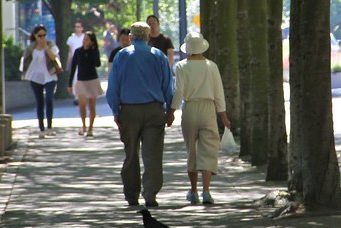
Photo: “Holding Hands on the Hornby Separated Bike Lane” by Paul Krueger is licensed under CC BY 2.0.

Sonnet: ‘Maz’ Griffiths, ‘Internal Memo’

Dear Stomach,
… Look, we’ve really had enough.
Your job is simply to digest the stuff
supplied by Hands and Tongue, to move it through,
not chuck it up. Spurned food is déjà vu
and hurts Oesophagus; she’s frankly pissed,
and Face says please forget The Exorcist,
because projectile vomits are not fun
and bloody heartburn hacks off everyone.
Lungs say they’re worried by a niggling cough
and Guts say if you won’t perform: Sod off!
That’s not my phrase–I’m mediating here,
but want to stress the general atmosphere.

Please see these hiccups don’t occur again.
I sign myself, sincerely,
… Upper Brain

*****

Margaret Ann “Maz” Griffiths, born in 1947, suffered for years from a stomach ailment which finally killed her in 2009. Her frankness, good humour, range of interests and insights and her technical skill make her one of the very best English language poets of the early 21st century.

I recommend ‘Grasshopper‘, the 350-page compilation of her known verse, to anyone interested in modern poetry. It is one of those rare books that I reread every couple of years. I would be glad to hear of any more of her verse that has turned up since 2011.

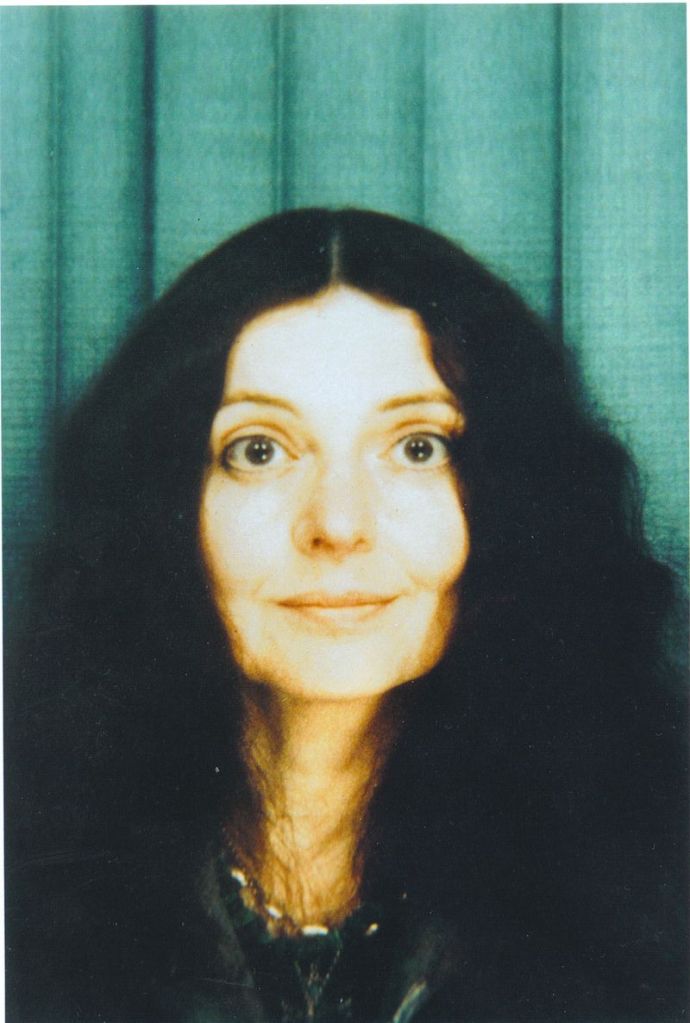
Photo: By David Adkins – Scanned photo provided by David Adkins with permission for reuse, CC0, https://commons.wikimedia.org/w/index.php?curid=16997441

Using form: Quatrains with refrain: Jerome Betts, ‘Plus ça change. . .’

If, as a child, he had a spreading rash,
The squitters, then, far worse, was constipated,
Or boasted big blue bruise and graze and gash,
A doctor murmured, “Yes, it’s age-related.”

When, in mid-life, and seeking novel thrills,
He got a dose of something best not stated
So had to suffer jabs and bitter pills,
A doctor murmured, “Yes, it’s age-related.”

Come his declining years, which tax most brains,
His wits would wander, now grown antiquated,
And while he rambled down his memory’s lanes
A doctor murmured, “Yes, it’s age-related.”

Until, one day of flowers and muffled peals,
Cause of demise at last certificated,
As up the aisle he rolled, worm-food on wheels,
A doctor murmured, “Yes, it’s age-related.”

*****

Jerome Betts writes: “Hearing a phrase new to you can start some process in the brain leading toa piece of verse. Here it was my GP saying of some minor ailment It’s age-related. It stuck in my mind, and I think triggered a recollection of a Thomas Hood poem, The Doctor, its seven stanzas all ending with the refrain Yes, yes, said the Doctor, / I meant it for that!, the dodgy physician’s unvarying response to reports of the disastrous effects, even death, of his prescriptions. Not long after, the sight of a hearse on wheels rather than on bearers’ shoulders entering a Devon church provided the idea for the last stanza of this essay in black humour which appeared in Snakeskin.

Jerome Betts lives in Devon, England, where he edits the quarterly Lighten Up Online. Pushcart-nominated twice, his verse has appeared in a wide variety of UK publications and in anthologies such as Love Affairs At The Villa NelleLimerick Nation, The Potcake Chapbooks 1, 2 and 12, and Beth Houston’s three Extreme collections. British, European, and North American web venues include Amsterdam QuarterlyBetter Than StarbucksLightThe Asses of ParnassusThe HypertextsThe New Verse News, and  Snakeskin.

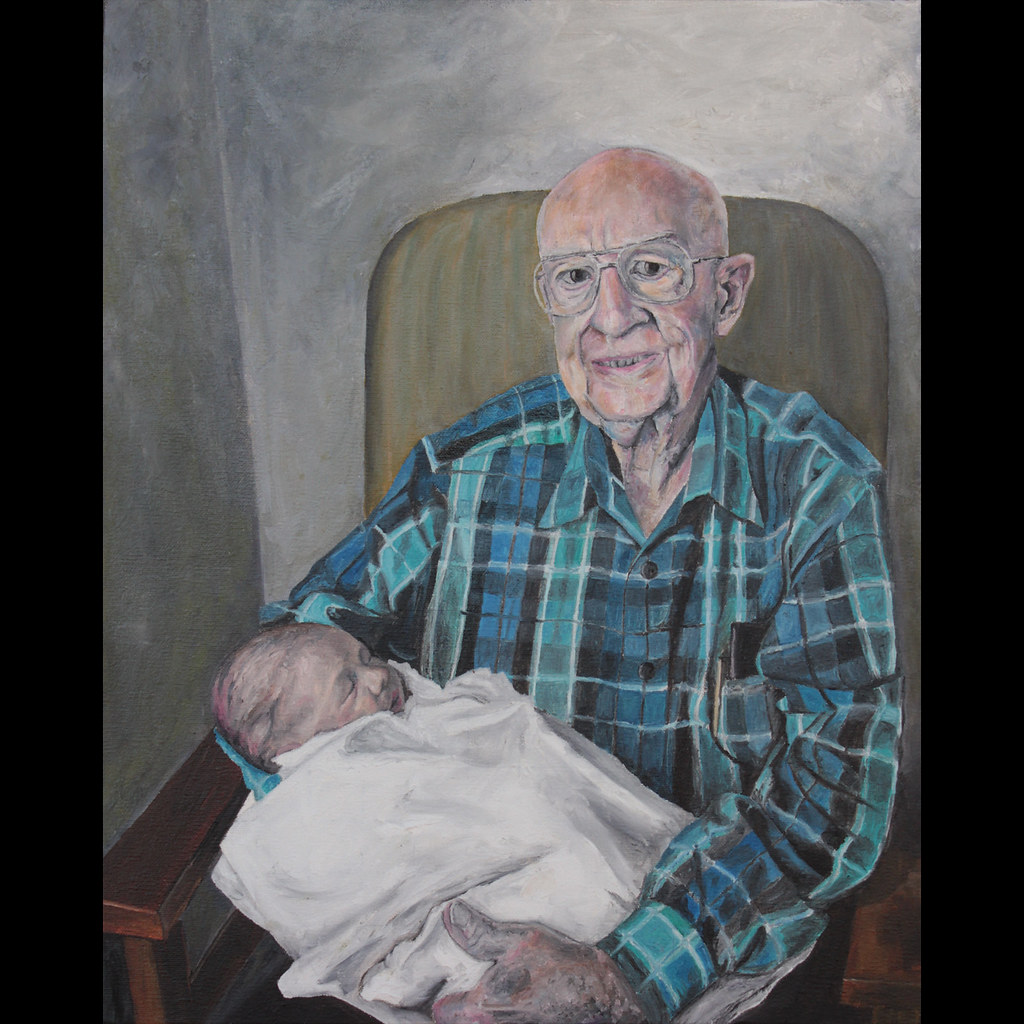
Illustration: “Great Grandfather and Child” by Melissa Flores is licensed under CC BY-NC-ND 2.0.

Short verse: Susan McLean, ‘Jeopardy’

The first thing she requests post-surgery,
awake but drifting in the morphine glow,
is that my sister turn on the TV
so that the two can watch her favorite show.
Weak but alive, unsure if she has cancer,
my mother turns to questions she can answer.

*****

Susan McLean writes: “I wrote this poem while I was over a thousand miles away from the scene it describes, based on my sister’s phone account of what happened. The irony of the show’s title under the circumstances was the first stimulus for the poem, but also I almost laughed when I thought of how characteristic my mother’s action was. Given that she was in her eighties when she had major surgery, my mother’s jeopardy was very real, and I wrote the poem while we still didn’t know whether she had cancer. She did not. There is another irony, in that the game show Jeopardy! provides answers for which the contestants have to supply the appropriate questions. Yet, in context, those questions are answers.
The hardest challenge when writing about an emotional situation is to focus on the facts and let the emotions emerge by suggestion. A hint of humor acts as a counterweight to unspoken anxieties. The poem was first published in Measure and later appeared in my second poetry book, The Whetstone Misses the Knife.”

Susan McLean has two books of poetry, The Best Disguise and The Whetstone Misses the Knife, and one book of translations of Martial, Selected Epigrams. Her poems have appeared in Light, Lighten Up Online, Measure, Able Muse, and elsewhere. She lives in Iowa City, Iowa.

Susan McLean has two books of poetry, The Best Disguise and The Whetstone Misses the Knife, and one book of translations of Martial, Selected Epigrams. Her poems have appeared in Light, Lighten Up Online, Measure, Able Muse, and elsewhere. She lives in Iowa City, Iowa.
https://www.pw.org/content/susan_mclean

Photo: “Filming Jeopardy!” by jurvetson is licensed under CC BY 2.0.